
Skip to Content
  • Offices

    Offices

    North & Latin America
    • Atlanta
    • Austin
    • Bogota
    • Boston
    • Buenos Aires
    • Chicago
    • Dallas
    • Denver
    • Houston
    • Los Angeles
    • Mexico City
    • Minneapolis
    • Monterrey
    • Montreal
    • New York
    • Rio de Janeiro
    • San Francisco
    • Santiago
    • São Paulo
    • Seattle
    • Silicon Valley
    • Toronto
    • Washington, DC
    Europe & Africa
    • Amsterdam
    • Athens
    • Berlin
    • Brussels
    • Copenhagen
    • Dusseldorf
    • Frankfurt
    • Helsinki
    • Istanbul
    • Johannesburg
    • Kyiv
    • Lisbon
    • London
    • Madrid
    • Milan
    • Munich
    • Oslo
    • Paris
    • Rome
    • Stockholm
    • Vienna
    • Warsaw
    • Zurich
    Middle East
    • Doha
    • Dubai
    • Riyadh
    Asia & Australia
    • Bangkok
    • Beijing
    • Bengaluru
    • Brisbane
    • Ho Chi Minh City
    • Hong Kong
    • Jakarta
    • Kuala Lumpur
    • Manila
    • Melbourne
    • Mumbai
    • New Delhi
    • Perth
    • Seoul
    • Shanghai
    • Singapore
    • Sydney
    • Tokyo
    See all offices
  • Alumni
  • Media Center
  • Subscribe
  • Contact
  • Global | English

    Select your region and language

    Global
    • Global (English)
    North & Latin America
    • Brazil (Português)
    • Argentina (Español)
    • Canada (Français)
    • Chile (Español)
    • Colombia (Español)
    Europe, Middle East, & Africa
    • France (Français)
    • DACH Region (Deutsch)
    • Italy (Italiano)
    • Spain (Español)
    • Greece (Elliniká)
    Asia & Australia
    • China (中文版)
    • Korea (한국어)
    • Japan (日本語)
  • Saved items (0)
    Saved items (0)

    You have no saved items.

    Bookmark content that interests you and it will be saved here for you to read or share later.

    Explore Bain Insights
  • Industries
    Main menu

    Industries

    • Aerospace & Defense
    • Agribusiness
    • Chemicals
    • Construction & Infrastructure
    • Consumer Products
    • Financial Services
    • Healthcare & Life Sciences
    • Industrial Machinery & Equipment
    • Media & Entertainment
      Industries
      Media & Entertainment
      • Media Lab
    • Metals
    • Mining
    • Oil & Gas
    • Paper & Packaging
    • Private Equity
      Industries
      Private Equity
      • Due Diligence
      • Exit Planning
      • Firm Strategy & Operations
      • Portfolio Value Creation
    • Social Impact
    • Retail
    • Technology
    • Telecommunications
      Industries
      Telecommunications
      • Capital Expenditure
      • Telco Digital Transformation
    • Transportation
    • Travel & Leisure
    • Utilities & Renewables
  • Consulting Services
    Main menu

    Consulting Services

    • Customer Experience
    • Sustainability
    • Innovation
    • M&A
    • Operations
    • People & Organization
    • Private Equity
    • Sales & Marketing
    • Strategy
    • AI, Insights, and Solutions
    • Technology
    • Transformation
  • Digital
  • Insights
    Main menu

    Insights

    • Industry Insights
    • Services Insights
    • Bain Books
    • Webinars
    • Bain Futures
    View all Insights
    Featured topics
    • Tariff Response
    • Artificial Intelligence
    • Thriving in Uncertainty
    • Executive Conversations
    • Macro Trends
    • M&A Report
    • Healthcare Private Equity Report
    • Paper & Packaging Report
    • Technology Report
    • CEO's Guide to Sustainability
    • CEO Insights
    • CFO Insights
    • COO Insights
    • CIO Insights
    • CMO Insights
    View all featured topics
  • About
    Main menu

    About

    • What We Do
    • What We Believe
    • Our People & Leadership
    • Client Results
    • Awards & Recognition
    • Global Affiliations
    Further: Our global responsibility
    • Sustainability
    • Social Impact
    • World Economic Forum
    Learn more about Further
  • Careers
    Main menu

    Careers

    • Work with Us
      Careers
      Work with Us
      • Find Your Place
      • Our Work Areas
      • Integrated Teams
      • Students
      • Internships & Programs
      • Recruiting Events
    • Life at Bain
      Careers
      Life at Bain
      • Blog: Inside Bain
      • Career Stories
      • Our People
      • Where We Work
      • Supporting Your Growth
      • Affinity Groups
      • Benefits
    • Impact Stories
    • Hiring Process
      Careers
      Hiring Process
      • What to Expect
      • Interviewing
    FIND JOBS
  • Offices
    Main menu

    Offices

    • North & Latin America
      Offices
      North & Latin America
      • Atlanta
      • Austin
      • Bogota
      • Boston
      • Buenos Aires
      • Chicago
      • Dallas
      • Denver
      • Houston
      • Los Angeles
      • Mexico City
      • Minneapolis
      • Monterrey
      • Montreal
      • New York
      • Rio de Janeiro
      • San Francisco
      • Santiago
      • São Paulo
      • Seattle
      • Silicon Valley
      • Toronto
      • Washington, DC
    • Europe & Africa
      Offices
      Europe & Africa
      • Amsterdam
      • Athens
      • Berlin
      • Brussels
      • Copenhagen
      • Dusseldorf
      • Frankfurt
      • Helsinki
      • Istanbul
      • Johannesburg
      • Kyiv
      • Lisbon
      • London
      • Madrid
      • Milan
      • Munich
      • Oslo
      • Paris
      • Rome
      • Stockholm
      • Vienna
      • Warsaw
      • Zurich
    • Middle East
      Offices
      Middle East
      • Doha
      • Dubai
      • Riyadh
    • Asia & Australia
      Offices
      Asia & Australia
      • Bangkok
      • Beijing
      • Bengaluru
      • Brisbane
      • Ho Chi Minh City
      • Hong Kong
      • Jakarta
      • Kuala Lumpur
      • Manila
      • Melbourne
      • Mumbai
      • New Delhi
      • Perth
      • Seoul
      • Shanghai
      • Singapore
      • Sydney
      • Tokyo
    See all offices
  • Alumni
  • Media Center
  • Subscribe
  • Contact
  • Global | English
    Main menu

    Select your region and language

    • Global
      Select your region and language
      Global
      • Global (English)
    • North & Latin America
      Select your region and language
      North & Latin America
      • Brazil (Português)
      • Argentina (Español)
      • Canada (Français)
      • Chile (Español)
      • Colombia (Español)
    • Europe, Middle East, & Africa
      Select your region and language
      Europe, Middle East, & Africa
      • France (Français)
      • DACH Region (Deutsch)
      • Italy (Italiano)
      • Spain (Español)
      • Greece (Elliniká)
    • Asia & Australia
      Select your region and language
      Asia & Australia
      • China (中文版)
      • Korea (한국어)
      • Japan (日本語)
  • Saved items  (0)
    Main menu
    Saved items (0)

    You have no saved items.

    Bookmark content that interests you and it will be saved here for you to read or share later.

    Explore Bain Insights
  • Industries
    • Industries

      • Aerospace & Defense
      • Agribusiness
      • Chemicals
      • Construction & Infrastructure
      • Consumer Products
      • Financial Services
      • Healthcare & Life Sciences
      • Industrial Machinery & Equipment
      • Media & Entertainment
      • Metals
      • Mining
      • Oil & Gas
      • Paper & Packaging
      • Private Equity
      • Social Impact
      • Retail
      • Technology
      • Telecommunications
      • Transportation
      • Travel & Leisure
      • Utilities & Renewables
  • Consulting Services
    • Consulting Services

      • Customer Experience
      • Sustainability
      • Innovation
      • M&A
      • Operations
      • People & Organization
      • Private Equity
      • Sales & Marketing
      • Strategy
      • AI, Insights, and Solutions
      • Technology
      • Transformation
  • Digital
  • Insights
    • Insights

      • Industry Insights
      • Services Insights
      • Bain Books
      • Webinars
      • Bain Futures
      View all Insights
      Featured topics
      • Tariff Response
      • Artificial Intelligence
      • Thriving in Uncertainty
      • Executive Conversations
      • Macro Trends
      • M&A Report
      • Healthcare Private Equity Report
      • Paper & Packaging Report
      • Technology Report
      • CEO's Guide to Sustainability
      • CEO Insights
      • CFO Insights
      • COO Insights
      • CIO Insights
      • CMO Insights
      View all featured topics
  • About
    • About

      • What We Do
      • What We Believe
      • Our People & Leadership
      • Client Results
      • Awards & Recognition
      • Global Affiliations
      Further: Our global responsibility
      • Sustainability
      • Social Impact
      • World Economic Forum
      Learn more about Further
  • Careers
    Popular Searches
    • Agile
    • Digital
    • Strategy
    Your Previous Searches
      Recently Visited Pages

      Content added to saved items

      Saved items (0)

      Removed from saved items

      Saved items (0)

      Brief

      A new pharma launch paradigm: From one size fits all to a tailored product approach

      A new pharma launch paradigm: From one size fits all to a tailored product approach

      Create an innovative Launch Factory by mapping your assets to four archetypes.

      By Michael Kunst, Rafael Natanek, Loic Plantevin and George Eliades

      • min read

      Brief

      A new pharma launch paradigm: From one size fits all to a tailored product approach
      en

      Product launches serve as defining moments for pharmaceutical companies to create sustained value. Well-managed launches provide the single most powerful way to offset the revenue shortfalls of the approaching patent cliff. The challenge to meet earnings targets puts even more pressure on product launches for at least two reasons:

      • First, the market access environment has become more restrictive. Our assessment of launches made in Europe shows that 60% to 90% face access restrictions by payers and governments due to a lack of perceived differentiation or cost-effectiveness. While the US numbers are somewhat better, insurers and providers will likely impose more restrictions as budgets tighten and the Affordable Care Act is implemented. A recent survey of 100 health plans and pharmacy benefit managers suggested that 37% are likely to support alternative payment models within the next three years.
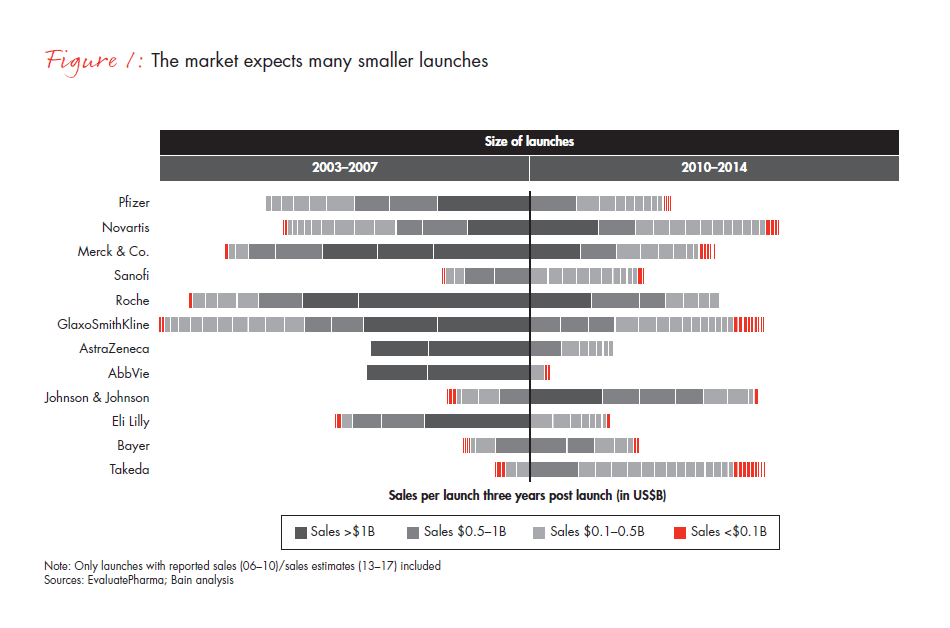
      • Second, a different product portfolio mix requires a new approach. While companies used to launch a few large products each year, in-depth pipeline assessments show they now launch many smaller products with more intense competition (see Figure 1).

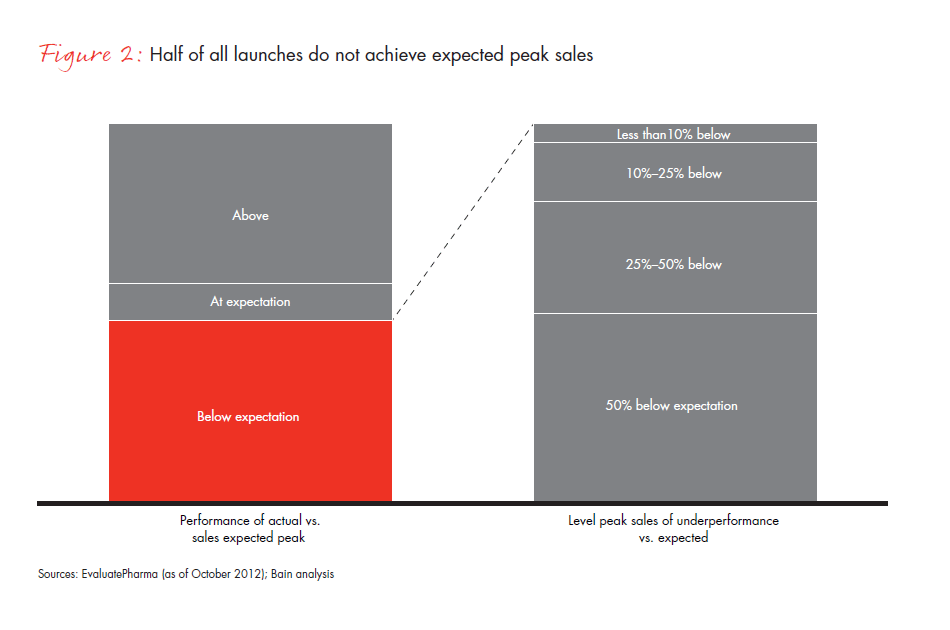
      The industry has not yet adjusted its launch approach to the new reality. One indication of this is that half of all launches now in the peak sales range did not meet expected levels, and half of those missed expectations by 50% or more (see Figure 2). In such a challenging environment, pharmaceutical companies recognize that not every launch can be a blockbuster and are searching for new ways to prepare for launch. In our experience, the companies adjusting most effectively to this reality share three common characteristics:
      • They are moving away from a one-size-fits-all approach to launch and tailoring activities to four assets or archetypes.
      • They are updating their launch toolkits to adapt to a world of smaller launches with more access restrictions.
      • They are retooling their organizations into Launch Factories that launch many products continuously and consistently.

      a-new-pharma-launch-paradigm-fig-01_embed
      a-new-pharma-launch-paradigm-fig-02_embed

      Move away from a one-size-fits-all approach to launch

      Many companies have pursued a one-size-fits-all approach to their launches when it comes to positioning, go-to-market strategy and resourcing. That approach may still work for blockbuster assets, but it is less applicable to other pipeline drugs.

      Our analysis looked at many variables that might help differentiate among launches and predict success. The two most meaningful variables were the size of the target population and how payers and providers perceived product differentiation. That insight revealed four distinct product archetypes, each with its own optimal launch approach: Block Buster, Value Buster, Access Buster and Turnaround Buster (see Figure 3). Identifying products on these two dimensions gives companies a practical approach for planning each launch according to the archetype that best describes its characteristics. For example:
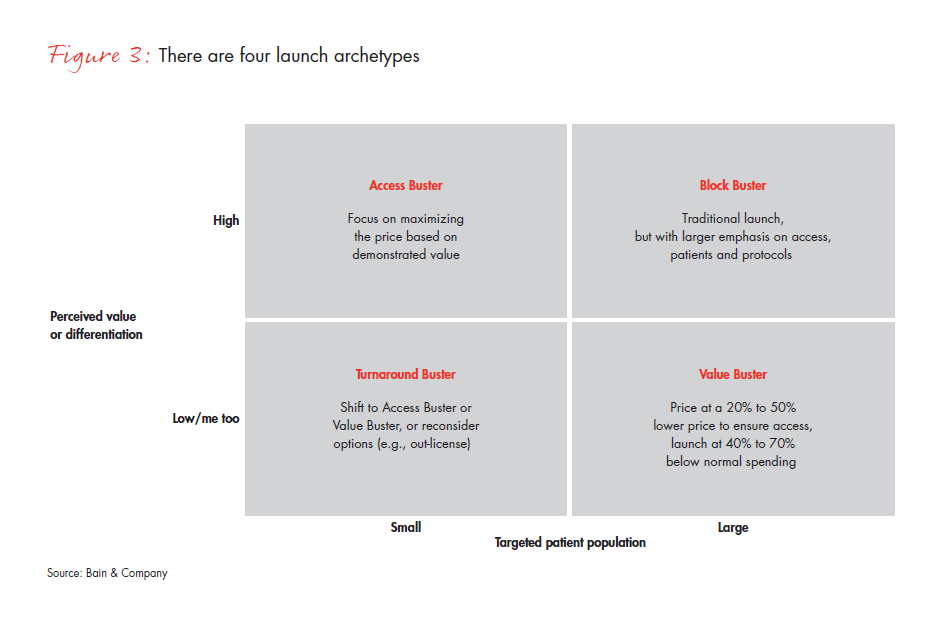
      • A traditional Block Buster approach will still work for products targeting a large patient population and high perceived value and differentiation, but it will continue to require a focus on efficient launch activities (e.g., Merck’s diabetes drug Januvia, which emphasizes digital channels and patient education along with traditional feet-on-the-street and directto- consumer models).
      • For products with a large patient population but perceived low differentiation by payers, pursuing a Value Buster approach could pay dividends, with a price point 20% to 30% lower to ensure access, and resourcing 30% to 50% below the traditional Block Buster (e.g., Sanofi’s colorectal product Zaltrap, which was forced to discount price 50% due to perceived similarity in outcomes to those of a competitor).
      • For products with a smaller patient population but a high perceived differentiation, an Access Buster approach will make the most of price based on demonstrated value (e.g., Genentech’s highly successful Herceptin, which, while expensive, has retained its price because it demonstrated successful outcomes for HER2-positive types of breast cancer, with a companion diagnostic).
      • The most challenging archetype, which we label a Turnaround Buster, includes products with a smaller patient population and low perceived differentiation. The best strategy for these products may be to refocus for other indications, delay the launch to capture additional trial outcomes or simply consider other options, such as out-licensing (e.g., Rare Disease Therapeutics’ Anascorp, a drug for scorpion bites with wide price variation that caused payer backlash).

      a-new-pharma-launch-paradigm-fig-03_embed

      Our assessment of the late-stage pipelines of nine large pharmaceutical companies, covering 89 products and 140 indications, shows that most companies have products distributed differentially across the four archetypes. This varied product distribution reinforces the critical importance of a tailored approach that takes into account the characteristics of each launch type (see Figure 4).
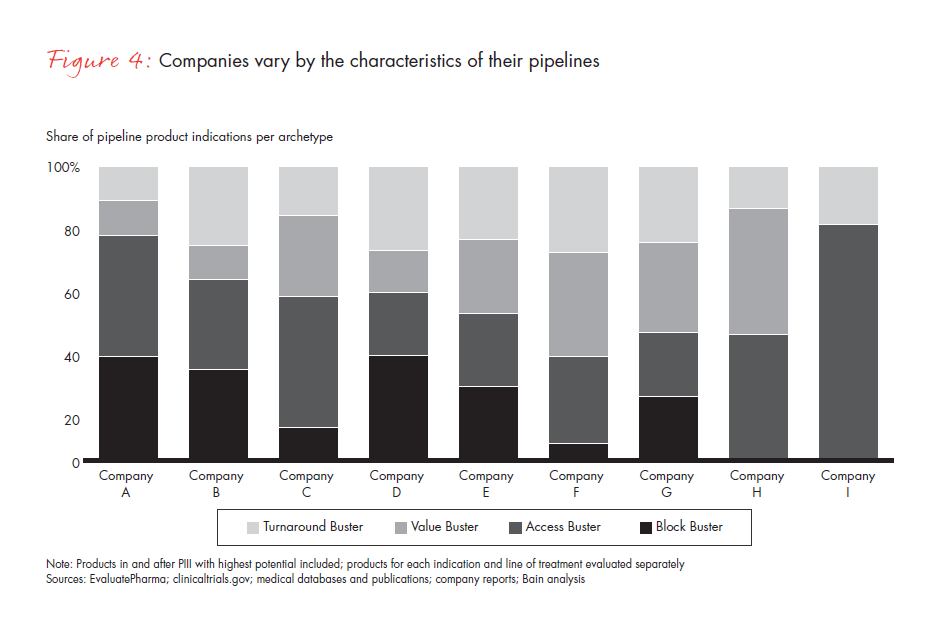

      a-new-pharma-launch-paradigm-fig-04_embed

      The power of the archetype approach emerges more fully as companies balance their commercial focus across the four launch types and shape strategies accordingly. The key launches in each pipeline may be broadly spread across all four approaches or narrowly focused on one or two. For example, one company found that while its pipeline had two classic Block Buster candidates, its other pipeline assets were spread over the remaining archetypes. As a result, the company developed a differentiated approach and institutionalized a global launch SWAT team targeted to their most important markets and regions. In addition, it ramped up access capabilities across the most relevant markets to account for the distribution of launch assets across archetypes.

      Another major company discovered that its late-stage pipeline products fit all four archetypes, triggering a different set of questions (see Figure 5). Its Block Buster products may generate confidence in the launch’s success, but the team will need to be sure it knows how to make the most of the opportunity. The company’s Value Buster product, with a potentially large target population but issues of value differentiation, will pose other challenges, such as whether there is a potential lower-cost approach that will still keep the product competitive. The Access Busters raise questions of how to ensure maximum access for a limited target group. These products can demonstrate value through post-launch trial commitments, real-life data, outcome-based pricing and geographic selection, but it also will help to emphasize clinical positioning to Key Opinion Leaders (KOLs) and Phase 2 preparedness. Its Turnaround Busters, with a small target population and low perceived differentiation, will be the most difficult to address and will require a fall-back option.
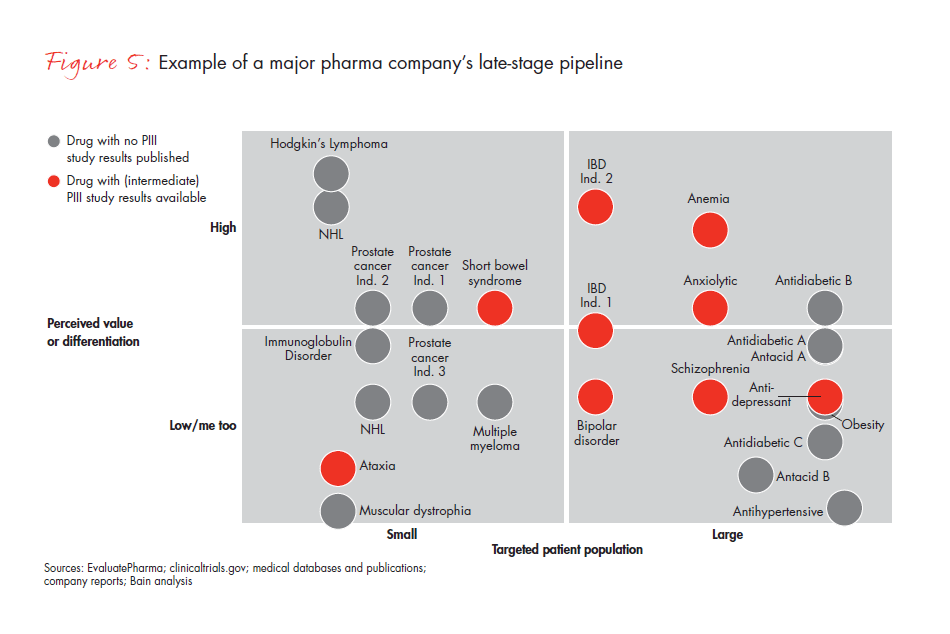

      a-new-pharma-launch-paradigm-fig-05_embed

      Update the launch toolkit

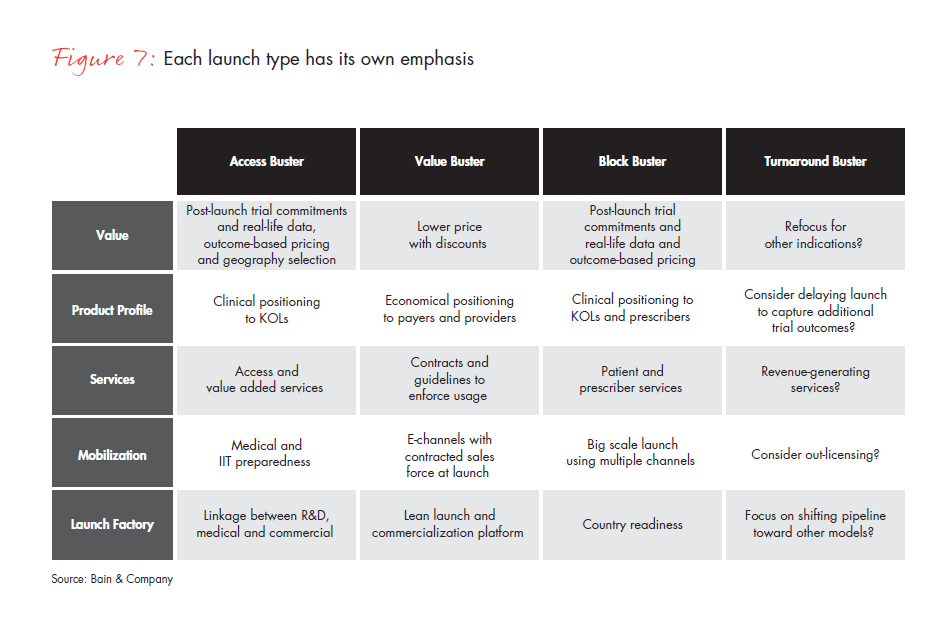
      After identifying the appropriate archetype for each launch, companies can move to launch preparation. At this point, there are large opportunities to add significant value beyond the conventional approach of shaping product positioning and checklists. The basic toolkit for a successful launch has five elements: Value, Product Profile, Services, Mobilization and Launch Factory (see Figure 6). While all of these elements need to be in place for every launch, their emphasis and actions differ significantly across archetypes (see Figure 7).
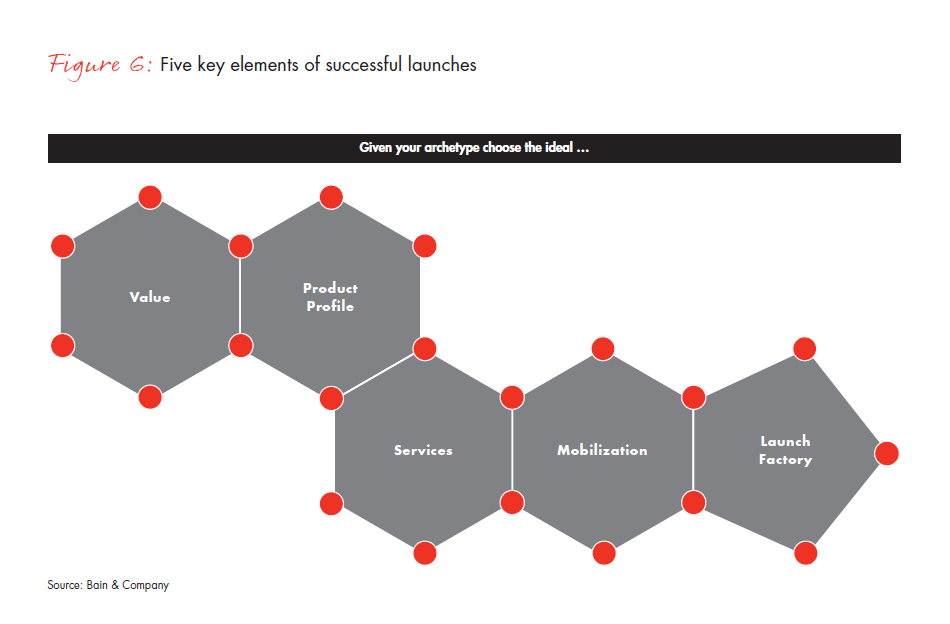

      a-new-pharma-launch-paradigm-fig-06_embed

      a-new-pharma-launch-paradigm-fig-07_embed

      Companies must demonstrate the product’s Value to the payer to obtain the right price and reimbursement. The basic requirements include a reimbursable dossier, standard prices and successful management of payers, regulators and health technology assessment organizations. A new product launch capability, however, may require additional tools, such as first indication choice/ delay, post-launch Phase IV commitments, real-life data to support differentiation, alternative pricing approaches and a broader focus on advisers to regulatory agencies.

      The best Product Profile tends to emphasize a comparison of the clinical profile vs. in-market products and forecasting based on internal research and development projections. Additional levers require assessing the clinical profile vs. competitors’ pipeline products and using more objective forecasting by independent analysts.

      Typical approaches to outreach and Services are KOL programs and patient advocacy engagement. Emphasizing different patient services (e.g., funding support, new compliance approaches), provider services (e.g., local budget/capacity models) and more sophisticated care management and data platforms for integrated care services will strengthen this approach.

      Nitin Chaturvedi, a partner in Bain's Healthcare practice, breaks down the macro trends that are making traditional go-to-market approaches in the healthcare industry less effective and outlines tactics needed to achieve successful pharmaceutical drug launches.

      For Mobilization, the typical approach will focus on salesforce preparedness, the reallocation of resources from other therapeutic areas or the inclusion of launch costs in each country’s budget. More productive options might include focusing on building critical skills/ resources for each therapeutic area, hiring 50% of staff from competitors for new therapeutic areas and dedicating budgets and incentives from 24 months before until 24 months after launch.

      Finally, the Launch Factory fundamentally restructures the current product-by-product approach. Building a Launch Factory adjusts the company’s organization to allow it to continuously and consistently launch many smaller products, as we describe in further detail below.

      Retool your organization into a Launch Factory

      Launching 5 to 10 new products each year poses a different challenge from launching a Block Buster every other year. The steps outlined above give companies a practical framework to address the new requirements for each individual launch. With many diverse products and regions to consider, however, executive teams also need a repeatable process that can guarantee consistent outcomes. The opportunity here is to build a Launch Factory. This approach requires a commitment to change the structure and roles, governance and decision making, financial incentives and capability management across the entire organization (see Figure 8).
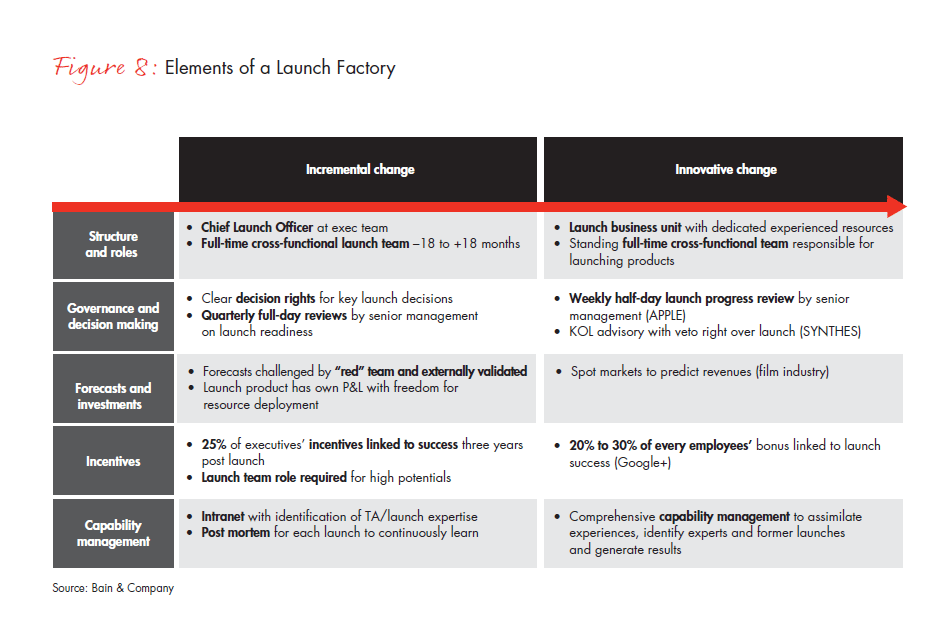

      a-new-pharma-launch-paradigm-fig-08_embed

      Companies that want a bolder approach to structure and roles might begin by establishing a chief launch officer at the executive team level, aided by a full-time, cross-functional team that operates 18 months before and after launch. Establishing a dedicated business unit or creating a standing full-time, cross-functional team to oversee all launches would be an even more innovative approach. More centralized launch functions also may require companies to reevaluate the role of brand teams. In the future, brand teams may need to be over-resourced around the launch—from one year before to two years after—and have a combination of traditional therapeutic area-focused marketers as well as launch experts. For brands further along the life cycle, these resources can be ratcheted back significantly.

      The decision-making process can move ahead more effectively with clear decision rights and timelines, along with quarterly full-day reviews by senior management on launch readiness, instead of only one or two senior management reviews during the entire launch process. Adding even more frequent progress review meetings can avoid problems that might emerge if the process is done only quarterly. One healthcare company has even given KOLs “veto rights” over the development and launch approach.

      Financial incentives tend to influence less than 10% of overall executive bonuses. Providing a quarter of executives with incentives linked to success three years postlaunch can produce a more highly committed team, but linking a third of every employee’s bonus to launch success would be even more innovative.

      Instead of a routine checklist approach, a capability management system can help to identify people with the right expertise, along with a post-mortem approach to learn from previous launches and to continuously apply that learning.

      The level of change any company can realistically implement will depend on its number of launches and consistency in launching products to date. Not every company will be able to execute innovative changes at every point, but moving beyond the typical approach can produce measurable results. For example, Biogen Idec established a dedicated launch-excellence function with experienced resources and a standing full-time, cross-functional team responsible for supporting all launch products, where a more typical approach might have been to simply set up a center of excellence.

      As disruptive as these changes may seem, they are not unique to the pharma industry. Companies in other industries have used the Launch Factory approach to gear their organizations toward delivering continuous product launches (e.g., high-tech companies like Apple and Samsung or medical technology companies like hearing aid makers). Some lessons learned that produced commercial momentum include establishment of a launch business unit where all new products are grown until they reach a certain size; weekly management meetings to review launch progress (e.g., Apple); 20% to 30% of every employee’s incentive linked to the success of critical launches (e.g., Google+); data systems to predict uptake of new products (spot markets to assess launch success); and systematic post-mortem analytics to understand what worked and what did not (e.g., the film industry).

      As the pharma industry adjusts to the new reality for successful product launches, leading companies that follow three practical insights will surge ahead:

      • Shift from a one-size-fits-all to a tailored launch approach.
      • Update the launch toolkit to clearly assess value, product profile, service and mobilization by market.
      • Build a Launch Factory that captures learning and applies it in a repeatable process across all product launches.

      Are you ready?

      Michael Kunst is a Bain partner based in Boston and Munich. Rafael Natanek is a principal based in Bain’s London office. Loic Plantevin is a Bain partner based in Paris. George Eliades is a Bain partner in the San Francisco office. All are members of Bain’s Global Healthcare practice. The authors would like to recognize Annabell Geidner and Nicolas Stephan, both with Bain & Company in Munich, for their contributions to this Bain Brief.


      a-new-pharma-launch-paradigm-fig-01_full

      a-new-pharma-launch-paradigm-fig-02_full

      a-new-pharma-launch-paradigm-fig-03_full

      a-new-pharma-launch-paradigm-fig-04_full

      a-new-pharma-launch-paradigm-fig-05_full

      a-new-pharma-launch-paradigm-fig-06_full

      a-new-pharma-launch-paradigm-fig-07_full

      a-new-pharma-launch-paradigm-fig-08_full
      Authors
      • Michael Kunst
        Former Partner, Munich
      • Headshot of Loïc Plantevin
        Loïc Plantevin
        Partner, Paris
      Contact us
      Related Industries
      • Healthcare & Life Sciences
      • Pharmaceuticals
      Healthcare & Life Sciences
      Global Healthcare Private Equity Report 2012

      A look at healthcare investment trends in 2011 and what awaits investors in 2012 and beyond.

      Read More
      Healthcare 2020

      To win in a shifting profit pool, companies need to improve how healthcare is delivered.

      Read More
      Pharmaceuticals
      The Cure for Pharma's Commercial Productivity Woes

      To earn greater loyalty and raise productivity, figure out what really matters for doctors.

      Read More
      Healthcare & Life Sciences
      How Life Sciences Leaders Are Widening the AI Capability Gap

      Most pharma and medtech companies agree that a strong data foundation is table stakes. Few invest equally in the behaviors needed to move from pilots to adoption.

      Read More
      Healthcare & Life Sciences
      From Silos to Pods: Scaling AI in Life Sciences

      Cross-functional collaboration is the real differentiator between those that see meaningful returns and those that don’t.

      Read More
      Published in June 2013
      Tags
      • Healthcare & Life Sciences
      • Pharmaceuticals

      How We've Helped Clients

      Performance Improvement A Pharma Company’s Finance Function Gets a Shot in the Arm

      Read case study

      Strategy Pharma oncology growth strategy

      Read case study

      Sales and Marketing Recharging the pharmaceutical sales model

      Read case study

      Ready to talk?

      We work with ambitious leaders who want to define the future, not hide from it. Together, we achieve extraordinary outcomes.

      Stay ahead in a rapidly changing world. Subscribe to Bain Insights, our monthly look at the critical issues facing global businesses.

      *I have read and understand Bain’s Privacy Notice.

      Please read and agree to the Privacy Policy.
      Bain & Company
      Contact us Sustainability Accessibility Terms of use Privacy Modern Slavery Act Statement Cookie Policy Sitemap Log In

      © 1996-2026 Bain & Company, Inc.

      Contact Bain

      How can we help you?

      • Business inquiry
      • Career information
      • Press relations
      • Partnership request
      • Speaker request
      See all offices