


Brief

|
|
Does customer loyalty matter to utility companies? Customers are certainly growing less “sticky” as it becomes easier to change energy suppliers, but can an old-line industry selling a commodity product really benefit by focusing on customer happiness? Utilities that emphasize customer experience have discovered that the answer is a resounding yes: Customers care about price, of course, but they also care about service, and over time service tends to become even more important. Even today, uswitch.gov, the leading UK website for switching energy suppliers, tracks not only prices and offers from different energy providers, but also customer satisfaction scores. Customer loyalty is a valuable asset for any company. Consider the experience of one of the most successful players in another commodity industry: credit cards. American Express turned its customers into such vocal promoters that retailers had no choice but to accept American Express cards—despite their higher fees. Loyal customers drive long-term revenue and profit growth: They stay longer and typically cost less to serve. Particularly for utilities, retaining customers is the key to profitability. Because utilities often invest six to eight years of gross margin into acquiring (or reacquiring) a customer, losing that customer due to bad service after only one to two years can cause huge losses. Keeping customers, on the other hand, is an almost guaranteed way to boost profits. Loyalty is equally important—indeed, critical— among commercial customers, who have several options for suppliers and who represent an attractive target for new market entrants selling energy-related services. New energy solutions, such as distributed generation, hedging and contracting schemes or back-up supply, all demand the trust and loyalty of commercial customers. But even in the residential segment, the trust and relationship depth of customers becomes more and more critical as the utilities business model starts to expand beyond selling kilowatt hours. Loyal customers, whether residential or commercial, recommend the utility to friends and colleagues and provide valuable feedback. They can also make life more pleasant for employees. Many companies have discovered that promoting both customer and employee loyalty creates a virtuous cycle that lowers employee churn and overall employee costs. In partially regulated industries like utilities, loyal customers also bolster a company’s image and reputation, which can ultimately result in more favorable regulation and pricing. That means a well-liked retail arm can benefit the generation and distribution businesses too. The utility challenge But even if you believe that loyal customers are better ones, how do you actually go about improving your “customer experience management”—making your customers happy? You start by understanding the real needs of your customers, and then delivering on those needs—if possible with a smile (or at least a nice voice or a friendly letter) and as few mistakes as possible. Leading utilities have made conscious decisions to move from being low-touch to customer-led companies. They focus not only on providing better products and services, but also on delivering a superior customer experience. This helps to drive organic growth—or, in the case of former monopolies, to maintain a healthy customer base. Despite the benefits of customer loyalty, reshaping a utility into a customer-centric company is challenging. Many utilities tend to still think in terms of “demand” or even “metering points” rather than “customers.” Recognizing (accurately) that they are to a large extent still selling a commodity product, utilities often focus more on price or bundle discounts than on customer service. Indeed, targeting customers and creating well-defined offerings for different segments are often difficult, given the legacy structures of those companies affiliated with municipal and regional utilities or those that operate in multiple countries. Laws that have forced utilities to separate the regulated side of the business (transmission and distribution) from the unregulated side (generation, trading and retail)—often followed by efforts to maintain synergies by creating a web of shared service units—further complicate efforts to focus on customers. Another challenge is that utilities have relatively few interactions with customers, and, with the exception of initial customer acquisition, most of those contacts are negative: service faults, billing errors, complaints and cancellations. For utilities, customer loyalty typically must begin with getting the basics right: seamless meter readings, correct bills and service that is timely, helpful and friendly. Building a strong relationship also depends on creating enough positive interactions to actually influence the customer’s perception. Despite these challenges, utilities do have some advantages when it comes to managing the customer experience. For example, the popularity of green options leads some customers to actively seek out utilities that offer green products (such as insulation and solar panels) or that have a higher percentage of their power mix from greener fuel sources. What’s more, utilities have one enormous advantage that companies in other industries can only envy: They already know exactly who their customers are. Utilities have their customers’ names, addresses and phone numbers, and know exactly how much product they use. Building customer loyalty—setting the scene Any company that hopes to earn the loyalty of its customers must meet both their rational and emotional needs. Utilities must deliver value and efficiency, of course, but to turn customers into promoters, they also have to build trust, put themselves into their customers’ shoes and show them that they care.
The first step in building customer loyalty is to articulate a clear and compelling vision for where you’re heading—but be realistic. Depending on where a utility finds itself versus its competitors, it may need to catch up with industry loyalty leaders or what their customers are used to in other industries. The goal may be to “fix the basics” or to “wow the customer.” A fix-the-basics customer experience aims to avoid detractors (minimize unhappy customers). For example, it might seek to reduce billing complaints by redesigning the billing system and layout of the actual bills. A wow-the-customer experience seeks to turn customers into vocal promoters (versus being just passively satisfied) by offering both great service and exceptional propositions. Once the intent and ambition are defined, it’s time to decide how to measure and manage the customer experience. Leading companies around the world—among them Allianz, American Express, Apple, British Gas, eBay, E.ON, GE, Philips and Southwest Airlines—have chosen to use the Net Promoter system. Users of the Net Promoter system achieve something fundamental to all successful customer experience management efforts: They make it relevant and actionable throughout the organization, from the leaders at the top all the way to the frontline employees that serve customers day in and day out (see www.netpromotersystem.com for more information). How to implement Creating the kind of customer experience that sets a company apart from its competitors is a serious commitment for any company, but it boils down to getting three things right. They are the “three Ds”: design, delivery and DNA. Design Design refers to all the steps that go into structuring segmented propositions, products and services that delight customers and make them happy. Mapping the customer lifecycle Design begins with understanding the different customer segments and mapping the customer lifecycle, laying out all the different events and episodes that utility customers might undergo during their lifetime with the company. This begins with the initial acquisition and includes meter readings and billing and, for some customers, price changes, service faults, house moves, complaints and cancellations. Drawing an end-to-end landscape strictly from the customer’s perspective helps a utility visualize how different events and episodes compose the overall customer experience and highlights interdependencies between different customer interactions. Prioritizing one customer episode for redesign Utilities can use this customer “experience landscape” to prioritize one episode or interaction as a pilot for a redesign. Focusing on a single episode makes it easier to implement quickly and allows the utility to concentrate financial and nonfinancial investments on a full redesign of that episode rather than on smaller, piecemeal changes. Typically, when choosing an episode for redesign, companies consider the following:
It’s best to select an episode that affects a large number of customers or that will deliver a high return on investment per customer. For example, every customer gets a bill, while only some customers move houses. Another important financial consideration is the amount of customer churn related to specific episodes. For example, if a utility experiences frequent cancellations after the first six months, this may indicate problems during the acquisition phase, such as channel partners creating unrealistic expectations. In a case like this, acquisitions might be a good place to pilot a redesign. To assess which episodes will best help differentiate itself from its competitors, a utility must revisit the fix-the-basics versus wow-the-customer questions that it considered when it was setting its strategic intent and ambition.
Redesigning and improving the billing episode can often be a basic fix that can set a utility apart from competitors. If the goal is the wow effect, something as simple as sending customers an SMS to warn about an upcoming high bill after a cold winter and to offer a flexible payment option might work. For customers who move, sending a map and a list of attractions in their new area could impress. One European utility tried something else. It awarded new customers vouchers for a service unrelated to energy—a car repair service—and found that its NPS improved even when the voucher was not used. Knowing how easy (or difficult) an episode will be to change is not intuitive. It requires a closer look not only at the performance and flexibility of processes and systems the episode is relying upon, but also at the commitment to change of departments in charge of their delivery. Understanding customer needs: Standing in their shoes How do customers like to interact with their utilities? Do they like to be contacted often or as rarely as possible? Do they like to be contacted by phone or email? When do they want just the facts (e.g., “We have corrected your bill”) and when do they want to talk or read more (e.g., “You might be interested in these new products”)? Understanding the current customer experience is crucial for efficient episode redesign and implementation because you need a good base case for comparison. One way to illustrate the current experience is to map it (and the associated NPS) along the underlying customer interactions. The result shows when expectations are being met and when they aren’t. Managers can use this map to focus on the most important areas for improvement or pinpoint where additional market research is needed. Improving the customer episode There are many steps to improving a customer episode. First and foremost, companies should attempt to remove “bad profits” that risk making customers dissatisfied—or even cause them to leave. For example, some utilities have a policy of automatically signing up customers for the most expensive product if they do not specify otherwise. In the short term customers may pay more, but this generally leads to low customer satisfaction and a short customer lifetime. Abandoning this practice is one way to avoid short-term bad profits and focus more on long-term growth and customer retention. Now is also the time to add touchpoints that can improve customer intimacy and increase customers’ knowledge about the utility. For example, the home-move process might be redesigned such that reps tell the customer about related services, such as a boiler repair. Even if the customer chooses not to buy the new service, they’ve been made aware of additional value the utility has to offer. This stage is also a great time to improve current service quality, for example, by simplifying the utility’s website or by offering service guarantees or vouchers if service guarantees fail. It’s also an opportunity to develop specific problem-solving strategies for detractors or customers that are highly likely to leave. Delivery Episode modifications should be based solidly on customer views and customer needs, so customers should be involved in both issue specification and solution generation. Successful companies use the “closed-loop feedback” processes of the Net Promoter system to learn and improve in near-real time. This closed-loop feedback system is most effective if the feedback is reacted upon quickly. Using “rapid prototyping,” companies bypass time-intensive customer market research and instead just try out what feels right. They aim at quickly implementing an 80 percent solution as a starting point and then fine-tuning it over time using closed-loop feedback. For example, a utility might need to communicate regulatory price increases to certain customers by sending a letter explaining the underlying reasons. An analysis of NPS feedback of affected customers allows management to continuously improve the implemented processes and related touchpoints almost in real time. This both speeds up implementation and allows the company to be flexible with regards to changing customer needs. Consistency is a key to success in creating a superior customer experience. Customers turn into real advocates only when a utility meets their expectations in every interaction. In order for a particular episode to leave customers satisfied, every single stage has to be in proper working order. Utilities must build up and strengthen specific capabilities necessary to get the job done well—among them IT. Identifying and fixing minor issues with the relevant IT or customer relationship management (CRM) system is the first step, but utilities often face a more substantial CRM upgrade in order to improve customer knowledge management and facilitate individualized customer communication. Though those projects are often time-intensive and expensive, utilities usually find that effective and robust CRM systems pay dividends quickly. This is especially true when technical improvements are combined with better customer service from employees. Establishing a central team to define a common approach to customer experience management and orchestrate activities across different units helps ensure consistent delivery. This is particularly useful when customer experience efforts are launched in specific organizational or geographical units. These teams are most effective—and assertive—when they have the authority to set targets and report directly to the board. Learnings from the redesign of the initial episodes and in the initial businesses allow companies to be more effective in the rollout across the entire customer experience landscape. Along the way they should be collecting tools to help them build a repeatable formula. DNA evolution Making customer-centricity part of a company’s DNA is a major cultural change for the utility sector in particular. This goal must be reflected in the company’s intent, ambitions and targets—though these alone are not sufficient. The best companies win not just the minds but also the hearts of both leaders and employees, convincing everyone of the importance of keeping customers happy. “Hard” and “soft” mechanisms play different roles in accomplishing this goal. Hard mechanisms usually involve setting key metrics and defining specific processes. For example, hard mechanisms might include setting NPS as one of a company’s top key performance indicators (KPIs) for measuring customer satisfaction or moving from a sales-driven business model to one focused on customer retention and loyalty (especially by changing to an emphasis on retention versus new sales). Soft mechanisms are the communication methods and visible symbols used by management to keep customer loyalty on everyone’s agenda. Companies also need to learn to integrate their customer and efficiency goals to avoid conflicting priorities. Too often customer service falls prey to short-term cost-cutting agendas and prior gains are lost. Caring about customers is crucial Utilities that commit to making customer experience management a core of their business will reap rewards. With a higher percentage of happy—and thus loyal—customers, costs go down and profits go up. Employee morale also tends to increase when customers are happy: Happy customers are easier to serve, and employees like working for companies with good reputations. This leads to lower employee costs and often higher productivity. Utilities aren’t only selling commodity products anymore: They’re also selling service and solutions. Customers are becoming more vocal and more demanding, and they’re voting with their feet. Utilities that want to stay competitive are listening. Dr. Andreas Dullweber, Bain & Company partner in the Munich office, leads the firm’s Customer Strategy & Marketing practice in EMEA. Dr. Kim Petrick, Bain & Company partner in the Munich office, is a member of the firm’s Utilities & Energy practice. Promoters, detractors and NPS How do you know if a customer is a passionate fan—a promoter? The best way is to survey your customers on a regular basis, right after key interactions. Using a zero-to-10 scale, ask them how likely they would be to recommend your company (or a particular product) to a friend or colleague. Scores of nine or 10, we have found, represent promoters. These customers stay longer, buy more and recommend you to their friends. That’s why creating more of them leads to profitable growth. Scores of seven and eight indicate passively satisfied customers, and scores of zero through six indicate unhappy customers—detractors. Your Net Promoter® score (NPS®) is simply the percentage of promoters minus the percentage of detractors. As Bain Partners Fred Reichheld and Rob Markey demonstrate in The Ultimate Question 2.0 (Harvard Business Review Press, September 2011), companies with higher NPS have measurably higher revenue growth rates than do those with lower scores (see chart below).
Reshaping the customer experience through a focus on people British Gas early on reacted to market deregulation and focused on improving the customer experience by rethinking the way customers interact with the company. Management identified call center agents as the best way to win customers’ hearts and thus increased internal management’s attention on the company’s call centers. They introduced a series of measures to improve call center performance:
These measures resulted in improved agent engagement and a more positive attitude toward customers. This in turn led to significantly improved NPS for British Gas. 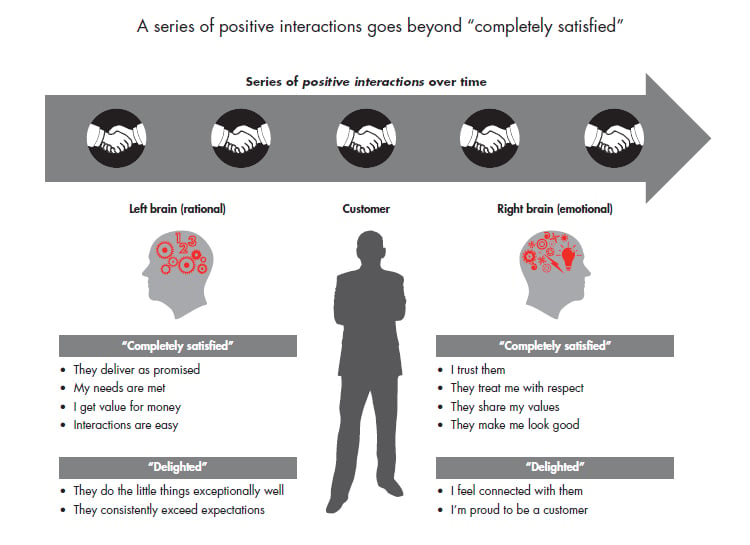 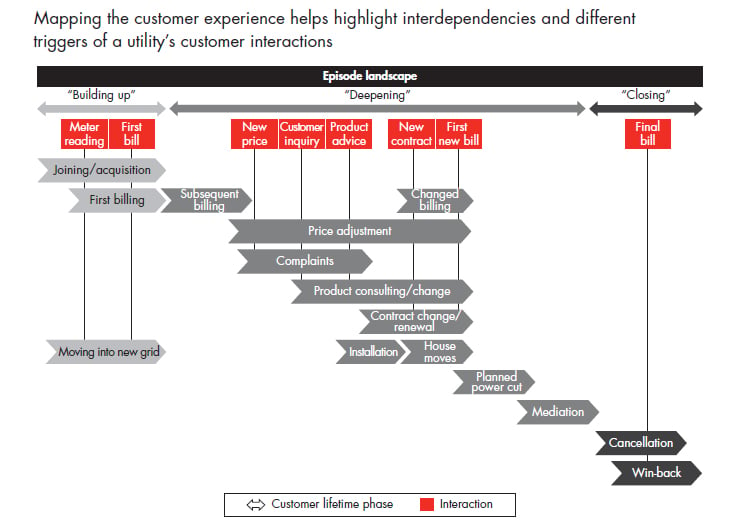 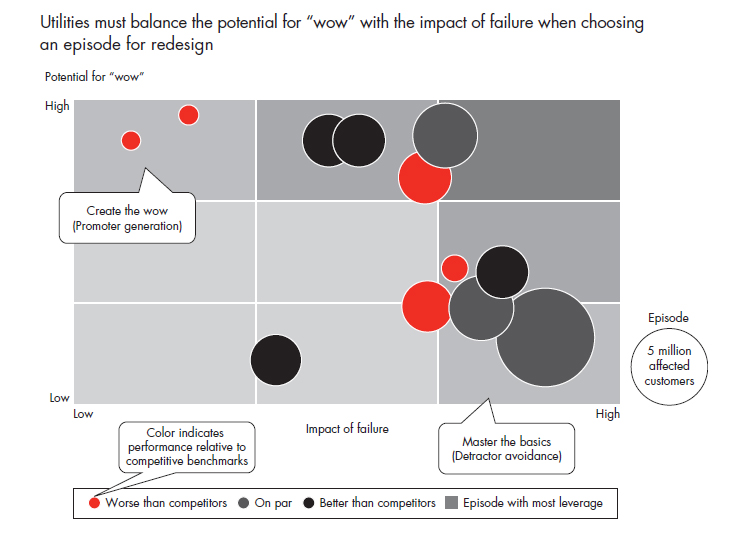 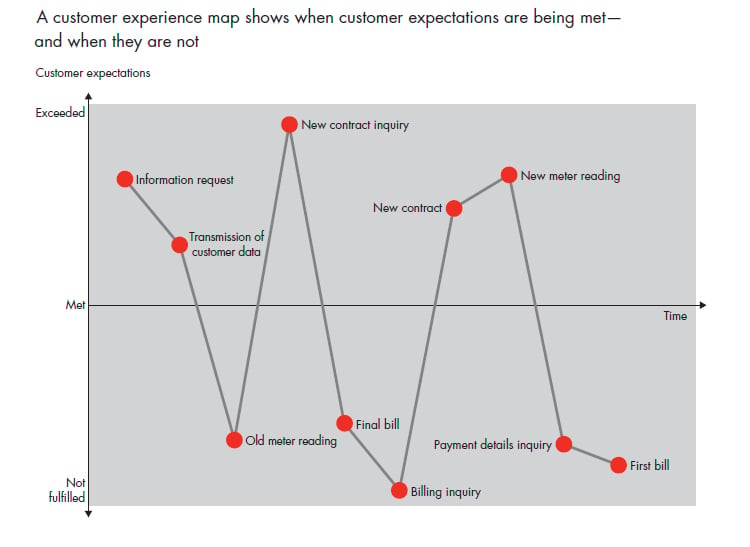 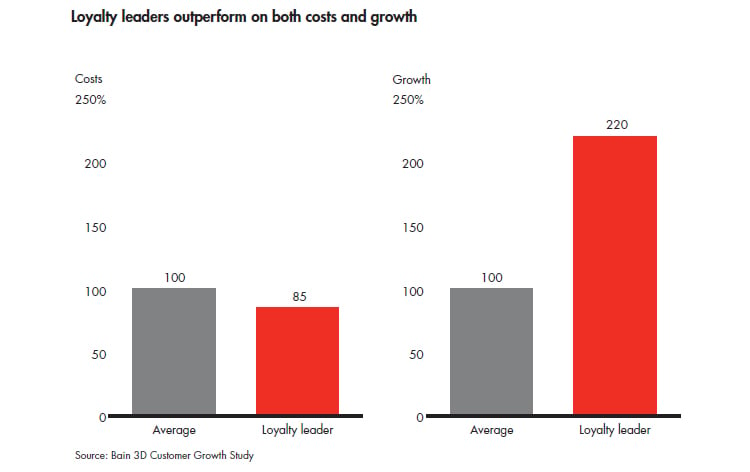 |