

Brief


|
|
While much of the upstream sector has struggled mightily since crude oil prices began collapsing in the summer of 2014, refiners have enjoyed a period of relative prosperity. Falling crude prices buoyed refiners’ margins, even as upstream producers trimmed costs and strained the capacities of their suppliers. But the easy times for refiners may be fading rapidly. Margins have already tightened as crude oil prices stabilized and refiners began to pass their savings on to customers (see Figure 1). That’s not all—over the next few years, refiners will have to cope with several long-term challenges sure to separate leaders from laggards and possibly force some poor performers from the field. Pedro Caruso, a partner in the Oil & Gas practice, offers a structured plan that can help refiners overcome compressed margins and eventually reap the benefits of the industry's structural shift. For starters, the global supply of crude continues to get heavier and more sour, except in the US, where light tight oil production has increased (see Figure 2). Unstable supplies from North Africa and the Middle East, together with fading production from the North Sea, are also affecting this mix. These changes are creating more volatility in pricing, forcing refiners to adjust their feedstocks more frequently and dramatically than in the past, and making long-range planning more difficult than ever. The influx of heavier and more sour oils also puts pressure on less complex refineries that must consider investing in conversion units if they want to stay in the game. Second, new refineries are coming online that could boost capacity beyond demand for refined products (see Figures 3 and 4). Most of these large and complex refineries are closer to the most dynamic centers of demand in the Asia-Pacific region. Their preferential access to markets, crude stocks and affordable labor supplies will bring structural shifts in the industry, making life harder for refiners that operate in regions with high labor and energy costs, or have weak operating and capital project-execution capabilities. Third, refiners can expect more stringent regulation in fuel specifications, refinery emissions and biofuels—and in most cases, new regulations will require additional investment and operating costs. Although developed economies are leading this agenda, developing economies are rushing to catch up with these strict guidelines. Mexico, for example, is adopting rules that will require heavy-duty vehicles there to comply with emission standards as strict as those in the European Union, and Saudi Aramco is working to reduce carbon emissions and tail gas flaring. 
Interactive: Which Refineries Will Thrive?Bain examined 200 refineries, the types of crude they can handle, and their refining capacity to find those best positioned to thrive.
Evaluating players and positionsThese global trends affect the entire sector, with some segments and refiners impacted more than others. When we look at the key competitiveness factors for refiners—markets, operating conditions and quality of asset portfolio—we see that some are better positioned than others to thrive over the next decade. Middle Eastern national oil companies (NOCs), globally integrated oil companies, independent refiners in the Asia-Pacific region, and refiners in the Commonwealth of Independent States (CIS) are well positioned, while national oil companies in Africa and Latin America and European independents are under greater pressure (see Figure 5).
These changes will combine to shift the flows of refined products around the world (see Figure 6), with the Middle East and the CIS becoming the major suppliers to the world, North America increasing its surplus, and Europe, Latin America, Africa and the Asia-Pacific region remaining net importers.
In addition, they will create interesting and challenging supply-and-demand dynamics in local markets. For example, demand for fuel could decline on the US West Coast, given the rising popularity of hybrid and electric vehicles. If this occurs, the region would produce more gasoline than it needs, and refiners would have to reduce capacity or export more refined products to Asia. Also, gasoline exports from Europe will face increasing challenges from new export-oriented players, including the US. NOC refiners in Latin America and Africa are likely to feel the pressure from public opinion as they continue to be net exporters of oil and net importers of derivatives. Clearly, the world will become more complex for even the most competitive refiners, requiring them to embrace an agenda of strategic and operational efficiency, with the elements differing from one player to the next, depending on the situation of each. Toward full potentialAs the conditions for the refining industry become more challenging, even the most favored companies have to work hard in five critical areas to achieve and maintain their full potential. The Bain Refining Full Potential Playbook offers a structured plan that can help refiners remain competitive (see Figure 7).
Finally, leading performers tend to focus on three capabilities that put them in the best position to tackle a full potential agenda.
The refining sector is poised for a cycle of “natural selection” that will separate the fittest from the rest, based on how well they used the profits from this most recent cycle to prepare for the storm on the horizon. The agenda is quite complex, even for the most prepared players. But if tackled in a structured manner with a focus on the highest value opportunities, the odds for success increase dramatically. Time to think ahead wisely and execute impeccably. Pedro Caruso is a partner with Bain & Company in Houston, Diego Garcia is a principal with Bain in Buenos Aires and José de Sá is a Bain partner in São Paulo. All three work with Bain’s Global Oil & Gas practice. 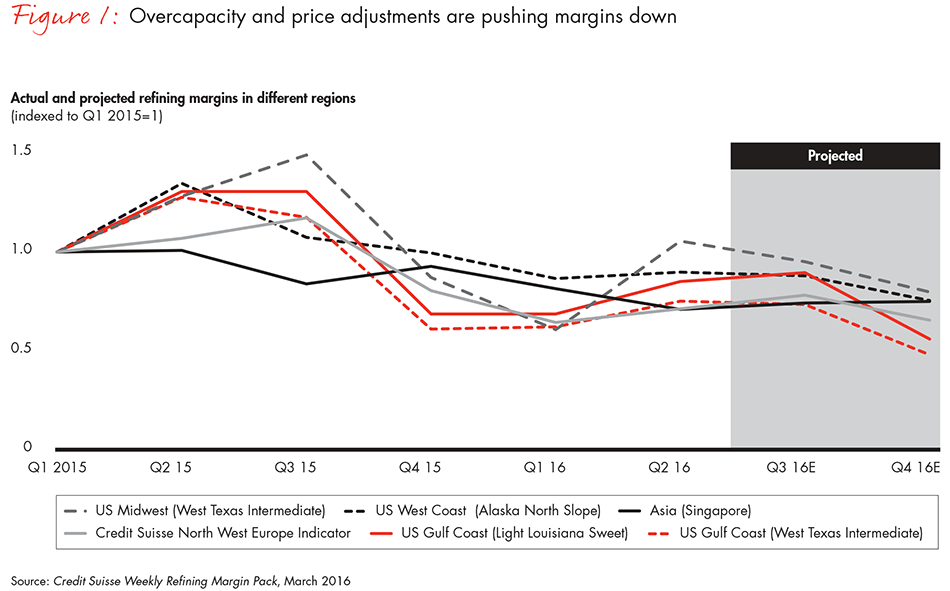 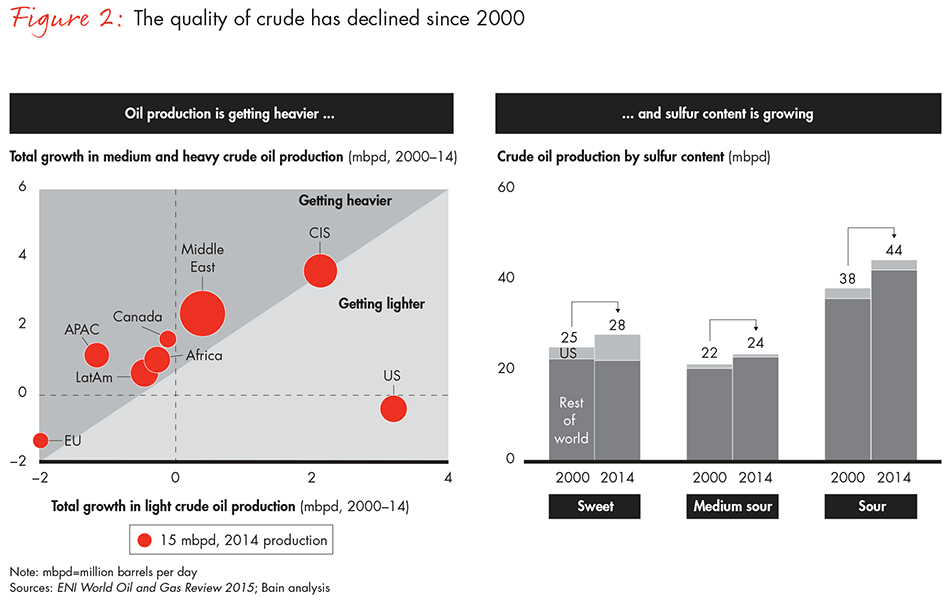 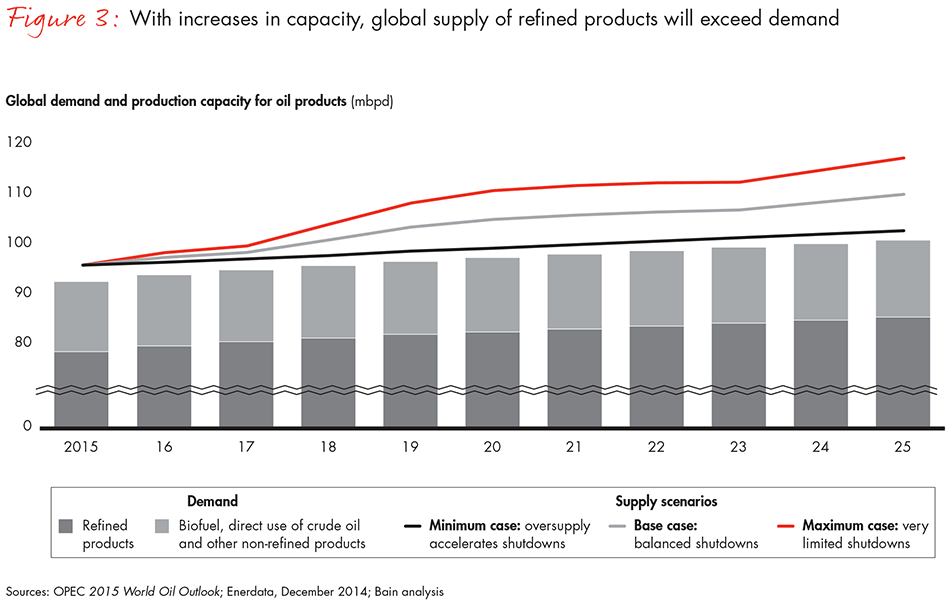 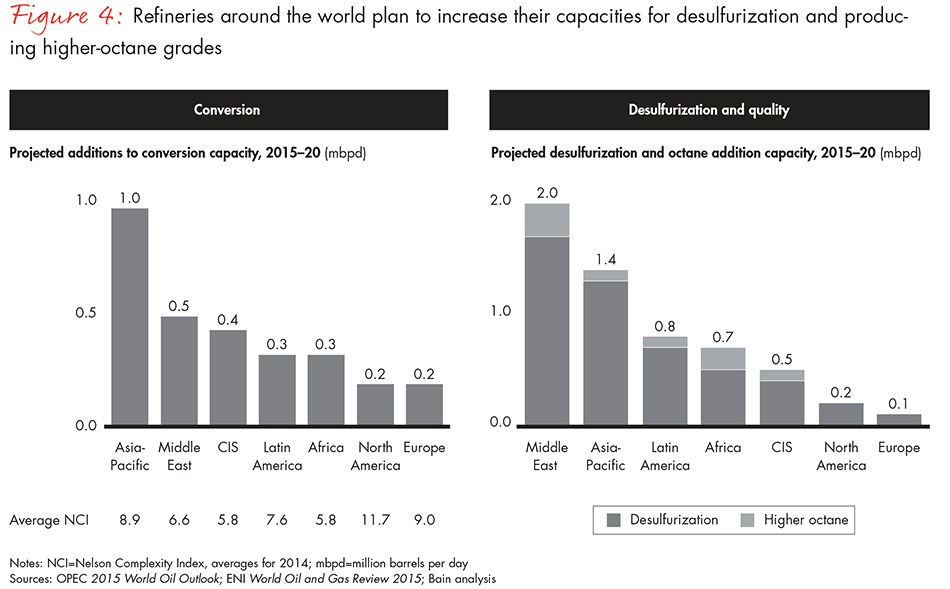 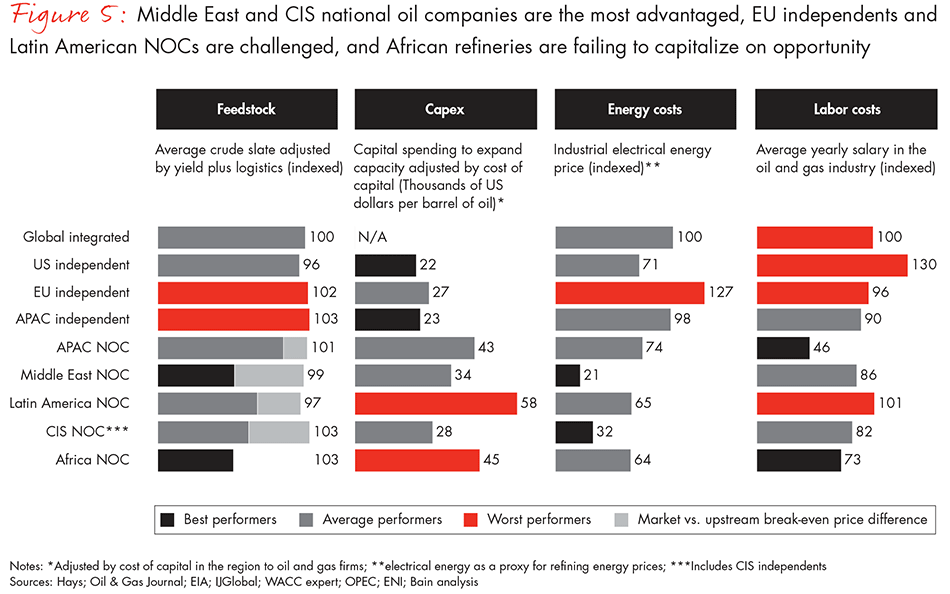 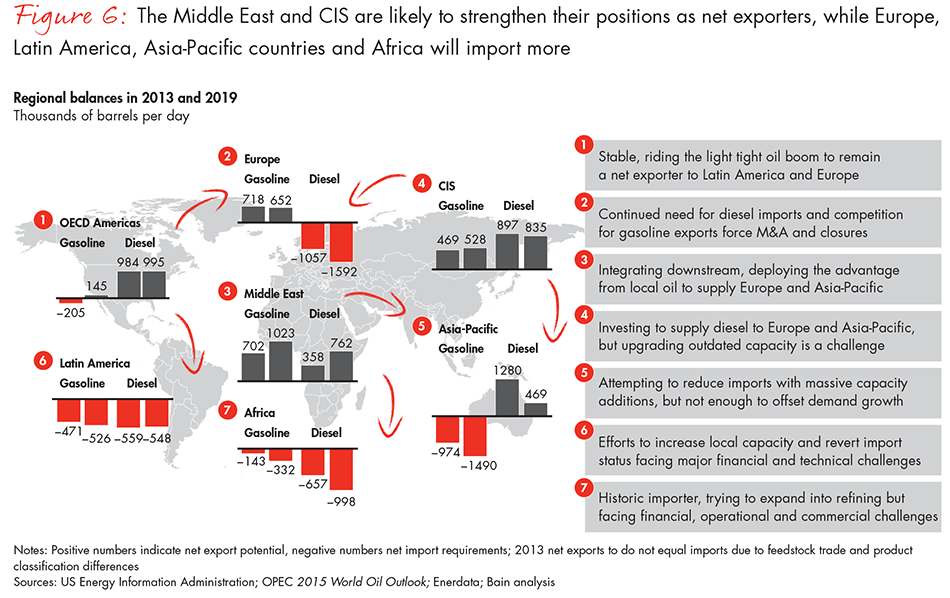 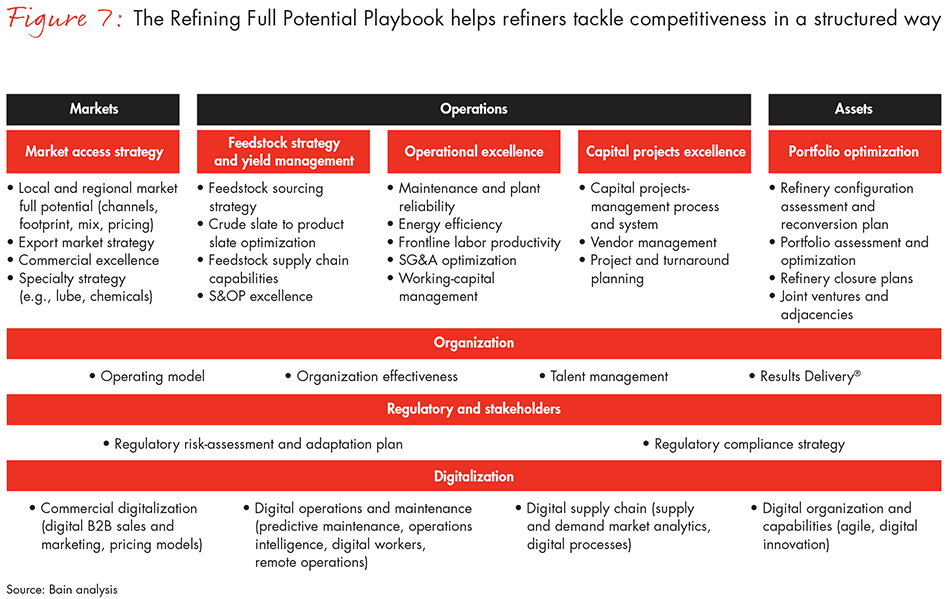 |