


Brief


|
|
Media consumers who prefer native digital content now make up nearly half the audience for entertainment in developed markets and more than a third of the audience for publishing and online services. In developing markets, those percentages are slightly lower, but trending in the same direction. These consumers who, regardless of age, favor content and services that have been designed and distributed exclusively through digital (and especially mobile) channels, are transforming not only entertainment but also publishing and services (see Figure 1). Perhaps most important for media companies, a younger cohort among these consumers says that it is increasingly willing to pay for content.
Mastering the new monetization model requires a sharp focus on five imperatives:
Survey results: Understanding media preferences Three traits characterize native digital formats and set them apart from earlier digital and analog media: mobility, ubiquity and context.
These new rules of the road and the opportunities they created became the driving force behind the growth of Generation #hashtag (see Figure 2).
The written word shows a more contrasted pace of change as few people outside the US and UK take up digital books, resulting in an overall penetration of 38% across developed countries, while online news reaches staggering digital penetrations of 89% across the same markets. In news, 31% of developed market consumers aged 15 to 25 rely primarily on native services such as Twitter, Reddit or BuzzFeed at the expense of traditional news outlets. Overall, about a third of readers belong to Generation #hashtag across developed and developing markets. Services are also rapidly becoming a native-first space. Our survey reveals the widespread adoption of digital services across the categories of local (including classifieds, restaurants and home services), housing, jobs and travel. Native models are ramping up fast as Generation #hashtag flocks to sharing and mobile champions such as Airbnb and BlaBlaCar in travel, Yelp and Uber in local, and LinkedIn for job search. While millennials led the charge in entertainment, services show a surprisingly even pace of change across generations. People over 30 have switched faster for housing searches, with more than 30% using native digital formats compared with younger consumers’ 20%, suggesting adoption comes from power users as much as new consumer cohorts (see Figure 4).
With new platforms come renewed hopes for consumers who will pay, and here there is hope. While advertiser-supported models remain prevalent, consumers adopt the full spectrum of digital monetization models—including single purchases, subscriptions and micropayments. Our survey also found that, contrary to conventional wisdom, younger customers are more willing to part with cash across a range of payment models despite their slimmer wallets and access to illegal alternatives (see Figure 5).
In developing markets, native services have a lower bar to reach since the penetration and market size of previous media waves has been more modest. Even the prospect of achieving annual revenues per user (ARPUs) of $1—be it though microtransactions, subscriptions or advertising—across vast, untapped markets such as India, China, South America and (eventually) Africa represents an important opportunity for the music industry and should be a component of future growth strategies. A similar downward trend appears to be reshaping services in some industries with digitized models faring worse than physical ones and native players reaping even lower ARPUs (see Figure 8). Yet what native services lack in terms of revenue per user, they compensate for through scale. Leaders such as Yelp, TripAdvisor and LinkedIn are logging hundreds of millions of users. With such large consumer bases, they can explore a range of business models, including premium services for customers and transaction fees paid by suppliers and other partners—effectively building two-sided monetization approaches. For example, LinkedIn sells premium access to individual users as well as packages for recruiters, the latter fueling most of its revenue growth.
Success will require more arrows in the monetization quiver. While traditional models relied mostly on either consumer or advertiser pay, digital native platforms have broadened and blurred the model, creating a richer but more complex monetization map (see Figure 10). 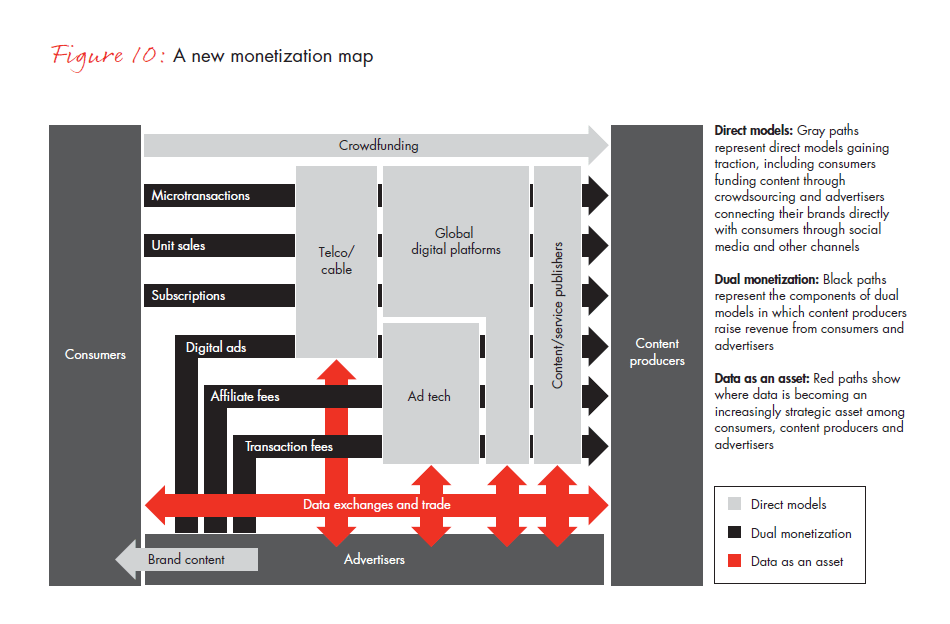
Finally, data permeates this new landscape, with content owners, service providers, publishers, platforms, agencies and advertisers seeking to concurrently buy, sell and leverage it. A playbook for the native digital era Mastering the new monetization map for the native digital era will require a deep capabilities upgrade, with an emphasis on five imperatives. Rethink content strategy From short videos for mobile phones to hours-long livestreams, media companies need to build content for the world we live in today rather than translate old recipes to new screens. The supply-driven paradigm of physical media has come to an end. Successful content is user-influenced, if not user-generated. Here, entertainment and publishing companies can learn from service players, which have become masters at growing audiences and building business models based on user engagement and contributions. Leading players are not standing still. The continued dominance of film and music majors, for instance, is as much a testament to their adaptability to new models as to the resilience of their old recipes. Disney’s investment in Maker Studio, Warner Bros. investing in Machinima, Nintendo striking a long-term deal with freemium video game maker DeNA and Condé Nast acquiring Reddit are only a few examples of old guard trying to master new content formats. New models are invented every year, and they all require tough decisions: For example, the jury is still out on Amazon’s $1 billion valuation for Twitch, the fast-growing video game spectating service now competing directly with YouTube’s own gaming service. Yet bandwidth limitations will not protect video from native digital change forever, and leading players in TV and video are well aware of the need to embrace such new formats. In addition, content strategies should account for the growing share of global revenue from developing markets and their tremendous potential in the native digital space. Hollywood’s new fascination with villains blowing up Asian cities, along with the more traditional assaults on New York City and the Golden Gate Bridge, is a sign of this shift and the critical need to reach a global audience. Aspiring worldwide leaders will need a strategy to react to the rapid growth of Bollywood and Nigeria’s Nollywood, of Latin American telenovelas, of K-pop and many other local trends with powerful regional influence, now unleashed on digital native platforms. Secure distribution routes In an increasingly overcrowded digital space, the old paradigm that “good content will always sell” may no longer hold true. How can providers cut through the clutter in a mobile world where any app that doesn’t make it onto a smartphone’s first two screens risks falling into oblivion? How can they get noticed on social networks where consumers are constantly solicited by friends, strangers, publishers and advertisers alike? Securing the right distribution to ensure that great content finds its consumers is all the more critical as audiences become increasingly fragmented across media and platforms. And building relationships with the dominant platforms—whether Apple, Google, Facebook, Amazon or Tencent—is a paramount but difficult task. Increasingly daunted by the revenue share such platforms demand from content and service partners to access their unique reach, many try to create alternatives—for instance, by developing or acquiring their own platform or securing deals with narrower, independent platforms with which they hope to secure more favorable deal terms. In the end, few can afford to bypass existing global ecosystems entirely, and most will have to develop a balanced portfolio of distribution channels, optimizing for reach and value. Striking the right equilibrium will become one of the distinctive capabilities of leading content and service publishers. 
Generation #Hashtag AscendantGeneration #hashtag now represents almost half of all online entertainment consumers in developed markets. Embrace the new rules of advertising Digital advertising has already overtaken TV advertising in the UK and could do so in France and the US over the next two to three years. Just as content shifts from digitized to native digital formats, advertising is evolving, too. Early digital advertising formats such as display banners are still around, but they represent a mature if not declining space—that is, when consumers are not actively preventing their appearance by running ad-blocking software. In their stead, native digital formats (mobile, social and so on), some of which are woven into the content feeds consumers are seeking online, are thriving and have become essential growth drivers for platforms such as Facebook, Twitter and Snapchat. As top marketers embrace digital not only for direct marketing but also branding campaigns, such new formats are setting new rules for the advertising market overall: Individual targeting, social engagement, measurability and return on investment (ROI) have joined (sometimes replaced) reach and affinity in the advertiser handbook. In this changing advertising landscape, traditional players compete with a new breed of technology experts with advanced and rapidly improving analytical and programming skills. As individual data and geo-targeting become paramount, telcos and other infrastructure players that relay the very signal carrying the advertising message are also looking to participate in the growing digital advertising pie. Verizon’s $4.4 billion buyout of AOL, now a leading global advertising solution provider, illustrates both these dynamics. The interest from major telcos in mobile ad-blocking technologies, such as the one developed by Israeli start-up Shine, also points to mobile operators gearing up for the digital advertising arms race. As marketing becomes ever larger and programmatic, it is becoming harder to maximize the monetization of audiences without ceding some control to these new masters of advertising through partnerships or investing in this space to regain control. Those who fail to make good use of analytics will also fail to make the most of their audience. Partner Laurent Colombani discusses five tactics that can help media companies master their monetization strategies and prioritize native digital content. Capture and make good use of consumer data In a demand-driven economy, deep insight into consumer behavior is more critical than ever. Providers have to tailor content to fast-evolving trends. Advertisers demand precise targeting and ROI measurement. Online media stores depend on recommendations for the next purchase. Customer profiling and saved payment information at the ready is the best way to drive impulse purchases through microtransactions by allowing providers to generate relevant, timely consumer triggers and minimize payment friction. Consumer data comes easily to most native players, which receive huge amounts of demographic and behavioral data through their customers’ accounts. Netflix’s use of consumer data, Zynga’s reliance on A/B testing in its content and user interface strategy and Google’s use of consumer data to increase its revenue per ad represent three well-known successful use cases. For traditional players, moving into the native space allows them not only to follow consumers and advertisers into new markets but also to access the wealth of information they bring. HBO’s launch of HBO Now and Sky’s Now TV allow them not only to gain share in the streaming market but also to correct the data collection imbalance. Vivendi’s purchase of online video service Dailymotion is another way for a traditional player to access vast amounts of consumer data gathered by a global native video platform. Acquiring a platform may be a fast (if expensive) way to access customer data, but it’s neither necessary nor sufficient on its own. Media companies need to develop incentives for consumers to provide their data willingly, and they can reinforce this exchange by rewarding customers who do so. Some mobile video games award virtual currency when players sign up via Facebook, which gives them access to a wide range of data about their preferences, online habits and sometimes even friends. TripAdvisor incentivizes anonymous visitors to log in with additional features such as more personalized search and multi-device sync. A third option is to purchase or trade data: A vast ecosystem of information gatherers and sellers has emerged, allowing advertisers, publishers and others to buy, sell and share consumer data. Regardless of how media companies obtain data, they should exercise caution in how they store and use it. More consumers are concerned about the ways companies gather and store information about them, challenging media companies’ ability to collect and use data to support both advertising and consumer-pay models. Our survey found that fewer people are willing to share personal information than they were a few years ago (see Figure 11). While historically such concerns have not really translated into action, this could eventually lead to consumer pushback, or more likely increased regulation, which would throttle both content creation and monetization. The European Commission, in particular, has stepped up with successive data protection regulations indicative of increasing scrutiny. Yet recent issues such as the “right to be forgotten,” enacted by a European Court of Justice decision but still debated in many parts of the world (including Europe), show the difficulty of finding the right balance.
Revisit the M&A toolkit All four above-mentioned levers represent a significant capability upgrade and cultural shift. While many have tried to use M&A as a way to speed up this process, the history of digital transformations is littered with examples of failed acquisitions and value destruction through high premiums and poor execution. The issue is all the more critical as native champions, well known for reinvesting profits into future growth, trade at consistently higher multiples (see Figure 12).
The next generation is around the corner Generation #hashtag and the breadth of native digital models it favors grew out of a wave of always-on devices born in the last decade with the smartphone boom. This is only the beginning. New devices are already emerging that will bring their own disruptive user experiences and formats. Whether virtual reality champion Oculus, now a Facebook company, will revolutionize how people watch the latest blockbuster at home, beat their high score or visit their next home remains to be seen. Microsoft’s augmented reality project HoloLens may bring Minecraft to coffee tables, or Mars to NASA’s meeting rooms. The next iteration of Google’s Glass project or Apple’s watch may bring a more convincing case for wearable devices. As device size and use cases diverge further away from legacy formats, now more than ever, media companies must adopt a native-digital first mindset rather than digitizing existing content and business models. Laurent Colombani is a partner with Bain & Company in Paris. David Sanderson is a Bain partner in Los Angeles, where he leads the firm’s Global Media practice. 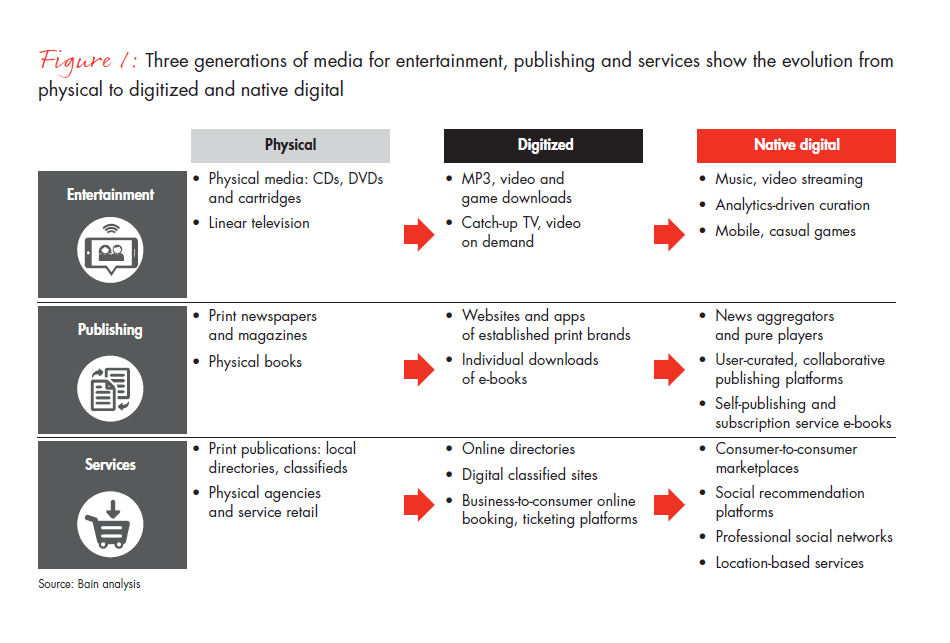 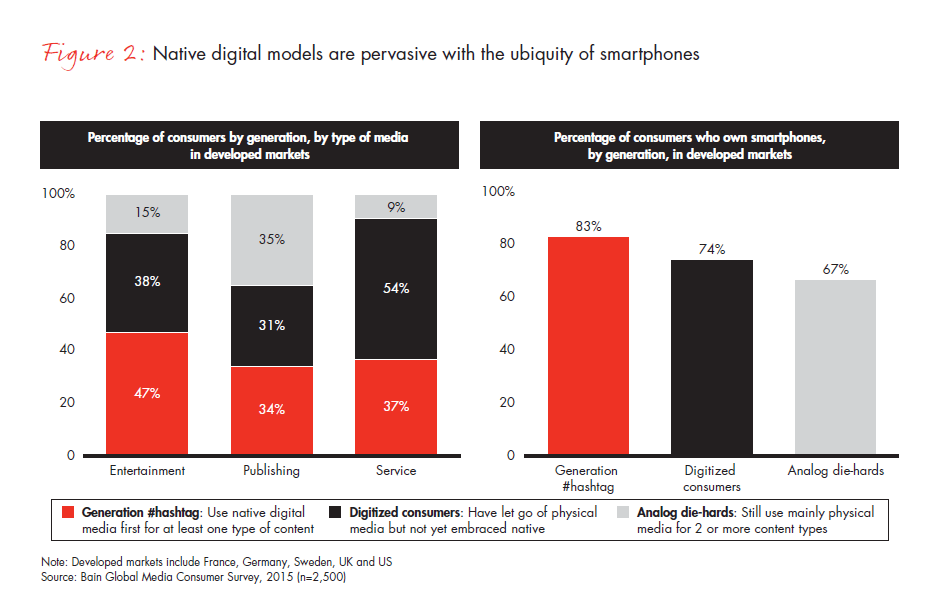 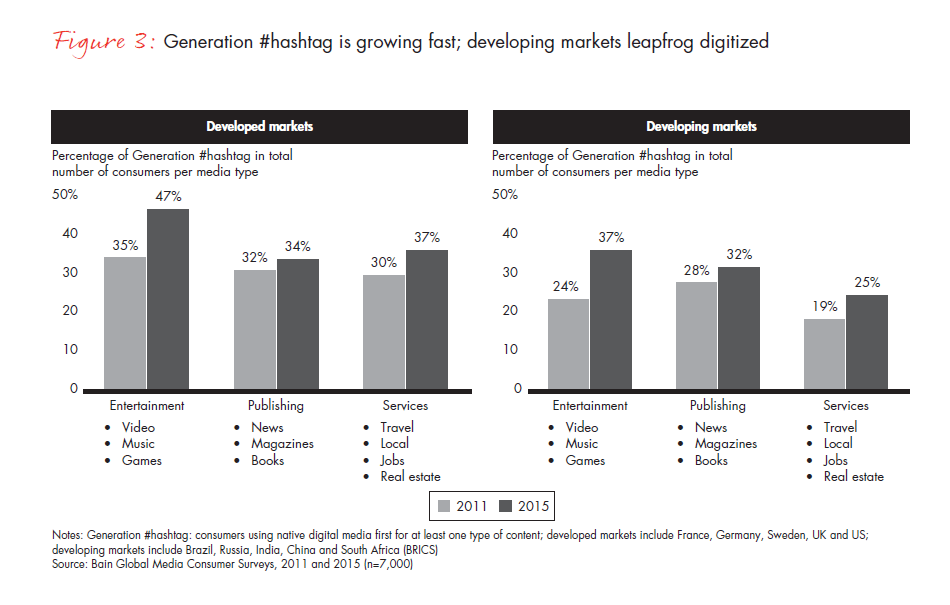 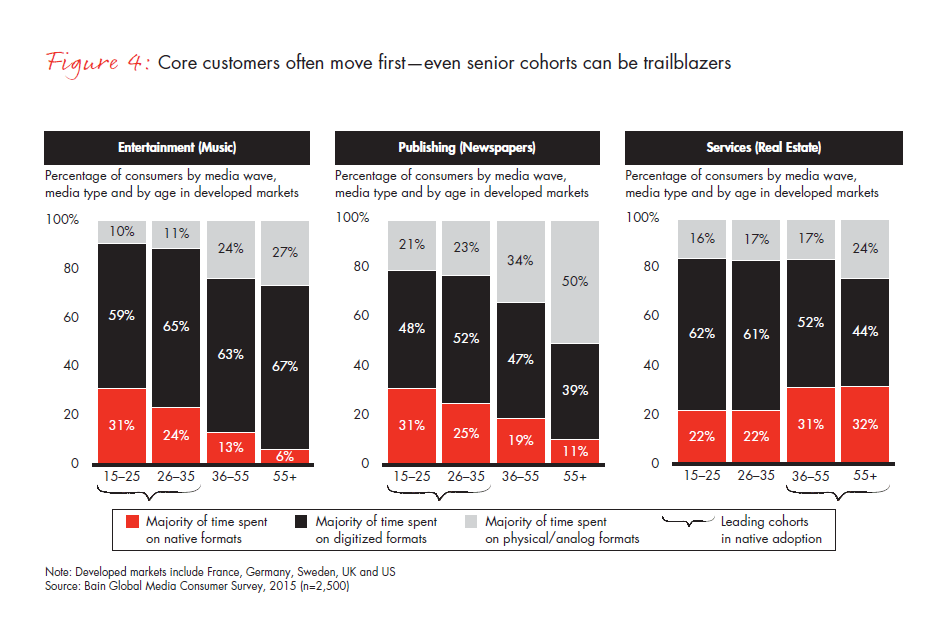 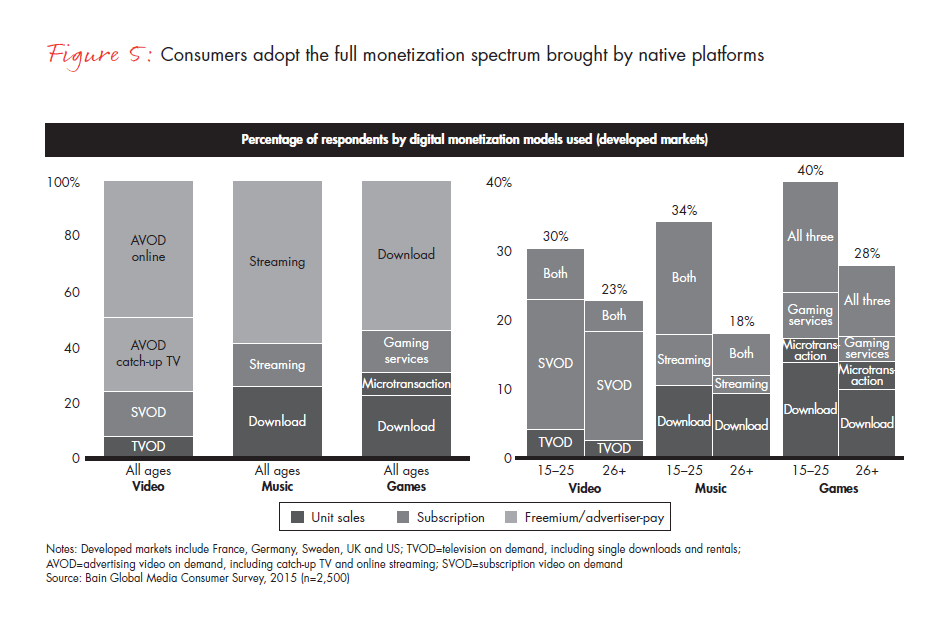 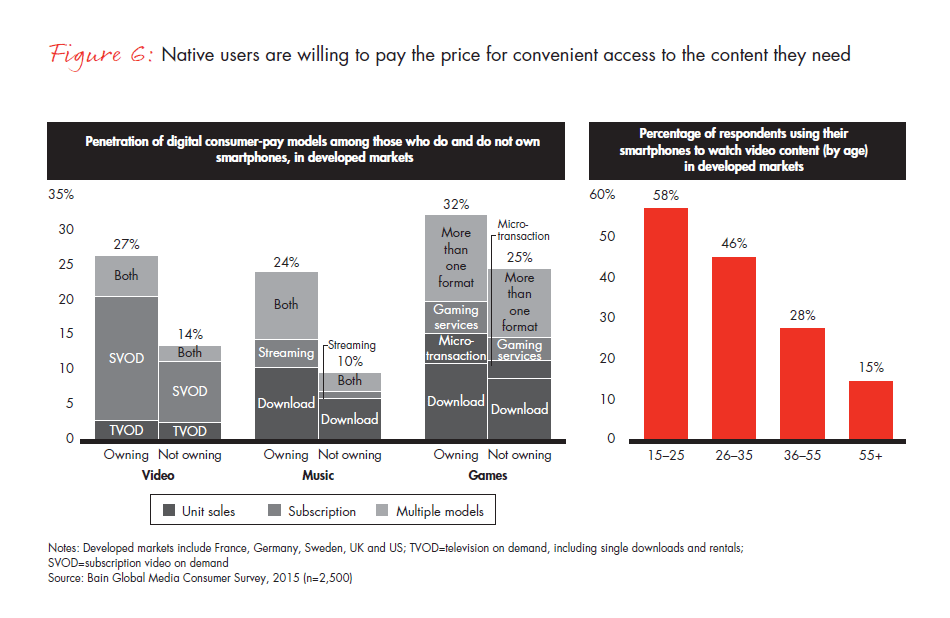 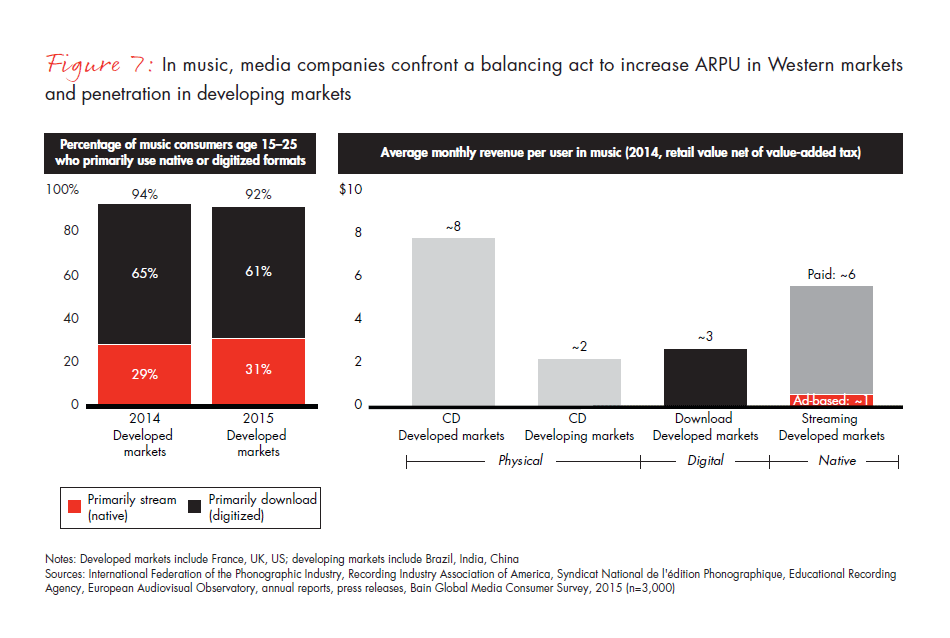 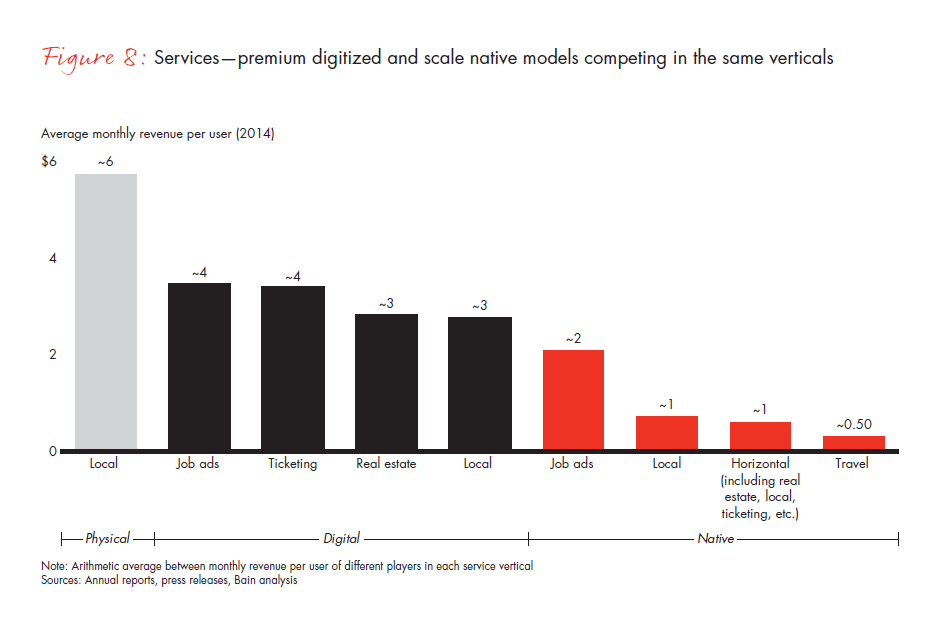  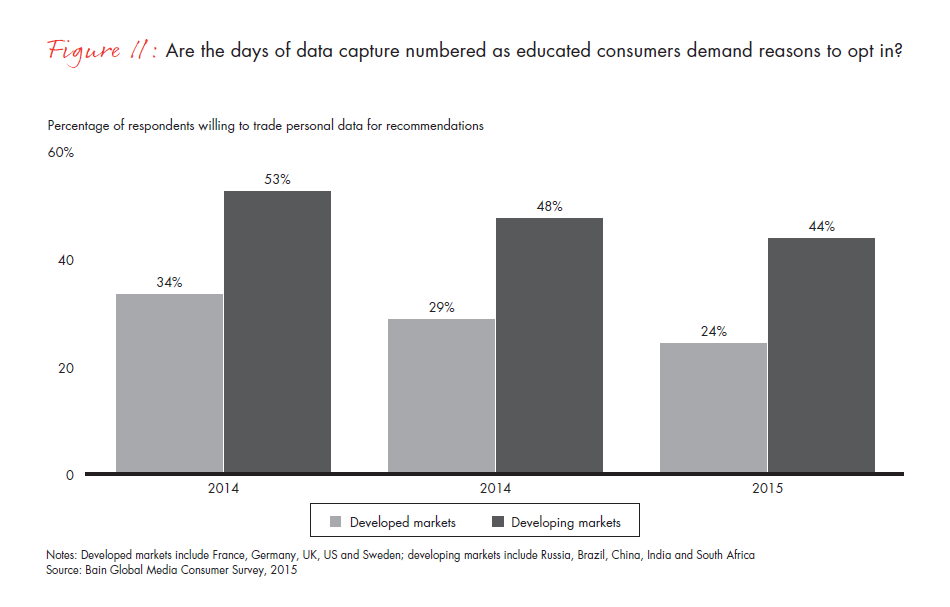 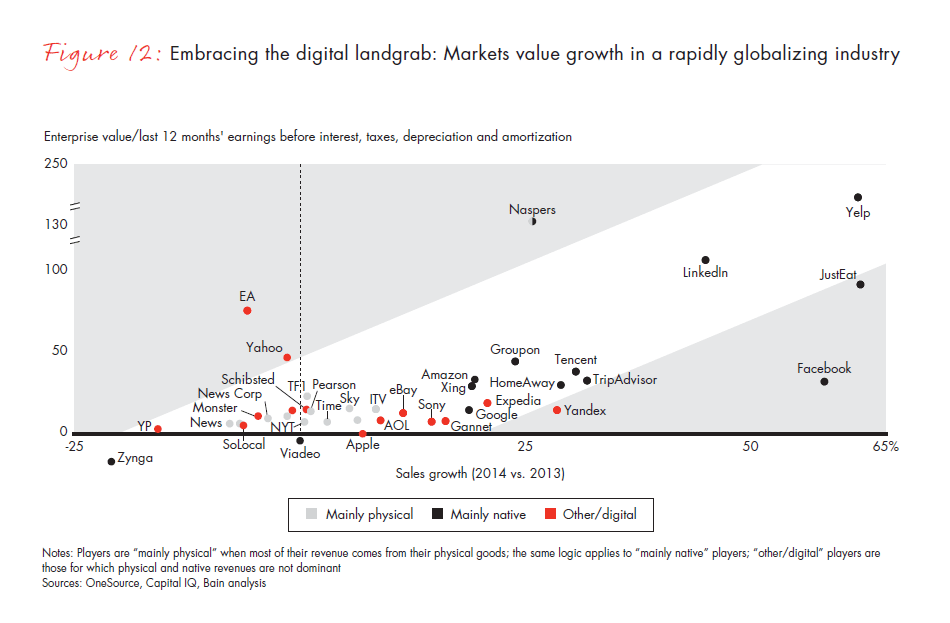 |