The Global Diamond Industry 2017: The Enduring Story in a Changing World
The diamond industry is turning challenges into opportunities even as consumer demand falls.
By Olya Linde, Genia Kudryasheva, Oleg Geyler, Ari Epstein, Stephane Fischler
Report
The Global Diamond Industry 2017: The Enduring Story in a Changing World
The Global Diamond Industry 2017: The Enduring Story in a Changing World
The diamond industry is turning challenges into opportunities even as consumer demand falls.
By Olya Linde, Genia Kudryasheva, Oleg Geyler, Ari Epstein, Stephane Fischler
Published on December 11, 2017
min read
Report
The Global Diamond Industry 2017: The Enduring Story in a Changing World
en
Note to Readers
Welcome to the seventh annual report on the global diamond industry prepared by the Antwerp World Diamond Centre (AWDC) and Bain & Company. This year's edition covers industry developments in 2016 and the first half of 2017 and discusses both the challenges the industry faces and how it is turning them into opportunities.
We begin with key developments along the value chain. In subsequent sections, we review factors that influenced rough-diamond production and sales, midstream performance and global diamond jewelry demand in major markets.
We also provide an update on the long-term outlook for the diamond industry through 2030. The 2030 supply-demand forecast considers recent changes in mining operations, potential additional sources of supply and expected changes in key macroeconomic measures.
Readers looking for a brief review of the key takeaways from this report can find them below:
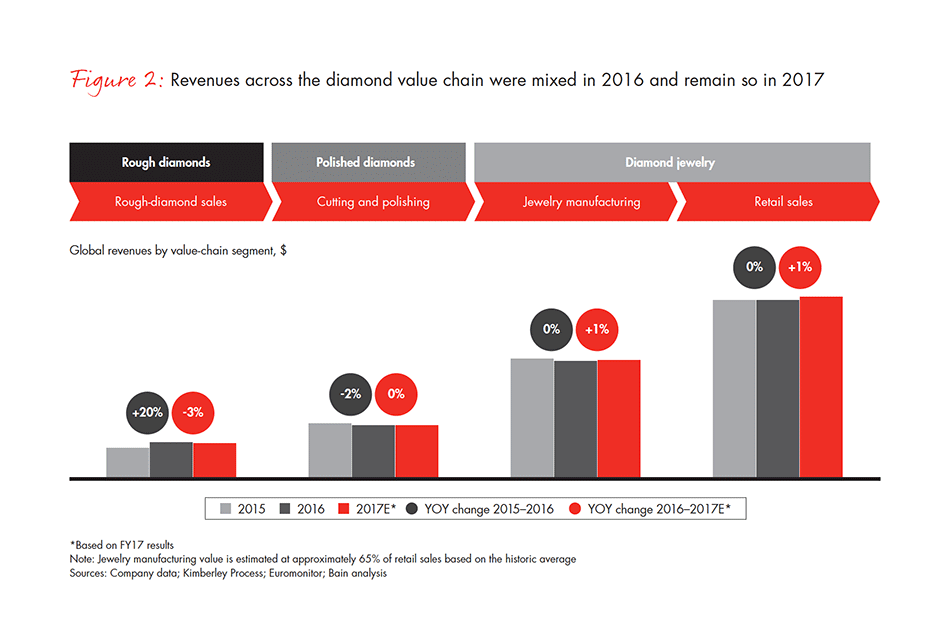
For rough-diamond producers, 2016 was an improvement over 2015. Rough-diamond sales rose 20%. Mining companies lowered rough prices and sold down inventories accumulated in 2015, as cutters and polishers increased their purchases.
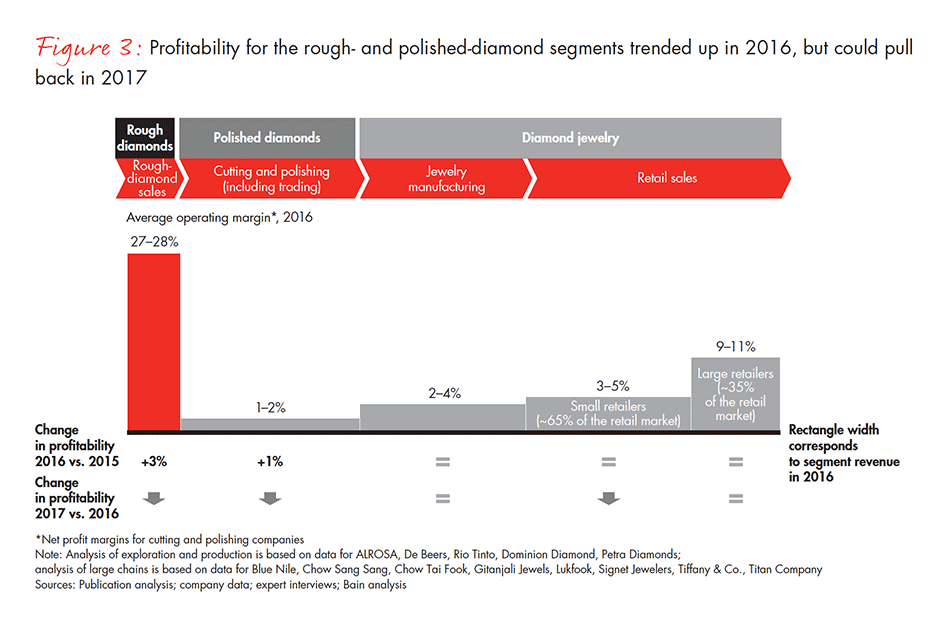
The midstream's 2016 revenues slightly fell in US dollar terms in 2016. Polished prices continued their downward trend, reflecting soft consumer demand for diamond jewelry across key markets. Rough prices declined faster than polished ones, restoring profitability to many players in the segment.
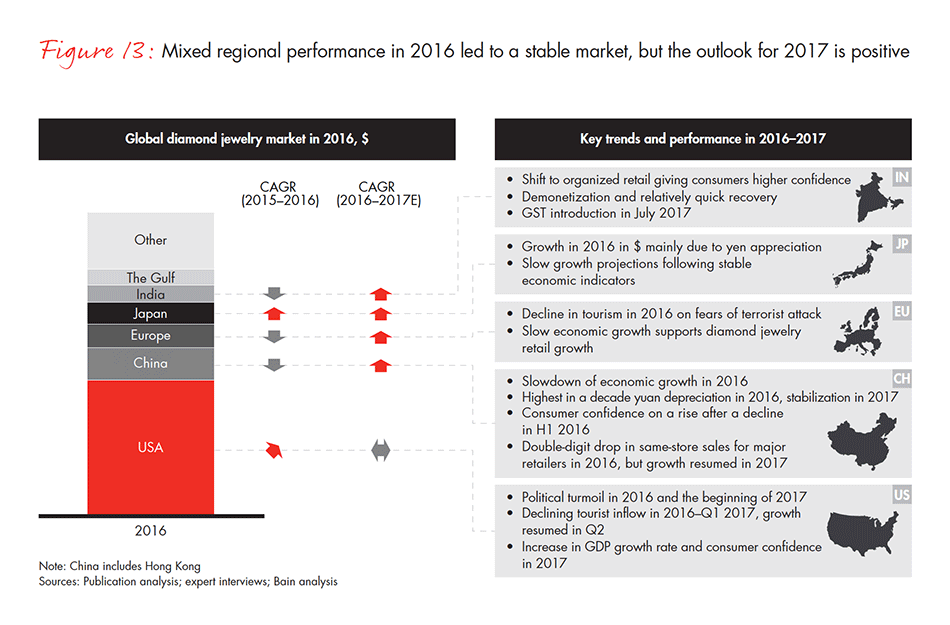
Global sales of diamond jewelry were roughly stable in 2016. The US remained the largest global diamond jewelry market. Following several years of consistent growth, diamond jewelry sales in the US were almost flat in 2016. China's performance faltered, as the yuan posted its largest decline in value in 10 years and consumer confidence softened. A strike by jewelers and demonetization disrupted India's market. Europe continued to struggle as tourist inflows plunged. Sales in Japan were a bright spot, showing growth in US dollar terms.
The outlook for 2017 is stable across the different segments of the value chain. The revenue of rough-diamond producers declined only slightly in the first half of the year, reflecting a return to normal trading conditions. Retail sales are sending positive signals across the key markets of the US, China and India. Rough prices rose and polished prices fell, again putting pressure on cutting and polishing companies. The midstream segment's future health will depend on the interplay of rough and polished prices as well as the segment's ability to make continued operational improvements. On that front, midstream players are focusing mainly on reducing days to market and improving rough-to-polished yields.
There are three key, persistent challenges facing the diamond industry, and the industry is renewing efforts to turn them into opportunities.
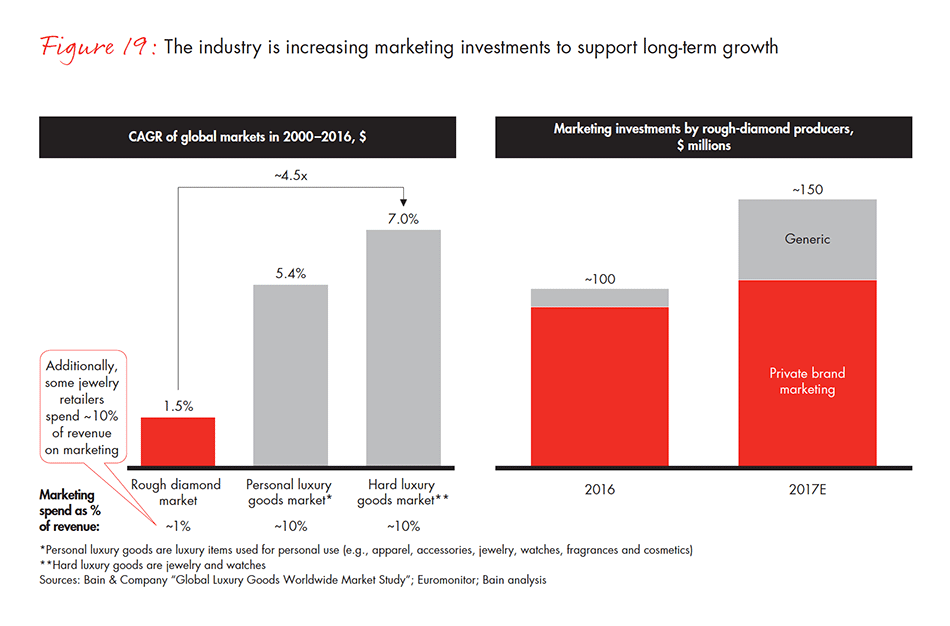
One of the most urgent challenges is the slowdown in demand for diamond jewelry. As competition from other luxury goods and experiences intensifies, rough-diamond producers are boosting their investment in promoting the diamond story. Producers will likely invest an aggregate $150 million in marketing in 2017, an increase of about 50% from recent years, in addition to retailers' own marketing spend. Additionally, the industry is renewing its approach to marketing to address evolving demand.
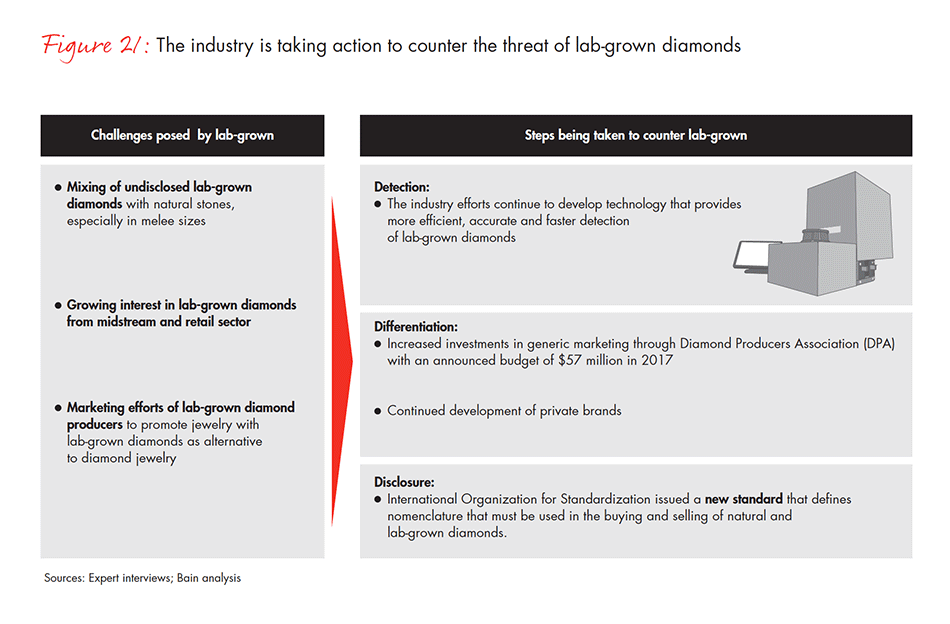
The second challenge is the mounting risk that lab-grown diamonds will illegally infiltrate the natural-diamond supply chain or legally erode natural diamonds' market share. Industry players continue their drive to protect the supply chain from illegal lab-grown diamonds and discourage substitution by legal lab-grown stones. Their work centers around detection, disclosure and differentiation—or the "three D's," in industry terms. The industry participants are fully supportive of these initiatives and detection technologies have developed rapidly over the recent years.
The third challenge is the financial stability of the midstream segment of the value chain. The most effective players have robust businesses, but the segment at large still needs to address chronic constraints. Chief among them are securing access to financing and continuously improving business models to sustain profitability amid price volatility.
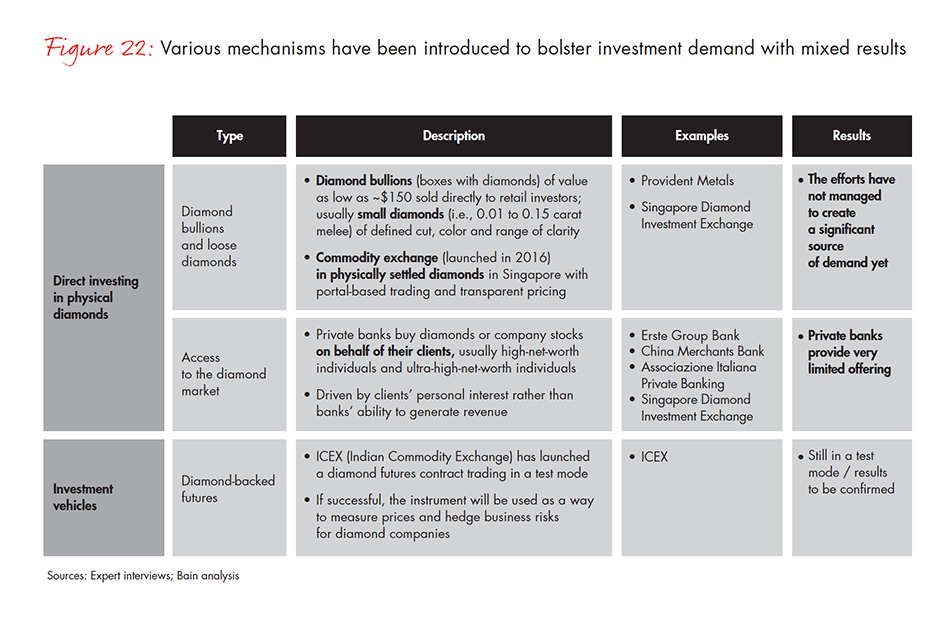
Efforts to build an investment market for diamonds continue, with the Indian Commodity Exchange launching diamond futures trading.
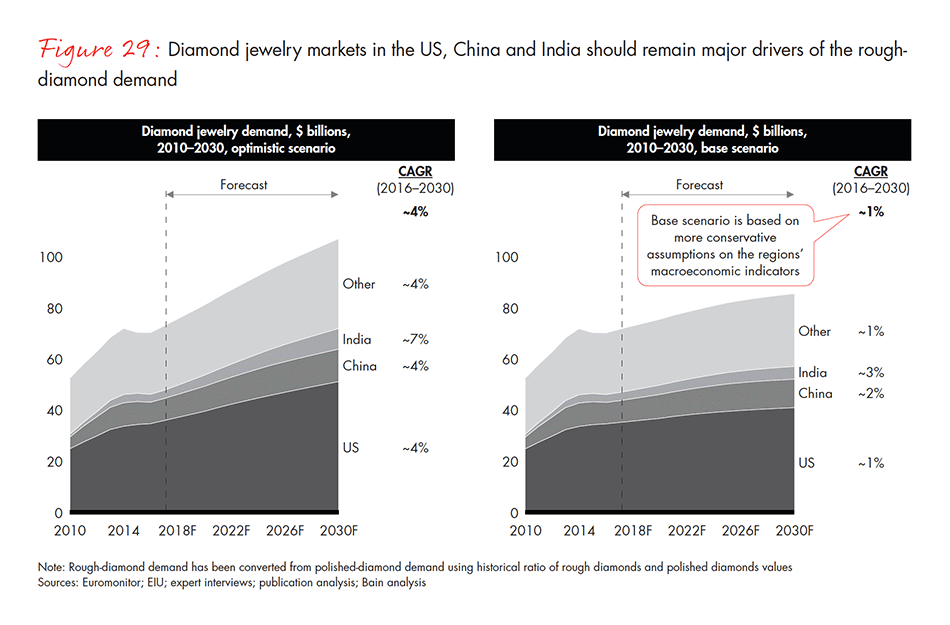
The diamond market's long-term outlook remains positive. We expect demand for rough diamonds to grow 1% to 4% annually, relying on strong fundamentals in the US, the continued growth of the middle class in China and India, and the strong and growing desire of consumers for diamond jewelry. The rough-diamond supply is expected to remain stable through 2030.
1. Recent developments in the diamond industry
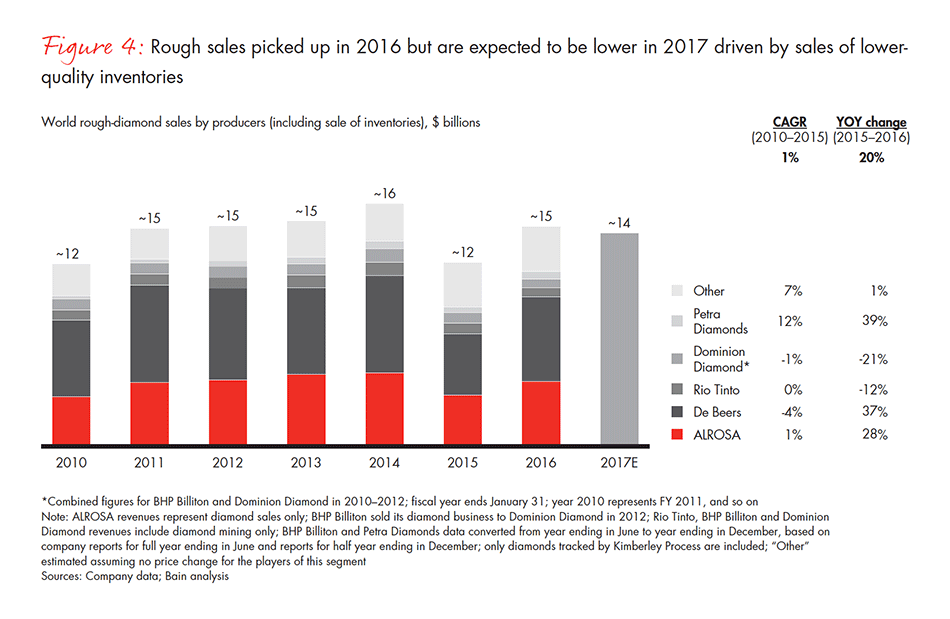
Following a difficult 2015, diamond producers staged a strong recovery in 2016, posting a 20% revenue increase. Demand for rough diamonds bounced back after the cutting and polishing segment cleared excessive surplus inventories in 2015. The top five producers' aggregate 2016 operating profit rose about 3%.
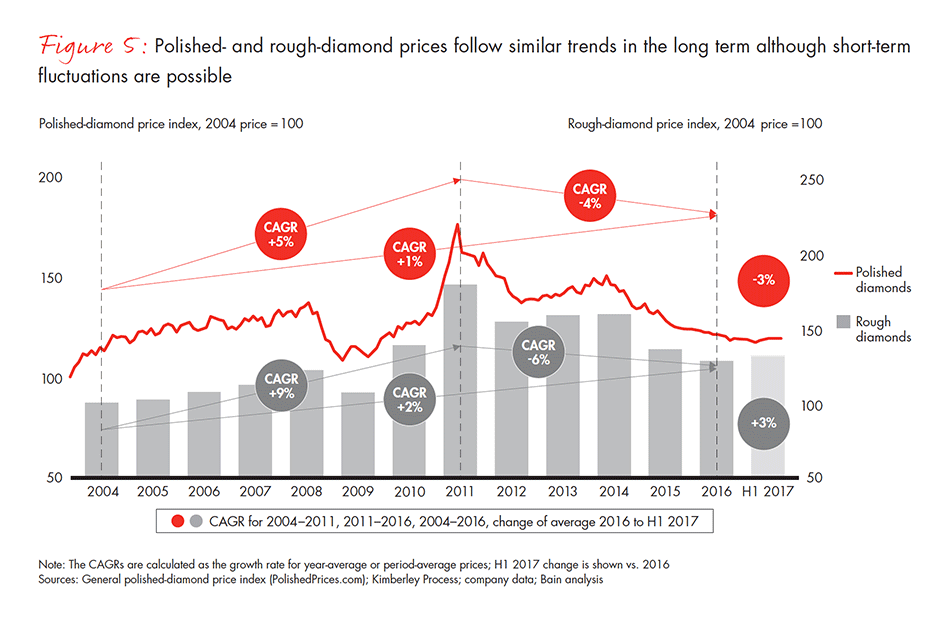
Cutting and polishing revenues decreased slightly in 2016 amid tepid demand for polished diamonds. According to industry executives, however, the segment's average profitability turned upward after slipping steadily for several years. After declining in 2015 and 2016, rough-diamond prices turned upward in 2017. Polished-diamond prices, which also declined in 2015 and 2016, stabilized in 2017.
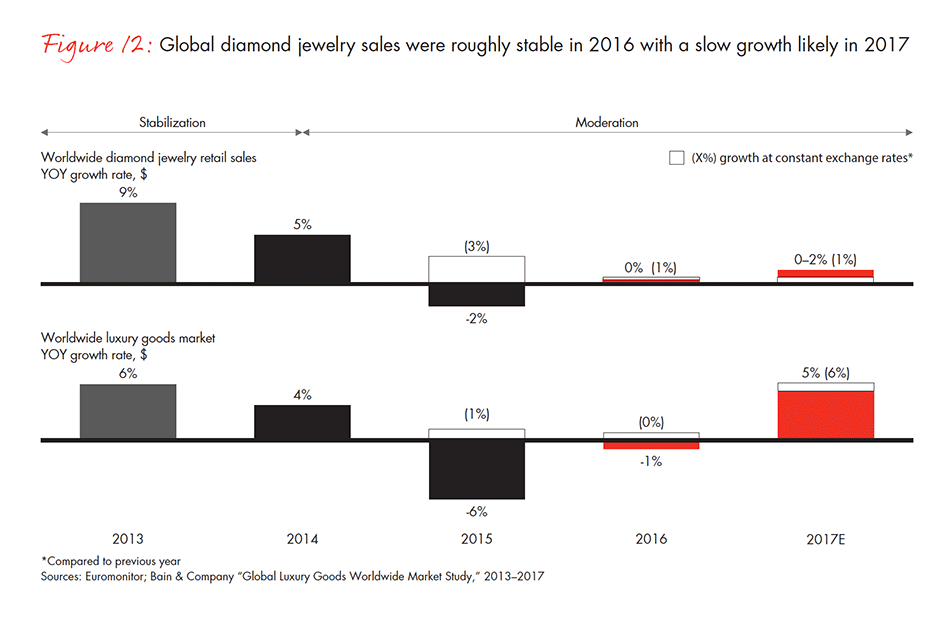
Global retail sales of diamond jewelry remained flat in US dollar terms in 2016. In line with continued moderate growth in the domestic economy, retail demand in the US, the largest diamond jewelry market, was stable.
The outlook for 2017 is stable across the segments of the diamond value chain. Rough-diamond suppliers posted a 3% revenue decline in the first half of 2017, as lower-priced assortments made up an increased share of their sales. The cutting and polishing segment's revenue is expected to stay flat in 2017. The revenues of major retail chains in key markets are trending up amid healthy macroeconomic fundamentals. Retail demand in India turned upward in 2017, after demonetization of large-denomination currency notes at the end of 2016 supported strengthening of organized jewelry retail.
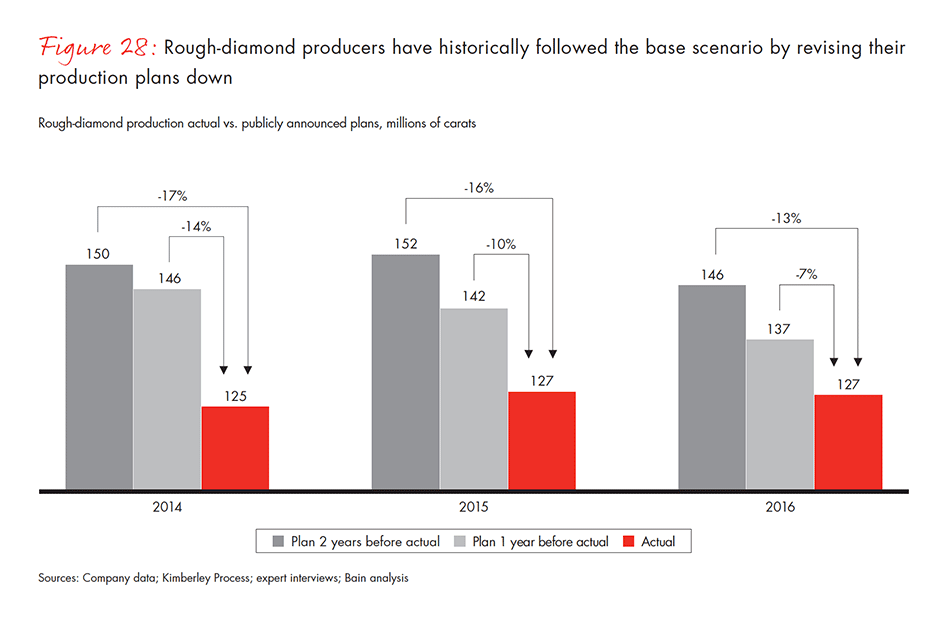
The medium-term outlook is stable. If previous years are any guide, rough-diamond producers' announced plans will likely not materialize in full, which should support rough prices. A broad-based marketing push to stimulate consumer demand remains an industry imperative. With medium- and long-term macroeconomic fundamentals looking strong, consumers should be encouraged to continue to choose diamond jewelry.
2. Rough-diamond production
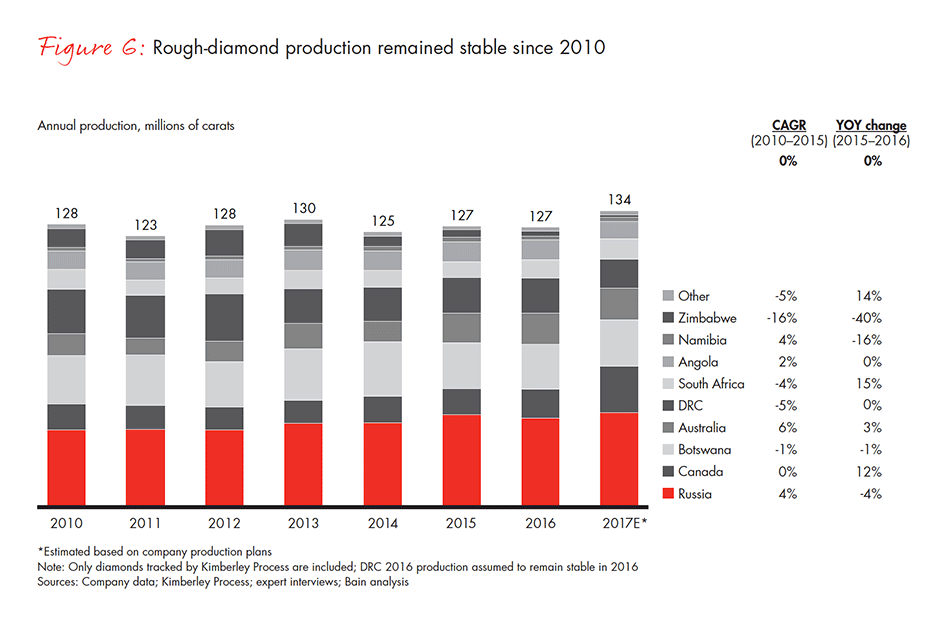
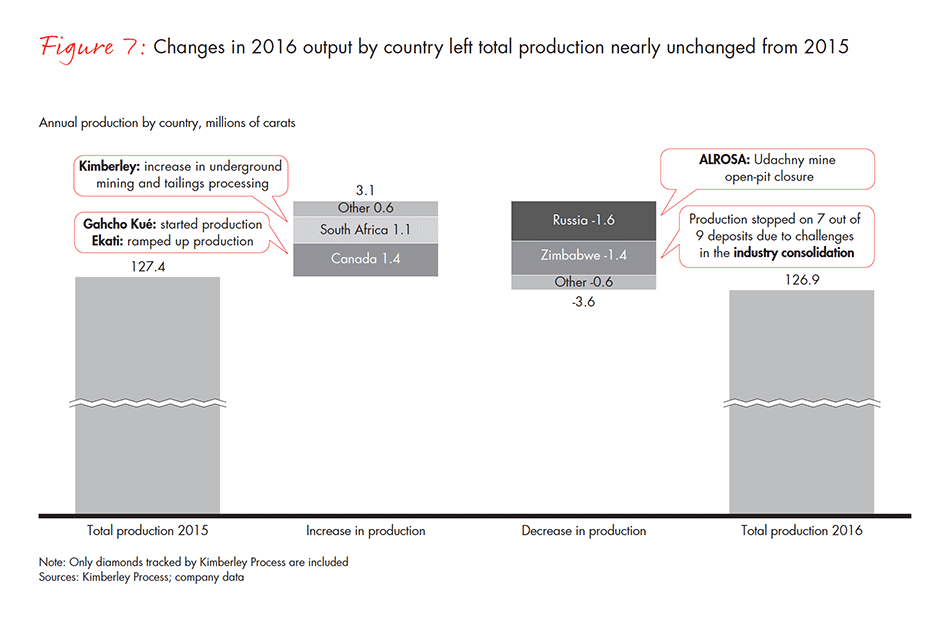
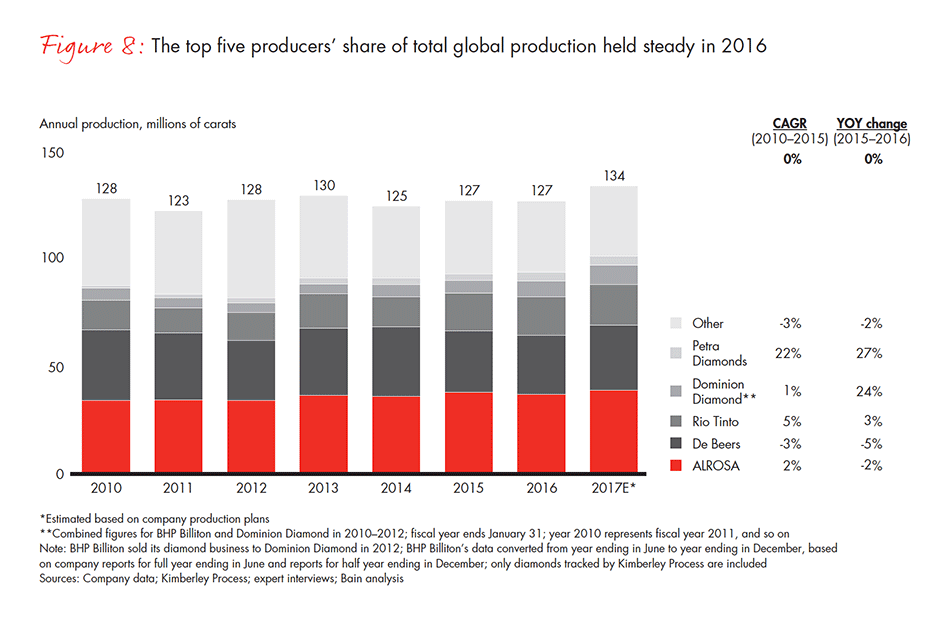
Extending the trend of the past eight years, global rough-diamond production volume remained relatively flat in 2016 at 127 million carats. The largest production increases occurred in Canada, where the Gahcho Kué mine came on line and the Ekati mine ramped up production, and in South Africa, where the Kimberley mine increased underground mining and tailings processing. The largest drops occurred in Russia and Zimbabwe. ALROSA's closure of the Udachnaya mine's open pit accounted for the fall in Russia; Zimbabwe's drop followed a production halt at seven of nine deposits while the industry struggled to consolidate.
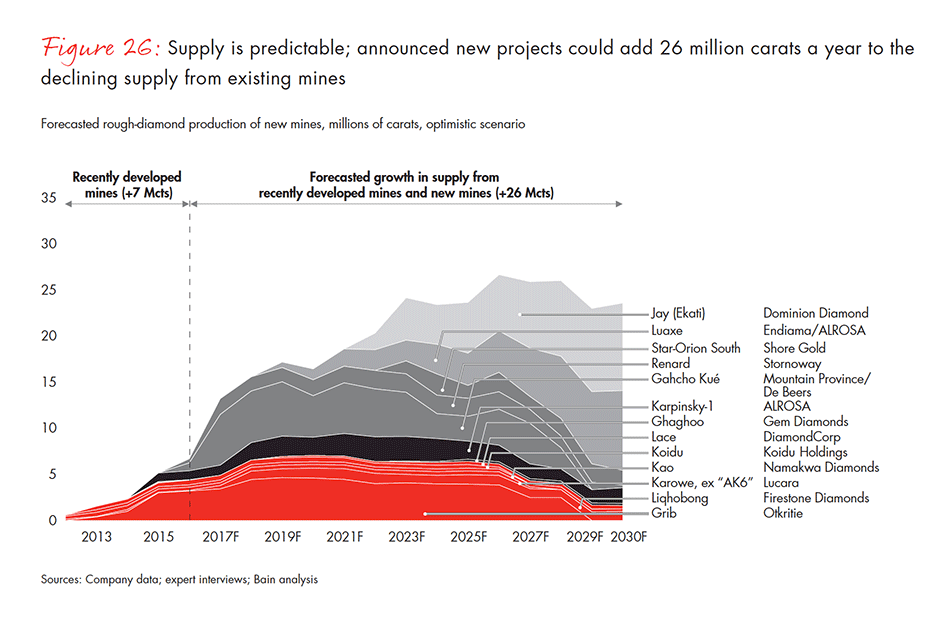
Three large new mines, Gahcho Kué and Renard in Canada and Liqhobong in Lesotho, started production in 2016. At their peak, their combined production is expected to exceed 8 million carats per year and offset declining production in depleting mines.
Miners' plans and actual production volumes in the first half of 2017 suggest an increase in full-year production volume, despite volume declines in some countries. In Russia, Mirny mine, which produced more than 3 million carats per year, was flooded. The mine is not expected to resume operations in the next few years.
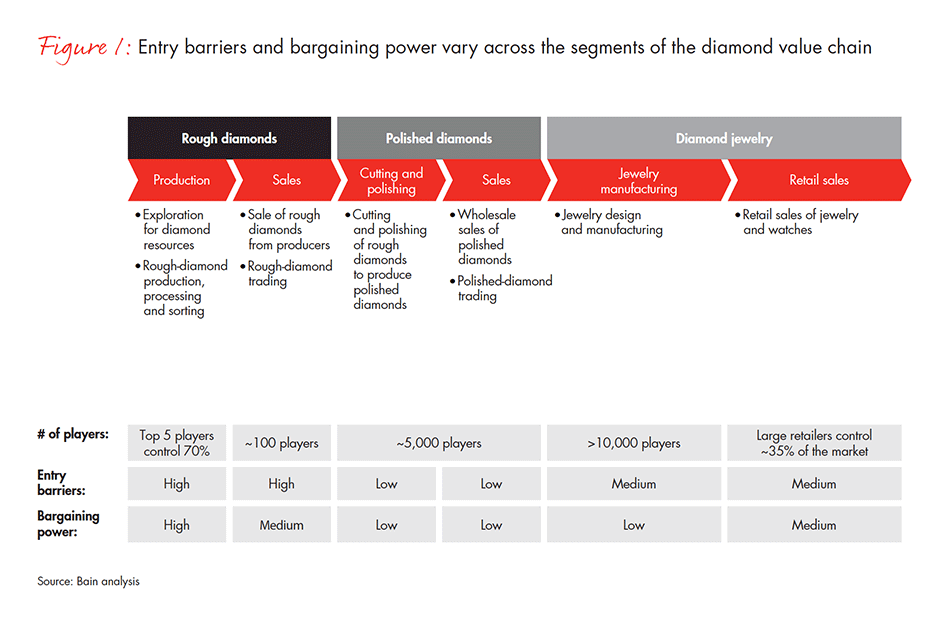
Diamond producers reduced their prices in 2016, while rough-diamond sales increased 20%. They had pulled back sales in 2015 in response to slowing global demand for diamond jewelry and a subsequent drop in polished prices. Although both ALROSA and De Beers cut production in 2016, their combined market share increased to about 70% from about 60% in 2015 as they sold off accumulated inventories amid improving demand.
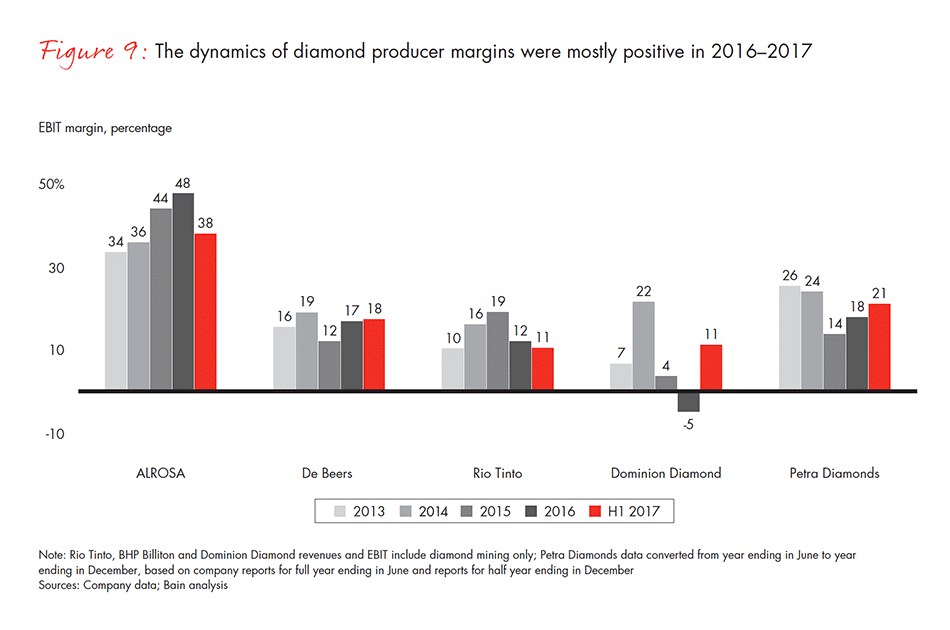
In 2016, the top five producers, except Rio Tinto and Dominion Diamond, reported increases in their EBIT margins (earnings before interest and taxes). In the first half of 2017, Dominion Diamond’s EBIT turned positive again. ALROSA's EBIT margin remained the highest in the segment.
Upstream players face increasingly complex geological and technical challenges as their mining operations go deeper and into more difficult terrain. To control costs, miners are investing in operating efficiencies and turning to digital innovations.
3. Cutting and polishing
The continuing slowdown in global diamond jewelry demand and the resulting downward trajectory of polished-diamond prices translated to a slight revenue drop in the cutting and polishing segment in 2016. Despite this drop, the midstream bought 20% more rough diamonds (by value) from producers in 2016 than in 2015.
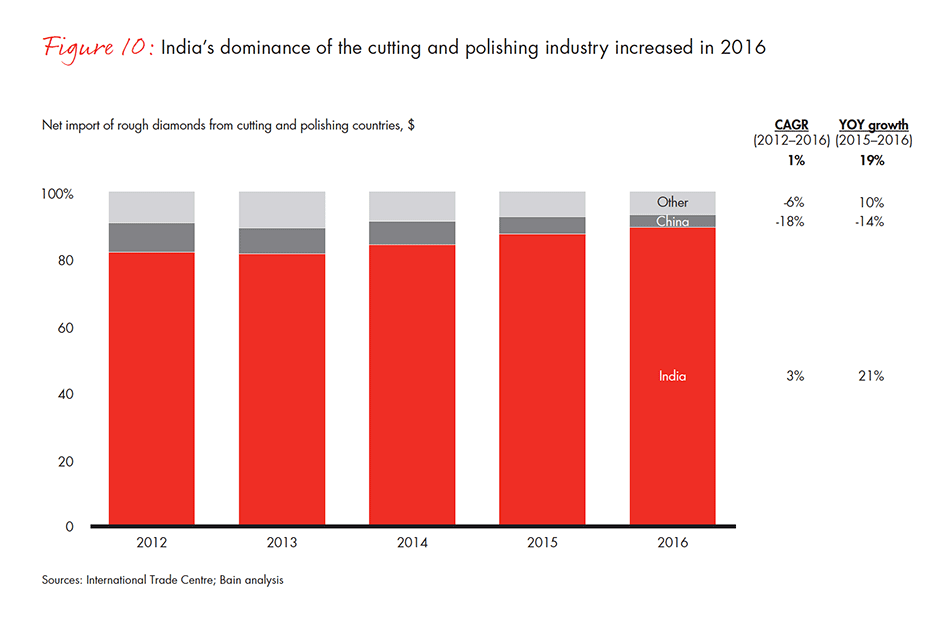
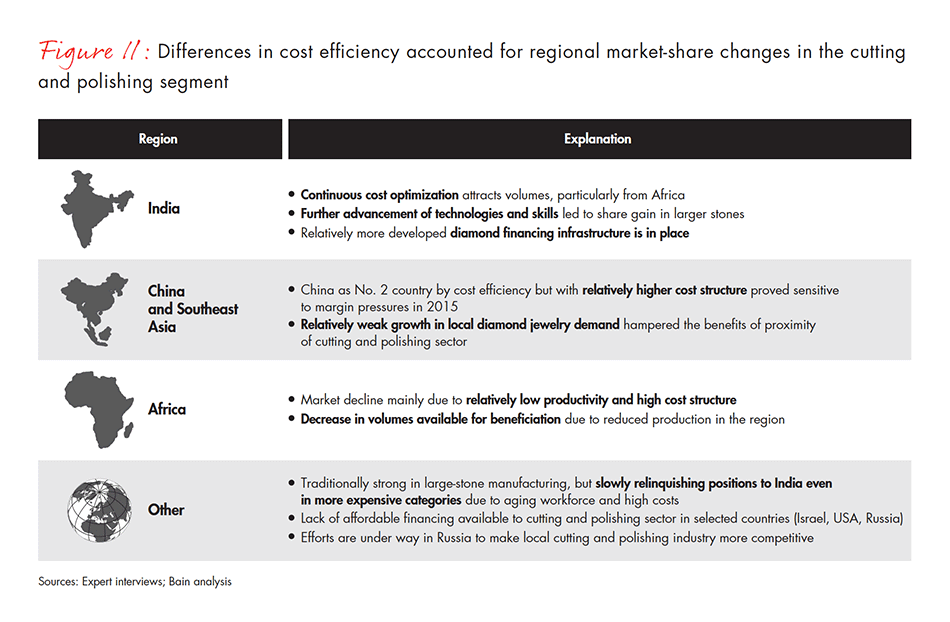
India, the world's largest, lowest-cost cutting and polishing center, gained market share. It now accounts for about 90% of the global polished-diamond manufacturing by value. Already the dominant manufacturer of small stones, the country is gaining share in the more value-added segment of larger stones, mostly at the expense of China.
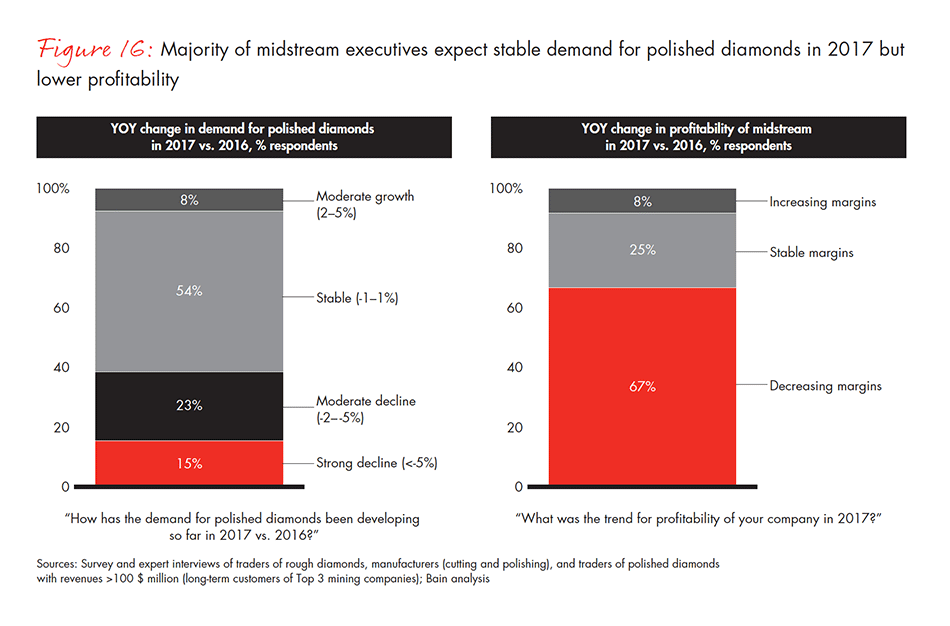
Midstream players' profitability improved in 2016, supported by declining rough-diamond prices. In the first half of 2017, rough-diamond prices increased by 3% while polished-diamond prices decreased by 3%, renewing pressure on midstream margins.
To sustain profitability over the long run, the largest cutting and polishing companies are maintaining intensive operational-improvement drives. They remain focused on continuously shortening cutting and polishing cycles and securing financing. They are also implementing new technologies such as automated cutting processes and advanced digital mapping and modeling of diamond cutting to optimize yields.
4. Diamond jewelry retail
The 2016 global diamond jewelry retail market stabilized in US dollar terms after 2015's weak performance.
In the US, total diamond jewelry sales grew, according to the US Census Bureau, although revenues at several major jewelry retailers declined. Changing consumer trends, including a shift to the online channel and increasing demand for lower-priced jewelry, might account for this drop. Major jewelry retailers reported declining sales in the first quarter of 2017, but sales growth resumed in the second quarter supported by the economy acceleration and strengthening consumer confidence.
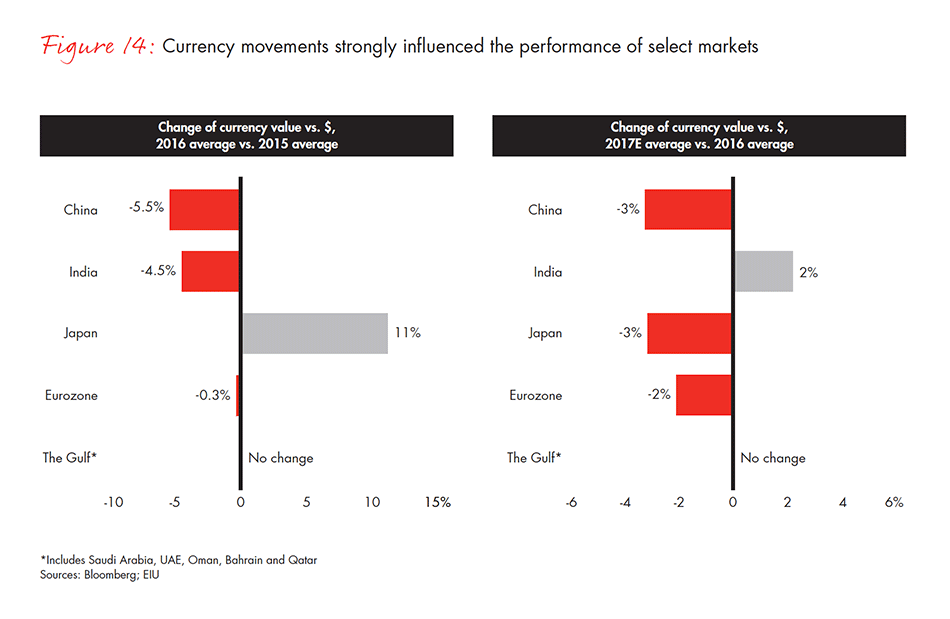
In China, diamond jewelry sales fell in 2016 as the economy slowed, the yuan depreciated the most in a decade and consumer confidence weakened. In the first half of 2017, following the stabilization of the yuan and a jump in consumer confidence, China's large jewelry retail chains saw their sales grow.
In India, 2016 was a turbulent year for the jewelry industry. A spring strike by jewelers to protest the introduction of a 1% excise duty and November's demonetization announcement disrupted sales. These events harmed mostly small jewelry retailers, however, as leading high-end branded retailers benefited from the shift in traffic to organized retail. This shift also increased consumer protections, which boosted consumers' confidence in the quality and security of jewelry purchases and led to rebounding sales in the first half of 2017. Other key sources of strength were the continuing growth of the middle class and personal incomes.
Europe saw a small decline in 2016 because of lower tourist inflows. Sales in Japan remained solid, mainly as a result of strong yen appreciation.
Based on trends observed in the US, China, India and Europe, we expect the global diamond jewelry retail market to return to growth in 2017. This trend parallels the course of the luxury goods market, which fell 1% in 2016 but is expected to grow 5% in 2017.
Digitalization remained an important trend in diamond jewelry retail in 2016 and 2017. Signet acquired R2Net, the owner of James Allen, a growing online jewelry retailer and digital solutions provider to the diamond jewelry market. Private equity funds acquired Blue Nile, another leading online retailer. These transactions underscore the potential of the online segment and the omnichannel model.
5. Margins and inventories in the midstream
The midstream is a critical segment of the diamond value chain. Operating on very thin margins, midstream companies must continuously improve their efficiency to sustain the long-term health of their businesses.
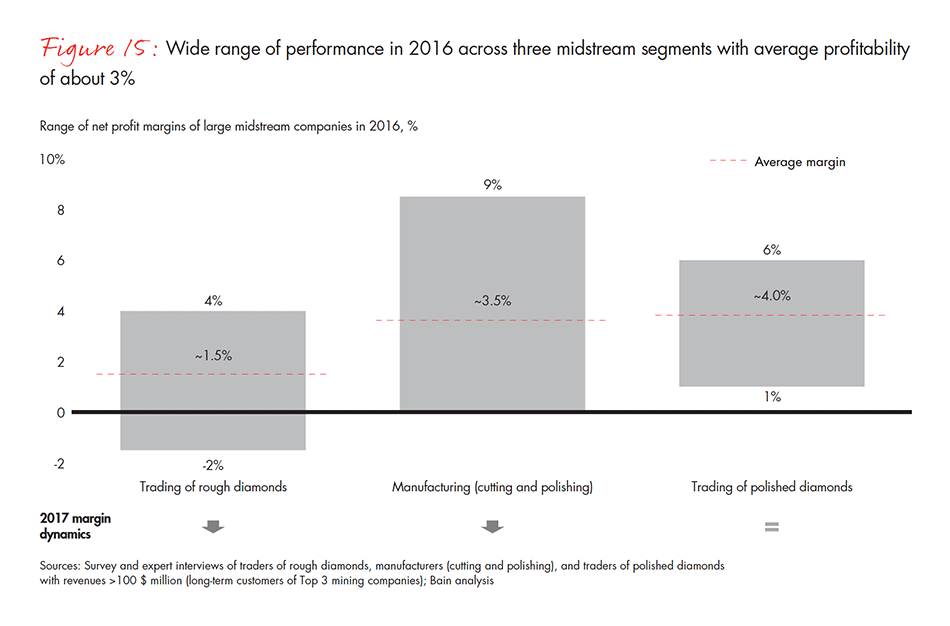
Despite the midstream's low average margins, 2016 was a good year for integrated cutting and polishing companies' profitability. Prices for rough diamonds declined faster than polished prices, which allowed for improved profitability compared with 2015.
According to industry executives, margins for rough-diamond trading ranged from -2% to 4%; for cutting and polishing, 0% to 9%; and for polished-diamond trading, 1% to 6%. Companies that maintained a ruthless focus on operational efficiencies and innovations reported profitability at the upper ends of those ranges.
In the first half of 2017, prices for rough and polished diamonds again converged. Surplus inventories are putting polished prices and the profitability of the midstream companies under pressure.
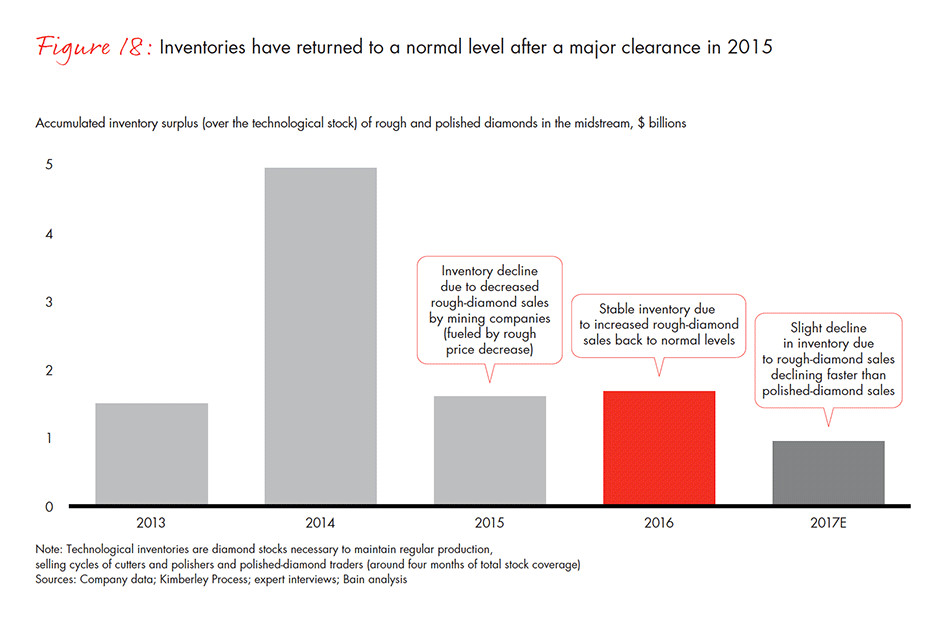
The level of inventories fluctuated significantly from 2013 through 2015. The midstream accumulated a significant inventory surplus in 2014. In 2015, midstream players unloaded inventories and reduced purchases from rough-diamond producers. In 2016, producers' rough-diamond sales increased 20%, returning to normal levels and keeping inventories roughly stable.
In the first half of 2017, rough-diamond sales by producers declined 3% while global diamond jewelry retail demand remained stable, resulting in a slight decrease in midstream inventories after stable inventories in 2016.
6. Key industry challenges
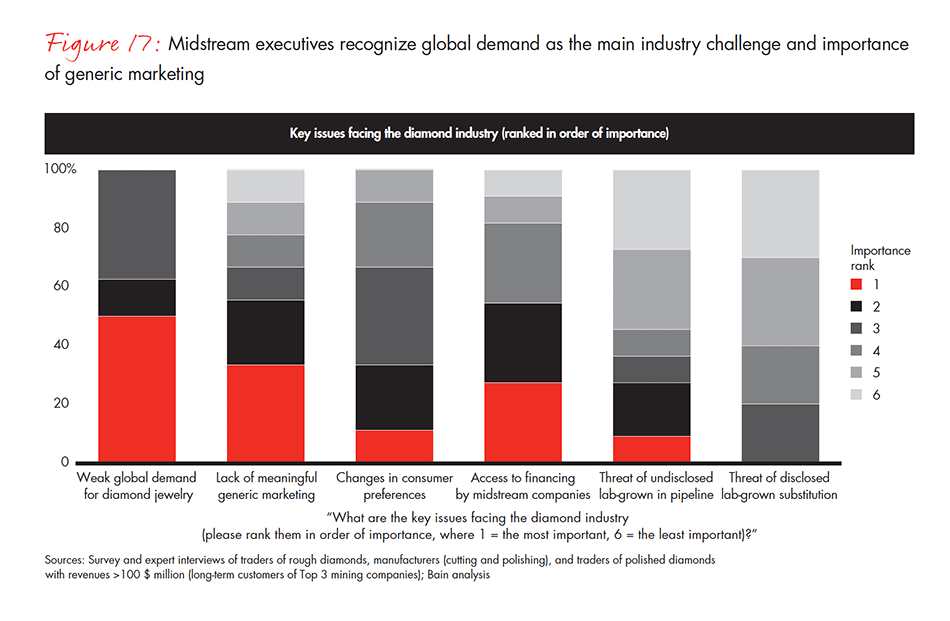
The diamond industry faces three persistent challenges: slowing long-term demand for diamonds, further developments of the lab-grown diamonds field and the financial sustainability of the midstream.
Long fueled by one of the most successful marketing campaigns of all time, the diamond industry enjoyed consistent growth through most of the 20th century. Major retailers invest an average of about 10% of revenue in their own marketing programs, which supported growth in their respective diamond jewelry segments. From the early 2000s, however, generic marketing spend by rough-diamond producers decreased from 5% to less than 1% of total sales of rough diamonds, while promotional efforts shifted to private brands. The growth of the rough-diamond industry has trailed that of luxury products since 2000. Aiming to reverse that trend, rough-diamond players plan to invest about $150 million in both generic and private-brand marketing in 2017. That sum represents a 50% increase over previous years. Additionally, the industry is renewing its approach to marketing, taking into account evolving customer preferences and marketing channels.
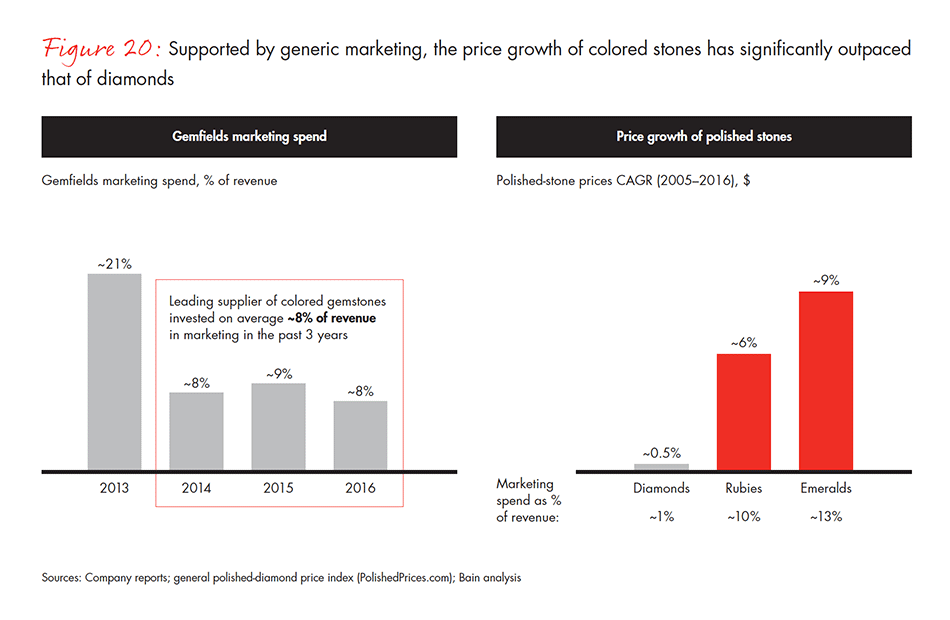
The ongoing evolution of the lab-grown diamond market and its potential impact on the market for natural diamonds continue to perturb industry players. Co-existence of markets for natural and synthetic colored gems such as rubies and emeralds for more than a century suggests that markets for natural and lab-grown diamonds can develop in parallel without cannibalizing each other, as does the healthy growth in demand for luxury leather goods despite the widespread availability of replicas. The diamond industry is maintaining its focus on protecting the supply chain from illegal infiltration by lab-grown diamonds by developing cheaper and more effective detection instruments.
Fluctuating rough prices, tighter financing terms and stagnant diamond jewelry sales remain a challenge for mid-stream players, which have stepped up the development of new technologies and pursued operational efficiencies. These moves have enabled the most agile players to attain margins several times greater than the industry average and given them an advantage in obtaining financing.
7. Updated supply and demand model
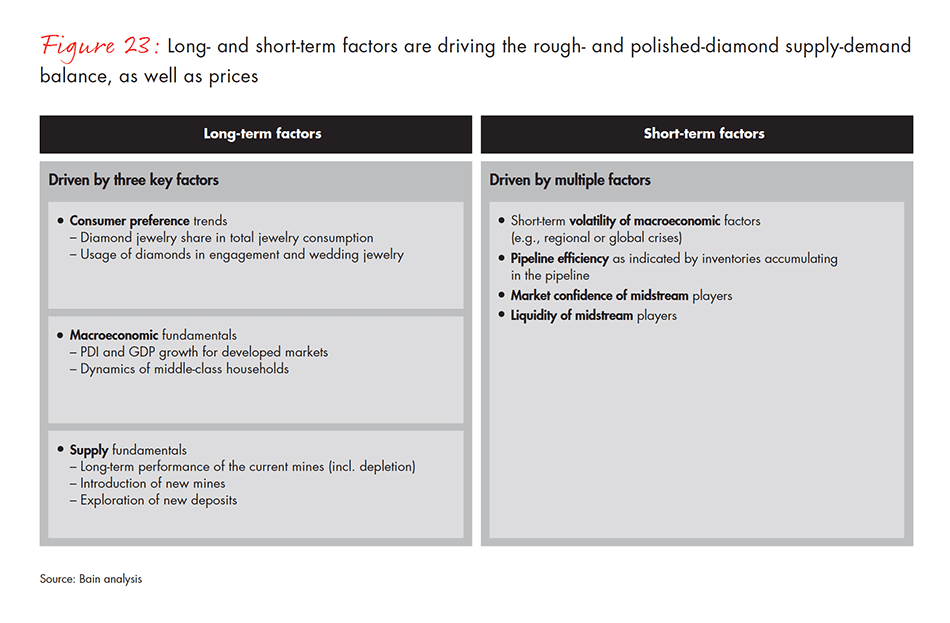
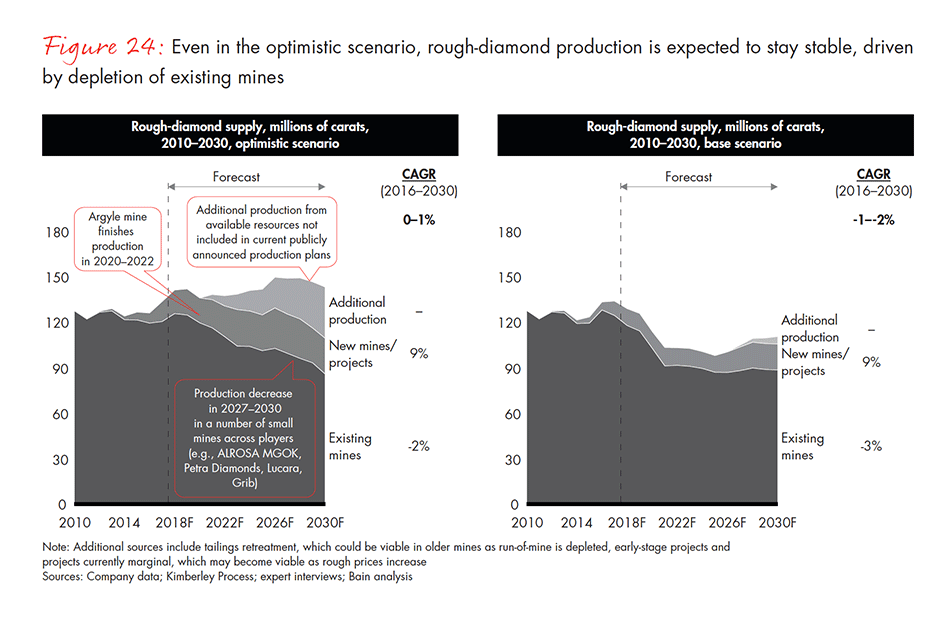
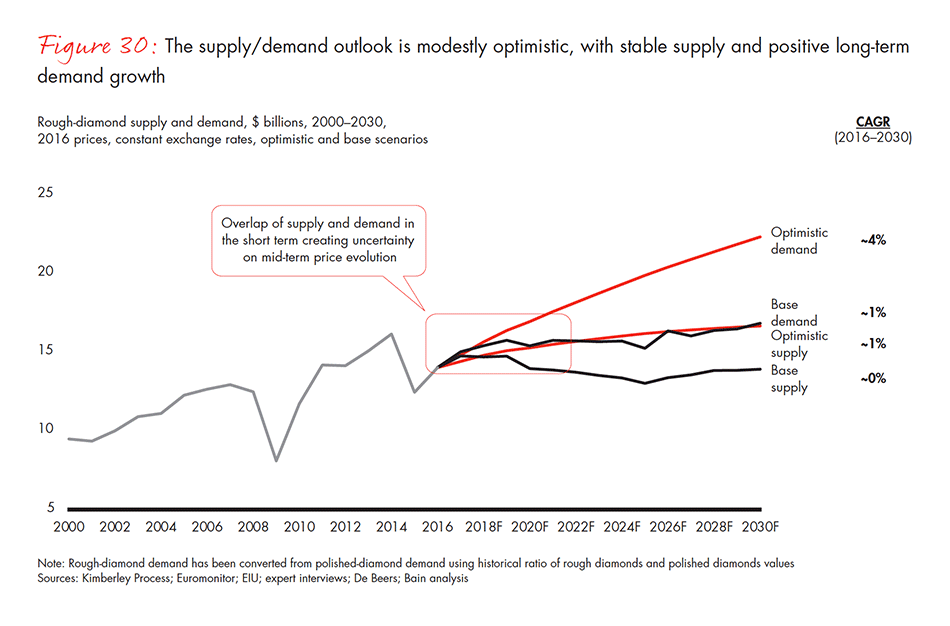
Global rough-diamond demand is projected to grow at an average annual rate of about 1% to 4% through 2030; supply is projected to grow 0% to 1% per year. Our forecast reflects fundamental supply and demand factors rather than short-term fluctuations. The short-term supply-demand balance depends heavily on the behavior of major producers and the efficiency of the diamond pipeline.
We expect that the US, China and India will remain the leading diamond jewelry markets and that US diamond jewelry demand will stabilize in 2017. In the longer term, healthy real disposable income growth of 1.5% to 2.5% per year will drive diamond jewelry consumption in the US. We expect demand growth in the Chinese market to resume in 2017. Economic growth and the expansion of the country's middle class reinforce China’s positive long-term demand trend.
India is potentially one of the fastest growing of all major diamond jewelry markets through 2030. The continued expansion of bridal diamond jewelry and the middle class will drive demand for diamond jewelry.
Europe and Japan should remain stable, large diamond jewelry markets where long-term, low-single-digit economic expansion will support modest growth.
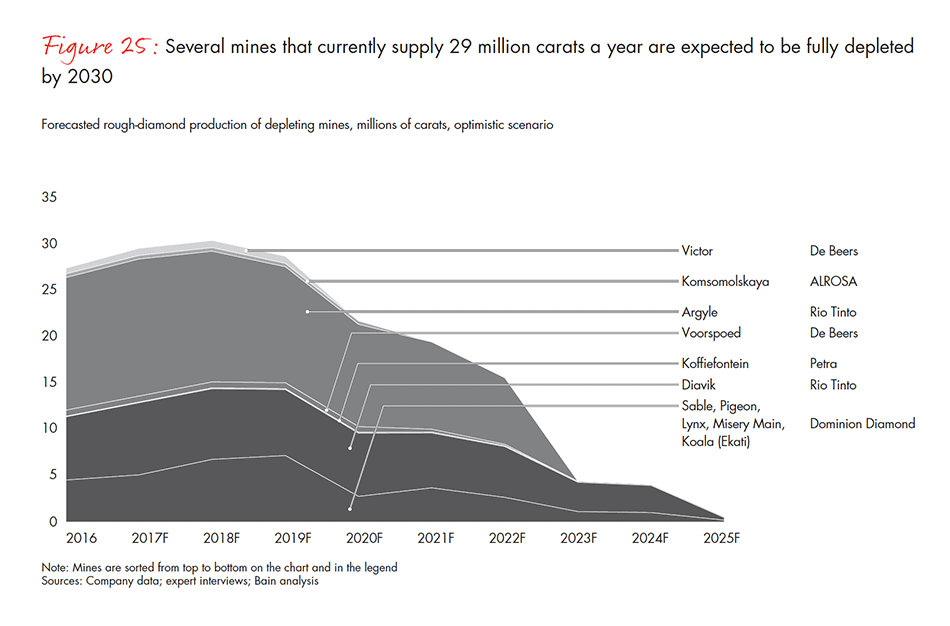
The rough-diamond supply is highly predictable over a five- to 10-year period. Unlike producers of some other commodities, diamond producers face technical challenges that make it difficult to increase production significantly in the short term.
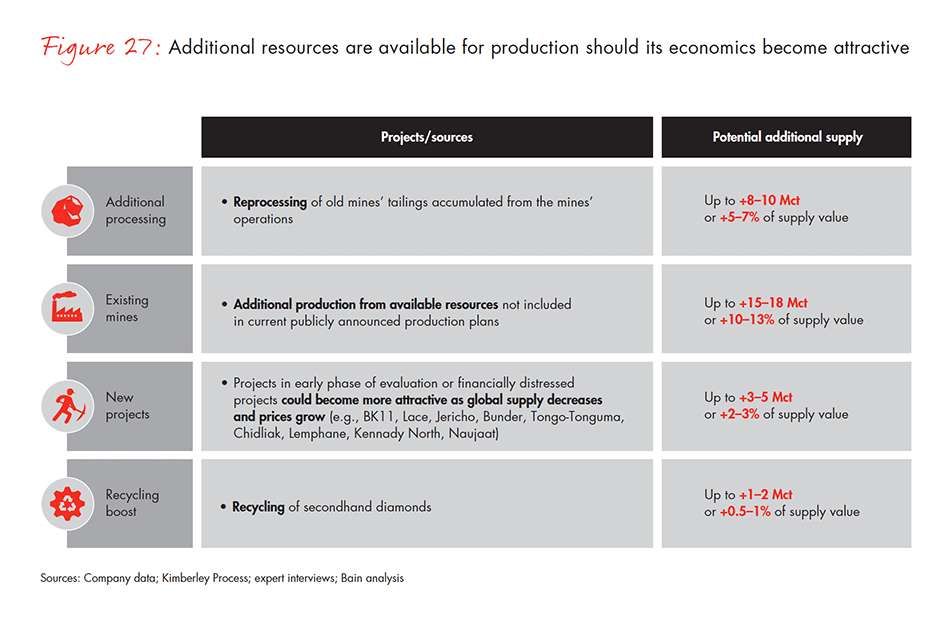
We have based our forecast of the rough-diamond supply on an analysis of existing mines and anticipated production at every planned new mine. We have also included in our forecast the potential supply from additional sources that could be activated if the economics becomes sufficiently attractive. These sources include tailings from older mines, the reopening of distressed mines and the activation of options in resource development plans. Taking into account all announced and additional potential sources, the global supply of rough diamonds is expected to grow an average 0% to 1% per year from 2017 through 2030.
This report was prepared by Olya Linde and Genia Kudryasheva, Partners from Bain & Company, and Oleg Geyler, Principal from Bain & Company, together with Ari Epstein, Chief Executive Officer, AWDC, and Stephane Fischler, President, AWDC. The authors were supported by a global team, including Yury Glazkov, Sophia Kravchenko, Yaroslav Karakai, Daria Safonova, Vasily Lovkovskiy, Fedor Zakharchenko, Anton Matalygin, Julia Gavrilova, Masha Shiroyan, and Bain’s Mining and Luxury Goods practices.