

Skip to Content
  • Offices

    Offices

    North & Latin America
    • Atlanta
    • Austin
    • Bogota
    • Boston
    • Buenos Aires
    • Chicago
    • Dallas
    • Denver
    • Houston
    • Los Angeles
    • Mexico City
    • Minneapolis
    • Monterrey
    • Montreal
    • New York
    • Rio de Janeiro
    • San Francisco
    • Santiago
    • São Paulo
    • Seattle
    • Silicon Valley
    • Toronto
    • Washington, DC
    Europe & Africa
    • Amsterdam
    • Athens
    • Berlin
    • Brussels
    • Copenhagen
    • Dusseldorf
    • Frankfurt
    • Helsinki
    • Istanbul
    • Johannesburg
    • Kyiv
    • Lisbon
    • London
    • Madrid
    • Milan
    • Munich
    • Oslo
    • Paris
    • Rome
    • Stockholm
    • Vienna
    • Warsaw
    • Zurich
    Middle East
    • Doha
    • Dubai
    • Riyadh
    Asia & Australia
    • Bangkok
    • Beijing
    • Bengaluru
    • Brisbane
    • Ho Chi Minh City
    • Hong Kong
    • Jakarta
    • Kuala Lumpur
    • Manila
    • Melbourne
    • Mumbai
    • New Delhi
    • Perth
    • Seoul
    • Shanghai
    • Singapore
    • Sydney
    • Tokyo
    See all offices
  • Alumni
  • Media Center
  • Subscribe
  • Contact
  • Global | English

    Select your region and language

    Global
    • Global (English)
    North & Latin America
    • Brazil (Português)
    • Argentina (Español)
    • Canada (Français)
    • Chile (Español)
    • Colombia (Español)
    Europe, Middle East, & Africa
    • France (Français)
    • DACH Region (Deutsch)
    • Italy (Italiano)
    • Spain (Español)
    • Greece (Elliniká)
    Asia & Australia
    • China (中文版)
    • Korea (한국어)
    • Japan (日本語)
  • Saved items (0)
    Saved items (0)

    You have no saved items.

    Bookmark content that interests you and it will be saved here for you to read or share later.

    Explore Bain Insights
  • Industries
    Main menu

    Industries

    • Aerospace & Defense
    • Agribusiness
    • Chemicals
    • Construction & Infrastructure
    • Consumer Products
    • Financial Services
    • Healthcare & Life Sciences
    • Industrial Machinery & Equipment
    • Media & Entertainment
      Industries
      Media & Entertainment
      • Media Lab
    • Metals
    • Mining
    • Oil & Gas
    • Paper & Packaging
    • Private Equity
      Industries
      Private Equity
      • Due Diligence
      • Exit Planning
      • Firm Strategy & Operations
      • Portfolio Value Creation
    • Social Impact
    • Retail
    • Technology
    • Telecommunications
      Industries
      Telecommunications
      • Capital Expenditure
      • Telco Digital Transformation
    • Transportation
    • Travel & Leisure
    • Utilities & Renewables
  • Consulting Services
    Main menu

    Consulting Services

    • Customer Experience
    • Sustainability
    • Innovation
    • M&A
    • Operations
    • People & Organization
    • Private Equity
    • Sales & Marketing
    • Strategy
    • AI, Insights, and Solutions
    • Technology
    • Transformation
  • Digital
  • Insights
    Main menu

    Insights

    • Industry Insights
    • Services Insights
    • Bain Books
    • Webinars
    • Bain Futures
    View all Insights
    Featured topics
    • Tariff Response
    • Artificial Intelligence
    • Thriving in Uncertainty
    • Executive Conversations
    • Macro Trends
    • M&A Report
    • Healthcare Private Equity Report
    • Paper & Packaging Report
    • Technology Report
    • CEO's Guide to Sustainability
    • CEO Insights
    • CFO Insights
    • COO Insights
    • CIO Insights
    • CMO Insights
    View all featured topics
  • About
    Main menu

    About

    • What We Do
    • What We Believe
    • Our People & Leadership
    • Client Results
    • Awards & Recognition
    • Global Affiliations
    Further: Our global responsibility
    • Sustainability
    • Social Impact
    • World Economic Forum
    Learn more about Further
  • Careers
    Main menu

    Careers

    • Work with Us
      Careers
      Work with Us
      • Find Your Place
      • Our Work Areas
      • Integrated Teams
      • Students
      • Internships & Programs
      • Recruiting Events
    • Life at Bain
      Careers
      Life at Bain
      • Blog: Inside Bain
      • Career Stories
      • Our People
      • Where We Work
      • Supporting Your Growth
      • Affinity Groups
      • Benefits
    • Impact Stories
    • Hiring Process
      Careers
      Hiring Process
      • What to Expect
      • Interviewing
    FIND JOBS
  • Offices
    Main menu

    Offices

    • North & Latin America
      Offices
      North & Latin America
      • Atlanta
      • Austin
      • Bogota
      • Boston
      • Buenos Aires
      • Chicago
      • Dallas
      • Denver
      • Houston
      • Los Angeles
      • Mexico City
      • Minneapolis
      • Monterrey
      • Montreal
      • New York
      • Rio de Janeiro
      • San Francisco
      • Santiago
      • São Paulo
      • Seattle
      • Silicon Valley
      • Toronto
      • Washington, DC
    • Europe & Africa
      Offices
      Europe & Africa
      • Amsterdam
      • Athens
      • Berlin
      • Brussels
      • Copenhagen
      • Dusseldorf
      • Frankfurt
      • Helsinki
      • Istanbul
      • Johannesburg
      • Kyiv
      • Lisbon
      • London
      • Madrid
      • Milan
      • Munich
      • Oslo
      • Paris
      • Rome
      • Stockholm
      • Vienna
      • Warsaw
      • Zurich
    • Middle East
      Offices
      Middle East
      • Doha
      • Dubai
      • Riyadh
    • Asia & Australia
      Offices
      Asia & Australia
      • Bangkok
      • Beijing
      • Bengaluru
      • Brisbane
      • Ho Chi Minh City
      • Hong Kong
      • Jakarta
      • Kuala Lumpur
      • Manila
      • Melbourne
      • Mumbai
      • New Delhi
      • Perth
      • Seoul
      • Shanghai
      • Singapore
      • Sydney
      • Tokyo
    See all offices
  • Alumni
  • Media Center
  • Subscribe
  • Contact
  • Global | English
    Main menu

    Select your region and language

    • Global
      Select your region and language
      Global
      • Global (English)
    • North & Latin America
      Select your region and language
      North & Latin America
      • Brazil (Português)
      • Argentina (Español)
      • Canada (Français)
      • Chile (Español)
      • Colombia (Español)
    • Europe, Middle East, & Africa
      Select your region and language
      Europe, Middle East, & Africa
      • France (Français)
      • DACH Region (Deutsch)
      • Italy (Italiano)
      • Spain (Español)
      • Greece (Elliniká)
    • Asia & Australia
      Select your region and language
      Asia & Australia
      • China (中文版)
      • Korea (한국어)
      • Japan (日本語)
  • Saved items  (0)
    Main menu
    Saved items (0)

    You have no saved items.

    Bookmark content that interests you and it will be saved here for you to read or share later.

    Explore Bain Insights
  • Industries
    • Industries

      • Aerospace & Defense
      • Agribusiness
      • Chemicals
      • Construction & Infrastructure
      • Consumer Products
      • Financial Services
      • Healthcare & Life Sciences
      • Industrial Machinery & Equipment
      • Media & Entertainment
      • Metals
      • Mining
      • Oil & Gas
      • Paper & Packaging
      • Private Equity
      • Social Impact
      • Retail
      • Technology
      • Telecommunications
      • Transportation
      • Travel & Leisure
      • Utilities & Renewables
  • Consulting Services
    • Consulting Services

      • Customer Experience
      • Sustainability
      • Innovation
      • M&A
      • Operations
      • People & Organization
      • Private Equity
      • Sales & Marketing
      • Strategy
      • AI, Insights, and Solutions
      • Technology
      • Transformation
  • Digital
  • Insights
    • Insights

      • Industry Insights
      • Services Insights
      • Bain Books
      • Webinars
      • Bain Futures
      View all Insights
      Featured topics
      • Tariff Response
      • Artificial Intelligence
      • Thriving in Uncertainty
      • Executive Conversations
      • Macro Trends
      • M&A Report
      • Healthcare Private Equity Report
      • Paper & Packaging Report
      • Technology Report
      • CEO's Guide to Sustainability
      • CEO Insights
      • CFO Insights
      • COO Insights
      • CIO Insights
      • CMO Insights
      View all featured topics
  • About
    • About

      • What We Do
      • What We Believe
      • Our People & Leadership
      • Client Results
      • Awards & Recognition
      • Global Affiliations
      Further: Our global responsibility
      • Sustainability
      • Social Impact
      • World Economic Forum
      Learn more about Further
  • Careers
    Popular Searches
    • Agile
    • Digital
    • Strategy
    Your Previous Searches
      Recently Visited Pages

      Content added to saved items

      Saved items (0)

      Removed from saved items

      Saved items (0)

      Brief

      Just Make It Easy: A Guide to Loyalty in Banking

      Just Make It Easy: A Guide to Loyalty in Banking

      Customers want simplicity and convenience, and often that means making interactions mobile.

      By Mark Schofield, Gerard du Toit and Maureen Burns

      • min read
      }

      Brief

      Just Make It Easy: A Guide to Loyalty in Banking
      en

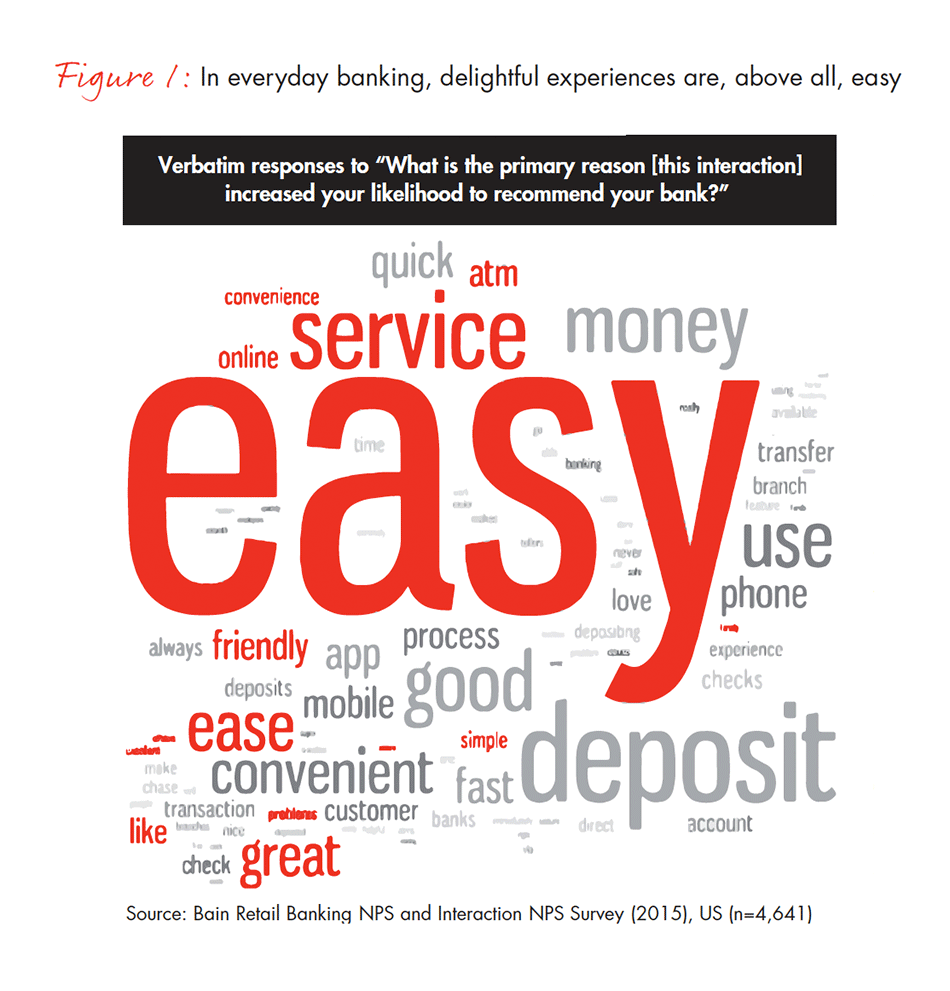
      The code that reveals the connection between consumers’ bank interactions and their loyalty to those banks has been cracked. It isn’t only big emotional episodes like fraud that matter to consumers, but also the mundane interactions that people deal with every day. For those interactions, the primacy of a branch that is conveniently near home or work, so important a decade ago, has been replaced by a new imperative: Just make it easy (see Figure 1).

      Making it easy means, in part, making it mobile. The rub: Easy is hard for many banks.

      Most retail banks recognize that earning customers’ loyalty improves the economics and competitive position of the business. Consumers who are promoters of a bank stay longer, buy more, refer their friends and colleagues and often cost less to serve than those who are detractors or, at best, passive.

      But knowing which investments to make and where to focus management time and effort is not always straightforward. In the short term, should a bank upgrade its website, intensify training for call-center agents or overhaul its anti-fraud processes? With so many types of interaction between the bank and customers—especially customers who hold multiple products—how can managers select and sequence the most valuable investment areas?

      2018 Customer Loyalty in Retail Banking Report

      In Search of Customers Who Love Their Bank

      With banks facing increased competition from tech firms, our latest report examines how the banks can focus on what customers value most.

      Consumers’ perceptions of their banking experiences point the way. Bain & Company recently surveyed 14,812 retail bank customers in Australia, Canada, the UK and the US. We asked customers to assign a Net Promoter Score® (a key measure of loyalty on a scale of 0 to 10) to their recent experiences with a dozen common banking interactions, from everyday transactions to more complex sales and service episodes. Our analysis of responses sheds light on how banks can determine which interactions affect loyalty among their customers and which merit immediate investment.

      We find a clear correlation between a bank’s Net Promoter Score and the scores for individual interactions at the bank. For example, customers who are delighted by their recent bill-paying experiences tend to be advocates of the bank in general. By improving key individual interactions, the average bank across the four countries has the potential to raise its Net Promoter Score by 10 to 15 percentage points.

      guide-to-loyalty-fig-01_embed

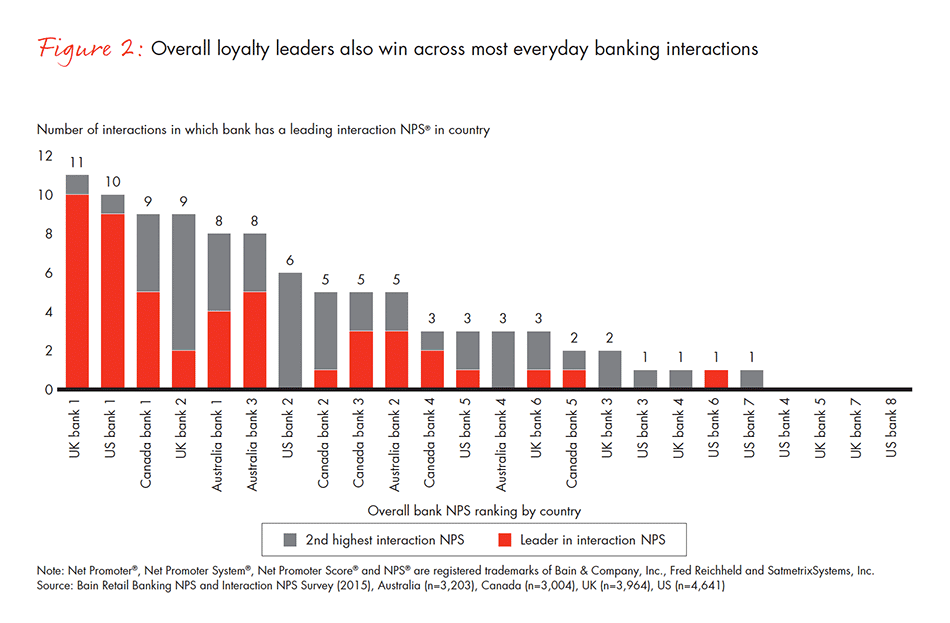
      No single interaction stands out as the area for every bank to double down on improvements. In fact, the overall loyalty leaders in the four countries excel in most individual interactions (see Figure 2), and leaders in the US and the UK excel in all everyday transactions.

      guide-to-loyalty-fig-02_embed

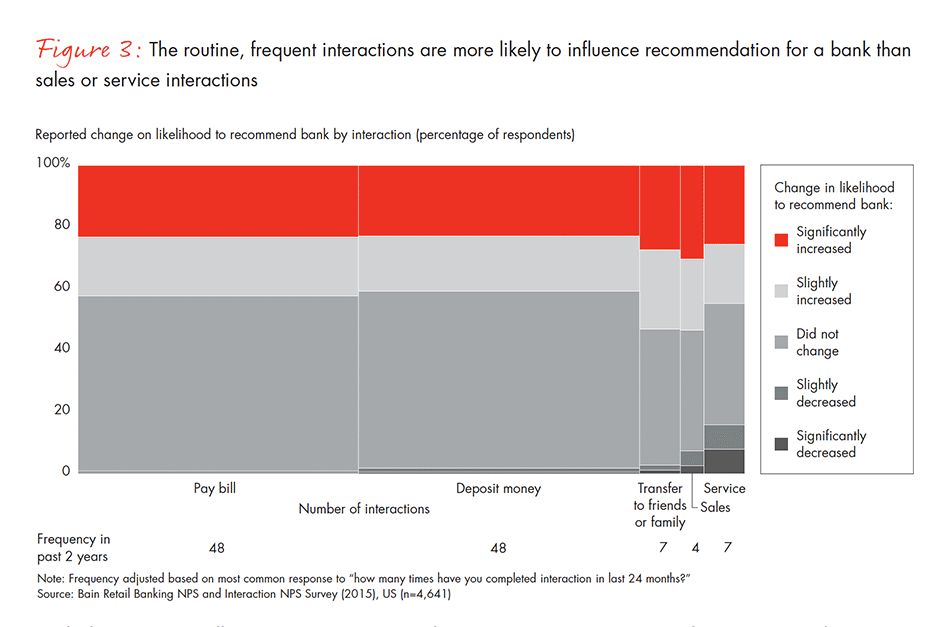
      Certain interactions, though, do have a stronger effect than others on a bank’s Net Promoter Score. On average, routine interactions contribute more to the score than do sales and service interactions. Let’s parse the data to show why.

      Of any single interaction, a sales interaction has the greatest influence on a bank’s loyalty score. For example, 68% of US customers who had a good experience opening a credit card, 74% who did for a new mortgage and 80% who did when opening a checking account said that they would be more likely to recommend their bank. The corresponding shares for customers who had a good experience with everyday transactions are lower, ranging from 51% to 57%. This difference makes intuitive sense, as getting a mortgage can be a complex, emotional episode that naturally generates delight with the bank when the interaction goes well. The opposite also applies: Sales and service interactions tend to go wrong more often than do routine interactions and cause greater damage to the customer relationship when they do so.

      Sales and service interactions, however, occur much less frequently than routine interactions (see Figure 3). With frequency factored in, routine interactions have a greater cumulative effect: They contribute three to four times more than sales or service to the lift in a bank’s loyalty score across the four countries.

      guide-to-loyalty-fig-03_embed

      Analysis of consumer responses also shows that the greatest potential lift in loyalty comes from turning passive customers into promoters. Although each bank starts from a different point, in general 65% of the lift in a bank’s Net Promoter Score derives from creating promoters, and 35% derives from turning detractors into passive customers or even promoters. Banks tend to have more passive customers than detractors, so delighting passives creates a larger lift. This insight counters the belief among some bankers that leaning out processes and fixing the worst problems is all that’s needed to win over customers. Although those tasks might be a good place to start, earning loyalty takes far more than lean processes.

      The right next moves for a bank depend on its customers’ current perceptions of individual interactions and of the bank overall. However, some general insights emerge from the survey analysis.

      Mark Schofield, a partner in Bain's Financial Services practice, discusses how banks can improve the mobile experience to lower costs, boost sales and improve customer loyalty.

      The battle is won or lost over routine interactions. While the effect of a single routine interaction is small, customers go through so many that the cumulative effect is large. For example, customers pay bills often: two to four times per month for the average respondent, depending on the country.

      Banks that lead their competition or have a close second or third position on an interaction should focus on delighting customers by innovating on their already solid processes. For instance, they could improve their mobile app to be as close as possible to “one click,” allowing customers to check their account balance without needing to log in.

      Infographic

      Customer Behavior and Loyalty in Retail Banking

      Leading banks are taking a "mobile first" approach, shifting routine transactions from branches to digital self-service tools.

      By contrast, banks with low relative scores and a large base of detractors in their everyday transactions should start by eliminating defects in those processes. For example, a login sequence that requires the user to scroll down to a new screen on a smartphone should be changed to a one-screen version.

      Make it easy through mobile-first design. Everyday banking is still held hostage to traditional branch and contact-center channels. For most banks, we estimate that 60% to 70% of teller transactions are bad (because of errors or rework) or avoidable (because they would be quicker, easier and cheaper through digital channels). Such transactions should be migrated to digital channels.

      Banks have two compelling reasons to migrate to digital: lower cost, and the fact that digital—especially mobile—interactions consistently create more customer delight for routine transactions than do traditional channels (see Figure 4). Simply installing a functional app or fixing what is broken in the current app is not sufficient to delight customers. An app must be reliable, convenient and easy to use if it is to shift volume away from branches. Now that most customers have used excellent apps from companies in other industries, they expect equally strong mobile features from their banks.
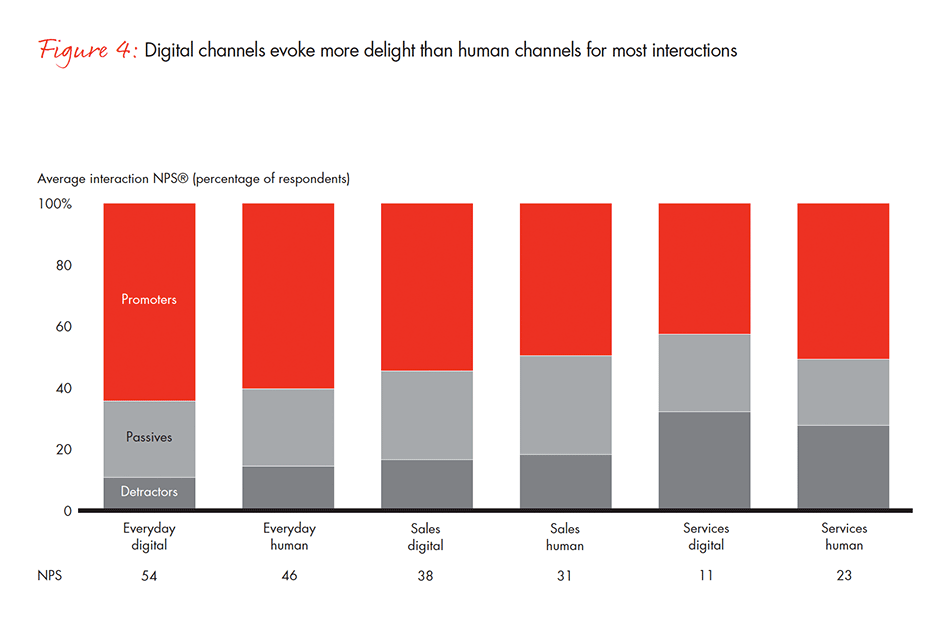

      guide-to-loyalty-fig-04_embed

      Migration also hinges on banks having a thoughtful process for changing behaviors of customers who are technology laggards. In the branch, for instance, employees can ask customers whether they would like to skip the line, then pull them aside to help them set up an online account and show them how to transact. The second or third visit might require further guidance, until the customer is comfortable with the technology.

      Raise the bar in creating delightful sales and service interactions. Rare though they might be, sales and service interactions have a marked effect on loyalty. Here too, customers increasingly expect a seamless experience, whether digital, in person or on the phone.

      Mobile apps gained popularity by making routine interactions easy to carry out anywhere, anytime. Now these apps are coming on strong in sales and service. Almost one-third of sales or service interactions in the past quarter occurred via mobile, Bain’s recent global consumer survey found.

      Although digital sales and service transactions do not yet consistently delight more than digital routine transactions, that situation will likely improve over time as banks streamline their digital processes and build greater mobile sales and service capabilities. Mobile access also has more potential than the branch to delight customers in sales and service interactions, particularly when the mobile channel is fast and easy to use.

      Employees still play essential roles in complex sales, service and advice settings, but the way in which they interact with customers is changing. Increasingly, these communications occur not in a branch but via mobile chat or video. As banks plug their frontline staff into the mobile hub, they can raise sales and service productivity by reaching more customers and reducing paperwork. Sales and service interactions that delight customers thus hinge on combining mobile-led design with empathetic, digitally skilled staff.

      Infographic

      Just Make It Easy: Loyalty in Banking

      Routine transactions have a greater overall effect on customer loyalty than complex sales and service transactions.

      Connect the dots to improve entire episodes, not just individual interactions. Customers form their perceptions based on the whole sequence of interactions that they experience. For instance, when a hacker makes a fraudulent credit card purchase, a series of interactions follows: alerting the customer through various channels, verifying the customer’s identity, discussing the process of reversing the charge, counseling the customer on avoiding future fraud and issuing a new card. How the bank manages all those stages—the degree of speed, convenience and empathy that the customer experiences— shapes the customer’s perception of the bank.

      At a minimum, banks need to measure the consumer experience from end to end. Moreover, delivery of a great experience requires closer collaboration among many departments in executing the operation across several channels and in acting on customer feedback to improve operations. Banks whose departments have historically operated “vertically” need to learn to run “horizontal” efforts that cut across the organization, just as customer episodes do.

      Banks that want to redesign customers’ everyday interactions, or the rare but high-wire interactions, can analyze their customer feedback to determine the right sequence of investments. Devoting time and resources up front to extract insights from feedback enables a bank to understand where it falls short, where it has an opportunity to take the lead and how each type of interaction influences its customers’ loyalty, relative to competitors.

      With those insights in hand, a bank can mobilize a cross-functional team of product owners, marketers, technologists, designers and, of course, compliance officers to co-create the highest priority episodes with consumers. The bank can then develop prototypes, test them quickly with customers, refine them and roll them out across the bank.

      Those banks that master these episodes by taking a mobile-first design approach stand to delight more customers and improve their economics in the bargain.

      Mark Schofield, Gerard du Toit and Maureen Burns are partners in Bain’s Financial Services practice. They are based, respectively, in Toronto, Boston and Boston.

      Net Promoter®, Net Promoter System®, Net Promoter Score® and NPS® are registered trademarks of Bain & Company, Inc., Fred Reichheld and Satmetrix Systems, Inc.


      guide-to-loyalty-fig-01_full

      guide-to-loyalty-fig-02_full

      guide-to-loyalty-fig-03_full

      guide-to-loyalty-fig-04_full
      Authors
      • Mark Schofield
        Former Partner, Toronto
      • Headshot of Gerard du Toit
        Gerard du Toit
        Partner, Boston
      • Headshot of Maureen Burns
        Maureen Burns
        Partner, Boston
      Contact us
      Related Industries
      • Financial Services
      Related Consulting Services
      • Customer Experience
      • Net Promoter System®
      How We Can Help
      • Net Promoter®
      Banking
      Customer Behavior, Experience and Loyalty in Retail Banking

      Leading banks are taking a "mobile first" approach, shifting routine transactions from branches to digital self-service tools.

      Read More
      Financial Services
      Is the Bank Branch Dead?

      Customers deserting bank branches in favor of mobile and online channels for many interactions signal that the size and nature of the branch network has to change faster and more substantially than most banks acknowledge.

      Read More
      Sales and Marketing
      Loyalty Insights: Assessing Your Net Promoter System®

      Is your company achieving the full benefits of its customer advocacy effort?

      Read More
      Financial Services
      How Banks Can Tease Out the Loyalty Metrics That Matter

      Measuring performance on the key episodes for a bank’s customers allows the bank to focus on investments that will improve loyalty—and its economics.

      Read More
      Financial Services
      Rethinking Transformation: Lawrence Lam on Leading Change at Prudential

      Frankie Leung speaks with Lawrence Lam, CEO of Prudential Hong Kong, about organizational transformation and sustaining change through a people-led approach.

      Read More
      Published in May 2016
      Tags
      • Customer Experience
      • Financial Services
      • Net Promoter System®
      • Net Promoter®

      How We've Helped Clients

      Sustainability Voluntary Carbon Markets: A Bank Moves Early to Seize the Opportunity

      Read case study

      Transformation Transformation sparks financial leader's turnaround

      Read case study

      Performance Improvement Lean Six Sigma solves a commercial bank's growth problem

      Read case study

      Ready to talk?

      We work with ambitious leaders who want to define the future, not hide from it. Together, we achieve extraordinary outcomes.

      Stay ahead in a rapidly changing world. Subscribe to Bain Insights, our monthly look at the critical issues facing global businesses.

      *I have read and understand Bain’s Privacy Notice.

      Please read and agree to the Privacy Policy.
      Bain & Company
      Contact us Sustainability Accessibility Terms of use Privacy Modern Slavery Act Statement Cookie Policy Sitemap Log In

      © 1996-2026 Bain & Company, Inc.

      Contact Bain

      How can we help you?

      • Business inquiry
      • Career information
      • Press relations
      • Partnership request
      • Speaker request
      See all offices