

Book

|
|
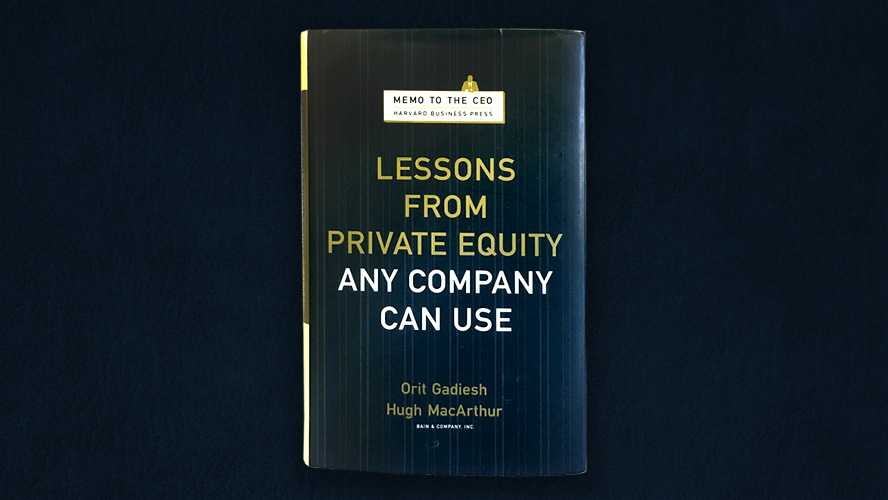
An excerpt from the chapter, "Introducing the Private Equity Advantage." Private equity (PE) has dominated the business headlines in recent years. Once a relatively low-profile, even exotic industry, it has moved into a significant position in the U.S. economy, is playing a prominent role in the rest of the developed economies around the world, and is quickly assuming more importance in some of the largest and fastest-growing developing markets. As the first management consulting firm to develop a global PE practice, Bain & Company has quite literally grown up with the industry. Today, our practice is the largest of its kind. We conduct detailed strategic due diligence on hundreds of targets annually and work in depth with portfolio companies and their management teams to boost performance. We are not simply on the outside looking in, either. Bain & Company partners have invested over $500 million of their own capital in private equity funds and deals over the last few years, with top-quartile results. From a very granular and unique perspective, we have come to understand what PE leaders are particularly good at, and also what they are not so good at, as it pertains to creating more valuable companies. So what is this memo about? It’s about how to make businesses more valuable, regardless of who owns them. While much has been written on this topic, and no memo, however well intentioned, will provide a panacea for value creation to all executives across all industries, we feel strongly from our many years of working with the best PE executives and the most capable chief executive officers that the PE industry can offer some general lessons that any business leader should consider to get the most out of his or her business. Having worked with thousands of CEOs of public and private companies, we fully realize that some CEOs have used the same approach to the topic we will be discussing without ever having looked at PE firms, and that others have taken PE lessons to heart some time ago. This memo may serve mainly as a tool for propagating them. Some leaders may be aware of PE lessons but face challenges in employing them. We hope to offer clear, practical suggestions for implementation. Some may not yet have faced the issues raised here, and we hope we articulate both the lessons and their application in ways that are helpful. 
Lessons from Private Equity Any Company Can UseLearn more about how PE firms use six disciplines to attain their edge. In short, some of these lessons will sound familiar. Some may even appear obvious. However, in our view they are not being consistently and rigorously applied by businesses around the world. We see two main reasons for this: first, the application of these lessons drives real change in many businesses, and, for better or worse, change brings risks, both real and imagined. There is validity to the old truism about people disliking change. Second, many leaders apply the lessons that we will discuss, but incompletely. It is easier to do “fine” than to do the “best” a company can do. We call this satisfactory underperformance—a pervasive disease in business that is the direct target of this memo. Your most important task as a leader is to make your company more valuable. Most studies confirm that the best PE investors do exactly that: they generate excellent returns on their investments, usually after a period of ownership of three to five years. In this memo, we not only will further explain these results, but also will describe how these PE investors achieve them, and why their approach is relevant to all companies, regardless of ownership structure. At the same time, a leader is committed to creating opportunities and rewards for the people who help make the company successful. Several studies have concluded that in the markets most thoroughly penetrated by PE players, job creation by PE-controlled firms significantly outpaces job creation in the rest of the economy. These are two of the most compelling reasons for you to take note of the success of the best PE firms and to figure out which of their tools and techniques you might adopt for yourself. How can you create more value for your shareholders, and more opportunities (in the form of jobs, financial rewards, and promotions) for your star performers? How can you combine these outcomes to form a results-oriented culture for all of your productive employees? Take, for example, the story of Crown Castle, an owner-operator of shared wireless infrastructure that PE firm Berkshire Partners invested in and expanded by acquiring transmission towers from wireless carriers. In 1998, Crown Castle went public, garnering Berkshire a tenfold return on its initial investment. As a public company, Crown Castle maintained many of the lessons we will discuss, such as regularly reevaluating the full potential of its business and focusing the organization on pursuing a crucial handful of initiatives to achieve its full potential. Revenues increased sevenfold, and the workforce grew 40 percent—under the continuous leadership of CEO John Kelly and CFO Ben Moreland. Wall Street applauded, and the company’s stock price outperformed the S&P 500 Lessons from Private Equity Any Company Can Use by a factor of more than two, from its IPO in 1998 through the end of October 2007. Crown Castle’s story should give all senior managers comfort: the lessons in this memo can work inside or outside the PE portfolio. So, what are these lessons? We characterize them as follows: • Define the full potential. • Develop the blueprint. • Accelerate performance. • Harness the talent. • Make equity sweat. • Foster a results-oriented mind-set. No single private equity firm that we know consistently applies all of these disciplines to every single investment. There are some real examples, too, of PE firms ignoring long-term operating value to turn a quick profit. However, despite the press’s trumpeting about asset stripping and debt overload, these instances are far fewer than the noise would suggest. Rather, there is an intense focus by the best PE investors, on whose practices this memo is based, to develop repeatable, sustainable processes that make their companies more valuable over time. Market forces, competition, debt conditions, currency values, and regulation will all cycle up and down during the course of investments. The smartest PE investors have realized that the only way to reliably increase the value of their portfolios is to maximize the operating value of the underlying businesses in them. For this reason, the best PE firms have shifted many of the resources that they once poured into financial engineering toward creating operating value—and they are doing it in a way that is more systematic, focused, and aggressive than the practices found in most companies. The need to provide strong returns to demanding limited partners (LPs) in a defined time frame creates a single-mindedness that fuels the rigor with which these lessons are applied. If you are not the clear-cut market leader in your industry, you can’t afford to ignore how the best PE firms are transforming the business landscape. Even if you are the clear-cut leader, our research has shown that such companies oftentimes perform below their true, full potential, and examining the full measure of these lessons can benefit them greatly. |
Published in January 2008