
Skip to Content
  • Offices

    Offices

    North & Latin America
    • Atlanta
    • Austin
    • Bogota
    • Boston
    • Buenos Aires
    • Chicago
    • Dallas
    • Denver
    • Houston
    • Los Angeles
    • Mexico City
    • Minneapolis
    • Monterrey
    • Montreal
    • New York
    • Rio de Janeiro
    • San Francisco
    • Santiago
    • São Paulo
    • Seattle
    • Silicon Valley
    • Toronto
    • Washington, DC
    Europe & Africa
    • Amsterdam
    • Athens
    • Berlin
    • Brussels
    • Copenhagen
    • Dusseldorf
    • Frankfurt
    • Helsinki
    • Istanbul
    • Johannesburg
    • Kyiv
    • Lisbon
    • London
    • Madrid
    • Milan
    • Munich
    • Oslo
    • Paris
    • Rome
    • Stockholm
    • Vienna
    • Warsaw
    • Zurich
    Middle East
    • Doha
    • Dubai
    • Riyadh
    Asia & Australia
    • Bangkok
    • Beijing
    • Bengaluru
    • Brisbane
    • Ho Chi Minh City
    • Hong Kong
    • Jakarta
    • Kuala Lumpur
    • Manila
    • Melbourne
    • Mumbai
    • New Delhi
    • Perth
    • Seoul
    • Shanghai
    • Singapore
    • Sydney
    • Tokyo
    See all offices
  • Alumni
  • Media Center
  • Subscribe
  • Contact
  • Global | English

    Select your region and language

    Global
    • Global (English)
    North & Latin America
    • Brazil (Português)
    • Argentina (Español)
    • Canada (Français)
    • Chile (Español)
    • Colombia (Español)
    Europe, Middle East, & Africa
    • France (Français)
    • DACH Region (Deutsch)
    • Italy (Italiano)
    • Spain (Español)
    • Greece (Elliniká)
    Asia & Australia
    • China (中文版)
    • Korea (한국어)
    • Japan (日本語)
  • Saved items (0)
    Saved items (0)

    You have no saved items.

    Bookmark content that interests you and it will be saved here for you to read or share later.

    Explore Bain Insights
  • Industries
    Main menu

    Industries

    • Aerospace & Defense
    • Agribusiness
    • Chemicals
    • Construction & Infrastructure
    • Consumer Products
    • Financial Services
    • Healthcare & Life Sciences
    • Industrial Machinery & Equipment
    • Media & Entertainment
      Industries
      Media & Entertainment
      • Media Lab
    • Metals
    • Mining
    • Oil & Gas
    • Paper & Packaging
    • Private Equity
      Industries
      Private Equity
      • Due Diligence
      • Exit Planning
      • Firm Strategy & Operations
      • Portfolio Value Creation
    • Social Impact
    • Retail
    • Technology
    • Telecommunications
      Industries
      Telecommunications
      • Capital Expenditure
      • Telco Digital Transformation
    • Transportation
    • Travel & Leisure
    • Utilities & Renewables
  • Consulting Services
    Main menu

    Consulting Services

    • Customer Experience
    • Sustainability
    • Innovation
    • M&A
    • Operations
    • People & Organization
    • Private Equity
    • Sales & Marketing
    • Strategy
    • AI, Insights, and Solutions
    • Technology
    • Transformation
  • Digital
  • Insights
    Main menu

    Insights

    • Industry Insights
    • Services Insights
    • Bain Books
    • Webinars
    • Bain Futures
    View all Insights
    Featured topics
    • Tariff Response
    • Artificial Intelligence
    • Thriving in Uncertainty
    • Executive Conversations
    • Macro Trends
    • M&A Report
    • Healthcare Private Equity Report
    • Paper & Packaging Report
    • Technology Report
    • CEO's Guide to Sustainability
    • CEO Insights
    • CFO Insights
    • COO Insights
    • CIO Insights
    • CMO Insights
    View all featured topics
  • About
    Main menu

    About

    • What We Do
    • What We Believe
    • Our People & Leadership
    • Client Results
    • Awards & Recognition
    • Global Affiliations
    Further: Our global responsibility
    • Sustainability
    • Social Impact
    • World Economic Forum
    Learn more about Further
  • Careers
    Main menu

    Careers

    • Work with Us
      Careers
      Work with Us
      • Find Your Place
      • Our Work Areas
      • Integrated Teams
      • Students
      • Internships & Programs
      • Recruiting Events
    • Life at Bain
      Careers
      Life at Bain
      • Blog: Inside Bain
      • Career Stories
      • Our People
      • Where We Work
      • Supporting Your Growth
      • Affinity Groups
      • Benefits
    • Impact Stories
    • Hiring Process
      Careers
      Hiring Process
      • What to Expect
      • Interviewing
    FIND JOBS
  • Offices
    Main menu

    Offices

    • North & Latin America
      Offices
      North & Latin America
      • Atlanta
      • Austin
      • Bogota
      • Boston
      • Buenos Aires
      • Chicago
      • Dallas
      • Denver
      • Houston
      • Los Angeles
      • Mexico City
      • Minneapolis
      • Monterrey
      • Montreal
      • New York
      • Rio de Janeiro
      • San Francisco
      • Santiago
      • São Paulo
      • Seattle
      • Silicon Valley
      • Toronto
      • Washington, DC
    • Europe & Africa
      Offices
      Europe & Africa
      • Amsterdam
      • Athens
      • Berlin
      • Brussels
      • Copenhagen
      • Dusseldorf
      • Frankfurt
      • Helsinki
      • Istanbul
      • Johannesburg
      • Kyiv
      • Lisbon
      • London
      • Madrid
      • Milan
      • Munich
      • Oslo
      • Paris
      • Rome
      • Stockholm
      • Vienna
      • Warsaw
      • Zurich
    • Middle East
      Offices
      Middle East
      • Doha
      • Dubai
      • Riyadh
    • Asia & Australia
      Offices
      Asia & Australia
      • Bangkok
      • Beijing
      • Bengaluru
      • Brisbane
      • Ho Chi Minh City
      • Hong Kong
      • Jakarta
      • Kuala Lumpur
      • Manila
      • Melbourne
      • Mumbai
      • New Delhi
      • Perth
      • Seoul
      • Shanghai
      • Singapore
      • Sydney
      • Tokyo
    See all offices
  • Alumni
  • Media Center
  • Subscribe
  • Contact
  • Global | English
    Main menu

    Select your region and language

    • Global
      Select your region and language
      Global
      • Global (English)
    • North & Latin America
      Select your region and language
      North & Latin America
      • Brazil (Português)
      • Argentina (Español)
      • Canada (Français)
      • Chile (Español)
      • Colombia (Español)
    • Europe, Middle East, & Africa
      Select your region and language
      Europe, Middle East, & Africa
      • France (Français)
      • DACH Region (Deutsch)
      • Italy (Italiano)
      • Spain (Español)
      • Greece (Elliniká)
    • Asia & Australia
      Select your region and language
      Asia & Australia
      • China (中文版)
      • Korea (한국어)
      • Japan (日本語)
  • Saved items  (0)
    Main menu
    Saved items (0)

    You have no saved items.

    Bookmark content that interests you and it will be saved here for you to read or share later.

    Explore Bain Insights
  • Industries
    • Industries

      • Aerospace & Defense
      • Agribusiness
      • Chemicals
      • Construction & Infrastructure
      • Consumer Products
      • Financial Services
      • Healthcare & Life Sciences
      • Industrial Machinery & Equipment
      • Media & Entertainment
      • Metals
      • Mining
      • Oil & Gas
      • Paper & Packaging
      • Private Equity
      • Social Impact
      • Retail
      • Technology
      • Telecommunications
      • Transportation
      • Travel & Leisure
      • Utilities & Renewables
  • Consulting Services
    • Consulting Services

      • Customer Experience
      • Sustainability
      • Innovation
      • M&A
      • Operations
      • People & Organization
      • Private Equity
      • Sales & Marketing
      • Strategy
      • AI, Insights, and Solutions
      • Technology
      • Transformation
  • Digital
  • Insights
    • Insights

      • Industry Insights
      • Services Insights
      • Bain Books
      • Webinars
      • Bain Futures
      View all Insights
      Featured topics
      • Tariff Response
      • Artificial Intelligence
      • Thriving in Uncertainty
      • Executive Conversations
      • Macro Trends
      • M&A Report
      • Healthcare Private Equity Report
      • Paper & Packaging Report
      • Technology Report
      • CEO's Guide to Sustainability
      • CEO Insights
      • CFO Insights
      • COO Insights
      • CIO Insights
      • CMO Insights
      View all featured topics
  • About
    • About

      • What We Do
      • What We Believe
      • Our People & Leadership
      • Client Results
      • Awards & Recognition
      • Global Affiliations
      Further: Our global responsibility
      • Sustainability
      • Social Impact
      • World Economic Forum
      Learn more about Further
  • Careers
    Popular Searches
    • Agile
    • Digital
    • Strategy
    Your Previous Searches
      Recently Visited Pages

      Content added to saved items

      Saved items (0)

      Removed from saved items

      Saved items (0)

      Brief

      Spotlight on Technology

      Spotlight on Technology

      With an ever-increasing number of tablets and smartphones in the United States, customers are constantly connected and are incorporating technology into their shopping activities in game-changing ways.

      By Darrell Rigby, Erika Serow, Suzanne Tager and Aaron Cheris

      • min read

      Brief

      Spotlight on Technology
      en

      Key indicators remain positive heading into Black Friday week, continuing to suggest solid growth for the holiday season. Technology is in the spotlight, and we’re referring to more than just gift items. With over 30 million more smartphones and tablets in the United States this year, customers are constantly connected and are incorporating technology into their shopping activities in game-changing ways. In this issue, we explore how technology is changing shoppers’ behaviors, and highlight innovative ways retailers are using technology to both enhance customers’ experiences and improve their operations.

      Despite mixed third-quarter results, the holiday outlook remains solid

      Retailers’ third-quarter earnings announcements were mixed, and a number of retailers have revised their fourth-quarter estimates downwards, anticipating a highly competitive and promotional holiday season. Nevertheless, several indicators suggest any slowdown should be modest:

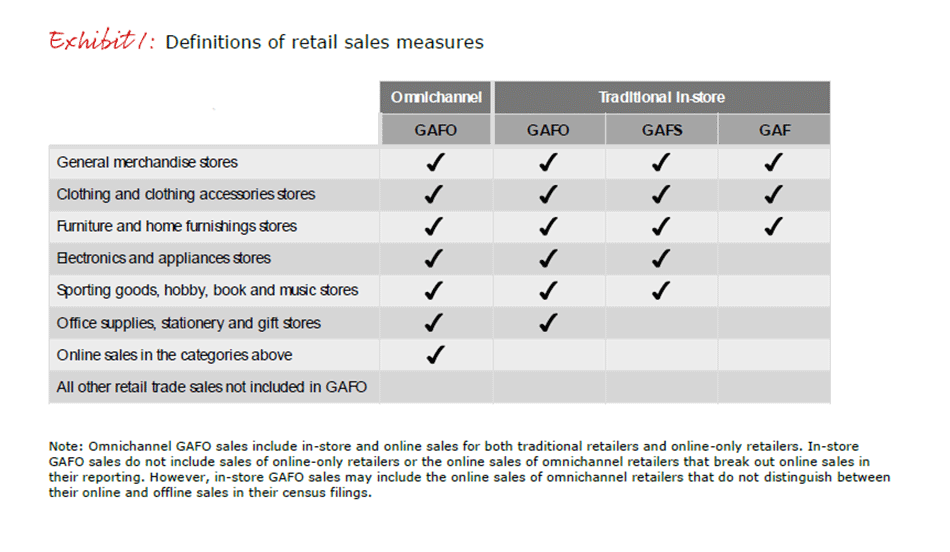
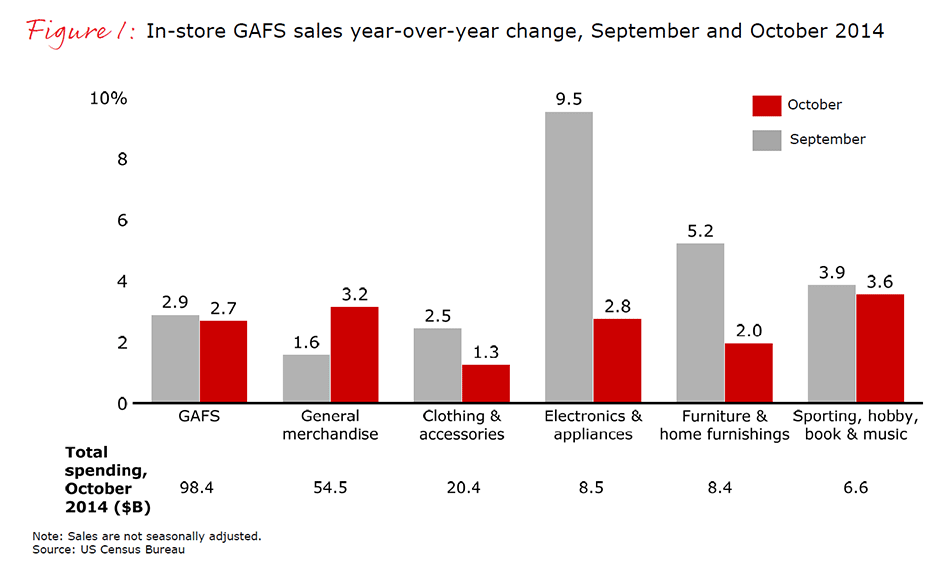
      • The Census Bureau reported 2.7% year-over-year growth in GAFS sales1 for October, just slightly below the 2.9% year-over-year growth in September. Strong growth in General Merchandise was tempered by slower growth in Clothing and Accessories (see Figure 1).
      • Estimates for same-store sales growth published by the International Council of Shopping Centers reflect a slight slowdown heading into the holiday season. Year-over-year growth was 4.6% for October, down from 5.0% in September. However, the predictive value of this metric has declined over time.2
      • US employers added 214,000 jobs in October, the ninth straight month with more than 200,000 new jobs, the longest stretch since 1995. Headline unemployment and total unemployment including discouraged and unemployed workers continue to drop (at 5.8% and 11.5% respectively), which should free up disposable income and boost confidence during the holidays.
      • The S&P 500 Index continues to reach all-time highs, up 4.8% since the beginning of October, boding well for holiday spending among upper-income households.

      rhn-14-15-2-fig01_embed

      Meanwhile, the countdown to Black Friday Week is under way. Forty percent of shoppers were holiday shopping before Halloween, and Google searches for the term “Black Friday” are up 27% compared to last year. Retailers are pushing promotions even earlier this year, stretching the duration of the sales period. Walmart began its holiday sales campaign on November 1 by discounting 20,000 items in stores and online. The retailer also announced it will shift its Black Friday one-day-only sales model this year to offering aggressive deals over a five-day period. Amazon has renewed its three-week countdown to Black Friday, but is now offering two daily deals versus last year’s one. Many of the best Black Friday deals are also being offered on Thanksgiving or Cyber Monday.

      Retailers are also announcing earlier and longer store hours over Thanksgiving weekend. Macy’s, Sears and Kohl’s are opening at 6 PM on Thanksgiving, two hours earlier than last year. JCPenney, Toys “R” Us and Best Buy will try to edge out competitors by opening at 5 PM. And Kmart is once again opening its stores at 6 AM on Thanksgiving Day and staying open until midnight on Black Friday—42 hours straight.

      Tech-enabled shopping goes mainstream

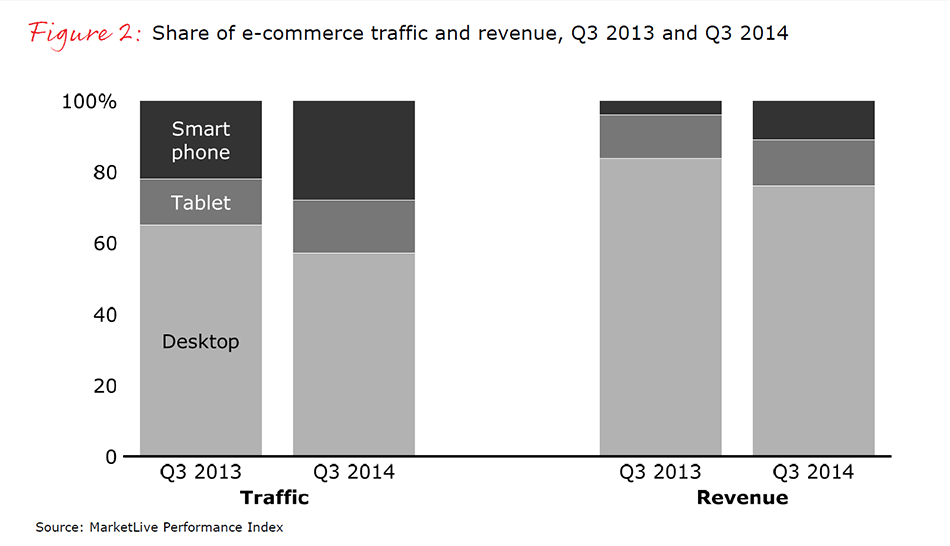
      Technology has changed the ways consumers live their everyday lives, so it is naturally changing how they shop. This holiday, there will be a record number of consumers using technology as part of the shopping experience. In the third quarter, smartphones and tablets accounted for 43% of all e-commerce site visits and 25% of e-commerce revenue, compared to 35% and 17% last year (see Figure 2).


      rhn-14-15-2-fig02_embed

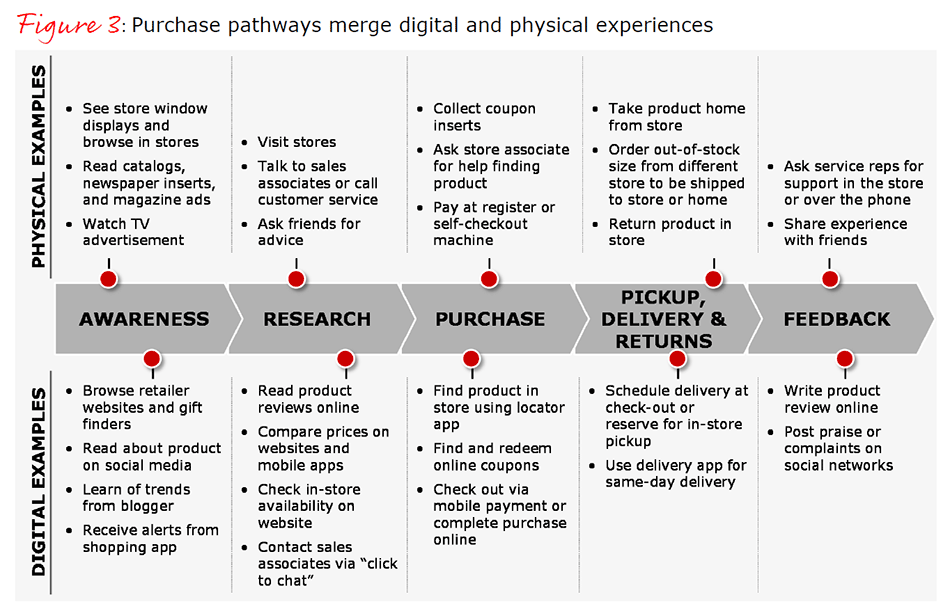
      Technology has made going online easy—anytime, anywhere. Consumers move between digital and physical worlds at will. Today, almost 60% of all retail sales are either carried out online or influenced by the Web. Shoppers are incorporating technology into each step of the consumer journey, and are expecting consistent experiences whether they’re shopping online or offline—their expectations for service, convenience and speed rising with every click and swipe (see Figure 3).


      rhn-14-15-2-fig03_embed


      Awareness: Inspire me, but don’t stalk me

      Technology is vital to helping shoppers discover new offerings. Consumers are using curated shopping platforms like Wanelo and Spring to browse multiple brands and filter suggestions based on personal preferences. They are turning to websites like Pinterest and Houzz to find ideas tailored to their taste, and are following bloggers or vloggers such as Zoella—whose beauty, fashion and lifestyle tips now reach more than 6.4 million subscribers through YouTube. They are choosing what to see and when they see it. They use apps like BlackFriday.com and SnapUp to set up alerts on specific products. Millions of shoppers have downloaded location-based apps like Shopular which notifies them about deals based on their favorite stores and Facebook interest lists, or Google Now which lets them know when they’re near a store that carries an item they’ve searched for online. Most customers prefer “opt-in” approaches, as privacy and security concerns loom large.

      Research: Help me learn

      Analysts report that 50% of smartphone users have engaged in showrooming and that 70% are webrooming, but the truth is that customers never use such terms. They are just shopping—in the tech-enabled ways they search for news, view entertainment, plan vacations or connect with friends. A recent FTC study found more than 150 price-comparison apps and 240 deal apps among the Google Play apps with more than 5,000 downloads.

      Still, it’s not just about websites and apps. In one survey, nearly 35% of respondents said speaking to an operator on the phone about a product or service makes them more likely to buy it. Over 60% of consumers want to be able to pick up the phone and call a business. Others are using live chats or videos to get the support they need as they browse online.

      Purchase: Help me find it and buy it (safely)

      Consumers are turning to technology solutions for quicker and more seamless purchasing. They are downloading mobile apps like aisle911 to help them navigate overcrowded stores and find specific products. Nearly 35% expect sales associates to be able to place Internet orders for them in stores. They are using scan-and-go and the other self-service technologies.

      Consumers are also warming up to mobile payment technologies that offer the convenience and safety of not needing a physical credit card or cash. A recent Gallup poll found that 69% of respondents frequently or occasionally worry about having their credit card information stolen by hackers when they use cards in stores. Apple Pay’s October launch may prove to be an inflection point for mobile payments, which are expected to more than double in value in the United States this year, from $1.6 billion in 2013 to $3.5 billion.

      Pickup or delivery (and returns): Get it to me where I want it, when I want it

      Last year’s holiday shipping delays will make customers even more demanding about where, when and how they receive their purchases this season. Many want faster delivery, some prefer picking up in stores, while others prefer very specific delivery windows. Expectations are rising as shoppers hear about the Postal Service offering select Sunday deliveries or about UPS’s My Choice, which allows customers to reroute packages and choose specific delivery windows. In some markets, shoppers subscribe to Google Express: For a $95 a year fee, they receive same-day deliveries from physical stores. Others use delivery apps like Postmates or WunWun which provide same-day or even one-hour delivery.

      Of course, free shipping still matters. A recent survey found that nearly 50% of online retailers interviewed cited free shipping as the most effective service to convert visitors into buyers. According to Internet Retailer, more than 60% of the 50 largest online retailers in North America are offering free shipping this holiday season. Consumers expect similar levels of flexibility when it comes to returns. From printing out prepaid shipping labels at home to returning online purchases in stores, they want to be able to return items in ways most convenient to them. We will cover the topics of shipping and flexible fulfilment in greater detail in our next issue, “The sprint toward Christmas.”

      Feedback: Let me tell you what I really think

      Technology is helping eager customers share their experiences immediately and with greater impact. More than 40% of millennials report that social media comments have more influence on their purchasing decisions than TV commercials or Internet ads, up 10 percentage points from last year. The rise of third-party marketplaces such as eBay, online ratings platforms like Yelp (138 million monthly users), and shared-economy players like Uber has made electronic feedback a part of consumers’ daily lives.

      Customers increasingly expect immediate resolution to problems. Last Christmas, customers took to the Web when Kohl’s was unable to fulfill orders in time for the holidays, creating a “Make Kohl’s Care” Facebook page as a platform to discuss their complaints. Kohl’s responded to particularly angry posts by offering $25 gift certificates as compensation.

      Retailers are smoothing customer pathways with technology

      The holiday shopping season is by far the most demanding for retailers. Busy stores and websites, heightened promotional activity, and thousands of temporary employees make it challenging for retailers to meet the expectations of harried shoppers. Technology to the rescue: Across all elements of the shopper journey, technology can help retailers provide consistent and superior brand experiences across both physical and digital worlds.

      What’s good for customers is often good for retailers, too. Omnichannel shoppers are typically a retailer’s most valuable customers—spending over five times as much as those who only shop online. Creating a great experience for those customers is critical, and not doing so is very risky. Technology investments don’t always add costs. Many approaches to enhance customers’ experiences can reduce overheads and improve operational effectiveness.

      Awareness: Earning customers’ attention

      Retailers have turned to new technologies to spark the shopping spirit. An increasing number, including Macy’s, Lord & Taylor and Urban Outfitters are using beacons to reach out to customers who have opted to learn about in-store promotions when they are in the vicinity of selected stores. In a pilot, Lord & Taylor found that more than 50% of customers engaged with the beacon push message and that more than 20% clicked to claim coupons. Even Santa has gone high tech in select General Growth Property malls where appointments can be made online and visiting Santa is an interactive adventure.

      One thing to remember: More isn’t always better as consumers become increasingly savvy at filtering out unsolicited communications. Nearly 70% of all email messaging is considered spam, and shoppers are quick to delete apps or adjust messaging settings when content isn’t relevant.

      Research: Providing ideas, information and service at reasonable cost

      Need inspiration, real-time product, pricing information or other customer service? Retailers are rolling out technology to help:

      • Gift finders. Smart algorithms and advanced search are helping customers take some of the guesswork out of holiday shopping. Gifts.com offers a Personality Profiler tool that helps shoppers identify the right gifts for the people on their list and purchase them directly on the website. Macy’s Image Search app and Neiman Marcus’s Snap.Find.Shop. feature use image-recognition technology to help shoppers track down products in stores using screenshots of similar products.
      • Deal finders. Retailers touting low prices are using technology to prove it. Walmart’s price-matching tool, Savings Catcher, compares prices across retailers and reimburses shoppers via an eGift card if a competitor’s advertised price is lower than the price paid at Walmart. Target is giving consumers a choice of coupons through its Cartwheel mobile app.
      • Self-service technologies. Helping shoppers help themselves can improve experience and save labor costs. Lowe’s and The Home Depot both maintain a detailed how-to library on their websites, including do-it-yourself (DIY) projects, assembly videos and videos to help consumers deck the halls for the holidays. Bloomingdale’s is testing “smart” fitting rooms, with iPads for checking product availability, reviews and recommendations. Customers can also use the devices to summon a sales associate without having to leave the fitting room. Macy’s is launching TableTop Builder in time for the holidays, a tool that helps customers visualize table settings online.
      • Tech-enabled sales associates. When asked what they want most from store associates, 73% of shoppers cite product knowledge. Lowe’s distributed 42,000 iPhones to store associates so they could quickly access information about products, inventory and pricing. Lowes and North Face are both taking automated in-store service one step further this holiday, testing robots and artificial intelligence fueled personal shopping programs.
      • Reimagining stores. Some retailers are implementing advanced technology-driven retail concepts. Retailers partnering with Hointer (which we will profile in an upcoming newsletter) enable customers to use mobile phones to select items, scan price tags and check out while in the store. The technology is not just streamlining shoppers’ in-store experience, it is also increasing retailers’ effectiveness. Fitting-room technology allows the store to determine what shoppers buy as well as what they leave behind, equipping sales associates and buyers with more customer data. Rebecca Minkoff has partnered with eBay’s retail innovation team to roll out a similar concept at two new digitized stores.

      Purchase: Make it simple (and safe) to buy

      No retailer wants customers to have trouble finding and buying items they are looking for, and many are turning to technology to help. Macy’s has partnered with Google to provide customers with real-time inventory information. Using Google Search, shoppers can find an item in stock at the nearest Macy’s and check for color, size and price. Walmart’s new mobile app, Search My Store, allows customers to determine the in-store availability of an item and the location of that item in the store, saving customers and store clerks time spent scouring the aisles. Other retailers, including Toys “R” Us and Lowe’s, offer digital maps to help customers navigate busy stores. These technologies can help big-box retailers in particular to retain shoppers who find big stores overwhelming relative to smaller, specialty formats. More retailers are also adopting mobile payment platforms to bring the convenience and safety of a digital wallet to in-store checkout.

      Retailers are turning to technology to enable purchases beyond their stores and websites. Sears, Kohl’s, Target and Walmart, for example, all publish interactive and “shoppable” videos to help reduce buying friction. Marc Jacobs Beauty sends registered shoppers a weekly e-mail with details on how to purchase the products they “like” on the retailer’s Instagram feed. Amazon’s Echo can respond to voice commands such as adding items on a shopping list, giving Amazon the potential to go from one-click to no-click shopping.

      Pickup or delivery (and returns): Offer more options—cheaper, faster, more profitably

      Leading retailers are integrating inventory systems and using advanced allocation algorithms to give customers more control over where, when and how they receive their purchases often at lower cost. In-store pickup reduces retailers’ shipping costs, increases inventory turns, drives traffic and promotes sales in stores. A recent UPS–comScore study found that of the 54% of customers who came to stores to pick up their purchases, 43% made an additional purchase. A Forrester Research study found that 88% of retailers that began shipping from stores saw an upswing in customer satisfaction. Retailers that are better able to manage inventory are also better equipped to deal with the large number of returns the holidays bring, helping reduce the significant cost of reverse logistics. Some examples of ways retailers are using technology to make sure shoppers get their products efficiently:

      • Macy’s is using RFID to track inventory. The technology is helping the retailer keep stores adequately stocked.
      • Nordstrom, lululemon and Sephora are using Wanelo to forecast trends and plan inventory based on a better understanding of customers’ needs.
      • Retailers such as Crate & Barrel, Williams-Sonoma and Nordstrom have partnered with Deliv to offer same-day delivery in several major markets, while Target, Home Depot and others are partnering with Curbside to offer free same-day drive-by and in-store pickups.

      Feedback: Listen and respond to what customers are saying

      Technology has changed the game when it comes to immediacy and reach of customer feedback, and it is also equipping retailers with better tools to listen and respond to those conversations:

      • Nike has a Twitter handle dedicated to customers’ questions and feedback. Customers tweet @NikeSupport to receive a fast response to feedback on a wide range of Nike products, from clothing to fitness apps and wearables.
      • Walmart has created a dedicated Facebook page for each of its stores where customers can submit feedback and see the store’s responses.
      • A number of retailers, among them Nordstrom and Sephora, have begun partnering with software provider Medallia to capture and analyze customer feedback from texts, social media and the Web. They use that feedback to improve daily operations in their stores.

      It takes more than a gadget

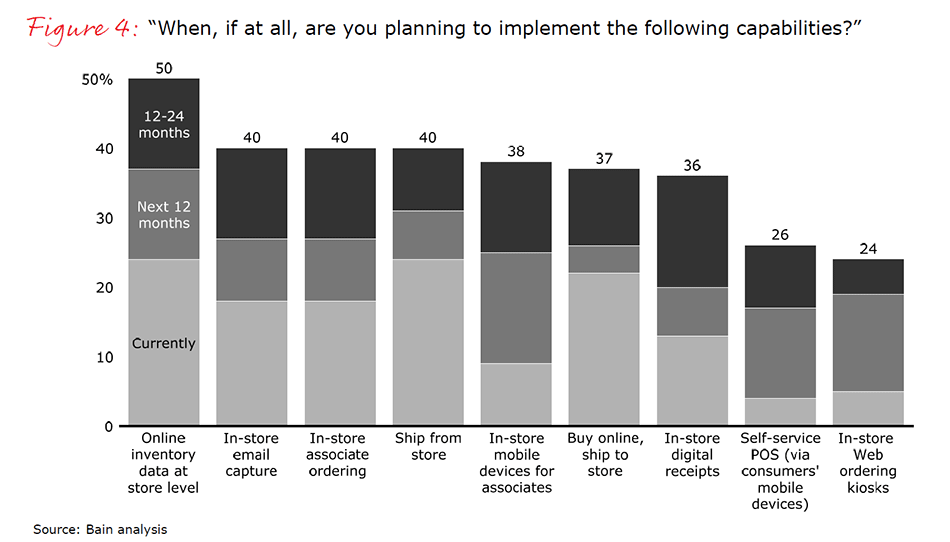
      Many retailers, eager to capitalize on advances in digital technologies, are rapidly implementing technology-related capabilities (see Figure 4).


      rhn-14-15-2-fig04_embed

      The challenge is that companies are so eager to adopt new technologies that different parts of the organization often spring into action in different ways. This leads to uncoordinated, duplicative activities, and customers are left with a disjointed experience in what should be a seamless omnichannel journey. Winning retailers follow five key steps when exploring when and how to invest in new technologies:

      1. Understand customer pathways and key pain points. Creating a seamless experience across both digital and physical worlds demands more than a website or WiFi in stores. It requires delivering a superior and consistent experience across multiple touchpoints throughout the shopper’s journey.
      2. Identify where technology investments can drive the greatest value. Technology shouldn’t be applied for technology’s sake. Retailers have to cut through the hype surrounding emerging technologies and focus on those that generate real value for targeted customers and for them.
      3. Prioritize where to invest. New technologies come with higher development costs, which means choices have to be made that align with the retailer’s brand and overall strategy.
      4. Build testing, learning, monitoring and feedback processes using customer experience metrics you can trust. An improved customer experience is the ultimate measure of the success of technology investments in retail. As technologies evolve, retailers need processes in place to ensure that the actions they are continuously improving that experience.
      5. Organize for success. Developing or investing in technology solutions requires new and different business models. Retailers need to ensure their operating model is set up to support a single, cohesive investment strategy.

      Looking forward: Future release dates and topics

      We wish you all success in the upcoming Black Friday week. We’ll be back after Thanksgiving and our next issue will explore supply chain strategies we expect retailers to use in the sprint toward Christmas.

      • Issue #3 (early December): The sprint toward Christmas
      • Issue #4 (mid-December): The art and science of pricing
      • Issue #5 (late January): Post-holiday outlook

      Please let us know if you have any questions or would like to arrange a follow-up discussion on technology or other retail topics. We look forward to continuing to share news of innovations and interesting strategies with you this holiday season.

      For a list of selected references, please view the full PDF.

      Appendix


      rhn-2014-2015-1-exhibit-01_embed

      1 GAFS sales are an advance estimate of GAFO sales. They include sales at general merchandise stores; clothing and clothing accessories stores; furniture and home furnishings stores; electronics and appliances stores; and sporting goods, hobby, book and music stores. (See Exhibit 1 in the Appendix for definitions of retail sales measures)

      Return to above


      2 The number of retailers that report same-store sales is down to 10 this year, from more than 50 in 2007. Many retailers have stopped reporting same-store sales to better focus on long-term growth and to avoid stock price fluctuations in response to monthly comparable-sales numbers. When same-store sales are reported, in some instances they also include Web-based sales fulfilled by stores, which makes year-over-year comparisons more difficult. The correlation between monthly ICSC same-store sales growth and GAFO sales growth over the last five years has fallen from R2 = 0.85 in 2011 and 0.7 in 2012 to R2 = 0.6 in 2014.
      Return to above

      rhn-14-15-2-fig01_full

      rhn-14-15-2-fig02_full

      rhn-14-15-2-fig03_full

      rhn-14-15-2-fig04_full

      rhn-2014-2015-1-exhibit-01_full
      Authors
      • Headshot of Darrell Rigby
        Darrell Rigby
        Partner, Boston
      • Headshot of Erika Serow
        Erika Serow
        Partner & Chief Marketing Officer, New York
      • Headshot of Suzanne Tager
        Suzanne Tager
        Chief of Staff to the Worldwide Managing Partner, New York
      • Headshot of Aaron Cheris
        Aaron Cheris
        Partner, San Francisco
      Contact us
      Related Industries
      • Retail
      Retail Holiday Newsletter
      The 2026 Retail Executive Agenda

      Here are letters to the C-suite to help strengthen strategy, catalyze collaboration, and expand value creation in the AI age.

      Read More
      Retail
      The 2025 Chinese Personal Luxury Goods Market

      Recalibration, resurgence, and more selective consumers are edging China’s personal luxury market toward recovery.

      Read More
      Retail Holiday Newsletter
      2030 Forecast: How Agentic AI Will Reshape US Retail

      Bain estimates that AI agents could be responsible for 15% to 25% of US e-commerce sales.

      Read More
      Retail
      2026 Global Retail Sales Outlook

      What can retailers in the US, UK, France, and Germany anticipate from shoppers this year?

      Read More
      Retail Holiday Newsletter
      Agentic AI in Retail: How Autonomous Shopping Is Redefining the Customer Journey

      As agentic AI transforms retail economics, industry leaders will compete for shoppers and agents alike.

      Read More
      Published in November 2014
      Tags
      • Retail
      • Retail Holiday Newsletter

      How We've Helped Clients

      Sales and Marketing Inspiring retail employees to think and act like owners

      Read case study

      Performance Improvement Retailer's performance improvement boosts shareholder value

      Read case study

      Digital Omnichannel strategy boosts fashion company

      Read case study

      Ready to talk?

      We work with ambitious leaders who want to define the future, not hide from it. Together, we achieve extraordinary outcomes.

      Stay ahead in a rapidly changing world. Subscribe to Bain Insights, our monthly look at the critical issues facing global businesses.

      *I have read and understand Bain’s Privacy Notice.

      Please read and agree to the Privacy Policy.
      Bain & Company
      Contact us Sustainability Accessibility Terms of use Privacy Modern Slavery Act Statement Cookie Policy Sitemap Log In

      © 1996-2026 Bain & Company, Inc.

      Contact Bain

      How can we help you?

      • Business inquiry
      • Career information
      • Press relations
      • Partnership request
      • Speaker request
      See all offices