


Brief


|
|
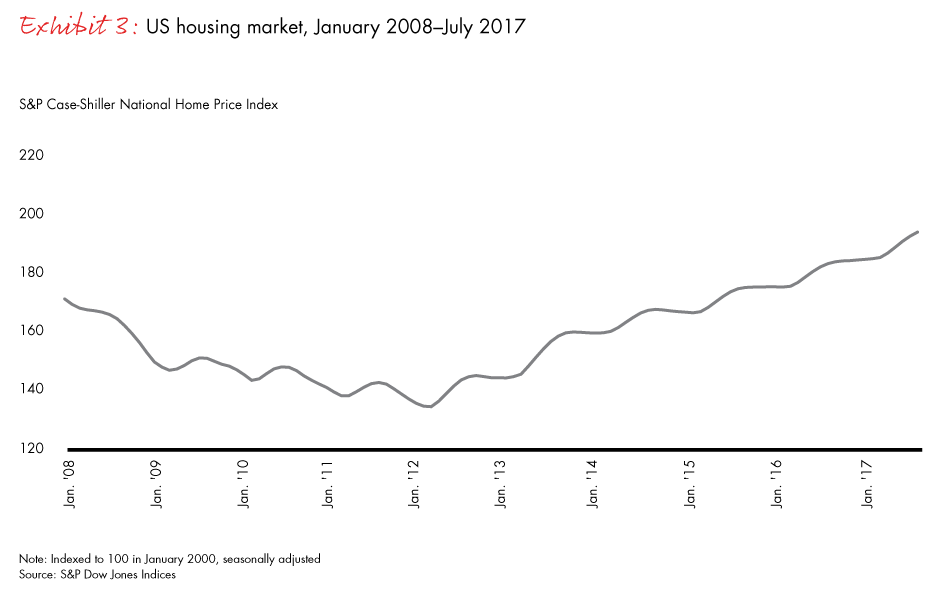
Bain & Company is forecasting 3.5% to 3.9% growth in US retail sales this holiday season, slightly above last year’s 3.5% growth and well above the 10-year average of 2.6%. Our optimism stems from positive macroeconomic indicators across the board, including rising wages, increasing employment and a strong stock market. We also see above-average growth in housing-related expenditures. The forecast is tempered, however, by sluggish in-store sales, deflationary pressures in a few key retail categories and a continued shift toward spending on services, a segment we don’t include in our analysis of retail sales. In this issue we also look at preseason customer advocacy. As the holiday shopping season unfolds, we plan to track and report changes in that advocacy and identify the innovations that will have the greatest impact during this high-stakes season and beyond. Unwrapping the forecastBain expects total US retail sales to grow 3.5% to 3.9% this holiday season, slightly above last year’s 3.5% growth and well above the 10-year average of 2.6% (see Figure 1). We define holiday retail sales as in-store and nonstore (e-commerce and mail-order) sales during the months of November and December, excluding sales by auto and auto parts dealers, gas stations and restaurants (see Exhibit 1 in the Appendix). 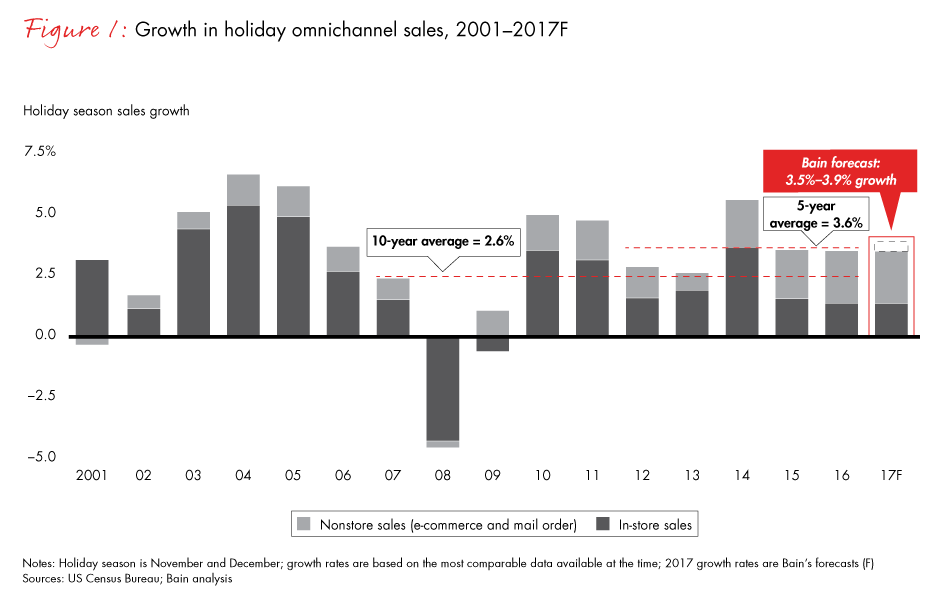
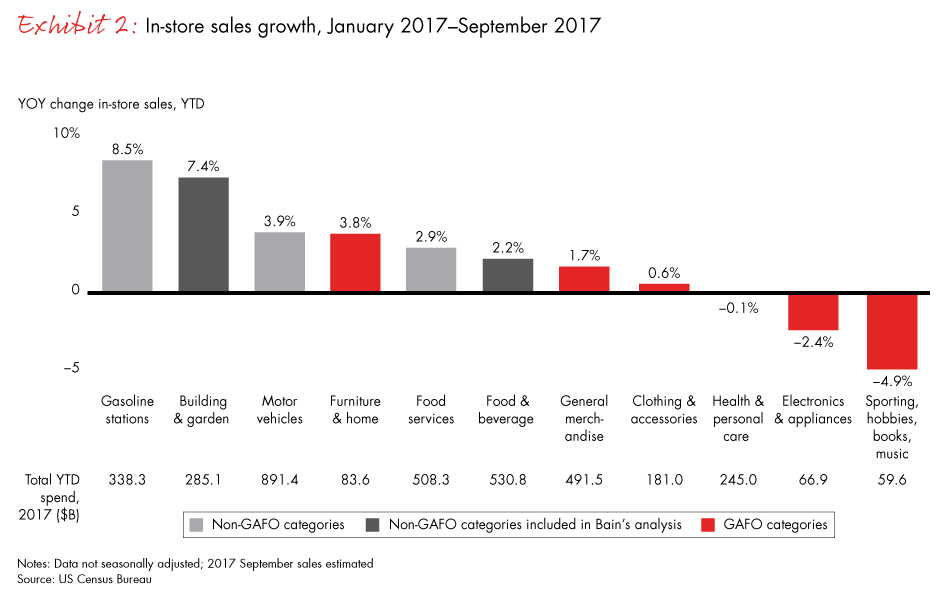
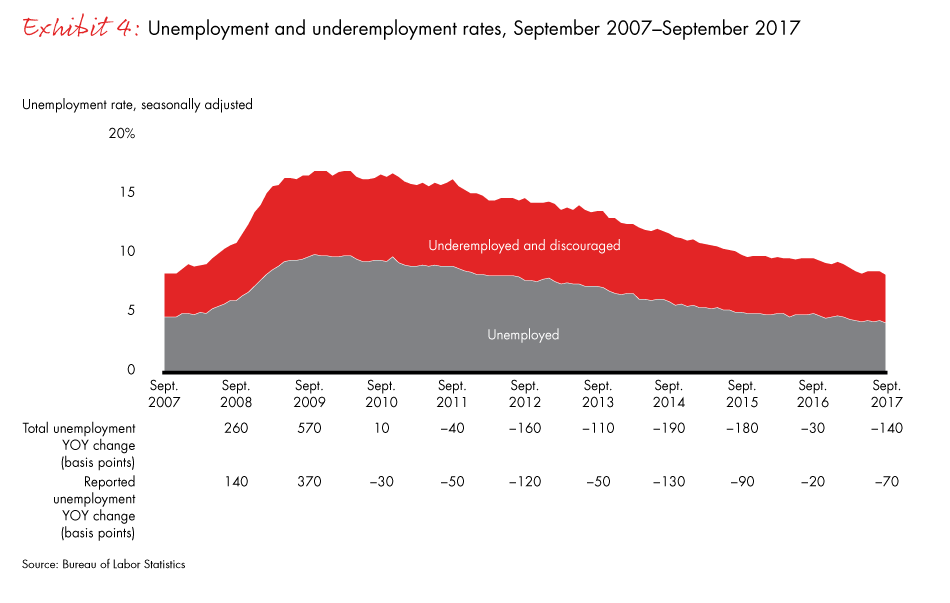
As usual, in-store retail sales will be critical to the holiday season: They represent more than 80% of holiday retail sales. Bain forecasts in-store sales growth of 1.7% to 2%. The low end of the range is in line with last year’s growth of 1.7%; the high end mirrors current year-to-date growth of 2%. Meanwhile, e-commerce continues to show strong momentum year to date, with 15% to 16% growth over the first half of 2017. We expect that momentum to continue into the fourth quarter. Macroeconomic indicators support prospects for a healthy holiday shopping season. Most consumers have more money to spend on holiday gifts this year, a function of favorable employment and wage trends. Several other positive forces are at play too:
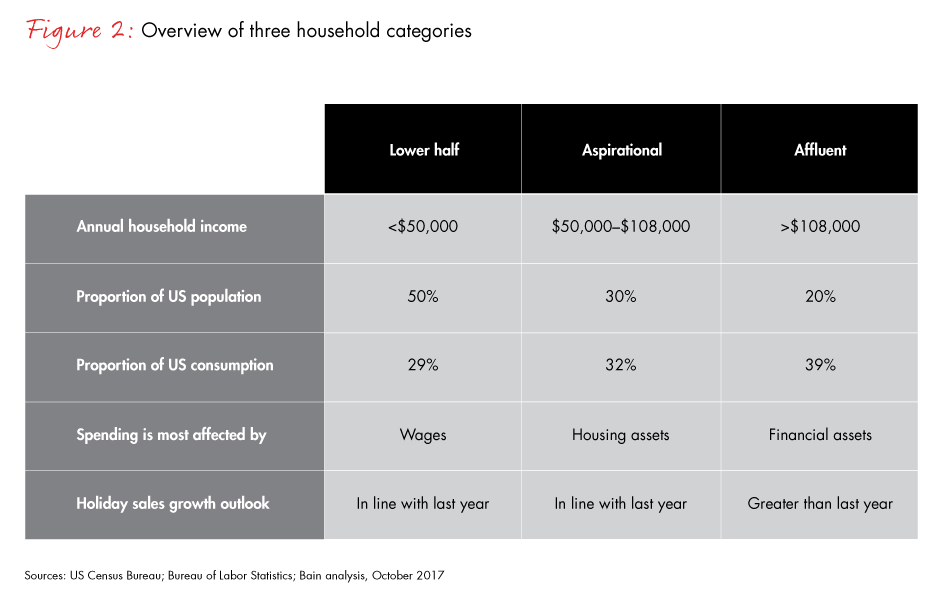
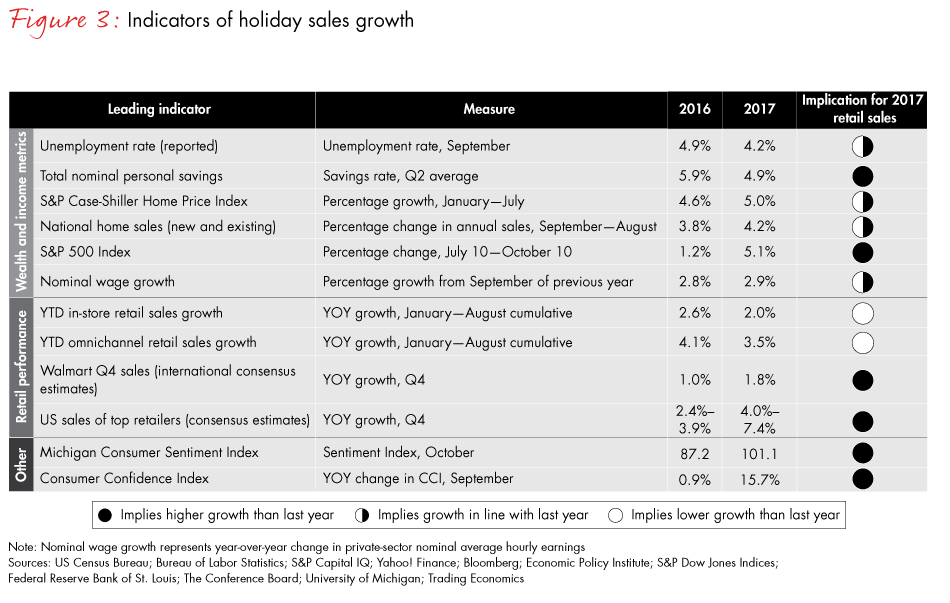
Offsetting these positive indicators are deflationary pressures on televisions, toys and other key holiday items, along with geopolitical uncertainty. In addition, a strong dollar (currently slightly below last year’s value) and more restrictive visa policies continue to constrain tourism. Although the shopping outlook is good, clearly there are headwinds at play:
The gift of customer advocacyThe holiday season presents extraordinary opportunities to shift consumer loyalty and drive advocacy. New customers are experimenting, trying new places both for themselves and for gifting. Current customers are hoping their loyalty will earn them valuable benefits. All of this comes at a time when peak utilization is stressing the system and competition is at fever pitch. The stakes for meeting shoppers’ demands, both physical and emotional, are higher than ever. If shipments arrive late, products don’t look or fit the way they’re described or customers’ questions are left unanswered, shoppers take note…and they tell their friends. The solution for retailers may well lie in customer advocacy. After all, in many ways, gift-giving is the highest form of advocacy. We have the starting positions on that advocacy for a lot of retailers and will track how things change throughout the season. Bain’s 2017 Advocacy in US Retail study, conducted in collaboration with ROI Consultancy Services, shows a wide spectrum of preseason performance. Looking at top retailers, Net Promoter Score®, a measure of customer advocacy and satisfaction, ranges from −26 to 57.1 Bain research also has shown that advocacy leaders in retail outperform their competitors by two to three times in terms of organic annual growth, and that many of them outperformed their competitors within their price tier and segment last holiday season. As the season unfolds, we’ll share our observations of retailers that are delivering the “wow factor” to improve the lifetime value—and the holiday value—of their customers. On our list this holiday seasonOver the next three months, in addition to tracking US sales data and broader trends impacting retailers globally, we will closely follow several hot topics ranging from how Amazon has continued to expand its reach to the latest technological and promotional strategies retailers are employing this holiday season. Here’s a preview of our upcoming newsletters:
Please let us know if you have other topics you would like to learn more about by emailing us at RetailHolidayNewsletter@bain.com. We look forward to sharing holiday headlines with you and hearing from you throughout the holiday season. Appendix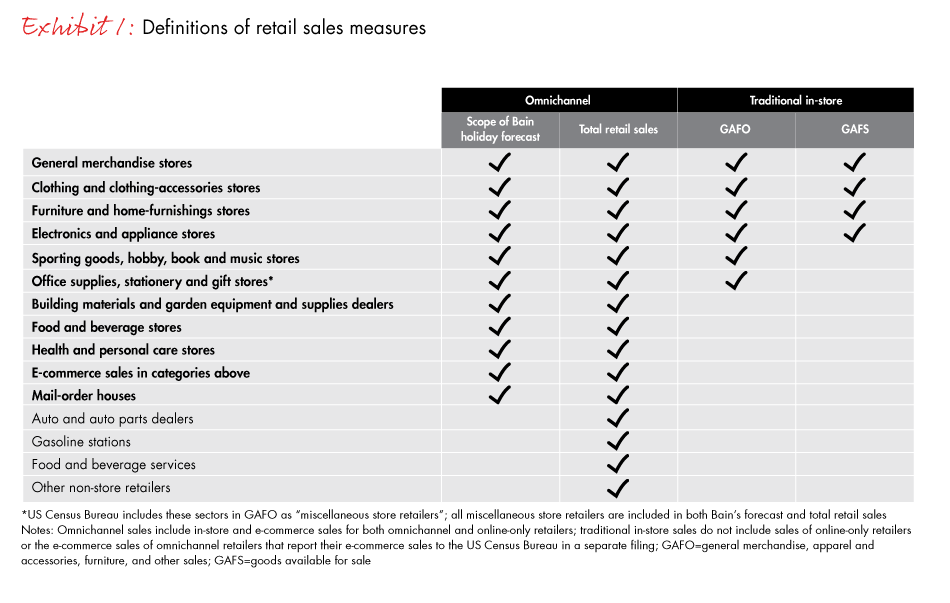
View the full PDF for a list of references About Our Research PartnerROI Consultancy Services
1 The Net Promoter Score® is derived by asking consumers, “On a scale of zero to 10, how likely would you be to recommend this company (or this product) to friends and colleagues?” Ratings of 9 or 10 indicate promoters; 7 and 8, passives; and zero through 6, detractors. The score is simply the percentage of promoters minus the percentage of detractors. Net Promoter®, Net Promoter System®, Net Promoter Score® and NPS® are registered trademarks of Bain & Company, Inc., Fred Reichheld and Satmetrix Systems, Inc. |