


Skip to Content
  • Offices

    Offices

    North & Latin America
    • Atlanta
    • Austin
    • Bogota
    • Boston
    • Buenos Aires
    • Chicago
    • Dallas
    • Denver
    • Houston
    • Los Angeles
    • Mexico City
    • Minneapolis
    • Monterrey
    • Montreal
    • New York
    • Rio de Janeiro
    • San Francisco
    • Santiago
    • São Paulo
    • Seattle
    • Silicon Valley
    • Toronto
    • Washington, DC
    Europe & Africa
    • Amsterdam
    • Athens
    • Berlin
    • Brussels
    • Copenhagen
    • Dusseldorf
    • Frankfurt
    • Helsinki
    • Istanbul
    • Johannesburg
    • Kyiv
    • Lisbon
    • London
    • Madrid
    • Milan
    • Munich
    • Oslo
    • Paris
    • Rome
    • Stockholm
    • Vienna
    • Warsaw
    • Zurich
    Middle East
    • Doha
    • Dubai
    • Riyadh
    Asia & Australia
    • Bangkok
    • Beijing
    • Bengaluru
    • Brisbane
    • Ho Chi Minh City
    • Hong Kong
    • Jakarta
    • Kuala Lumpur
    • Manila
    • Melbourne
    • Mumbai
    • New Delhi
    • Perth
    • Seoul
    • Shanghai
    • Singapore
    • Sydney
    • Tokyo
    See all offices
  • Alumni
  • Media Center
  • Subscribe
  • Contact
  • Global | English

    Select your region and language

    Global
    • Global (English)
    North & Latin America
    • Brazil (Português)
    • Argentina (Español)
    • Canada (Français)
    • Chile (Español)
    • Colombia (Español)
    Europe, Middle East, & Africa
    • France (Français)
    • DACH Region (Deutsch)
    • Italy (Italiano)
    • Spain (Español)
    • Greece (Elliniká)
    Asia & Australia
    • China (中文版)
    • Korea (한국어)
    • Japan (日本語)
  • Saved items (0)
    Saved items (0)

    You have no saved items.

    Bookmark content that interests you and it will be saved here for you to read or share later.

    Explore Bain Insights
  • Industries
    Main menu

    Industries

    • Aerospace & Defense
    • Agribusiness
    • Chemicals
    • Construction & Infrastructure
    • Consumer Products
    • Financial Services
    • Healthcare & Life Sciences
    • Industrial Machinery & Equipment
    • Media & Entertainment
      Industries
      Media & Entertainment
      • Media Lab
    • Metals
    • Mining
    • Oil & Gas
    • Paper & Packaging
    • Private Equity
      Industries
      Private Equity
      • Due Diligence
      • Exit Planning
      • Firm Strategy & Operations
      • Portfolio Value Creation
    • Social Impact
    • Retail
    • Technology
    • Telecommunications
      Industries
      Telecommunications
      • Capital Expenditure
      • Telco Digital Transformation
    • Transportation
    • Travel & Leisure
    • Utilities & Renewables
  • Consulting Services
    Main menu

    Consulting Services

    • Customer Experience
    • Sustainability
    • Innovation
    • M&A
    • Operations
    • People & Organization
    • Private Equity
    • Sales & Marketing
    • Strategy
    • AI, Insights, and Solutions
    • Technology
    • Transformation
  • Digital
  • Insights
    Main menu

    Insights

    • Industry Insights
    • Services Insights
    • Bain Books
    • Webinars
    • Bain Futures
    View all Insights
    Featured topics
    • Tariff Response
    • Artificial Intelligence
    • Thriving in Uncertainty
    • Executive Conversations
    • Macro Trends
    • M&A Report
    • Healthcare Private Equity Report
    • Paper & Packaging Report
    • Technology Report
    • CEO's Guide to Sustainability
    • CEO Insights
    • CFO Insights
    • COO Insights
    • CIO Insights
    • CMO Insights
    View all featured topics
  • About
    Main menu

    About

    • What We Do
    • What We Believe
    • Our People & Leadership
    • Client Results
    • Awards & Recognition
    • Global Affiliations
    Further: Our global responsibility
    • Sustainability
    • Social Impact
    • World Economic Forum
    Learn more about Further
  • Careers
    Main menu

    Careers

    • Work with Us
      Careers
      Work with Us
      • Find Your Place
      • Our Work Areas
      • Integrated Teams
      • Students
      • Internships & Programs
      • Recruiting Events
    • Life at Bain
      Careers
      Life at Bain
      • Blog: Inside Bain
      • Career Stories
      • Our People
      • Where We Work
      • Supporting Your Growth
      • Affinity Groups
      • Benefits
    • Impact Stories
    • Hiring Process
      Careers
      Hiring Process
      • What to Expect
      • Interviewing
    FIND JOBS
  • Offices
    Main menu

    Offices

    • North & Latin America
      Offices
      North & Latin America
      • Atlanta
      • Austin
      • Bogota
      • Boston
      • Buenos Aires
      • Chicago
      • Dallas
      • Denver
      • Houston
      • Los Angeles
      • Mexico City
      • Minneapolis
      • Monterrey
      • Montreal
      • New York
      • Rio de Janeiro
      • San Francisco
      • Santiago
      • São Paulo
      • Seattle
      • Silicon Valley
      • Toronto
      • Washington, DC
    • Europe & Africa
      Offices
      Europe & Africa
      • Amsterdam
      • Athens
      • Berlin
      • Brussels
      • Copenhagen
      • Dusseldorf
      • Frankfurt
      • Helsinki
      • Istanbul
      • Johannesburg
      • Kyiv
      • Lisbon
      • London
      • Madrid
      • Milan
      • Munich
      • Oslo
      • Paris
      • Rome
      • Stockholm
      • Vienna
      • Warsaw
      • Zurich
    • Middle East
      Offices
      Middle East
      • Doha
      • Dubai
      • Riyadh
    • Asia & Australia
      Offices
      Asia & Australia
      • Bangkok
      • Beijing
      • Bengaluru
      • Brisbane
      • Ho Chi Minh City
      • Hong Kong
      • Jakarta
      • Kuala Lumpur
      • Manila
      • Melbourne
      • Mumbai
      • New Delhi
      • Perth
      • Seoul
      • Shanghai
      • Singapore
      • Sydney
      • Tokyo
    See all offices
  • Alumni
  • Media Center
  • Subscribe
  • Contact
  • Global | English
    Main menu

    Select your region and language

    • Global
      Select your region and language
      Global
      • Global (English)
    • North & Latin America
      Select your region and language
      North & Latin America
      • Brazil (Português)
      • Argentina (Español)
      • Canada (Français)
      • Chile (Español)
      • Colombia (Español)
    • Europe, Middle East, & Africa
      Select your region and language
      Europe, Middle East, & Africa
      • France (Français)
      • DACH Region (Deutsch)
      • Italy (Italiano)
      • Spain (Español)
      • Greece (Elliniká)
    • Asia & Australia
      Select your region and language
      Asia & Australia
      • China (中文版)
      • Korea (한국어)
      • Japan (日本語)
  • Saved items  (0)
    Main menu
    Saved items (0)

    You have no saved items.

    Bookmark content that interests you and it will be saved here for you to read or share later.

    Explore Bain Insights
  • Industries
    • Industries

      • Aerospace & Defense
      • Agribusiness
      • Chemicals
      • Construction & Infrastructure
      • Consumer Products
      • Financial Services
      • Healthcare & Life Sciences
      • Industrial Machinery & Equipment
      • Media & Entertainment
      • Metals
      • Mining
      • Oil & Gas
      • Paper & Packaging
      • Private Equity
      • Social Impact
      • Retail
      • Technology
      • Telecommunications
      • Transportation
      • Travel & Leisure
      • Utilities & Renewables
  • Consulting Services
    • Consulting Services

      • Customer Experience
      • Sustainability
      • Innovation
      • M&A
      • Operations
      • People & Organization
      • Private Equity
      • Sales & Marketing
      • Strategy
      • AI, Insights, and Solutions
      • Technology
      • Transformation
  • Digital
  • Insights
    • Insights

      • Industry Insights
      • Services Insights
      • Bain Books
      • Webinars
      • Bain Futures
      View all Insights
      Featured topics
      • Tariff Response
      • Artificial Intelligence
      • Thriving in Uncertainty
      • Executive Conversations
      • Macro Trends
      • M&A Report
      • Healthcare Private Equity Report
      • Paper & Packaging Report
      • Technology Report
      • CEO's Guide to Sustainability
      • CEO Insights
      • CFO Insights
      • COO Insights
      • CIO Insights
      • CMO Insights
      View all featured topics
  • About
    • About

      • What We Do
      • What We Believe
      • Our People & Leadership
      • Client Results
      • Awards & Recognition
      • Global Affiliations
      Further: Our global responsibility
      • Sustainability
      • Social Impact
      • World Economic Forum
      Learn more about Further
  • Careers
    Popular Searches
    • Agile
    • Digital
    • Strategy
    Your Previous Searches
      Recently Visited Pages

      Content added to saved items

      Saved items (0)

      Removed from saved items

      Saved items (0)

      Brief

      The digital disconnect in consumer products

      The digital disconnect in consumer products

      Here’s what the digitally entitled consumer means for consumer products companies.

      By David Harding and Suzanne Tager

      • min read

      Brief

      The digital disconnect in consumer products
      en

      The digital shopping era has arrived, and opportunities for consumer products companies abound. With those opportunities, however, come risks that threaten to render long-standing business models obsolete.

      This era is being shaped by a new class of consumers: the digitally entitled. These consumers want the best products—at the lowest prices—available around the clock. They want the option of home delivery, ideally with free shipping or in-store pickup. They want immediate recourse if something goes wrong. And even if a company delivers all of that, they have no guarantee of loyalty, thanks to the unprecedented amount of information consumers can access to get the best deal.

      The result: The consumer products’ profit pool may never look the same. Globally, the approximately $1 trillion profit pool has favored the top consumer products manufacturers—which have earned double-digit margins for the past decade—over the grocery retailers—which eke out sub-5% margins on average. But the growth of online retail means new entrants, and invigorated competitors will change the size and dispersion of the profit pool in ways we can only begin to understand. Need proof? A look at just one element of that profit pool—grocery retail—shows how dramatically even incremental changes in consumer behavior may affect profits. The way it plays out in different markets will vary, of course, but the economics point to a challenging environment for grocers that don’t take action. For example, if online players cherry-pick just 10% of the volume in categories that are more inclined to move online—such as general merchandise and non-perishables—grocers that don’t respond stand to lose about 25% of pretax profit, according to Bain & Company analysis. That loss soars to more than 50% if full baskets shift. Even grocers that invest wisely in omnichannel capabilities will experience some turmoil as expenses rise, stores go dark and customer loyalties change.

      As retailers vie for share, the battle will affect everyone in the profit pool. For example, retailers will likely look to their vendors for trade allowances to compete on price, adjust category space allocations to drive traffic, ask for exclusive products to differentiate assortments and manage inventory down as they seek capital to reinvest in their businesses. Those demands inevitably will affect the core operations of consumer products companies, from product development to supply chains to sales execution—and ultimately, profits.

      Anticipating the shift, some leading consumer products companies have started to erase the lines between digital and the rest of their business. The required change focuses first on two critical areas: resource allocation and the operating models that define where and how work gets done. The leaders are adapting their playbooks to win in this new environment, updating familiar chapters with very different tactics. If your company is still watching and waiting, the most critical step at the moment is to gauge what it will take to win with the digitally entitled consumer and put some stakes in the ground.

      Digital shopping is coming to the grocery aisles

      Grocery is one of the last frontiers of digital retail, thanks mostly to the perishable nature of fresh and frozen foods and challenging economics of delivery, but evidence suggests that this will change. Some studies show that more than 50% of consumers have already purchased some grocery products online, with urban convenience seekers leading the way. Online sales are a relatively small percentage of all grocery sales in most markets now, but have climbed to nearly 7% in some. Certainly, the online grocery experience is still a work in progress, but one that is well under way. Online behemoth Amazon.com has stated plans to expand its grocery offering in the US, UK and Germany, and brick-and-mortar grocers everywhere—from Australia to Amsterdam—are building digital capabilities. Experiments like online-only specials, transaction-enabled marketing and drive-thru pickup locations will improve the experience and economics, and more solutions are in the works.

      The rapid growth of online apparel and accessories sales shows how quickly behaviors can change. It wasn’t long ago that brands in this space felt insulated from the impact of the Internet. After all, the conventional wisdom ran, consumers need to try on shoes and touch fabrics before buying. Enter more reliable search engines, better photography and video clips, helpful product reviews, broader ranges of sizes and colors and in many cases free shipping. Today, the online penetration of apparel and accessories sales is above overall retail averages.

      Opportunities for CPGs

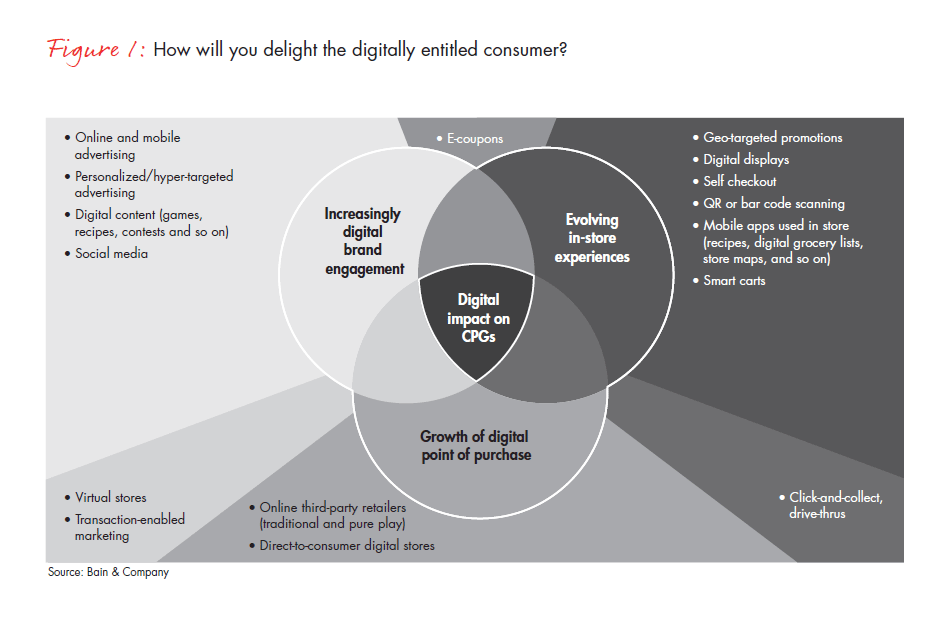
      Digital creates three primary categories of opportunities for CPGs (see Figure 1). The first and best known is brand engagement: creating awareness of products through digital advertising, email, social media, mobile apps and more. Second is using digital to influence in-store experience—experiments including digital displays and QR code scanning. The third category, digital point-of-sale, is rapidly gaining traction as retailers invest to expand online offerings.

      the-digital-disconnect-in-cosumer-products-fig-01_embed

      Boundaries are blurring, and opportunities are increasingly at the intersections of these categories. For example, digital brand building can quickly take consumers from discovery to purchase as transaction-enabled marketing takes root. PepsiCo’s Facebook ads in the UK use Slingshot to let consumers place a product in their online basket at the retailer of their choice; the next time they make a purchase, it’s there waiting for them. The proliferation of smartphones creates new ways for marketing to influence in-store experiences. Shopmium’s mobile app delivers consumer products promotions and a map of nearby retailers that carry the products directly to shoppers’ phones in France. At the intersection of digital point-of-purchase and in-store experience is the “click and collect” model, which allows consumers to select their groceries online and then pick them up at the store or another designated location. This model is poised to rapidly expand in many markets, sending an increasing number of customers to pick-up sites and fewer into the stores. For example, Walmart-owned ASDA announced plans to add this capability to nearly half its UK stores in the space of a year.

      Updating the playbook

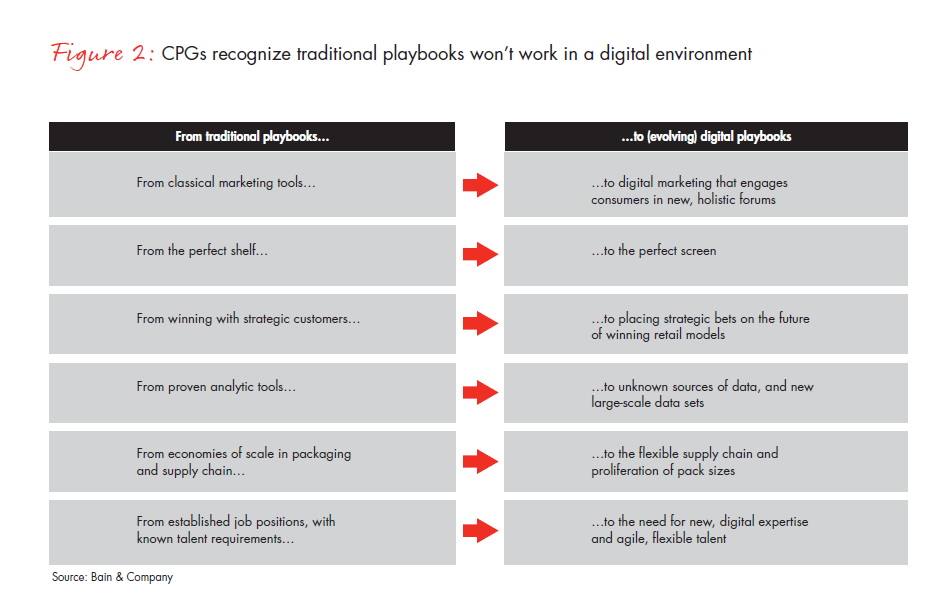
      As the battle for sales moves from aisles to screens, what it takes to win—and be profitable—is changing quickly. One of the most immediate issues that consumer products executives confront is how to update their playbooks. The chapters may be the same, covering marketing, sales, supply chain and so on, but the plays are going to be different in the digital environment and many require new ways of working across functional silos (see Figure 2).

      the-digital-disconnect-in-cosumer-products-fig-02_embed

      Consider how many years consumer products companies have spent creating the perfect shelf set. The screen, however, is completely different. Time-honored techniques for getting a shopper’s attention in the store, including clusters of facings, end caps and weekly specials, don’t exist in an online format. While most consumer products companies are still discovering the formula for creating a perfect screen, the leaders are experimenting with search optimization, rich media content to bring their brands to life and exclusive online products that cannot be compared across retailers or across channels.

      Finding the right operating model for a digitally advanced organization is one of the biggest challenges facing consumer products companies. Some companies have embedded digital experts in each brand or sales team; others have created digital centers of excellence to serve across the firm. The unifying theme: a recognition that digital requires new forms of collaboration across brands, categories and geographies. That has prompted leadership teams to ask themselves some key questions:

      • What is our digital vision and are we making deliberate choices to accomplish our goals?
      • How do our brands translate into online offerings? What stays the same, what changes and who makes this decision?
      • How do we encourage zero-based budgeting, so that there is not a bias toward the old way of doing business?
      • What can we learn from digital shoppers, and how do we feed that insight back to brand and sales teams?
      • Will we need different types of talent and skills going forward to achieve our brand goals?
      • Where can we find funds to invest in new capabilities and innovations?

      Plan of action: Three no-regret moves

      Bain has interviewed dozens of consumer products executives to learn how they are responding to the new era of the digitally entitled consumer. While executives universally recognize the phenomenon, their responses are diverse and highly experimental. The catalyst for change in many organizations is often a “maverick” with the gravitas to cut across functional boundaries and bootstrap resources. Outside of marketing, digital efforts are generally something of an outpost, only loosely linked to standard business operations.

      These ad hoc responses are a natural first step, but not likely sustainable, considering the magnitude of change on the horizon. As the industry profit pool churns, the task at hand is to make sure organizations have the proper resources and operating model to meet the opportunities and challenges coming their way. While there are many unknowns, three steps can help a company get off the ground. The first is to set a baseline. This includes taking stock of the organization’s current digital efforts, as well as looking externally to understand the urgency for a particular category and market. The next step is to set a strategy and take some reasonable risks, encouraging a “test and learn” culture of experimentation. Finally, taking out complexity, inventory and cost wherever possible will not only make change easier, it will help fuel investments in new capabilities.

      Conclusion

      Managing disruptive change is never easy. It requires abandoning old patterns and establishing new ones in the face of uncertainty, and often, doubt. But for companies that have been through market disruptions before, the high price of falling behind looms large. Just look at how quickly the warehouse club channel changed the game. These stores offer a limited assortment of brands, heavily skewed toward large pack sizes. When the format first emerged in the US, consumers were interested, but executives at a leading food company spurned unfavorable economics. They decided not to invest deeply in the new requirements of the channel, believing volume would never be significant.

      Fast forward to today: The warehouse clubs now have a nearly 10% share of the market in the US and competitors that invested enough in capabilities have captured huge market share gains. The food company is now fully participating, but only after several years of playing catch-up.

      Farsighted executives still have time to lay the foundations for success in a digital world. As the profit pool churns, however, the opportunities to proactively delight the digitally entitled consumer and build platforms for competitive advantage may dwindle. Is your company ready to make a move now?

      David Harding is a partner in the Boston office and founding member of Bain’s Consumer Products practice. Suzanne Tager is senior director of Bain’s Americas Consumer Products and Retail practices and is based in New York. Leigha Salvo, a Bain consultant based in New York, also contributed to this report.


      the-digital-disconnect-in-cosumer-products-fig-01_full

      the-digital-disconnect-in-cosumer-products-fig-02_full
      Authors
      • Headshot of David Harding
        David Harding
        Advisory Partner, Boston
      • Headshot of Suzanne Tager
        Suzanne Tager
        Chief of Staff to the Worldwide Managing Partner, New York
      Contact us
      Related Industries
      • Consumer Products
      Related Consulting Services
      • Digital
      Consumer Products
      Growing brands by understanding what Chinese shoppers really do

      The days of growing a brand just by riding a category wave are coming to an end, especially in top-tier cities. As in more mature markets, brand growth in China will need to come from share gains.

      Read More
      Consumer Products
      Growth through simplicity: How the best consumer goods players are getting bigger by getting smaller

      By focusing only on winning products, consumer goods companies are finding a way to outperform.

      Read More
      Consumer Products
      How US Consumers Are Adopting Generative AI

      Daily use of gen AI is becoming routine, but some mistrust lingers.

      Read More
      Consumer Products
      Shift to Vertical: David Haines, Group CEO, Flora Food Group

      What does it take to stay connected to your customers when scale and complexity threaten to pull you away? 

      Read More
      Digital
      What Business Leaders Need to Know About AI Sovereignty

      Aligning business strategy with national AI priorities is necessary to compete and scale.

      Read More
      Published in October 2013
      Tags
      • Consumer Products
      • Digital

      How We've Helped Clients

      Sustainability A Personal Care and Cosmetics Brand Charts a Course for Sustainability

      Read case study

      Change Management Results360® Propels an Appliance Maker Into a New Era of Growth

      Read case study

      Sales and Marketing A sweet new branding strategy

      Read case study

      Ready to talk?

      We work with ambitious leaders who want to define the future, not hide from it. Together, we achieve extraordinary outcomes.

      Stay ahead in a rapidly changing world. Subscribe to Bain Insights, our monthly look at the critical issues facing global businesses.

      *I have read and understand Bain’s Privacy Notice.

      Please read and agree to the Privacy Policy.
      Bain & Company
      Contact us Sustainability Accessibility Terms of use Privacy Modern Slavery Act Statement Cookie Policy Sitemap Log In

      © 1996-2026 Bain & Company, Inc.

      Contact Bain

      How can we help you?

      • Business inquiry
      • Career information
      • Press relations
      • Partnership request
      • Speaker request
      See all offices