
Skip to Content
  • Offices

    Offices

    North & Latin America
    • Atlanta
    • Austin
    • Bogota
    • Boston
    • Buenos Aires
    • Chicago
    • Dallas
    • Denver
    • Houston
    • Los Angeles
    • Mexico City
    • Minneapolis
    • Monterrey
    • Montreal
    • New York
    • Rio de Janeiro
    • San Francisco
    • Santiago
    • São Paulo
    • Seattle
    • Silicon Valley
    • Toronto
    • Washington, DC
    Europe & Africa
    • Amsterdam
    • Athens
    • Berlin
    • Brussels
    • Copenhagen
    • Dusseldorf
    • Frankfurt
    • Helsinki
    • Istanbul
    • Johannesburg
    • Kyiv
    • Lisbon
    • London
    • Madrid
    • Milan
    • Munich
    • Oslo
    • Paris
    • Rome
    • Stockholm
    • Vienna
    • Warsaw
    • Zurich
    Middle East
    • Doha
    • Dubai
    • Riyadh
    Asia & Australia
    • Bangkok
    • Beijing
    • Bengaluru
    • Brisbane
    • Ho Chi Minh City
    • Hong Kong
    • Jakarta
    • Kuala Lumpur
    • Manila
    • Melbourne
    • Mumbai
    • New Delhi
    • Perth
    • Seoul
    • Shanghai
    • Singapore
    • Sydney
    • Tokyo
    See all offices
  • Alumni
  • Media Center
  • Subscribe
  • Contact
  • Global | English

    Select your region and language

    Global
    • Global (English)
    North & Latin America
    • Brazil (Português)
    • Argentina (Español)
    • Canada (Français)
    • Chile (Español)
    • Colombia (Español)
    Europe, Middle East, & Africa
    • France (Français)
    • DACH Region (Deutsch)
    • Italy (Italiano)
    • Spain (Español)
    • Greece (Elliniká)
    Asia & Australia
    • China (中文版)
    • Korea (한국어)
    • Japan (日本語)
  • Saved items (0)
    Saved items (0)

    You have no saved items.

    Bookmark content that interests you and it will be saved here for you to read or share later.

    Explore Bain Insights
  • Industries
    Main menu

    Industries

    • Aerospace & Defense
    • Agribusiness
    • Chemicals
    • Construction & Infrastructure
    • Consumer Products
    • Financial Services
    • Healthcare & Life Sciences
    • Industrial Machinery & Equipment
    • Media & Entertainment
      Industries
      Media & Entertainment
      • Media Lab
    • Metals
    • Mining
    • Oil & Gas
    • Paper & Packaging
    • Private Equity
      Industries
      Private Equity
      • Due Diligence
      • Exit Planning
      • Firm Strategy & Operations
      • Portfolio Value Creation
    • Social Impact
    • Retail
    • Technology
    • Telecommunications
      Industries
      Telecommunications
      • Capital Expenditure
      • Telco Digital Transformation
    • Transportation
    • Travel & Leisure
    • Utilities & Renewables
  • Consulting Services
    Main menu

    Consulting Services

    • Customer Experience
    • Sustainability
    • Innovation
    • M&A
    • Operations
    • People & Organization
    • Private Equity
    • Sales & Marketing
    • Strategy
    • AI, Insights, and Solutions
    • Technology
    • Transformation
  • Digital
  • Insights
    Main menu

    Insights

    • Industry Insights
    • Services Insights
    • Bain Books
    • Webinars
    • Bain Futures
    View all Insights
    Featured topics
    • Tariff Response
    • Artificial Intelligence
    • Thriving in Uncertainty
    • Executive Conversations
    • Macro Trends
    • M&A Report
    • Healthcare Private Equity Report
    • Paper & Packaging Report
    • Technology Report
    • CEO's Guide to Sustainability
    • CEO Insights
    • CFO Insights
    • COO Insights
    • CIO Insights
    • CMO Insights
    View all featured topics
  • About
    Main menu

    About

    • What We Do
    • What We Believe
    • Our People & Leadership
    • Client Results
    • Awards & Recognition
    • Global Affiliations
    Further: Our global responsibility
    • Sustainability
    • Social Impact
    • World Economic Forum
    Learn more about Further
  • Careers
    Main menu

    Careers

    • Work with Us
      Careers
      Work with Us
      • Find Your Place
      • Our Work Areas
      • Integrated Teams
      • Students
      • Internships & Programs
      • Recruiting Events
    • Life at Bain
      Careers
      Life at Bain
      • Blog: Inside Bain
      • Career Stories
      • Our People
      • Where We Work
      • Supporting Your Growth
      • Affinity Groups
      • Benefits
    • Impact Stories
    • Hiring Process
      Careers
      Hiring Process
      • What to Expect
      • Interviewing
    FIND JOBS
  • Offices
    Main menu

    Offices

    • North & Latin America
      Offices
      North & Latin America
      • Atlanta
      • Austin
      • Bogota
      • Boston
      • Buenos Aires
      • Chicago
      • Dallas
      • Denver
      • Houston
      • Los Angeles
      • Mexico City
      • Minneapolis
      • Monterrey
      • Montreal
      • New York
      • Rio de Janeiro
      • San Francisco
      • Santiago
      • São Paulo
      • Seattle
      • Silicon Valley
      • Toronto
      • Washington, DC
    • Europe & Africa
      Offices
      Europe & Africa
      • Amsterdam
      • Athens
      • Berlin
      • Brussels
      • Copenhagen
      • Dusseldorf
      • Frankfurt
      • Helsinki
      • Istanbul
      • Johannesburg
      • Kyiv
      • Lisbon
      • London
      • Madrid
      • Milan
      • Munich
      • Oslo
      • Paris
      • Rome
      • Stockholm
      • Vienna
      • Warsaw
      • Zurich
    • Middle East
      Offices
      Middle East
      • Doha
      • Dubai
      • Riyadh
    • Asia & Australia
      Offices
      Asia & Australia
      • Bangkok
      • Beijing
      • Bengaluru
      • Brisbane
      • Ho Chi Minh City
      • Hong Kong
      • Jakarta
      • Kuala Lumpur
      • Manila
      • Melbourne
      • Mumbai
      • New Delhi
      • Perth
      • Seoul
      • Shanghai
      • Singapore
      • Sydney
      • Tokyo
    See all offices
  • Alumni
  • Media Center
  • Subscribe
  • Contact
  • Global | English
    Main menu

    Select your region and language

    • Global
      Select your region and language
      Global
      • Global (English)
    • North & Latin America
      Select your region and language
      North & Latin America
      • Brazil (Português)
      • Argentina (Español)
      • Canada (Français)
      • Chile (Español)
      • Colombia (Español)
    • Europe, Middle East, & Africa
      Select your region and language
      Europe, Middle East, & Africa
      • France (Français)
      • DACH Region (Deutsch)
      • Italy (Italiano)
      • Spain (Español)
      • Greece (Elliniká)
    • Asia & Australia
      Select your region and language
      Asia & Australia
      • China (中文版)
      • Korea (한국어)
      • Japan (日本語)
  • Saved items  (0)
    Main menu
    Saved items (0)

    You have no saved items.

    Bookmark content that interests you and it will be saved here for you to read or share later.

    Explore Bain Insights
  • Industries
    • Industries

      • Aerospace & Defense
      • Agribusiness
      • Chemicals
      • Construction & Infrastructure
      • Consumer Products
      • Financial Services
      • Healthcare & Life Sciences
      • Industrial Machinery & Equipment
      • Media & Entertainment
      • Metals
      • Mining
      • Oil & Gas
      • Paper & Packaging
      • Private Equity
      • Social Impact
      • Retail
      • Technology
      • Telecommunications
      • Transportation
      • Travel & Leisure
      • Utilities & Renewables
  • Consulting Services
    • Consulting Services

      • Customer Experience
      • Sustainability
      • Innovation
      • M&A
      • Operations
      • People & Organization
      • Private Equity
      • Sales & Marketing
      • Strategy
      • AI, Insights, and Solutions
      • Technology
      • Transformation
  • Digital
  • Insights
    • Insights

      • Industry Insights
      • Services Insights
      • Bain Books
      • Webinars
      • Bain Futures
      View all Insights
      Featured topics
      • Tariff Response
      • Artificial Intelligence
      • Thriving in Uncertainty
      • Executive Conversations
      • Macro Trends
      • M&A Report
      • Healthcare Private Equity Report
      • Paper & Packaging Report
      • Technology Report
      • CEO's Guide to Sustainability
      • CEO Insights
      • CFO Insights
      • COO Insights
      • CIO Insights
      • CMO Insights
      View all featured topics
  • About
    • About

      • What We Do
      • What We Believe
      • Our People & Leadership
      • Client Results
      • Awards & Recognition
      • Global Affiliations
      Further: Our global responsibility
      • Sustainability
      • Social Impact
      • World Economic Forum
      Learn more about Further
  • Careers
    Popular Searches
    • Agile
    • Digital
    • Strategy
    Your Previous Searches
      Recently Visited Pages

      Content added to saved items

      Saved items (0)

      Removed from saved items

      Saved items (0)

      Brief

      The evolution of China's private wealth market

      The evolution of China's private wealth market

      As the number of high net worth individuals in China reaches one million, they are turning to private banks and other institutions for new and innovative services.

      By Jennifer Zeng, Alfred Shang and Sameer Chishty

      • min read
      }

      Brief

      The evolution of China's private wealth market
      en

      China is now home to one million high-net-worth individuals (HNWIs)—twice as many as in 2010. This is a key finding of the 2015 China Private Wealth Report, jointly published by Bain & Company and China Merchants Bank (CMB). We surveyed approximately 2,800 Chinese HNWIs (those with individual investable assets in excess of RMB 10 million, or approximately US $1.6 million). We conducted our first survey in 2009 and have conducted three follow-ups since then. Our latest survey found that the country’s total private wealth market grew by 16% annually between 2012 and 2014, reaching RMB 112 trillion in 2014. This market should reach RMB 129 trillion in 2015.

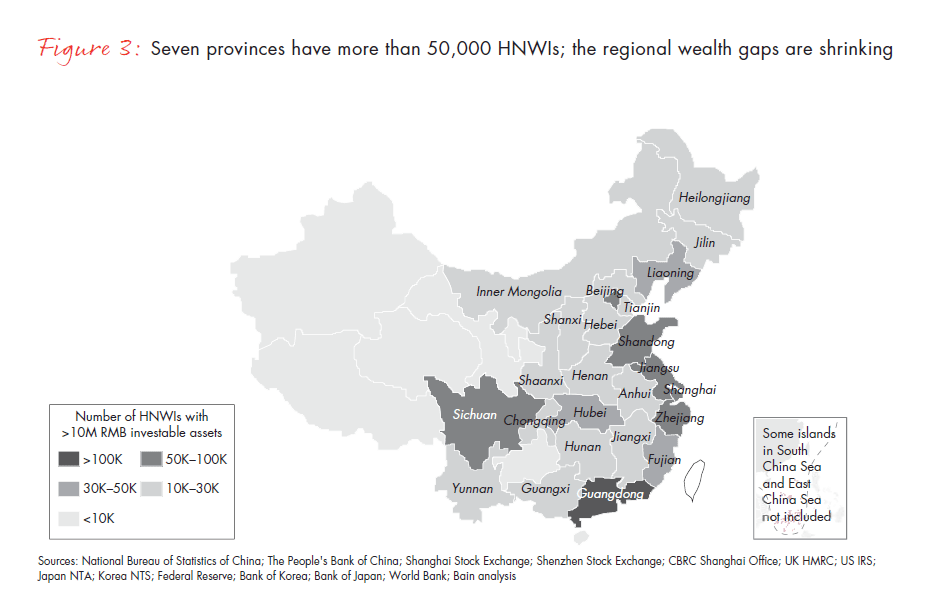
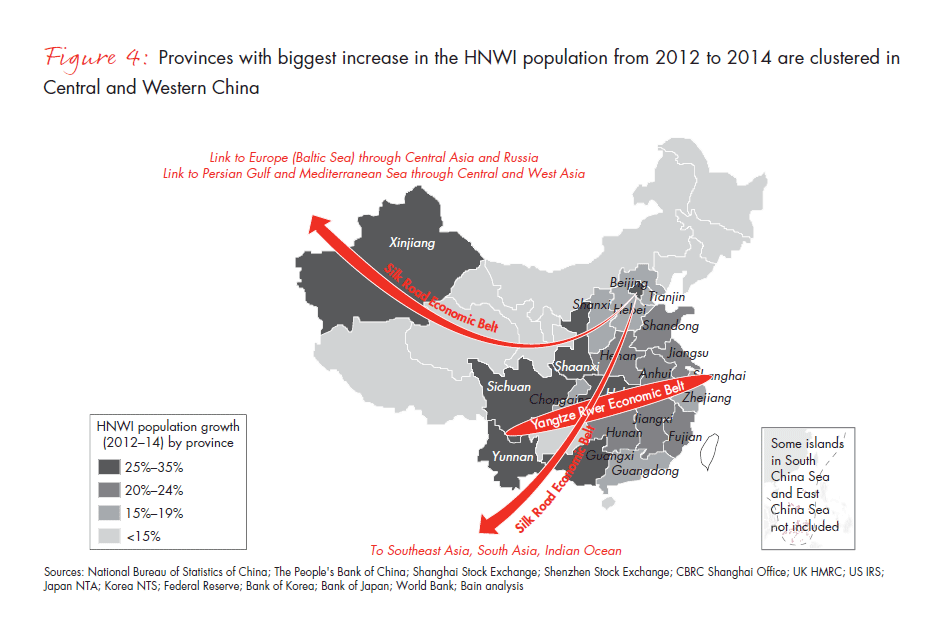
      The HNWI population is expanding throughout China. While only the seven provinces of Guangdong, Shanghai, Beijing, Jiangsu, Zhejiang, Shandong and Sichuan claim more than 50,000 HNWIs, the numbers are increasing rapidly in provinces like Xinjiang, Hubei and Shaanxi, where the number of HNWIs rose by 25% to 35% annually between 2012 and 2104, contributing to a more balanced geographic distribution of wealth.

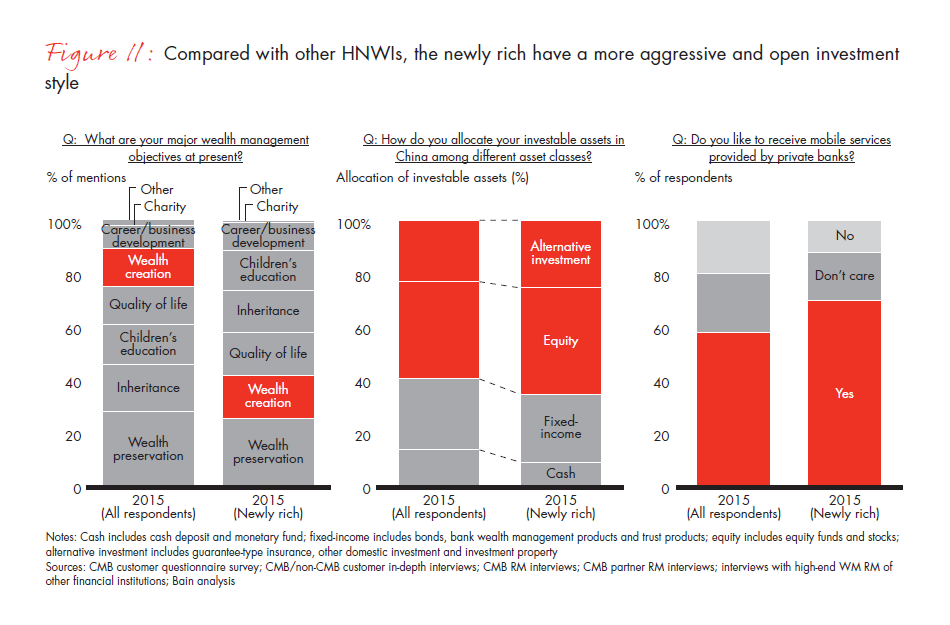
      In addition to determining the size and growth trajectory for China’s HNWI population and private wealth market, the survey produced insights into how these individuals gained wealth, where they live, how their priorities are changing and how they invest today. For example, the growth of innovative industries such as IT, biotechnology and alternative energy led to the creation of a newly rich, a segment of HNWIs who are younger and adopt a more aggressive and open investment style than their more established counterparts among the wealthy. Fully 80% of the newly rich are under 50 years of age and add diversity to the HNWI population, which now includes both entrepreneurs who opened factories decades ago and younger professionals in the technology sector and other emerging industries.

      Unlike more established wealthy individuals, the newly rich prioritize wealth creation over wealth inheritance. Their presence and success is changing how wealthy Chinese invest outside of the capital markets. According to Bain’s research, China’s HNWIs are adjusting their investment strategies based on domestic reforms. More than one-third of HNWIs surveyed said that they expect to increase their investment in innovative industries such as IT, biotechnology and alternative energy. In addition, less than 10% of HNWIs expect to increase their investment in more traditional manufacturing industries.

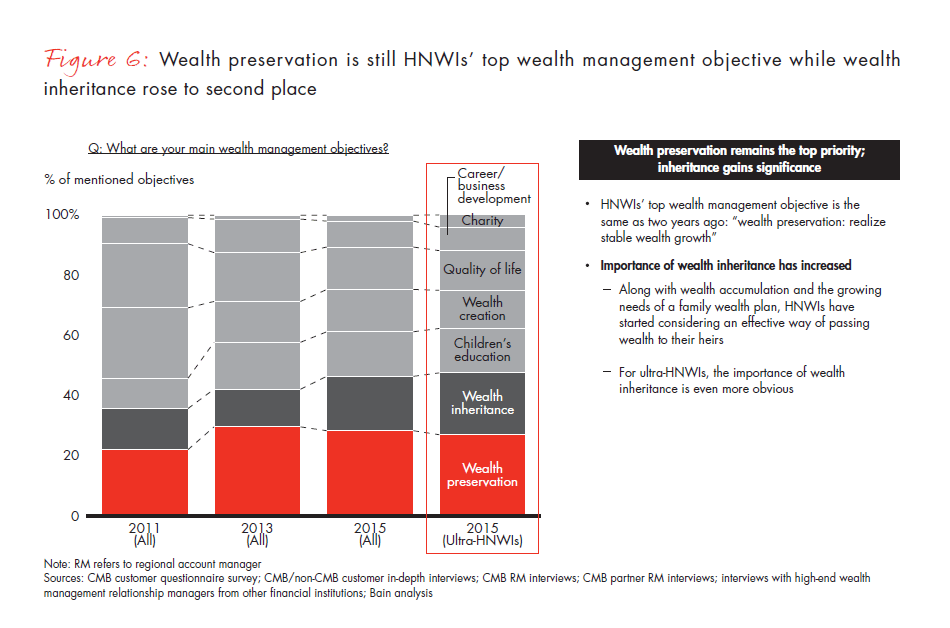
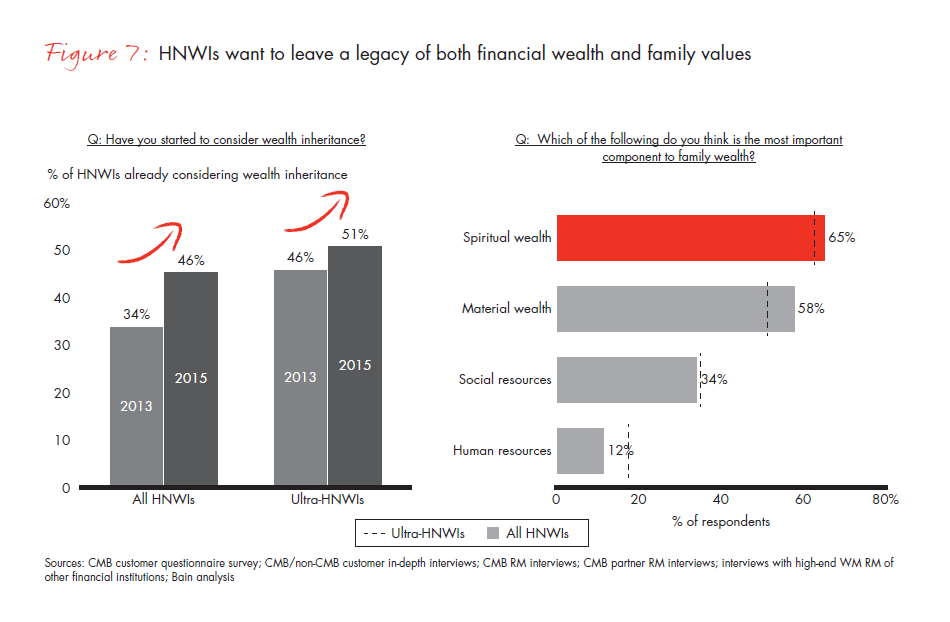
      Wealth preservation remains the top wealth management objective, followed by wealth inheritance planning, which surged from the fifth priority in 2013 to the second in our 2015 survey. It shares its ranking among ultra-HNWIs (those with investable assets in excess of RMB 100 million).

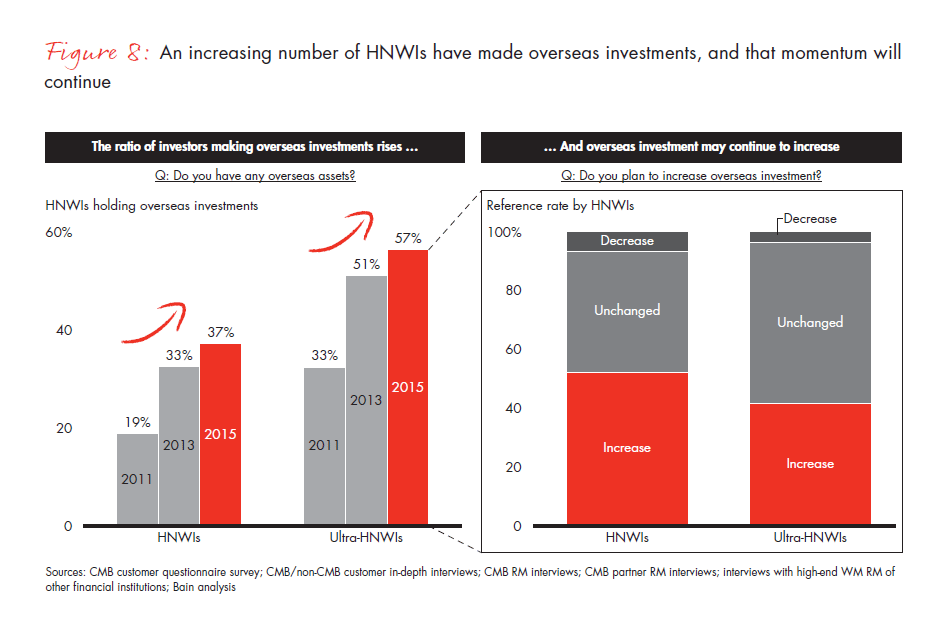
      HNWIs’ interest in overseas investment continues to increase. Nearly 40% of HNWIs and almost 60% of ultra-HNWIs indicated that they have overseas investments—a sizable jump from 20% and more than 30%, respectively, in 2011. About half of the HNWIs said they plan to boost their overseas investments in the next year or two, attracted by the more diverse cross-border investment opportunities.

      HNWIs are entrusting a larger share of wallet—or a percentage of their investable assets—to private banks or other high-end wealth management institutions. In 2015, HNWIs put 65% of their investable assets in the hands of private banks or other high-end wealth management institutions, a significant increase from 25%, on average, in 2009.

      As China’s private wealth market grows and changes, all wealth management institutions are discovering the importance of adapting to their customers’ shifting needs and preferences. This includes continually improving customer relationships and actively exploring innovative service models. Chinese private banks remain the first choice for HNWI onshore wealth management requirements. Now, many are investing heavily to expand their overseas service platforms and capabilities in order to capture the growing market for overseas investments.

      1. China’s private wealth market
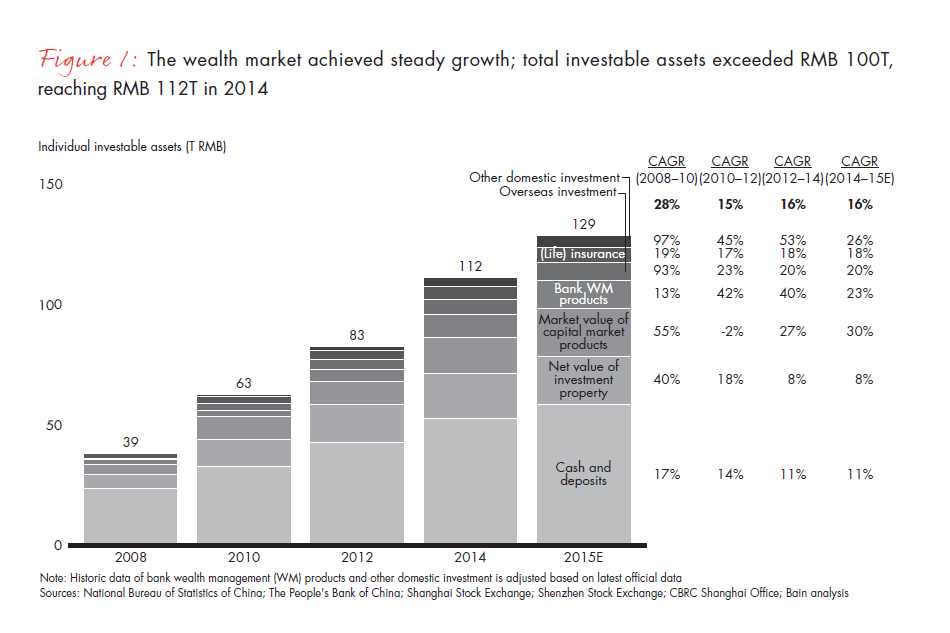
      • China’s private wealth market surpassed the RMB 100 trillion mark in 2014, reaching RMB 112 trillion. The market grew at an annual rate of 16% from 2012 to 2014, at par with 2010–2012, and we expect it to continue to grow approximately 16%, reaching an estimated RMB 129 trillion in 2015.
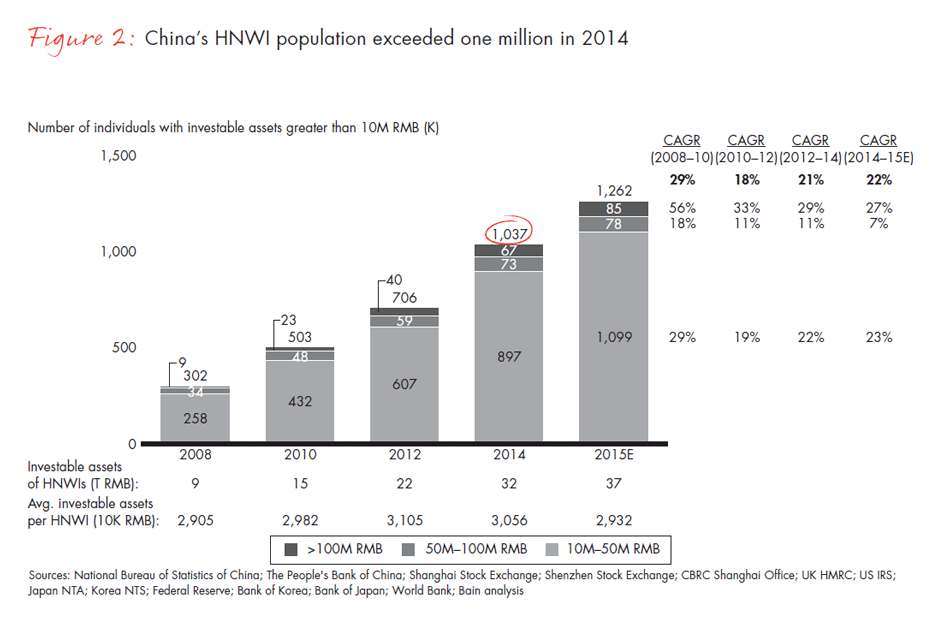
      • China’s high-net-worth individuals (HNWI) population exceeded one million in 2014. The population of HNWIs increased at a healthy pace between 2012 and 2014, with a compounded annual rate of 21%. Investable assets owned by Chinese HNWIs reached RMB 32 trillion by the end of 2014.
      • There are seven provinces in China with more than 50,000 HNWIs: Guangdong, Shanghai, Beijing, Jiangsu, Zhejiang, Shandong and Sichuan.
      • Guangdong is the first province to have more than 100,000 HNWIs, and Sichuan is the first inland province to have more than 50,000 HNWIs. Provinces in Central and Western China had the greatest increase in the HNWI population in 2012 to 2014, contributing to a more balanced geographic distribution of wealth.
      • We expect continued significant growth potential for wealth in Central and Western China given the “One Belt, One Road” initiative and the Yangtze River economic belt policies.

      the-evolution-of-chinas-private-wealth-market-fig-01_embed
      the-evolution-of-chinas-private-wealth-market-fig-02_embed

      the-evolution-of-chinas-private-wealth-market-fig-03_embed

      the-evolution-of-chinas-private-wealth-market-fig-04_embed


      2. Investment mindset and behaviors
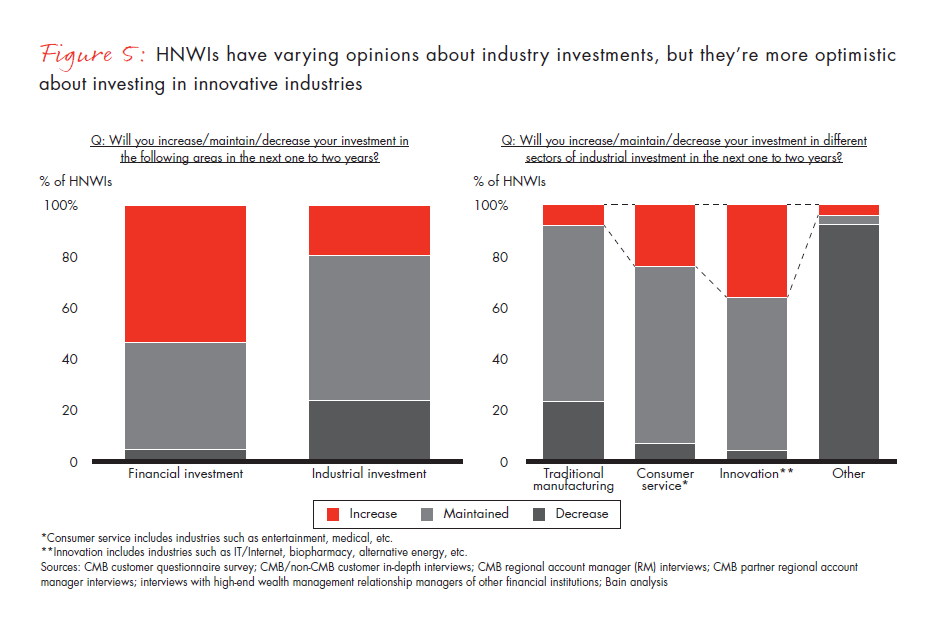
      • HNWIs’ investment approach continues to evolve, and investors are becoming more optimistic about investments in innovative industries.
      • As China’s macroeconomic growth enters a “new normal,” the country’s HNWIs are paying increasing attention to government policies regarding domestic reforms, market openings and innovation.
      • Chinese HNWIs have varying opinions regarding the industries in which they choose to invest. Many feel optimistic about investment in innovative industries but cautious about investment in traditional manufacturing industries.
      • Wealth preservation remains the top wealth management objective, followed by wealth inheritance, which surged from the fifth priority in 2013 to the second priority in our 2015 survey—sharing its present ranking among ultra-HNWIs, too.
      • Besides financial wealth, HNWIs want to pass on such family values as receiving a good education and working hard.
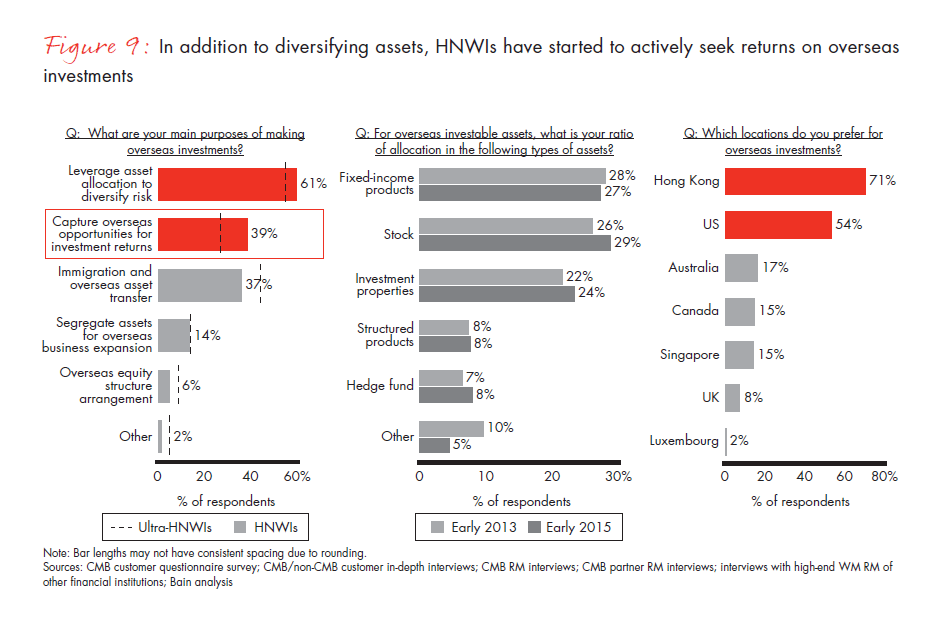
      • In addition to spreading risk and diversifying assets, HNWIs are starting to actively seek returns on overseas investments, with Hong Kong and the US topping the list.
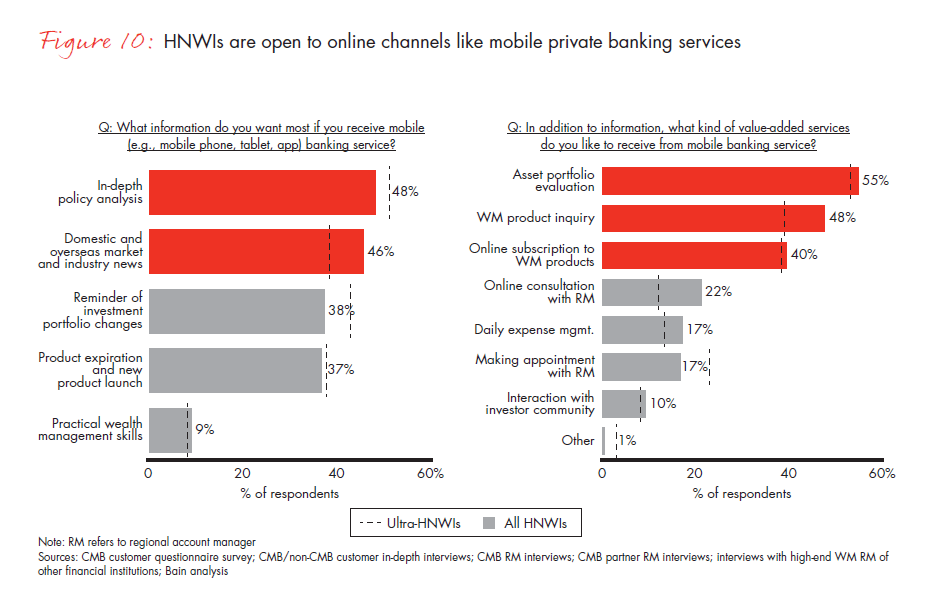
      • HNWIs still prefer personalized and private relationship management and advisor services in offline channels; however, they are increasingly using online channels (especially mobile Internet) for investment information and banking services.
      • The development of innovative industries such as IT, biotechnology and alternative energy has led to the emergence of the newly rich HNWI segment, a group with a more aggressive and open investment style.

      the-evolution-of-chinas-private-wealth-market-fig-05_embed

      the-evolution-of-chinas-private-wealth-market-fig-06_embed ;

      the-evolution-of-chinas-private-wealth-market-fig-07_embed


      the-evolution-of-chinas-private-wealth-market-fig-08_embed

      the-evolution-of-chinas-private-wealth-market-fig-09_embed

      the-evolution-of-chinas-private-wealth-market-fig-10_embed

      the-evolution-of-chinas-private-wealth-market-fig-11_embed


      3. Private banking: Competitive landscape
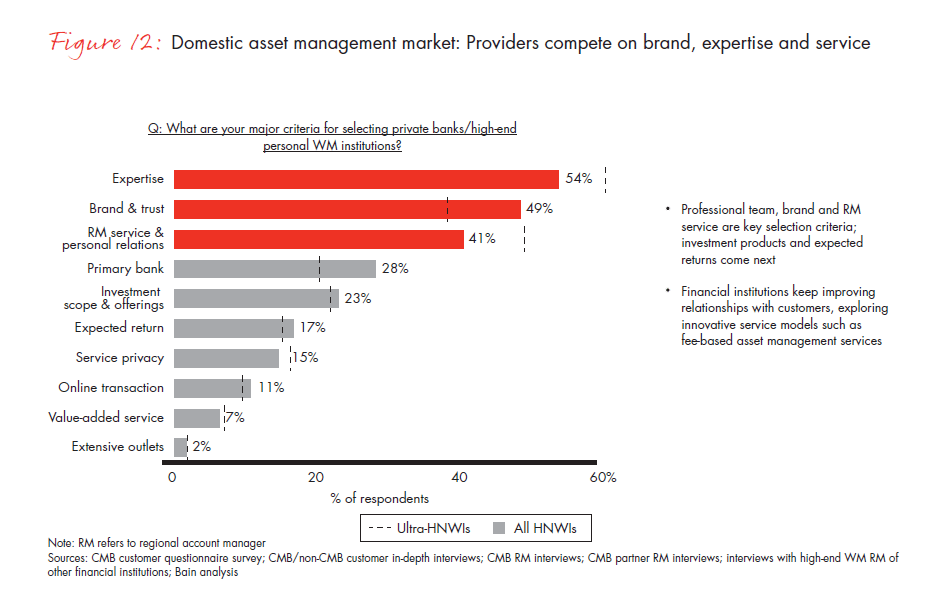
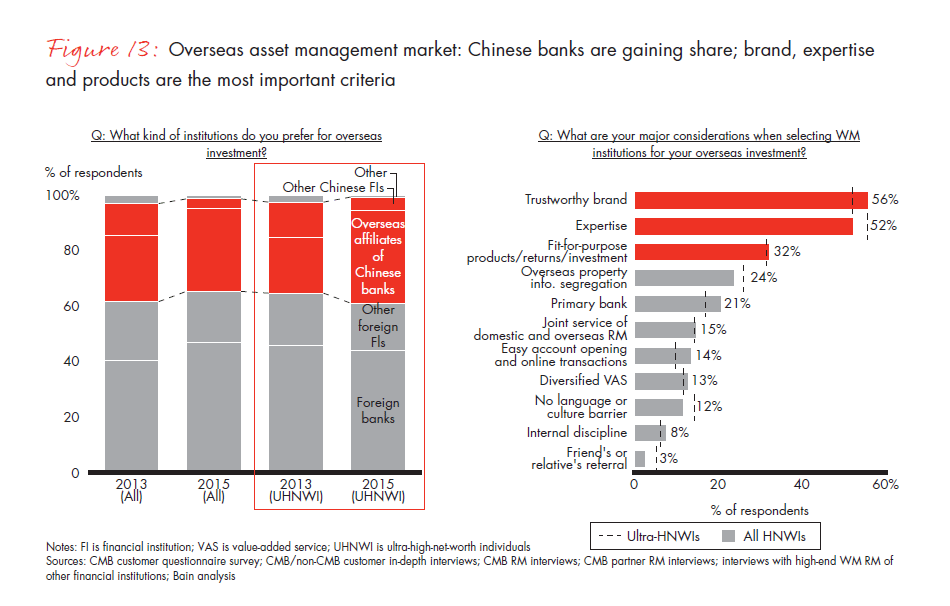
      • Chinese private banks continue to be the most preferred wealth management option. They are actively investing to build cross-border capabilities.
      • Banks and other wealth management institutions in China earn customers based on their brand, expertise and service. The scope of product offerings and expected returns are secondary criteria.
      • Other wealth management providers, including fund management companies and third-party wealth management and trust companies, mainly compete on product offerings and distribution.
      • Brand, expertise and product offerings are the most important criteria for Chinese HNWIs when choosing their overseas wealth management institution; ultra-HNWIs value expertise the most.
      • Convenience, Chinese language service capability and cultural connections are important, especially for HNWIs who use overseas investments to achieve risk diversification and stable returns.

      the-evolution-of-chinas-private-wealth-market-fig-12_embed

      the-evolution-of-chinas-private-wealth-market-fig-13_embed

      the-evolution-of-chinas-private-wealth-market-wealth-market-sizing-model_embed


      Jennifer Zeng, Alfred Shang and Sameer Chishty are partners with Bain & Company. For a copy of the full Evolution of China’s Private Wealth Market report, please contact the authors.


      the-evolution-of-chinas-private-wealth-market-fig-01_full

      the-evolution-of-chinas-private-wealth-market-fig-02_full

      the-evolution-of-chinas-private-wealth-market-fig-03_full

      the-evolution-of-chinas-private-wealth-market-fig-04_full

      the-evolution-of-chinas-private-wealth-market-fig-05_full

      the-evolution-of-chinas-private-wealth-market-fig-06_full ;

      the-evolution-of-chinas-private-wealth-market-fig-07_full

      the-evolution-of-chinas-private-wealth-market-fig-08_full

      the-evolution-of-chinas-private-wealth-market-fig-09_full

      the-evolution-of-chinas-private-wealth-market-fig-10_full

      the-evolution-of-chinas-private-wealth-market-fig-11_full

      the-evolution-of-chinas-private-wealth-market-fig-12_full

      the-evolution-of-chinas-private-wealth-market-fig-13_full

      the-evolution-of-chinas-private-wealth-market-wealth-market-sizing-model_full
      Authors
      • Jennifer Zeng
        Former Partner, Hong Kong
      Contact us
      Related Industries
      • Financial Services
      Advanced Manufacturing & Services
      China New Mobility Study 2015

      Car owners in China’s mega-cities are rethinking the value of car ownership.

      Read More
      Retail
      Riding the Digital Retail Wave in China

      How should brands and retailers transform their business model to adapt to customer purchasing habits in the digital age?

      Read More
      Financial Services
      Six Threats Demand a New Playbook for Banks in Wealth and Asset Management

      AI, direct-to-consumer models, and the return of local priorities are redrawing industry lines.

      Read More
      Financial Services
      Stay Relevant, Spark Energy: Pedro Arnt, CEO dLocal

      How can a hyperscaler grow at lightning speed without losing its soul? 

      Read More
      Financial Services
      Rethinking Transformation: Lawrence Lam on Leading Change at Prudential

      Frankie Leung speaks with Lawrence Lam, CEO of Prudential Hong Kong, about organizational transformation and sustaining change through a people-led approach.

      Read More
      Published in September 2015
      Tags
      • Financial Services

      How We've Helped Clients

      Sustainability Voluntary Carbon Markets: A Bank Moves Early to Seize the Opportunity

      Read case study

      Performance Improvement Lean Six Sigma solves a commercial bank's growth problem

      Read case study

      Enterprise Technology Bridging the Gap Between Business and Technology

      Read case study

      Ready to talk?

      We work with ambitious leaders who want to define the future, not hide from it. Together, we achieve extraordinary outcomes.

      Stay ahead in a rapidly changing world. Subscribe to Bain Insights, our monthly look at the critical issues facing global businesses.

      *I have read and understand Bain’s Privacy Notice.

      Please read and agree to the Privacy Policy.
      Bain & Company
      Contact us Sustainability Accessibility Terms of use Privacy Modern Slavery Act Statement Cookie Policy Sitemap Log In

      © 1996-2026 Bain & Company, Inc.

      Contact Bain

      How can we help you?

      • Business inquiry
      • Career information
      • Press relations
      • Partnership request
      • Speaker request
      See all offices