


Skip to Content
  • Offices

    Offices

    North & Latin America
    • Atlanta
    • Austin
    • Bogota
    • Boston
    • Buenos Aires
    • Chicago
    • Dallas
    • Denver
    • Houston
    • Los Angeles
    • Mexico City
    • Minneapolis
    • Monterrey
    • Montreal
    • New York
    • Rio de Janeiro
    • San Francisco
    • Santiago
    • São Paulo
    • Seattle
    • Silicon Valley
    • Toronto
    • Washington, DC
    Europe & Africa
    • Amsterdam
    • Athens
    • Berlin
    • Brussels
    • Copenhagen
    • Dusseldorf
    • Frankfurt
    • Helsinki
    • Istanbul
    • Johannesburg
    • Kyiv
    • Lisbon
    • London
    • Madrid
    • Milan
    • Munich
    • Oslo
    • Paris
    • Rome
    • Stockholm
    • Vienna
    • Warsaw
    • Zurich
    Middle East
    • Doha
    • Dubai
    • Riyadh
    Asia & Australia
    • Bangkok
    • Beijing
    • Bengaluru
    • Brisbane
    • Ho Chi Minh City
    • Hong Kong
    • Jakarta
    • Kuala Lumpur
    • Manila
    • Melbourne
    • Mumbai
    • New Delhi
    • Perth
    • Seoul
    • Shanghai
    • Singapore
    • Sydney
    • Tokyo
    See all offices
  • Alumni
  • Media Center
  • Subscribe
  • Contact
  • Global | English

    Select your region and language

    Global
    • Global (English)
    North & Latin America
    • Brazil (Português)
    • Argentina (Español)
    • Canada (Français)
    • Chile (Español)
    • Colombia (Español)
    Europe, Middle East, & Africa
    • France (Français)
    • DACH Region (Deutsch)
    • Italy (Italiano)
    • Spain (Español)
    • Greece (Elliniká)
    Asia & Australia
    • China (中文版)
    • Korea (한국어)
    • Japan (日本語)
  • Saved items (0)
    Saved items (0)

    You have no saved items.

    Bookmark content that interests you and it will be saved here for you to read or share later.

    Explore Bain Insights
  • Industries
    Main menu

    Industries

    • Aerospace & Defense
    • Agribusiness
    • Chemicals
    • Construction & Infrastructure
    • Consumer Products
    • Financial Services
    • Healthcare & Life Sciences
    • Industrial Machinery & Equipment
    • Media & Entertainment
      Industries
      Media & Entertainment
      • Media Lab
    • Metals
    • Mining
    • Oil & Gas
    • Paper & Packaging
    • Private Equity
      Industries
      Private Equity
      • Due Diligence
      • Exit Planning
      • Firm Strategy & Operations
      • Portfolio Value Creation
    • Social Impact
    • Retail
    • Technology
    • Telecommunications
      Industries
      Telecommunications
      • Capital Expenditure
      • Telco Digital Transformation
    • Transportation
    • Travel & Leisure
    • Utilities & Renewables
  • Consulting Services
    Main menu

    Consulting Services

    • Customer Experience
    • Sustainability
    • Innovation
    • M&A
    • Operations
    • People & Organization
    • Private Equity
    • Sales & Marketing
    • Strategy
    • AI, Insights, and Solutions
    • Technology
    • Transformation
  • Digital
  • Insights
    Main menu

    Insights

    • Industry Insights
    • Services Insights
    • Bain Books
    • Webinars
    • Bain Futures
    View all Insights
    Featured topics
    • Tariff Response
    • Artificial Intelligence
    • Thriving in Uncertainty
    • Executive Conversations
    • Macro Trends
    • M&A Report
    • Healthcare Private Equity Report
    • Paper & Packaging Report
    • Technology Report
    • CEO's Guide to Sustainability
    • CEO Insights
    • CFO Insights
    • COO Insights
    • CIO Insights
    • CMO Insights
    View all featured topics
  • About
    Main menu

    About

    • What We Do
    • What We Believe
    • Our People & Leadership
    • Client Results
    • Awards & Recognition
    • Global Affiliations
    Further: Our global responsibility
    • Sustainability
    • Social Impact
    • World Economic Forum
    Learn more about Further
  • Careers
    Main menu

    Careers

    • Work with Us
      Careers
      Work with Us
      • Find Your Place
      • Our Work Areas
      • Integrated Teams
      • Students
      • Internships & Programs
      • Recruiting Events
    • Life at Bain
      Careers
      Life at Bain
      • Blog: Inside Bain
      • Career Stories
      • Our People
      • Where We Work
      • Supporting Your Growth
      • Affinity Groups
      • Benefits
    • Impact Stories
    • Hiring Process
      Careers
      Hiring Process
      • What to Expect
      • Interviewing
    FIND JOBS
  • Offices
    Main menu

    Offices

    • North & Latin America
      Offices
      North & Latin America
      • Atlanta
      • Austin
      • Bogota
      • Boston
      • Buenos Aires
      • Chicago
      • Dallas
      • Denver
      • Houston
      • Los Angeles
      • Mexico City
      • Minneapolis
      • Monterrey
      • Montreal
      • New York
      • Rio de Janeiro
      • San Francisco
      • Santiago
      • São Paulo
      • Seattle
      • Silicon Valley
      • Toronto
      • Washington, DC
    • Europe & Africa
      Offices
      Europe & Africa
      • Amsterdam
      • Athens
      • Berlin
      • Brussels
      • Copenhagen
      • Dusseldorf
      • Frankfurt
      • Helsinki
      • Istanbul
      • Johannesburg
      • Kyiv
      • Lisbon
      • London
      • Madrid
      • Milan
      • Munich
      • Oslo
      • Paris
      • Rome
      • Stockholm
      • Vienna
      • Warsaw
      • Zurich
    • Middle East
      Offices
      Middle East
      • Doha
      • Dubai
      • Riyadh
    • Asia & Australia
      Offices
      Asia & Australia
      • Bangkok
      • Beijing
      • Bengaluru
      • Brisbane
      • Ho Chi Minh City
      • Hong Kong
      • Jakarta
      • Kuala Lumpur
      • Manila
      • Melbourne
      • Mumbai
      • New Delhi
      • Perth
      • Seoul
      • Shanghai
      • Singapore
      • Sydney
      • Tokyo
    See all offices
  • Alumni
  • Media Center
  • Subscribe
  • Contact
  • Global | English
    Main menu

    Select your region and language

    • Global
      Select your region and language
      Global
      • Global (English)
    • North & Latin America
      Select your region and language
      North & Latin America
      • Brazil (Português)
      • Argentina (Español)
      • Canada (Français)
      • Chile (Español)
      • Colombia (Español)
    • Europe, Middle East, & Africa
      Select your region and language
      Europe, Middle East, & Africa
      • France (Français)
      • DACH Region (Deutsch)
      • Italy (Italiano)
      • Spain (Español)
      • Greece (Elliniká)
    • Asia & Australia
      Select your region and language
      Asia & Australia
      • China (中文版)
      • Korea (한국어)
      • Japan (日本語)
  • Saved items  (0)
    Main menu
    Saved items (0)

    You have no saved items.

    Bookmark content that interests you and it will be saved here for you to read or share later.

    Explore Bain Insights
  • Industries
    • Industries

      • Aerospace & Defense
      • Agribusiness
      • Chemicals
      • Construction & Infrastructure
      • Consumer Products
      • Financial Services
      • Healthcare & Life Sciences
      • Industrial Machinery & Equipment
      • Media & Entertainment
      • Metals
      • Mining
      • Oil & Gas
      • Paper & Packaging
      • Private Equity
      • Social Impact
      • Retail
      • Technology
      • Telecommunications
      • Transportation
      • Travel & Leisure
      • Utilities & Renewables
  • Consulting Services
    • Consulting Services

      • Customer Experience
      • Sustainability
      • Innovation
      • M&A
      • Operations
      • People & Organization
      • Private Equity
      • Sales & Marketing
      • Strategy
      • AI, Insights, and Solutions
      • Technology
      • Transformation
  • Digital
  • Insights
    • Insights

      • Industry Insights
      • Services Insights
      • Bain Books
      • Webinars
      • Bain Futures
      View all Insights
      Featured topics
      • Tariff Response
      • Artificial Intelligence
      • Thriving in Uncertainty
      • Executive Conversations
      • Macro Trends
      • M&A Report
      • Healthcare Private Equity Report
      • Paper & Packaging Report
      • Technology Report
      • CEO's Guide to Sustainability
      • CEO Insights
      • CFO Insights
      • COO Insights
      • CIO Insights
      • CMO Insights
      View all featured topics
  • About
    • About

      • What We Do
      • What We Believe
      • Our People & Leadership
      • Client Results
      • Awards & Recognition
      • Global Affiliations
      Further: Our global responsibility
      • Sustainability
      • Social Impact
      • World Economic Forum
      Learn more about Further
  • Careers
    Popular Searches
    • Agile
    • Digital
    • Strategy
    Your Previous Searches
      Recently Visited Pages

      Content added to saved items

      Saved items (0)

      Removed from saved items

      Saved items (0)

      Brief

      Three Rules for Building the Modern Retail Organization

      Three Rules for Building the Modern Retail Organization

      Winners in omnichannel retailing are changing the way they work and building the capabilities needed to deliver on their strategy.

      By Andrew Noble, James Anderson and Sam Thakarar

      • min read
      }

      Brief

      Three Rules for Building the Modern Retail Organization
      en

      Most retailers recognize the importance of combining the best of digital technologies and physical stores to profitably create a seamless and consistent customer experience across channels (see the Bain Brief “Leading a Digical® transformation”). There’s a good reason for this. Their most valuable customers are engaging with them across all channels: store, mobile, social and online. Some retailers find that these omnichannel customers spend two times to five times more than customers who buy in only one channel.

      But many retailers tell us it is difficult to build the right organization to deliver on their omnichannel strategy. It’s easy to make mistakes that have disastrous consequences.

      Consider the rough path taken by an early leader in omnichannel. The retailer recognized the need for highly aligned assortments and chose to make every merchant an omnichannel merchant, with responsibility across both physical stores and digital channels. While the principle of alignment and shared vision was right, most of the merchants found the small digital business to be a distraction from the physical stores. Many had no experience with digital and ignored the business altogether. Digital growth stalled, even while the online market expanded by 15%.

      When the leadership team recognized the error, it moved quickly to reinstate a digital team, this time setting goals to dramatically accelerate digital growth. However, a year later, the company found itself with highly divergent assortments, poor communications around key programs and events, and misaligned incentives around inventory management. Growth stalled for a second year.

      Where did this retailer go off course? It had twice tried to use structure to solve a problem without making the corresponding investments and clarifications in capabilities, alignment and decision rights. By the time the retailer addressed these issues the following year—the third reorganization in as many years—it had fallen from first place to third place among its competitors in digital sales.

      This is not an unusual experience, and it highlights the dangers that retailers encounter by not making the right organizational changes required to support an omnichannel strategy. For every company that loses its place in digital sales, we see a rival that moves up the ranks, using the disruption presented by digital retailing to gain market share. Our analysis and work with hundreds of clients across retail sectors to navigate the omnichannel journey has helped us identify the three rules required to build a modern retail organization.

      Andy Noble, a partner in Bain's Retail practice, outlines the three rules that are essential to building a modern retail organization.

      Rule #1: Be a silo buster—build cross-channel and cross-functional capabilities

      Many retailers have long been organized in a siloed way, often with infrequent collaboration across channel teams or across functions such as merchandising, stores, IT and supply chain. This model makes it easier to run the business, but it doesn’t make it easier for customers to shop seamlessly across channels. To deliver on new omnichannel strategies and meet the expectations of today’s customers, retailers have no choice but to work more effectively across functions and channels.

      Take the example of “buy online, pick up in store”—or “click and collect.” This capability requires coordination and quick decisions across e-commerce, supply chain, brick-and-mortar stores, as well as across planning, merchandising and marketing functions, among others. The online channel needs to know that inventory is available in the local store to offer to a customer. Stores need to successfully receive the order, reserve it for the customer, and provide great service when the customer comes to pick it up. Supply chain and planning need to have appropriate visibility into the movement of inventory, and marketing needs to be involved to effectively showcase the offering to customers.

      The first step is having a clear strategy for critical omnichannel capabilities. We’ve identified seven broad capabilities that retailers need to get right to serve omnichannel customers (see below: “Build must-have capabilities—but pick a few to differentiate”). These are capabilities that typically span multiple functions or channels and require well-defined accountabilities, decision roles and processes to coordinate effectively across channels.

      Macy’s has built an omnichannel organizational model to support such new capabilities. Omnichannel has long been a core part of the retailer’s M.O.M. strategy (My Macy’s localization, Omnichannel integration and Magic Selling customer engagement), and Macy’s continues to push the envelope on critical capabilities, such as ship from store. Earlier this year the department store reorganized its merchant, planning and marketing organizations to make them faster, more nimble and better connected between the store and digital worlds. Macy’s unified its merchant organization and refined accountabilities and processes, with omni merchants and digital merchants collaborating to execute a single assortment strategy for both store and digital growth. Its integrated planning organization is able to analyze trade-area demand and rely on a single view of inventory to better allocate merchandise by location. In marketing, Macy’s brought together its market presence and strategy across all channels—including brand, promotional, store, digital, and events marketing and customer analytics—to speak to its customers with one voice.

      In contrast to the retailer described above that reorganized three times in three years, Macy’s waited to make these moves to more integration until it had built strong digital capabilities and had grown the digital business to a meaningful portion of overall sales. Macy’s is now a leader in the digital space, with online sales accounting for nearly one-fifth of total revenue in 2014, according to estimates by Internet Retailer.

      Rule #2: Go beyond structure—devise new ways of working

      Changing organizational structure alone won’t give a company the muscle to develop omnichannel capabilities. All elements of a retailer’s operating model need to align with its strategy. This includes structure, accountabilities, governance and essential behaviors, as well as the way people, processes and technology are deployed.

      Some of the omnichannel leaders have focused on designing effective processes with clear decision roles on how functions should work together. Others have found that co-location of people from different functions and channels helps establish learning and trust-based relationships. Some are redesigning metrics and incentives to encourage the right behaviors from their team. Singapore retailer Courts integrated online sales into store budgets and made store managers into “trade area managers,” measuring them on sales across all channels for everyone who lives in the store’s trade area. The move has contributed to strong growth in digital of 35% in its latest quarterly results.

      Retailers are also defining new career paths that build cross-channel capabilities and develop the next generation of omnichannel leaders. For example, a company may require potential buyers to have both store and digital experience before getting promoted to more senior positions in merchandising. In some retailers, this rotation of people reaches the highest levels. Nordstrom, another omnichannel innovator, in May 2014 swapped the roles of then-President of Stores Erik Nordstrom with then-President of Nordstrom Direct Jamie Nordstrom. This move likely accomplished more than just a structural change; it brought Erik’s store expertise to Nordstrom’s digital operations and Jaime’s digital expertise to the physical stores.

      A caution: When companies evaluate possible operating model changes, they can’t make their choices by simply trying to replicate competitors. There’s a danger in relying on benchmarks. Operating models need to be tied to a retailer’s unique strategy. A company aiming to differentiate on shipping speed and reliability will have different answers than one aiming to excel on in-store experiences.

      Rule #3: Have bold ambitions—and be deliberate about how you get there

      Finally, there’s the challenge of implementing these changes at the right pace. For omnichannel retailers, the end goal will likely be more integration between digital and store merchants, planners, or marketers, but moving too quickly or slowly can wreak havoc on results. Integrating too swiftly can stifle digital growth by not enabling enough separation to focus on the unique aspects of digital channels—the different talent requirements, metrics and technologies that are needed to create a great digital customer experience. Moving too slowly to more integration can leave a retailer stuck with disparate customer experiences across channels while competitors build stronger connections across stores, mobile and online.

      The right choices will vary by retailer and depend not only on the company’s strategy but also on its level of systems integration and digital maturity. The right operating model for Macy’s or Nordstrom or Courts will not be the right model for retailers that are investing differently in capabilities or that are in a different phase in their omnichannel journey.

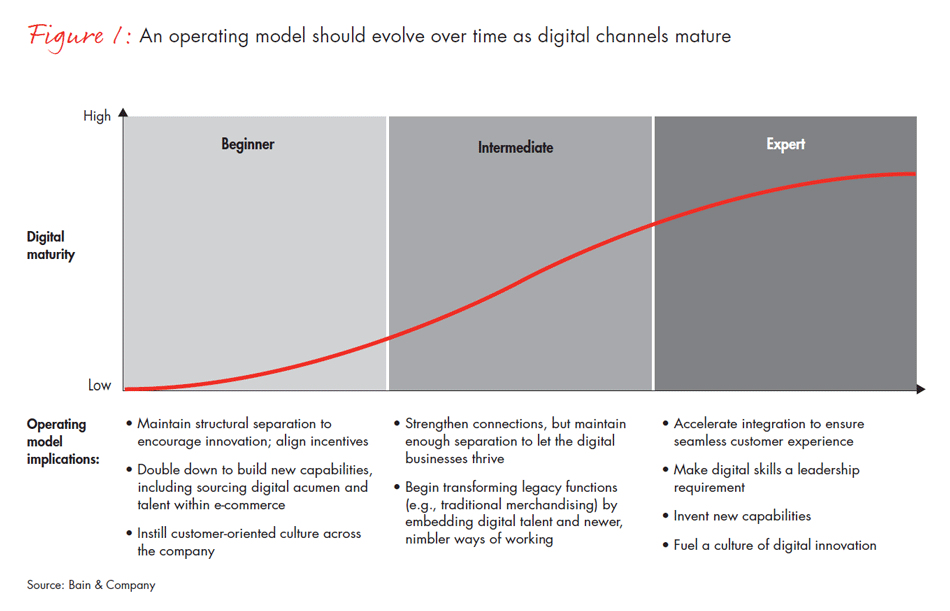
      In our experience, retailers at the early stages of building digital capabilities should have greater functional and channel separation to foster innovation, yet phased evolution toward a more integrated operating model is essential to becoming an omnichannel retailer (see Figure 1). Beginner-level retailers typically have distinct cultures and metrics within channels, heavy investments in older technology and one- to two-year investment horizons. In contrast, expert-level retailers have more unified cultures, integrated systems and tools, and five-year-plus investment ambitions.

      three-rules-for-modern-retail-org-fig01_embed

      As retailers determine how to evolve from beginner to expert, it’s critical to consider the state of information systems when making operating model decisions. For example, decisions about when to merge specific functions such as digital and store inventory-planning teams largely depend on whether information systems such as inventory-planning systems and item management systems are integrated across channels.

      UK retailer John Lewis has taken a deliberate, systematic approach to its omnichannel journey. It has developed a leading online platform, built a modern and flexible automated distribution center and re-platformed its legacy IT onto omnichannel back-end systems. These well-planned moves ultimately allowed the retailer to deliver leading innovations—for example, offering customers the ability to “click and collect” in John Lewis Department stores as well as Waitrose Grocery stores.

      So, where to begin? Building a modern retail organization means starting with a clear omnichannel strategy to profitably offer a seamless customer experience. It means busting traditional silos and devising new ways of working, in terms of roles, processes and systems. And it means paying careful attention to the timing of your moves. The radical change sweeping across the retailing world brings with it tremendous opportunities for growth and profits—but only for companies that are willing to reimagine organizations that are fit for the future.


      Build must-have capabilities—but pick a few to differentiate

      In our view, seven capabilities are essential for any omnichannel strategy:

      • Building web and mobile customer experiences with intuitive interfaces, rich content and a great connection to the physical store experience.
      • Building the right assortment across channels in a way that makes the most of each channel.
      • Marketing effectively across traditional and digital media channels through media allocation, message and promotion coordination, and optimizing each media channel. Developing profitable fulfillment and shipping models.
      • Integrating management of inventory across the supply chain, and placing SKUs in the right nodes (stores, distribution centers and fulfillment centers) for rapid delivery at minimum cost.
      • Incorporating advanced analytics techniques into day-to-day decision making.
      • Building an agile technology development function that is connected to the business and is flexible enough to work across functions.

      However, every retailer must identify where it needs to make the biggest investments and how to design these capabilities to enhance brand positioning and customer value. We counsel retailers to clearly define the capabilities that will be most important to win. A retailer that chooses to win on the basis of a highly personalized experience may invest in different data and analytics capabilities than one that’s focused on the lowest-cost supply chain. Both capabilities will be important for most retailers, but deciding where to differentiate is critical to place the right bets on hiring the best talent and structuring the organization. In fact, the success or failure of an omnichannel strategy can rest on deciding which capabilities will differentiate the company and which will be on par with competitors.

      Andrew Noble and Sam Thakarar are partners in the Boston office of Bain & Company. James Anderson is a partner in Bain’s London office. All are members of the firm’s Retail practice.


      three-rules-for-modern-retail-org-fig01_full
      Authors
      • Headshot of Andrew Noble
        Andrew Noble
        Advisory Partner, Boston
      • Headshot of James Anderson
        James Anderson
        Partner, London
      • Headshot of Sam Thakarar
        Sam Thakarar
        Partner, Boston
      Contact us
      Related Industries
      • Retail
      Retail
      Leading a Digical® Transformation

      The big change taking place in business today is the combination of digital and physical elements to create wholly new sources of value.

      Read More
      People and Organization
      Winning Operating Models That Convert Strategy to Results

      The right operating model serves as a bridge between strategy and effective execution.

      Read More
      Retail
      Erika Serow: Why Stores Still Matter in an Online World

      Physical stores continue to offer value to consumers who enjoy the social and tactile aspects of shopping.

      Read More
      Retail
      The 2026 Retail Executive Agenda

      Here are letters to the C-suite to help strengthen strategy, catalyze collaboration, and expand value creation in the AI age.

      Read More
      Retail
      The 2025 Chinese Personal Luxury Goods Market

      Recalibration, resurgence, and more selective consumers are edging China’s personal luxury market toward recovery.

      Read More
      Published in June 2015
      Tags
      • Retail

      How We've Helped Clients

      Sales and Marketing Inspiring retail employees to think and act like owners

      Read case study

      Performance Improvement Retailer's performance improvement boosts shareholder value

      Read case study

      Digital Omnichannel strategy boosts fashion company

      Read case study

      Ready to talk?

      We work with ambitious leaders who want to define the future, not hide from it. Together, we achieve extraordinary outcomes.

      Stay ahead in a rapidly changing world. Subscribe to Bain Insights, our monthly look at the critical issues facing global businesses.

      *I have read and understand Bain’s Privacy Notice.

      Please read and agree to the Privacy Policy.
      Bain & Company
      Contact us Sustainability Accessibility Terms of use Privacy Modern Slavery Act Statement Cookie Policy Sitemap Log In

      © 1996-2026 Bain & Company, Inc.

      Contact Bain

      How can we help you?

      • Business inquiry
      • Career information
      • Press relations
      • Partnership request
      • Speaker request
      See all offices