
Skip to Content
  • Offices

    Offices

    North & Latin America
    • Atlanta
    • Austin
    • Bogota
    • Boston
    • Buenos Aires
    • Chicago
    • Dallas
    • Denver
    • Houston
    • Los Angeles
    • Mexico City
    • Minneapolis
    • Monterrey
    • Montreal
    • New York
    • Rio de Janeiro
    • San Francisco
    • Santiago
    • São Paulo
    • Seattle
    • Silicon Valley
    • Toronto
    • Washington, DC
    Europe & Africa
    • Amsterdam
    • Athens
    • Berlin
    • Brussels
    • Copenhagen
    • Dusseldorf
    • Frankfurt
    • Helsinki
    • Istanbul
    • Johannesburg
    • Kyiv
    • Lisbon
    • London
    • Madrid
    • Milan
    • Munich
    • Oslo
    • Paris
    • Rome
    • Stockholm
    • Vienna
    • Warsaw
    • Zurich
    Middle East
    • Doha
    • Dubai
    • Riyadh
    Asia & Australia
    • Bangkok
    • Beijing
    • Bengaluru
    • Brisbane
    • Ho Chi Minh City
    • Hong Kong
    • Jakarta
    • Kuala Lumpur
    • Manila
    • Melbourne
    • Mumbai
    • New Delhi
    • Perth
    • Seoul
    • Shanghai
    • Singapore
    • Sydney
    • Tokyo
    See all offices
  • Alumni
  • Media Center
  • Subscribe
  • Contact
  • Global | English

    Select your region and language

    Global
    • Global (English)
    North & Latin America
    • Brazil (Português)
    • Argentina (Español)
    • Canada (Français)
    • Chile (Español)
    • Colombia (Español)
    Europe, Middle East, & Africa
    • France (Français)
    • DACH Region (Deutsch)
    • Italy (Italiano)
    • Spain (Español)
    • Greece (Elliniká)
    Asia & Australia
    • China (中文版)
    • Korea (한국어)
    • Japan (日本語)
  • Saved items (0)
    Saved items (0)

    You have no saved items.

    Bookmark content that interests you and it will be saved here for you to read or share later.

    Explore Bain Insights
  • Industries
    Main menu

    Industries

    • Aerospace & Defense
    • Agribusiness
    • Chemicals
    • Construction & Infrastructure
    • Consumer Products
    • Financial Services
    • Healthcare & Life Sciences
    • Industrial Machinery & Equipment
    • Media & Entertainment
      Industries
      Media & Entertainment
      • Media Lab
    • Metals
    • Mining
    • Oil & Gas
    • Paper & Packaging
    • Private Equity
      Industries
      Private Equity
      • Due Diligence
      • Exit Planning
      • Firm Strategy & Operations
      • Portfolio Value Creation
    • Social Impact
    • Retail
    • Technology
    • Telecommunications
      Industries
      Telecommunications
      • Capital Expenditure
      • Telco Digital Transformation
    • Transportation
    • Travel & Leisure
    • Utilities & Renewables
  • Consulting Services
    Main menu

    Consulting Services

    • Customer Experience
    • Sustainability
    • Innovation
    • M&A
    • Operations
    • People & Organization
    • Private Equity
    • Sales & Marketing
    • Strategy
    • AI, Insights, and Solutions
    • Technology
    • Transformation
  • Digital
  • Insights
    Main menu

    Insights

    • Industry Insights
    • Services Insights
    • Bain Books
    • Webinars
    • Bain Futures
    View all Insights
    Featured topics
    • Tariff Response
    • Artificial Intelligence
    • Thriving in Uncertainty
    • Executive Conversations
    • Macro Trends
    • M&A Report
    • Healthcare Private Equity Report
    • Paper & Packaging Report
    • Technology Report
    • CEO's Guide to Sustainability
    • CEO Insights
    • CFO Insights
    • COO Insights
    • CIO Insights
    • CMO Insights
    View all featured topics
  • About
    Main menu

    About

    • What We Do
    • What We Believe
    • Our People & Leadership
    • Client Results
    • Awards & Recognition
    • Global Affiliations
    Further: Our global responsibility
    • Sustainability
    • Social Impact
    • World Economic Forum
    Learn more about Further
  • Careers
    Main menu

    Careers

    • Work with Us
      Careers
      Work with Us
      • Find Your Place
      • Our Work Areas
      • Integrated Teams
      • Students
      • Internships & Programs
      • Recruiting Events
    • Life at Bain
      Careers
      Life at Bain
      • Blog: Inside Bain
      • Career Stories
      • Our People
      • Where We Work
      • Supporting Your Growth
      • Affinity Groups
      • Benefits
    • Impact Stories
    • Hiring Process
      Careers
      Hiring Process
      • What to Expect
      • Interviewing
    FIND JOBS
  • Offices
    Main menu

    Offices

    • North & Latin America
      Offices
      North & Latin America
      • Atlanta
      • Austin
      • Bogota
      • Boston
      • Buenos Aires
      • Chicago
      • Dallas
      • Denver
      • Houston
      • Los Angeles
      • Mexico City
      • Minneapolis
      • Monterrey
      • Montreal
      • New York
      • Rio de Janeiro
      • San Francisco
      • Santiago
      • São Paulo
      • Seattle
      • Silicon Valley
      • Toronto
      • Washington, DC
    • Europe & Africa
      Offices
      Europe & Africa
      • Amsterdam
      • Athens
      • Berlin
      • Brussels
      • Copenhagen
      • Dusseldorf
      • Frankfurt
      • Helsinki
      • Istanbul
      • Johannesburg
      • Kyiv
      • Lisbon
      • London
      • Madrid
      • Milan
      • Munich
      • Oslo
      • Paris
      • Rome
      • Stockholm
      • Vienna
      • Warsaw
      • Zurich
    • Middle East
      Offices
      Middle East
      • Doha
      • Dubai
      • Riyadh
    • Asia & Australia
      Offices
      Asia & Australia
      • Bangkok
      • Beijing
      • Bengaluru
      • Brisbane
      • Ho Chi Minh City
      • Hong Kong
      • Jakarta
      • Kuala Lumpur
      • Manila
      • Melbourne
      • Mumbai
      • New Delhi
      • Perth
      • Seoul
      • Shanghai
      • Singapore
      • Sydney
      • Tokyo
    See all offices
  • Alumni
  • Media Center
  • Subscribe
  • Contact
  • Global | English
    Main menu

    Select your region and language

    • Global
      Select your region and language
      Global
      • Global (English)
    • North & Latin America
      Select your region and language
      North & Latin America
      • Brazil (Português)
      • Argentina (Español)
      • Canada (Français)
      • Chile (Español)
      • Colombia (Español)
    • Europe, Middle East, & Africa
      Select your region and language
      Europe, Middle East, & Africa
      • France (Français)
      • DACH Region (Deutsch)
      • Italy (Italiano)
      • Spain (Español)
      • Greece (Elliniká)
    • Asia & Australia
      Select your region and language
      Asia & Australia
      • China (中文版)
      • Korea (한국어)
      • Japan (日本語)
  • Saved items  (0)
    Main menu
    Saved items (0)

    You have no saved items.

    Bookmark content that interests you and it will be saved here for you to read or share later.

    Explore Bain Insights
  • Industries
    • Industries

      • Aerospace & Defense
      • Agribusiness
      • Chemicals
      • Construction & Infrastructure
      • Consumer Products
      • Financial Services
      • Healthcare & Life Sciences
      • Industrial Machinery & Equipment
      • Media & Entertainment
      • Metals
      • Mining
      • Oil & Gas
      • Paper & Packaging
      • Private Equity
      • Social Impact
      • Retail
      • Technology
      • Telecommunications
      • Transportation
      • Travel & Leisure
      • Utilities & Renewables
  • Consulting Services
    • Consulting Services

      • Customer Experience
      • Sustainability
      • Innovation
      • M&A
      • Operations
      • People & Organization
      • Private Equity
      • Sales & Marketing
      • Strategy
      • AI, Insights, and Solutions
      • Technology
      • Transformation
  • Digital
  • Insights
    • Insights

      • Industry Insights
      • Services Insights
      • Bain Books
      • Webinars
      • Bain Futures
      View all Insights
      Featured topics
      • Tariff Response
      • Artificial Intelligence
      • Thriving in Uncertainty
      • Executive Conversations
      • Macro Trends
      • M&A Report
      • Healthcare Private Equity Report
      • Paper & Packaging Report
      • Technology Report
      • CEO's Guide to Sustainability
      • CEO Insights
      • CFO Insights
      • COO Insights
      • CIO Insights
      • CMO Insights
      View all featured topics
  • About
    • About

      • What We Do
      • What We Believe
      • Our People & Leadership
      • Client Results
      • Awards & Recognition
      • Global Affiliations
      Further: Our global responsibility
      • Sustainability
      • Social Impact
      • World Economic Forum
      Learn more about Further
  • Careers
    Popular Searches
    • Agile
    • Digital
    • Strategy
    Your Previous Searches
      Recently Visited Pages

      Content added to saved items

      Saved items (0)

      Removed from saved items

      Saved items (0)

      Brief

      Unearthing the Hidden Treasure of Procurement

      Unearthing the Hidden Treasure of Procurement

      Companies that think differently about procurement strike a rich vein of savings.

      By David Schannon, Sam Thakarar, Klaus Neuhaus and Raymond Tsang

      • min read
      }

      Brief

      Unearthing the Hidden Treasure of Procurement
      en

      The CEO of a global insurance company knew procurement was sitting on a trove of hidden savings. Year after year, regional teams working separately trimmed only a modest $15 million from the company’s $3 billion cost base. Determined to unearth greater gains, he gave the chief of procurement a strategic remit and agreed to build a new global operating model. As the company’s purchasing experts began to work side-by-side with the CFO and business unit leaders, big savings started to flow. Within two years, the company had transformed its buying and spending patterns, netting more than $200 million in savings.

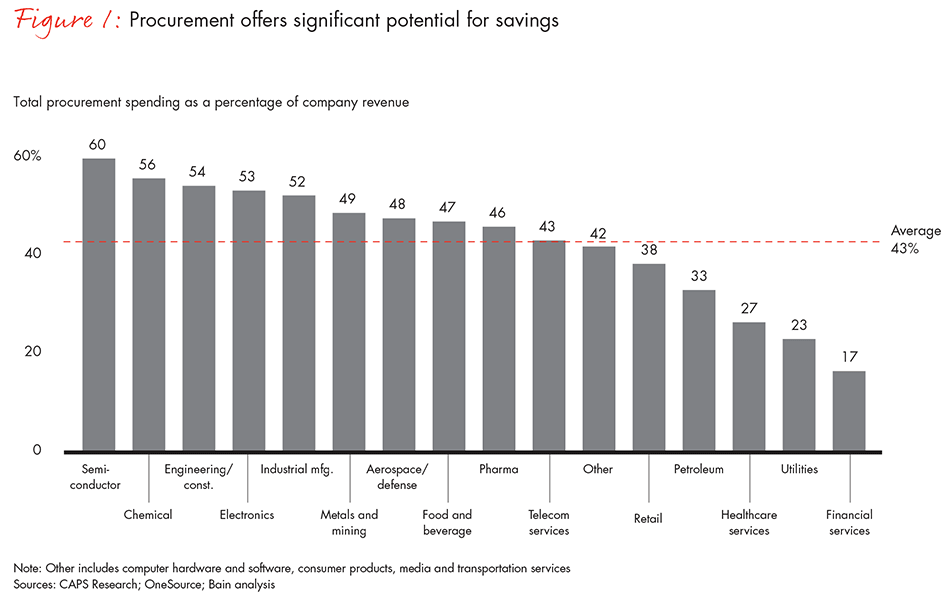
      Most companies only scratch the surface of procurement efficiency. Those that dig deeper discover that the savings can be dramatic. External purchasing is the largest single expense category for most firms, averaging 43% of total costs (see Figure 1). Bain research shows that world-class procurement organizations can reduce a company’s purchasing cost base by an average of 8%–12% and deliver additional annual savings of 2%–3%.

      A talented procurement team can provide valuable data, analysis and insights that influence what a company buys and how it buys. But many organizations wall off procurement from the rest of the business, treating it as a non-strategic service. Procurement managers that have a mandate to think strategically about what a company buys and spends can make the business case for change. But overcoming organizational silos takes time, and procurement needs to earn a seat at the table with business unit leaders.

      Leading companies achieve full potential savings by creating a collaborative partnership between procurement and the business, and making both accountable for results. They invest in procurement teams with the skills and talent to work across all business functions. The combination enables smarter, proactive purchasing decisions. At the global insurance company, for example, purchasing managers started providing regular feedback to business unit heads about where their spending was less efficient than the competition’s. That’s powerful intelligence.


      unearthing-hidden-treasure-of-procurement-fig01_embed

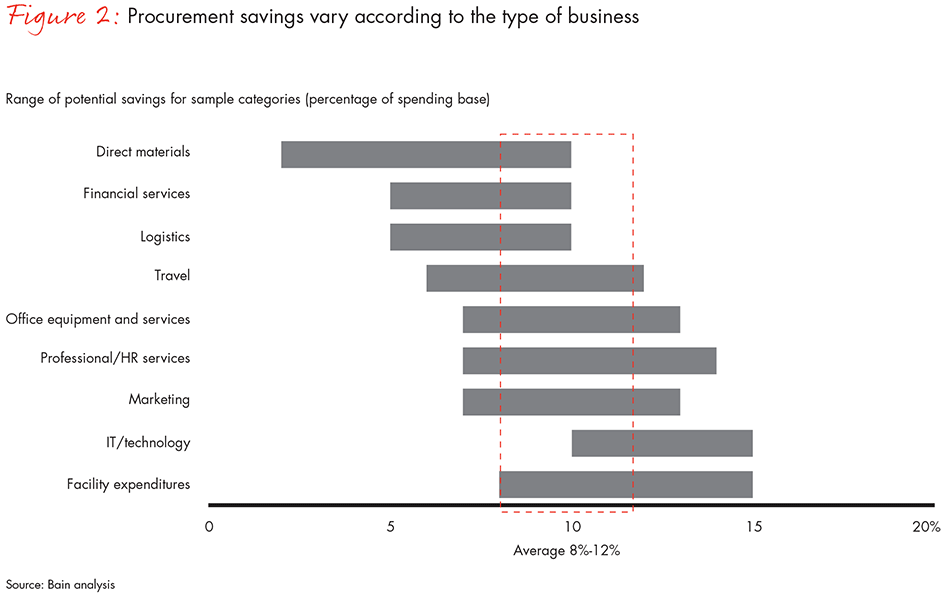
      A big challenge is making sure procurement savings really stick. Often, they seem to evaporate. Why? Procurement managers seek to cut category costs (such as travel and entertainment expenses) that typically span multiple budgets, so the savings are difficult for finance to track and book. As a result, procurement claims large savings that never show up in the company financials—a major point of frustration for CFOs and business unit managers. When procurement and finance work together, however, they can create systems that reliably capture these gains, delivering real cash savings to management (see Figure 2). That creates a virtuous circle for improving performance.


      unearthing-hidden-treasure-of-procurement-fig02_embed

      Another important step is building the capabilities to lock in long-term savings. Even when companies achieve significant purchasing savings, many cannot sustain the process. Giving procurement a strategic mandate requires behavior change across the entire organization. Successful companies understand that and invest in the structures, talent and tools to find new opportunities year after year.

      Changing organizational behaviors takes time, but the benefits of giving procurement a strategic mandate are compelling. It allows companies to save more, track gains so they don’t evaporate, and continue saving from year to year.

      Infographic

      Procurement Savings That Stick

      External purchasing is the largest single expense at most companies. Businesses that think differently about procurement can reap big rewards.

      Save more: Buy Better + Spend BetterSM


      Buy better. When companies set out to trim procurement costs, they typically focus on the two areas of savings that procurement offices control directly: price negotiation and supplier selection, which both help companies buy better.

      • Negotiate better. Negotiating lower prices for everything a company buys may sound obvious, but many companies struggle with how to do this when the offering is more customized, as in certain service categories. A global agricultural chemicals company achieved breakthrough service savings by benchmarking the labor rates and markups it was paying suppliers against industry standards. That allowed the procurement team to renegotiate labor service contracts, yielding $75 million in savings.
      • Streamline suppliers. When the same company launched a procurement transformation in 2013, one of the first moves was a strategic sourcing process that consolidated 2,000 suppliers worldwide for maintenance and repair equipment down to one main supplier. By doing so, the company won a 20% price reduction, netted more than $10 million in annual savings and improved management efficiency.

      Spend better. Buying better is critical, but spending better can double a company’s procurement gains—or more. Bain research shows that techniques for spending better, which focus on what companies are buying, not just what they pay for it, can produce 60% of total savings. Companies that do both—buy better and spend better—canvass the entire landscape of opportunities.

      Three guidelines can help companies spend better:

      • Get a grip on demand. Leading companies streamline purchasing. By examining specific categories, procurement teams can put a spotlight on unnecessary spending.
      • Design to cost. World-class purchasing teams also make sure design teams are not overengineering new products. They embed procurement managers in the R&D team to assess the cost of different components and consider alternative options that may be more cost-effective.
      • Reduce system costs. Successful companies evaluate the total cost of owning expensive items. Paying more upfront can be the more economical choice if savings over time outweigh an initial higher cost. They examine their supply chain regularly to understand whether it makes more sense to produce items in-house or buy them from someone else. And they collaborate closely with suppliers to reduce extra costs by reducing supplier complexity.

      The agricultural chemicals company significantly enhanced its procurement savings by identifying opportunities to spend better. In one case, its service contractors at mine sites were struggling to meet production and cost targets. Cross-functional operations-and-procurement teams helped highlight the key bottlenecks and develop solutions. They co-led negotiations to reengineer the workflow so the right-size team was working at the right times, and all the steps in the mill process were coordinated. That resulted in improved throughput, higher uptime and lower labor costs. The company also switched from paying service contractors on a time-and-materials basis to output-based contracts that aligned the company’s economic interests with its suppliers. Overhauling the service contracts reduced service costs by 10%. Altogether, the procurement team achieved $130 million in savings on an indirect spending base of $1.5 billion.

      Giving procurement a more strategic role required support from the leadership team and behavior change across the entire organization. With a mandate from the top, procurement teams built trust by bringing data and insights to the table and making the business case for change.

       David Schannon, a partner with Bain's Performance Improvement practice, discusses how leading companies think differently about procurement by using three methods to capture full potential savings.

      Closing the loop to lock in savings


      All too often, companies can reap big procurement savings on paper, but they leak out of the system. It’s an annual ritual many companies know well: The head of procurement touts an impressive savings figure for the year, but a frustrated CFO never sees any real savings in the financial statements.

      The reason is clear. Procurement generates savings at the category level, but business-unit managers spend at the budget level. Since most companies don’t have transparent systems that map categories to budgets, managers often take savings from one category and spend them elsewhere. Of course, when managers spend their entire budget, procurement savings quietly disappear. By that time, procurement teams already have reported the gains to finance and moved on to the next initiative.

      Leading companies close the loop by connecting procurement and finance to make sure category-level savings flow into the current year’s budget. When Boston Scientific revamped its indirect procurement in 2015, the executive team was determined to capture the savings in real time—and to consciously decide whether to reinvest in growth or let the gains flow to the bottom line. That meant breaking down outmoded barriers between procurement and finance and helping finance see where the procurement savings were being generated budget by budget.

      The company used cross-functional teams and category-sourcing plans to translate category-level procurement savings into specific budget-level targets. They then put systems in place for the finance department to track and channel those category-level savings into specific budgets. As a result, Boston Scientific will deliver $30 million in savings in 2016 tied to specific budgets, allowing the leadership team to make clear choices about how to spend the windfall.

      By helping management generate and actually capture the savings, procurement managers at Boston Scientific earned trust and influence across the entire business. Closing the loop created a virtuous circle. It delivered greater purchasing savings across the board, channeled them to business objectives and reinforced top-level support for giving procurement a strategic mandate.

      Making the savings stick


      Even when companies identify big procurement gains, the discipline typically is short-lived, because they haven’t built the organizational capabilities to sustain annual procurement gains of 2%–3% over time. It’s hard to do because building cross-functional coordination and collaboration involves behavior change across the entire business.

      The global insurance company paved the way for ongoing savings by investing in a new global procurement model, filling key talent gaps, refining decision rights and installing new systems and tools to review spending patterns continually.

      Investing in the procurement team’s capabilities is also critical, particularly following major acquisitions. In 2011, Lenovo realized after a series of acquisitions that its six procurement centers around the world had widely divergent skills and practices. In response, it launched a global training program for 300 people with a focus on category management, including strategy development and stakeholder engagement in addition to the core procurement skills of negotiating and sourcing. That helped procurement teams collaborate effectively across all business units and with suppliers.

      The result was a steady stream of cross-functional initiatives—where there had been none—that continue to deliver gains from year to year. In one of the company’s highest-cost categories, original design manufacturing (ODM) for the T Series ThinkPad, procurement orchestrated a different type of working relationship between the supplier and engineering. By negotiating with more transparent cost data, it shared more risk and promoted long-term partnership, generating $90 million in savings.

      Ultimately, a more strategic role for procurement helps companies invest in and attract talented people whose capabilities are critical to sustaining behavior change. The right procurement talent also can set up strategic relationships with suppliers that underpin innovation and create competitive advantage.

      Three sets of capabilities can help make savings sustainable:

      • Structure and process. Leading companies create clear roles and decision rights for cross-functional teams. They develop category strategies to capture full potential value from each category so the chief of procurement can take control of the spending agenda and create strategic alignment on the savings plan.
      • Talent and skills. World-class procurement teams have the talent and skills to deliver market expertise, analysis and insights to the business. They build cross-functional teams and partnerships within the business to make sure procurement insights become part of decision making.
      • Tools and systems. Successful companies invest in tools that provide spending visibility and track supplier performance, including metrics and a procurement savings dashboard.

      A skilled procurement team with a strategic mandate can unearth hidden savings and deliver significant additional gains year after year. By bringing procurement into the routine process of decision making, the entire leadership team is more attuned to opportunities to liberate cash that can be invested in growth. That, in turn, helps companies put the right organization in place to deliver savings that stick.

      David Schannon is a partner in Bain’s Silicon Valley office. Sam Thakarar is a partner in Bain’s Boston office. Klaus Neuhaus is a partner in the company’s Düsseldorf office. Raymond Tsang is a partner in Bain’s Shanghai office.

      unearthing-hidden-treasure-of-procurement-fig01_full

      unearthing-hidden-treasure-of-procurement-fig02_full
      Authors
      • Headshot of David Schannon
        David Schannon
        Alumni, Silicon Valley
      • Headshot of Sam Thakarar
        Sam Thakarar
        Partner, Boston
      • Headshot of Klaus Neuhaus
        Klaus Neuhaus
        Partner, Dusseldorf
      • Headshot of Raymond Tsang
        Raymond Tsang
        Partner, Hong Kong
      Contact us
      Related Consulting Services
      • Operations
      • Performance Improvement
      • Procurement
      Financial Services
      Calling on Procurement to Add More Value to Insurance Claims Management

      Close collaboration between procurement and business units can reduce claims costs while raising customer advocacy.

      Read More
      Performance Improvement
      Building a World-Class Global Procurement Organization

      Leaders are turning to a new transformational approach for full-potential savings.

      Read More
      Performance Improvement
      Tariff Response: What You Need to Know

      Bain's Karen Harris and Hernan Saenz discuss the lasting impact of tariffs, what leading companies are doing to adapt, and the strategic moves to make for success.

      Read More
      Cost
      Scaling AI While Controlling Tech Costs

      AI adds complexity, but it’s also a powerful tool to control spending.

      Read More
      Cost
      The New Case for Zero-Based Cost Management

      A clean-sheet approach helps leaders produce savings that stick—even in turbulent times.

      Read More
      Published in October 2016
      Tags
      • Cost
      • Operations
      • Performance Improvement
      • Procurement

      How We've Helped Clients

      Performance Improvement Turning bottlenecks into growth opportunities

      Read case study

      Performance Improvement Constructing a best-in-class global procurement organization

      Read case study

      Performance Improvement Streamlining engine assembly boosts output

      Read case study

      Ready to talk?

      We work with ambitious leaders who want to define the future, not hide from it. Together, we achieve extraordinary outcomes.

      Stay ahead in a rapidly changing world. Subscribe to Bain Insights, our monthly look at the critical issues facing global businesses.

      *I have read and understand Bain’s Privacy Notice.

      Please read and agree to the Privacy Policy.
      Bain & Company
      Contact us Sustainability Accessibility Terms of use Privacy Modern Slavery Act Statement Cookie Policy Sitemap Log In

      © 1996-2026 Bain & Company, Inc.

      Contact Bain

      How can we help you?

      • Business inquiry
      • Career information
      • Press relations
      • Partnership request
      • Speaker request
      See all offices