
Skip to Content
  • Offices

    Offices

    North & Latin America
    • Atlanta
    • Austin
    • Bogota
    • Boston
    • Buenos Aires
    • Chicago
    • Dallas
    • Denver
    • Houston
    • Los Angeles
    • Mexico City
    • Minneapolis
    • Monterrey
    • Montreal
    • New York
    • Rio de Janeiro
    • San Francisco
    • Santiago
    • São Paulo
    • Seattle
    • Silicon Valley
    • Toronto
    • Washington, DC
    Europe & Africa
    • Amsterdam
    • Athens
    • Berlin
    • Brussels
    • Copenhagen
    • Dusseldorf
    • Frankfurt
    • Helsinki
    • Istanbul
    • Johannesburg
    • Kyiv
    • Lisbon
    • London
    • Madrid
    • Milan
    • Munich
    • Oslo
    • Paris
    • Rome
    • Stockholm
    • Vienna
    • Warsaw
    • Zurich
    Middle East
    • Doha
    • Dubai
    • Riyadh
    Asia & Australia
    • Bangkok
    • Beijing
    • Bengaluru
    • Brisbane
    • Ho Chi Minh City
    • Hong Kong
    • Jakarta
    • Kuala Lumpur
    • Manila
    • Melbourne
    • Mumbai
    • New Delhi
    • Perth
    • Shanghai
    • Singapore
    • Sydney
    • Tokyo
    See all offices
  • Alumni
  • Media Center
  • Subscribe
  • Contact
  • Global

    Select your region and language

    Global
    • Global (English)
    North & Latin America
    • Brazil (Português)
    • Argentina (Español)
    • Canada (Français)
    • Chile (Español)
    • Colombia (Español)
    Europe, Middle East, & Africa
    • France (Français)
    • DACH Region (Deutsch)
    • Italy (Italiano)
    • Spain (Español)
    • Greece (Elliniká)
    Asia & Australia
    • China (中文版)
    • Korea (한국어)
    • Japan (日本語)
  • Saved items (0)
    Saved items (0)

    You have no saved items.

    Bookmark content that interests you and it will be saved here for you to read or share later.

    Explore Bain Insights
  • Industries
    Main menu

    Industries

    • Aeroespacial y Defensa
    • Agroindustria
    • Químicos
    • Construcción e Infraestructura
    • Productos de Consumo
    • Servicios Financieros
    • Salud y Ciencias de la Vida
    • Maquinaria y Equipo Industrial
    • Medios y Entretenimiento
      Industries
      Medios y Entretenimiento
      • Media Lab
    • Metales
    • Minería
    • Petróleo y Gas
    • Papel y Empaque
    • Private Equity
      Industries
      Private Equity
      • Due Diligence
      • Exit Planning
      • Firm Strategy & Operations
      • Portfolio Value Creation
    • Sector Público y Social
    • Retail
    • Tecnología
    • Telecomunicaciones
      Industries
      Telecomunicaciones
      • Capital Expenditure
      • Telco Digital Transformation
    • Transporte
    • Viajes y Turismo
    • Servicios Públicos y Energías Renovables
  • Consulting Services
    Main menu

    Consulting Services

    • Customer Experience
    • Sustainability
    • Innovation
    • M&A
    • Operations
    • People & Organization
    • Private Equity
    • Sales & Marketing
    • Strategy
    • AI, Insights, and Solutions
    • Technology
    • Transformation
  • Digital
  • Insights
    Main menu

    Insights

    • Industry Insights
    • Services Insights
    • Bain Books
    • Webinars
    • Bain Futures
    View all Insights
    Featured topics
    • Tariff Response
    • Artificial Intelligence
    • Thriving in Uncertainty
    • Executive Conversations
    • Macro Trends
    • M&A Report
    • Healthcare Private Equity Report
    • Paper & Packaging Report
    • Technology Report
    • CEO's Guide to Sustainability
    • CEO Insights
    • CFO Insights
    • COO Insights
    • CIO Insights
    • CMO Insights
    View all featured topics
  • About
    Main menu

    About

    • What We Do
    • What We Believe
    • Our People & Leadership
    • Client Results
    • Awards & Recognition
    • Global Affiliations
    Further: Our global responsibility
    • Sustainability
    • Social Impact
    • World Economic Forum
    Learn more about Further
  • Carreras
    Main menu

    Carreras

    • Trabaja con Nosotros
      Carreras
      Trabaja con Nosotros
      • Find Your Place
      • Nuestras Áreas de Trabajo
      • Equipos Integrados
      • Estudiantes
      • Internships & Programs
      • Eventos de Reclutamiento
    • La Vida en Bain
      Carreras
      La Vida en Bain
      • Historias Profesionales
      • Nuestra Gente
      • Dónde Trabajamos
      • Apoyando tu Crecimiento
      • Grupos de Afinidad
      • Beneficios
    • Impact Stories
    • Nuestro Proceso
      Carreras
      Nuestro Proceso
      • Qué Esperar
      • Entrevistas
    FIND JOBS
  • Offices
    Main menu

    Offices

    • North & Latin America
      Offices
      North & Latin America
      • Atlanta
      • Austin
      • Bogota
      • Boston
      • Buenos Aires
      • Chicago
      • Dallas
      • Denver
      • Houston
      • Los Angeles
      • Mexico City
      • Minneapolis
      • Monterrey
      • Montreal
      • New York
      • Rio de Janeiro
      • San Francisco
      • Santiago
      • São Paulo
      • Seattle
      • Silicon Valley
      • Toronto
      • Washington, DC
    • Europe & Africa
      Offices
      Europe & Africa
      • Amsterdam
      • Athens
      • Berlin
      • Brussels
      • Copenhagen
      • Dusseldorf
      • Frankfurt
      • Helsinki
      • Istanbul
      • Johannesburg
      • Kyiv
      • Lisbon
      • London
      • Madrid
      • Milan
      • Munich
      • Oslo
      • Paris
      • Rome
      • Stockholm
      • Vienna
      • Warsaw
      • Zurich
    • Middle East
      Offices
      Middle East
      • Doha
      • Dubai
      • Riyadh
    • Asia & Australia
      Offices
      Asia & Australia
      • Bangkok
      • Beijing
      • Bengaluru
      • Brisbane
      • Ho Chi Minh City
      • Hong Kong
      • Jakarta
      • Kuala Lumpur
      • Manila
      • Melbourne
      • Mumbai
      • New Delhi
      • Perth
      • Shanghai
      • Singapore
      • Sydney
      • Tokyo
    See all offices
  • Alumni
  • Media Center
  • Subscribe
  • Contact
  • Global
    Main menu

    Select your region and language

    • Global
      Select your region and language
      Global
      • Global (English)
    • North & Latin America
      Select your region and language
      North & Latin America
      • Brazil (Português)
      • Argentina (Español)
      • Canada (Français)
      • Chile (Español)
      • Colombia (Español)
    • Europe, Middle East, & Africa
      Select your region and language
      Europe, Middle East, & Africa
      • France (Français)
      • DACH Region (Deutsch)
      • Italy (Italiano)
      • Spain (Español)
      • Greece (Elliniká)
    • Asia & Australia
      Select your region and language
      Asia & Australia
      • China (中文版)
      • Korea (한국어)
      • Japan (日本語)
  • Saved items  (0)
    Main menu
    Saved items (0)

    You have no saved items.

    Bookmark content that interests you and it will be saved here for you to read or share later.

    Explore Bain Insights
  • Industries
    • Industries

      • Aeroespacial y Defensa
      • Agroindustria
      • Químicos
      • Construcción e Infraestructura
      • Productos de Consumo
      • Servicios Financieros
      • Salud y Ciencias de la Vida
      • Maquinaria y Equipo Industrial
      • Medios y Entretenimiento
      • Metales
      • Minería
      • Petróleo y Gas
      • Papel y Empaque
      • Private Equity
      • Sector Público y Social
      • Retail
      • Tecnología
      • Telecomunicaciones
      • Transporte
      • Viajes y Turismo
      • Servicios Públicos y Energías Renovables
  • Consulting Services
    • Consulting Services

      • Customer Experience
      • Sustainability
      • Innovation
      • M&A
      • Operations
      • People & Organization
      • Private Equity
      • Sales & Marketing
      • Strategy
      • AI, Insights, and Solutions
      • Technology
      • Transformation
  • Digital
  • Insights
    • Insights

      • Industry Insights
      • Services Insights
      • Bain Books
      • Webinars
      • Bain Futures
      View all Insights
      Featured topics
      • Tariff Response
      • Artificial Intelligence
      • Thriving in Uncertainty
      • Executive Conversations
      • Macro Trends
      • M&A Report
      • Healthcare Private Equity Report
      • Paper & Packaging Report
      • Technology Report
      • CEO's Guide to Sustainability
      • CEO Insights
      • CFO Insights
      • COO Insights
      • CIO Insights
      • CMO Insights
      View all featured topics
  • About
    • About

      • What We Do
      • What We Believe
      • Our People & Leadership
      • Client Results
      • Awards & Recognition
      • Global Affiliations
      Further: Our global responsibility
      • Sustainability
      • Social Impact
      • World Economic Forum
      Learn more about Further
  • Carreras
    Popular Searches
    • Agile
    • Digital
    • Strategy
    Your Previous Searches
      Recently Visited Pages

      Content added to saved items

      Saved items (0)

      Removed from saved items

      Saved items (0)

      Brief

      Beyond the Stage Gate: Capital Projects in the Energy Transition

      Beyond the Stage Gate: Capital Projects in the Energy Transition

      Leading energy and natural resource companies are rethinking their capital deployment model to succeed in the energy transition.

      By Juan Carlos Gay, Edward Stone, Nir Feinstein , and Annie Medaglia

      • min read
      }

      Brief

      Beyond the Stage Gate: Capital Projects in the Energy Transition
      en
      Executive Summary
      • The energy transition will require ENR companies to deploy unprecedented amounts of capital with unparalleled speed and efficiency.
      • As a variety of factors make it harder to deliver projects, cost overruns could put about $1.5 billion of capital expenditures at risk each year for the average company, according to Bain analysis.
      • To increase efficiency and resilience, emerging leaders are building upon the traditional project stage-gate process and thinking systematically across the portfolio.
      • They’re also leveraging technology to eliminate waste, accelerate execution, and manage risk.

      A successful energy transition will require the largest, most rapid transformation of the global energy system in history. To meet the moment, leaders of energy and natural resource (ENR) companies are undertaking an enormous number of capital projects in the coming years. These span emerging and conventional technologies and infrastructure, from solar power and liquefied natural gas to copper mining and battery storage.

      Many ENR companies have decades of experience executing capital projects. While some have struggled to deliver large capital projects on time and on budget, many companies take pride in their organization’s track record.

      But none have faced anything like what’s ahead. Millions of acres of land must be transformed to build assets for renewables, energy transmission, distribution, and storage. Millions of new workers will be needed to change over tens of millions of pieces of machinery and equipment across the energy and raw materials systems, and to develop the mines and supply chains for raw materials and equipment.

      While the volume of capital required to achieve this is unprecedented, so is the speed of the transition. Some companies face the prospect of doubling or tripling their capital deployment levels within a few short years.

      At the same time, roadblocks are stacking up. High interest rates and inflation are driving up project costs. Lead times and costs are being stretched by limited supplies of equipment, materials, and talent. Public sentiment and the regulatory environment are growing more complex, with a patchwork of policies around the world, sometimes with competing agendas. Nascent energy transition technologies are encountering scaling challenges as early estimates meet the realities of capital deployment and construction.

      This leaves ENR companies exposed. With large projects often running 15% to 20% over budget, about $1.5 billion of capital will be at risk each year for the average power, oil and gas, or mining company through 2030, according to Bain & Company analysis of top companies’ planned investments (see Figure 1). That has serious ramifications for the world’s timeline to reach net-zero carbon emissions and for each company’s return on capital deployed. It’s no surprise that ENR executives are feeling intensifying pressure from shareholders, governments, and local communities to keep projects on track.

      Figure 1
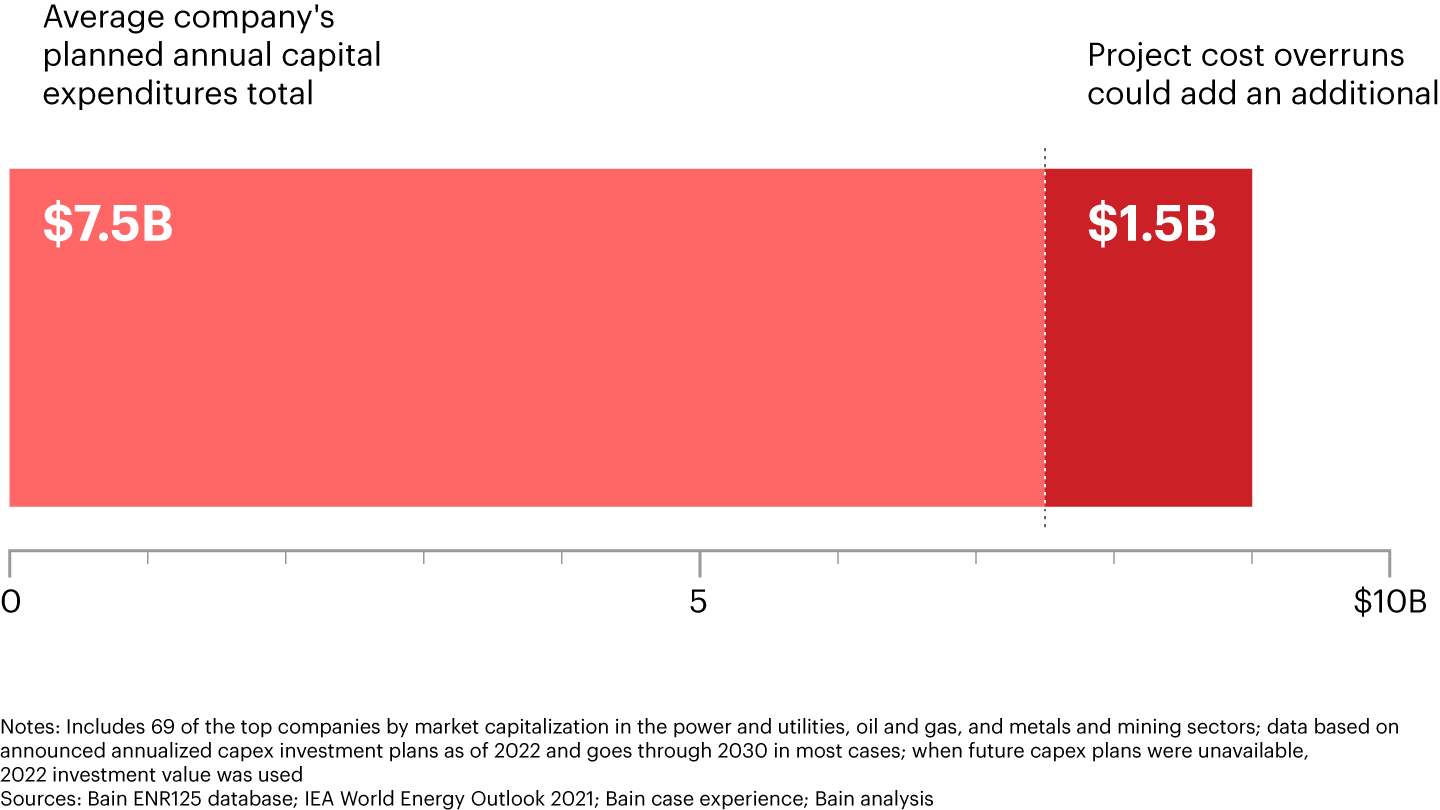
      Project cost overruns will put about $1.5 billion of capital at risk each year for power, oil and gas, and mining companies

      Companies will have to take bold action to navigate the wave of capital projects in motion amid this more complex global landscape.

      Some of the answers to these challenges are known, and many ENR companies are already implementing them: resetting relationships with suppliers, making purchases more strategically and proactively, deploying Agile ways of working in the project development and delivery phases. But leading companies are now going further and rethinking the long-held model used to facilitate capital delivery: the project stage-gate process.

      Beyond the stage gate

      We’re not suggesting ENR companies scrap the stage-gate process. For decades, it has proven instrumental in managing risk and generating returns for capital projects. When done well, it helps companies satisfy prescriptive requirements for each project milestone before approving funding for the project to advance.

      The process has drawbacks, however, and it can hinder projects if not applied effectively. Stage gates create a rigid decision-making cadence that can delay critical decisions until a gate review, which may be too late. Or worse, some decisions never get made, simply due to scheduling conflicts among key stakeholders. The stage-gate structure also may empower individual project teams to make decisions without sufficient input from leaders with a cross-portfolio view.

      Because companies typically apply stage gates project by project, they often miss opportunities to improve engineering, procurement, or scheduling across the portfolio. Absent other efforts, stage gates can also limit knowledge and experience sharing from one project to the next. Finally, companies sometimes treat stage gates as a compliance exercise, with teams focused on producing huge volumes of documentation rather than analyzing the decisions that truly create value—or destroy it.

      In our work with ENR companies worldwide, we’re seeing the emerging leaders adapt their decision-making approach by focusing on three key principles.

      1. Think systematically across the portfolio to capture synergies and build resilience. A focus on managing each individual project’s capex as efficiently as possible has historically worked well because most ENR companies typically haven’t pursued multiple large capital projects simultaneously. But given the sheer scale and increasing interdependencies of the energy infrastructure of the future, organizations that don’t expand their focus are likely to miss significant opportunities to reduce the total cost of their capex deployment and increase resilience in their delivery of projects.

      The most effective companies are stepping back to view their projects as an interconnected and aggregated system across the entire value chain. This system has three main levels: individual projects; programs (collections of projects in a technology vertical, such as all of the company’s solar or transmissions projects); and the full portfolio of programs and projects (see Figure 2). These groupings enable a more comprehensive understanding of all the potential challenges and synergies across projects, allowing the company to develop more cohesive and strategic plans to address them.

      Figure 2
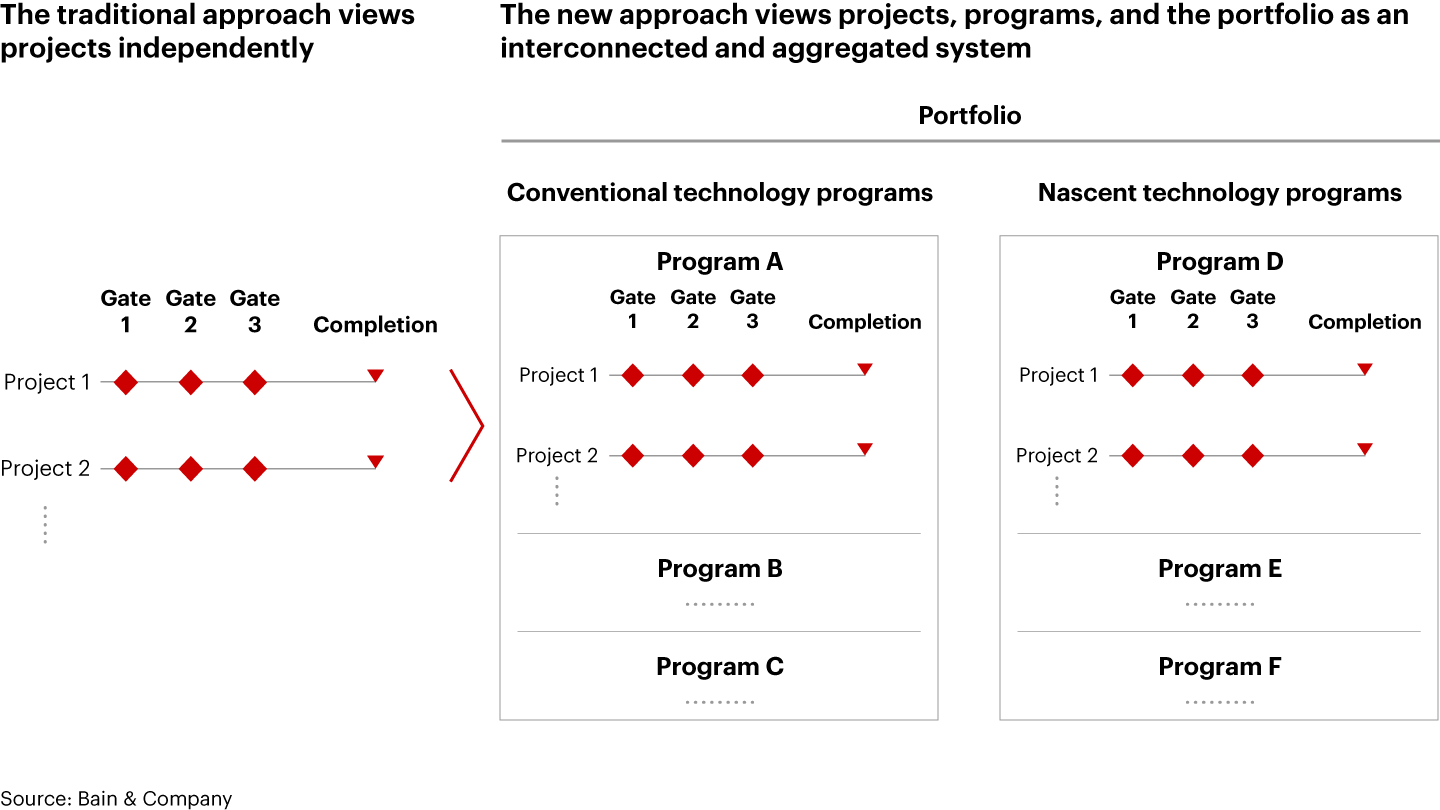
      Thinking systematically across the entire portfolio can help energy companies develop more cohesive strategies
      Thinking systematically across the entire portfolio can help energy companies develop more cohesive strategies
      Thinking systematically across the entire portfolio can help energy companies develop more cohesive strategies

      One US utility company that switched to a more systematic portfolio view segmented its programs into conventional and nascent technology verticals, helping it more efficiently allocate time and resources. The company already had battle-tested execution playbooks and institutional knowledge for conventional projects such as gas power plants, but it recognized the challenges to scaling them up. On the other hand, the company had to create playbooks from scratch for nascent technology programs it hadn’t pursued in decades, if at all, such as new nuclear reactors and hydrogen plants. By thinking through all potential risks before launching each type of program, the utility was able to proactively spot issues and plan solutions.

      Thinking systematically also means ensuring the organization is ready to execute the new strategy. A key starting point is stress testing the aggregate demand for resources across each program (e.g., funding, construction sites, permits, engineers, equipment, and labor) relative to the market capacity. The most effective organizations also ensure critical enablers are in place or planned, such as the right operational procedures, performance metrics, regulatory support, and digital capabilities.

      This approach has enabled leading companies to identify risks and competitive levers that wouldn’t normally be part of an isolated project stage-gate review, such as consistently identifying high-quality land for a solar farm program. These more systematic reviews tee up more effective and better coordinated decision making at the portfolio and program levels. Following such a review of an upcoming three-year capital program, leaders of an integrated oil and gas company realized that tight supplies of key equipment and lower availability of engineering, procurement, and construction suppliers made it vulnerable. The executives decided to sign long-term purchase agreements to secure the company’s access to both.

      2. Realign the operating model around critical decisions. It’s imperative in this new environment to understand which decisions need to be made, when, by whom, and on what basis. When achieved across the project, program, and portfolio levels, this clarity can enable companies to head off risks and extract maximum value from their competitive advantages.

      However, most ENR companies’ operating models aren’t set up to deliver this. Project managers are typically siloed from decision makers at the program and portfolio levels, resulting in less effective decisions at all three levels. In addition, program and portfolio decisions are too often made through discussion only within capital project groups. That’s sure to leave blind spots. All parts of the company, including finance, investor relations, and regulatory affairs, need to work together to successfully deliver the portfolio.

      In light of the new demands of this era, forward-looking companies are adapting their decision-making processes, governance, forums, operating rhythms, and even top-level structure and accountability protocols. They’re mapping out the critical decisions, including defining strategic guardrails—the types of investments or activities they will not pursue. Again, this map should span projects (e.g., selecting cost-effective construction sites); programs (e.g., standardizing project design); and the whole portfolio (e.g., supplier framework agreements and determining which capabilities should be outsourced vs. managed in-house).

      These companies then augment their stage-gate process with governance at both the program and portfolio levels, ensuring that cross-project decisions and synergies are optimized as work progresses. Making these decisions at the program and portfolio levels will have ripple effects that unlock value across each project.

      One US electric utility was able to reduce construction costs of a multiyear solar program by 15% by revising its operating model. This included clarifying decision-making processes and elevating program-level decisions to the right senior leaders. The company dramatically brought down costs by focusing on the most critical areas that it could directly control. For example, the utility implemented a more rigorous, data-driven protocol for selecting and purchasing land for its solar farms. In addition, it received less expensive quotes from vendors by delivering project bid requests with leaner and more fully baked scope requirements and schedule visibility.

      3. Eliminate waste and friction with digital technology. By taking advantage of well-established and emerging technologies, companies have a unique opportunity to eliminate the inherent friction and delays that come with managing risk in the stage-gate process. Digital solutions, automation capabilities, and artificial intelligence tools have matured enough that they can deliver real and immediate efficiency gains for capital projects.

      We’ve seen AI and other advanced technologies create value for clients in areas such as processing documents and invoices; identifying quality flaws in engineering design documents; improving project schedules or equipment layouts; and monitoring project metrics for risk signals. For example, one European energy company used AI to identify a potential 50% reduction in the time and resources required for its document QA/QC compliance process.

      The list of potential applications of these technologies is long and growing. Strengthening the organizational muscle to test and learn in the day-to-day project life cycle will be critical for any ENR company to remain competitive and deliver capital projects effectively and efficiently.

      Be bold, or bust

      For many leadership teams, it may feel uncomfortable to adopt new approaches to the stage-gate model that has long created value across industries. But the alternative—sticking to current management practice—is riskier. Companies that fail to prepare their organizations for a step change in demand will find it even more difficult in the future to meet their performance goals. The number and size of capital projects needed to meet society’s climate goals will overload companies that aren’t prepared to manage them more efficiently. Leadership teams that take a holistic view of their portfolio and reshape their stage-gate processes, operating model, and technology for this new era will be best positioned to deliver on and create returns from the challenging transition ahead.

      The authors wish to thank Aurelia Legrez, Linh Le, and James Pyle for their contributions to this article.

      Authors
      • Headshot of Juan Carlos Gay
        Juan Carlos Gay
        Partner, London
      • Headshot of Edward Stone
        Edward Stone
        Partner, London
      • Nir Feinstein
        Alumni, Houston
      • Headshot of Annie Medaglia
        Annie Medaglia
        Partner, Washington, DC
      Related Industries
      • Agribusiness
      • Chemicals
      • Energy & Natural Resources
      • Mining
      • Oil & Gas
      • Utilities & Renewables
      Related Consulting Services
      • Capital Projects Acceleration
      • Operations
      • Transformation
      Energy & Natural Resources
      Improving Capital Project Delivery Systems

      Bain experts reveal how top energy companies are revolutionizing their capital project delivery to excel in cost, timing, and quality in the energy transition.

      Read more
      Energy & Natural Resources
      Sustaining Capital: From Chaos to Discipline

      Fragmented budgets, poor visibility, and missed forecasts are fixable with the right approach.

      Read more
      Energy & Natural Resources
      What’s Ahead for Energy Executives in 2025

      Bain partners discuss findings from our latest survey of energy executives and how today's challenges are reshaping priorities across sectors.

      Read more
      Utilities & Renewables
      Solving for AI’s Data Center Construction Crunch

      AI’s computing needs could reach 200 gigawatts of new global demand by 2030, requiring companies to build faster and smarter.

      Read more
      Energy & Natural Resources
      Energy Executives Double Down on Core Business

      Amid global turbulence and a slowing energy transition, a growing share of leaders are concentrating on the core.

      Read more
      First published in junio 2024
      Tags
      • Agribusiness
      • Capital Projects Acceleration
      • Chemicals
      • Energy & Natural Resources
      • Mining
      • Oil & Gas
      • Operations
      • Transformation
      • Utilities & Renewables

      How We've Helped Clients

      New products propel profitability for metals manufacturer

      See more related case studies

      An OFS captures post-merger growth synergies

      See more related case studies

      Broader market plus tighter sales strategy equals big success for a portfolio company

      See more related case studies

      Want to continue the conversation

      We help global leaders with their organization's most critical issues and opportunities. Together, we create enduring change and results

      Bain Insights. Our perspectives on critical issues global businesses face in today's challenging environment, delivered monthly.

      *I have read and understand Bain’s Privacy Notice.

      Please read and agree to the Privacy Policy.
      Bain & Company
      Contact us Sustainability Accessibility Terms of use Privacy Modern Slavery Act Statement Cookie Policy Sitemap Log In

      © 1996-2026 Bain & Company, Inc.

      Contact Bain

      How can we help you?

      • Business inquiry
      • Career information
      • Press relations
      • Partnership request
      • Speaker request
      See all offices