
Skip to Content
  • Offices

    Offices

    North & Latin America
    • Atlanta
    • Austin
    • Bogota
    • Boston
    • Buenos Aires
    • Chicago
    • Dallas
    • Denver
    • Houston
    • Los Angeles
    • Mexico City
    • Minneapolis
    • Monterrey
    • Montreal
    • New York
    • Rio de Janeiro
    • San Francisco
    • Santiago
    • São Paulo
    • Seattle
    • Silicon Valley
    • Toronto
    • Washington, DC
    Europe & Africa
    • Amsterdam
    • Athens
    • Berlin
    • Brussels
    • Copenhagen
    • Dusseldorf
    • Frankfurt
    • Helsinki
    • Istanbul
    • Johannesburg
    • Kyiv
    • Lisbon
    • London
    • Madrid
    • Milan
    • Munich
    • Oslo
    • Paris
    • Rome
    • Stockholm
    • Vienna
    • Warsaw
    • Zurich
    Middle East
    • Doha
    • Dubai
    • Riyadh
    Asia & Australia
    • Bangkok
    • Beijing
    • Bengaluru
    • Brisbane
    • Ho Chi Minh City
    • Hong Kong
    • Jakarta
    • Kuala Lumpur
    • Manila
    • Melbourne
    • Mumbai
    • New Delhi
    • Perth
    • Shanghai
    • Singapore
    • Sydney
    • Tokyo
    See all offices
  • Alumni
  • Media Center
  • Subscribe
  • Contact
  • Global

    Select your region and language

    Global
    • Global (English)
    North & Latin America
    • Brazil (Português)
    • Argentina (Español)
    • Canada (Français)
    • Chile (Español)
    • Colombia (Español)
    Europe, Middle East, & Africa
    • France (Français)
    • DACH Region (Deutsch)
    • Italy (Italiano)
    • Spain (Español)
    • Greece (Elliniká)
    Asia & Australia
    • China (中文版)
    • Korea (한국어)
    • Japan (日本語)
  • Saved items (0)
    Saved items (0)

    You have no saved items.

    Bookmark content that interests you and it will be saved here for you to read or share later.

    Explore Bain Insights
  • Industries
    Main menu

    Industries

    • Aeroespacial y Defensa
    • Agroindustria
    • Químicos
    • Construcción e Infraestructura
    • Productos de Consumo
    • Servicios Financieros
    • Salud y Ciencias de la Vida
    • Maquinaria y Equipo Industrial
    • Medios y Entretenimiento
      Industries
      Medios y Entretenimiento
      • Media Lab
    • Metales
    • Minería
    • Petróleo y Gas
    • Papel y Empaque
    • Private Equity
      Industries
      Private Equity
      • Due Diligence
      • Exit Planning
      • Firm Strategy & Operations
      • Portfolio Value Creation
    • Sector Público y Social
    • Retail
    • Tecnología
    • Telecomunicaciones
      Industries
      Telecomunicaciones
      • Capital Expenditure
      • Telco Digital Transformation
    • Transporte
    • Viajes y Turismo
    • Servicios Públicos y Energías Renovables
  • Consulting Services
    Main menu

    Consulting Services

    • Customer Experience
    • Sustainability
    • Innovation
    • M&A
    • Operations
    • People & Organization
    • Private Equity
    • Sales & Marketing
    • Strategy
    • AI, Insights, and Solutions
    • Technology
    • Transformation
  • Digital
  • Insights
    Main menu

    Insights

    • Industry Insights
    • Services Insights
    • Bain Books
    • Webinars
    • Bain Futures
    View all Insights
    Featured topics
    • Tariff Response
    • Artificial Intelligence
    • Thriving in Uncertainty
    • Executive Conversations
    • Macro Trends
    • M&A Report
    • Healthcare Private Equity Report
    • Paper & Packaging Report
    • Technology Report
    • CEO's Guide to Sustainability
    • CEO Insights
    • CFO Insights
    • COO Insights
    • CIO Insights
    • CMO Insights
    View all featured topics
  • About
    Main menu

    About

    • What We Do
    • What We Believe
    • Our People & Leadership
    • Client Results
    • Awards & Recognition
    • Global Affiliations
    Further: Our global responsibility
    • Sustainability
    • Social Impact
    • World Economic Forum
    Learn more about Further
  • Carreras
    Main menu

    Carreras

    • Trabaja con Nosotros
      Carreras
      Trabaja con Nosotros
      • Find Your Place
      • Nuestras Áreas de Trabajo
      • Equipos Integrados
      • Estudiantes
      • Internships & Programs
      • Eventos de Reclutamiento
    • La Vida en Bain
      Carreras
      La Vida en Bain
      • Historias Profesionales
      • Nuestra Gente
      • Dónde Trabajamos
      • Apoyando tu Crecimiento
      • Grupos de Afinidad
      • Beneficios
    • Impact Stories
    • Nuestro Proceso
      Carreras
      Nuestro Proceso
      • Qué Esperar
      • Entrevistas
    FIND JOBS
  • Offices
    Main menu

    Offices

    • North & Latin America
      Offices
      North & Latin America
      • Atlanta
      • Austin
      • Bogota
      • Boston
      • Buenos Aires
      • Chicago
      • Dallas
      • Denver
      • Houston
      • Los Angeles
      • Mexico City
      • Minneapolis
      • Monterrey
      • Montreal
      • New York
      • Rio de Janeiro
      • San Francisco
      • Santiago
      • São Paulo
      • Seattle
      • Silicon Valley
      • Toronto
      • Washington, DC
    • Europe & Africa
      Offices
      Europe & Africa
      • Amsterdam
      • Athens
      • Berlin
      • Brussels
      • Copenhagen
      • Dusseldorf
      • Frankfurt
      • Helsinki
      • Istanbul
      • Johannesburg
      • Kyiv
      • Lisbon
      • London
      • Madrid
      • Milan
      • Munich
      • Oslo
      • Paris
      • Rome
      • Stockholm
      • Vienna
      • Warsaw
      • Zurich
    • Middle East
      Offices
      Middle East
      • Doha
      • Dubai
      • Riyadh
    • Asia & Australia
      Offices
      Asia & Australia
      • Bangkok
      • Beijing
      • Bengaluru
      • Brisbane
      • Ho Chi Minh City
      • Hong Kong
      • Jakarta
      • Kuala Lumpur
      • Manila
      • Melbourne
      • Mumbai
      • New Delhi
      • Perth
      • Shanghai
      • Singapore
      • Sydney
      • Tokyo
    See all offices
  • Alumni
  • Media Center
  • Subscribe
  • Contact
  • Global
    Main menu

    Select your region and language

    • Global
      Select your region and language
      Global
      • Global (English)
    • North & Latin America
      Select your region and language
      North & Latin America
      • Brazil (Português)
      • Argentina (Español)
      • Canada (Français)
      • Chile (Español)
      • Colombia (Español)
    • Europe, Middle East, & Africa
      Select your region and language
      Europe, Middle East, & Africa
      • France (Français)
      • DACH Region (Deutsch)
      • Italy (Italiano)
      • Spain (Español)
      • Greece (Elliniká)
    • Asia & Australia
      Select your region and language
      Asia & Australia
      • China (中文版)
      • Korea (한국어)
      • Japan (日本語)
  • Saved items  (0)
    Main menu
    Saved items (0)

    You have no saved items.

    Bookmark content that interests you and it will be saved here for you to read or share later.

    Explore Bain Insights
  • Industries
    • Industries

      • Aeroespacial y Defensa
      • Agroindustria
      • Químicos
      • Construcción e Infraestructura
      • Productos de Consumo
      • Servicios Financieros
      • Salud y Ciencias de la Vida
      • Maquinaria y Equipo Industrial
      • Medios y Entretenimiento
      • Metales
      • Minería
      • Petróleo y Gas
      • Papel y Empaque
      • Private Equity
      • Sector Público y Social
      • Retail
      • Tecnología
      • Telecomunicaciones
      • Transporte
      • Viajes y Turismo
      • Servicios Públicos y Energías Renovables
  • Consulting Services
    • Consulting Services

      • Customer Experience
      • Sustainability
      • Innovation
      • M&A
      • Operations
      • People & Organization
      • Private Equity
      • Sales & Marketing
      • Strategy
      • AI, Insights, and Solutions
      • Technology
      • Transformation
  • Digital
  • Insights
    • Insights

      • Industry Insights
      • Services Insights
      • Bain Books
      • Webinars
      • Bain Futures
      View all Insights
      Featured topics
      • Tariff Response
      • Artificial Intelligence
      • Thriving in Uncertainty
      • Executive Conversations
      • Macro Trends
      • M&A Report
      • Healthcare Private Equity Report
      • Paper & Packaging Report
      • Technology Report
      • CEO's Guide to Sustainability
      • CEO Insights
      • CFO Insights
      • COO Insights
      • CIO Insights
      • CMO Insights
      View all featured topics
  • About
    • About

      • What We Do
      • What We Believe
      • Our People & Leadership
      • Client Results
      • Awards & Recognition
      • Global Affiliations
      Further: Our global responsibility
      • Sustainability
      • Social Impact
      • World Economic Forum
      Learn more about Further
  • Carreras
    Popular Searches
    • Agile
    • Digital
    • Strategy
    Your Previous Searches
      Recently Visited Pages

      Content added to saved items

      Saved items (0)

      Removed from saved items

      Saved items (0)

      Brief

      Most Companies Overestimate Their Cybersecurity, but Resilience Is Possible

      Most Companies Overestimate Their Cybersecurity, but Resilience Is Possible

      Strong cybersecurity is about more than technology; it also takes a long-term commitment to develop a range of strategic capabilities.

      By Frank Ford and Syed Ali

      • min read
      }

      Brief

      Most Companies Overestimate Their Cybersecurity, but Resilience Is Possible
      en
      Executive Summary
      • Companies are spending more than ever to protect against cyberattacks, but this may be creating a false sense of security.
      • Investing in great technology is helpful, but it isn’t enough. Companies can still leave themselves vulnerable through a wide range of missteps, such as failing to focus their investments on their most important assets or not supporting their people and partners with good training.
      • True resilience comes only with sustained dedication to building up a broad range of strategic capabilities and developing cybersecurity maturity.

      Few executives need to be told that cybersecurity is a critical issue, one that is central to protecting an organization’s assets and reputation. Companies are spending more than ever to learn where they are vulnerable, to deploy the latest security solutions and to hire the talent necessary for a strong cyber defense. Our research finds that 97% of large firms have undergone audits or assessments of cybersecurity over the past three years, 70% regularly upgrade most of their cybersecurity technologies, and three out of four have senior executives focused squarely on cybersecurity, often a chief information security officer.

      In spite of this investment, our research finds that many firms continue to overestimate the effectiveness of their cybersecurity because they fail to grasp the complexity of the challenge. Specifically, many are not developing the long-term strategic capabilities essential for robust cybersecurity. Indeed, most struggle to comply with simple best practices. Only 43% of executives believe that their firms follow best practices for cybersecurity, but deeper analysis identifies that only about 24% of firms actually meet that bar. This gap represents a broad swath of executives and companies who believe that they are better protected than they actually are. Meanwhile, cyberattacks are expected to cost businesses $6 trillion annually by 2021, twice the cost of 2015.

      Executives overestimate their cybersecurity

      Time and again, a familiar pattern emerges in the post-mortem analysis of data breaches: Despite a high level of awareness among senior executives and substantial investments in cybersecurity technology, companies remain vulnerable and these weaknesses are ruthlessly exploited. A key factor in many breaches is that leaders fundamentally misunderstand the characteristics of good cybersecurity, and they underestimate the rigor necessary to achieve it. Consequently, they approach the issue at a tactical level, ticking boxes rather than undertaking the serious work of building deep and strategic capabilities necessary to achieve real cyber resilience.

      Identifying common weaknesses

      At some level, executives appear to understand the limits of their cybersecurity posture: In a recent survey by security firm FireEye, slightly more than half of respondents don’t believe that their organization would respond well to a cyberattack. The concern is warranted. A vast number of things need to work well to achieve cybersecurity resilience, and this complexity can overwhelm executives and misguide their focus (see Figure 1).

      Figure 1
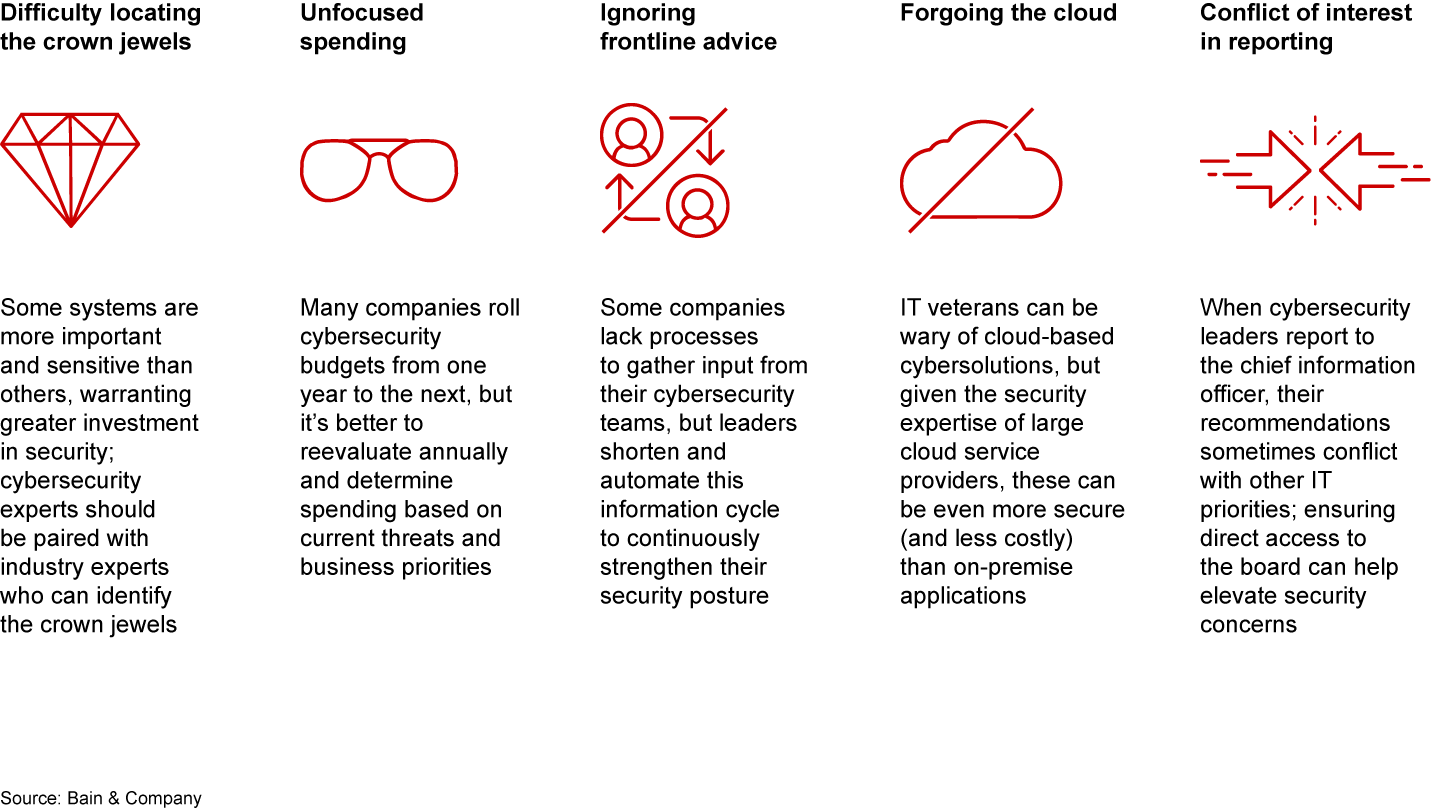
      A range of common mistakes weaken cybersecurity
      A range of common mistakes weaken cybersecurity
      A range of common mistakes weaken cybersecurity

      The first place they look for solutions is usually technology. Large companies use dozens of products and services to meet their needs, and they invest in policies and standards to ensure that their defenses remain proactive and up to date. The greater challenge comes in ensuring constancy so that policies and standards are applied appropriately across complex global organizations. Even applying simple security patches can take large organizations months or even years to achieve, leaving systems vulnerable in the interim. Some large breaches in recent years were because of failures to update web servers against known vulnerabilities.

      Technology is only one arrow in the quiver. Because so many cyberattacks start by exploiting vulnerabilities in employee behavior, education is also critically important. Fewer than half the companies we surveyed provide regular staff training on cybersecurity, and, far more surprising, only 55% provide adequate training for their cybersecurity professionals.

      Third-party risk represents another common vulnerability, but fewer than half of companies regularly assess the security posture of their suppliers and partners.

      Only 58% of executives continuously work to improve alignment between cybersecurity governance and business goals.

      Most companies invest in audits to give leaders a sense of the state of their cybersecurity, but audits can also focus on superficial issues and lead to a false sense of security once the identified vulnerabilities are addressed piece by piece. Audits should help verify program delivery and outcomes; they should not serve as the primary input for defining programs or cybersecurity strategy.

      Finally, executives struggle to understand how much they should spend on cybersecurity. Reliable industry benchmarks are difficult to find, so a lot of cybersecurity teams try to align their spending with peers based on available information. Most companies just roll their budgets over or add annual increases, but few take a zero-based approach to their cybersecurity spending based on the actual threat environment.

      Building mature capabilities

      While all of these aspects of cybersecurity need to be addressed, none will build strong resiliency on its own or even jointly. The long-term solution requires redefining cybersecurity as a set of strategic capabilities that can be built and improved over time to continuously address the ever-evolving threat of cyberattacks. Neither technology solutions nor third-party services nor following industry standards can substitute for a fully holistic approach to cybersecurity maturity (see Figure 2).

      Figure 2
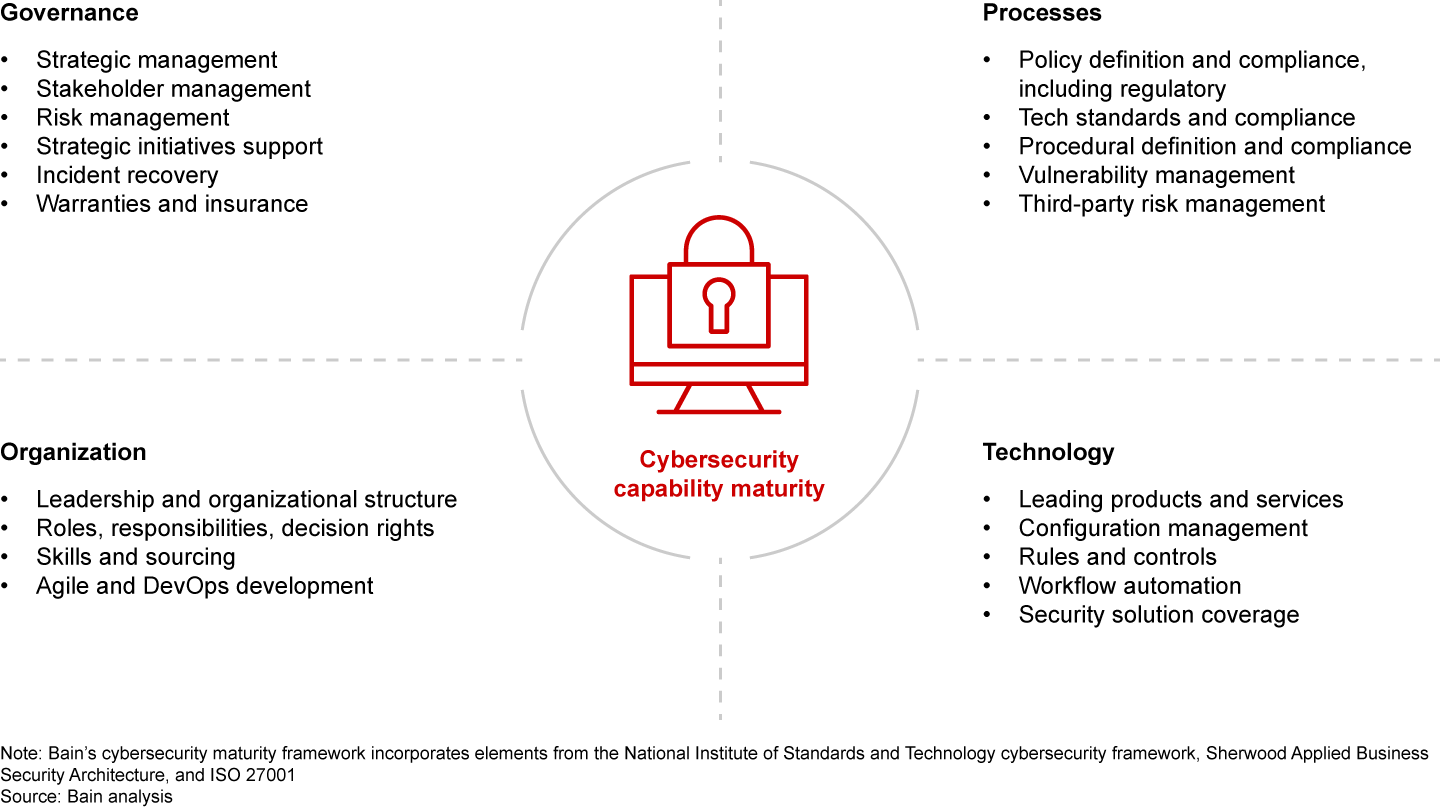
      To build up their cyber resilience, companies need to develop capabilities in 20 key areas
      To build up their cyber resilience, companies need to develop capabilities in 20 key areas
      To build up their cyber resilience, companies need to develop capabilities in 20 key areas

      Building up these capabilities to the appropriate level of maturity takes a sustained effort over months or even years, but companies can achieve their cybersecurity maturity goals by following a clear set of discrete steps.

      • Develop a baseline. Understand where you are starting from by measuring current maturity levels across the full range of 20 capabilities.
      • Identify benchmarks, and determine target maturity levels for capabilities. Establish the target capability maturity level that is right for your company, and bear in mind that industry, region, critical assets requiring different protections, benchmarks and the current threat environment will all have an impact.
      • Define a roadmap, and begin to follow it. Address the most critical capability maturity gaps first, especially those that concern your most valuable assets. Then define more comprehensive initiatives to enhance capabilities in other key areas. Take on no more than 10 initiatives over an 18- to 36-month period.
      • Strengthen the commitment to continuous improvement. Reassess capability requirements and maturity levels regularly. Refresh the strategic cybersecurity roadmap to build capability maturity where needed, and ensure that the plan is adequately funded.

      Finally, part of continuous assessment is understanding what level of risk can and should be mitigated through cybersecurity insurance. No amount of insurance can cover the damage of a major, highly visible security breach, but insurance is an indispensable component of cybersecurity risk management. FireEye found that half of the companies it surveyed are insured against this type of risk, and another 41% plan to add insurance over the next 18 months.

      Bain's Frank Ford discusses how companies can address concerns by looking holistically at their cybersecurity maturity.

      Taken as a whole, the approach to building cybersecurity capability maturity is a straightforward journey, not unlike other transformational initiatives, but experience shows that it can require sustained focus and a commitment of years to bring capability levels in line with the real needs of the company. The most important step is the first one: Executive teams must come to grips with the scale of the challenge and acknowledge that, in most cases, everything they are doing around cybersecurity is probably not enough. With that understanding, executives can take the necessary steps to increase their cyber resilience to protect their organization, its assets and its stakeholders.

      Frank Ford is a partner and Syed Ali is an expert vice president with Bain’s Enterprise Technology practice. Frank is based in London, and Syed is based in Houston.

      Authors
      • Headshot of Frank Ford
        Frank Ford
        Partner, London
      • Headshot of Syed Ali
        Syed Ali
        Partner, Houston
      Related Industries
      • Cybersecurity
      Related Consulting Services
      • Digital
      • Enterprise Technology
      How We Can Help
      • Systems & Architecture
      Technology
      Cybersecurity Is the Key to Unlocking Demand in the Internet of Things

      Enterprise customers would buy more IoT devices if vendors could ensure better security.

      Read more
      Systems & Architecture
      Tech Execs Lack Confidence in System Integrators

      Only 6% said that they would recommend their system integrators for an enterprise resource planning (ERP) transformation.

      Read more
      Cybersecurity
      Quantum Computing Moves from Theoretical to Inevitable

      Quantum will likely become part of a mosaic, working with classical computing to solve big problems.

      Read more
      Enterprise Technology
      Reimagining Merchandising in the Era of Agentic AI

      The future of merchandising is not better analysis, but faster, smarter execution—and agentic AI is what makes that possible.

      Read more
      Cybersecurity
      Generative AI and Cybersecurity: Strengthening Both Defenses and Threats

      Breakthroughs in technologies built on large language models will accelerate the arms race between hackers and companies.

      Read more
      First published in enero 2020
      Tags
      • Cybersecurity
      • Digital
      • Enterprise Technology
      • Systems & Architecture

      How We've Helped Clients

      A Strategic Separation Enables New Growth for GSK and Haleon

      See more related case studies

      An Appliance Maker Transforms its Technology Architecture and Strategy

      See more related case studies

      Salvaging a Technology Outsourcing Deal Gone Bad

      See more related case studies

      Want to continue the conversation

      We help global leaders with their organization's most critical issues and opportunities. Together, we create enduring change and results

      Bain Insights. Our perspectives on critical issues global businesses face in today's challenging environment, delivered monthly.

      *I have read and understand Bain’s Privacy Notice.

      Please read and agree to the Privacy Policy.
      Bain & Company
      Contact us Sustainability Accessibility Terms of use Privacy Modern Slavery Act Statement Cookie Policy Sitemap Log In

      © 1996-2026 Bain & Company, Inc.

      Contact Bain

      How can we help you?

      • Business inquiry
      • Career information
      • Press relations
      • Partnership request
      • Speaker request
      See all offices