
Skip to Content
  • Offices

    Offices

    North & Latin America
    • Atlanta
    • Austin
    • Bogota
    • Boston
    • Buenos Aires
    • Chicago
    • Dallas
    • Denver
    • Houston
    • Los Angeles
    • Mexico City
    • Minneapolis
    • Monterrey
    • Montreal
    • New York
    • Rio de Janeiro
    • San Francisco
    • Santiago
    • São Paulo
    • Seattle
    • Silicon Valley
    • Toronto
    • Washington, DC
    Europe & Africa
    • Amsterdam
    • Athens
    • Berlin
    • Brussels
    • Copenhagen
    • Dusseldorf
    • Frankfurt
    • Helsinki
    • Istanbul
    • Johannesburg
    • Kyiv
    • Lisbon
    • London
    • Madrid
    • Milan
    • Munich
    • Oslo
    • Paris
    • Rome
    • Stockholm
    • Vienna
    • Warsaw
    • Zurich
    Middle East
    • Doha
    • Dubai
    • Riyadh
    Asia & Australia
    • Bangkok
    • Beijing
    • Bengaluru
    • Brisbane
    • Ho Chi Minh City
    • Hong Kong
    • Jakarta
    • Kuala Lumpur
    • Manila
    • Melbourne
    • Mumbai
    • New Delhi
    • Perth
    • Shanghai
    • Singapore
    • Sydney
    • Tokyo
    See all offices
  • Alumni
  • Media Center
  • Subscribe
  • Contact
  • Global

    Select your region and language

    Global
    • Global (English)
    North & Latin America
    • Brazil (Português)
    • Argentina (Español)
    • Canada (Français)
    • Chile (Español)
    • Colombia (Español)
    Europe, Middle East, & Africa
    • France (Français)
    • DACH Region (Deutsch)
    • Italy (Italiano)
    • Spain (Español)
    • Greece (Elliniká)
    Asia & Australia
    • China (中文版)
    • Korea (한국어)
    • Japan (日本語)
  • Saved items (0)
    Saved items (0)

    You have no saved items.

    Bookmark content that interests you and it will be saved here for you to read or share later.

    Explore Bain Insights
  • Industries
    Main menu

    Industries

    • Aeroespacial y Defensa
    • Agroindustria
    • Químicos
    • Construcción e Infraestructura
    • Productos de Consumo
    • Servicios Financieros
    • Salud y Ciencias de la Vida
    • Maquinaria y Equipo Industrial
    • Medios y Entretenimiento
      Industries
      Medios y Entretenimiento
      • Media Lab
    • Metales
    • Minería
    • Petróleo y Gas
    • Papel y Empaque
    • Private Equity
      Industries
      Private Equity
      • Due Diligence
      • Exit Planning
      • Firm Strategy & Operations
      • Portfolio Value Creation
    • Sector Público y Social
    • Retail
    • Tecnología
    • Telecomunicaciones
      Industries
      Telecomunicaciones
      • Capital Expenditure
      • Telco Digital Transformation
    • Transporte
    • Viajes y Turismo
    • Servicios Públicos y Energías Renovables
  • Consulting Services
    Main menu

    Consulting Services

    • Customer Experience
    • Sustainability
    • Innovation
    • M&A
    • Operations
    • People & Organization
    • Private Equity
    • Sales & Marketing
    • Strategy
    • AI, Insights, and Solutions
    • Technology
    • Transformation
  • Digital
  • Insights
    Main menu

    Insights

    • Industry Insights
    • Services Insights
    • Bain Books
    • Webinars
    • Bain Futures
    View all Insights
    Featured topics
    • Tariff Response
    • Artificial Intelligence
    • Thriving in Uncertainty
    • Executive Conversations
    • Macro Trends
    • M&A Report
    • Healthcare Private Equity Report
    • Paper & Packaging Report
    • Technology Report
    • CEO's Guide to Sustainability
    • CEO Insights
    • CFO Insights
    • COO Insights
    • CIO Insights
    • CMO Insights
    View all featured topics
  • About
    Main menu

    About

    • What We Do
    • What We Believe
    • Our People & Leadership
    • Client Results
    • Awards & Recognition
    • Global Affiliations
    Further: Our global responsibility
    • Sustainability
    • Social Impact
    • World Economic Forum
    Learn more about Further
  • Carreras
    Main menu

    Carreras

    • Trabaja con Nosotros
      Carreras
      Trabaja con Nosotros
      • Find Your Place
      • Nuestras Áreas de Trabajo
      • Equipos Integrados
      • Estudiantes
      • Internships & Programs
      • Eventos de Reclutamiento
    • La Vida en Bain
      Carreras
      La Vida en Bain
      • Historias Profesionales
      • Nuestra Gente
      • Dónde Trabajamos
      • Apoyando tu Crecimiento
      • Grupos de Afinidad
      • Beneficios
    • Impact Stories
    • Nuestro Proceso
      Carreras
      Nuestro Proceso
      • Qué Esperar
      • Entrevistas
    FIND JOBS
  • Offices
    Main menu

    Offices

    • North & Latin America
      Offices
      North & Latin America
      • Atlanta
      • Austin
      • Bogota
      • Boston
      • Buenos Aires
      • Chicago
      • Dallas
      • Denver
      • Houston
      • Los Angeles
      • Mexico City
      • Minneapolis
      • Monterrey
      • Montreal
      • New York
      • Rio de Janeiro
      • San Francisco
      • Santiago
      • São Paulo
      • Seattle
      • Silicon Valley
      • Toronto
      • Washington, DC
    • Europe & Africa
      Offices
      Europe & Africa
      • Amsterdam
      • Athens
      • Berlin
      • Brussels
      • Copenhagen
      • Dusseldorf
      • Frankfurt
      • Helsinki
      • Istanbul
      • Johannesburg
      • Kyiv
      • Lisbon
      • London
      • Madrid
      • Milan
      • Munich
      • Oslo
      • Paris
      • Rome
      • Stockholm
      • Vienna
      • Warsaw
      • Zurich
    • Middle East
      Offices
      Middle East
      • Doha
      • Dubai
      • Riyadh
    • Asia & Australia
      Offices
      Asia & Australia
      • Bangkok
      • Beijing
      • Bengaluru
      • Brisbane
      • Ho Chi Minh City
      • Hong Kong
      • Jakarta
      • Kuala Lumpur
      • Manila
      • Melbourne
      • Mumbai
      • New Delhi
      • Perth
      • Shanghai
      • Singapore
      • Sydney
      • Tokyo
    See all offices
  • Alumni
  • Media Center
  • Subscribe
  • Contact
  • Global
    Main menu

    Select your region and language

    • Global
      Select your region and language
      Global
      • Global (English)
    • North & Latin America
      Select your region and language
      North & Latin America
      • Brazil (Português)
      • Argentina (Español)
      • Canada (Français)
      • Chile (Español)
      • Colombia (Español)
    • Europe, Middle East, & Africa
      Select your region and language
      Europe, Middle East, & Africa
      • France (Français)
      • DACH Region (Deutsch)
      • Italy (Italiano)
      • Spain (Español)
      • Greece (Elliniká)
    • Asia & Australia
      Select your region and language
      Asia & Australia
      • China (中文版)
      • Korea (한국어)
      • Japan (日本語)
  • Saved items  (0)
    Main menu
    Saved items (0)

    You have no saved items.

    Bookmark content that interests you and it will be saved here for you to read or share later.

    Explore Bain Insights
  • Industries
    • Industries

      • Aeroespacial y Defensa
      • Agroindustria
      • Químicos
      • Construcción e Infraestructura
      • Productos de Consumo
      • Servicios Financieros
      • Salud y Ciencias de la Vida
      • Maquinaria y Equipo Industrial
      • Medios y Entretenimiento
      • Metales
      • Minería
      • Petróleo y Gas
      • Papel y Empaque
      • Private Equity
      • Sector Público y Social
      • Retail
      • Tecnología
      • Telecomunicaciones
      • Transporte
      • Viajes y Turismo
      • Servicios Públicos y Energías Renovables
  • Consulting Services
    • Consulting Services

      • Customer Experience
      • Sustainability
      • Innovation
      • M&A
      • Operations
      • People & Organization
      • Private Equity
      • Sales & Marketing
      • Strategy
      • AI, Insights, and Solutions
      • Technology
      • Transformation
  • Digital
  • Insights
    • Insights

      • Industry Insights
      • Services Insights
      • Bain Books
      • Webinars
      • Bain Futures
      View all Insights
      Featured topics
      • Tariff Response
      • Artificial Intelligence
      • Thriving in Uncertainty
      • Executive Conversations
      • Macro Trends
      • M&A Report
      • Healthcare Private Equity Report
      • Paper & Packaging Report
      • Technology Report
      • CEO's Guide to Sustainability
      • CEO Insights
      • CFO Insights
      • COO Insights
      • CIO Insights
      • CMO Insights
      View all featured topics
  • About
    • About

      • What We Do
      • What We Believe
      • Our People & Leadership
      • Client Results
      • Awards & Recognition
      • Global Affiliations
      Further: Our global responsibility
      • Sustainability
      • Social Impact
      • World Economic Forum
      Learn more about Further
  • Carreras
    Popular Searches
    • Agile
    • Digital
    • Strategy
    Your Previous Searches
      Recently Visited Pages

      Content added to saved items

      Saved items (0)

      Removed from saved items

      Saved items (0)

      Brief

      Procurement’s Twin Challenge: Managing Inflation and Supply Shortages

      Procurement’s Twin Challenge: Managing Inflation and Supply Shortages

      Three steps can help companies boost performance while improving supply security.

      By Karen Stansfield, Tony Cape, Anna Fritz Månsson, and Borja Tramazaygues

      • min read
      }

      Brief

      Procurement’s Twin Challenge: Managing Inflation and Supply Shortages
      en
      Executive Summary
      • Improved transparency, new sourcing strategies, and strong execution can help counter inflation and supply volatility.
      • In times of inflation, top-performing companies double down on productivity gains.
      • Cross-functional teams that “spend better” can pare overall cost.

      Business leaders that need a reminder of the imperative for strategic procurement capabilities as they face the double punch of rapid inflation and supply shortages should consider the following recent examples:

      • An agricultural raw materials converter experiencing a 275% year-over-year cost increase on its most critical ocean freight lane
      • A consumer products company facing 25% cost inflation on critical packaging subcategories, threatening product margins
      • A global automotive supplier dealing with a 30% increase in rubber cost resulting from rising crude oil costs, freight rates, and constrained supplies
      • A global industrial equipment manufacturer experiencing severe shortages of components due to competition for underlying raw materials, as well as sharply increasing prices, especially for steel, leading to EBIT reductions

      The difference between winning and losing in this environment is stark: Emerging winners are keeping costs below the inflation line, and in some areas, they are even generating P&L gains while also assuring supply security and quality. At the other end, for some companies, inflation and supply shortages are puncturing earnings.

      The precedents are instructive: Top-performing companies that accelerated out of the last period of high inflation were those that made productivity improvement a top priority (see Figure 1).

      Figure 1
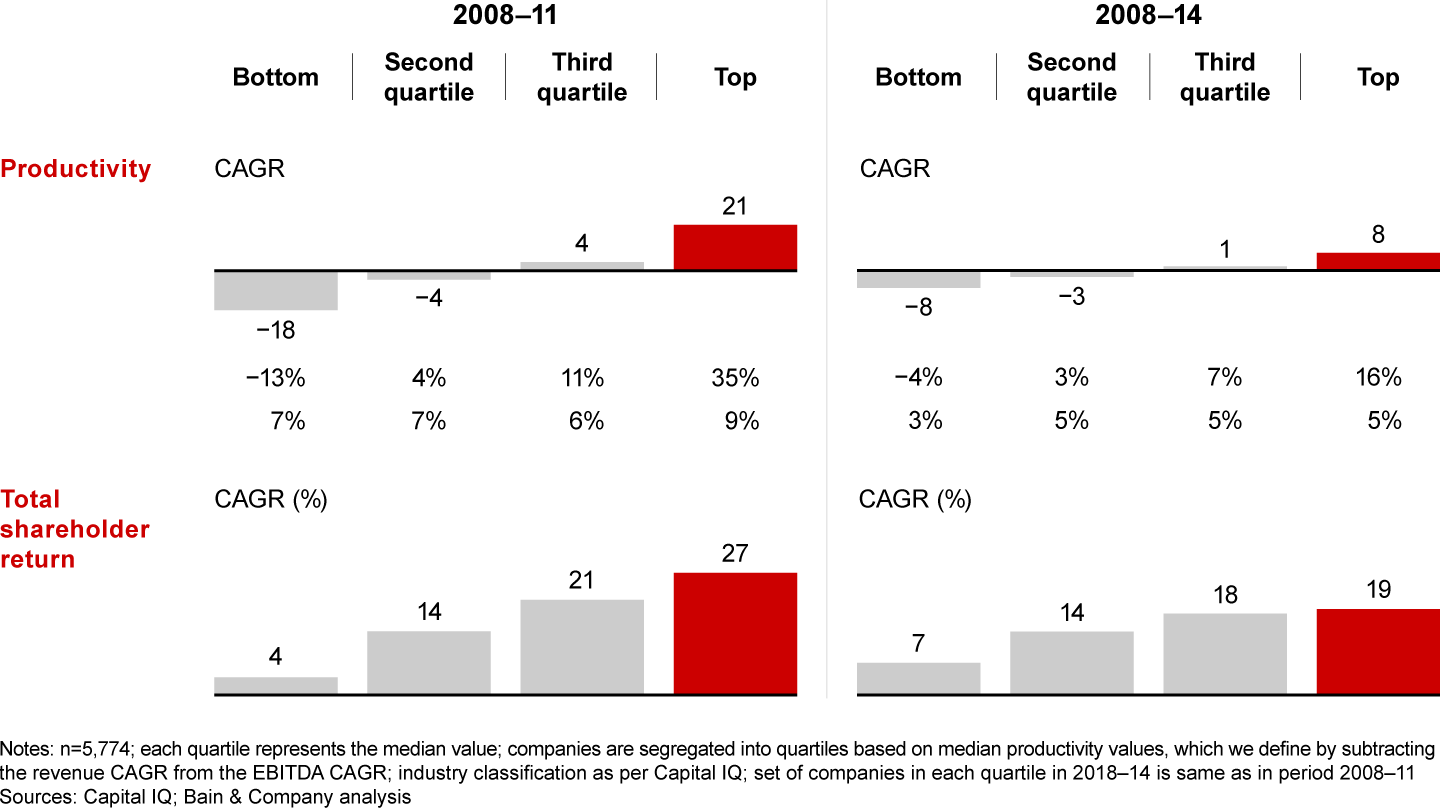
      Companies that doubled down on productivity in the downturn had better total shareholder return (TSR) in the short and long terms
      Companies that doubled down on productivity in the downturn had better total shareholder return (TSR) in the short and long terms
      Companies that doubled down on productivity in the downturn had better total shareholder return (TSR) in the short and long terms

      We expect leaders to repeat this pattern as inflation ticks up again. What’s different this time is that the capabilities that enabled procurement organizations to generate year-over-year cost reductions in the past are not enough in the face of today’s turbulent conditions. While still important, “should-cost” modeling tools and competitive bidding practices are not as effective when underlying input costs are rising at double-digit rates and supply is tight. Leading companies ensure that their procurement organizations play a strategic role in bringing together internal and external stakeholders to take three essential actions: Create transparency, revamp the firm’s sourcing strategies, and execute seamlessly. Let’s take a closer look at how these actions make a difference.

      Action 1: Create transparency

      Procurement executives dread telling business stakeholders and CFOs about negative surprises on cost or supply availability. Yet those conversations are common due to limited upstream visibility and the lack of full traceability. Good data on third-party spending alone won’t solve the problem. Procurement functions need two additional things to mitigate the risk of nasty surprises: traceability across the entire value chain, and short- and long-term demand and supply forecasts.

      Leading companies are enhancing internal spend visibility and analytics with supplier-provided reporting to improve transparency, creating a single source of truth on external outlays. Procurement teams are also partnering with the supply chain function to create end-to-end traceability within the value chain. Price and supply volatility now make it urgent to achieve full transparency on suppliers and raw materials, down to tier-3 or tier-4 suppliers (see Figure 2). This allows them to forecast properly and mitigate supply availability issues. And, of course, improved transparency supports enterprise-wide environmental, social, and governance (ESG) efforts.

      Figure 2
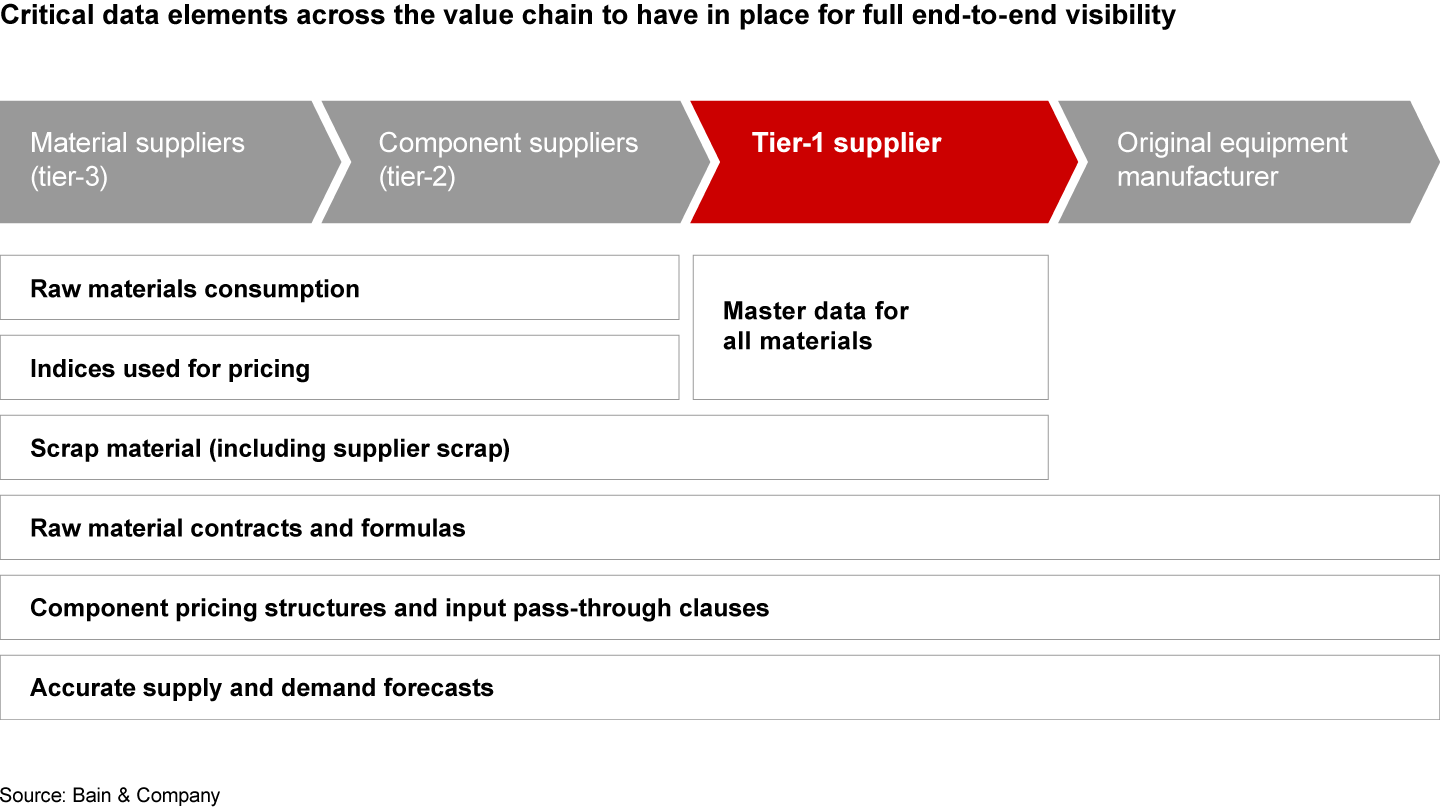
      Raw material visibility across the entire supply chain is critical to tier-1 supply management
      Raw material visibility across the entire supply chain is critical to tier-1 supply management
      Raw material visibility across the entire supply chain is critical to tier-1 supply management

      Finally, leading procurement teams are bringing together a short- and long-term view of demand and supply forecasts, including constrained and unconstrained scenarios. They are integrating data into a robust category dashboard linked to internal and external inputs. Dashboards enable organizations to understand current inflation and supply-and-demand dynamics as well as to better anticipate future fluctuations.

      Take the example of a tier-1 automotive supplier struggling to mitigate inflation and supply scarcity risks. The leadership team lacked full visibility into raw material pricing and sources. To address that problem, the procurement team wielded data-forecasting tools to gauge critical raw material price increases and shortages far down the value chain—and their implications on a specific customer product.  The effort provided the company with powerful information for negotiations and indexing, both with suppliers and customers.

      As major disruptive events become more commonplace, leading companies are making significant changes to their procurement systems, creating sustainable data visibility and embedding predictive analytical tools (see "Master Your Supplier Universe with Digital Procurement").

      Many companies also struggle to align on the magnitude of the challenge before deciding how to act. A key step is establishing clear cross-functional roles and decision rights across procurement, finance, and the business’s relevant stakeholders including supply chain, commercial, engineering, and IT. Having the right forums and escalation mechanisms to mitigate inflation and supply scarcity across the entire business also support alignment.

      Action 2: Revamp sourcing strategies

      When the full risk exposure is transparent, procurement teams have the ability and incentive to act. Traditional price negotiation strategies are less effective in the current environment. Instead, leading procurement organizations are deploying more sophisticated sourcing techniques including parametric pricing, consortium buying, index-based pricing, and hedging strategies. These advanced techniques that focus on big-picture holistic value are essential to minimize inflation and scarcity impacts and position the business to accelerate out of turbulence.

      The tier-1 auto supplier mentioned above struggled to use indices effectively in its raw material contracts. Its scattershot approach resulted in high internal complexity and failed to generate value. The solution was a customized strategy on how to use indices across different raw material segments. That approach gave commodity managers a clear understanding of when to use specific indices and how to use each index to maximize value.

      The company was able to identify double-digit cost savings by tying index-based adjustments to the proper underlying material. The procurement team also helped dramatically simplify the number of indexes used. In one case, it found ways to cut the number of aluminum indexes by more than half. The firm also launched an effort to reduce its total global risk by making sure procurement and commercial teams aligned on pass-through price changes.

      While advanced sourcing techniques are important, winning companies are realizing even more value by establishing cross-functional teams to “spend better” to pare overall costs. Leaders are moving beyond inflation mitigation and cost reduction in certain categories while securing supply. Some actions are simple, such as using policy and internal controls to curtail usage of certain items. Others are more complex, such as applying value engineering to lower the cost of complex machined parts. What matters is taking an unconstrained approach to reducing the total cost of ownership.

      In fact, it’s an opportune moment to tackle more fundamental change since supply shortages and price increases provide an incentive for engineering and other stakeholders to collaborate on sourcing. The procurement team at one mining company, for example, was faced with a 170% increase in transport costs for internal material movements. And the presence of much larger mining companies nearby reduced the company’s leverage and ability to secure supply. Faced with these headwinds, the procurement team spearheaded a joint initiative with the operations team to develop an updated production forecast model. That helped them identify a demand-smoothing opportunity, deferring trips to enable backhauls and reducing annual costs by nearly 25%.

      Beyond category management tactics, procurement teams at leading companies also play a role in supporting topline growth. While there are natural limits to procurement’s influence on a company’s pricing actions, savvy teams play a key role in ensuring alignment across all relevant functions, including supply chain, finance, and commercial operations. This ensures that inflation and indirect supply assurance costs are accurately forecast, tracked, reported, and reflected in pricing.

      Upstream, transparency is vital to commercial teams in difficult customer conversations. Just as procurement professionals expect suppliers to provide details of cost increases, they should also be arming their commercial teams with the right data to adjust pricing when needed to protect the bottom line from inflation (see "How B2B Firms Can Price with Confidence as Inflation Rises").

      Action 3: Execute seamlessly

      Strategic procurement in an inflationary environment requires strong execution. The first step is to communicate clearly with all key stakeholders about implementing the procurement strategy and the expected outcomes. When the team initiates engineering redesigns or approves new suppliers to address scarcity concerns, for instance, leading organizations ensure that everyone involved is clear on the outcomes and is collaborating on critical issues.

      Improving data visibility with the finance and commercial teams often surfaces opportunities to adjust budgets with improved forecasting and reporting accuracy, and to flow through price adjustments to customers, where contracts allow. Similarly, updating supply scarcity concerns and mitigation action plans with supply chain teams and other relevant business units helps to limit the risks associated with fulfilling customer contracts.

      Leading companies also adjust supplier pricing downward when inflation eases. A clear and simple guideline helps to set the agenda at top procurement organizations: Follow the same assessment and alignment process for upward and downward inflationary periods to identify easing and the opportunity to adjust pricing down.

      Getting started

      The dual challenge of inflation and supply insecurity presents a major opportunity for procurement organizations. CPOs, CFOs, and business leaders can help position the business to accelerate out of turbulence by asking a few questions:

      • Do we have robust traceability and is it integrated with supply-and-demand forecasts to highlight risks and exposures across the value chain?
      • Can we rapidly notify our cross-functional stakeholders when we see shocks coming to align on the magnitude of the challenge?
      • Do our category strategies include advanced sourcing techniques and playbooks to execute more complex, cross-functional “spend better” opportunities?
      • Does our closed-loop system encourage accountability for actions and clarity on outcomes?

      The answers to these questions will vary from company to company. But posing the questions is an important catalyst. It requires the procurement team to push for increased transparency across the entire supply chain and orchestrate an enterprise-wide strategy that can transform performance in an increasingly difficult business environment.

      Authors
      • Headshot of Karen Stansfield
        Karen Stansfield
        Partner, Chicago
      • Headshot of Tony Cape
        Tony Cape
        Partner, Chicago
      • Headshot of Anna Fritz Månsson
        Anna Fritz Månsson
        Partner, Stockholm
      • Headshot of Borja Tramazaygues
        Borja Tramazaygues
        Partner, Madrid
      Related Industries
      • Advanced Manufacturing & Services
      • Consumer Products
      • Energy & Natural Resources
      • Retail
      Related Consulting Services
      • Manufacturing
      • Operations
      • Procurement
      • Supply Chain
      COO insights
      Are You Ready for Traceable, Circular Supply Chains?

      Digital traceability allows companies to improve sustainability, performance, and resilience.

      Read more
      Managing Inflation
      The New Recession Playbook

      How the best businesses are planning for the coming downturn.

      Read more
      Consumer Products
      Embracing the “Do-Say” Gap

      Three pragmatic questions that shift sustainability from ambition to action.

      Read more
      COO insights
      Accelerating the Transition to Circular Economies

      Bain Partner Hernan Saenz discusses the importance of circularity in reducing waste and carbon emissions.

      Read more
      Managing Inflation
      Turning Inflation Disruption into Value with Six Strategic Steps

      Our study determined the key moves that have helped companies in times of high inflation.

      Read more
      First published in junio 2022
      Tags
      • Advanced Manufacturing & Services
      • CFO Insights
      • Consumer Products
      • COO insights
      • Energy & Natural Resources
      • Managing Inflation
      • Manufacturing
      • Operations
      • Procurement
      • Retail
      • Supply Chain

      How We've Helped Clients

      Constructing a best-in-class global procurement organization

      See more related case studies

      Uncovering major savings in procurement

      See more related case studies

      Turning around a real estate giant's financial performance

      See more related case studies

      Want to continue the conversation

      We help global leaders with their organization's most critical issues and opportunities. Together, we create enduring change and results

      Bain Insights. Our perspectives on critical issues global businesses face in today's challenging environment, delivered monthly.

      *I have read and understand Bain’s Privacy Notice.

      Please read and agree to the Privacy Policy.
      Bain & Company
      Contact us Sustainability Accessibility Terms of use Privacy Modern Slavery Act Statement Cookie Policy Sitemap Log In

      © 1996-2026 Bain & Company, Inc.

      Contact Bain

      How can we help you?

      • Business inquiry
      • Career information
      • Press relations
      • Partnership request
      • Speaker request
      See all offices