

Brief

Nobody would say that it’s easy to get ahead in the grocery business, but today the challenge is more difficult than ever. Shoppers are not loyal to any single supermarket, discounters have created increased price pressures despite already-thin margins and customers are demanding more in quality and service.
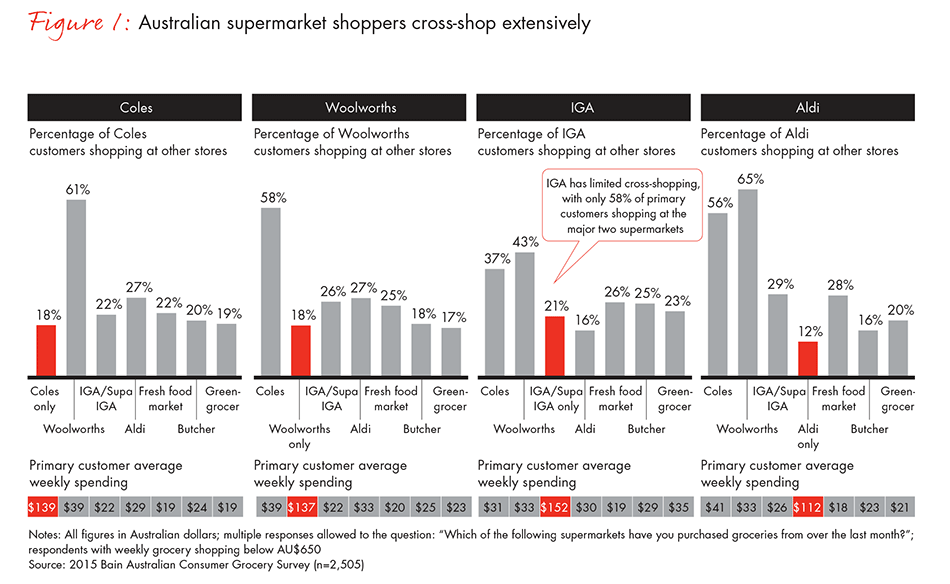
This drama is playing out in many countries, but we decided to take a closer look at the situation in Australia, where these pressures are mounting even though it has one of the most concentrated grocery markets in the world. We surveyed more than 2,500 supermarket shoppers throughout the country and the findings were unsettling. Shopper loyalty in Australia is essentially nonexistent. More than 80% of respondents told us they routinely cross-shop (see Figure 1). They spend almost 40% of their grocery budgets outside of their primary supermarkets.
Discounter Aldi is also disrupting the overall market because its low prices have helped make it the leader in customer advocacy. Using the Net Promoter Score®, a common measure of customer advocacy, Aldi scored nearly three times higher than its closest competitor, forcing Coles, Woolworths and IGA to find new ways to retain and grow customer loyalty.
Winning in this environment requires all companies to raise the bar by investing in price, quality and service, while step-changing costs to fuel these investments. But it also requires grocers to create a differentiated proposition—beyond price—that will truly earn them customer loyalty.
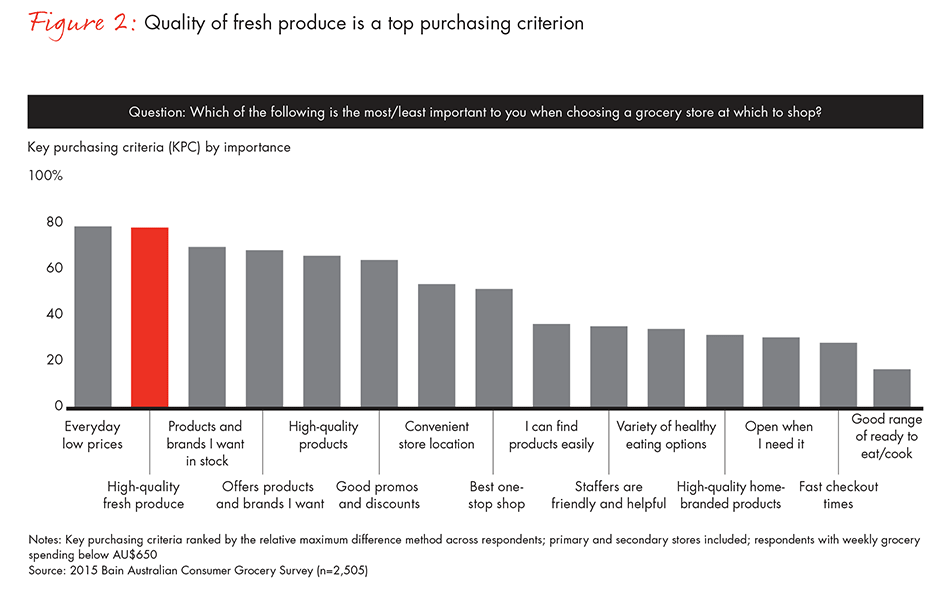
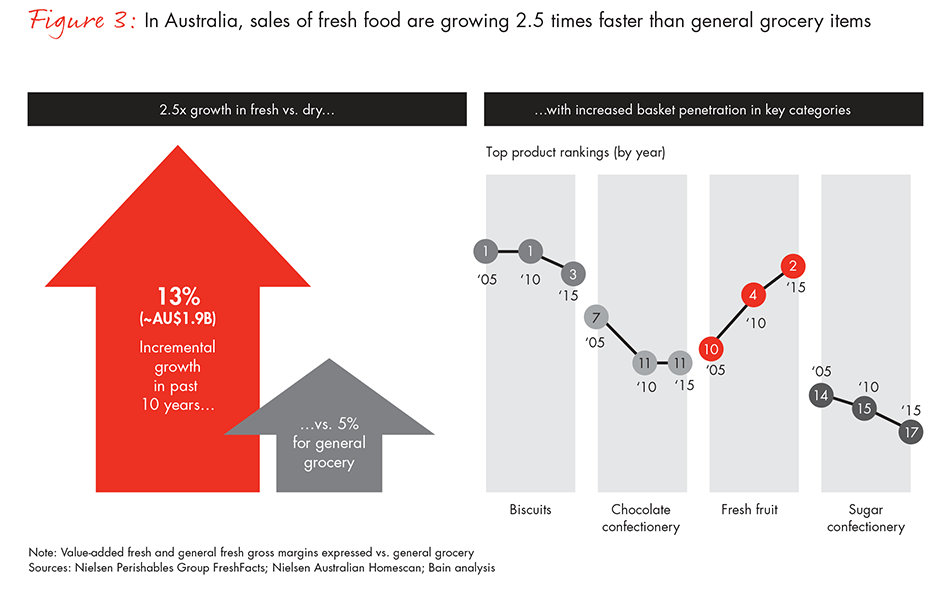
When it comes to differentiation, all signs point to one area in the supermarket: fresh food. In our survey, high-quality fresh food was equal to price as the most important criteria for choosing a grocery store (see Figure 2). That preference is playing out at the cash register. Over the past 10 years, fresh food sales have grown 2.5 times faster than dry groceries in Australia (see Figure 3).
The halo effect of fresh food
In our survey, respondents said that buying fresh food was the main reason for 65% of visits to their primary store. During those trips, shoppers typically also buy non-fresh items. So the prize for getting the fresh proposition right extends beyond that department. In other words, a winning fresh department has a significant “halo” effect on shoppers’ perception of the store and contributes to bigger overall shopper baskets.
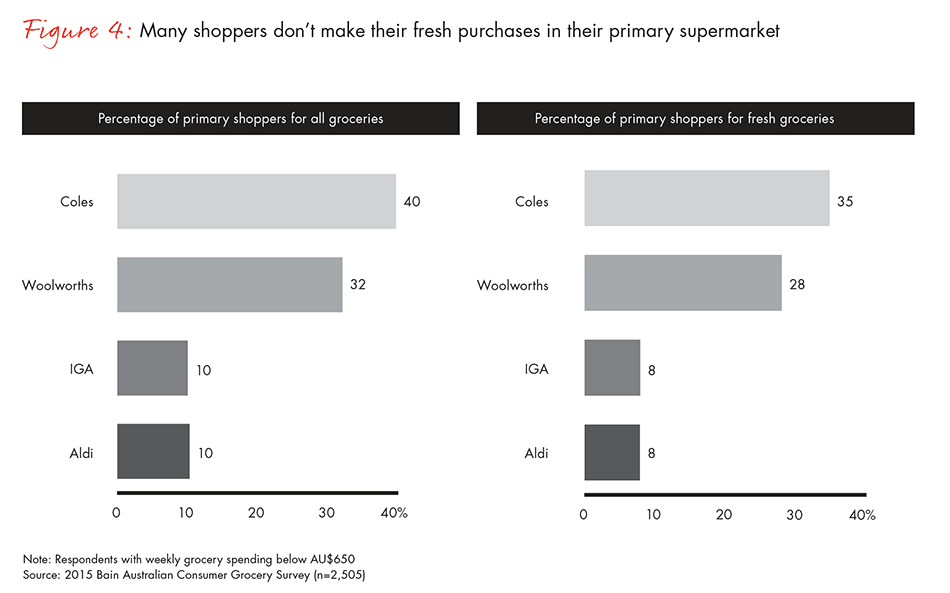
The incumbents in Australia (Coles, Woolworths and IGA) still have work to do to get this right. Many shoppers simply don’t make their major fresh purchases at their primary supermarket. For example, 20% of the shoppers who cite Coles or Woolworths as their primary supermarket report that they go to another supermarket as their primary store for fresh food. Similar patterns of leakage and cross-shopping have been found at all other major Australian supermarkets, and they occur in most other geographic markets (see Figure 4).
What does it take to succeed as a fresh food purveyor? Of course, grocers have to get the basics right by being competitive with discounters on core fresh lines. But global retailers that are seeking to differentiate and encourage customers to trade up are investing in a range of tactics. Many have created in-store theaters to showcase their fresh offerings, with chefs preparing sushi, for example, or baking bread from scratch. Others are focused on offering fresher, locally sourced or organic produce. In addition, winning companies are also boosting the number of value-added fresh offerings (pre-made salads, for instance) and employing specialists to answer shoppers’ questions about cheese pairings, while some provide specialized services such as in-store butcheries (see below, "The coming boom in doorstep fresh"). Others have rebuilt their supply chains to speed fresh food from farms to store in record time. All of these tactics require investment.
The case for fresh food is clear—but there’s a huge conundrum. While the fresh food section may hold more promise than other grocery departments for attractive gross margins, it has traditionally been less profitable. The costs of shrinkage, store labor, rent and merchandising typically cause it to lag center-of-the-store categories in profitability. On a fully loaded basis, fresh departments such as delis or bakeries might even be unprofitable. This raises the question: How do supermarkets invest for differentiation without significantly hurting their overall profit margins?
Melanie Sanders, a partner with Bain’s Retail practice, shares the four musts to getting fresh right and discusses the economics of fresh.
First move: defining a fresh strategy
There are key differences in how to play the game in fresh compared with the typical center-of-the-store department. The best grocers thoughtfully define a clear strategy for balancing customer differentiation and profit imperatives. Consider two simple examples from the US. With an average of 820 fresh SKUs in each store, discounter Trader Joe’s simple, low-price, high-quality range is designed to keep its costs low. Compare that strategy with Whole Foods Market, where each store stocks an average of more than 3,000 fresh SKUs. This broad assortment is designed to deliver high sales. While these grocers have taken decidedly different routes, both earn high marks for customer advocacy.
After defining a strategy, winning grocers understand that they need to break down the silos and ensure highly effective cross-functional collaboration among merchandising, supply chain and store operations. And decisions made in merchandising or supply chain setups can have big implications on store operations and cost—and vice versa. For example, the decision to replace an offsite commissary with an in-store butchery may help a grocer differentiate from a competitor, but it can be a costly move that may not pay off.
Grocers also need to take a whole-store view of fresh economics—it will be harder to make a business case for fresh food on its own. Because fresh on average is less profitable than the center-of-the-store, you need to determine how an in-store bakery would contribute to the total store economics. For instance, factor in the implications for total basket size and transaction numbers. Acknowledging that the fresh food department could make less money, the best grocers identify the decisions that will help them beat the odds: when to bake the doughnuts to take advantage of optimal store traffic, how many apples to display, when to discard the overripe strawberries.
In many situations, these and other decisions that can actually underpin the profitability of an individual fresh food section only can be made at the local level. With that in mind, the head office needs to empower local store managers to influence decisions in merchandising, supply chain and other crucial areas, as the best information and insights will be at the local level.
Based on our research and work with clients, we identified four areas of focus for any grocer hoping to make traction in fresh food. Let’s look at them one-by-one.
Four imperatives for winning in fresh food
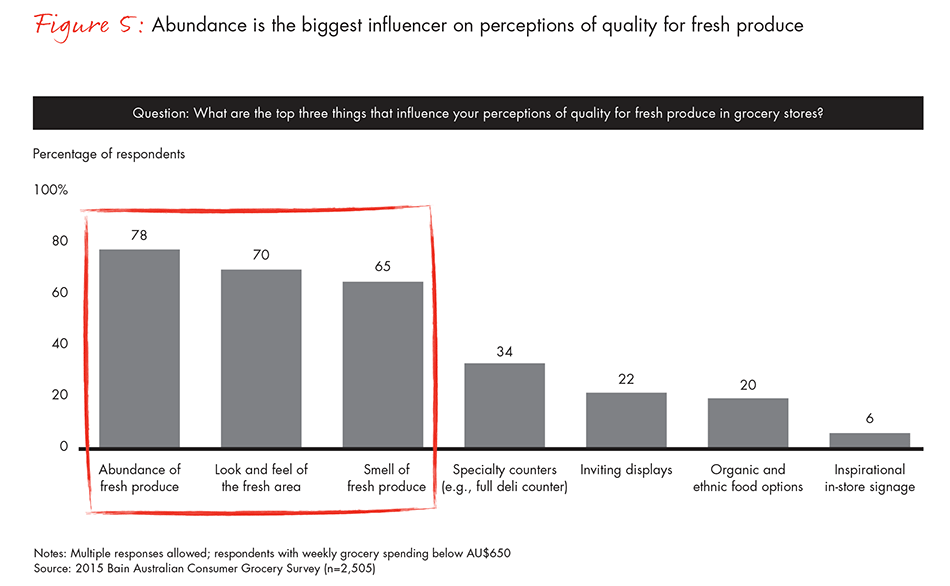
Get the assortment right. What do shoppers want in fresh food? The highest quality fresh fruit and vegetables topped the list of 14 criteria for choosing a grocery store for fresh food, according to our survey. The second most popular criterion: a large selection of fresh produce. Clearly, quality counts. But that raises the question of what influences shoppers’ perception of quality. The three most common answers in our survey were the abundance of fresh produce, the look and feel of the fresh area and how the produce smells (see Figure 5). As the center of the store shrinks, and with the rise of online sales, the best stores now devote fully 50% of their floor space to fresh food, while the average store dedicates 35%.
But winning means being selective about when and where you invest. Grocers need to strike the right balance. For example, a wide product range builds credibility with the customer, but will increase the store’s supply chain, in-store labor and shrinkage costs. The answer is to pick your spots to differentiate. Beyond the core 50 to 100 items, localize your assortment. The best retailers now employ advanced analytics techniques to mine basket and loyalty data to understand where to make the smart trade-offs in assortment.
Pay attention to product presentation. Again, some grocers are making inroads by creating in-store theaters to showcase their fresh offerings, including specialty counters, in-store bakeries and areas for special occasion purchasing. However, there’s an inherent challenge when it comes to presenting fresh food. Customers like to see tomatoes piled high—remember, abundance is the No. 1 purchase criterion from our survey. The concern is that with abundance comes high labor costs and the potential for a high rate of shrinkage.
Fortunately, there are ways to get product presentation right and also minimize stock. For example, grocers work with suppliers to ensure produce is delivered in the right quantities to match the velocity of sales. They also install fixtures that are best suited for that pace of turnover. Trader Joe’s fixtures are narrow but well stocked, creating a sense of abundance without contributing to waste. Some grocers use cardboard fill or other material beneath the produce to give the appearance of abundance.
Be smart about in-store labor. Customers want employees who are trained to know about the fresh products and can deliver top service. Sometimes they interact with them in dedicated “knowledge stations” where they can learn about cheese varieties or how to prepare seasonal ingredients. But the costs can be daunting. To provide such a high level of service, and offer everything from fresh-baked pastries to freshly stocked salad bars, stores can spend three to seven times more in labor costs for fresh food than they spend in other departments.
Working in a fresh section is not a matter of stocking boxes of corn flakes on a shelf. It requires employees who take ownership—putting covers on the bananas to allow them to last another day, using their judgment about removing the bad peaches, knowing which variety of doughnuts to bake. These are local decisions that can’t be mandated by headquarters. That means allocating your best people to fresh, providing them with the right tools and training, and rewarding them accordingly, given their disproportionate impact on customer experience and shrinkage. An important component: Invest in a dedicated training team that travels to stores to build employees’ capabilities and identify improvement opportunities.
Companies are getting the message. From 2013 to 2015, grocers in the US increased the number of full-time produce employees by 30%. Today, supermarkets hire an average of seven full-time employees per 1,000 square feet (92.9 square meters) of store space for fresh food departments, compared with two employees for dry categories. Whole Foods has set the standard in store labor by paying above-average salaries to attract and retain the best people, operating its stores as a series of product teams and providing incentives based on team and individual performance down to the lowest-level employees. It also collects daily data on store and team sales, product costs and store profitability, making that information available to all staff to spur continuous improvement. Whole Foods also invests in regional and in-store training, with a focus on inventory management.
Build a supply chain to support fresh food. The goal of the supply chain should be to move products from farm to fork in record time while improving the customer experience. By prioritizing speed, the best grocers avoid delays that affect shelf time and contribute to shrinkage, which can be up to 10 times higher in fresh departments than in other sections of the store. They also avoid uneven replenishment, which often results in over- or under-stocking. They reduce handling time by coordinating delivery with store staffing so that produce doesn’t lie around on pallets for hours.
Scale is often key for a successful fresh supply chain. Higher store density around a distribution center allows for quicker inventory turns. In the best of situations, grocers provide a one-day turnover pace for more than 80% of the stock in their distribution centers, with five to seven deliveries to stores each week. For example, San Antonio-based H-E-B Grocery has a supply chain that keeps the fresh food quickly moving. With the majority of its 370 stores located in Texas, H-E-B maintains a dense network of stores around its distribution center, relies on cross-docking to save time on incoming shipments and uses multiple-temperature trucks to ensure full loads in shipments bound for stores. Each truck serves a maximum of four stores.
As the competition for shoppers moves away from the center of the store, grocers that rely on fresh food as a major source of growth will beat the competition. That requires careful analysis of how to offer the right assortment for any particular store, more attention than ever to product presentation and more investment in people, as well as building a supply chain that speeds products from farm to fork—instead of having them linger in distribution centers or on the shelves. Undeniably, today’s shoppers want fresh food, and winning grocers will be those that do the best job of selling it to them.
The coming boom in doorstep fresh
The names already are becoming household words, particularly in millennium-generation households: Blue Apron, Munchery, Snap Kitchen, AmazonFresh, dish’d. These and other companies providing direct-to-customer ingredients (including recipes) for home-cooked meals represent a new wave of growth and big competition for grocers that are attempting to generate profits from fresh food.
In our survey of 2,500 Australian food shoppers, nearly 40% of respondents reported purchasing quick meals or other food for immediate consumption on their last shopping trip. This value-added fresh department that spans everything from rotisserie chicken to pre-packaged salads to freshly shelled seafood is one area that is underrepresented in many supermarkets in Australia and around the world.
While grocers lay plans to sell more value-added fresh food in their stores, the competition is heating up, with young, time-starved, health-conscious food shoppers finding alternative places to buy. Just as supermarkets are remodeling to serve more hot prepared meals or boosting their stock of ready-to-make salads, companies offering easy online shopping and quick delivery of fresh meal ingredients are poised to take a rising share of consumers’ wallets. For example, among all shoppers participating in our survey, only 3% reported using such a service. However, the young convenience-seeking shoppers (who make up almost one-third of the market) are likely to be early adopters. Good, ready-to-eat or cook options and convenient, fast shopping are important for this customer segment. There’s no reason why supermarkets can’t stay ahead of this phenomenon with their own online fresh ingredient delivery services.
Net Promoter® and Net Promoter Score® are registered trademarks of Bain & Company, Inc., Fred Reichheld and Satmetrix Systems, Inc.
Melanie Sanders and Yngve Andresen are Bain & Company partners based in Melbourne. Both are members of Bain’s Retail practice.
First published in junio 2016