Skip to Content
  • オフィス

    オフィス

    北米・南米
    • Atlanta
    • Austin
    • Bogota
    • Boston
    • Buenos Aires
    • Chicago
    • Dallas
    • Denver
    • Houston
    • Los Angeles
    • Mexico City
    • Minneapolis
    • Monterrey
    • Montreal
    • New York
    • Rio de Janeiro
    • San Francisco
    • Santiago
    • São Paulo
    • Seattle
    • Silicon Valley
    • Toronto
    • Washington, DC
    ヨーロッパ・中東・アフリカ
    • Amsterdam
    • Athens
    • Berlin
    • Brussels
    • Copenhagen
    • Doha
    • Dubai
    • Dusseldorf
    • Frankfurt
    • Helsinki
    • Istanbul
    • Johannesburg
    • Kyiv
    • Lisbon
    • London
    • Madrid
    • Milan
    • Munich
    • Oslo
    • Paris
    • Riyadh
    • Rome
    • Stockholm
    • Vienna
    • Warsaw
    • Zurich
    アジア・オーストラリア
    • Bangkok
    • Beijing
    • Bengaluru
    • Brisbane
    • Ho Chi Minh City
    • Hong Kong
    • Jakarta
    • Kuala Lumpur
    • Manila
    • Melbourne
    • Mumbai
    • New Delhi
    • Perth
    • Shanghai
    • Singapore
    • Sydney
    • Tokyo
    全てのオフィス
  • アルムナイ
  • メディア
  • お問い合わせ
  • 東京オフィス
  • Japan | 日本語

    地域と言語を選択

    グローバル
    • Global (English)
    北米・南米
    • Brazil (Português)
    • Argentina (Español)
    • Canada (Français)
    • Chile (Español)
    • Colombia (Español)
    ヨーロッパ・中東・アフリカ
    • France (Français)
    • DACH Region (Deutsch)
    • Italy (Italiano)
    • Spain (Español)
    • Greece (Elliniká)
    アジア・オーストラリア
    • China (中文版)
    • Korea (한국어)
    • Japan (日本語)
  • Saved items (0)
    Saved items (0)

    You have no saved items.

    後で閲読、共有できるようにするためにブックマークしてください

    Explore Bain Insights
  • 業界別プラクティス
    メインメニュー

    業界別プラクティス

    • 航空宇宙、防衛、政府関連
    • 農業
    • 化学製品
    • インフラ、建設
    • 消費財
    • 金融サービス
    • ヘルスケア
    • 産業機械、設備
    • メディア、エンターテインメント
    • 金属
    • 採掘・鉱業
    • 石油、ガス
    • 紙、パッケージ
    • プライベートエクイティ
    • 公共、社会セクター
    • 小売
    • テクノロジー
    • 通信
    • 交通
    • 観光産業
    • 公益事業、再生可能エネルギー
  • 機能別プラクティス
    メインメニュー

    機能別プラクティス

    • カスタマー・エクスペリエンス
    • サステイナビリティ、 社会貢献
    • Innovation
    • 企業買収、合併 (M&A)
    • オペレーション
    • 組織
    • プライベートエクイティ
    • マーケティング・営業
    • 戦略
    • アドバンスド・アナリティクス
    • Technology
    • フルポテンシャル・トランスフォーメーション
  • Digital
  • 知見/レポート
  • ベイン・アンド・カンパニーについて
    メインメニュー

    ベイン・アンド・カンパニーについて

    • ベインの信条
    • 活動内容
    • 社員とリーダーシップ
    • プレス・メディア情報
    • クライアントの結果
    • 受賞歴
    • パートナーシップを結んでいる団体
    Further: Our global responsibility
    • ダイバーシティ
    • 社会貢献
    • サステイナビリティへの取り組み
    • 世界経済フォーラム(WEF)
    Learn more about Further
  • キャリア
    メインメニュー

    キャリア

    • ベインで働く
      キャリア
      ベインで働く
      • Find Your Place
      • ベインで活躍する機会
      • ベインのチーム体制
      • 学生向けページ
      • インターンシップ
      • 採用イベント
    • ベインでの体験
      キャリア
      ベインでの体験
      • Blog: Inside Bain
      • キャリアストーリー
      • 社員紹介
      • Where We Work
      • 成長を後押しするサポート体制
      • アフィニティ・グループ
      • 福利厚生
    • Impact Stories
    • 採用情報
      キャリア
      採用情報
      • 採用プロセス
      • 面接内容
    FIND JOBS
  • オフィス
    メインメニュー

    オフィス

    • 北米・南米
      オフィス
      北米・南米
      • Atlanta
      • Austin
      • Bogota
      • Boston
      • Buenos Aires
      • Chicago
      • Dallas
      • Denver
      • Houston
      • Los Angeles
      • Mexico City
      • Minneapolis
      • Monterrey
      • Montreal
      • New York
      • Rio de Janeiro
      • San Francisco
      • Santiago
      • São Paulo
      • Seattle
      • Silicon Valley
      • Toronto
      • Washington, DC
    • ヨーロッパ・中東・アフリカ
      オフィス
      ヨーロッパ・中東・アフリカ
      • Amsterdam
      • Athens
      • Berlin
      • Brussels
      • Copenhagen
      • Doha
      • Dubai
      • Dusseldorf
      • Frankfurt
      • Helsinki
      • Istanbul
      • Johannesburg
      • Kyiv
      • Lisbon
      • London
      • Madrid
      • Milan
      • Munich
      • Oslo
      • Paris
      • Riyadh
      • Rome
      • Stockholm
      • Vienna
      • Warsaw
      • Zurich
    • アジア・オーストラリア
      オフィス
      アジア・オーストラリア
      • Bangkok
      • Beijing
      • Bengaluru
      • Brisbane
      • Ho Chi Minh City
      • Hong Kong
      • Jakarta
      • Kuala Lumpur
      • Manila
      • Melbourne
      • Mumbai
      • New Delhi
      • Perth
      • Shanghai
      • Singapore
      • Sydney
      • Tokyo
    全てのオフィス
  • アルムナイ
  • メディア
  • お問い合わせ
  • 東京オフィス
  • Japan | 日本語
    メインメニュー

    地域と言語を選択

    • グローバル
      地域と言語を選択
      グローバル
      • Global (English)
    • 北米・南米
      地域と言語を選択
      北米・南米
      • Brazil (Português)
      • Argentina (Español)
      • Canada (Français)
      • Chile (Español)
      • Colombia (Español)
    • ヨーロッパ・中東・アフリカ
      地域と言語を選択
      ヨーロッパ・中東・アフリカ
      • France (Français)
      • DACH Region (Deutsch)
      • Italy (Italiano)
      • Spain (Español)
      • Greece (Elliniká)
    • アジア・オーストラリア
      地域と言語を選択
      アジア・オーストラリア
      • China (中文版)
      • Korea (한국어)
      • Japan (日本語)
  • Saved items  (0)
    メインメニュー
    Saved items (0)

    You have no saved items.

    後で閲読、共有できるようにするためにブックマークしてください

    Explore Bain Insights
  • 業界別プラクティス
    • 業界別プラクティス

      • 航空宇宙、防衛、政府関連
      • 農業
      • 化学製品
      • インフラ、建設
      • 消費財
      • 金融サービス
      • ヘルスケア
      • 産業機械、設備
      • メディア、エンターテインメント
      • 金属
      • 採掘・鉱業
      • 石油、ガス
      • 紙、パッケージ
      • プライベートエクイティ
      • 公共、社会セクター
      • 小売
      • テクノロジー
      • 通信
      • 交通
      • 観光産業
      • 公益事業、再生可能エネルギー
  • 機能別プラクティス
    • 機能別プラクティス

      • カスタマー・エクスペリエンス
      • サステイナビリティ、 社会貢献
      • Innovation
      • 企業買収、合併 (M&A)
      • オペレーション
      • 組織
      • プライベートエクイティ
      • マーケティング・営業
      • 戦略
      • アドバンスド・アナリティクス
      • Technology
      • フルポテンシャル・トランスフォーメーション
  • Digital
  • 知見/レポート
  • ベイン・アンド・カンパニーについて
    • ベイン・アンド・カンパニーについて

      • ベインの信条
      • 活動内容
      • 社員とリーダーシップ
      • プレス・メディア情報
      • クライアントの結果
      • 受賞歴
      • パートナーシップを結んでいる団体
      Further: Our global responsibility
      • ダイバーシティ
      • 社会貢献
      • サステイナビリティへの取り組み
      • 世界経済フォーラム(WEF)
      Learn more about Further
  • キャリア
    人気検索キーワード
    • デジタル
    • 戦略
    前回の検索
      最近訪れたページ

      Content added to saved items

      Saved items (0)

      Removed from saved items

      Saved items (0)

      論説

      After Years of Customer Loyalty Programs in Insurance, What Works, and What’s Next?

      After Years of Customer Loyalty Programs in Insurance, What Works, and What’s Next?

      Based on Bain’s 10 years of research, five themes describe the progress and challenges of earning customers’ advocacy in an increasingly digital experience.

      著者:Henrik Naujoks, Sean O'Neill, Andrew Schwedel, Phil Sager, Tanja Brettel, and Jason Barro

      • min read
      }

      論説

      After Years of Customer Loyalty Programs in Insurance, What Works, and What’s Next?
      en
      概要
      • Net Promoter Scores for insurers have improved over the past decade, but most insurers lag on delivering elements that customers value highly, such as “reduces anxiety.”
      • Acquiring and retaining customers each contribute to growth; few insurers excel at both.
      • Risk prevention services remain more promise than reality, but they still offer a huge opportunity.
      • Simple, convenient digital self-service tools are now critical to winning and retaining customers—looking ahead, generative artificial intelligence and connected devices will play major roles in loyalty.

      Earning customers’ loyalty has long been a bedrock principle for sustained success in insurance. A corporate culture that puts the customer’s perspective front and center tends to build a better customer experience that also generates superior economics. Customers who are promoters of an insurer are more apt to refer friends and family, stay longer, buy more of the carrier’s products, and cost less to serve than more neutral customers or outright detractors.

      NPS Prism℠

      Our unique customer experience benchmarking service provides actionable insights and analysis that guide your creation of game-changing customer experiences.

      Learn more

      Yet it has been devilishly difficult for insurers to progress in loyalty because the frequency of interaction is inherently low for most customers, offering few natural opportunities to impress them. In addition, what consumers value in their carrier constantly evolves. It can be useful to identify the longer-term patterns around loyalty to understand how to invest and organize for loyalty in the years ahead. To that end, this year’s report on customer loyalty in insurance (10 years after our first report) takes stock of the major trends and implications over that period.

      Loyalty: Hard-earned progress, which might stem the tide of switching

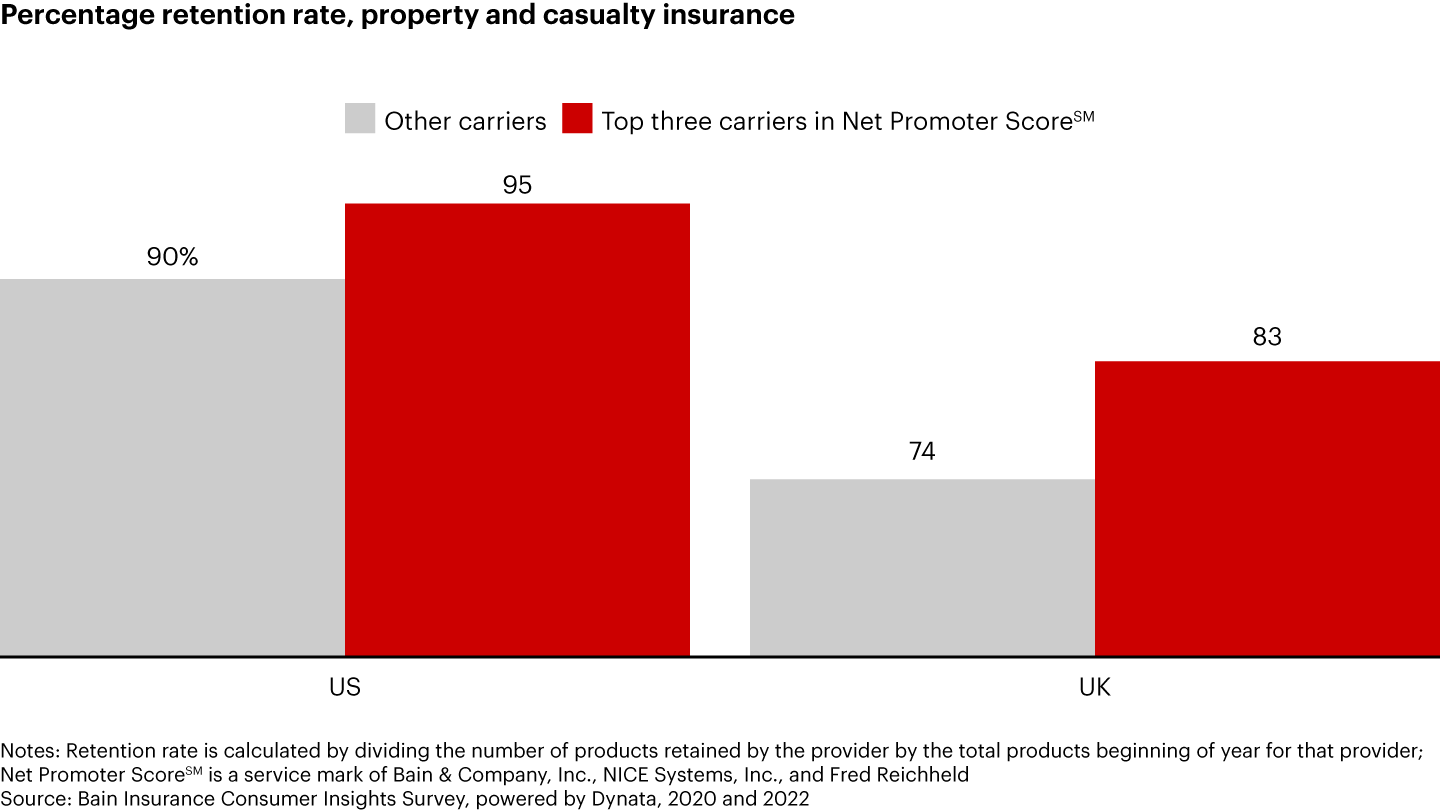
      Loyalty among insurance customers, as measured by Net Promoter Score℠, has steadily improved over the past decade—in most countries by between 10 and 30 percentage points. Moreover, laggard companies have been narrowing the gap with Net Promoter Score leaders. At the same time, customer switching rates in property and casualty markets rose during the period, reflecting that many carriers pulled back from certain coverage and raised premiums, spurring people to shop for lower-priced alternatives (see Figure 1). In life insurance markets, by contrast, a carrier’s reputation plays a greater role than price. Given that digital channels and tools have made prices more transparent and switching so much easier, focusing on products and an experience that builds advocacy, as measured by Net Promoter Score, has become nonnegotiable for retaining customers (see Figure 2).

      Figure 1
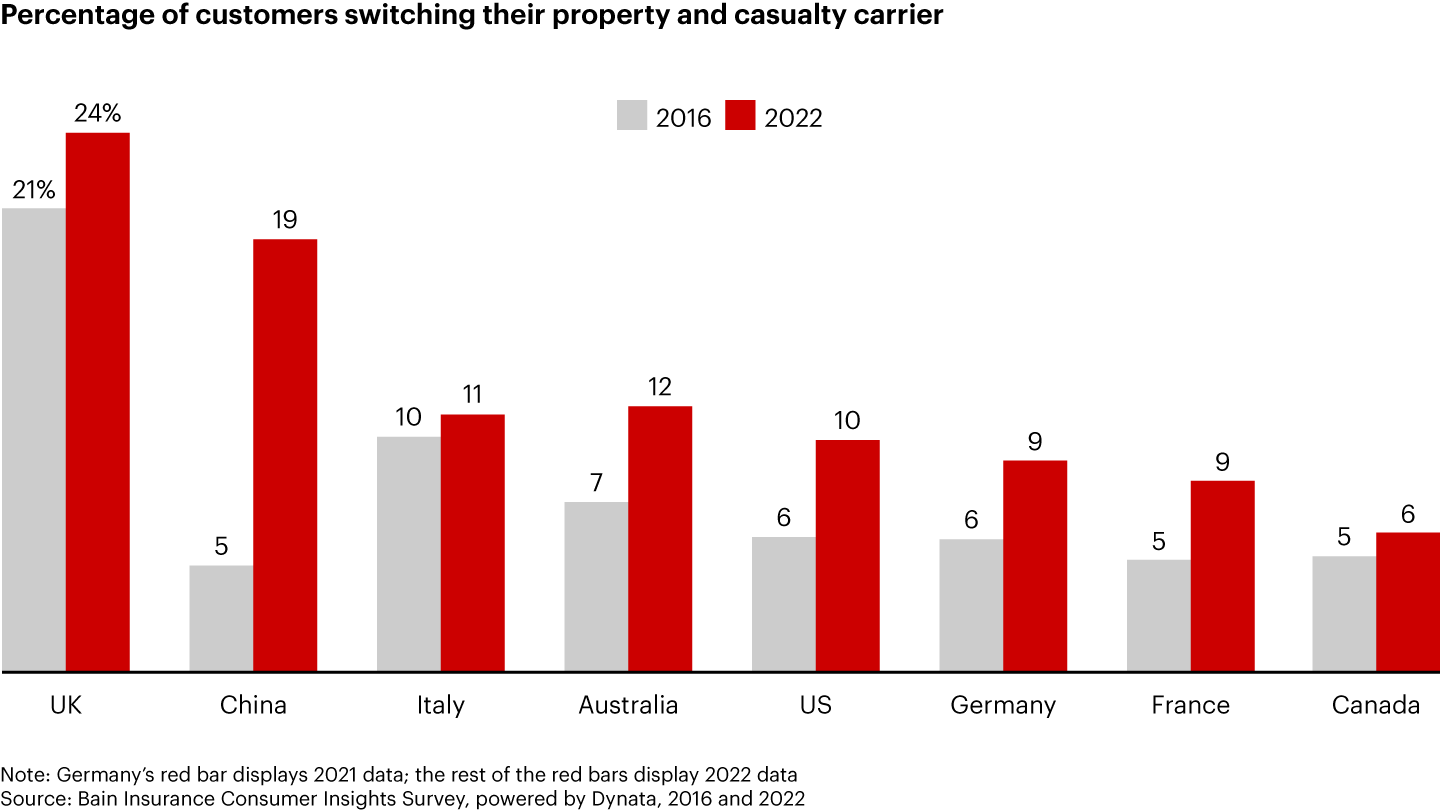
      Customer switching rates have risen as digital tools and more transparent pricing make it easier to defect
      Figure 2
      Focusing on Net Promoter Score℠ as a gauge of the customer experience has become essential for retaining customers

      Delivering value: What customers really care about

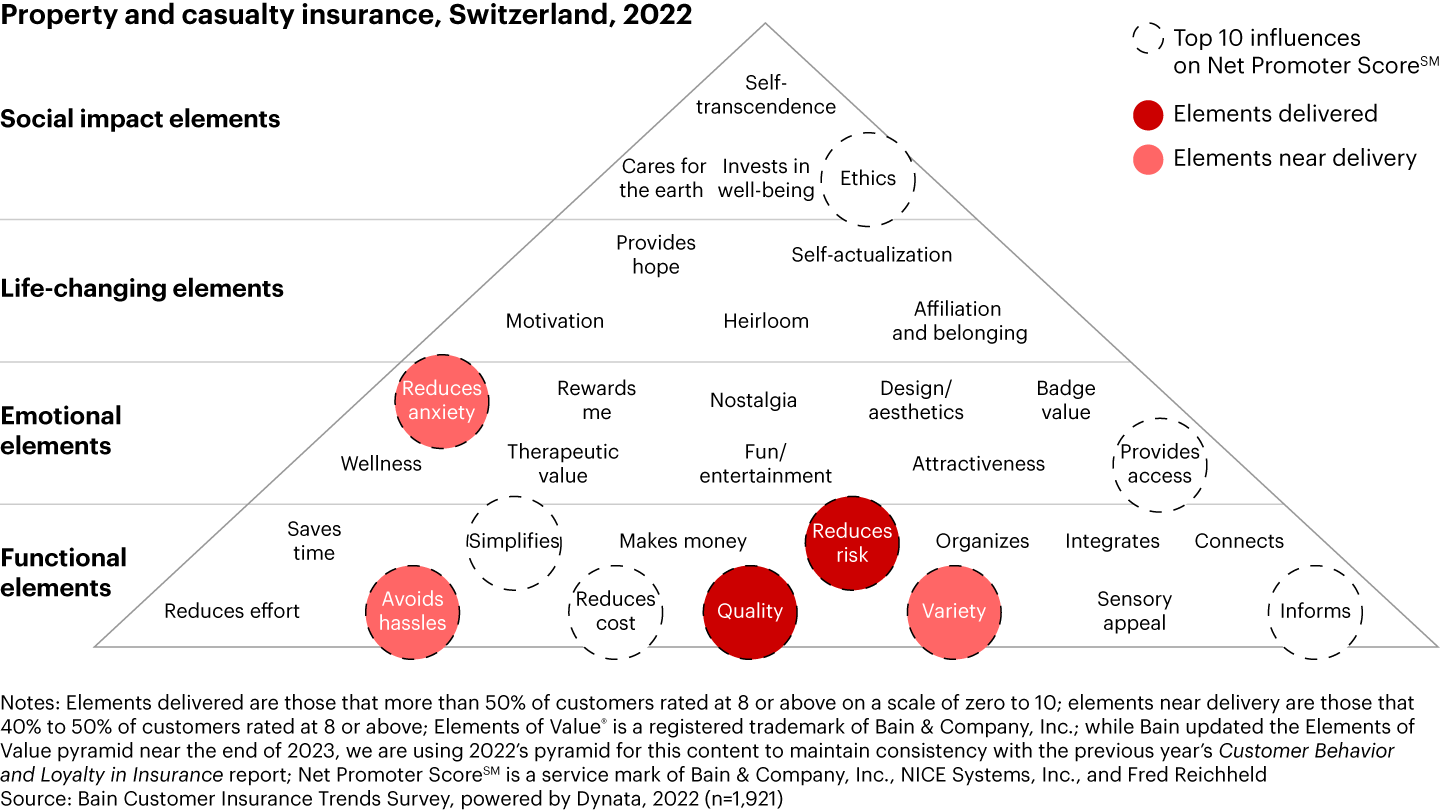
      Beyond basic protection, consumers increasingly want insurers to excel on dimensions other than the functional basics of what we call the Elements of Value®, including higher-order or emotional elements such as ethics, heirloom, and reducing anxiety. We asked consumers to rate their insurers on each of the 33 elements that can lift products and services above commodity status. (Note: While Bain updated the Elements of Value nomenclature near the end of 2023, we are using 2022’s nomenclature for this content to maintain consistency with the previous year’s Customer Behavior and Loyalty in Insurance report.) Net Promoter Score increased in every country surveyed when insurers delivered a strong performance on higher-order elements (see Figure 3). However, few insurers currently excel at using these elements in their proposition (see Figure 4). A traditionalist perspective persists, viewing insurers largely as capital providers and claims payers, not solutions providers. The business case for a broader role can be tough to embrace with a multiyear payback period and new skills required. Yet broader solutions lead to more engagement with customers, expand the market to new demographic or geographic segments, and can improve a firm’s economics over time.

      Figure 3
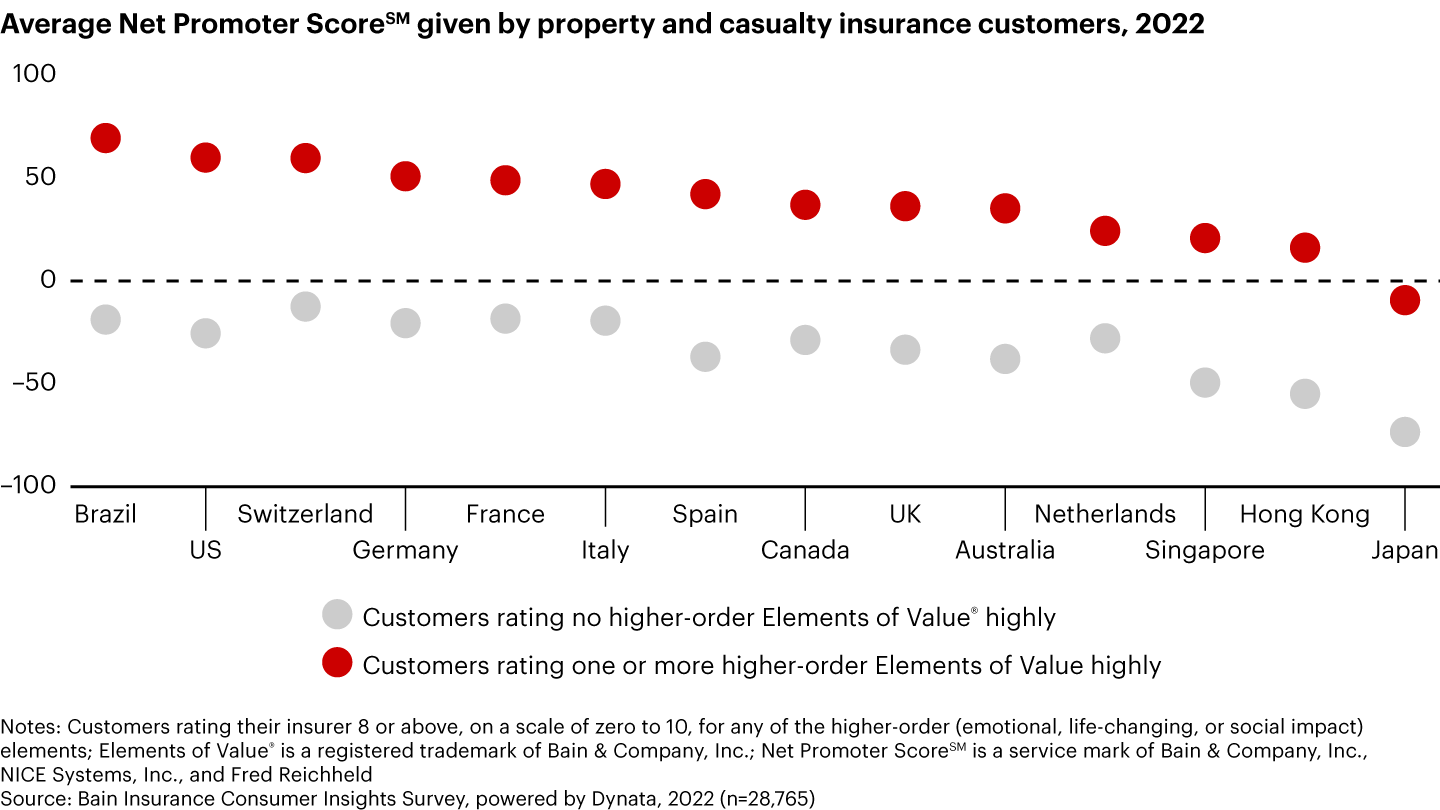
      Customers’ advocacy increases when they rate their insurer favorably on higher-order Elements of Value®
      Figure 4
      As seen in Switzerland, most property and casualty insurers are not performing well on the Elements of Value® that matter to customers

      Hunting and farming: They each matter, but few insurers excel at both

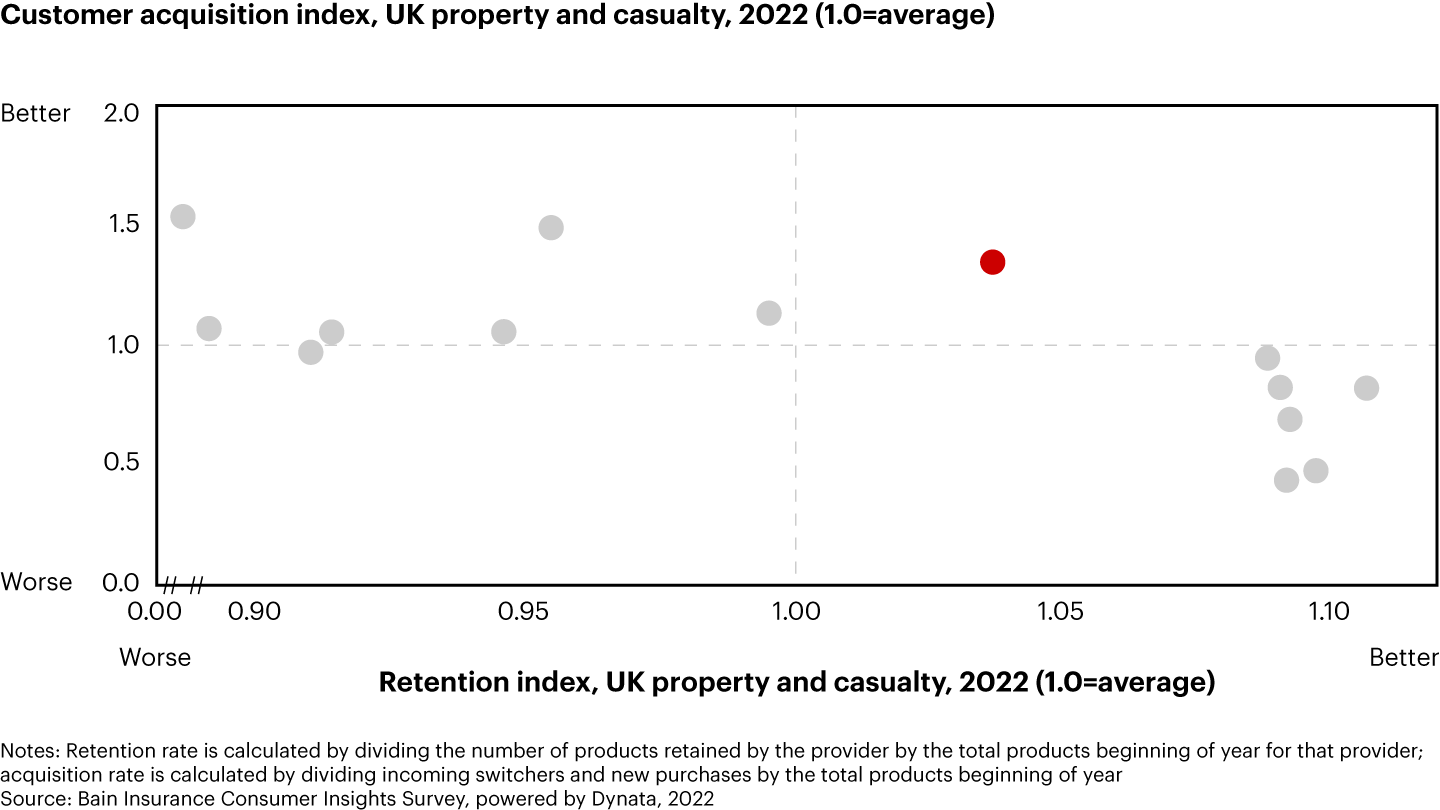
      Growth in the volume of insurance premiums has not outpaced general economic growth, especially in developed markets (see Figure 5). There, the ranks of first-time buyers have slowed, and the average number of products that consumers own has stagnated. This is another reason that retaining customers is critical for growth, as it links to product ownership—through effective cross-selling, customers who stay longer with an insurer own more of its products and thereby improve the company’s economics. Acquiring customers, on the other hand, requires different capabilities and actions, and few insurers do both well (see Figure 6). Customer acquisition tends to be more expensive than retention, yet it still contributes to growth. Smart acquisition hinges on understanding which consumer segments to target, whether the segmentation derives from age, region, lifestyle, or customer needs.

      Figure 5
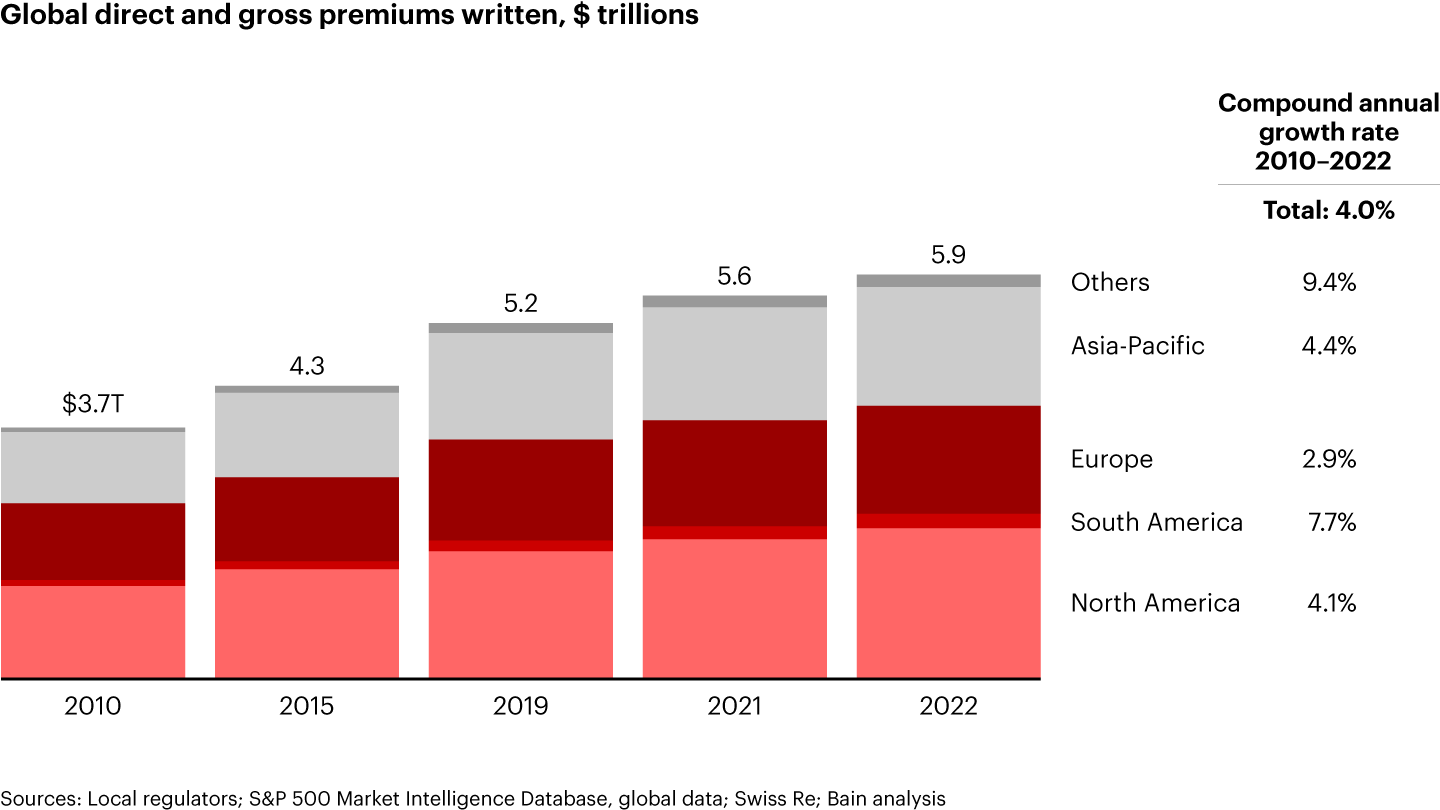
      Growth in premiums has not outpaced general economic growth in most countries
      Figure 6
      Very few insurers have the capabilities to excel at both acquiring and retaining customers

      Digital adoption: Self-service has arrived, just not yet at scale

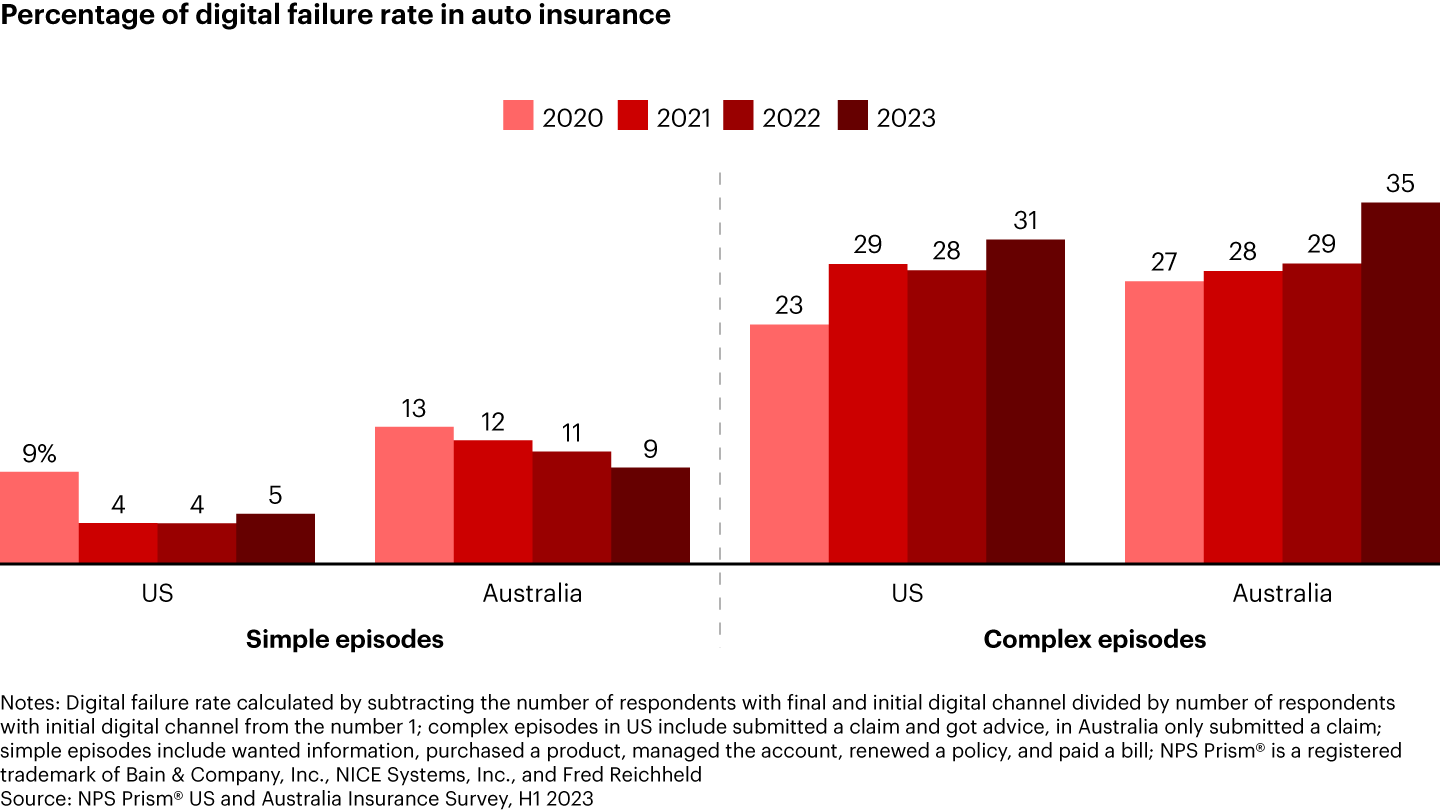
      Insurers’ investments in digital channels and tools have kindled steady adoption by consumers, which spiked during the Covid-19 lockdowns, especially for research interactions and, to a lesser extent, for purchasing. Once just a glimmer of promise, digital tool adoption has doubled or quintupled, depending on the country (see Figure 7). However, consumers still rely heavily on humans to augment digital channels, particularly for more complex issues such as dealing with a claim. The average rate of resolving an interaction at the first digital contact has increased for simple transactions such as paying a bill but not for complex episodes—sometimes by design because insurers want the customer to engage an employee about some aspect of the complex episode (see Figure 8).

      Figure 7
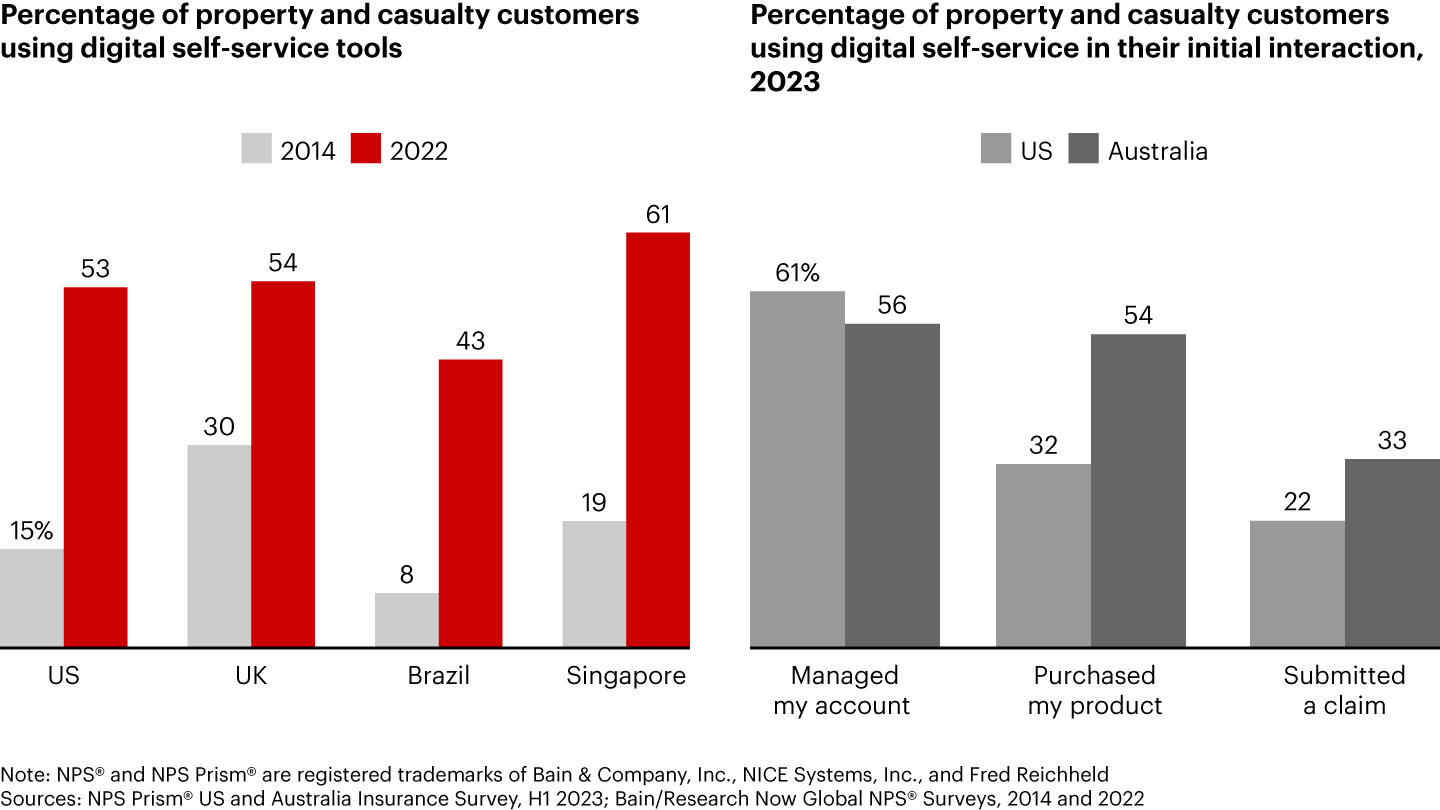
      Consumers’ use of digital self-service tools in insurance has increased, especially for relatively simple interactions
      Figure 8
      Insurers have reduced digital failure rates for simple but not complex episodes

      For each episode, the mix of channels strongly influences consumers’ perceptions of the experience. Digital channels have a higher likelihood to delight consumers for simple episodes. Insurers thus need to make digital processes as simple and convenient as possible for episodes that lend themselves to self-service while also making it easy to connect with an employee for help with complex issues.

      Digital offers other benefits as well. It helps to engage customers in new ways, to collect more data, and to offer more comprehensive services, such as risk prevention, in convenient forms, often with external partner firms. Over the past year, generative artificial intelligence (AI) has emerged as the next digital frontier, with great promise to improve the customer’s experience with both product and service interactions and to increase loyalty.

      About the Research

      Data powered by Dynata, a leading global first-party data and insights platform.

      Risk prevention: Customers and technology are ready if insurers choose to act

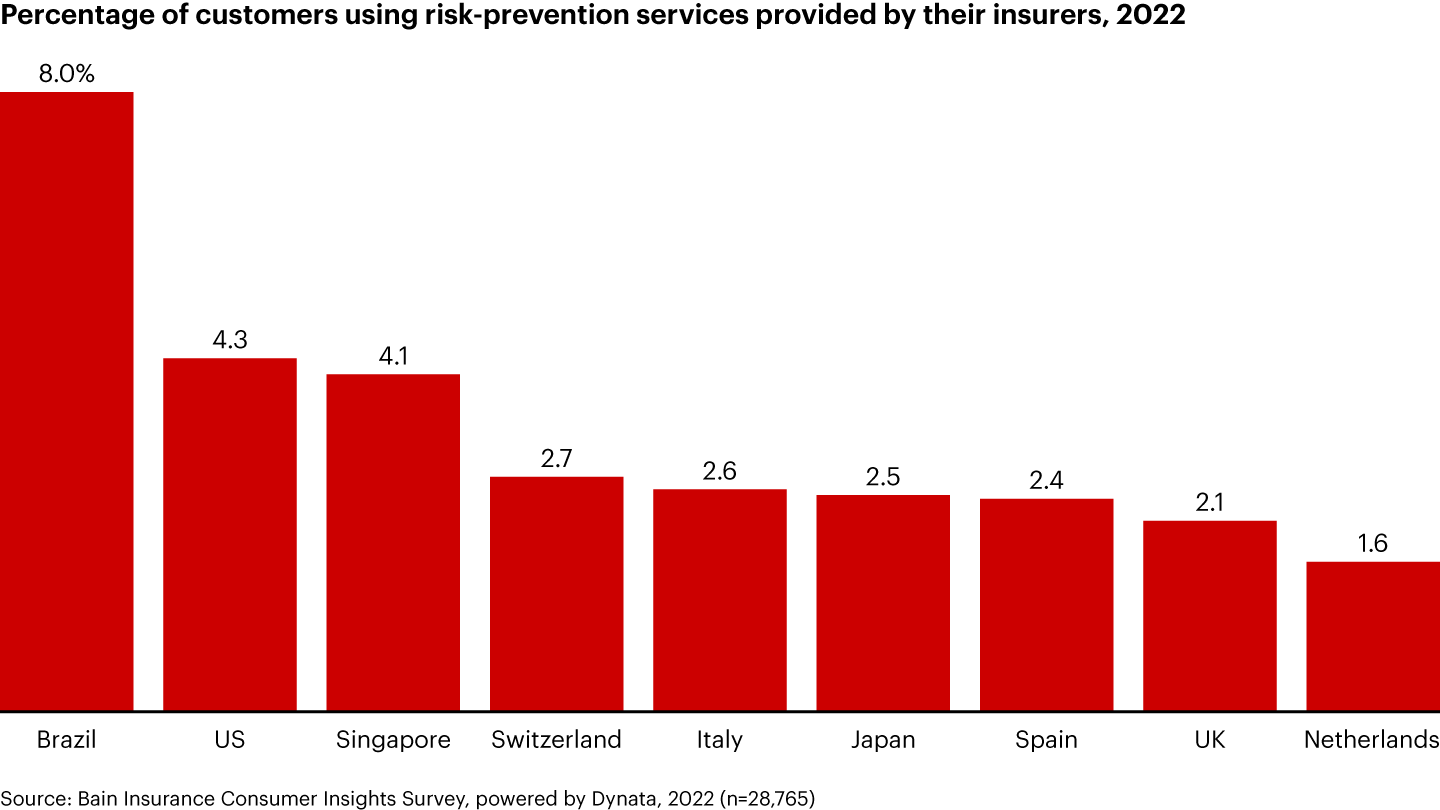
      Consumers want to reduce risks in their lives and are willing to use risk-prevention ser­vices from insurers (see Figure 9). This preference is most pronounced among millennials, affluent customers, urban customers, and families with children. In home insurance, for instance, the top services cited by survey respondents are automatic device shutoff, inspection services prior to buying a house, and alerts for threats. In life and health insurance, they would most value rewards for healthy living, checkups or remote diagnostics, and support to find and schedule a provider. The infrastructure for risk-prevention services has improved in recent years as customers own more connected devices and express more willingness to share data with insurers. But few consumers globally use risk-prevention services or share connected-device data with their insurers (see Figure 10). Done right, though, risk-prevention services can lead to more engagement with customers, expand the market to new demographic or geographic segments, and improve a firm’s economics over time.

      Figure 9
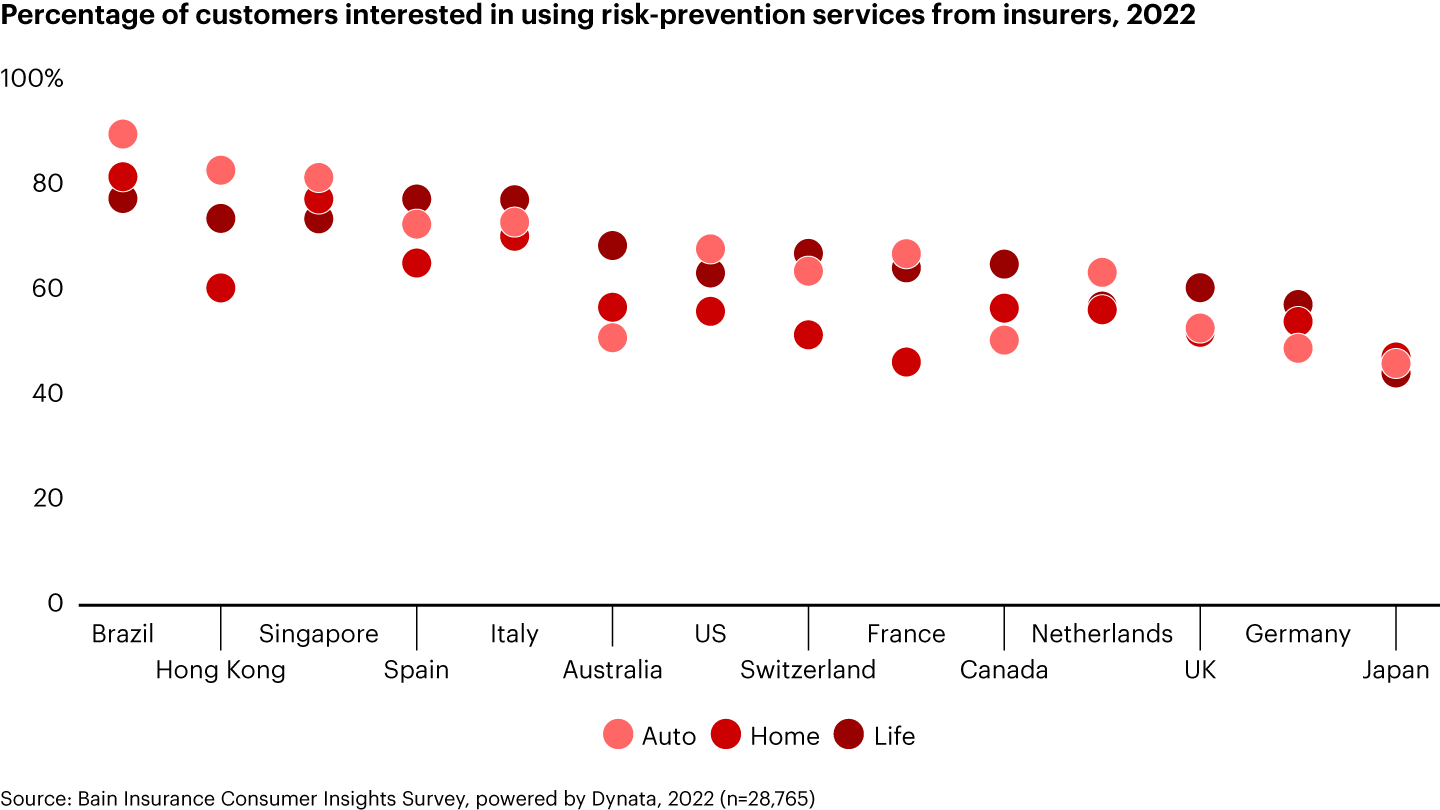
      Consumers are open to using risk-prevention services from insurers
      Figure 10
      Few customers currently use risk-prevention services from insurers

      Outlook: How generative AI and connected devices will reshape relationships with customers

      From comparison websites to self-service apps, digital technologies have set the agenda for serving consumers over the past decade, and the coming years will see technologies continue to spur change in the field of loyalty. Two types of technology—namely, generative AI and connected devices—are starting to sweep through insurance markets. Each provides opportunities for insurers to target customers more effectively, offer stronger value propositions beyond risk coverage, price more accurately, and create better experiences—all at a lower cost.

      Generative AI will redefine relationships with customers in all kinds of ways (see Figure 11). It will allow consumers to self-serve more effectively beyond simple interactions. Insurers will be able to target customers in a personalized way on digital channels, guide them to the best products, offer relevant services at the right time, and create a human-like digital claims experience.

      Figure 11
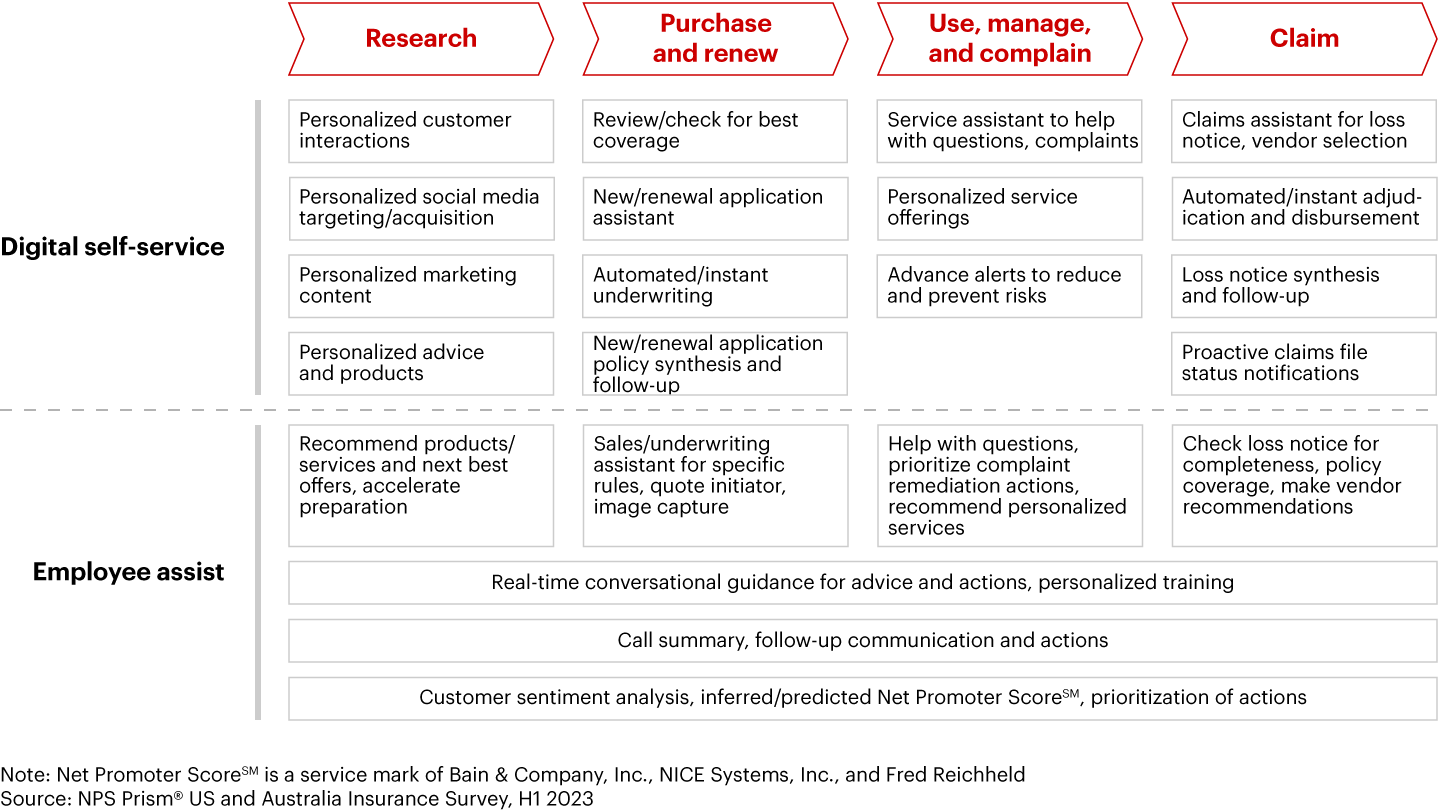
      Generative artificial intelligence will improve the customer experience across a range of episodes

      On the employee side, generative AI will augment the agent or contact-center representative when customers need to interact with them. Generative AI assistants will speed up administrative tasks (such as taking meeting notes), give a live customer history or live sales nudges, and improve the quality of decisions.

      Companies have already reaped benefits from the first set of experiments. An Asian financial services provider is using generative AI to raise the productivity of its advisers by 50% based on expanded coverage (because of less time needed for preparation and follow-up), higher lead conversion, and a better product mix. Nationwide filters its claims data through generative AI to provide personalized information about pet health risks to its pet insurance customers. And Allstate has developed a generative AI tool to help policyholders report claims more quickly by summarizing details of the incident and passing those to adjusters so that claimants do not have to answer the same question twice.

      Turning to connected devices, when coupled with the latest data analytics technologies, they will accelerate a collective industry shift from loss coverage to loss prevention and mitigation, allowing for finer risk segmentation and pricing. Wearable devices allow life and health insurers to offer more services tied to healthy living and remote diagnostics, which consumers tell us they value highly.

      Connected devices in residences or businesses are another fruitful area. Such devices already figure in parametric flood insurance, monitoring water levels at an insured property and paying out if a flood exceeds an agreed-upon height. Sensors and gauges strategically placed in flood-prone areas could also serve as early warning systems so that people can act before the high waters arrive.

      To harness these technologies effectively, each insurer will need to define clear goals that stretch the art of the possible while also setting a realistic level for its risk appetite. As with any technology, achieving genuine improvements instead of just adding another layer of complexity entails regular measurement of outcomes and adaptation of the operating model to implement the technologies in more use cases. Those insurers that embrace the technologies sooner rather than later stand a better chance of both creating distinctive propositions and improving their economics.

      The path to demonstrating customer love continually evolves. Success in the next phase will involve considerable pressure throughout the organization—from senior leaders to the agents and staff—to learn how to use these technologies and datasets effectively. For the near future, insurance executives should revisit their approach by answering a set of high-gain questions:

      • Are the Elements of Value that we deliver still what customers care about most?
      • Are we deploying the latest technologies to benefit customers, intermediaries, and our own operations?
      • Do we have effective means to both attract and retain the highest-value customers?
      • Do we have the right offerings of digital self-service, particularly in more complicated episodes such as claims or advice?
      • As the risks for customers change, are we supporting them in prevention, mitigation, and protection?

      Insurance companies that incorporate effective answers to these questions in their strategy and execution will be positioned to generate even stronger customer advocacy, faster growth, and better economics in the years ahead.

      著者
      • Headshot of Henrik Naujoks
        Henrik Naujoks
        パートナー, Hong Kong
      • Headshot of Sean O'Neill
        Sean O'Neill
        パートナー, Chicago
      • Headshot of Andrew Schwedel
        Andrew Schwedel
        パートナー, New York
      • Headshot of Phil Sager
        Phil Sager
        パートナー, Toronto
      • Headshot of Tanja Brettel
        Tanja Brettel
        Practice Executive Vice President, Dusseldorf
      • Headshot of Jason Barro
        Jason Barro
        パートナー, New York
      関連業種
      • 金融サービス
      • 保険
      関連するコンサルティングサービス
      • Customer Experience
      • Digital
      • IT
      • 顧客戦略、マーケティング
      • 戦略
      コンサルティングサービス
      • Elements of Value®
      • NPS Prism®
      金融サービス
      Customer Behavior and Loyalty in Insurance: Global Edition 2023

      Consumers to insurers: more risk-prevention services, please, and more convenient digital channels.

      詳細
      CIO Insights
      Four Ways Leaders Can Make AI Redesigns Stick

      As companies redesign to scale AI, these four lessons help leaders ensure their organizations actually live the new operating model.

      詳細
      金融サービス
      Rethinking Transformation: Lawrence Lam on Leading Change at Prudential

      Frankie Leung speaks with Lawrence Lam, CEO of Prudential Hong Kong, about organizational transformation and sustaining change through a people-led approach.

      詳細
      CIO Insights
      Five Functions Where AI Is Already Delivering

      Spurred on by early success, companies of all sizes are increasing their spending on generative AI.

      詳細
      CIO Insights
      The 2026 Retail Executive Agenda

      Here are letters to the C-suite to help strengthen strategy, catalyze collaboration, and expand value creation in the AI age.

      詳細
      First published in 4月 2024
      Tags
      • CIO Insights
      • Customer Experience
      • Digital
      • Elements of Value®
      • IT
      • NPS Prism®
      • ロイヤルティ
      • 金融サービス
      • 顧客戦略、マーケティング
      • 戦略
      • 保険

      クライアント支援事例

      Customer Experience From Laggard to Leader: Desjardins Evolves Member Centricity for the Digital Age

      ケーススタディを見る

      IT Cost Transparency Helps Insurer Strengthen Tech Expense Management Capability

      ケーススタディを見る

      顧客戦略、マーケティング Customer focus helps a P&C insurer grow

      ケーススタディを見る

      お気軽にご連絡下さい

      私達は、グローバルに活躍する経営者が抱える最重要経営課題に対して、厳しい競争環境の中でも成長し続け、「結果」を出すために支援しています。

      Net Promoter®, NPS®, NPS Prism®, and the NPS-related emoticons are registered trademarks and Net Promoter Score℠ and Net Promoter System℠ are service marks of Bain & Company, Inc., Satmetrix Systems, Inc., and Fred Reichheld. Digital is a service mark and Elements of Value® and Elements of Value® are registered trademarks of Bain & Company, Inc.

      ベインの知見。競争が激化するグローバルビジネス環境で、日々直面するであろう問題について論じている知見を毎月お届けします。

      *プライバシーポリシーの内容を確認し、合意しました。

      プライバシーポリシーをご確認頂き、合意頂けますようお願い致します。
      Bain & Company
      お問い合わせ Sustainability Accessibility Terms of use Privacy Cookie Policy Sitemap Log In

      © 1996-2026 Bain & Company, Inc.

      お問い合わせ

      How can we help you?

      • ビジネスについて
      • プレス報道について
      • 採用について
      全てのオフィス