Skip to Content
  • Γραφεία

    Γραφεία

    North & Latin America
    • Atlanta
    • Austin
    • Bogota
    • Boston
    • Buenos Aires
    • Chicago
    • Dallas
    • Denver
    • Houston
    • Los Angeles
    • Mexico City
    • Minneapolis
    • Monterrey
    • Montreal
    • New York
    • Rio de Janeiro
    • San Francisco
    • Santiago
    • São Paulo
    • Seattle
    • Silicon Valley
    • Toronto
    • Washington, DC
    Europe & Africa
    • Amsterdam
    • Athens
    • Berlin
    • Brussels
    • Copenhagen
    • Dusseldorf
    • Frankfurt
    • Helsinki
    • Istanbul
    • Johannesburg
    • Kyiv
    • Lisbon
    • London
    • Madrid
    • Milan
    • Munich
    • Oslo
    • Paris
    • Rome
    • Stockholm
    • Vienna
    • Warsaw
    • Zurich
    Middle East
    • Doha
    • Dubai
    • Riyadh
    Asia & Australia
    • Bangkok
    • Beijing
    • Bengaluru
    • Brisbane
    • Ho Chi Minh City
    • Hong Kong
    • Jakarta
    • Kuala Lumpur
    • Manila
    • Melbourne
    • Mumbai
    • New Delhi
    • Perth
    • Shanghai
    • Singapore
    • Sydney
    • Tokyo
    See all offices
  • Alumni
  • Media Center
  • Εγγραφή
  • Επικοινωνία
  • Greece | Elliniká

    Select your region and language

    Global
    • Global (English)
    North & Latin America
    • Brazil (Português)
    • Argentina (Español)
    • Canada (Français)
    • Chile (Español)
    • Colombia (Español)
    Europe, Middle East, & Africa
    • France (Français)
    • DACH Region (Deutsch)
    • Italy (Italiano)
    • Spain (Español)
    • Greece (Elliniká)
    Asia & Australia
    • China (中文版)
    • Korea (한국어)
    • Japan (日本語)
  • Saved items (0)
    Saved items (0)

    You have no saved items.

    Bookmark content that interests you and it will be saved here for you to read or share later.

    Explore Bain Insights
  • Κλάδοι
    Main menu

    Κλάδοι

    • Aerospace & Defense
    • Agribusiness
    • Chemicals
    • Construction & Infrastructure
    • Consumer Products
    • Financial Services
    • Healthcare & Life Sciences
    • Industrial Machinery & Equipment
    • Media & Entertainment
      Κλάδοι
      Media & Entertainment
      • Media Lab
    • Metals
    • Mining
    • Oil & Gas
    • Paper & Packaging
    • Private Equity
      Κλάδοι
      Private Equity
      • Due Diligence
      • Exit Planning
      • Firm Strategy & Operations
      • Portfolio Value Creation
    • Social Impact
    • Retail
    • Technology
    • Telecommunications
      Κλάδοι
      Telecommunications
      • Capital Expenditure
      • Telco Digital Transformation
    • Transportation
    • Travel & Leisure
    • Utilities & Renewables
  • Συμβουλευτικές Υπηρεσίες
    Main menu

    Συμβουλευτικές Υπηρεσίες

    • Customer Experience
    • Sustainability
    • Innovation
    • M&A
    • Operations
    • People & Organization
    • Private Equity
    • Sales & Marketing
    • Strategy
    • AI, Insights, and Solutions
    • Technology
    • Transformation
  • Digital
  • Πληροφορίες
    Main menu

    Πληροφορίες

    • Industry Insights
    • Services Insights
    • Bain Books
    • Webinars
    • Bain Futures
    View all Insights
    Featured topics
    • Artificial Intelligence
    • Managing Inflation
    • Thriving in Uncertainty
    • The Talent Imperative
    • Macro Trends
    • Healthcare Private Equity Report
    • CEO's Guide to Sustainability
    • Technology Report
    • Energy & Natural Resources Report
    • Paper & Packaging Report
    • CEO Insights
    • CFO Insights
    • COO Insights
    • CIO Insights
    • CMO Insights
    View all featured topics
  • Σχετικά με εμάς
    Main menu

    Σχετικά με εμάς

    • What We Do
    • What We Believe
    • Our People & Leadership
    • Client Results
    • Awards & Recognition
    • Global Affiliations
    • Social Impact
    • Sustainability
    • World Economic Forum
    Learn more about Further
  • Careers
    Main menu

    Careers

    • Work with Us
      Careers
      Work with Us
      • Find Your Place
      • Our Work Areas
      • Integrated Teams
      • Students
      • Internships & Programs
      • Recruiting Events
    • Life at Bain
      Careers
      Life at Bain
      • Blog: Inside Bain
      • Career Stories
      • Our People
      • Where We Work
      • Supporting Your Growth
      • Affinity Groups
      • Benefits
    • Impact Stories
    • Hiring Process
      Careers
      Hiring Process
      • What to Expect
      • Interviewing
    FIND JOBS
  • Γραφεία
    Main menu

    Γραφεία

    • North & Latin America
      Γραφεία
      North & Latin America
      • Atlanta
      • Austin
      • Bogota
      • Boston
      • Buenos Aires
      • Chicago
      • Dallas
      • Denver
      • Houston
      • Los Angeles
      • Mexico City
      • Minneapolis
      • Monterrey
      • Montreal
      • New York
      • Rio de Janeiro
      • San Francisco
      • Santiago
      • São Paulo
      • Seattle
      • Silicon Valley
      • Toronto
      • Washington, DC
    • Europe & Africa
      Γραφεία
      Europe & Africa
      • Amsterdam
      • Athens
      • Berlin
      • Brussels
      • Copenhagen
      • Dusseldorf
      • Frankfurt
      • Helsinki
      • Istanbul
      • Johannesburg
      • Kyiv
      • Lisbon
      • London
      • Madrid
      • Milan
      • Munich
      • Oslo
      • Paris
      • Rome
      • Stockholm
      • Vienna
      • Warsaw
      • Zurich
    • Middle East
      Γραφεία
      Middle East
      • Doha
      • Dubai
      • Riyadh
    • Asia & Australia
      Γραφεία
      Asia & Australia
      • Bangkok
      • Beijing
      • Bengaluru
      • Brisbane
      • Ho Chi Minh City
      • Hong Kong
      • Jakarta
      • Kuala Lumpur
      • Manila
      • Melbourne
      • Mumbai
      • New Delhi
      • Perth
      • Shanghai
      • Singapore
      • Sydney
      • Tokyo
    See all offices
  • Alumni
  • Media Center
  • Εγγραφή
  • Επικοινωνία
  • Greece | Elliniká
    Main menu

    Select your region and language

    • Global
      Select your region and language
      Global
      • Global (English)
    • North & Latin America
      Select your region and language
      North & Latin America
      • Brazil (Português)
      • Argentina (Español)
      • Canada (Français)
      • Chile (Español)
      • Colombia (Español)
    • Europe, Middle East, & Africa
      Select your region and language
      Europe, Middle East, & Africa
      • France (Français)
      • DACH Region (Deutsch)
      • Italy (Italiano)
      • Spain (Español)
      • Greece (Elliniká)
    • Asia & Australia
      Select your region and language
      Asia & Australia
      • China (中文版)
      • Korea (한국어)
      • Japan (日本語)
  • Saved items  (0)
    Main menu
    Saved items (0)

    You have no saved items.

    Bookmark content that interests you and it will be saved here for you to read or share later.

    Explore Bain Insights
  • Κλάδοι
    • Κλάδοι

      • Aerospace & Defense
      • Agribusiness
      • Chemicals
      • Construction & Infrastructure
      • Consumer Products
      • Financial Services
      • Healthcare & Life Sciences
      • Industrial Machinery & Equipment
      • Media & Entertainment
      • Metals
      • Mining
      • Oil & Gas
      • Paper & Packaging
      • Private Equity
      • Social Impact
      • Retail
      • Technology
      • Telecommunications
      • Transportation
      • Travel & Leisure
      • Utilities & Renewables
  • Συμβουλευτικές Υπηρεσίες
    • Συμβουλευτικές Υπηρεσίες

      • Customer Experience
      • Sustainability
      • Innovation
      • M&A
      • Operations
      • People & Organization
      • Private Equity
      • Sales & Marketing
      • Strategy
      • AI, Insights, and Solutions
      • Technology
      • Transformation
  • Digital
  • Πληροφορίες
    • Πληροφορίες

      • Industry Insights
      • Services Insights
      • Bain Books
      • Webinars
      • Bain Futures
      View all Insights
      Featured topics
      • Artificial Intelligence
      • Managing Inflation
      • Thriving in Uncertainty
      • The Talent Imperative
      • Macro Trends
      • Healthcare Private Equity Report
      • CEO's Guide to Sustainability
      • Technology Report
      • Energy & Natural Resources Report
      • Paper & Packaging Report
      • CEO Insights
      • CFO Insights
      • COO Insights
      • CIO Insights
      • CMO Insights
      View all featured topics
  • Σχετικά με εμάς
    • Σχετικά με εμάς

      • What We Do
      • What We Believe
      • Our People & Leadership
      • Client Results
      • Awards & Recognition
      • Global Affiliations
      Further: Our global responsibility
      • Social Impact
      • Sustainability
      • World Economic Forum
      Learn more about Further
  • Careers
    Popular Searches
    • Agile
    • Digital
    • Strategy
    Your Previous Searches
      Recently Visited Pages

      Content added to saved items

      Saved items (0)

      Removed from saved items

      Saved items (0)

      Report

      Customer Behavior and Loyalty in Insurance: Global Edition 2023

      Customer Behavior and Loyalty in Insurance: Global Edition 2023

      Consumers to insurers: more risk-prevention services, please, and more convenient digital channels.

      By Henrik Naujoks, Andrew Schwedel, and Tanja Brettel

      • min read
      }

      Report

      Customer Behavior and Loyalty in Insurance: Global Edition 2023
      en

      Executive summary

      Consumers value purpose, not just coverage for losses

      The traditional premise of insurance—providing capital to cover risk and reimburse claims—doesn’t fully satisfy anymore. Customers increasingly are looking for help from insurers to reduce and even prevent the risks that pervade their lives. For consumers, these risks largely involve their home, car, health, and financial well-being.

      Consumer interest has risen in part because of intense turbulence and uncertainty in recent years. Extreme weather events, disease and the Covid-19 pandemic, aging populations, and technological disruptions are combining to radically change the risk landscape, both through more risks and different types of risk.

      The changes thrust insurance companies into an identity crisis that calls on them to redefine their role. They have the chance, perhaps even the duty, to take a firmer hand in moving beyond reimbursement for damage to encouraging behaviors and providing solutions in ways that will reduce risks. We foresee a collective shift in the industry’s central purpose from loss reimbursement to risk solutions over the next decade, consistent with past efforts such as advocating for seat belts in cars and safety standards in house construction.

      Indeed, consumer attitudes and behaviors have become increasingly purpose-driven in ways that extend beyond preventing risk. In Bain & Company’s new survey, powered by Dynata, of 28,765 consumers in 14 countries, some 80% of respondents want insurers to embed environmental, social, and corporate governance (ESG) initiatives into their proposition. And 59% globally want life insurers to reward them for healthy living.

      Listen to the podcast

      What Does a Customer Want From Their Insurer?

      Listen to Episode 9 of Deciphered as we deep-dive into the world of insurance—namely, how the traditional premise of providing capital to cover risk and reimburse claims doesn’t necessarily satisfy anymore.

      From risk protection to prevention

      Our survey confirms that consumers see a greater role for insurers than merely delivering on the basics of coverage. That expanded role starts with the broad dimension of risk reduction. New technologies, such as the Internet of Things or machine learning, along with massive data sets on auto driving behavior and other relevant trends, enable insurers to directly partner with customers to identify, prevent, and mitigate each risk event.

      Some insurers already offer promising risk-reduction services. For instance, one European health insurer launched such services for three customer segments. It offers connected health apps for coaching and other purposes and has enlisted partners ranging from doctors to nutritionists. User sign-up has been brisk and largely free of churn.

      In automotive coverage, one insurer has long experience with telematics, targeting customers in regions with high levels of theft and high premiums. Some 40% of policyholders have converted to the service, partly because of a simple online sign-up process aided by the salesforce. The insurer plans to expand services through a partnership with an automaker, and by signing up repair garages, gasoline stations, and used car dealers. Its aims to eventually create a one-stop platform for theft recovery, toll and tax payment, immediate vehicle assistance, and more.

      And in Southeast Asia, a life insurer recently launched services for young families such as online health and parenting forums, trackers for family events and vaccines, and related expert content. The company relies on partnerships in prevention, diagnostic services, and food scoring. More than 300,000 customers signed up the first year, which led to one-fifth of active users then meeting with an insurance broker. 

      Video

      The Power of Customer-Led Innovation

      In just months, the legacy insurance company AIA was able to build an award-winning health app.

      To what purpose?

      Beyond the risk arena, consumers also want insurers to excel on dimensions other than the functional basics of what we call Elements of Value®, including ethics, providing access, and reducing anxiety. We asked consumers to rate the Elements of Value’s 33 attributes, which can lift products and services above commodity status, on a scale of zero to 10. Consumer loyalty and advocacy increases in every country surveyed when insurers deliver a strong performance on higher-order elements.

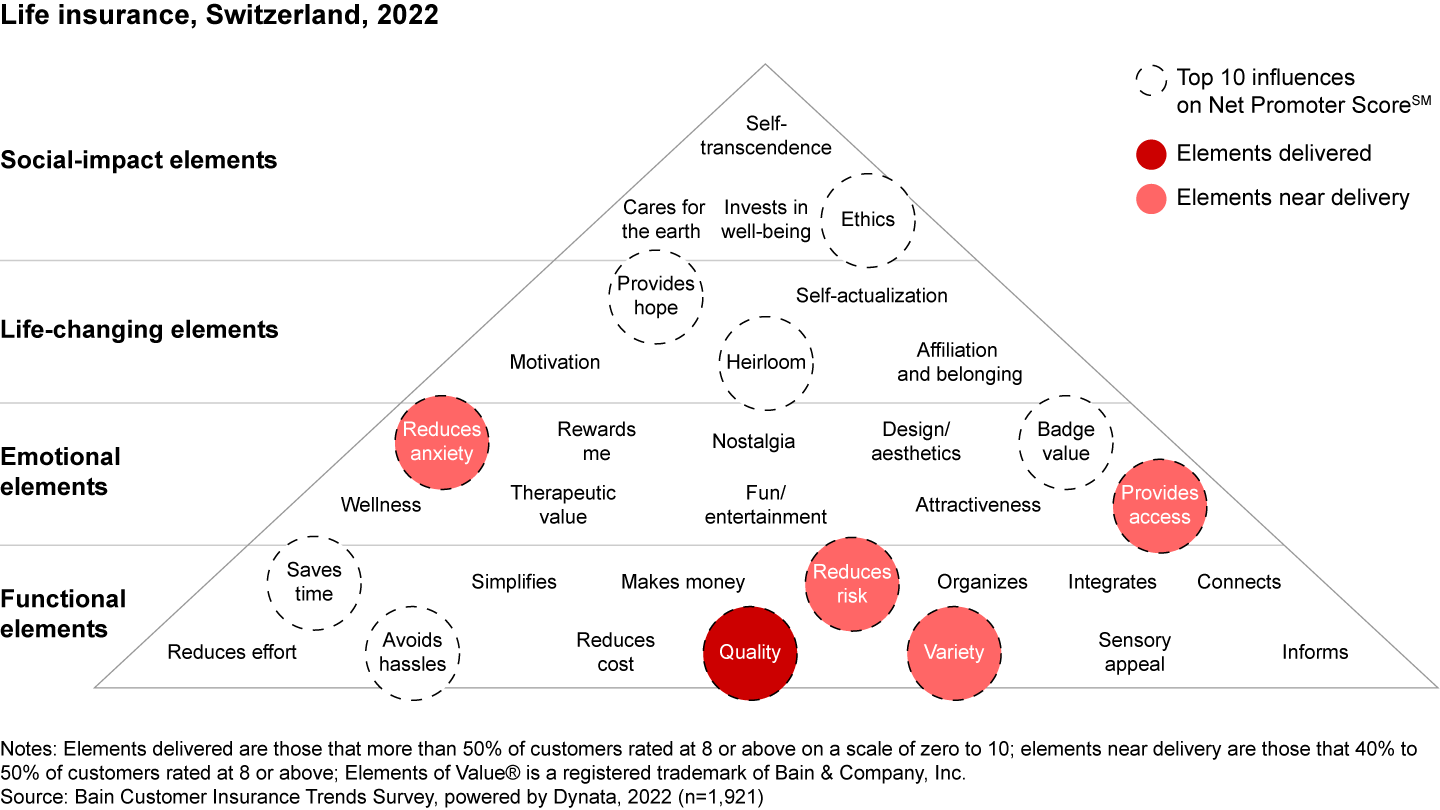
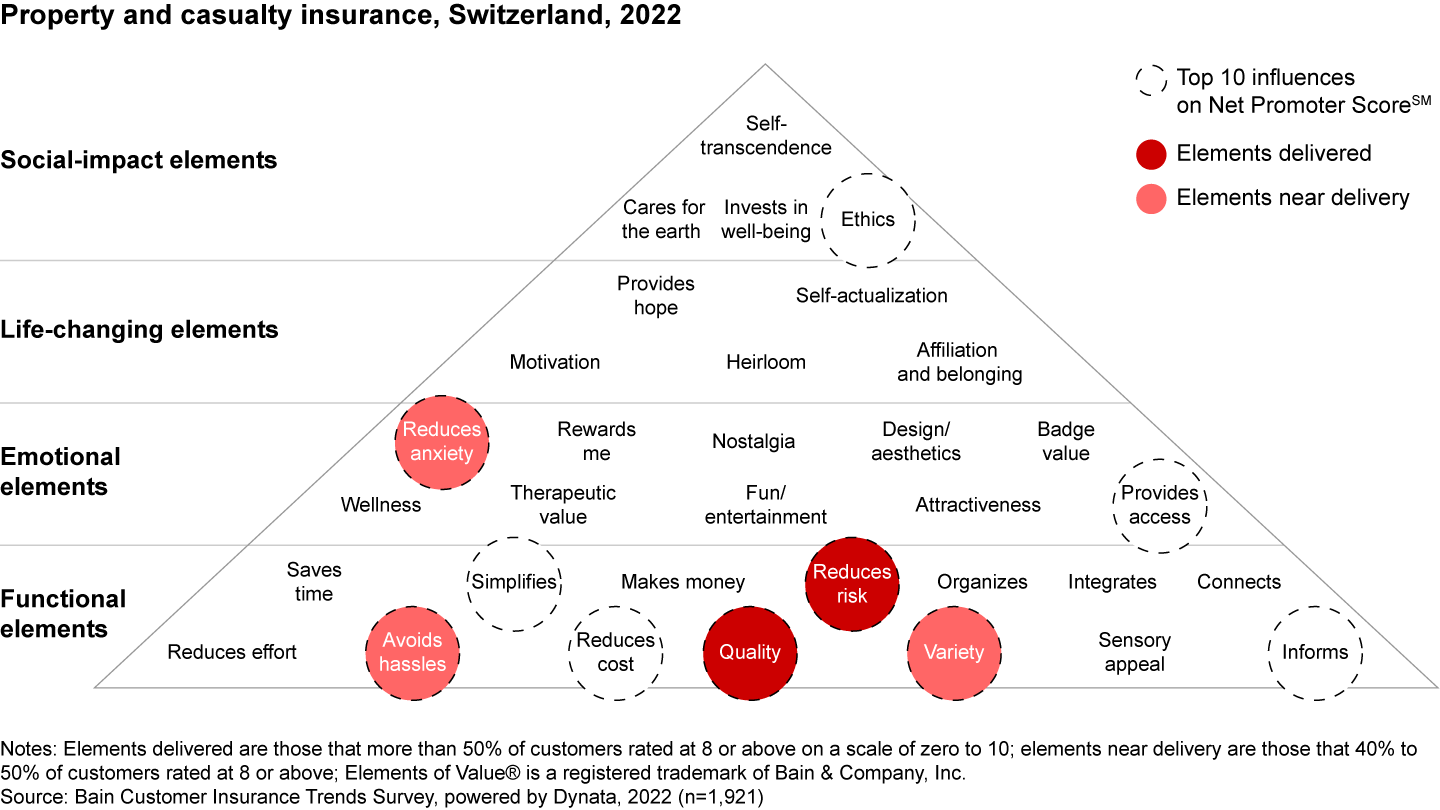
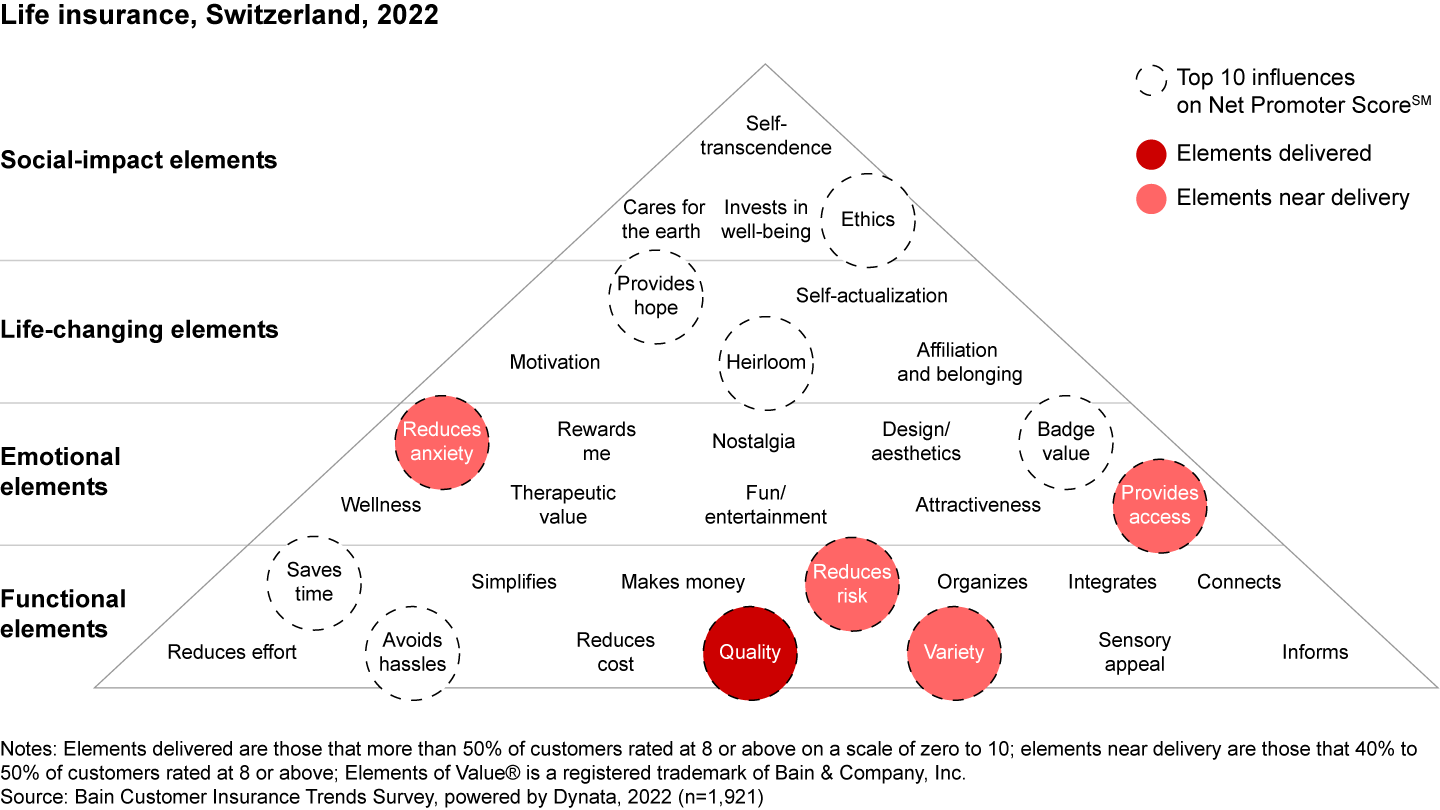
      However, few insurers currently excel at using these elements in their proposition, our survey and other analysis shows (see Figure 1). A traditionalist perspective persists in the industry, one that views insurers largely as capital providers and claims payers, not solution providers. The business case for a broader role can be tough to embrace, with a multiyear payback period and new skills required. The role entails figuring out how to promote personal advice and service rather than product, managing an ecosystem of partners, using data to target the right set of interventions, and adopting new economic models.

      Figure 1
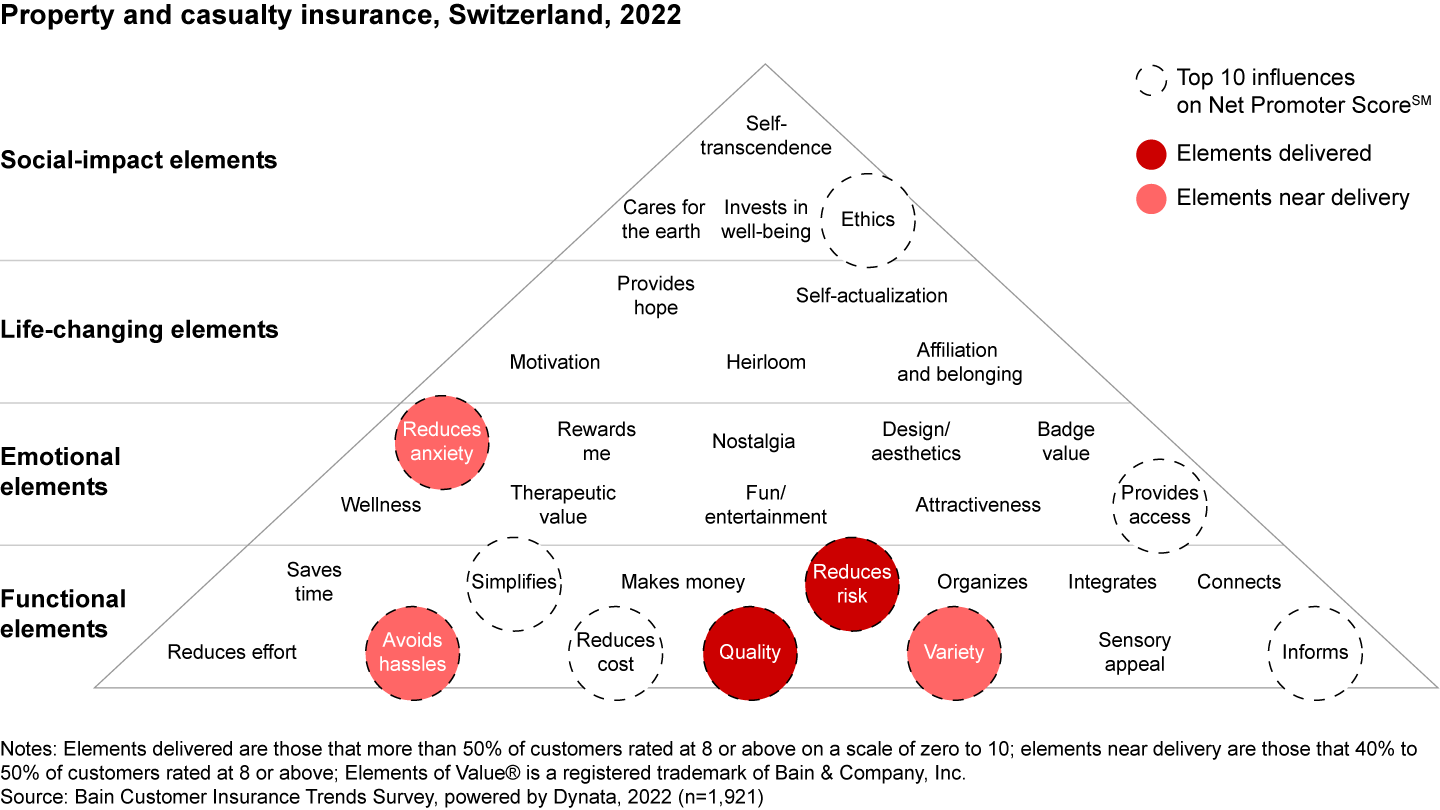
      As seen in Switzerland, most insurers are not performing well on the Elements of Value® that matter a lot to customers
      Figure 1
      As seen in Switzerland, most insurers are not performing well on the Elements of Value® that matter a lot to customers

      Even firms that have started down this road often struggle to get it right, so market penetration for such solutions remains low. Some insurers hand out excessive rewards to acquire customers, which attracts opportunistic consumers who churn when the rewards end, and which cuts into profitability. Others start hard-selling prematurely to new customers, an approach that can come off as intimidating.

      A services business depends on refining and learning to adapt to customer needs, which involves organizational capabilities beyond creating a new coverage product. It also requires decisions on whether to separate or integrate the service business, and how to price services.

      Done right, though, broader services and solutions can yield several benefits. They lead to more engagement with customers in an industry that traditionally has few customer interactions. They expand the market to new demographic or geographic segments. And they can improve a firm’s economics over time.

      The same old challenge: convenient digital tools

      Many of these new services hinge on digital technologies and channels, which brings us to a parallel challenge for the industry: improving digital interactions. It’s not a new challenge, of course, but one that has proven stubbornly difficult as consumer expectations constantly evolve.

      Over the past decade, consumers have embraced digital search and shopping for their insurance products. They want to handle simple transactions such as an address or status change, or a request for contract information, digitally, because of the anytime and anyplace convenience. This preference naturally intensified during the Covid-19 pandemic and lockdowns.

      Yet many in the industry haven’t made their digital tools and channels, especially self-service channels, simple enough for consumers to adopt with confidence and stick with them. Take the filing of a simple claim. Insurers still ask too many time-consuming questions, with many answers already residing somewhere in the company’s files, so consumers give up midway through and revert to calling or emailing their agent. And a large share of consumers find digital claims tools difficult or slow to use.

      Improving digital self-service thus has become a pressing issue. Communicating with a human will remain important, but not for simple transactions best handled digitally. Consumers want to speak with an agent for more complex or sensitive issues, Bain NPS Prism® survey data shows.

      Beyond self-service interactions, insurers will need advanced digital capabilities to deliver risk-prevention services that resonate with consumers. For example, integrating wearables and sensors, or developing engaging experiences, require sophisticated digital tools. Constant experimentation with blending digital tools and employee interactions should help determine which propositions and channels work best with specific customer segments.

      New roles for agents

      As digital channels improve, the role of the insurance agent will change as well. To keep up with evolving customer behavior, more and more insurers have started to link their channels closely. And leading firms are starting to shift their distribution approach from “push” that focuses on acquisition to “pull” that uses advanced analytics and other digital tools to address customers’ needs and priorities at the right moments of truth.

      The emerging lead-fed agency model can substantially raise agent productivity and make the job more attractive for young people. One insurer, for instance, identified claims events with high customer satisfaction, and routed those leads automatically to its tied agency, which could approach the customer for cross-selling. This led to double-digit conversion rates in two separate pilots.

      Effective ways of working will change dramatically, with agents spending less time on low-value tasks, and more time on building relationships that have been primed by an insurer’s data-informed analysis.

      In turn, the role of the contact center will move away from working by rote scripts on transactional requests to a broader role that relies more on advanced analytics. Contact center agents will engage with consumers at points conducive to cross-selling or upselling, or to an additional service. Ideally, the contact center will increasingly focus on solving complicated problems, not handling simple transactions after consumers have tried and failed to work them digitally. Here again, though, this evolution will hinge on insurers developing advanced digital capabilities that human agents find easy to use and valuable for addressing customers’ needs.

      Consumers show the way

      To catch up with consumers’ priorities and preferences, leading insurers are focusing on a few areas:

      • Embedding purpose into a brand promise that’s distinctive in customers’ eyes, then delivering on the promise. For instance, Mapfre promises: “We are by your side every step of the way, accompanying you to move forward with peace of mind, contributing to the development of a more sustainable and supportive society.” United Healthcare pledges: “Helping people live healthier lives and making the health system work better for everyone.”

        But branding and marketing, while crucial, are just the first step for a purpose-driven company. Insurers must also deliver on their promise with a proposition that truly addresses the elements that customers value most, including economic value. They’ll need to make risk prevention and mitigation a core feature of the proposition.

      • Improving the digital experience. For self-service channels to thrive and delight customers, they must be simple and convenient, and allow the user to complete every stage of the task. Any glitch along the way will cause frustration and probably increase the volume of calls to contact centers.

      • Using advanced analytics for personalization, through integrated human and digital channels. Insurers have access to rich customer data at many touchpoints, which can help them personalize products and generate higher-quality leads for agents. The right data signals reveal events where a customer can be approached by an agent based on a perceived need. Doing this well requires connected IT systems and a well-maintained data lake to enable real-time data mining across various points of contact with customers.

      The shift from loss coverage to risk prevention, from functional product excellence to serving customers on more emotional and social needs, and from pushing out offerings with a pitch to pulling in customers by addressing their priorities at the right moments, won’t be quick or easy. In-depth surveys such as our recent global analysis can help keep this journey on track, if insurers commit to listening closely to consumers in the vanguard.

      1. The next frontier: risk mitigation and prevention

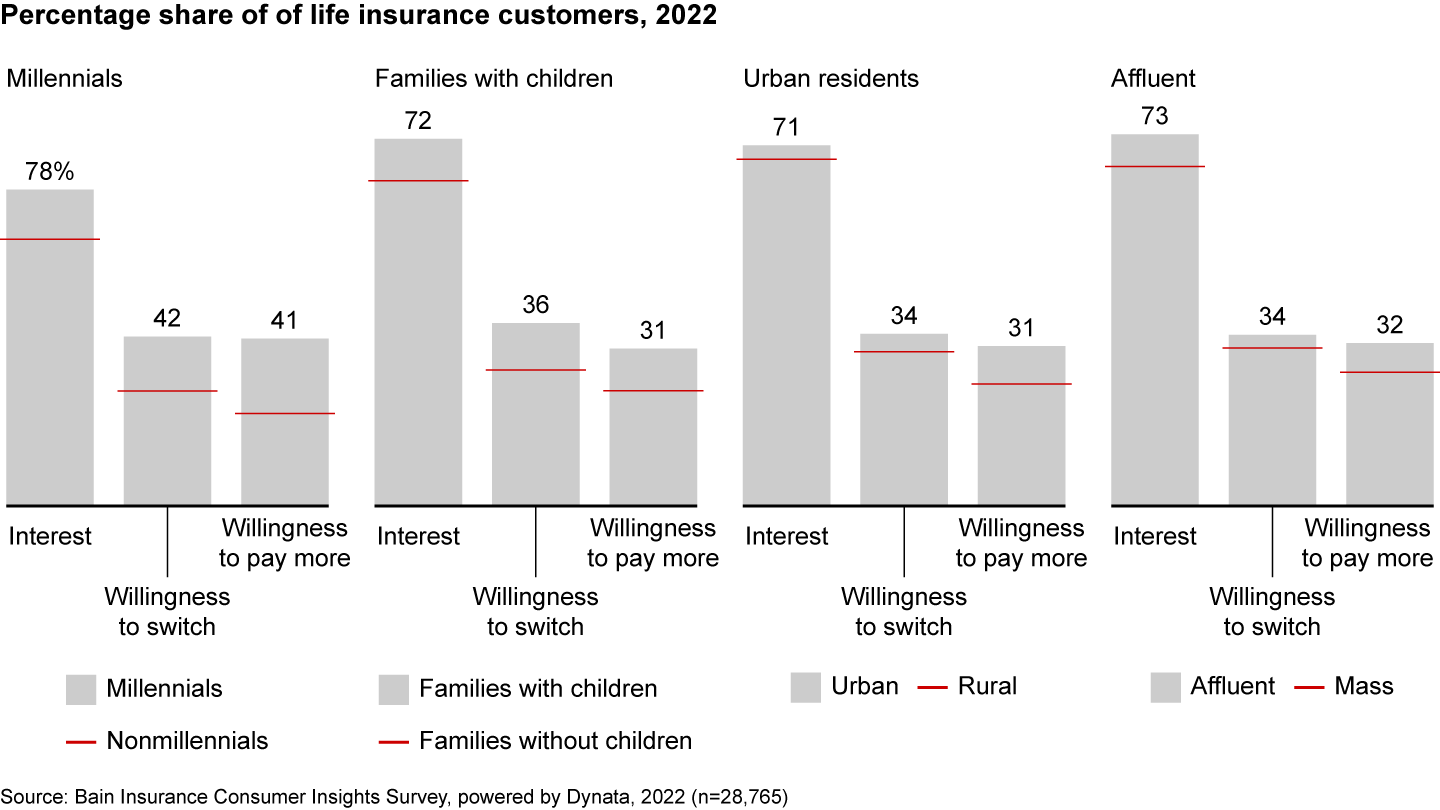
      • Insurance customers want to reduce risks in their lives and are willing to use risk-prevention services from insurers. This preference is most pronounced among millennials, affluent customers, urban customers, and families with children.
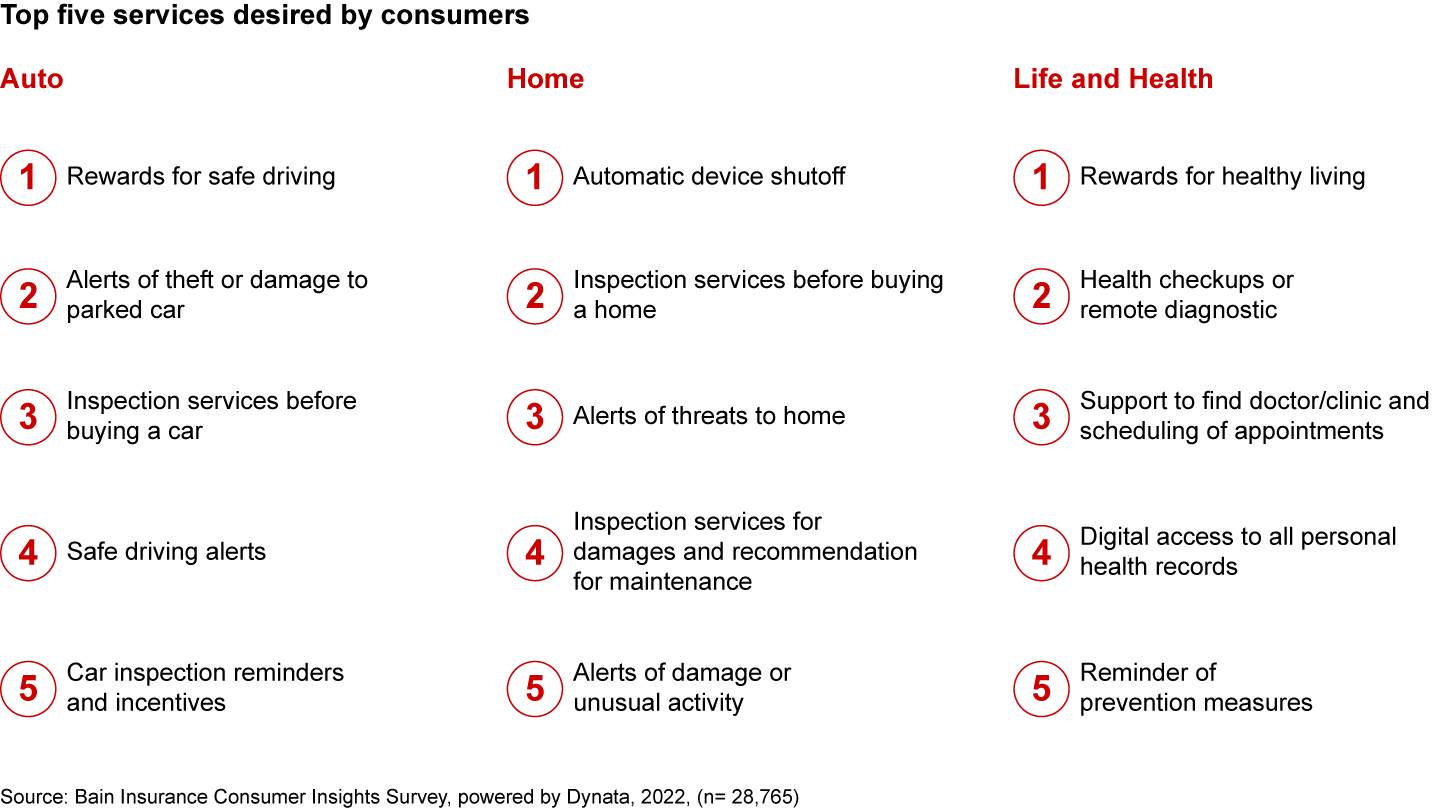
      • In auto insurance, the top services consumers seek are rewards for safe driving, alerts of theft or damage to a parked car, and inspection services prior to buying a car. In home insurance, respondents cited automatic device shutoff, inspection services prior to buying a house, and alerts for threats. In life and health insurance, they would most value rewards for healthy living, checkups or remote diagnostics, and support to find and schedule a provider.
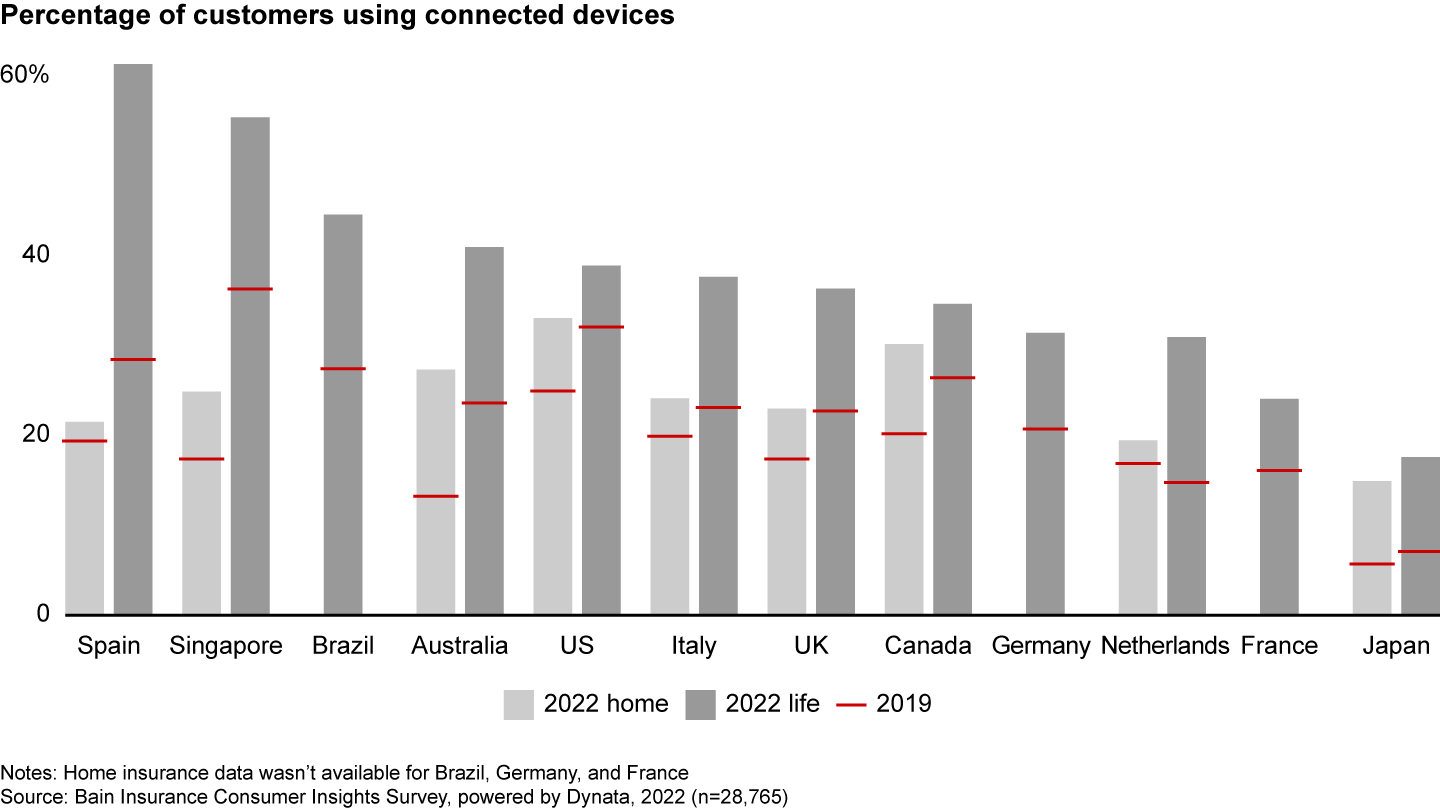
      • Infrastructure for risk-prevention services has improved in recent years, as customers own more connected devices and are open to sharing data with insurers.
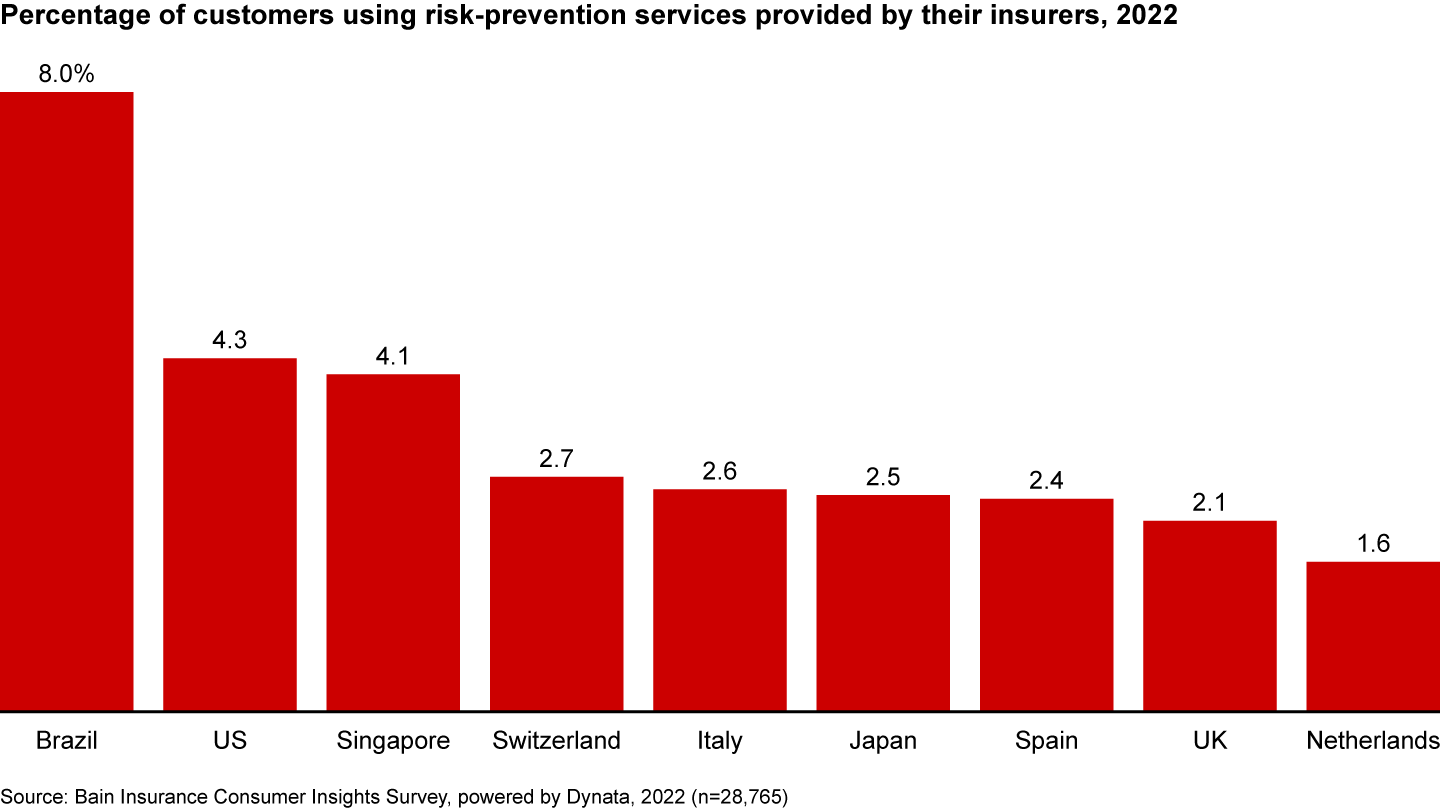
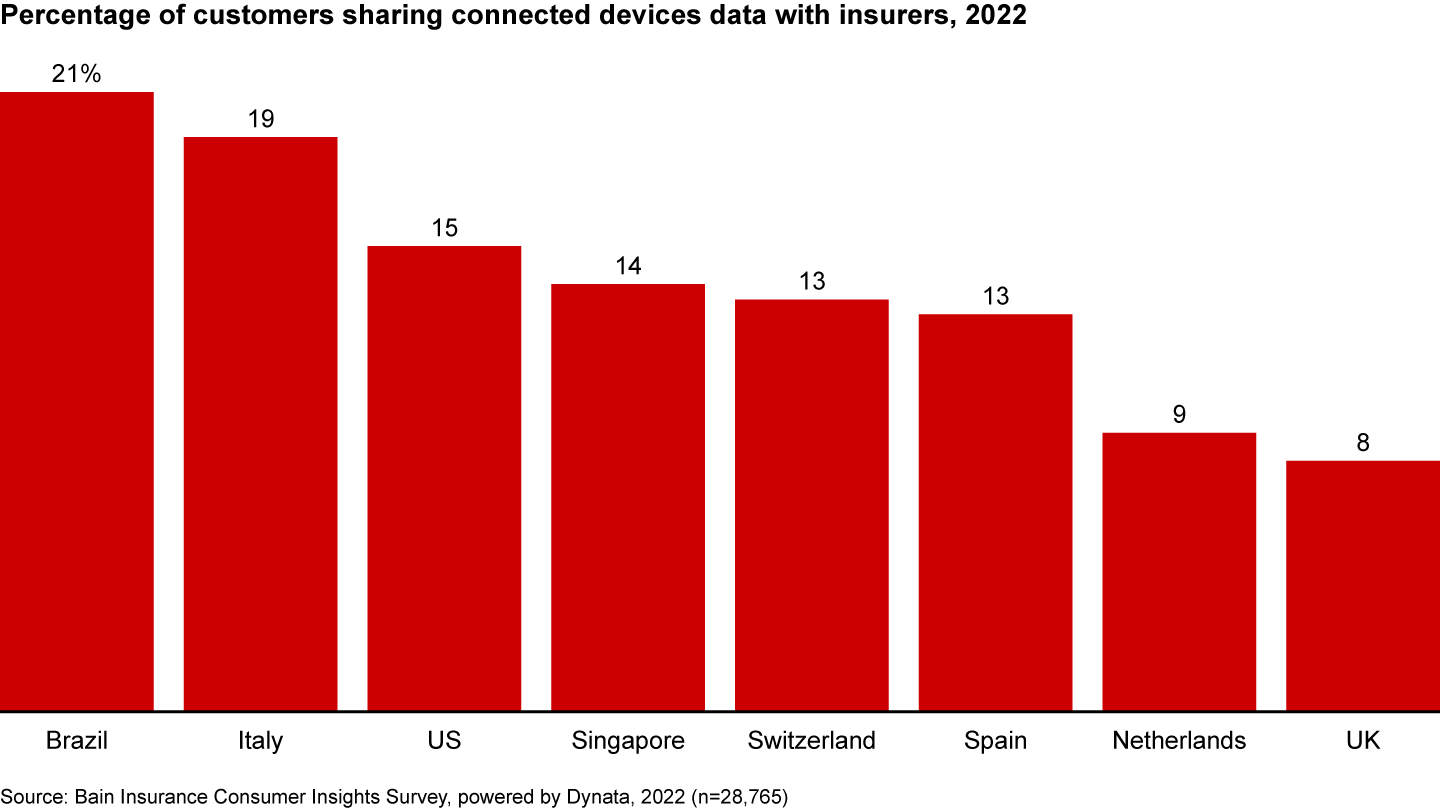
      • Unfortunately, insurers aren’t yet seizing the opportunity to redefine the role they play for customers, as very few consumers globally use risk-prevention services or share connected-device data with their insurers. Most insurers haven’t even positioned themselves to seize the opportunity.
      Figure 2
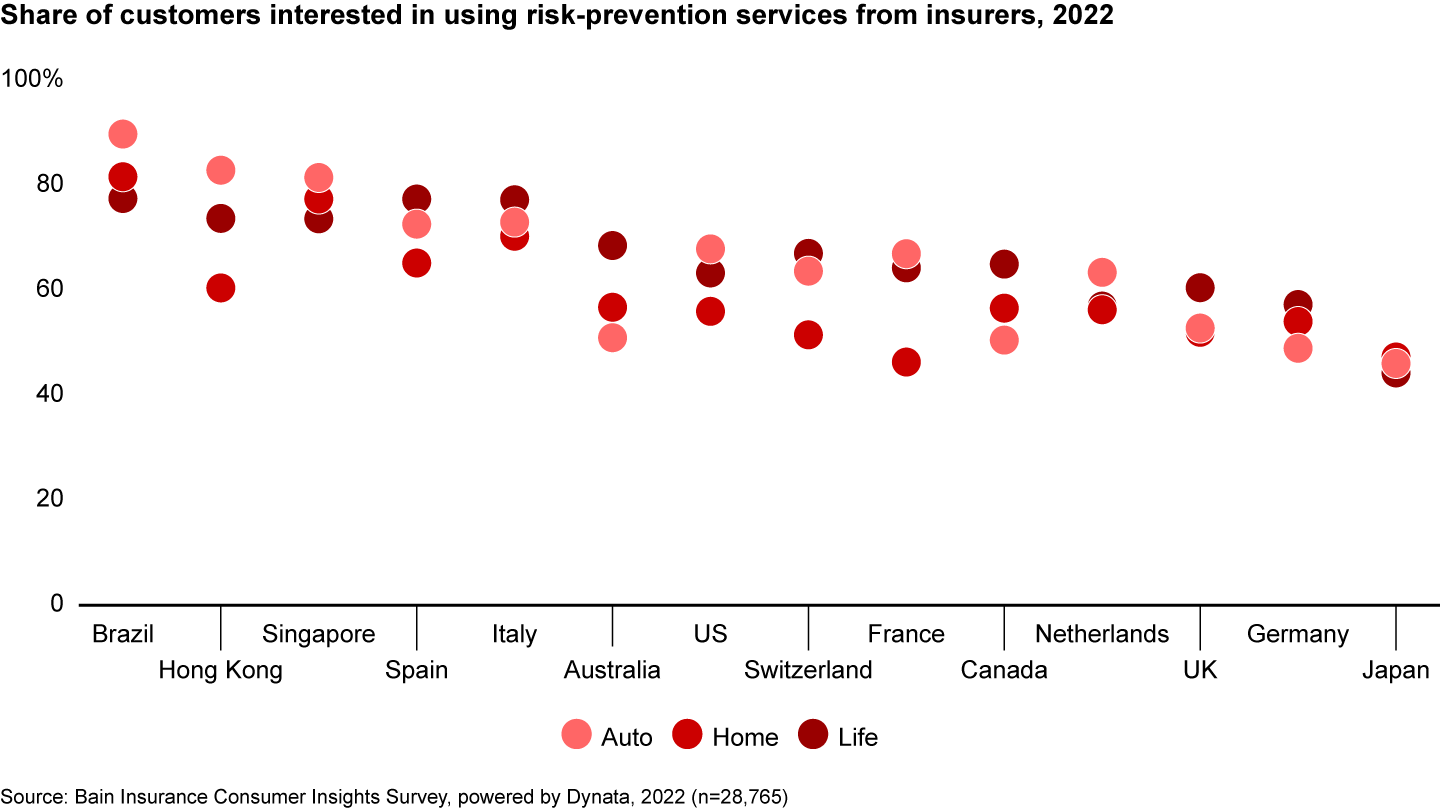
      Consumers are open to using risk-prevention services from insurers
      Figure 3
      Risk prevention is particularly relevant for certain customers segments, such as these groups in life insurance
      Figure 4
      Customers have clear preferences for risk-prevention services
      Figure 5
      The infrastructure for risk-prevention services has improved as more customers own connected devices
      Figure 6
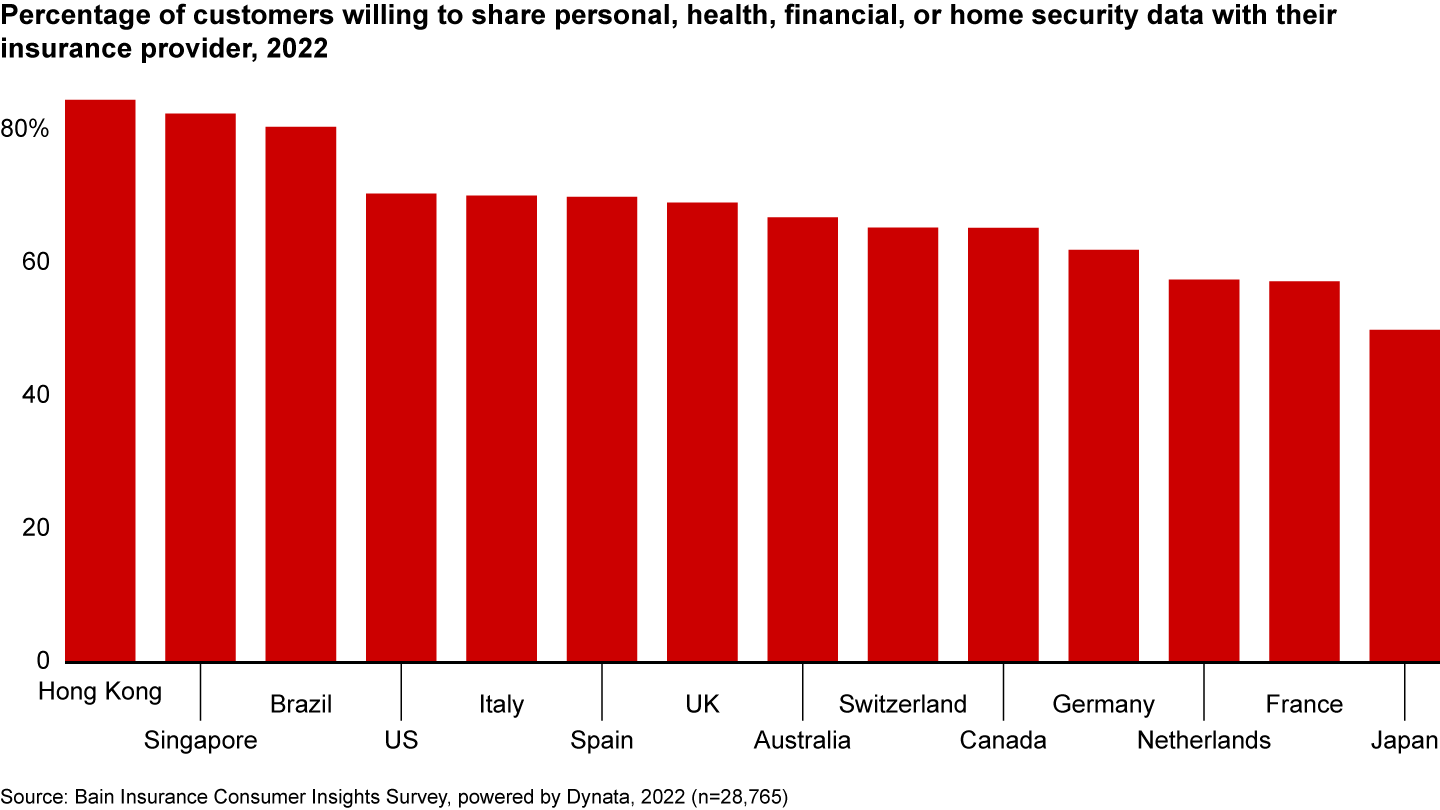
      Many consumers are open to sharing their data with insurers
      Figure 7
      Few customers currently use risk-prevention services through insurers …
      Figure 8
      … and few use connected devices to share data with insurers

      2. Consumers seek a higher purpose from insurers

      • Consumer attitudes and behaviors have become increasingly motivated by purpose. Some 80% of respondents globally want insurers to embed ESG initiatives into their proposition. And 59% of respondents globally want life insurers to reward them for healthy living.
      • Consumers increasingly emphasize higher-order Elements of Value for insurance, such as ethics, and for life insurance, provides hope and heirloom. However, insurers currently aren’t delivering a lot of value on these elements, in consumers’ view.
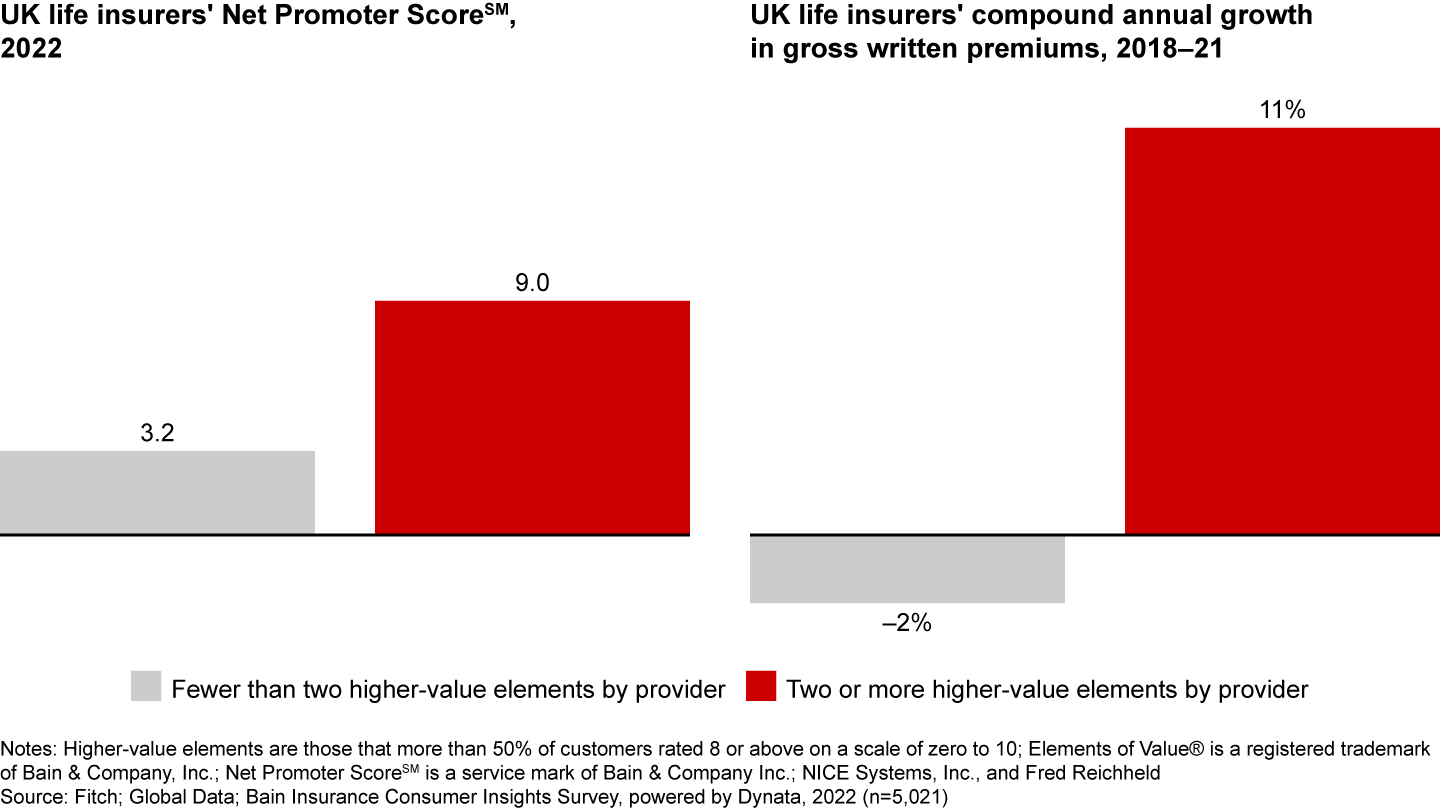
      • Delivering more value makes sense for insurers, as it boosts both customer loyalty and revenue growth.
      • An insurance brand can ignite meaningful growth with a strategy centered on leading with a winning purpose. Insurers are starting to embed purpose into their brand promise, and now need to deliver on the promise.
      Figure 9
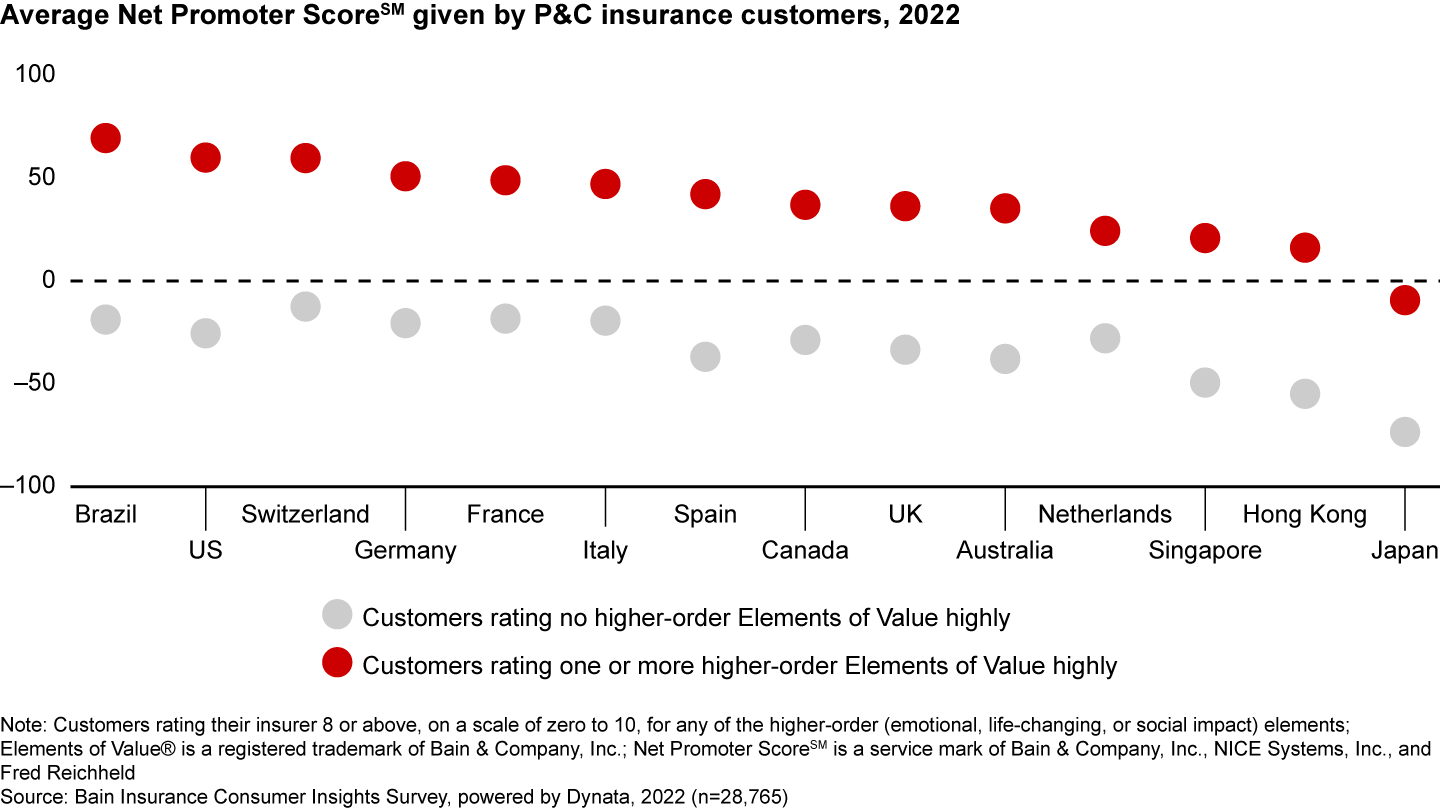
      Customers’ advocacy increases when they rate their property and casualty insurer favorably on higher-order Elements of Value® …
      Figure 10
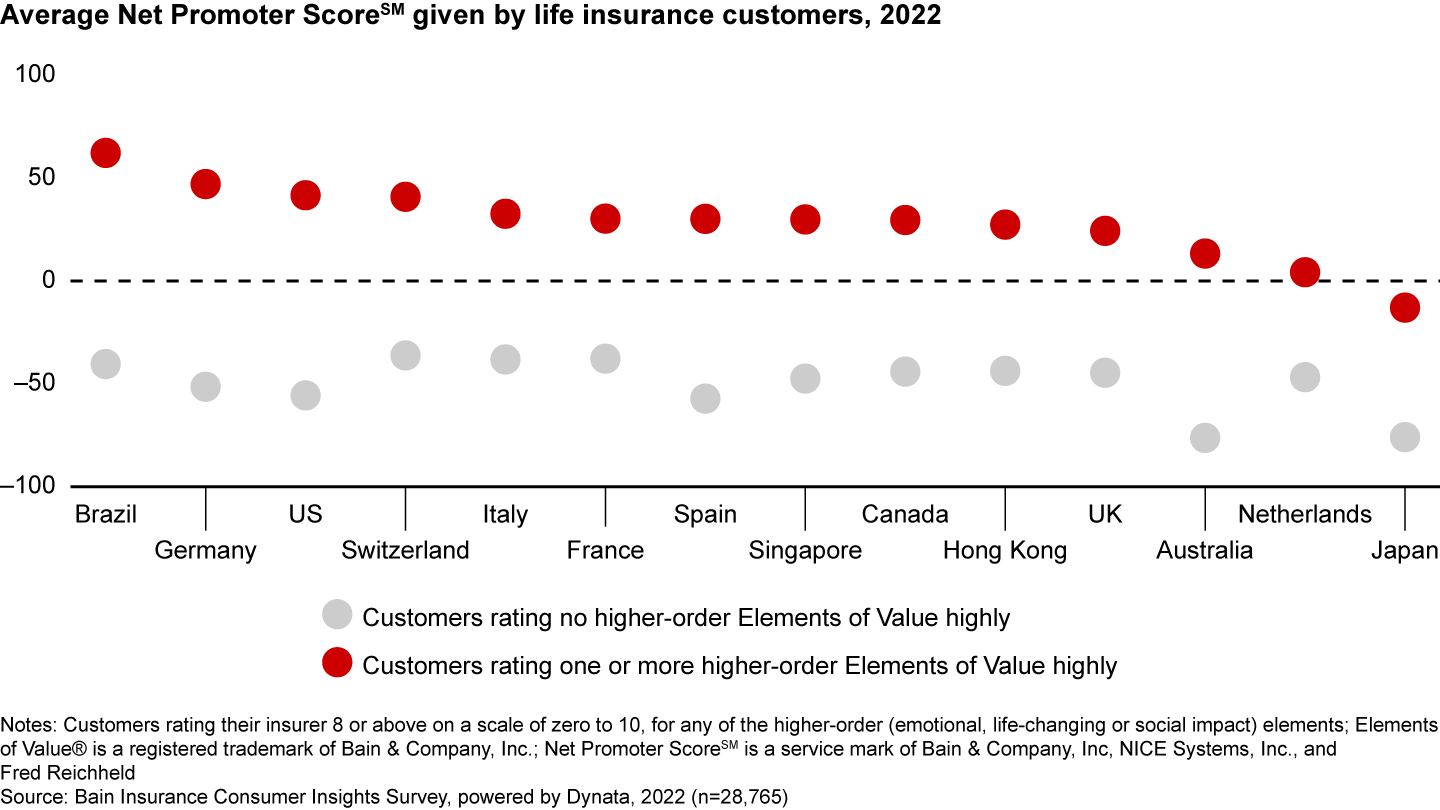
      … and the same applies to life insurance
      Figure 11
      When UK insurers excel in more Elements of Value®, they boost customer advocacy and revenue growth
      Figure 12
      As seen in Switzerland, most insurers are not performing well on the Elements of Value® that matter to customers
      Figure 12
      As seen in Switzerland, most insurers are not performing well on the Elements of Value® that matter a lot to customers

      3. Digital usage grows, but consumers are still dissatisfied

      • The Covid-19 pandemic and lockdowns spurred consumers’ adoption of digital tools and channels for their insurance interactions, led mainly by a spike in research interactions.
      • Three years later, strictly offline interactions aren’t rebounding. Digital adoption has kept rising, but typically in hybrid combination with channels.
      • Customers are having fewer in-person interactions with their insurers. However, they aren’t necessarily migrating to self-serve channels, which have grown mostly for research and to a lesser extent for purchasing. Instead, consumers are using more email than ever to communicate with the insurer.
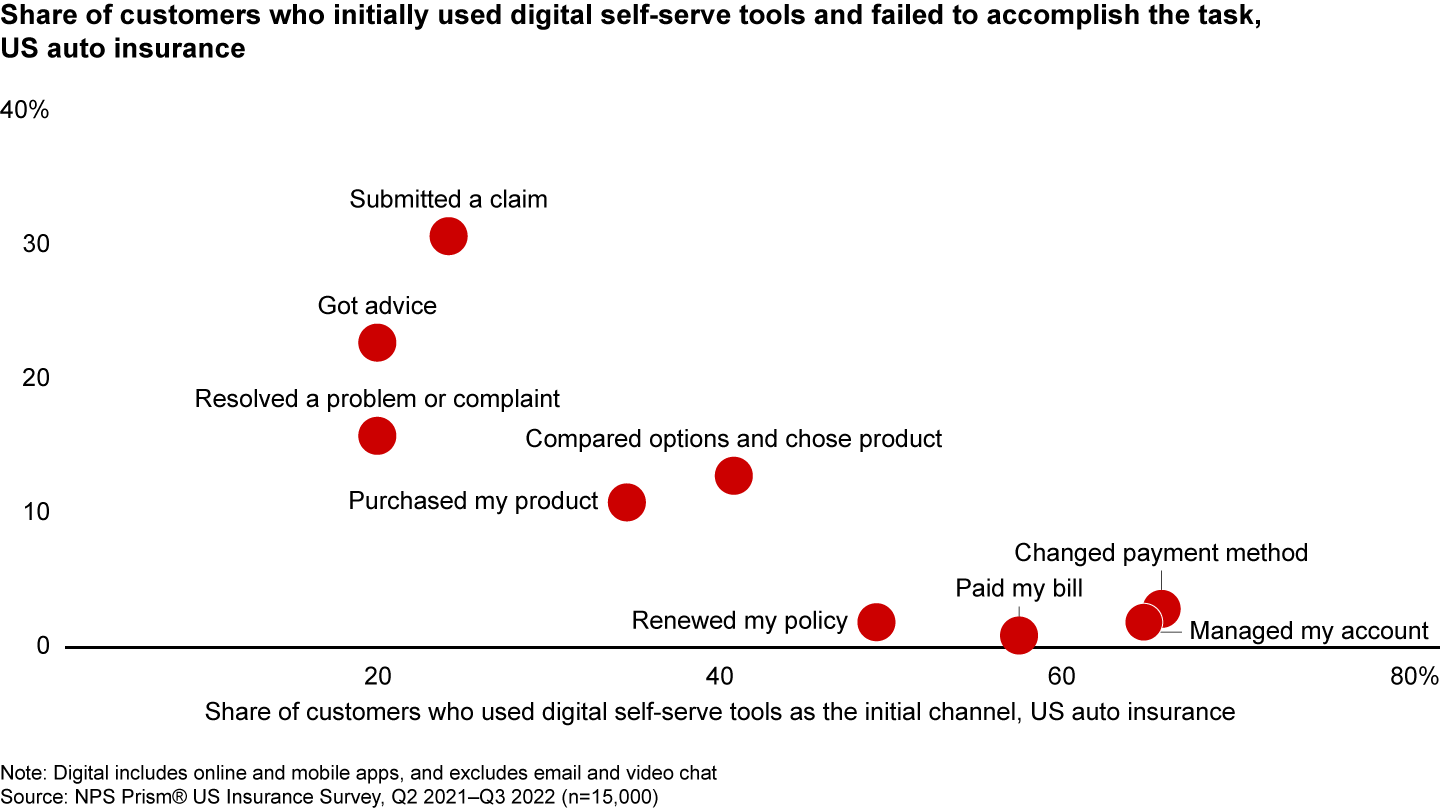
      • Slow adoption of digital self-serve tools for different episodes ties directly to failure rates in the digital transaction, which are as high as 31% in US auto insurance.
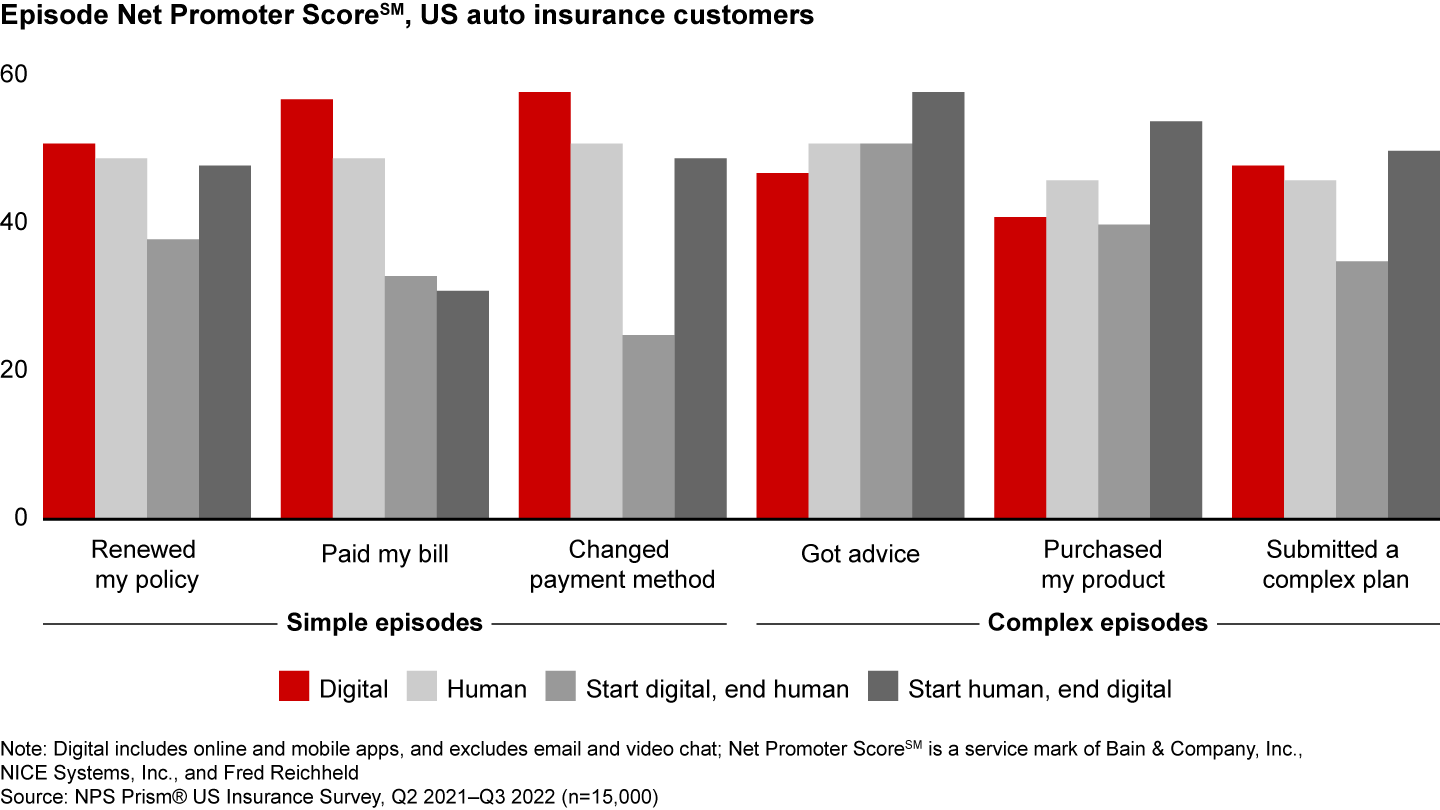
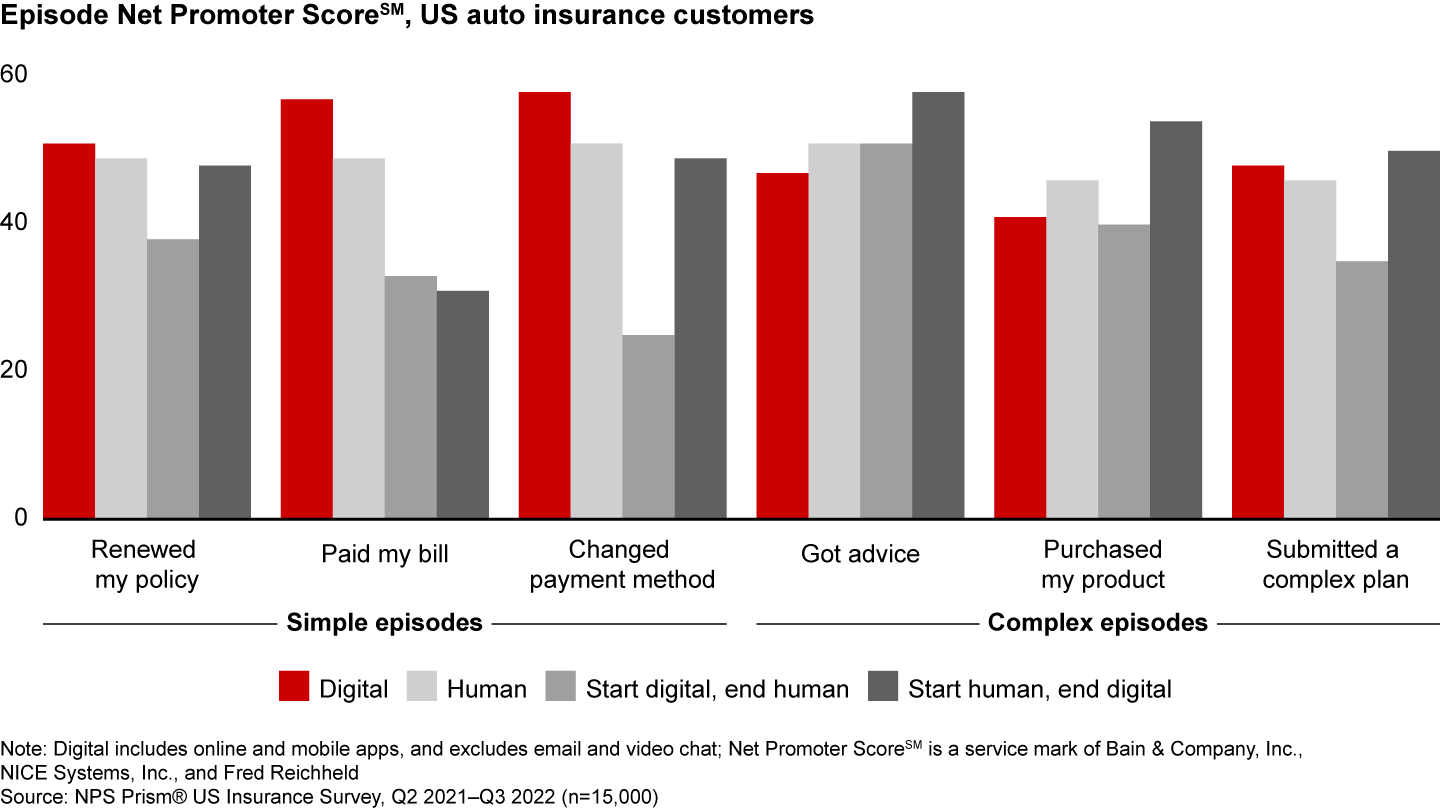
      • For each particular episode, the mix of channels strongly influences consumers’ perceptions of the experience. Digital channels have a higher likelihood to delight consumers for simple episodes such as paying a bill. Consumers prefer a human-digital combination for more complex episodes such as filing a complicated claim or getting advice.
      • Because consumer needs and preferences depend on the episode, it’s more effective for insurers to implement a differentiated channel strategy. At the same time, insurers need to make digital processes as simple and convenient as possible for episodes that lend themselves to self-service.
      Figure 13
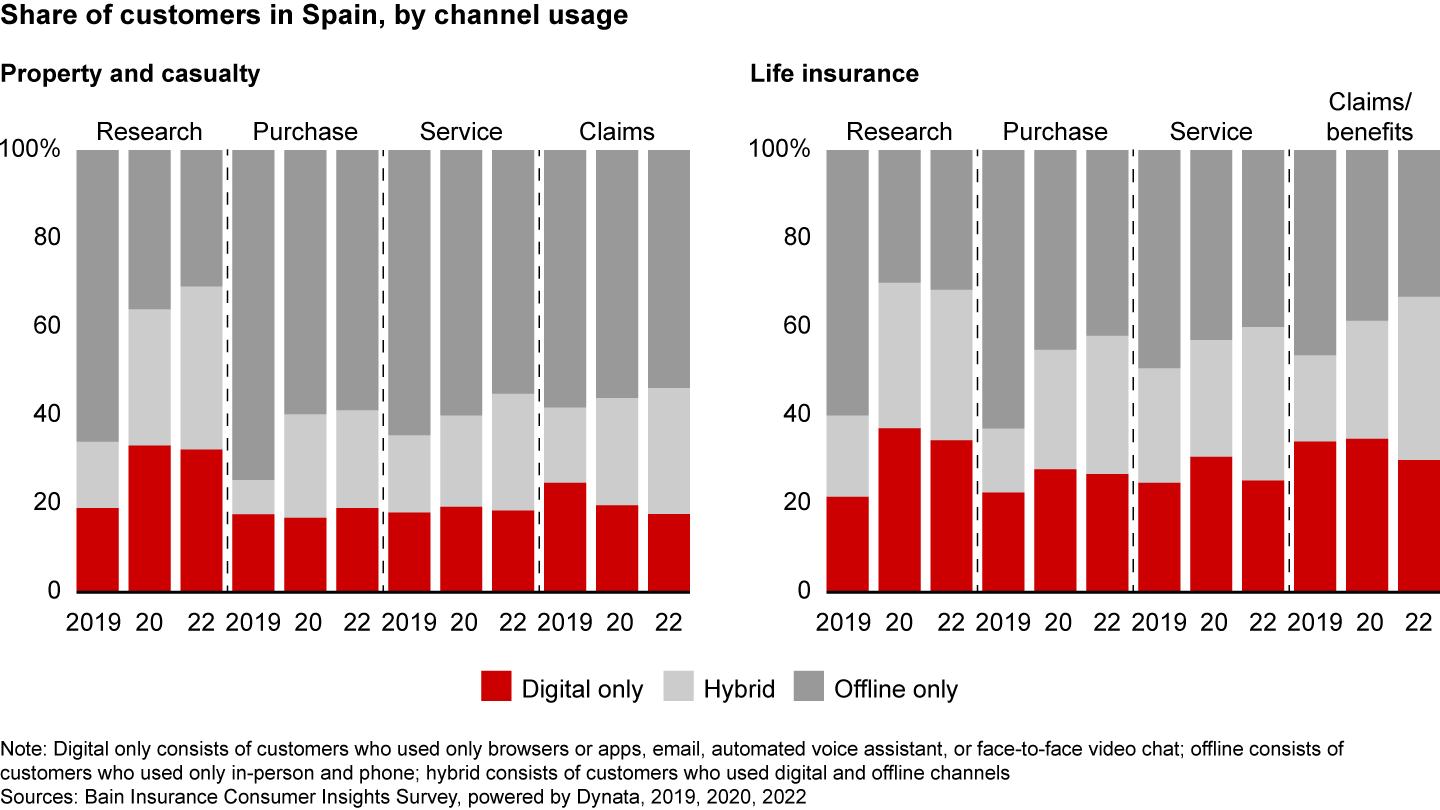
      Covid-19 and lockdowns increased digital adoption for insurance episodes in Spain, primarily research, while offline-only interactions continue to shrink
      Figure 14
      When digital self-serve tools fail to complete the task at hand, adoption of the tools suffers
      Figure 15
      US customers prefer digital channels for simple episodes, and hybrid digital-human channels for complex episodes
      • Acknowledgments

        The authors wish to thank these colleagues for their support in preparing this report: Geetika Jawa, Diksha Shrivastava, Suman Ghosh, Tatsat Chopra, and Sai Lakshmi Suresh. They also thank Bain Partners Sean O' Neill, Camille Goossens, Harshveer Singh, Mareike Steingroever, and Eric Almquist; NPS Prism colleagues Jason Barro and Alison Leibovitz for their valuable suggestions; and John Campbell for his editorial support.

      About the Research

      Data powered by Dynata, a leading global first-party data and insights platform.

      Authors
      • Headshot of Henrik Naujoks
        Henrik Naujoks
        Partner, Hong Kong
      • Headshot of Andrew Schwedel
        Andrew Schwedel
        Partner, New York
      • Headshot of Tanja Brettel
        Tanja Brettel
        Practice Executive Vice President, Dusseldorf
      Contact us
      Related Industries
      • Financial Services
      • Insurance
      Related Consulting Services
      • Customer Experience
      • Customer Loyalty
      • Sales and Marketing
      How We Can Help
      • Net Promoter®
      • NPS Prism®
      Financial Services
      After Years of Customer Loyalty Programs in Insurance, What Works, and What’s Next?

      Based on Bain’s 10 years of research, five themes describe the progress and challenges of earning customers’ advocacy in an increasingly digital experience.

      More
      Financial Services
      Rethinking Transformation: Lawrence Lam on Leading Change at Prudential

      Frankie Leung speaks with Lawrence Lam, CEO of Prudential Hong Kong, about organizational transformation and sustaining change through a people-led approach.

      More
      Financial Services
      How Banks Can Tease Out the Loyalty Metrics That Matter

      Measuring performance on the key episodes for a bank’s customers allows the bank to focus on investments that will improve loyalty—and its economics.

      More
      Customer Experience
      The Customer Loyalty Metrics That Matter Most for B2B Companies

      Mining customers’ perceptions of the brand, account relationships, and joint projects inform the best next actions to foster loyalty and long-term growth.

      More
      Financial Services
      Scaled AI Is Transforming the Claims Process

      While most insurers are still dabbling in generative AI, leaders are gaining an advantage in speed, cost, and productivity.

      More
      First published in Φεβρουάριος 2023
      Tags
      • Customer Experience
      • Customer Loyalty
      • Financial Services
      • Insurance
      • Net Promoter®
      • NPS Prism®
      • Sales and Marketing

      How We've Helped Clients

      From Laggard to Leader: Desjardins Evolves Member Centricity for the Digital Age

      Read case study

      Cost Transparency Helps Insurer Strengthen Tech Expense Management Capability

      Read case study

      Transformation sparks financial leader's turnaround

      Read case study

      Έτοιμοι να μιλήσουμε

      Συνεργαζόμαστε με φιλόδοξους ηγέτες που θέλουν να καθορίσουν το μέλλον και όχι. Όχι να κρυφτούν από αυτό. Μαζί, επιτυγχάνουμε πετυχαίνουμε εξαιρετικά αποτελέσματα.

      Net Promoter®, NPS®, NPS Prism®, and the NPS-related emoticons are registered trademarks of Bain & Company, Inc., NICE Systems, Inc., and Fred Reichheld. Net Promoter Score℠ and Net Promoter System℠ are service marks of Bain & Company, Inc., NICE Systems, Inc., and Fred Reichheld. Elements of Value® is a registered trademark of Bain & Company, Inc.

      Μείνετε μπροστά σε έναν γρήγορα εξελισσόμενο κόσμο. Εγγραφείτε στο Bain Insights, τη μηνιαία μας επισκόπηση των κρίσιμων θεμάτων που αντιμετωπίζουν οι παγκόσμιες επιχειρήσεις

      *Έχω διαβάσει την Πολιτική Απορρήτου και συμφωνώ με τους όρους της.

      Please read and agree to the Privacy Policy.
      Bain & Company
      Επικοινωνήστε μαζί μας Sustainability Accessibility Όροι χρήσης Privacy Cookie Policy Sitemap Log In

      © 1996-2026 Bain & Company, Inc.

      Contact Bain

      How can we help you?

      • Business inquiry
      • Career information
      • Press relations
      • Partnership request
      • Speaker request
      See all offices