

Brief
Customer loyalty has been tough to come by in the insurance industry, especially for life insurers that traditionally have far fewer interactions with customers than, say, retail banks. Yet in most countries, for both the life and the property and casualty (P&C) sectors, one or two insurance carriers manage to excel in earning their customers’ passion and advocacy.
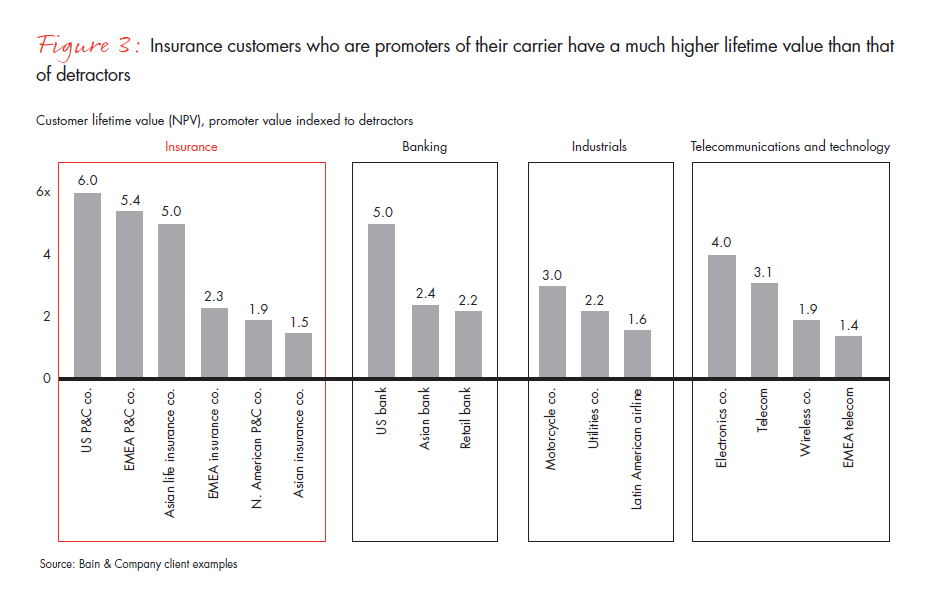
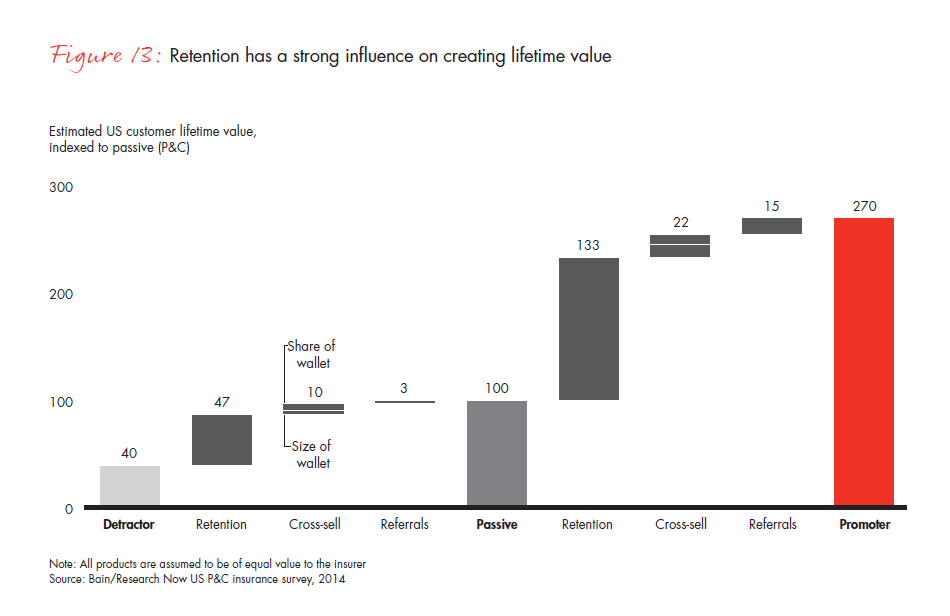
Why dwell on loyalty? Because there’s ample evidence that loyalty improves a carrier’s economics and leads to sustained, above-market growth. Customers who are loyal promoters of their insurers stay longer, buy more, recommend the company to friends and family, and usually cost less to serve—with the mix of these forces dependent on the particular market and type of insurance. In the US, for instance, Bain & Company analysis shows that a promoter’s lifetime value is worth, on average, nearly seven times that of a customer who’s a detractor of the carrier and two to three times that of a passive customer.
Bain’s new survey of 158,422 consumers in 18 countries sheds light on how various customer segments perceive their P&C and life carriers, what customers want from their carriers and how they behave, and how different distribution and interaction channels influence loyalty. The research was conducted online over six months in 2013 and early 2014 through Research Now for the great majority of respondents and through Survey Sampling International (SSI) for additional respondents in Asia.
The survey measures loyalty by calculating the Net Promoter ScoreSM (NPS®) for each insurance company, derived from responses to this question: On a zero-to-10 scale, how likely are you to recommend your insurer to a friend or a colleague? Based on the scores they give, respondents are classified as promoters (9–10), passives (7–8) or detractors (0–6). NPS is the percentage of promoters minus the percentage of detractors.
Many insurers appreciate the merits of loyalty, of course, and they collect and measure feedback from customers. The problem is that few act on the feedback in ways that put the customer’s perspective and priorities at the center of the business. Feedback that doesn’t lead to action is meaningless. Truly customer-centered companies analyze the feedback to identify patterns and take actions that will improve the customer’s experience, based on how those actions will affect the economics of the business.
A customer-centered approach thus remains a radical departure from most insurers’ internally focused stance, which assumes the agents are the customers. The traditional organization tends to focus on products and financial considerations, especially in-year measures.
In a business built around loyalty, by contrast, the salesforce serves end customers, whether they are new or existing. Technology doesn’t just support and automate internal processes; rather, it’s deployed to accommodate customers’ priorities in ways that can actually delight them. Digital and physical channels fuse into a Digical® approach that customers now demand. And firm economics improve not only through financial and technical engineering but also through the financial benefits of loyalty.
A few insurers that have become loyalty leaders in their markets have moved well beyond surveying customers to systematically looping back survey responses to frontline employees and managers. Based on that ongoing feedback loop, they’ve made significant changes to products and processes in order to improve the customer’s experience at critical touchpoints and episodes.
In one of Allianz’s European life and health insurance operations, for instance, feedback revealed that customers had to call back repeatedly about the status of payments and were expected to describe their medical conditions again and again. An Allianz team figured out a process solution: On the initial call, a case manager would be assigned to the policyholder and handle all contact until the claim was resolved. Any delay in the reimbursement process would trigger a call or text message informing the policyholder of the claim’s status. Soon after implementing the new protocol, the claims unit saw a double-digit increase in its NPS and a significant rise in policy renewal rates.
Putting customers at the center of the universe requires top management’s commitment to invest in redesigning products, refining processes and consistently delivering on what the company promises customers. The customer focus needs to become part of the organization’s very DNA, from the CEO’s agenda right through to frontline employees and to third parties such as repair shops.
Customers who are loyal to their insurers cost less to serve, buy more products and stay with their providers longer. These promoters have a lifetime value that's nearly seven times higher than those of detractors, people who have negative feelings toward their insurers. Partner Gunther Schwarz shares some of the best practices of loyalty leaders in insurance.
While earning goodwill among customers is necessary, it is insufficient for generating superior revenue growth. Leaders must also motivate customers to actively promote the company. Bain’s research and client work suggest four specific steps that are essential to succeeding with a customer-centered distribution and service model.
1. Decide where you must win and where you can afford to lose
Loyalty leaders know they can’t be all things to all people. They either started with a mandate to serve a narrow segment of customers—as is the case with most mutual companies—or they decided to define a narrow segment and put the needs of those customers first.
In the UK, for instance, Admiral’s in-vehicle telematics system, called LittleBox, aims to reduce auto insurance premiums for young customers with safe driving habits. Sheilas’ Wheels targets safe female drivers, with lower premiums and tailored branding messages. In Asia, a number of insurers have refined their offerings for affluent, high-value customers and wrapped them in premium services, including regular check-ins by agents or financial advisers.
Other attractive new segments have been developed based on behaviors and interests rather than basic demographics. Discovery Holdings, a major insurer based in South Africa, has generated exceptional growth over the past decade in part through its Vitality program, which appeals to people committed to healthy living. Vitality members accrue points for demonstrating certain healthy, safe behaviors—reinforced through discounts on gym memberships and healthy foods, as well as by installing tracking devices in cars—which they can redeem for rewards from other vendors. Vitality has built a healthier book of business with a better risk profile and a lower cost to serve, and has helped Discovery maintain a very loyal customer base.
2. Selectively invest in moments of truth
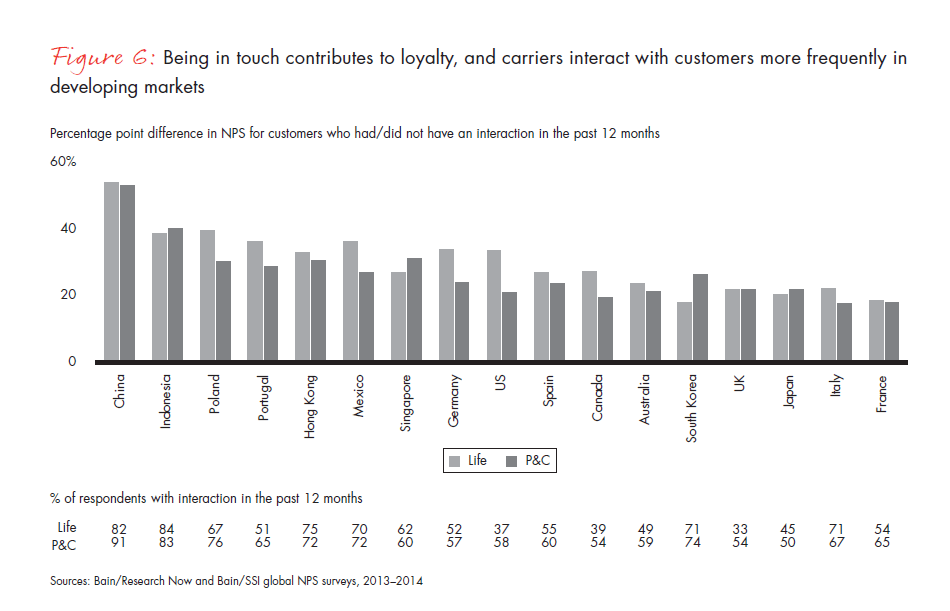
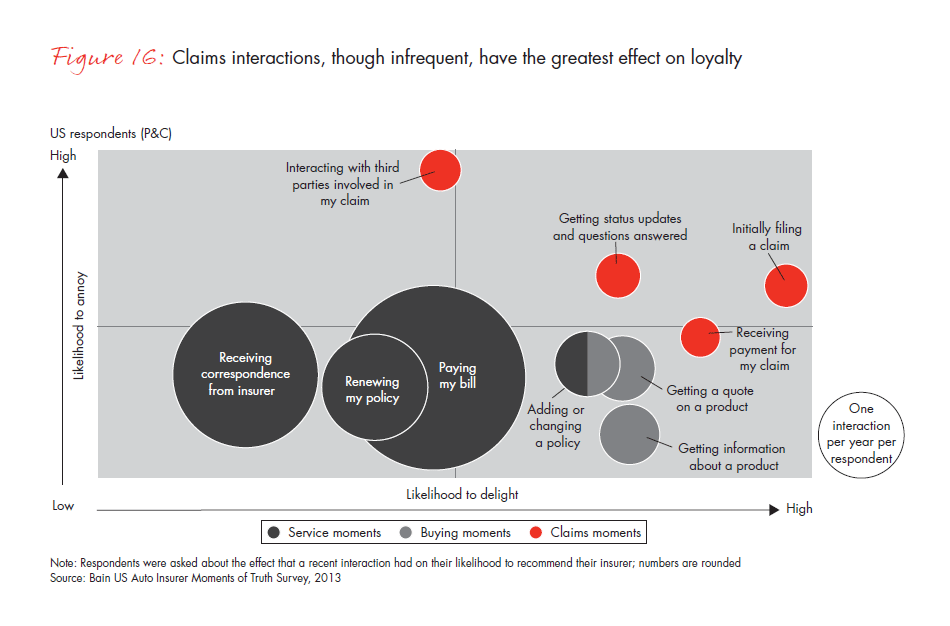
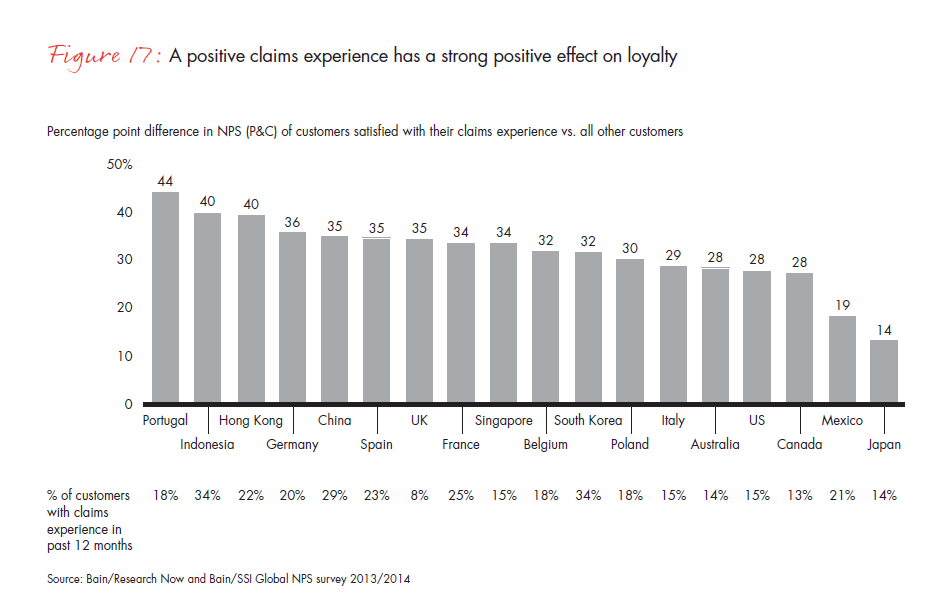
Being in touch regularly and in meaningful ways with customers builds loyalty both in P&C and life, Bain’s survey shows. During moments of truth such as filing a claim, it’s vital to exceed customers’ expectations and deliver a level of service and support that leaves strong positive impressions. This does not mean simply offering more generous payment policies; our survey results show that the initial filing of a claim often has a higher potential to delight than the subsequent payment.
Regular communication containing useful, relevant information reinforces those impressions. Affluent customers, in particular, place a high value on regularly staying in touch. That’s a departure for some agents who live mainly by commissions for new sales and thus have little incentive to nurture relationships with current customers.
Many carriers have underinvested in touchpoints where they communicate directly with customers relative to those touchpoints handled by agents, so carriers will want to improve the functionality of their direct touchpoints. In many Asian countries, for instance, there’s a trust deficit between younger customers and traditional agents, who are perceived as being too mercenary in their interactions. Some challengers and incumbents in Asian markets, therefore, are betting on alternative channels such as direct (Lifeplanet, Kyobo’s joint venture with Lifenet in South Korea) or bancassurance (AXA), a channel that has reached a roughly 40% market share in new business volumes in certain Asian countries.
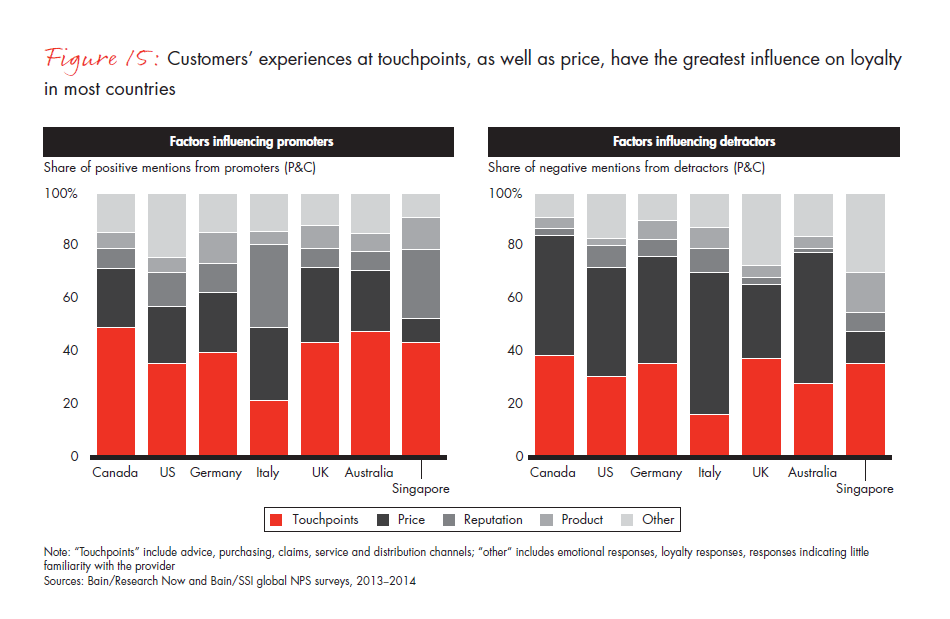
Each insurer will want to dig beneath the NPS averages to determine which touchpoints and episodes are most effective at earning loyalty—and how to invest for the specific country and situation. In Italy, reputation plays a prominent role in both life and P&C, whereas claims or advisory services matter more in many other countries. In the UK, insurers lack a strong physical presence, which makes it more challenging to delight customers.
3. In P&C, acquire mostly through price, but retain through product and service innovation
A quandary: Today’s fierce battle for new customers in P&C is largely won by price, yet price-sensitive buyers are more prone to switching later for a lower-priced offer. (For the life sector, price matters less than investment returns, except for standardized products like term life, because there’s less price transparency.)
One way to deal with this problem is to avoid the most price-sensitive customers and use marketing that emphasizes other types of value, as Allstate has done in the US through advertising that focuses on peace of mind.
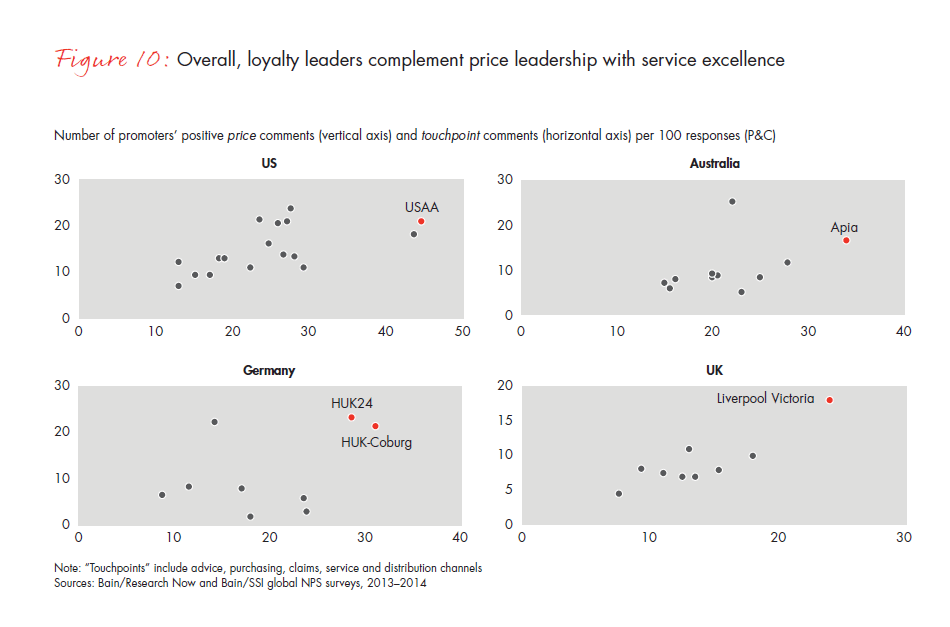
Even price-sensitive customers, though, can be converted to loyal promoters through differentiated products and standout service. Indeed, Bain’s research shows that loyalty leaders in most countries, such as Liverpool Victoria in the UK and Apia in Australia, excel on both price and service dimensions.
Some product and service innovations depend on digital technologies. In the US, MetroMile has launched an auto policy that sets price by the number of miles driven, made possible by in-vehicle telematics.
Other innovations focus more on management of certain operations like the supplier network. HUK-Coburg, a leading auto insurer in Germany, has assembled a network of 1,300 certified repair shops. Going through these garages saves costs and thus reduces prices, while also providing high-quality repairs and a better claims experience—a combination that HUK-Coburg customers love.
4. Accelerate the transformation to a Digical model
The migration of customers to digital channels started with music retailing, consumer electronics, airlines and hotels. So the bar for insurance companies has been set high by accomplished digital leaders like Amazon in online retailing.
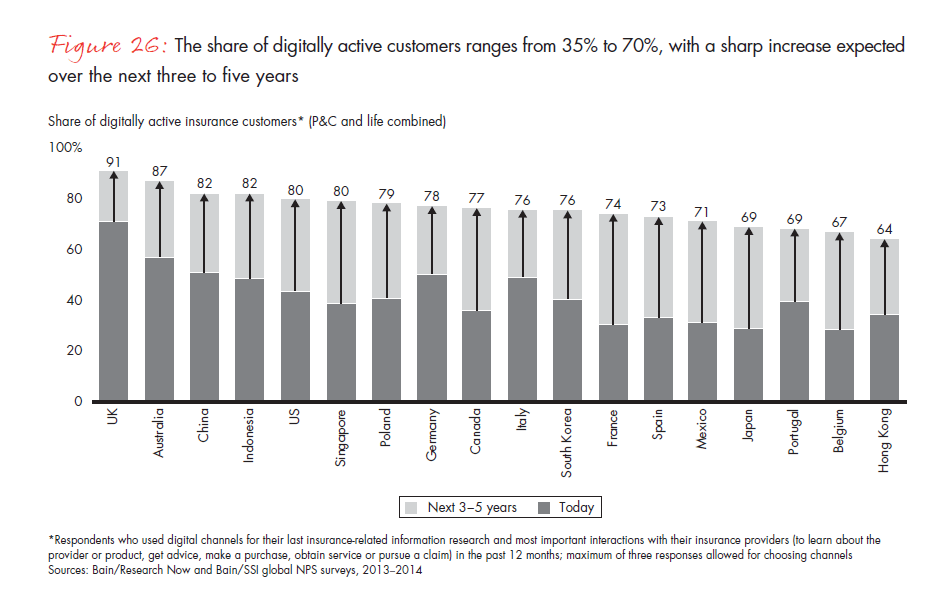
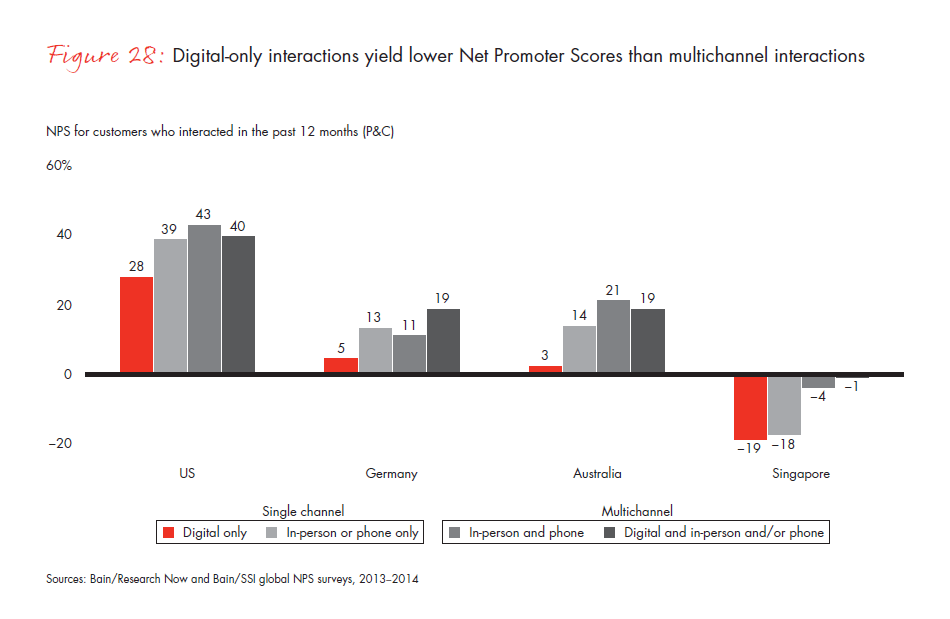
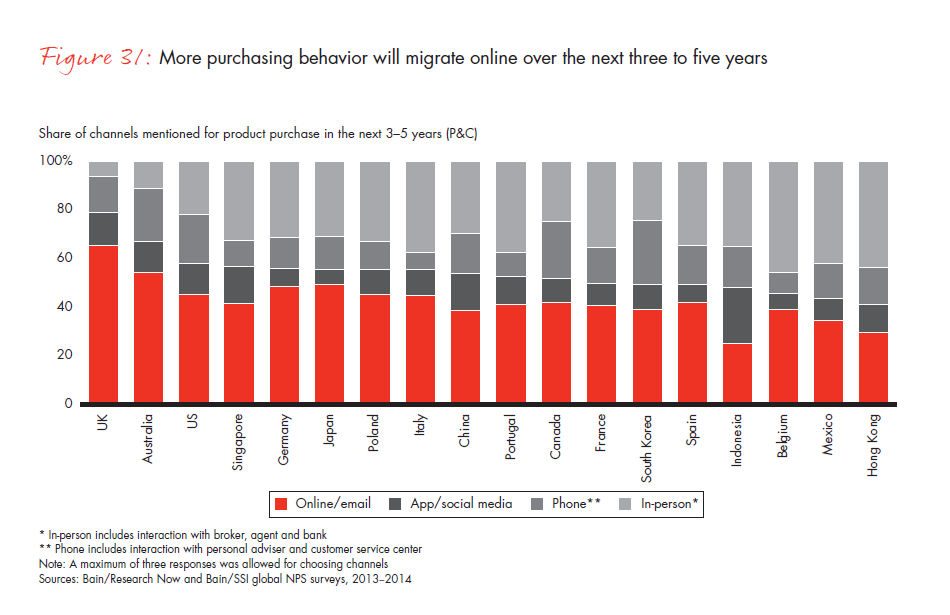
Every country has a significant share of digitally active insurance customers, Bain’s survey shows. And digital usage will increase over the next three to five years—but digital channels don’t replace physical channels. Customers who use only digital channels give the lowest NPS, since they would still benefit from talking with a person when dealing with complex insurance products or transactions. Multichannel customers give the highest NPS.
This shift in behavior and the attendant disruption present both an opportunity and a threat. Insurance companies can significantly improve the customer experience if they act quickly yet thoughtfully to build out digital channels for transactions and communications, transform their physical networks for higher-value services and redesign their processes to seamlessly integrate their various channels.
Laggards, meanwhile, may get crushed by forward-looking competitors and upstarts that provide a better experience and better service at a lower cost. Consider China’s Internet giants Alibaba and Tencent, which recently partnered with Ping An to offer online insurance.
As insurers make the transition to a Digical world, they should target investments in proportion to the value at stake by, say, digitizing processes to both reduce costs and please customers. Case in point: AIA has issued iPads to its agents throughout Asia so they can sit with customers, do a needs analysis and accept customers’ digital signatures to allow straight-through processing.
• • •
Every insurance company can benchmark against competitors in its home market and against the best performers globally. The following sections explore customers’ behaviors and perceptions in life and P&C, with an eye toward helping insurers understand the factors influencing loyalty.
Insurers that deliver the best customer experience advance against the competition, because they begin with their target customers’ priorities and expectations. Earning loyalty figures prominently in their approach.
These leaders rely on a proven approach such as the Net Promoter SystemSM and listen regularly to customer feedback to determine what they’re doing right and wrong from the customer’s standpoint. They use fast feedback loops so employees learn what customers want, and they harness employees’ discretionary efforts to adjust products and customer experiences. Senior executives play a critical role by convincing employees in different parts of the organization to work together and by ensuring that the organization has the tools for making appropriate trade-offs when necessary.
The result, over time, is more promoters and fewer detractors—a powerful engine for sustainable, profitable organic growth.
1. Loyalty trends around the world
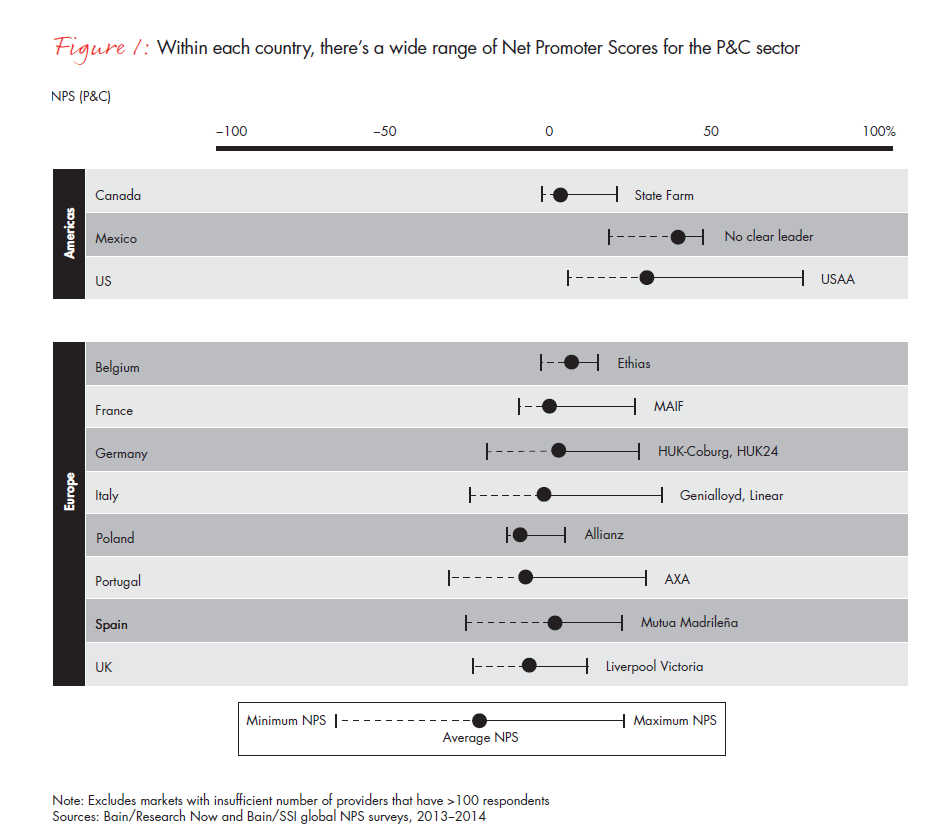
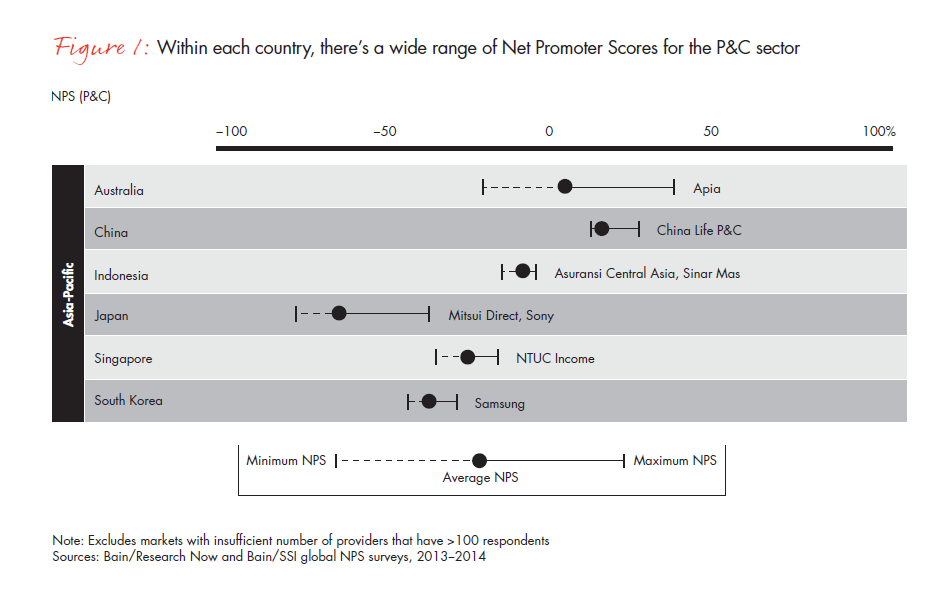
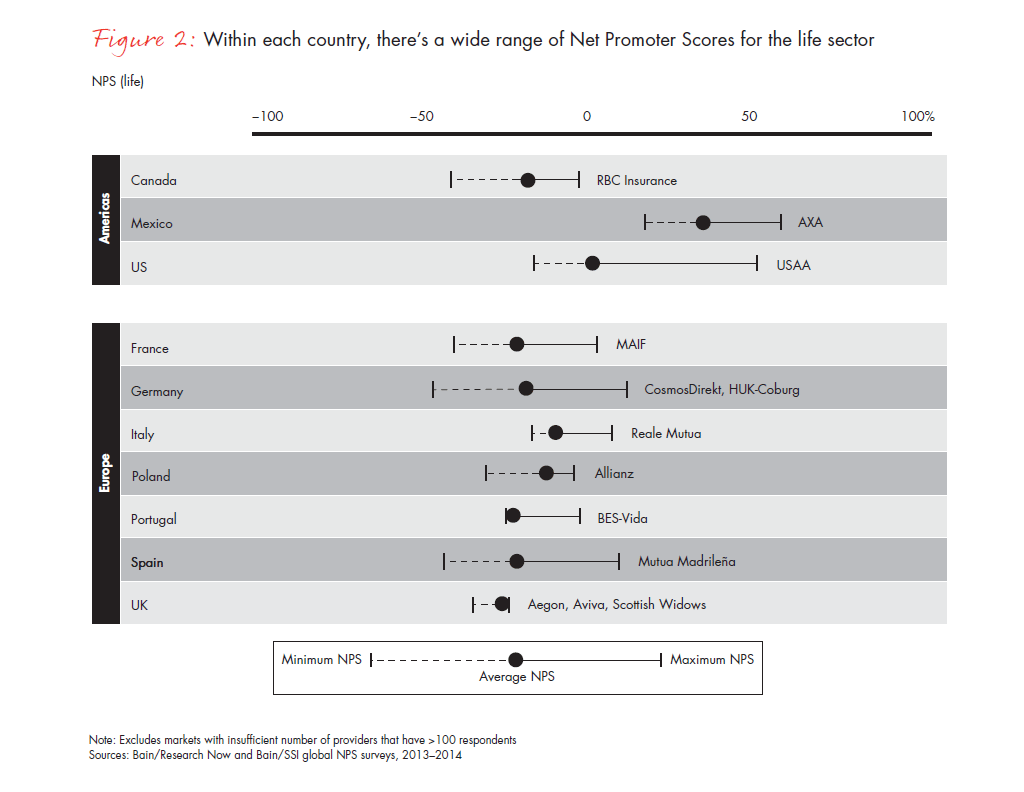
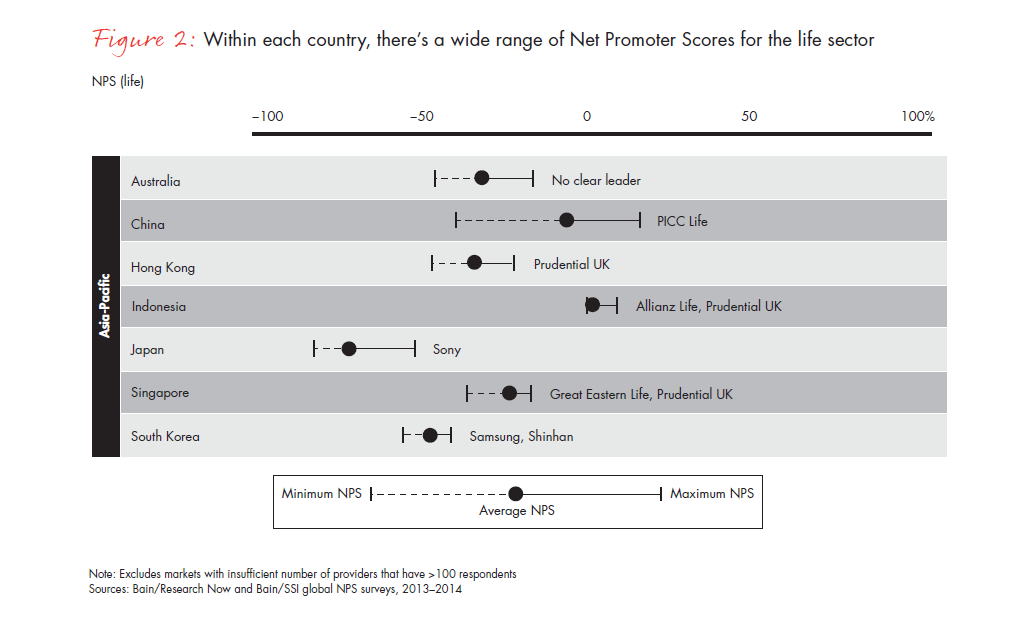
- NPS among insurers varies substantially by country. Because local perceptions and market traits account for some of that variation, it’s most useful to compare firms within an individual country. Within many national markets, NPS varies widely. In Australia, for instance, top P&C performer Apia has an NPS that is 57 points higher than the worst performer and 32 points higher than the country’s average.
- Loyalty flows through to a carrier’s economics. Customers who are promoters of their carrier have a far higher lifetime value than detractors.
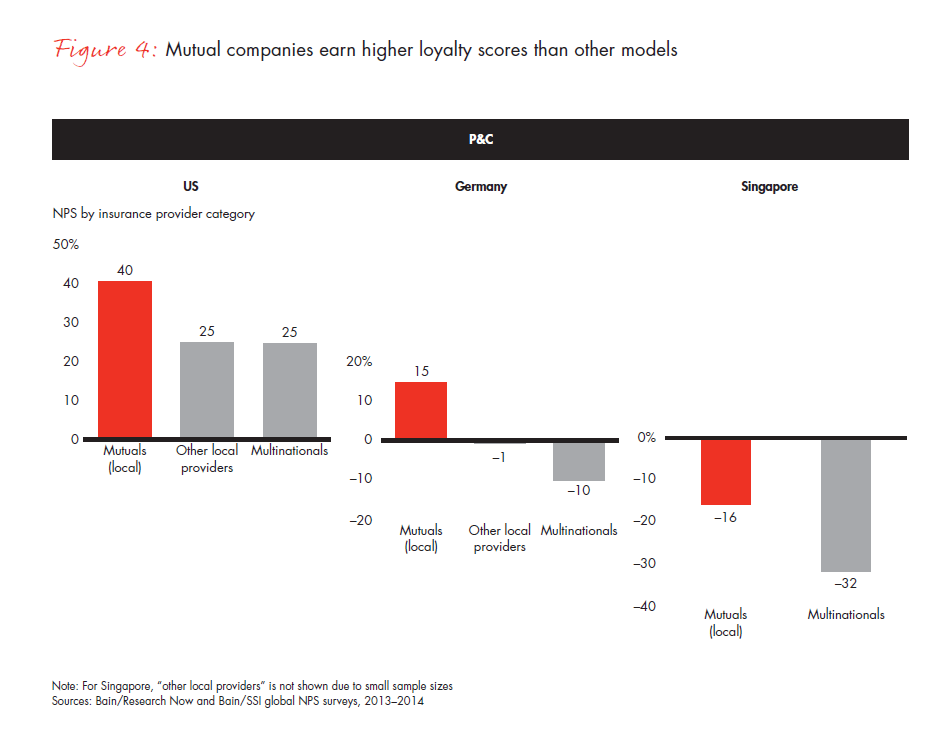
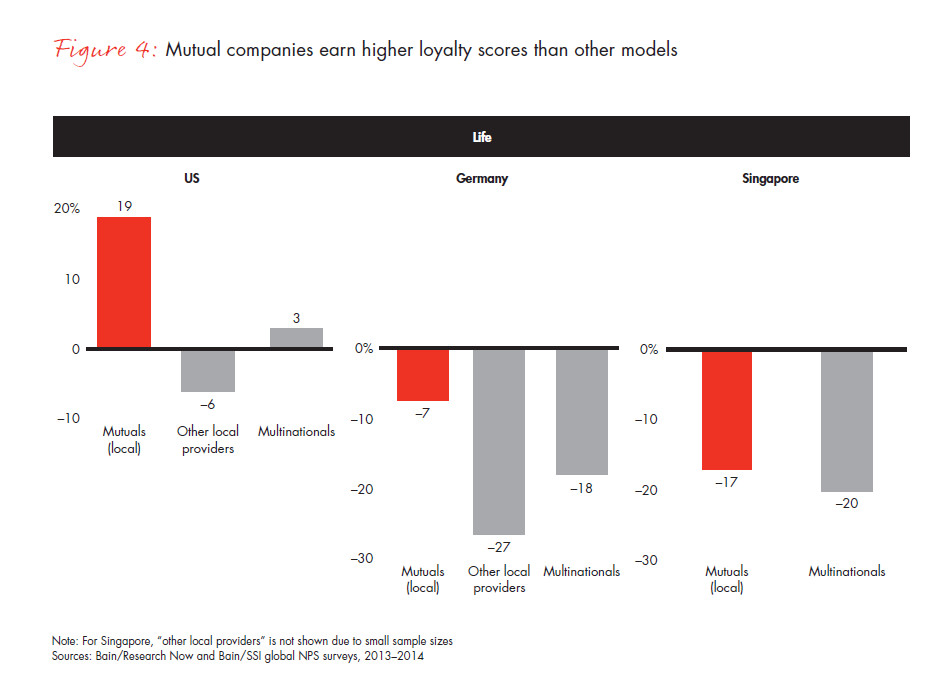
- Loyalty leaders in each country tend to be locally based and use a mutual model, whereas multinationals and other local business models have lower NPS. Mutuals often have a customer-centered mindset and experienced salesforces, and they are able to offer lower prices than most other traditional carriers.
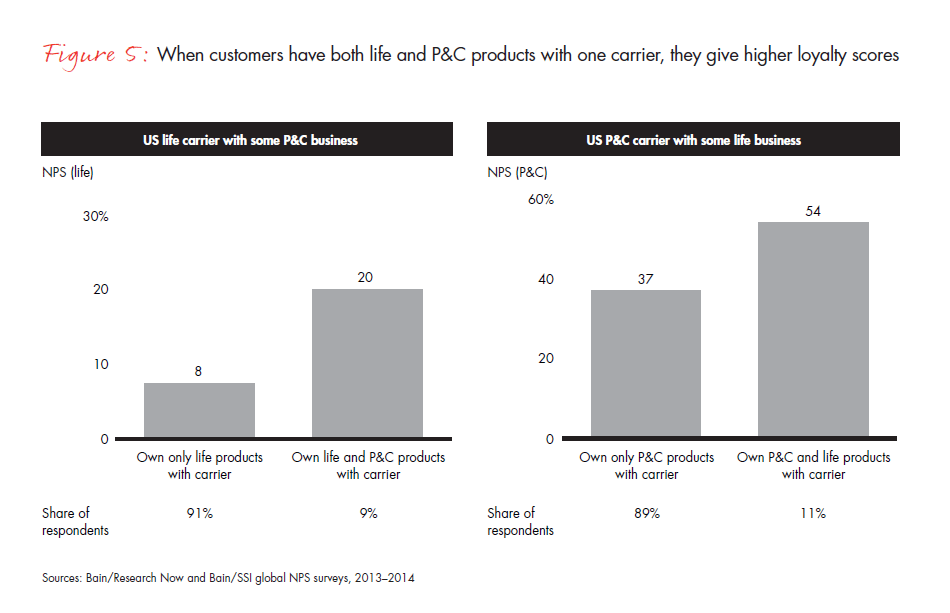
- Leaders also are often multiline providers. Customers generally give a higher NPS when they have both life and P&C products with their main provider.
- Although insurance has fewer customer transactions than some industries such as retail banking, being in touch with customers has a large positive effect on loyalty for both life and P&C. Insurers in developing markets tend to have more interactions than do those in developed markets, even adjusting for the fact that their customer bases tend to skew toward newer customers.
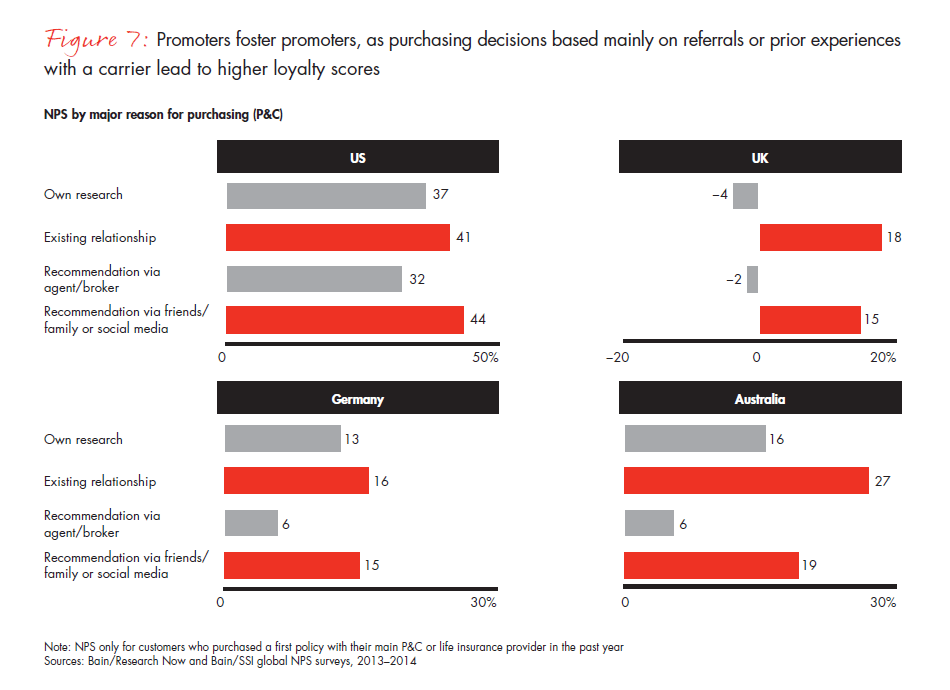
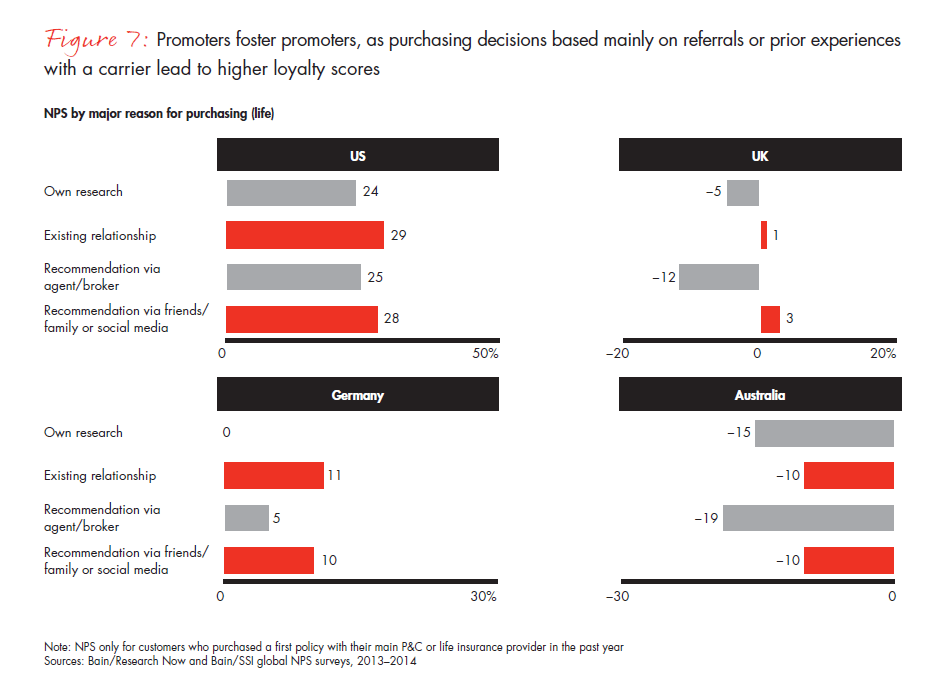
- Promoters beget promoters. NPS is higher for people who primarily relied for their purchase decision on a recommendation from someone they know or from social media platforms, or who had a prior relationship with the carrier.
2. P&C insurance: The battle for customers
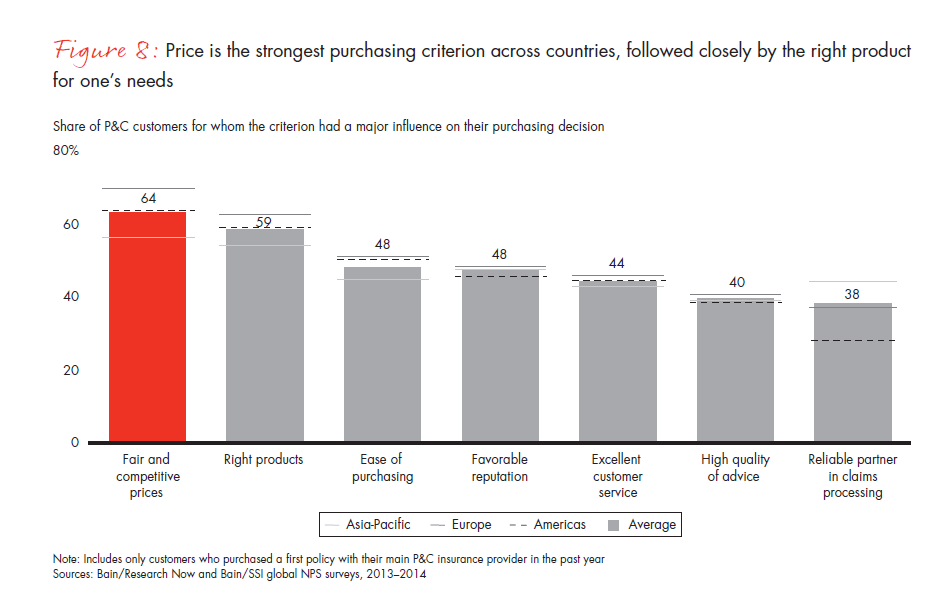
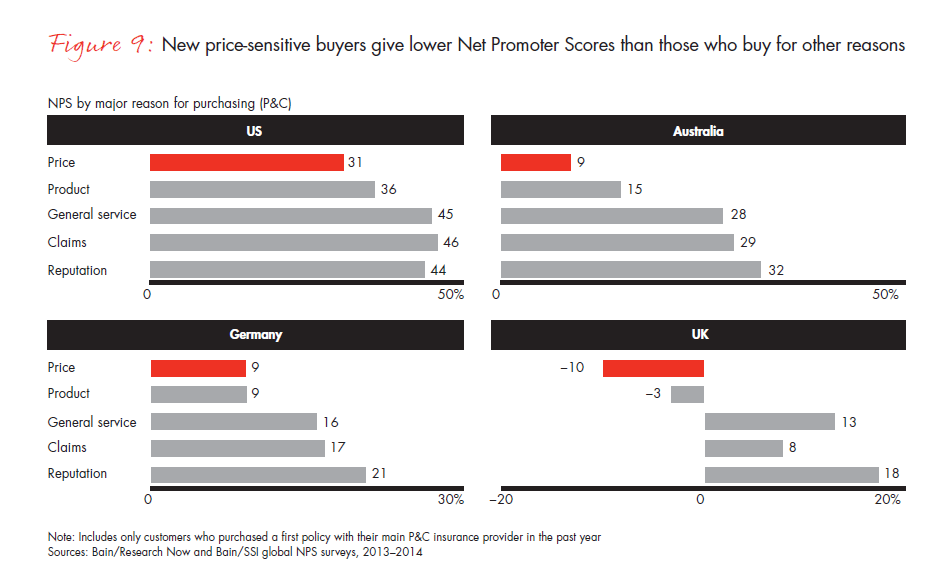
- In every country, price stands as the most important purchasing criterion, just ahead of having the right product for one’s needs. Price-sensitive buyers, however, give the lowest NPS in the first year after signing up. To reduce churn, companies will need to engage in more meaningful interactions.
- Low prices don’t necessarily conflict with good service. Loyalty leaders, such as Liverpool Victoria in the UK and HUK-Coburg in Germany, excel at both price and performance on touchpoints, as perceived by customers.
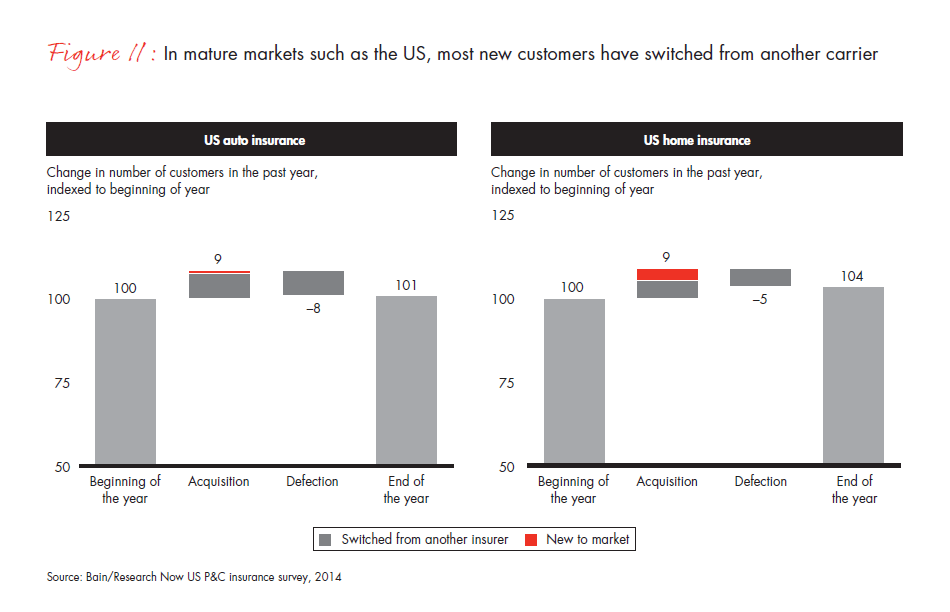
- The battle for scarce customers is most pronounced in developed markets, where the majority of a carrier’s new customers actually switched from another carrier.
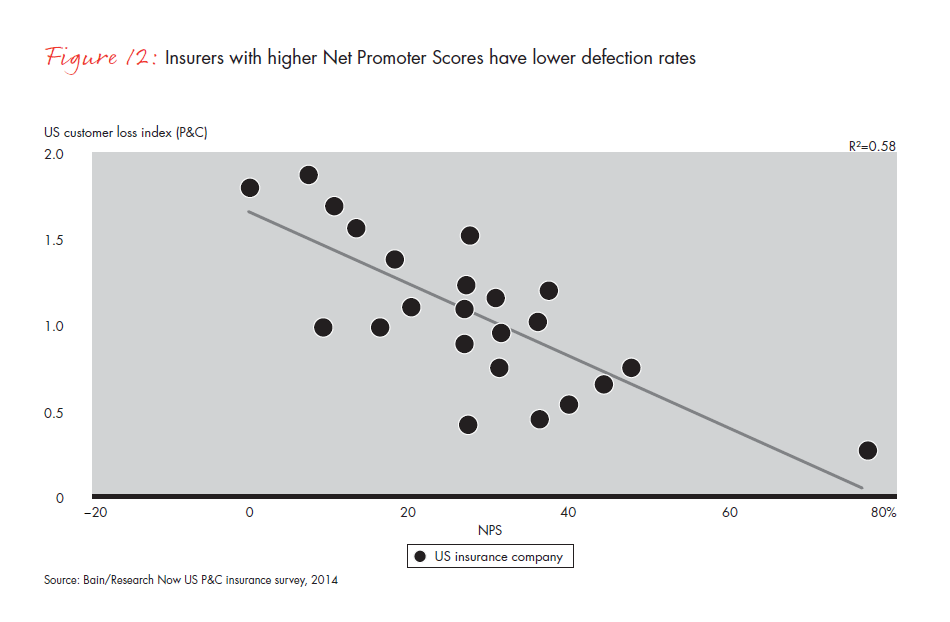
- Retention of customers correlates strongly with their NPS for both auto and home categories, with USAA ahead of the pack in the US. And retention has a strong influence on creating lifetime value.
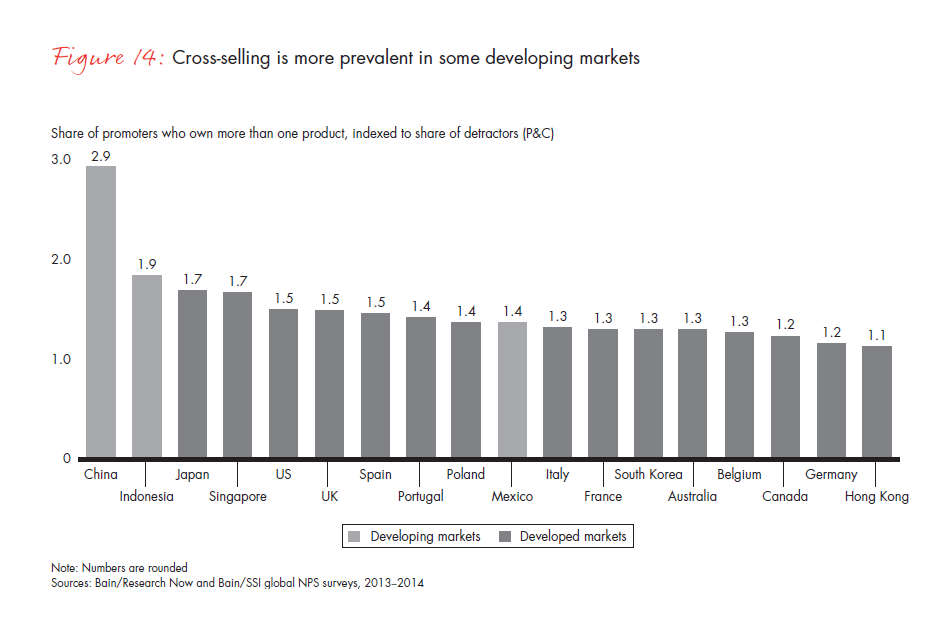
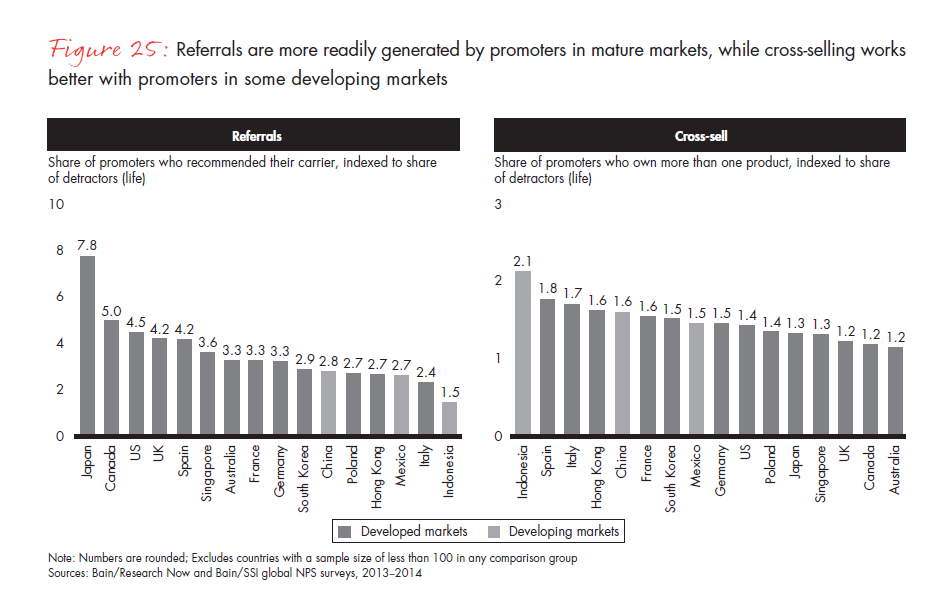
- The importance of cross-selling and referrals depends on the country and the provider. Cross-selling, for instance, weights more heavily in China and Indonesia.
- Customer experience at touchpoints, as well as price, have the greatest influence on loyalty in most countries.
- Excellent claims handling, especially around claims filing and third-party interactions, is critical to delight customers and avoid creating detractors. Even though few customers have a claim at any given time, the experience makes an enormous impression on them. Interactions with repair garages, doctors and other third parties stand out as flash points for frustration.
3. Life insurance: Delighting customers in a low-touch industry
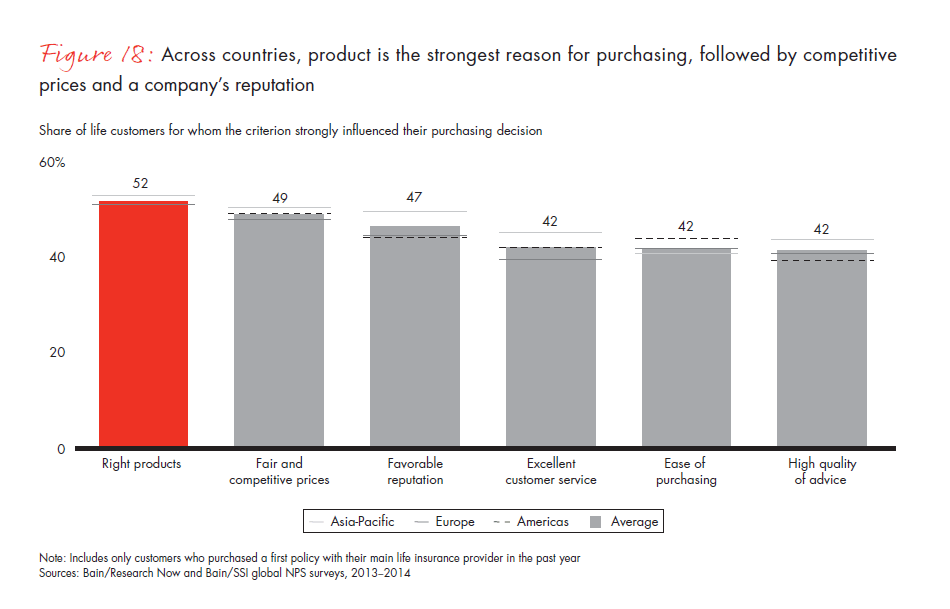
- Across countries, most customers buying life insurance say product attributes are a major factor influencing their decision, closely followed by price and reputation.
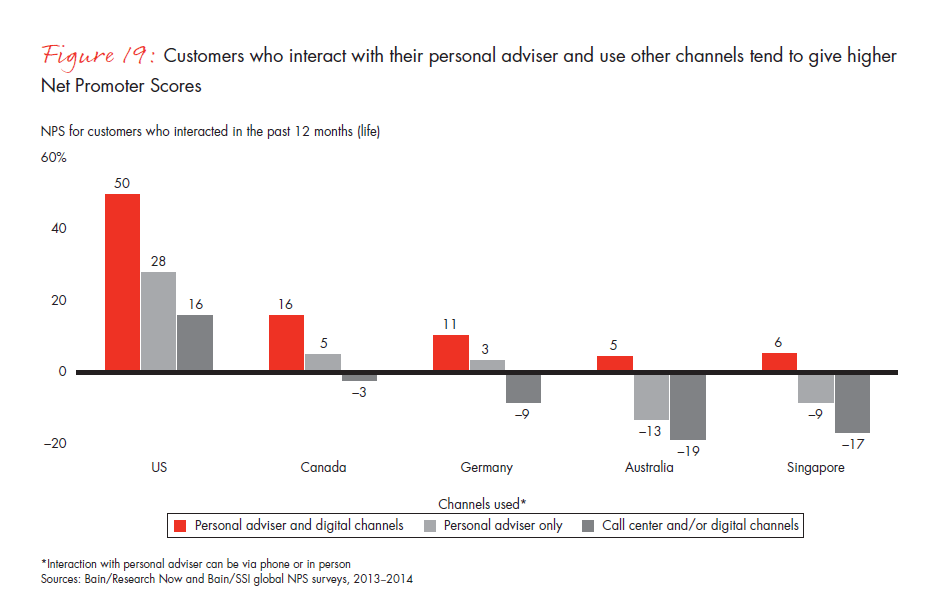
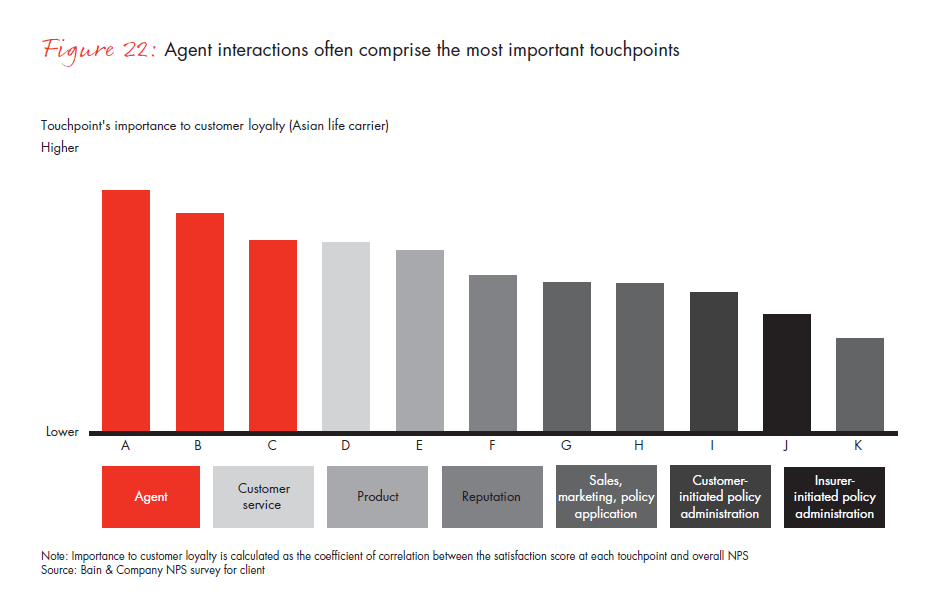
- Once customers are on board, however, the life insurance business depends on relationships. Interactions with a personal adviser tend to raise NPS, more so when complemented by interactions through other channels. In the US, for example, NPS for customers who interacted with an adviser and used digital channels is 34 points higher than for customers who used a call center and/or digital channels.
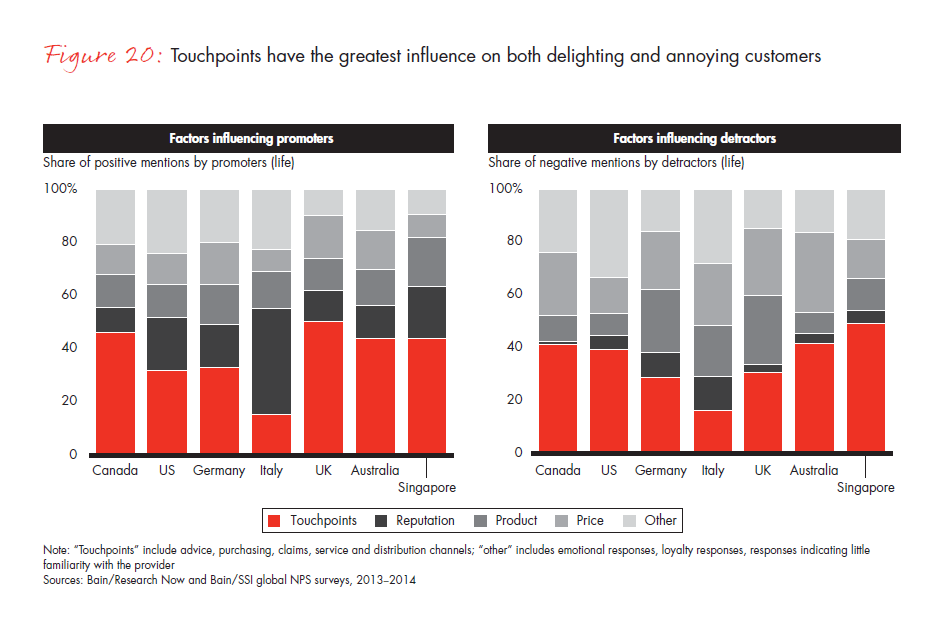
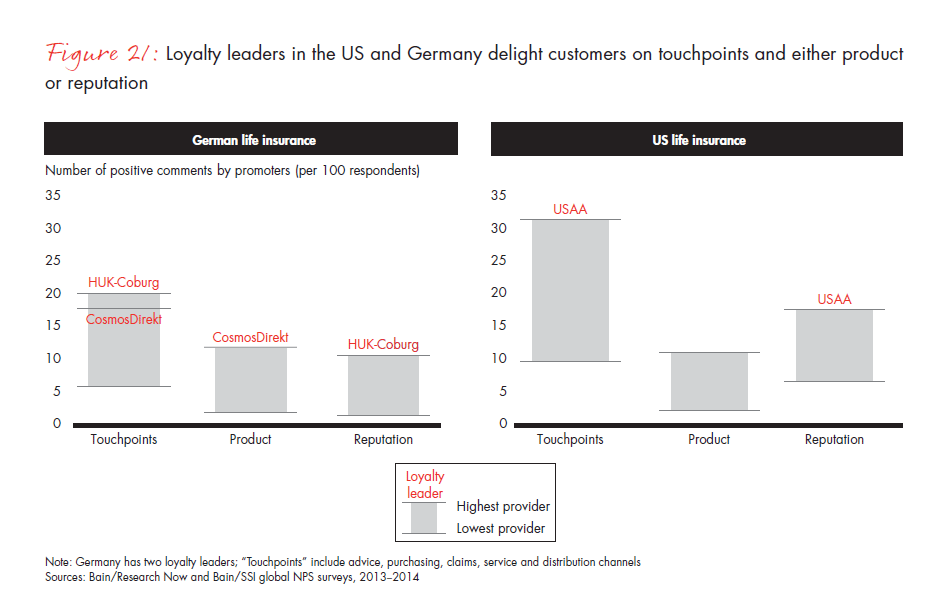
- The experience at critical touchpoints and episodes, including those involving an adviser, has the greatest propensity to delight or annoy customers. On the positive side, US and German loyalty leaders excel at delighting customers through touchpoints as well as with their products or reputation.
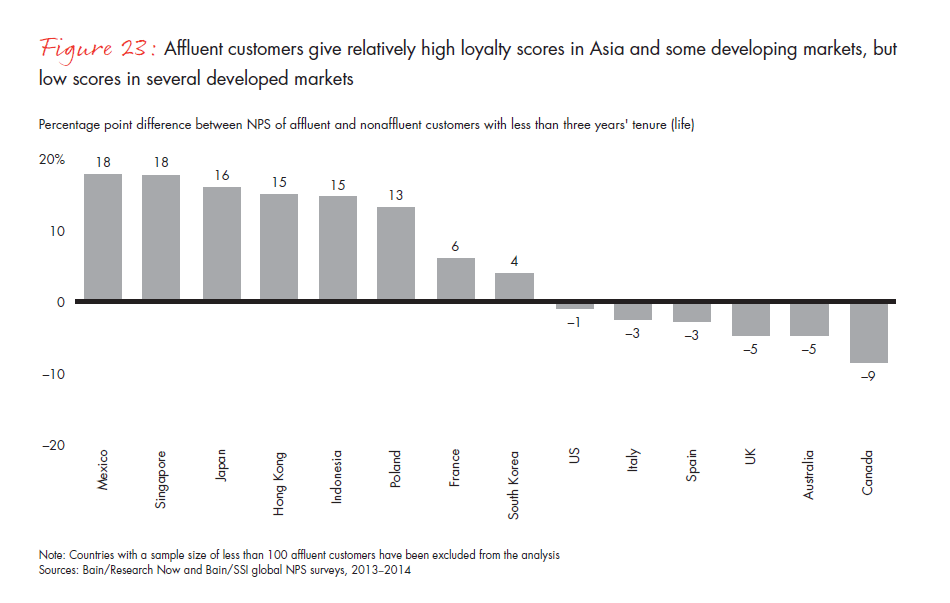
- In Asia, affluent customers give far higher NPS than do other customers. By contrast, in the mature and highly competitive markets of Australia, the UK and Canada, affluent customers give lower-than-average NPS.
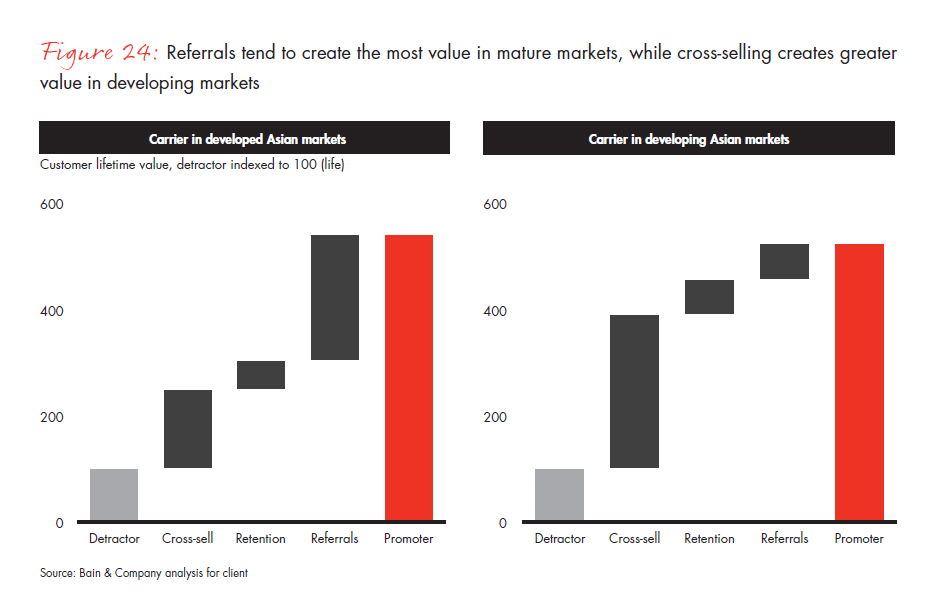
- Investing to improve advocacy pays handsomely. In developed markets, referrals from an existing customer to other potential customers play the biggest role in building customer lifetime value. In developing markets, cross-selling creates more value, because penetration there is low.
4. The shift to a Digical business
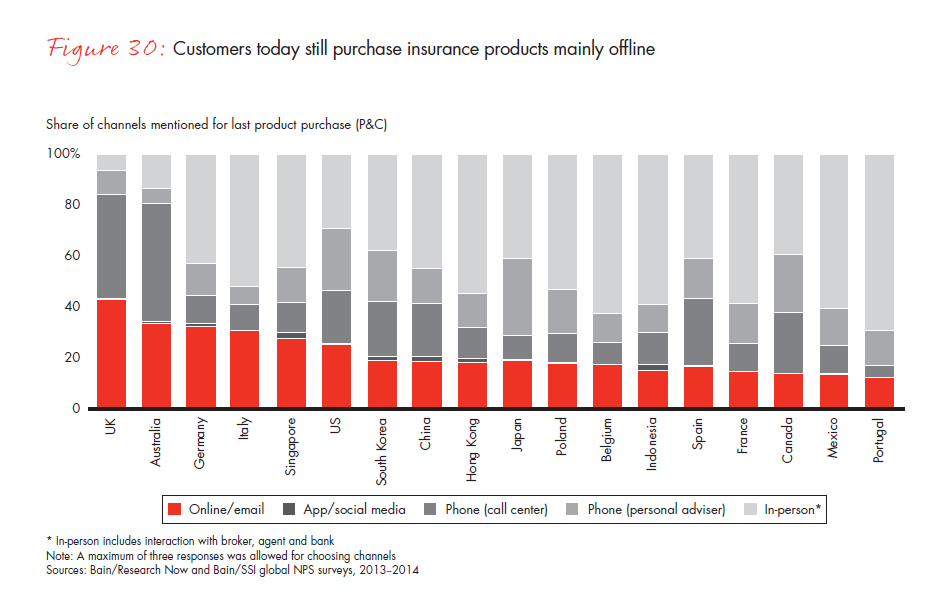
- All countries have a significant share of customers who do research or interact digitally with their insurer, and their ranks will grow over the next three to five years. Digital usage will grow to become the dominant channel for prepurchase research in many countries. For the actual purchase, however, most customers still use mainly phone or in-person meetings.
- Digital interactions thus need to be complemented with offline interactions in order to delight customers. In fact, digital-only interactions result in the lowest NPS in most countries.
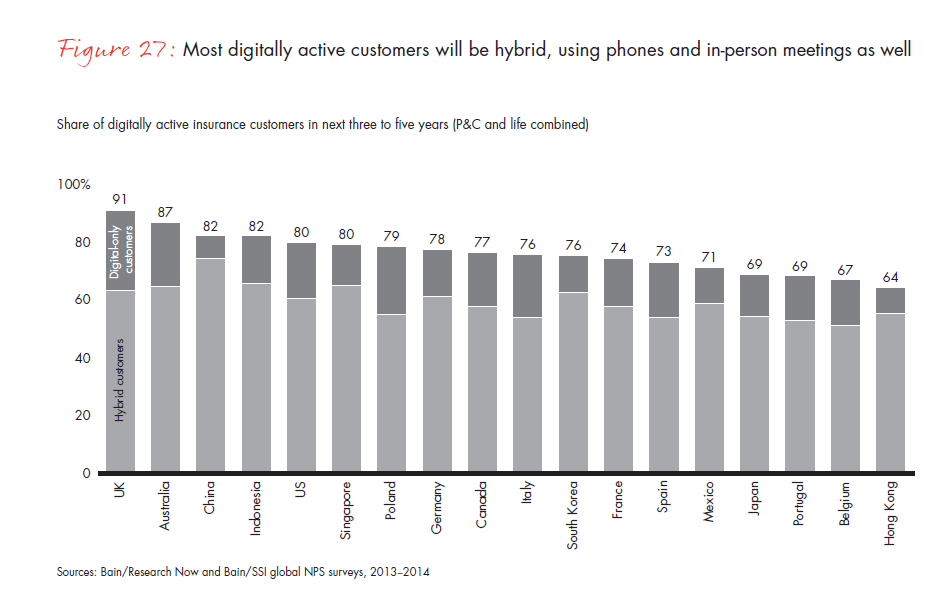
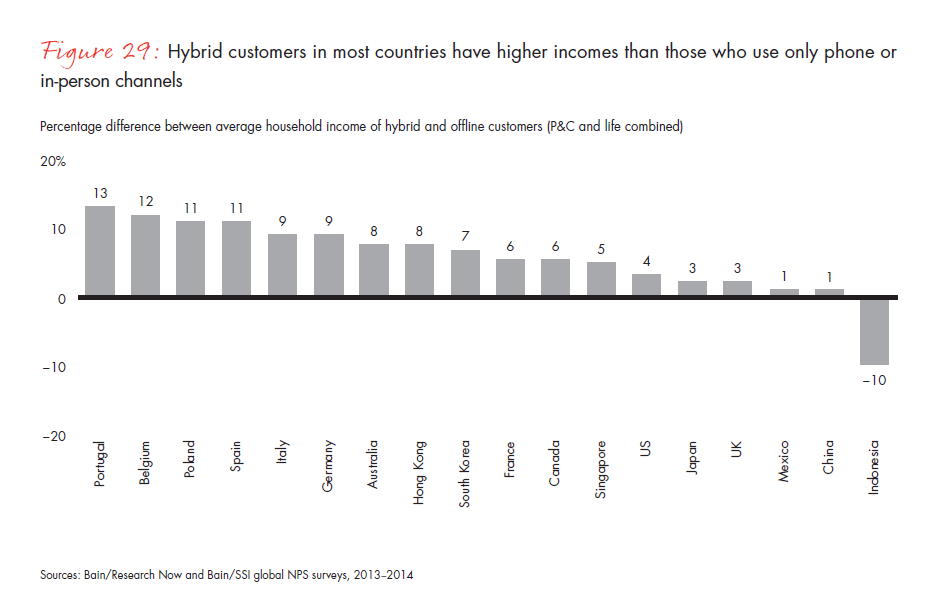
- Hybrid customers merit extra attention, given that they have higher incomes than customers who don’t go online. And the hybrid share of the total market is large and growing.
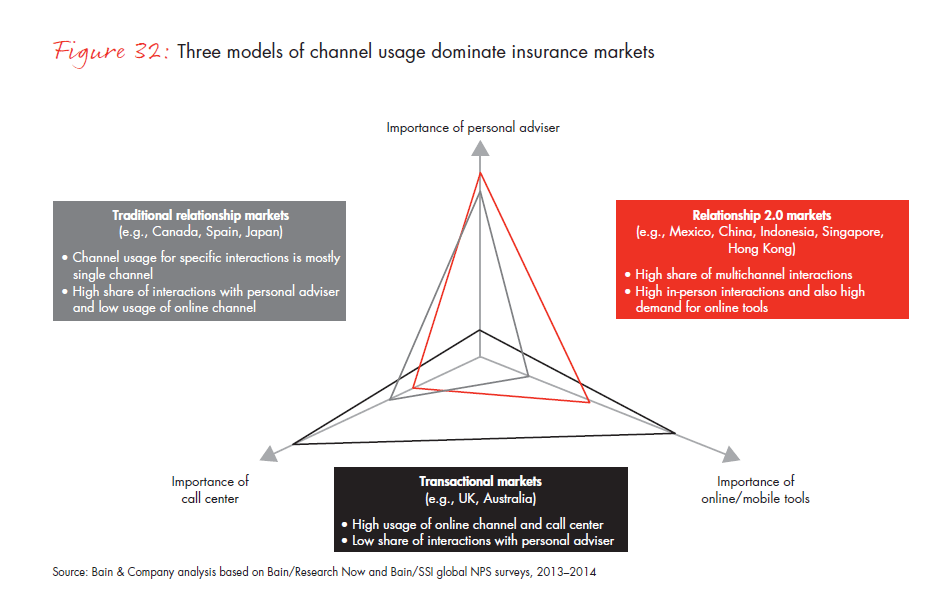
- Insurance markets across the globe fall into three broad categories of channel usage: Traditional relationship markets include Canada, Spain and Japan. These will likely evolve to relationship 2.0 markets, which currently include Mexico, China, Singapore and Hong Kong. In addition, Germany, Italy and the US have started down this path. Finally, there are two transactional markets—the UK and Australia—where relationships have far less importance.
- These different markets require different short-term and midterm approaches by insurers. Omnichannel in the UK means mainly digital and call-center telephony; in the US it means integrating in-person, phone and digital channels.
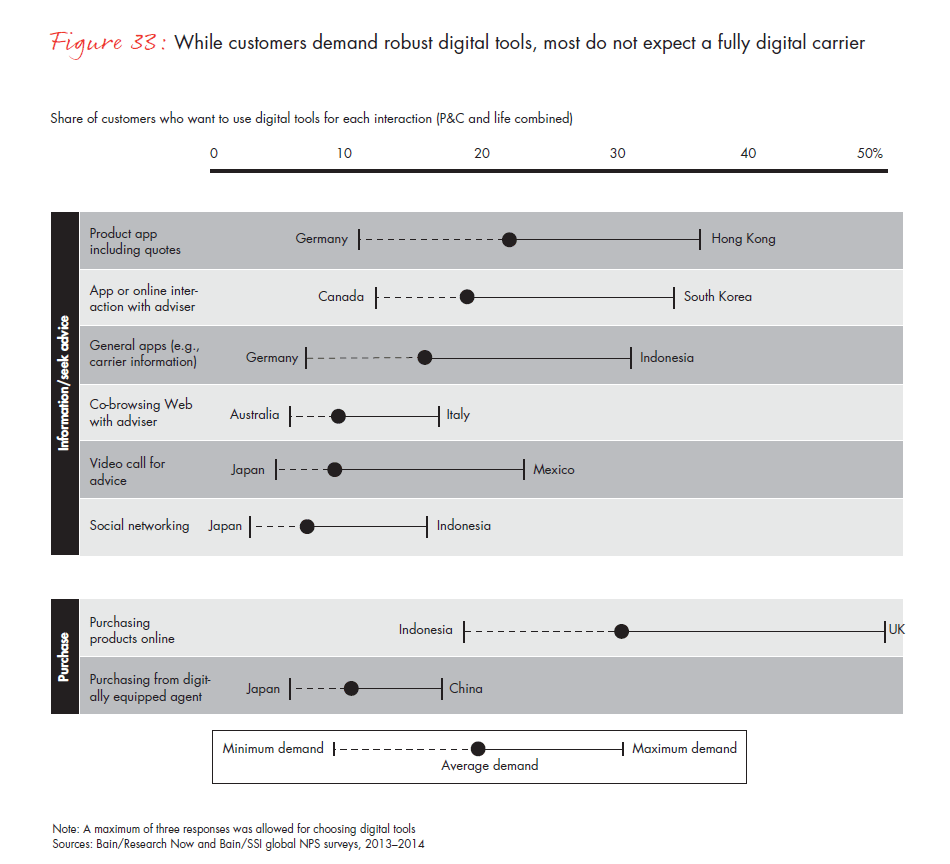
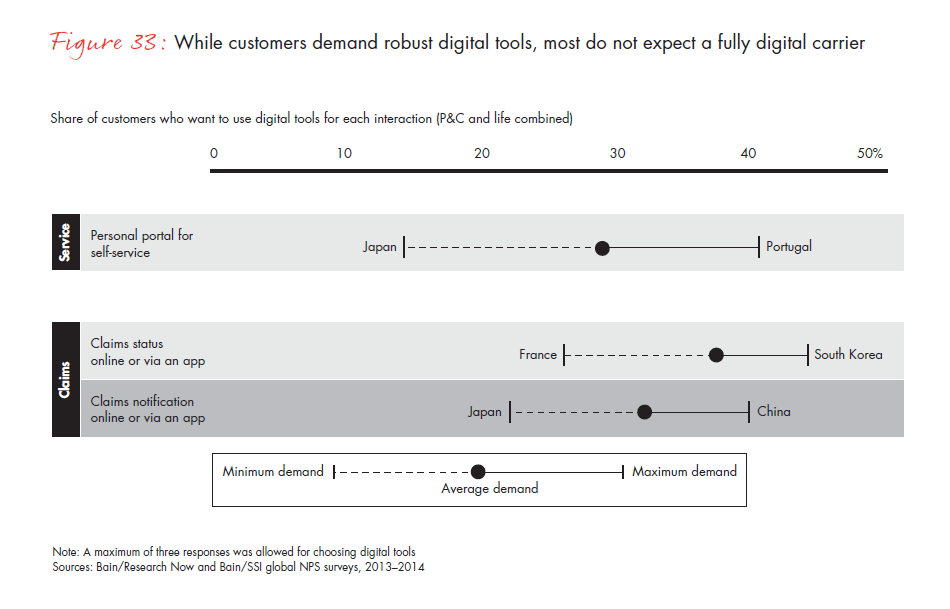
- Customers do not expect or want exclusively digital insurers. Among all types of interactions, the strongest demand for digital tools comes in purchasing online and handling claims.
- For most interactions, Asian customers show the highest demand for digital tools. Strengthening security and user-friendliness would increase digital demand in most countries.
For information about the methodology, please view the PDF version.
This report was prepared by Gunther Schwarz, Henrik Naujoks, Harshveer Singh, Andrew Schwedel, David Whelan and Camille Goossens, partners in Bain’s Global Financial Services practice, and a team led by Tanja Brettel, a practice area manager, and Shilpi Goel, a project leader at the Bain Capability Center.
Net Promoter® and NPS® are registered trademarks of Bain & Company, Inc., Fred Reichheld and Satmetrix Systems, Inc.
Net Promoter SystemSM and Net Promoter ScoreSM are trademarks of Bain & Company, Inc., Fred Reichheld and Satmetrix Systems, Inc.
Digical® is a registered trademark of Bain & Company, Inc.
First published in Ιούνιος 2014