
Skip to Content
  • Γραφεία

    Γραφεία

    North & Latin America
    • Atlanta
    • Austin
    • Bogota
    • Boston
    • Buenos Aires
    • Chicago
    • Dallas
    • Denver
    • Houston
    • Los Angeles
    • Mexico City
    • Minneapolis
    • Monterrey
    • Montreal
    • New York
    • Rio de Janeiro
    • San Francisco
    • Santiago
    • São Paulo
    • Seattle
    • Silicon Valley
    • Toronto
    • Washington, DC
    Europe & Africa
    • Amsterdam
    • Athens
    • Berlin
    • Brussels
    • Copenhagen
    • Dusseldorf
    • Frankfurt
    • Helsinki
    • Istanbul
    • Johannesburg
    • Kyiv
    • Lisbon
    • London
    • Madrid
    • Milan
    • Munich
    • Oslo
    • Paris
    • Rome
    • Stockholm
    • Vienna
    • Warsaw
    • Zurich
    Middle East
    • Doha
    • Dubai
    • Riyadh
    Asia & Australia
    • Bangkok
    • Beijing
    • Bengaluru
    • Brisbane
    • Ho Chi Minh City
    • Hong Kong
    • Jakarta
    • Kuala Lumpur
    • Manila
    • Melbourne
    • Mumbai
    • New Delhi
    • Perth
    • Shanghai
    • Singapore
    • Sydney
    • Tokyo
    See all offices
  • Alumni
  • Media Center
  • Εγγραφή
  • Επικοινωνία
  • Greece | Elliniká

    Select your region and language

    Global
    • Global (English)
    North & Latin America
    • Brazil (Português)
    • Argentina (Español)
    • Canada (Français)
    • Chile (Español)
    • Colombia (Español)
    Europe, Middle East, & Africa
    • France (Français)
    • DACH Region (Deutsch)
    • Italy (Italiano)
    • Spain (Español)
    • Greece (Elliniká)
    Asia & Australia
    • China (中文版)
    • Korea (한국어)
    • Japan (日本語)
  • Saved items (0)
    Saved items (0)

    You have no saved items.

    Bookmark content that interests you and it will be saved here for you to read or share later.

    Explore Bain Insights
  • Κλάδοι
    Main menu

    Κλάδοι

    • Aerospace & Defense
    • Agribusiness
    • Chemicals
    • Construction & Infrastructure
    • Consumer Products
    • Financial Services
    • Healthcare & Life Sciences
    • Industrial Machinery & Equipment
    • Media & Entertainment
      Κλάδοι
      Media & Entertainment
      • Media Lab
    • Metals
    • Mining
    • Oil & Gas
    • Paper & Packaging
    • Private Equity
      Κλάδοι
      Private Equity
      • Due Diligence
      • Exit Planning
      • Firm Strategy & Operations
      • Portfolio Value Creation
    • Social Impact
    • Retail
    • Technology
    • Telecommunications
      Κλάδοι
      Telecommunications
      • Capital Expenditure
      • Telco Digital Transformation
    • Transportation
    • Travel & Leisure
    • Utilities & Renewables
  • Συμβουλευτικές Υπηρεσίες
    Main menu

    Συμβουλευτικές Υπηρεσίες

    • Customer Experience
    • Sustainability
    • Innovation
    • M&A
    • Operations
    • People & Organization
    • Private Equity
    • Sales & Marketing
    • Strategy
    • AI, Insights, and Solutions
    • Technology
    • Transformation
  • Digital
  • Πληροφορίες
    Main menu

    Πληροφορίες

    • Industry Insights
    • Services Insights
    • Bain Books
    • Webinars
    • Bain Futures
    View all Insights
    Featured topics
    • Artificial Intelligence
    • Managing Inflation
    • Thriving in Uncertainty
    • The Talent Imperative
    • Macro Trends
    • Healthcare Private Equity Report
    • CEO's Guide to Sustainability
    • Technology Report
    • Energy & Natural Resources Report
    • Paper & Packaging Report
    • CEO Insights
    • CFO Insights
    • COO Insights
    • CIO Insights
    • CMO Insights
    View all featured topics
  • Σχετικά με εμάς
    Main menu

    Σχετικά με εμάς

    • What We Do
    • What We Believe
    • Our People & Leadership
    • Client Results
    • Awards & Recognition
    • Global Affiliations
    • Social Impact
    • Sustainability
    • World Economic Forum
    Learn more about Further
  • Careers
    Main menu

    Careers

    • Work with Us
      Careers
      Work with Us
      • Find Your Place
      • Our Work Areas
      • Integrated Teams
      • Students
      • Internships & Programs
      • Recruiting Events
    • Life at Bain
      Careers
      Life at Bain
      • Blog: Inside Bain
      • Career Stories
      • Our People
      • Where We Work
      • Supporting Your Growth
      • Affinity Groups
      • Benefits
    • Impact Stories
    • Hiring Process
      Careers
      Hiring Process
      • What to Expect
      • Interviewing
    FIND JOBS
  • Γραφεία
    Main menu

    Γραφεία

    • North & Latin America
      Γραφεία
      North & Latin America
      • Atlanta
      • Austin
      • Bogota
      • Boston
      • Buenos Aires
      • Chicago
      • Dallas
      • Denver
      • Houston
      • Los Angeles
      • Mexico City
      • Minneapolis
      • Monterrey
      • Montreal
      • New York
      • Rio de Janeiro
      • San Francisco
      • Santiago
      • São Paulo
      • Seattle
      • Silicon Valley
      • Toronto
      • Washington, DC
    • Europe & Africa
      Γραφεία
      Europe & Africa
      • Amsterdam
      • Athens
      • Berlin
      • Brussels
      • Copenhagen
      • Dusseldorf
      • Frankfurt
      • Helsinki
      • Istanbul
      • Johannesburg
      • Kyiv
      • Lisbon
      • London
      • Madrid
      • Milan
      • Munich
      • Oslo
      • Paris
      • Rome
      • Stockholm
      • Vienna
      • Warsaw
      • Zurich
    • Middle East
      Γραφεία
      Middle East
      • Doha
      • Dubai
      • Riyadh
    • Asia & Australia
      Γραφεία
      Asia & Australia
      • Bangkok
      • Beijing
      • Bengaluru
      • Brisbane
      • Ho Chi Minh City
      • Hong Kong
      • Jakarta
      • Kuala Lumpur
      • Manila
      • Melbourne
      • Mumbai
      • New Delhi
      • Perth
      • Shanghai
      • Singapore
      • Sydney
      • Tokyo
    See all offices
  • Alumni
  • Media Center
  • Εγγραφή
  • Επικοινωνία
  • Greece | Elliniká
    Main menu

    Select your region and language

    • Global
      Select your region and language
      Global
      • Global (English)
    • North & Latin America
      Select your region and language
      North & Latin America
      • Brazil (Português)
      • Argentina (Español)
      • Canada (Français)
      • Chile (Español)
      • Colombia (Español)
    • Europe, Middle East, & Africa
      Select your region and language
      Europe, Middle East, & Africa
      • France (Français)
      • DACH Region (Deutsch)
      • Italy (Italiano)
      • Spain (Español)
      • Greece (Elliniká)
    • Asia & Australia
      Select your region and language
      Asia & Australia
      • China (中文版)
      • Korea (한국어)
      • Japan (日本語)
  • Saved items  (0)
    Main menu
    Saved items (0)

    You have no saved items.

    Bookmark content that interests you and it will be saved here for you to read or share later.

    Explore Bain Insights
  • Κλάδοι
    • Κλάδοι

      • Aerospace & Defense
      • Agribusiness
      • Chemicals
      • Construction & Infrastructure
      • Consumer Products
      • Financial Services
      • Healthcare & Life Sciences
      • Industrial Machinery & Equipment
      • Media & Entertainment
      • Metals
      • Mining
      • Oil & Gas
      • Paper & Packaging
      • Private Equity
      • Social Impact
      • Retail
      • Technology
      • Telecommunications
      • Transportation
      • Travel & Leisure
      • Utilities & Renewables
  • Συμβουλευτικές Υπηρεσίες
    • Συμβουλευτικές Υπηρεσίες

      • Customer Experience
      • Sustainability
      • Innovation
      • M&A
      • Operations
      • People & Organization
      • Private Equity
      • Sales & Marketing
      • Strategy
      • AI, Insights, and Solutions
      • Technology
      • Transformation
  • Digital
  • Πληροφορίες
    • Πληροφορίες

      • Industry Insights
      • Services Insights
      • Bain Books
      • Webinars
      • Bain Futures
      View all Insights
      Featured topics
      • Artificial Intelligence
      • Managing Inflation
      • Thriving in Uncertainty
      • The Talent Imperative
      • Macro Trends
      • Healthcare Private Equity Report
      • CEO's Guide to Sustainability
      • Technology Report
      • Energy & Natural Resources Report
      • Paper & Packaging Report
      • CEO Insights
      • CFO Insights
      • COO Insights
      • CIO Insights
      • CMO Insights
      View all featured topics
  • Σχετικά με εμάς
    • Σχετικά με εμάς

      • What We Do
      • What We Believe
      • Our People & Leadership
      • Client Results
      • Awards & Recognition
      • Global Affiliations
      Further: Our global responsibility
      • Social Impact
      • Sustainability
      • World Economic Forum
      Learn more about Further
  • Careers
    Popular Searches
    • Agile
    • Digital
    • Strategy
    Your Previous Searches
      Recently Visited Pages

      Content added to saved items

      Saved items (0)

      Removed from saved items

      Saved items (0)

      The Visionary CEO’s Guide to Sustainability

      Decarbonization That Works: Five Key Actions in Private Equity

      Decarbonization That Works: Five Key Actions in Private Equity

      Scope 1 and 2 emissions-reduction leaders focus on both decarbonization and value creation.

      By Deike Diers, Marc Lino, and Radhika Mehrotra

      • min read
      }

      Brief

      Decarbonization That Works: Five Key Actions in Private Equity
      en
      At a Glance
      • The number of PE-owned companies disclosing their climate impact has jumped 55%, according to research from Bain and CDP.
      • Scope 1 and 2 emissions are down—a median 26% for Scope 2—and many companies are seeing clear business benefits.
      • Decarbonization leaders have engaged in five common practices to generate business results.

      This article is part of Bain's 2025 CEO Sustainability Guide

      EXPLORE THE REPORT

      Written in collaboration with

      Written in collaboration with

      CDP_Wordmark_Off-White_RGB-248x65.jpg


      From 2021 to 2023, the number of private-equity–owned companies disclosing their environmental and climate impact through CDP rose 55%. Bain & Company studied 824 of those portfolio companies and found a median 5% decrease in Scope 1 emissions and a 26% drop in Scope 2 emissions over that period (see Figure 1). And these companies, which represent a cross-section of global supply chains, are translating this progress into measurable business benefits, such as greater operational efficiency, lower carbon taxes, and improved customer offerings.

      Figure 1
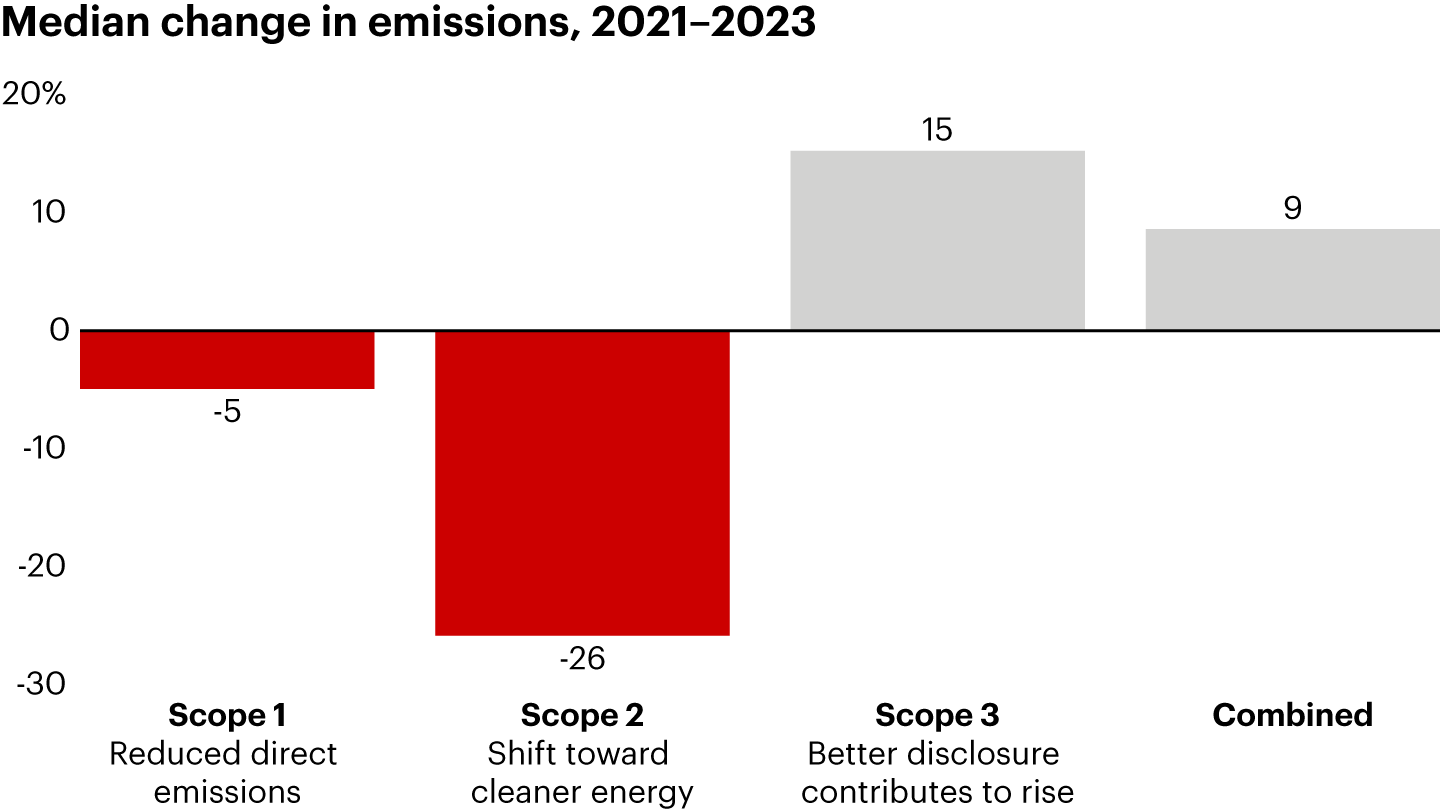
      Portfolio companies have made significant progress on reducing Scope 1 and 2 emissions, but work continues on Scope 3

      Notes: Median change, controlling for revenue; n=824 companies

      Sources: CDP; Bain & Company analysis

      These are strong advances, but challenges remain. Much of the steep drop in Scope 2 emissions can be attributed to grid decarbonization. As industries accelerate their electrification, the demand for clean energy will surge. This is a positive sign, but it will be difficult for electrical grids to keep pace and continue reducing emissions.

      Scope 3 emissions, which are generated by suppliers and customers and are the largest category of emissions, are proving harder for this group to reduce (echoing a similar pattern among public companies). Median Scope 3 emissions for PE-owned companies rose 15% between 2021 and 2023. One factor may be that reported Scope 3 emissions commonly increase as companies become more comprehensive in their disclosures, expanding the number of categories they track and replacing initial estimates based on industry averages with more accurate data. Some companies in the infrastructure and hospitality industries, among others, have been able to reduce their Scope 3 emissions (see Figure 2).

      Figure 2
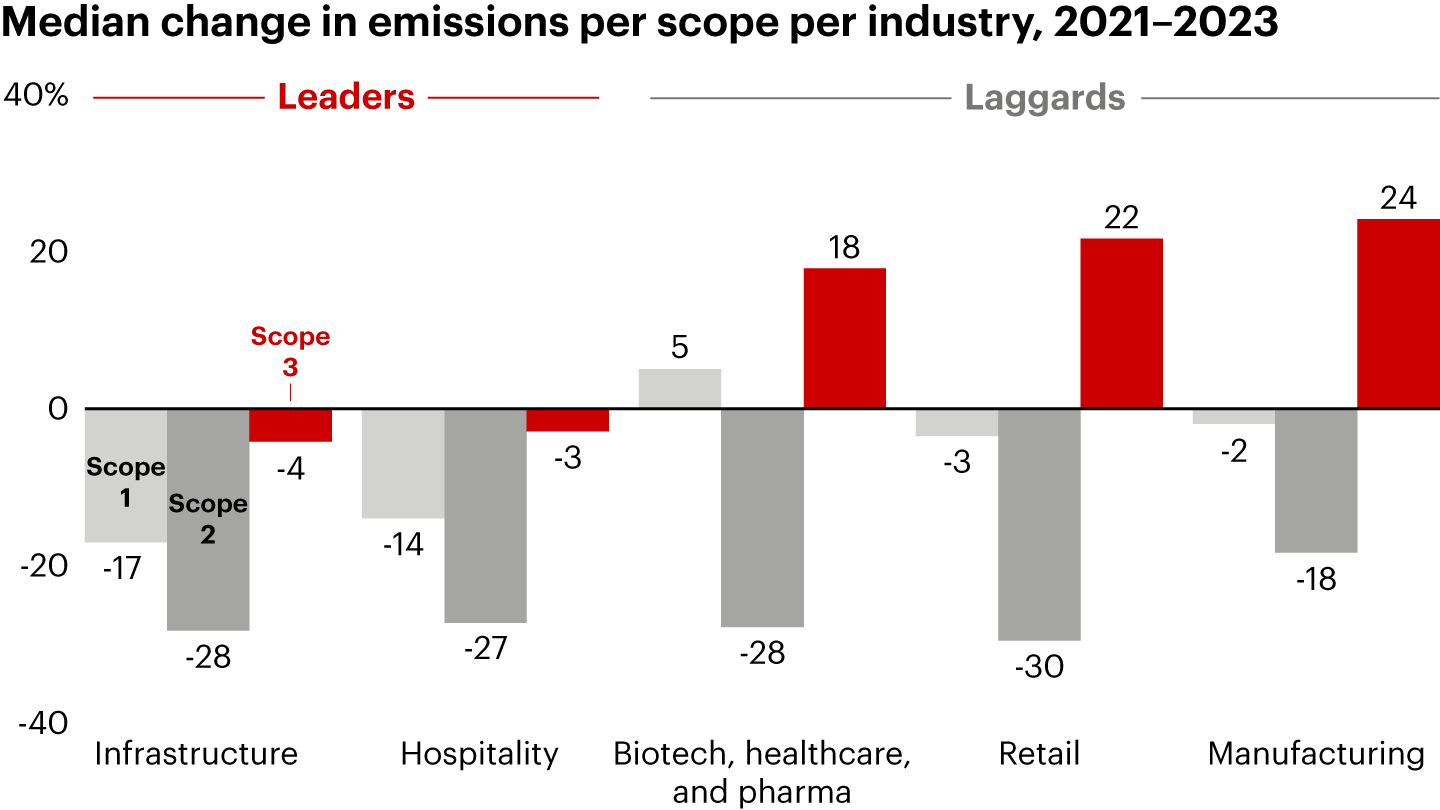
      In lagging industries, Scope 3 is the primary contributor to higher emissions

      Note: n=430 companies

      Sources: CDP; Bain & Company analysis

      The five practices of decarbonization leaders

      Successful decarbonizing firms balance climate impacts with business realities. Immediate cost-saving measures such as optimizing delivery routes coexist with long-term investments in resilience and innovation. Upfront costs are accepted for the opportunity to strengthen customer relationships, enhance employee engagement, and access emerging low-carbon markets.

      To better understand how PE firms and their portfolio companies can learn from these leaders and strengthen their own decarbonization capabilities, we identified five common practices among those decarbonizing most effectively.

      1. Focus on both business value and climate impact.

      Successful companies integrate decarbonization into their core business operating model and strategy, prioritizing initiatives that improve emissions and build financial value. They do so by launching or supporting ongoing initiatives to reduce greenhouse gas emissions, and by setting goals and tracking results.

      The environmental benefits can be striking. Among the 824 companies we examined, those that implemented initiatives to reduce fugitive emissions—gases or vapors unintentionally released by industrial processes, equipment, or facilities—achieved a median reduction of 52 tons per million dollars of revenue between 2021 and 2023. That compares to a median increase of 7 tons for those without such initiatives (see Figure 3).

      Figure 3
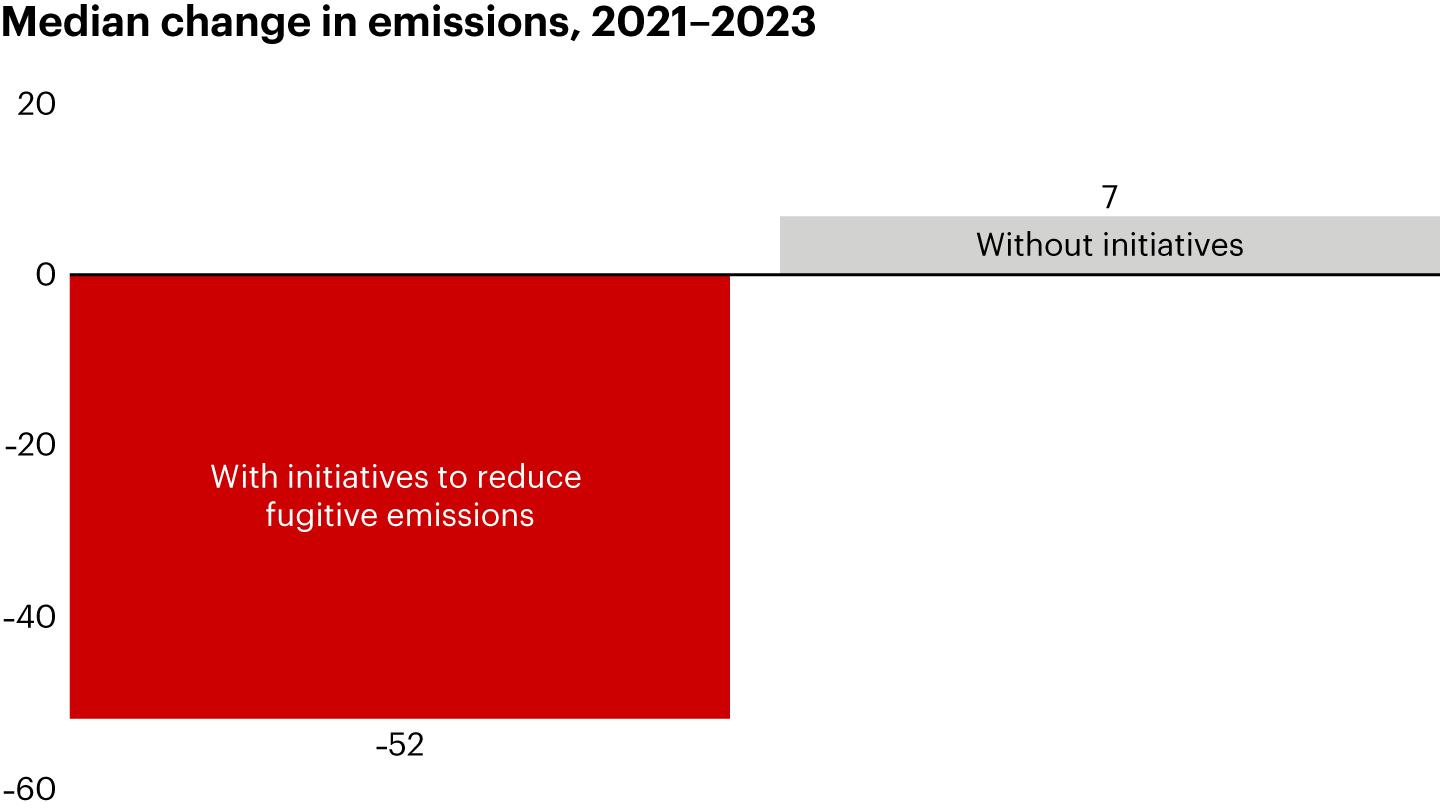
      Companies with dedicated initiatives—such as natural gas methane leak capture or refrigerant leakage reduction—cut more emissions

      Note: n=770 companies

      Sources: CDP; Bain & Company analysis

      A well-executed roadmap can help companies reduce emissions, deliver measurable financial returns, generate operational savings, and enhance customer loyalty. For example, Apollo, which managed $733 billion as of September 30, 2024, has funds that hold portfolio companies in sectors such as manufacturing that have leveraged energy efficiency programs to reach their decarbonization targets earlier than expected while driving incremental EBITDA.

      To support this type of investment, private companies are rapidly becoming more transparent. Ninety-five percent reported their Scope 1 emissions in 2024, and 91% reported Scope 2, a significant improvement since 2022.

      2. Set science-based, absolute targets.

      Companies with clear, measurable targets make the most progress. Among the top carbon reducers studied, 35% set science-based reduction targets, compared to just 16% of low performers. Companies with long-term (10 years or longer) and near-term (5- to 10-year) targets reduced more carbon emissions than companies with short-term targets of fewer than 5 years. Of the companies examined by Bain, 43% had long-term targets, 60% had near-term targets, and 21% had both. Those with absolute targets that aim to cut emissions by a fixed amount outperform those with intensity targets focused on reducing emissions relative to a business metric such as revenue per unit. Well-defined, measurable targets help companies prepare for climate transition and build business resilience.

      Since 2022, there has been a qualitative improvement in targets, with 65% of private and public companies using absolute targets in 2024 and 19% combining both short- and long-term goals, up from 12% in 2022.

      Among the investors focused on science-based targets is Investindustrial, a Europe-based firm with $13.8 billion of assets. Investindustrial is on track to meet its 2026 goal of having science-based targets in place at half its PE investments. By 2030, it expects all portfolio companies will have such targets. One Rock Capital Partners, a private equity firm with approximately $8 billion of cumulative capital commitments that typically focuses on middle-market “real economy” investments, does not set portfolio-wide, near-term science-based targets but helps its fund portfolio companies develop, establish, and validate their own.

      Apollo’s flagship private equity strategy aims to reduce median carbon intensity over the period of ownership. The firm has a sustainability team with operational expertise that directly engages with the management teams of its funds’ portfolio companies, prioritizing returns-focused sustainability initiatives and working with portfolio companies to create value, monitor key performance indicators (KPIs), and assist with carbon accounting.

      3. Assign explicit decarbonization goals to operational leaders and ensure senior-level sponsorship.

      Decarbonization succeeds when operational leaders are directly accountable. From fleet managers addressing Scope 1 emissions to procurement leaders tackling upstream Scope 3 challenges, this alignment ensures that those closest to the action drive results.

      High-level sponsorship is still needed, however. Most of One Rock’s portfolio companies tie approximately 10% of C-Suite bonuses to sustainability performance, typically including one climate-related metric, as a way of emphasizing the importance of this work.

      Having an empowered chief sustainability officer (CSO) with deep expertise pays particular dividends. Among the companies Bain studied, those with CSOs overseeing decarbonization outperformed the companies that had more traditional roles, such as CEOs or CFOs, overseeing these efforts. In 2024, 93% of private companies reported having a management-level position dedicated to environmental issues—up from 89% in 2022—reflecting a more structured approach to climate governance.

      4. Collaborate across supply chains on Scope 3 emissions.

      In 2024, 68% of private companies reported their Scope 3 emissions, up from 49% in 2022. Deep partnerships with suppliers and customers are critical to addressing these emissions. Companies that invest in such collaboration consistently achieve greater emission reductions than their peers, even in challenging industries such as retail and manufacturing. Among manufacturers in the top quartile of Scope 3 emissions reduction, 92% are working with suppliers to abate emissions. Seventy-six percent of top-quartile retailers and 84% of top-quartile manufacturers are actively engaged with customers on the topic.

      At Jadex, a manufacturer and material sciences company owned by One Rock funds, buyers and sales teams are trained on sustainable sourcing, training that advances over time to cover topics like full lifecycle analysis of specific raw materials. This expertise helps buyers work with suppliers to reduce emissions while building business value through sustainable product innovation and price premiums. One example is Jadex’s home-compostable disposable cutlery, which was priced higher than virgin plastic alternatives when introduced.

      5. Integrate climate-related risk into a holistic risk management process. 

      Climate risks—from reputational damage to physical disruptions—are company specific but increasingly significant for all businesses. Incorporating climate considerations into risk assessments can unlock climate-related financial and operational benefits while mitigating potential losses. Consider the case of Constantia Flexibles, one of the world’s largest producers of flexible packaging and a One Rock fund holding. The company conducts physical climate risk assessments and invests in precautionary protective measures. For instance, Constantia engineered and built a protective floodwall between one of its manufacturing plants and a nearby river. In October 2024, the floodwall helped defend the plant during a significant flood, minimizing the impact on Constantia’s operations and customers.

      Next steps

      For PE firms and portfolio companies hoping to accelerate decarbonization, these three “no-regret” actions are a good place to start:

      1. Assess current performance. Establish a carbon footprint baseline and then make formal disclosures of your climate goals, results, and risks, illuminating areas for improvement. This builds trust with stakeholders, including investors and customers. CDP can help fund managers meet compliance requirements of limited partners, and portfolio companies can meet compliance requirements and customer needs through standardized disclosures. For some leaders, this can help unlock financing benefits and preferred supplier partnerships.
      2. Map a decarbonization pathway. Set clear targets and prioritize initiatives based on business value. Use tools such as the Private Markets Decarbonization Roadmap (PMDR) to chart your path, strategize, prioritize, and track both financial and decarbonization progress .
      3. Communicate with one another and with external stakeholders. PE firms need to closely engage with portfolio companies because they are the ones effecting change. For both investors and portfolio companies, it’s important to highlight decarbonization achievements and any associated financial benefits to differentiate from competitors and strengthen exit strategies. Investindustrial uses the PMDR to disclose publicly its assets’ decarbonization evolution, helping leaders align on decarbonization strategy priorities; ensuring investment teams agree on strategy implementation; and keeping stakeholders, including investors, informed, all while highlighting a competitive advantage.

      A strategic imperative for private equity

      We are in a dynamic moment. Yet one thing remains clear: Long-term decarbonization is an important value driver in PE portfolios, and leaders are finding ways to ensure strong business outcomes. Although some initiatives will never be ROI positive and others will offer only temporary returns, it is still possible to turn today’s carbon challenges into opportunities. By effectively managing trade-offs, organizations can build financial value and resilience, positioning themselves for the transition to a low-carbon economy.

      The authors would like to thank Mégane Muehlestein, Simone Canu, Helen Gasche, and Lauren Karzen for their contributions to this article.

      Read the Next Section

      Why Leaders Must Focus on Carbon Removal Markets Now

      Read our 2025 CEO Sustainability Guide

      EXPORE THE REPORT DOWNLOAD THE PDF

      More from the report

      • Embracing the “Do-Say” Gap

      • What’s Still Stopping Consumers from Living Sustainably?

      • How Sustainability Is Creating B2B Growth

      • AI and Sustainability: Shaping What’s Next

      • The CEO Playbook for Climate Resilience

      • Decarbonization That Works: Five Key Actions in Private Equity

      • Why Leaders Must Focus on Carbon Removal Markets Now

      • Circular Business Models Unlock New Profit and Growth

      • Can Food Companies Unwrap a New Strategy?

      About CDP

      CDP is a global non-profit that runs the world’s only independent environmental disclosure system. As the founder of environmental reporting, we believe in transparency and the power of data to drive change. Partnering with leaders in enterprise, capital, policy and science, we surface the information needed to enable Earth-positive decisions. We helped more than 24,800 companies and 1,100 cities, states and regions disclose their environmental impacts in 2024. Financial institutions with more than a quarter of the world’s institutional assets use CDP data to help inform investment and lending decisions. Aligned with the ISSB’s climate standard, IFRS S2, as its foundational baseline, CDP integrates best-practice reporting standards and frameworks in one place. Our team is truly global, united by our shared desire to build a world where people, planet and profit are truly balanced. Visit CDP.net or follow us @CDP to find out more.

      Authors
      • Headshot of Deike Diers
        Deike Diers
        Partner, Zurich
      • Headshot of Marc Lino
        Marc Lino
        Partner, Dubai
      • Headshot of Radhika  Mehrotra
        Radhika Mehrotra
        Associate Director, Capital Markets, CDP North America, New York
      Contact us
      Related Industries
      • Private Equity
      Related Consulting Services
      • Sustainability
      How We Can Help
      • Climate Change
      • Sustainable Finance & Investing
      Sustainable Finance & Investing
      Financing Climate Solutions in Brazil

      A study conducted by Bain, in partnership with BNDES, highlights both the challenges and the opportunities to accelerate the climate transition.

      More
      Private Equity
      Spotting the Downturn Early and Coming Out Ahead with Gryphon’s David Andrews

      We ask the co-CEO of Gryphon Investors how he spotted one of the harshest cycles in the industry’s history and when he thinks it may finally break.

      More
      Sustainability
      How AI Is Starting to Transform Circular Packaging

      There are 15 AI use cases companies across the value chain can use today to accelerate circularity.

      More
      Private Equity
      What Kind of AI Cycle Are We Actually In?

      The question for investors is not whether AI will boom or bust, but who may be unwittingly subsidizing the buildout.

      More
      Sustainable Finance & Investing
      Climate Week NYC 2025: Sustainability Integrates into the Core

      Leaders shift from pledges to practical solutions, revealing how energy, finance, manufacturing, and food systems are turning sustainability into strategy.

      More
      First published in Σεπτέμβριος 2025
      Tags
      • Climate Change
      • Private Equity
      • Sustainability
      • Sustainable Finance & Investing

      How We've Helped Clients

      Voluntary Carbon Markets: A Bank Moves Early to Seize the Opportunity

      Read case study

      A Powerful Carbon Accounting Platform Helps IndustrialCo Optimize Its ESG Strategy

      Read case study

      A Paper Company Takes Bold Steps to Make Sustainability a Source of Profits

      Read case study

      Έτοιμοι να μιλήσουμε

      Συνεργαζόμαστε με φιλόδοξους ηγέτες που θέλουν να καθορίσουν το μέλλον και όχι. Όχι να κρυφτούν από αυτό. Μαζί, επιτυγχάνουμε πετυχαίνουμε εξαιρετικά αποτελέσματα.

      Μείνετε μπροστά σε έναν γρήγορα εξελισσόμενο κόσμο. Εγγραφείτε στο Bain Insights, τη μηνιαία μας επισκόπηση των κρίσιμων θεμάτων που αντιμετωπίζουν οι παγκόσμιες επιχειρήσεις

      *Έχω διαβάσει την Πολιτική Απορρήτου και συμφωνώ με τους όρους της.

      Please read and agree to the Privacy Policy.
      Bain & Company
      Επικοινωνήστε μαζί μας Sustainability Accessibility Όροι χρήσης Privacy Cookie Policy Sitemap Log In

      © 1996-2026 Bain & Company, Inc.

      Contact Bain

      How can we help you?

      • Business inquiry
      • Career information
      • Press relations
      • Partnership request
      • Speaker request
      See all offices