

Brief

At a Glance
- Sustainability has moved from being a compliance or reputational factor to an opportunity for significant value creation.
- Turkish business leaders are acting on the potential of ESG action to enable moves into new markets or areas of activity.
- However, barriers, including an inability to consistently measure results and progress, are hampering faster advances.
In a series of exclusive interviews with Bain & Company, Turkish CEOs explained what the sustainability revolution means for their businesses now and in the future, and how they are striving to find the right balance between short-term actions and long-term ESG purpose.
All are committed to building a better world, regardless of where they are in their transformation journey. This enthusiasm is set against a backdrop of the country’s ambition—Türkiye has not only committed to a 21% reduction in its emissions by 2030 but has also set a target of achieving net-zero carbon emissions by 2053.
However, numerous challenges to faster progress remain. The pandemic, energy crisis, supply-chain blockages, and higher inflation levels have all had an impact on the speed of environmental, social, and governance (ESG) transformation.
To understand how CEOs in Türkiye see and approach sustainability in this complex environment and how they are setting up their companies to seize the opportunities offered by more sustainable operations, we interviewed 22 CEOs from 10 different sectors, a mix of Turkish companies and global players. All agreed that acting on ESG remains critical and that challenges only strengthen their determination.
Five key messages emerged from our discussions:
- ESG is a game-changer: Sixty-three percent of CEOs believe that having an ESG agenda and taking a leading role in driving this transformation help them predict risks, build resilience, and find new opportunities to grow their businesses.
- Leading the pack, but needing to pick up the pace: Eighty-two percent of business leaders stated they are ahead of the competition when it comes to ESG efforts and impact, and almost two-thirds (64%) declared they do not just want to comply with regulations but rather want to lead their industry. However, while commitment and sustainability targets are usually in place, a gap remains between efforts and the ability to evaluate impact by measuring results.
- Positive, but difficult road to success: Sixty-two percent of CEOs are satisfied with their transformation so far, but 40% find pushing forward the ESG agenda challenging, with 46% highlighting the cost of transformation as the biggest barrier.
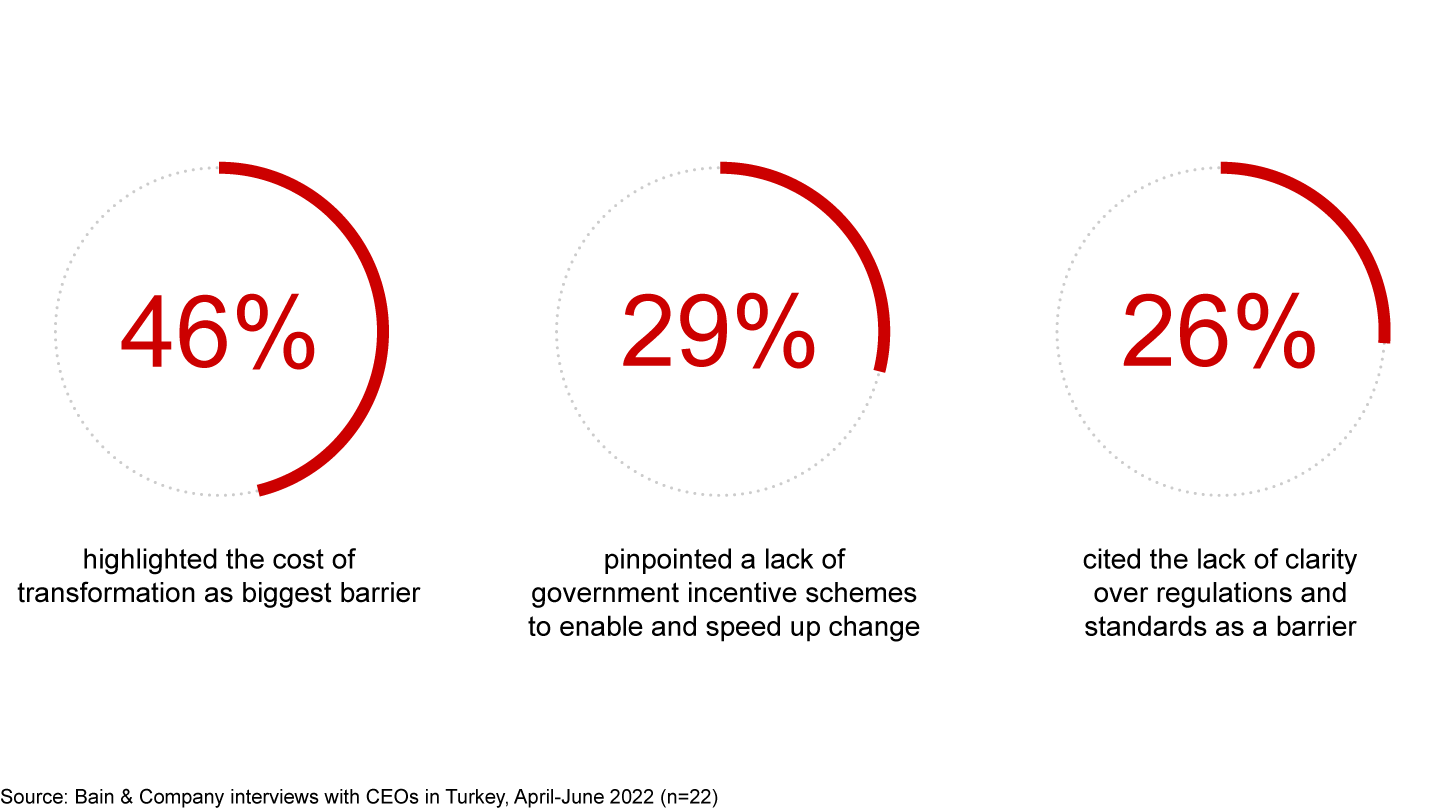
- Barriers to faster change: There are other significant barriers to achieving ESG goals, including lack of both regulatory clarity (cited by 26% of the CEOs we spoke to) and government incentive schemes to enable and speed up change (29%). Internally, 23% believe having clear ambitions and targets is crucial to success.
- At the dawn of great change: Sustainability is widely considered by business leaders as a strategic way to create value and uncover new products and business models. With a young workforce ready to embrace change, a high level of digital maturity, a fertile tech ecosystem, and rich supplies of natural resources, Türkiye is well positioned to seize the opportunities of the sustainability revolution.
Overall, CEOs regard action on ESG as crucial to future growth. While the cost of ESG initiatives and an unclear regulatory framework are key factors holding back faster transformation, businesses also feel hampered by the limited availability of carbon-reduction technology and green energy, and by the increased complexity linked to a bewildering array of ESG standards, certifications, and terminology.
Those we spoke to would like to see increased regulatory clarity. To achieve this, closer communication and cooperation within sectors, across them, and with government and institutions will be vital to help shape effective regulation and build an interconnected ecosystem with common values and shared goals. Individual efforts can be amplified by businesses joining forces along the entire value chain and by inviting governments and institutions to help accelerate change and achieve the ambitious goal of building a more sustainable world.
In this context, unity is strength and ESG cannot be a solo game.
Shaping a new way of doing business
With the majority of the business leaders believing the current pace of change is not fast enough, despite clear momentum, Turkish companies are now poised to speed up their sustainability journeys.
After all, as one CEO summarized: “ESG is existential; if we continue like this, there will be no world.”
ESG is considered a game-changer because of the scale of the challenges and opportunities it raises for a more prosperous and sustainable world.
“It is changing the way we think, the way we act, and the way we view the world as customers and as leaders of businesses.”
In fact, many CEOs consider it to be a revolution. Among our respondents, 64% view the need to evolve in terms of ESG as greater than the digital revolution.
ESG is here to stay
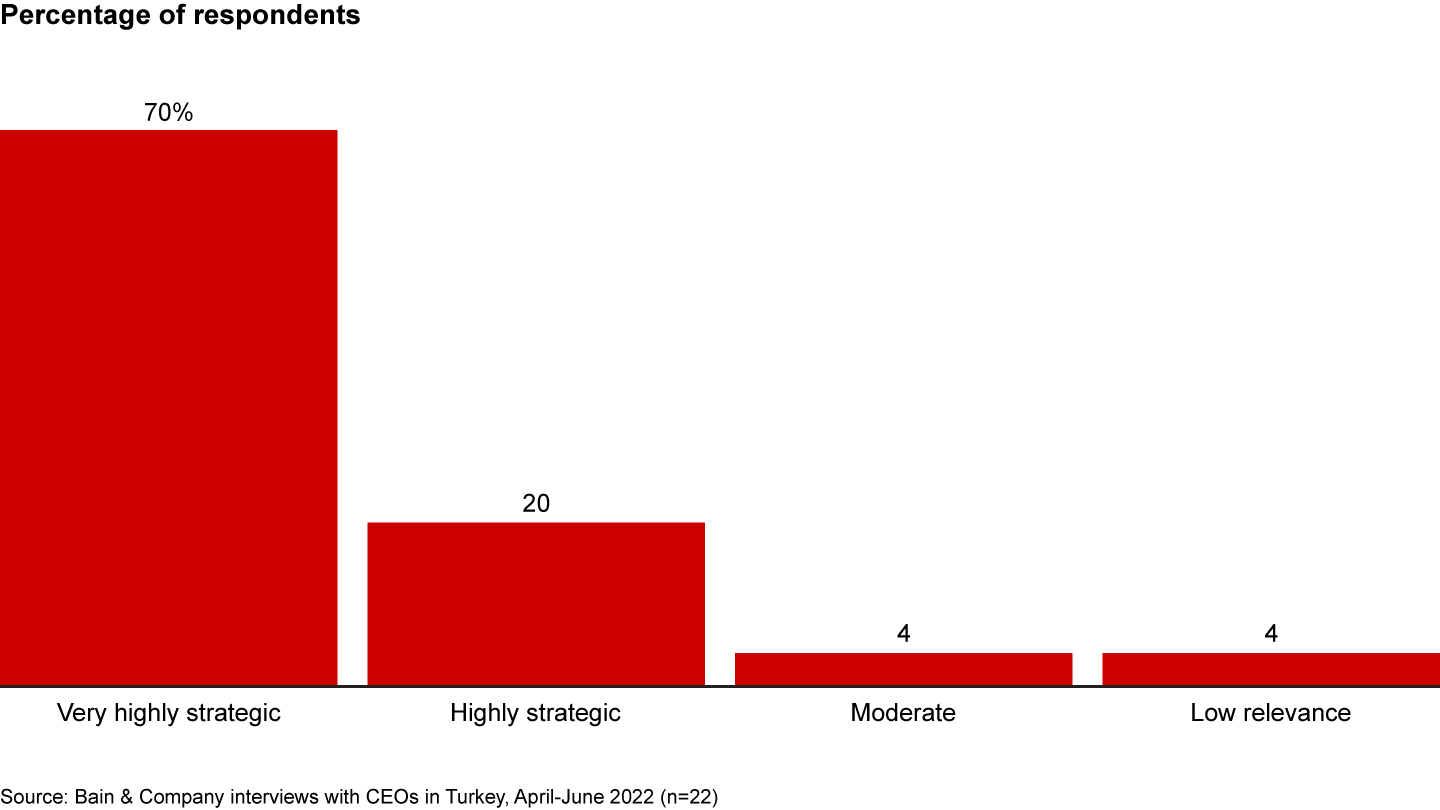
Sustainability is now a near-universal business concern, with over 90% of CEOs we spoke to describing ESG issues as either highly or very highly strategic (see Figure 1). Accordingly, it is addressed at the senior management level and is crucial to long-term success. “For industry and for companies, sustainability is existential. What will determine whether a company exists in 10 years is the speed at which they transform regarding sustainability,” said one business leader.
Figure 1

When it comes to ESG priorities, climate change remains the top issue for most companies. This is in part because business leaders tend to push topics that are measurable and can have an impact on reputation. As one CEO said: “Businesses should focus on particular, executable, fundable plans. That means decarbonization.”
But the focus is widening to include other social and governance considerations, such as diversity, equity, and inclusion. Various CEOs mentioned initiatives aimed at promoting a higher percentage of female employees in the workforce, especially in top leadership positions. “Female employees at top levels represent 16% to 19% of the leadership team,” one CEO shared. To address this, his business has created a network to mentor, support, and train middle-management-level female employees to help remove barriers.
This is important because, increasingly, action on ESG measures has become crucial to attracting and retaining talent.
“The younger generation care about the impact of the company’s operations, especially on the environment.”
Within this context, a company’s ESG positioning, and actions, can be a deal-breaker. As another CEO detailed: “Salary is not enough to attract the best talent; we have to provide ethical management, a diverse environment, and a flexible working environment.”
Searching for the right ESG coordinates
When assessing others in their field, 82% of CEOs we spoke to believe that they are ahead of their competitors and peers (see Figure 2). This is especially prevalent in companies that have a global footprint, are part of international groups, or that are controlled by institutional investors, as international standards are considered to be more stringent.
Figure 2
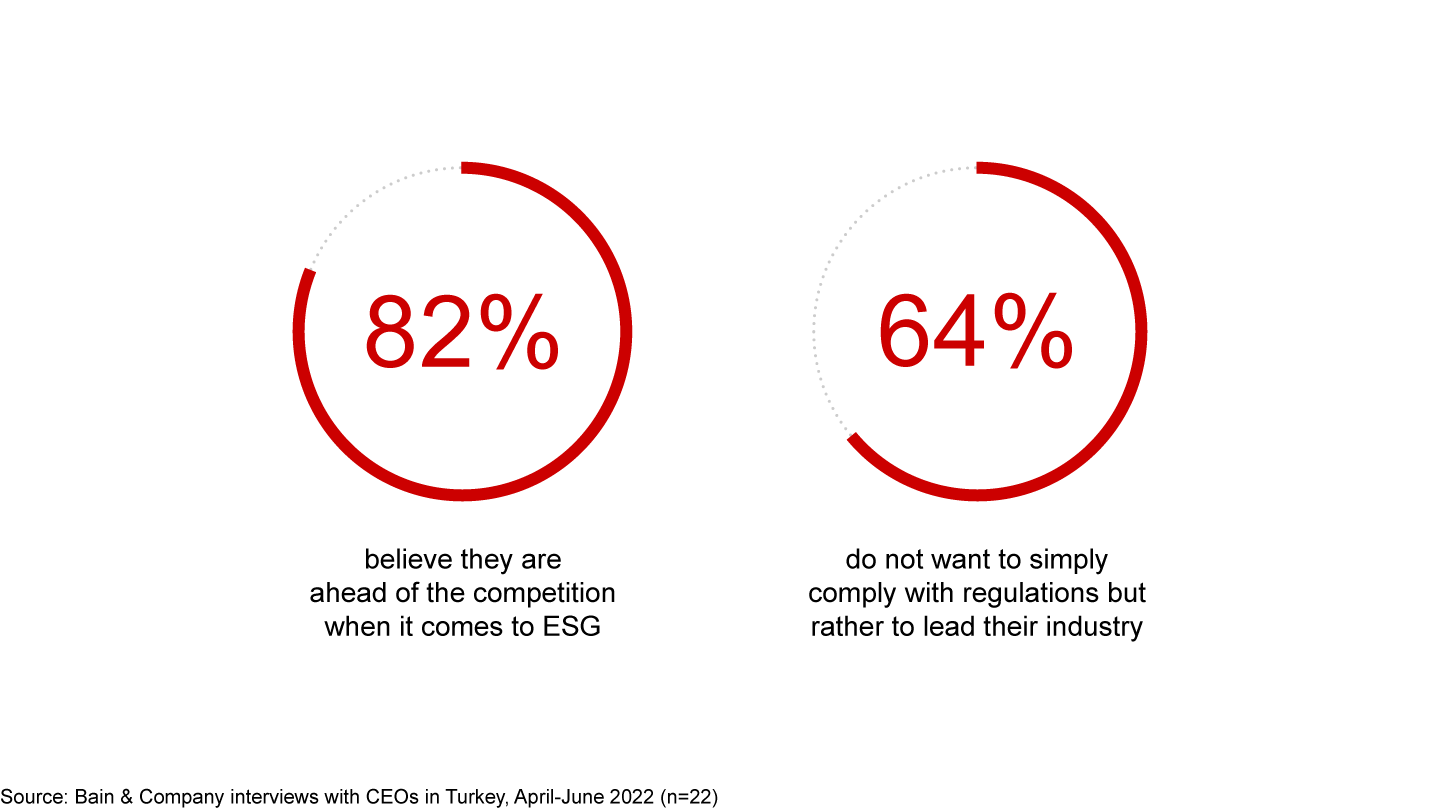

The overall level of ambition is also clear, with 64% of CEOs declaring their desire not just to comply with ESG regulations but rather to lead their industry on ESG topics. “We want to be proactive about pushing regulations in a way that has more impact because we understand the industry—instead of the government just imposing regulations,” was the view shared by one CEO. “We want to put in a framework for regulations that works and is easy for everybody to follow.”
ESG purpose is also a strong need, as cited by 80% of companies we spoke to.
Navigating without a compass
Clear direction, purpose, and action, however, can be blunted if the impact of ESG initiatives cannot be measured or if progress cannot be monitored. More than 50% of the organizations in our survey do not yet have an ESG dashboard and instead provide information based on high-level key performance indicators (KPIs).
This inability to fully evaluate the impact generated by ESG effort makes it even more difficult to communicate sustained progress to stakeholders.
Within this framework, many business leaders feel they are navigating the ESG revolution without a compass. In contrast, those with more advanced reporting practices, such as real-time data monitoring and quarterly reporting, which allow every employee to track progress, are better positioned to prioritize ESG targets and reach their goals. One business leader explained how his company created a second balance sheet to measure carbon emissions: “Any investment we make, any action we take in the company, we add/subtract the carbon from this balance sheet.” This forces the company to continuously track progress against targets.
Accelerate to avoid getting stuck
While satisfaction levels with ESG action to date are high—62% of CEOs we spoke to are satisfied with their companies’ transformation journey, and all defined their experience so far as either positive or very positive—many recognize that they are only at the beginning of the journey. As one CEO summarized: “Today we are at a good point and we are proud of this, but in 10 years, when we look back, we are going to say that we didn’t do enough.”
Employees are broadly supportive of ESG efforts, with 70% of our respondents saying that employees have openly embraced them. This is not just because employees want their employer to do the right thing, but also because it gives them the opportunity to act as corporate entrepreneurs with a high level of ownership and be part of a good cause.
Impact on the bottom line
However, not all leaders are finding a smooth path to success, with 40% defining their experience as challenging. Reasons include the added complexity that ESG brings to operations, the need for more frequent engagement with a wide variety of stakeholders, the expanding range of ESG standards and terminology, and, most importantly, the pressures of addressing the balance between sustainability and profitability.
In terms of challenges, 46% of the CEOs identified transformation costs as the most important barrier hindering ESG acceleration, followed by a lack of incentive schemes as well as clarity on standards (see Figure 3).
Figure 3

Despite the growing evidence of the economic benefits of sustainability, many of our respondents have yet to see the link between financial gains and ESG efforts. As one CEO explained: “The financial impact of sustainability is not there yet. Most leaders intuitively feel that ESG is a must and is crucial for valuation creation and staying relevant, but when you cannot link those efforts to the financials, financial support by investors becomes crucial.”
The key role of the financial sector
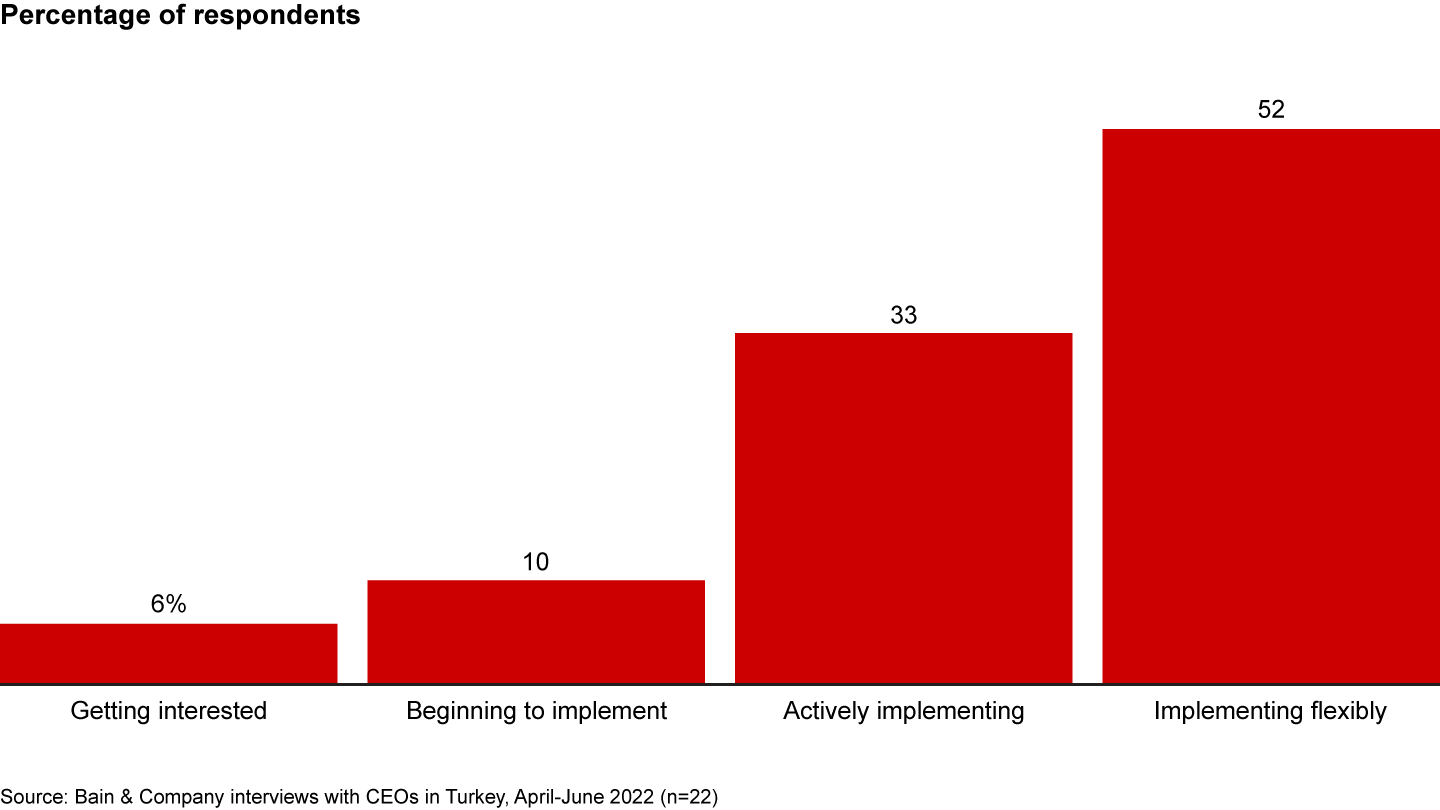
To help organizations cope with the cost of transformation, the business leaders we spoke to are keen to see more financial support, even as some progress is being made and incentive schemes become more available (see Figure 4). “Financing support is mandatory because we have to switch to new technologies,” one said.
Figure 4

Within the sustainability ecosystem, the financial community has a key part to play by providing financing to help companies cover transformation costs. “To invest in ESG, you need money. Availability of financing and how it rewards you for becoming a sustainable company plays an important role,” said one CEO.
The Turkish banking sector is increasing loans to renewable energy projects, but 62% of respondents would like to see funding become more wide-ranging. One CEO explained: “ESG is not only about financing windmills and solar panels. Financial institutions should develop strict policies on board structures or child labor in factories.” Another business leader shared a similar perspective: “Even if the financial community commits to finance ESG efforts and safe projects such as solar roof panels are supported, it is still difficult to raise financing for innovative decarbonization efforts or, worse still, for social-oriented initiatives.”
Practice what you preach
Within organizations, business leaders highlighted the importance of setting clear ambitions and targets to effectively push forward the ESG agenda. “Our journey started by setting a very clear purpose and roadmap,” said one. “Your company needs to evolve as a whole, to share the same ambition, to look in the same direction,” explained another. A further key enabler is developing management engagement and finding internal sponsors who lead by example and facilitate cultural change. As one respondent said: “You need to set an example as a CEO.”
Business leaders also highlighted the importance of shareholder support. Shareholders play an important role in encouraging companies to integrate sustainability into their business strategy, as often this is a requirement for securing their investment.
Innovation and sustainability: two sides of the same coin
Almost all—95%—of the CEOs interviewed see innovation as driving ESG transformation. Innovation is viewed as a crucial enabler in making companies more sustainable, both in terms of providing the technology, from hydrogen to smart grids, that can tackle issues such as climate change, and as a tool to earn customers’ appreciation and stay competitive. One CEO said: “Many of our engineers are focused on innovation to drive decarbonization and increase energy efficiency. Consumers and retailers will eventually reward companies that solve sustainability problems with innovation.”
“Innovation was previously about creating a new product. It is now about evolving; it is about new business models.”
All respondents stated that their innovation approach has evolved significantly on their ESG journey. But innovation is not just about finding ways to utilize new technologies; it is also increasingly seen as a vital sustainability tool, essential to pre-empt future regulations and meet the demand for new products and services. One CEO highlighted the development of novel materials and technologies that will have to be compliant with “future regulations that do not even exist today.”
Embedding new ideas and a new mindset
Most of the CEOs we interviewed are clear that sustainability creates opportunities, particularly regarding new business models or evolving current ones. Businesses can increase the top line by gaining market share and winning in either existing or new markets and segments. Sustainability action can be a way of improving pricing power as customers demand a more sustainable approach. There is also an opportunity for companies to lower the cost of capital by qualifying for ESG-restricted investment, as well as obtaining a lower interest rate on banking loans, and gaining additional advantages by attracting and retaining the best talent.
However, companies must also find a balance between risks and costs. Reducing emissions, for example, can have an immediate impact on financials, especially in sectors such as heavy industry or aviation. In addition, businesses should seriously consider the role of technology in enabling sustainability, as the potential benefits provided by efficiency recovery and product innovation usually lead to reductions in operational costs.
To succeed in seizing the ESG opportunity, accessing and integrating start-ups and scale-ups is going to be fundamental. As one CEO said: “Your potential depends on your ability to bring start-ups into the ecosystem, to generate fresh ideas and engage the best talent.”
How to move forward at speed
There are five key steps Turkish businesses can take to accelerate their transformation and take their ESG actions to the next level:
- Set a bold sustainability ambition: Most leaders tend to concentrate their efforts on emissions reduction. However, businesses must question whether their organizations want to simply comply with regulations or proactively leverage sustainability to build a competitive advantage. In either case, businesses are mostly likely to find success by having a long-term ambition, as well as a set of more short-term actions or goals.
- Measure impact to get leadership aligned: Dedicating enough time and attention to ensuring awareness and commitment of leadership is crucial. This will be a marathon, and engaging senior management from the start is the only way to stay in the race. Companies should create a clear bridge between required resources and effort, and the potential benefits that could result.
- Test, calibrate, and scale fast: In any new activity or field of action, allowing time to understand how to get things done and how to get them right is key. A test-and-learn approach will allow businesses to scale faster and give them the opportunity to expand capabilities and resources. All organizational assets should pull in the same direction, with people at the top of the list.
- Have a clear roadmap and communication plan: Delivering on sustainability means starting a journey. Dealing with fluid regulations and standards, however, can make it easy to lose sight of the path. To remain on track, businesses must set clear milestones and design a reliable roadmap, with a comprehensive dashboard to track performance. In addition, effective communication and reporting to build and solidify the bridge between effort and market or stakeholder perception are key.
- Balance ESG and financial impact: Financial sustainability is a crucial part of the equation when establishing an ESG mindset. Many companies are unable to measure the economic impact of ESG actions, which makes it more difficult for them to see the value-creation opportunities offered. In our experience, there is a potential impact of up to 3 percentage points on EBITDA, depending on the industry and sector, for companies that engage and measure sustainable practices. This is a significant result that can speed cultural change.
ESG momentum is building across Türkiye, and the next step is to transform the ambitious commitment that many companies have into targets and concrete actions that set a clear path to success. ESG transformation is the single biggest challenge facing Turkish businesses today, but those that seize the opportunities will experience the most success in the years ahead.
Now is the time to push forward at speed, for all our sakes.
The authors would like to thank all participants and contributors for taking the time to share their views and experiences on the ESG challenge. This report has been created in partnership with the Republic of Türkiye Investment Office.
First published in Φεβρουάριος 2023