
Skip to Content
  • Γραφεία

    Γραφεία

    North & Latin America
    • Atlanta
    • Austin
    • Bogota
    • Boston
    • Buenos Aires
    • Chicago
    • Dallas
    • Denver
    • Houston
    • Los Angeles
    • Mexico City
    • Minneapolis
    • Monterrey
    • Montreal
    • New York
    • Rio de Janeiro
    • San Francisco
    • Santiago
    • São Paulo
    • Seattle
    • Silicon Valley
    • Toronto
    • Washington, DC
    Europe & Africa
    • Amsterdam
    • Athens
    • Berlin
    • Brussels
    • Copenhagen
    • Dusseldorf
    • Frankfurt
    • Helsinki
    • Istanbul
    • Johannesburg
    • Kyiv
    • Lisbon
    • London
    • Madrid
    • Milan
    • Munich
    • Oslo
    • Paris
    • Rome
    • Stockholm
    • Vienna
    • Warsaw
    • Zurich
    Middle East
    • Doha
    • Dubai
    • Riyadh
    Asia & Australia
    • Bangkok
    • Beijing
    • Bengaluru
    • Brisbane
    • Ho Chi Minh City
    • Hong Kong
    • Jakarta
    • Kuala Lumpur
    • Manila
    • Melbourne
    • Mumbai
    • New Delhi
    • Perth
    • Shanghai
    • Singapore
    • Sydney
    • Tokyo
    See all offices
  • Alumni
  • Media Center
  • Εγγραφή
  • Επικοινωνία
  • Greece | Elliniká

    Select your region and language

    Global
    • Global (English)
    North & Latin America
    • Brazil (Português)
    • Argentina (Español)
    • Canada (Français)
    • Chile (Español)
    • Colombia (Español)
    Europe, Middle East, & Africa
    • France (Français)
    • DACH Region (Deutsch)
    • Italy (Italiano)
    • Spain (Español)
    • Greece (Elliniká)
    Asia & Australia
    • China (中文版)
    • Korea (한국어)
    • Japan (日本語)
  • Saved items (0)
    Saved items (0)

    You have no saved items.

    Bookmark content that interests you and it will be saved here for you to read or share later.

    Explore Bain Insights
  • Κλάδοι
    Main menu

    Κλάδοι

    • Aerospace & Defense
    • Agribusiness
    • Chemicals
    • Construction & Infrastructure
    • Consumer Products
    • Financial Services
    • Healthcare & Life Sciences
    • Industrial Machinery & Equipment
    • Media & Entertainment
      Κλάδοι
      Media & Entertainment
      • Media Lab
    • Metals
    • Mining
    • Oil & Gas
    • Paper & Packaging
    • Private Equity
      Κλάδοι
      Private Equity
      • Due Diligence
      • Exit Planning
      • Firm Strategy & Operations
      • Portfolio Value Creation
    • Social Impact
    • Retail
    • Technology
    • Telecommunications
      Κλάδοι
      Telecommunications
      • Capital Expenditure
      • Telco Digital Transformation
    • Transportation
    • Travel & Leisure
    • Utilities & Renewables
  • Συμβουλευτικές Υπηρεσίες
    Main menu

    Συμβουλευτικές Υπηρεσίες

    • Customer Experience
    • Sustainability
    • Innovation
    • M&A
    • Operations
    • People & Organization
    • Private Equity
    • Sales & Marketing
    • Strategy
    • AI, Insights, and Solutions
    • Technology
    • Transformation
  • Digital
  • Πληροφορίες
    Main menu

    Πληροφορίες

    • Industry Insights
    • Services Insights
    • Bain Books
    • Webinars
    • Bain Futures
    View all Insights
    Featured topics
    • Artificial Intelligence
    • Managing Inflation
    • Thriving in Uncertainty
    • The Talent Imperative
    • Macro Trends
    • Healthcare Private Equity Report
    • CEO's Guide to Sustainability
    • Technology Report
    • Energy & Natural Resources Report
    • Paper & Packaging Report
    • CEO Insights
    • CFO Insights
    • COO Insights
    • CIO Insights
    • CMO Insights
    View all featured topics
  • Σχετικά με εμάς
    Main menu

    Σχετικά με εμάς

    • What We Do
    • What We Believe
    • Our People & Leadership
    • Client Results
    • Awards & Recognition
    • Global Affiliations
    • Social Impact
    • Sustainability
    • World Economic Forum
    Learn more about Further
  • Careers
    Main menu

    Careers

    • Work with Us
      Careers
      Work with Us
      • Find Your Place
      • Our Work Areas
      • Integrated Teams
      • Students
      • Internships & Programs
      • Recruiting Events
    • Life at Bain
      Careers
      Life at Bain
      • Blog: Inside Bain
      • Career Stories
      • Our People
      • Where We Work
      • Supporting Your Growth
      • Affinity Groups
      • Benefits
    • Impact Stories
    • Hiring Process
      Careers
      Hiring Process
      • What to Expect
      • Interviewing
    FIND JOBS
  • Γραφεία
    Main menu

    Γραφεία

    • North & Latin America
      Γραφεία
      North & Latin America
      • Atlanta
      • Austin
      • Bogota
      • Boston
      • Buenos Aires
      • Chicago
      • Dallas
      • Denver
      • Houston
      • Los Angeles
      • Mexico City
      • Minneapolis
      • Monterrey
      • Montreal
      • New York
      • Rio de Janeiro
      • San Francisco
      • Santiago
      • São Paulo
      • Seattle
      • Silicon Valley
      • Toronto
      • Washington, DC
    • Europe & Africa
      Γραφεία
      Europe & Africa
      • Amsterdam
      • Athens
      • Berlin
      • Brussels
      • Copenhagen
      • Dusseldorf
      • Frankfurt
      • Helsinki
      • Istanbul
      • Johannesburg
      • Kyiv
      • Lisbon
      • London
      • Madrid
      • Milan
      • Munich
      • Oslo
      • Paris
      • Rome
      • Stockholm
      • Vienna
      • Warsaw
      • Zurich
    • Middle East
      Γραφεία
      Middle East
      • Doha
      • Dubai
      • Riyadh
    • Asia & Australia
      Γραφεία
      Asia & Australia
      • Bangkok
      • Beijing
      • Bengaluru
      • Brisbane
      • Ho Chi Minh City
      • Hong Kong
      • Jakarta
      • Kuala Lumpur
      • Manila
      • Melbourne
      • Mumbai
      • New Delhi
      • Perth
      • Shanghai
      • Singapore
      • Sydney
      • Tokyo
    See all offices
  • Alumni
  • Media Center
  • Εγγραφή
  • Επικοινωνία
  • Greece | Elliniká
    Main menu

    Select your region and language

    • Global
      Select your region and language
      Global
      • Global (English)
    • North & Latin America
      Select your region and language
      North & Latin America
      • Brazil (Português)
      • Argentina (Español)
      • Canada (Français)
      • Chile (Español)
      • Colombia (Español)
    • Europe, Middle East, & Africa
      Select your region and language
      Europe, Middle East, & Africa
      • France (Français)
      • DACH Region (Deutsch)
      • Italy (Italiano)
      • Spain (Español)
      • Greece (Elliniká)
    • Asia & Australia
      Select your region and language
      Asia & Australia
      • China (中文版)
      • Korea (한국어)
      • Japan (日本語)
  • Saved items  (0)
    Main menu
    Saved items (0)

    You have no saved items.

    Bookmark content that interests you and it will be saved here for you to read or share later.

    Explore Bain Insights
  • Κλάδοι
    • Κλάδοι

      • Aerospace & Defense
      • Agribusiness
      • Chemicals
      • Construction & Infrastructure
      • Consumer Products
      • Financial Services
      • Healthcare & Life Sciences
      • Industrial Machinery & Equipment
      • Media & Entertainment
      • Metals
      • Mining
      • Oil & Gas
      • Paper & Packaging
      • Private Equity
      • Social Impact
      • Retail
      • Technology
      • Telecommunications
      • Transportation
      • Travel & Leisure
      • Utilities & Renewables
  • Συμβουλευτικές Υπηρεσίες
    • Συμβουλευτικές Υπηρεσίες

      • Customer Experience
      • Sustainability
      • Innovation
      • M&A
      • Operations
      • People & Organization
      • Private Equity
      • Sales & Marketing
      • Strategy
      • AI, Insights, and Solutions
      • Technology
      • Transformation
  • Digital
  • Πληροφορίες
    • Πληροφορίες

      • Industry Insights
      • Services Insights
      • Bain Books
      • Webinars
      • Bain Futures
      View all Insights
      Featured topics
      • Artificial Intelligence
      • Managing Inflation
      • Thriving in Uncertainty
      • The Talent Imperative
      • Macro Trends
      • Healthcare Private Equity Report
      • CEO's Guide to Sustainability
      • Technology Report
      • Energy & Natural Resources Report
      • Paper & Packaging Report
      • CEO Insights
      • CFO Insights
      • COO Insights
      • CIO Insights
      • CMO Insights
      View all featured topics
  • Σχετικά με εμάς
    • Σχετικά με εμάς

      • What We Do
      • What We Believe
      • Our People & Leadership
      • Client Results
      • Awards & Recognition
      • Global Affiliations
      Further: Our global responsibility
      • Social Impact
      • Sustainability
      • World Economic Forum
      Learn more about Further
  • Careers
    Popular Searches
    • Agile
    • Digital
    • Strategy
    Your Previous Searches
      Recently Visited Pages

      Content added to saved items

      Saved items (0)

      Removed from saved items

      Saved items (0)

      The Visionary CEO’s Guide to Sustainability

      How CEOs Can Turn Decarbonization Setbacks into Progress

      How CEOs Can Turn Decarbonization Setbacks into Progress

      Successful companies are establishing a strong business case and then collaborating across the value chain.

      By Torsten Lichtenau, Peter Guarraia, Abhijit Prabhu, Anna Fritz Månsson, and Euan Murray

      • min read
      }

      Report

      How CEOs Can Turn Decarbonization Setbacks into Progress
      en
      At a Glance
      • According to Bain’s analysis, 36% of companies are behind on their Scope 1 and 2 targets, and 51% are behind on Scope 3 targets.
      • Those that do succeed value decarbonization holistically and embed it across the business.
      • They also collaborate effectively with external groups, including suppliers, customers, policymakers, and standard setters.

      This article is part of Bain's 2024 CEO Sustainability Guide

      EXPLORE THE REPORT

      Based on the number of companies that have set decarbonization targets, commitment to the carbon transition is growing fast. That’s good news for the environment. It also means that simply committing to decarbonize no longer differentiates. What does set a company apart today is the ability to deliver on those ambitions and then monetize the gains in a way that’s sustainable from a business perspective.

      Yet many companies are struggling. Higher-than-expected costs and tight timelines are making it difficult to meet their Scope 1, 2, and 3 emissions targets (see Figure 1).

      Figure 1
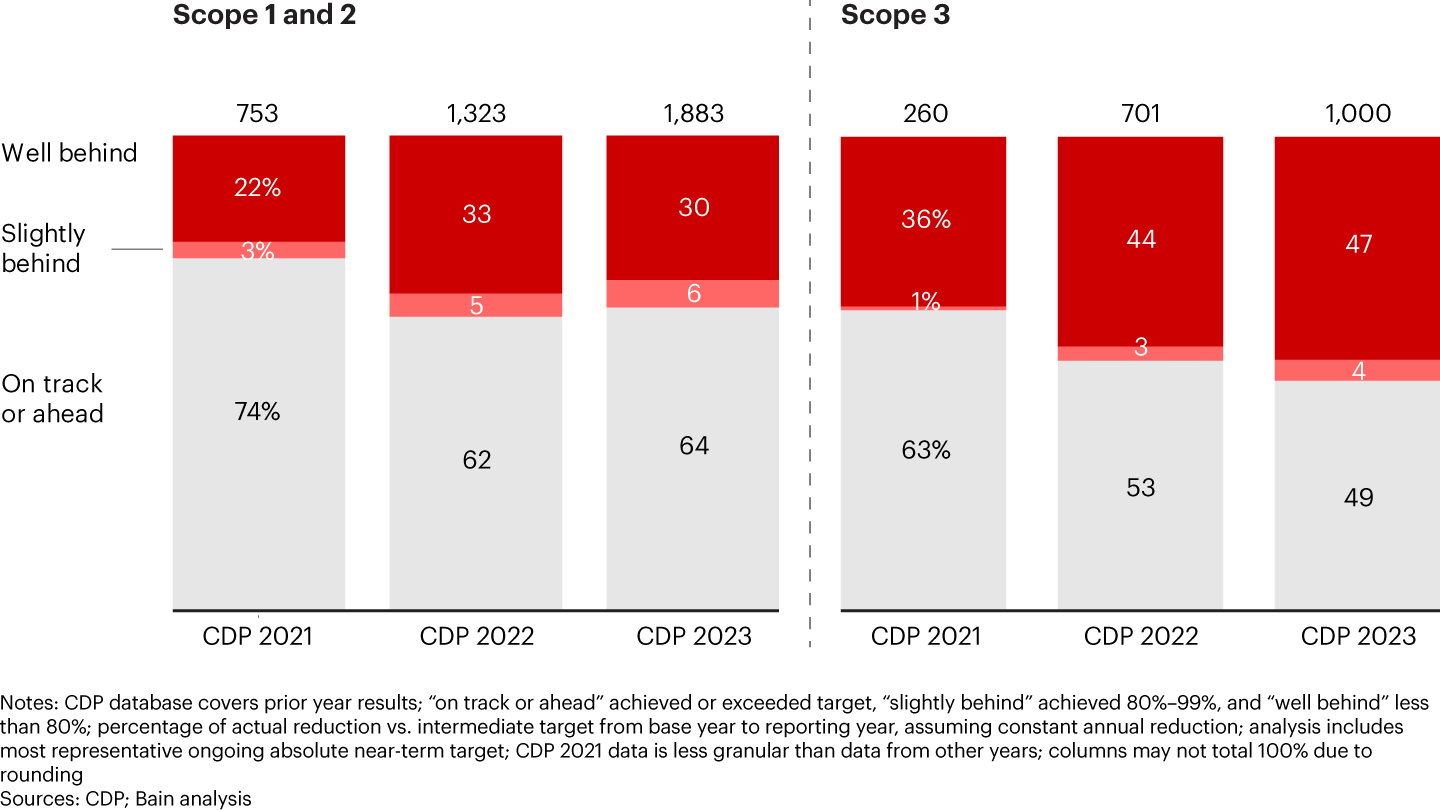
      Companies are falling behind on their commitments to decarbonize

      So, what can companies learn from those that are on track? Decarbonization leaders consistently do two things right. First, they are visionary pragmatists, having built a clear and realistic business case for how they will decarbonize. Second, they collaborate internally and also externally, with others in their value chain and with third parties like regulators. Many other efforts follow from these, but absent these two priorities, decarbonization ambitions seem to stall.

      Step 1: Building the business case for decarbonization

      Decarbonization efforts can be expensive and uncertain, especially in heavy-emitting industries. The more complex a company’s path to decarbonization, the more likely it is to fall behind (see Figure 2). While buying green electricity and renting energy-efficient office space can go a long way toward reducing the service sector’s carbon footprint, results are slower for industries that rely on new technologies and solutions to decarbonize or on partners, customers, and suppliers to do so—or both. Food, beverage, and agriculture companies, for example, have incredibly complex supply chains that represent the vast majority of their emissions. As a result, meeting targets is proving difficult.

      Figure 2
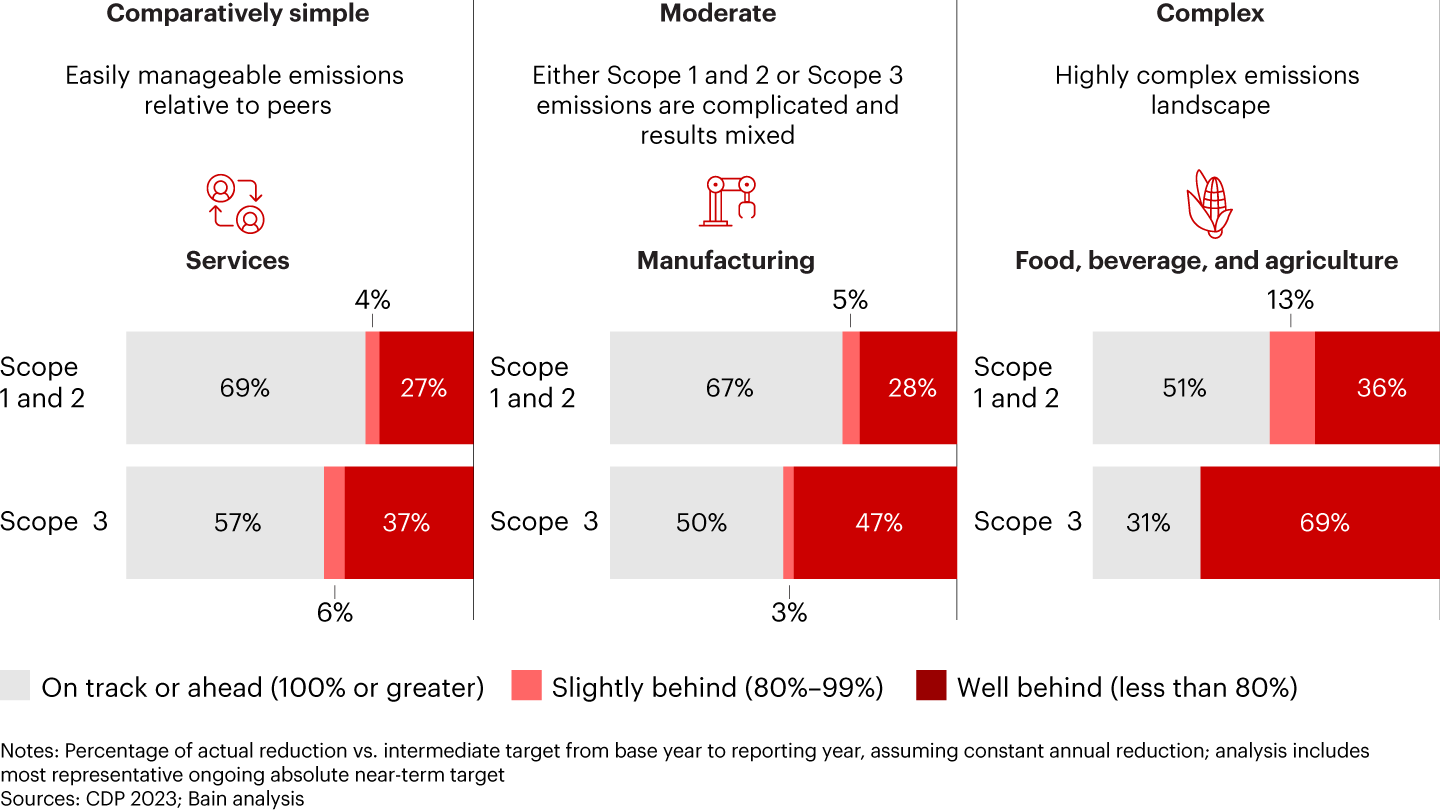
      The more complex an industry’s emissions landscape, the harder it is to decarbonize

      Though there is no one standard approach to building the business case for decarbonization, companies that are having the most success do three things differently. First, they holistically value decarbonization’s contribution to the business. Second, they understand the decarbonization experience curve and pace themselves accordingly. Finally, they build flexibility into their plans and adjust to market changes and other factors.

      Identifying value. If only operating costs are considered, decarbonization won’t always offer a positive return on investment, so companies look for other sources of value. These can range from highly tangible benefits—things like carbon tax risk mitigation, subsidies, or price premiums—to less tangible ones, such as premium valuations by investors (see Figure 3). 

      Figure 3
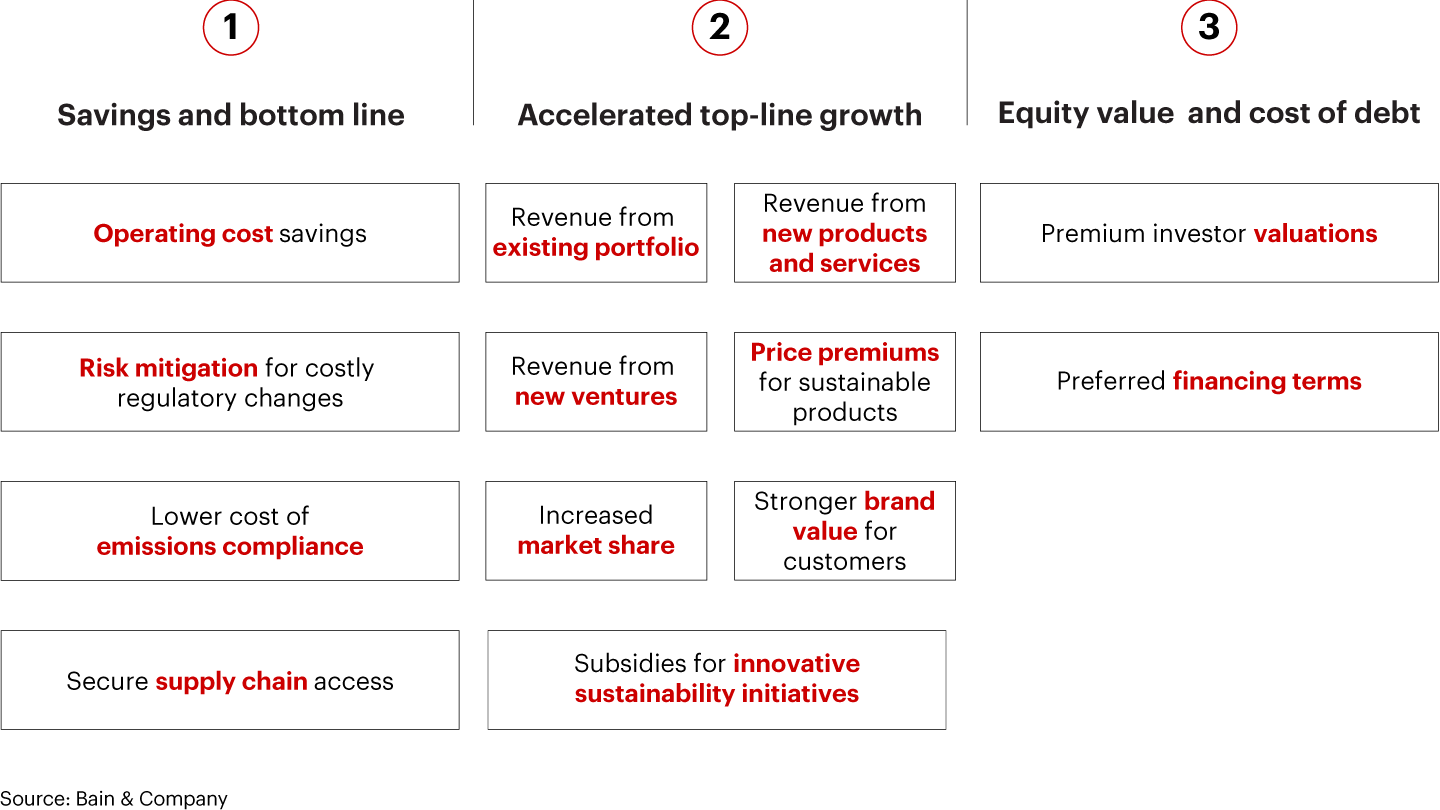
      Companies need to look holistically at the sources of value from decarbonization

      Decarbonization can help safeguard market share from agile competitors, ensure a company is not locked out of low-cost or scarce low-carbon supplies, or keep it ahead of costly regulatory changes such as carbon pricing. Given the uncertainties ahead, companies are exploring multiple approaches. Consider the approach of one chemicals company. Forming exclusive partnerships with green suppliers of low-carbon feedstock early helped the company explore new technology and develop strategic partnerships to assure customers that they would have access to critical supplies as the market evolves. Over time, those supplier relationships should be financially beneficial for the company and help it build a strong market position as the industry shifts toward decarbonization.

      Pacing for the decarbonization experience curve. In many industries, full decarbonization will require nascent technologies to mature. Successful companies aren’t sitting back and waiting. They are focusing first on established ways of reducing carbon and then dynamically adding new approaches as their capacity increases and emerging technologies mature or become economically viable. They also are developing a superior understanding of the decarbonization experience curve and the cost trajectory of key technologies.

      That’s how a dairy company has phased in its commitment to decarbonize. It will achieve the first 45% of its emissions reduction in the near term by pulling mature carbon levers like renewable electricity and cattle-feeding regimes that reduce methane emissions. The next 35% will come from packaging redesign, including lightweighting and increased levels of recycled content, and through sourcing lower-carbon raw materials. The final 20% will take longer and depends on new initiatives in logistics and innovation with suppliers. This could include working with partners to promote broader use of innovative low-carbon technologies, such as deploying battery electric vehicles in logistics.

      Exhibiting flexibility. Companies make decisions in highly complex and unsure environments. The prices and availability of new materials and services are often uncertain. It’s important to be able to adjust plans when new signals come in from customers, investors, government action, or technological change.

      Consider how surging electric demand from generative AI has challenged many companies’ established sustainability plans. In 2023, Microsoft reported a roughly 30% increase in Scope 3 emissions due to AI- and cloud-related data center expansion. In response, the company has adjusted its approach, enforcing a requirement that major suppliers utilize 100% carbon-free electricity by 2030.

      Step 2: Collaborating across the value chain

      Decarbonization requires both independent action and collaboration across the value chain and with external participants. Companies that understand that embed decarbonization in their operating model and then work with a variety of external groups, from suppliers and customers to policymakers and standard setters.  

      Embedding decarbonization in operations. Decarbonization is the biggest internal operational shift many companies have faced since lean manufacturing. To instill a systematic approach to incremental change and a culture of continuous improvement, lean manufacturers develop new capabilities and embed them in their operating model.

      Similarly, decarbonization requires companies to manage carbon like they manage cost by putting an internal price on it, mastering their marginal abatement cost curves, and flexibly adapting to their experience curve. These new capabilities must be embedded by aligning organizational incentives and assigning ownership of decarbonization to functional leaders. Leading companies consider carbon when making decisions and recognize that a low-carbon focus can help build a differentiated company culture.

      Working with customers and suppliers. In most industries, indirect emissions outweigh direct emissions, so progress requires collaboration with stakeholders up and down the value chain. This means companies must identify value for their customers, for their customers’ customers, and for their own suppliers. It starts with better understanding and deaveraging individual customers and then educating them on the price, quality, and sustainability of the company’s offering, as well as how it can help them and their own customers decarbonize. By understanding their customers, companies can work with them to develop the right new products and services, ones whose differentiation can be confidently asserted without risk of greenwashing.

      With suppliers, it’s important to build a similarly granular understanding of their carbon footprint and to identify which are critical emitters. (The largest source of Scope 3 emissions is often raw materials way up the value chain.) Helping suppliers decarbonize will involve advising them, innovating new products and solutions together, developing decarbonization plans, and possibly supporting the financing of those plans. Sometimes, companies have to switch suppliers to reach their goals. Some 39% of B2B buyers report that they are already giving more business to sustainable suppliers.

      A forward-thinking aluminum packaging company illustrates the dividends a “me and we” effort can pay. Internally, the company studied how to decarbonize production efficiently, identifying immediate no-regret moves, like manufacturing lighter cans and using renewable energy, that saved money and lowered costs. Simultaneously, it built a list of more strategic steps that could be taken over time, like shifting the supply mix to higher recycled content and electrifying manufacturing.

      Understanding they couldn’t reach their goals alone, executives also studied where carbon could be lowered across the whole value chain—from mining and refining to end users and recycling. So far, the company has identified ways to abate up to 80% of emissions by 2030, and it expects tens of millions of dollars in financial upside from cost savings and more circular and lower-carbon products.

      Working with policymakers and standard setters. Leading companies anticipate and work with their value chain partners to understand and respond to upcoming regulation, such as carbon taxes, subsidies, or carbon border adjustment mechanisms. They also work with policymakers and standard setters to shape policy, supporting legislation that improves the ROI of decarbonization—either by subsidizing green efforts or by putting a cost on the negative consequences of carbon—and efforts to create common certification standards.

      Change is collaborative, and companies need to work together to bring a cohesive industry voice to government partnerships. Through coalitions, they can outline the support needed to accelerate the sustainability transition. By framing the incentives well, they can illustrate how the right policies will help government address societal needs while providing companies with critical interim support as clean tech scales. Governments need to know what really moves the needle, and making the case in this way can help defend against future pressure to roll back good policies.

      New opportunities

      Even though decarbonization is complex, companies don’t have to give up on their ambitions. By integrating sustainability into their core business and partnering with key stakeholders, companies can effectively manage risks and at the same time capitalize on new growth opportunities. Building a strong business case for decarbonization greatly improves the odds for any company to reach its environmental goals.

      Read the Next Section

      AI and Sustainability: The Power of Integration

      Read our 2024 CEO Sustainability Guide

      EXPORE THE REPORT DOWNLOAD THE PDF

      More from the report

      • Four Questions for Every CEO

      • What Consumers Want

      • Selling Sustainability in B2B

      • Accelerating Decarbonization

      • AI and Sustainability

      • Voice of the CFO

      • Energy

      • Circularity

      • Food

      Authors
      • Headshot of Torsten Lichtenau
        Torsten Lichtenau
        Partner, London
      • Headshot of Peter Guarraia
        Peter Guarraia
        Alumni, Houston
      • Headshot of Abhijit Prabhu
        Abhijit Prabhu
        Partner, Boston
      • Headshot of Anna Fritz Månsson
        Anna Fritz Månsson
        Partner, Stockholm
      • Euan Murray
        Partner, London
      Contact us
      Related Industries
      • Advanced Manufacturing & Services
      • Consumer Products
      • Energy & Natural Resources
      Related Consulting Services
      • Operations
      • Supply Chain
      • Sustainability
      How We Can Help
      • Climate Change
      CEO's Guide to Sustainability
      Building Resilience in Your Business Strategy: Four Imperatives for Leaders

      Traditional approaches to resilience don’t rise to today’s challenges.

      More
      CEO Insights
      Tariffs: The Next Chapter

      Companies need to rebuild their strategies for a world in which the free movement of goods, capital, IP, and people cannot be taken for granted.

      More
      Advanced Manufacturing & Services
      Embracing the “Do-Say” Gap

      Three pragmatic questions that shift sustainability from ambition to action.

      More
      Climate Change
      Financing Climate Solutions in Brazil

      A study conducted by Bain, in partnership with BNDES, highlights both the challenges and the opportunities to accelerate the climate transition.

      More
      COO insights
      How AI Is Starting to Transform Circular Packaging

      There are 15 AI use cases companies across the value chain can use today to accelerate circularity.

      More
      First published in Σεπτέμβριος 2024
      Tags
      • Advanced Manufacturing & Services
      • CEO Insights
      • CEO's Guide to Sustainability
      • Climate Change
      • Consumer Products
      • COO insights
      • Energy & Natural Resources
      • Operations
      • Supply Chain
      • Sustainability

      How We've Helped Clients

      Constructing a best-in-class global procurement organization

      Read case study

      Uncovering major savings in procurement

      Read case study

      Turning around a real estate giant's financial performance

      Read case study

      Έτοιμοι να μιλήσουμε

      Συνεργαζόμαστε με φιλόδοξους ηγέτες που θέλουν να καθορίσουν το μέλλον και όχι. Όχι να κρυφτούν από αυτό. Μαζί, επιτυγχάνουμε πετυχαίνουμε εξαιρετικά αποτελέσματα.

      Μείνετε μπροστά σε έναν γρήγορα εξελισσόμενο κόσμο. Εγγραφείτε στο Bain Insights, τη μηνιαία μας επισκόπηση των κρίσιμων θεμάτων που αντιμετωπίζουν οι παγκόσμιες επιχειρήσεις

      *Έχω διαβάσει την Πολιτική Απορρήτου και συμφωνώ με τους όρους της.

      Please read and agree to the Privacy Policy.
      Bain & Company
      Επικοινωνήστε μαζί μας Sustainability Accessibility Όροι χρήσης Privacy Cookie Policy Sitemap Log In

      © 1996-2026 Bain & Company, Inc.

      Contact Bain

      How can we help you?

      • Business inquiry
      • Career information
      • Press relations
      • Partnership request
      • Speaker request
      See all offices