

Energy & Natural Resources Report

At a Glance
- Bottlenecks and scarcities will define the pace and depth of the energy transition in every market while also creating substantial opportunities.
- Locating and capturing returns on investment in low-carbon businesses will be a greater challenge than accessing capital.
- To succeed, companies will need to build new strategic and operational muscles and to view value chains differently.
This article is part of Bain’s Energy and Natural Resources Report 2023
In some aspects of the energy transition, we’re seeing startling progress. There were record investments in the future energy system in 2022 (1%–2% of global GDP), including a net addition of more than 250 gigawatts of wind and solar capacity. New electric vehicle sales have doubled across Europe, the US, and China. Major clean energy stimulus policy—including the US Inflation Reduction Act—is pumping billions of dollars into the clean energy economy.
At the same time, geopolitical and economic forces have dampened progress in other areas. In the wake of Russia’s gas supply cuts, various European countries fired up coal plants for electricity generation. India retreated from its thermal coal import targets due to the power crisis following last year’s heat waves. Policymakers in some jurisdictions enacted fiscal measures and price interventions to reduce the impact of rising energy bills on consumers.
There’s no clear consensus on what the transition’s end point will look like or what pathway will take us there. For executives of energy and natural resource companies, the more pressing concern is navigating the global energy and carbon transition already taking place. Even if the world can’t meet its ambitions for limiting warming to 1.5 degrees Celsius above preindustrial levels, the transition will prove massively disruptive to the energy sector.
This multi-decade period of transition is likely to be messy, involving more frequent shocks to key commodity markets and value chains. The world isn’t investing in new energy systems fast enough to deliver them quickly, nor is it investing in traditional energy sources (which remain necessary during the transition) at the levels historically required to sustain them. In addition, rather than collaboratively managing a complex transition, the world is fragmenting economically and geopolitically.
Companies that lean into this era with enthusiasm, even if it requires a departure from the ways of the past, will be well positioned to both create tremendous value for their investors and unlock a smoother energy transition for the world.
Bottlenecks shape the pace and profits
Executives are of course familiar with the laws of supply and demand, but viewing the energy transition through the lens of bottlenecks and their resulting scarcities can help companies spot business opportunities. Scarcity governs access to resources, infrastructure, commodity flows, and profit pools. When demand exceeds supply, it creates economic rents that induce investment to ease the scarcity—whether it’s a global commodity or a piece of equipment in a local infrastructure network.
Bottlenecks and scarcities will define the pace and depth of the energy transition in every market and sector. It’s helpful to think of them in three categories: paying, building, and operating.
Bottleneck 1: Who pays? Energy transition progress is often measured by the gap between capital required and committed. Although the world’s committed investments fall far short of the annual capital required to reach net zero by 2050, capital itself isn’t necessarily the constraining factor. It’s available in most energy and natural resource industries, but instead of being reinvested for growth, an increasing percentage is being returned to shareholders.
This is the case in the oil and gas and mining industries, for example. Meanwhile, in utilities, the share of capital being reinvested for growth is steady and capital expenditures are increasing (see Figure 1), but it’s not yet enough to modernize and expand the grid for the target levels of renewable energy and electrification.
Figure 1
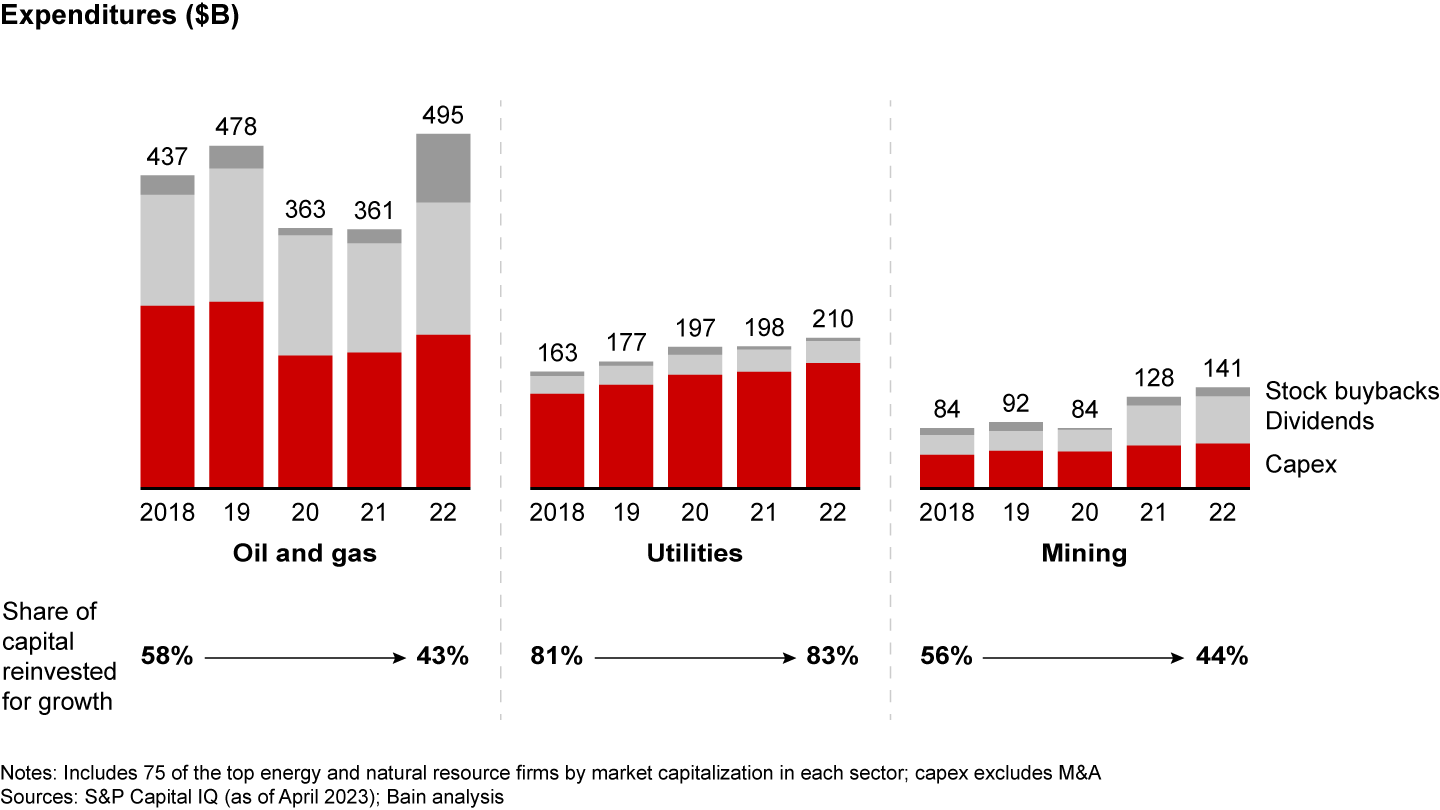

Why is this? Global energy and natural resource executives rank the availability of capital among the bottom three barriers to scaling up low-carbon businesses, according to Bain’s 2023 energy transition survey. Instead, return on investment and customer willingness to pay are top of mind.
Without demand that’s sufficiently profitable on a risk-adjusted basis, there’s limited incentive to develop supply or the infrastructure required to make supply and demand meet. This makes economic returns a first-order scarcity, and locating and capturing them will be a primary challenge of the transition. One path is to anchor on end markets and consumers who are willing to pay the green premium associated with many new energy sources. Every new technology has these early adopters, but identifying and selling to them requires a different mindset for most companies.
Without enough customers willing to pay (or regulations driving them to do so, as is the case in Europe, where industrial consumers are subject to a carbon cap-and-trade program), the only other major source of funding would be governments (taxpayers). This could take the form of taxing alternatives, subsidies that alleviate the cost of production, or direct funding.
Encouraging examples exist across the globe. The US and EU have implemented policy measures to advance the transition, supported by significant government funds. These regions represent the lion’s share of global government investments in clean energy. However, with steeply increasing interest rates and debt-to-GDP ratios in the US and EU, it will prove more difficult to pay for these initiatives. Economic returns may be even harder to find in the developing world, where country risk premiums, counterparty and currency risk, and lack of infrastructure can push required returns much higher than in OECD countries.
Policy can rearrange the rules of the economic game board quickly and dramatically. With geopolitics and the world economy generally fragmenting, it’s safe to assume that the local/national policy landscape will be at least as important as global institutions. The US Inflation Reduction Act (whose passage was a surprise in many circles) made green hydrogen production instantly cost competitive with gray hydrogen—and sparked a backlash in the EU.
In many areas of the new energy ecosystem, markets will not only be regulated by policy but may indeed be created by government. For companies that typically shy away from stroke-of-pen risk, there are compelling reasons to be ready to shape and seize stroke-of-pen opportunity.
Bottleneck 2: Who builds? According to Bain research, 125 of the top energy and natural resource firms by market capitalization in each sector continue to modestly increase the capital allocated to low-carbon growth areas (see Figure 2).
Figure 2
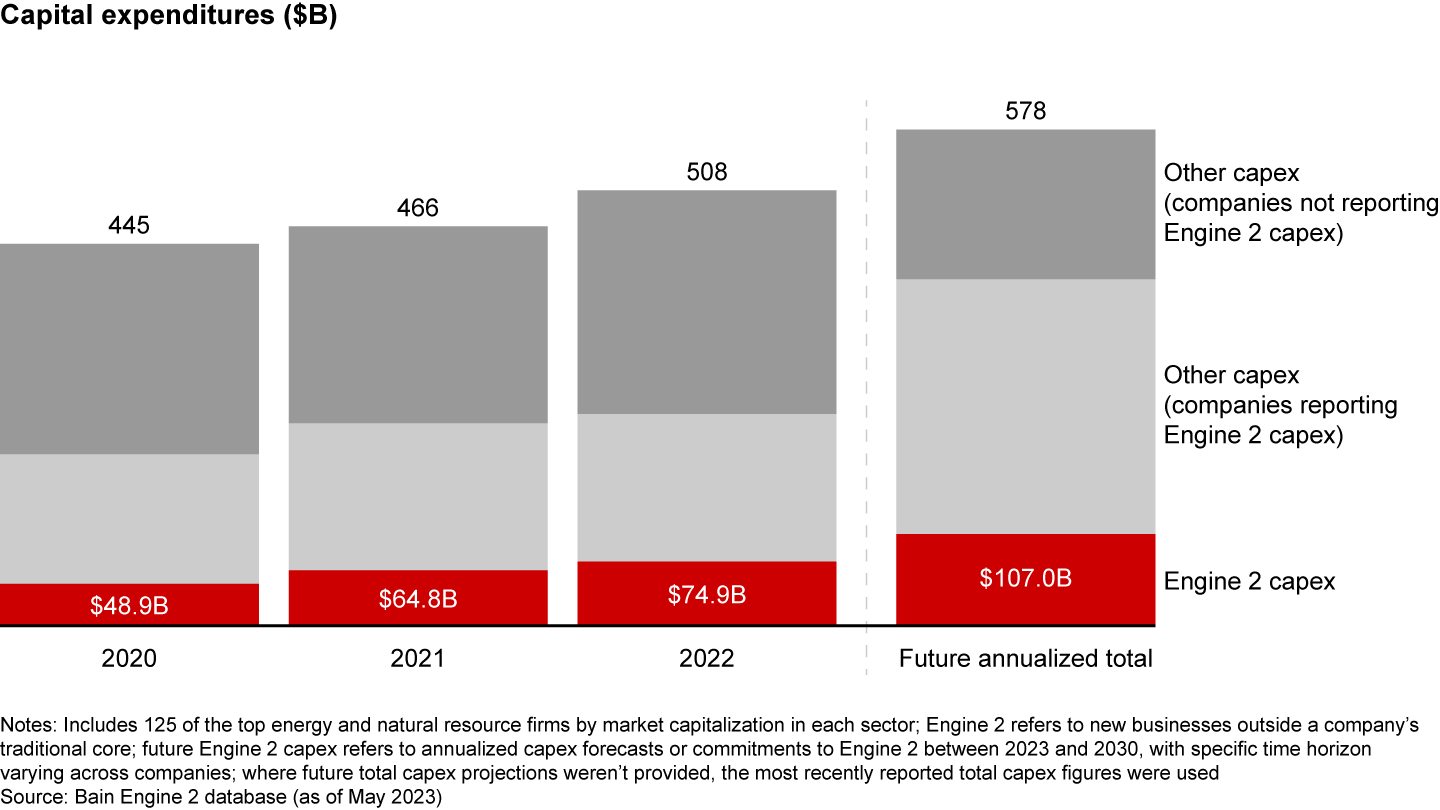

However, developing new energy systems and infrastructure at anything near the pace expected for the transition may push supply chain capacity beyond the breaking point, spurring transformation in some cases. Energy transition ambitions demand record-setting growth in many sectors.
Scarcity will shape and inhibit investment decisions as companies seek access to skilled people, manufacturing and processing capacity, and raw materials and other inputs. For example, the world isn’t extracting enough metals and minerals critical to renewable energy technologies to meet net-zero targets. And the US would need to more than double its energy transmission capacity to take full advantage of the Inflation Reduction Act’s potential impact on renewable power generation (see Figure 3). Technology will improve and costs will decline with experience, but scarcity pricing can reverse those cost improvements for as long as it takes to relieve the bottleneck.
Figure 3
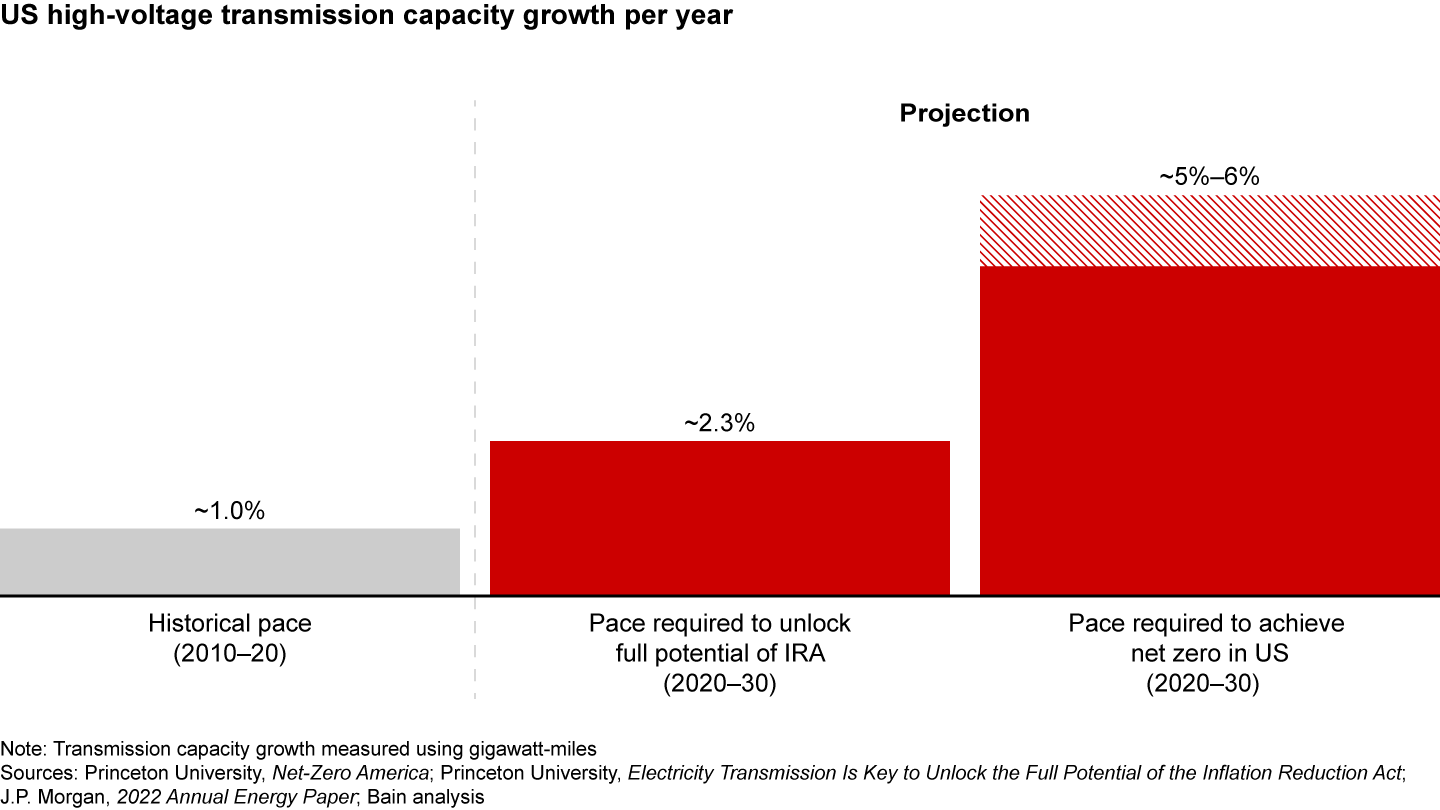

Just as supportive economics are uncertain for energy producers and suppliers, the rest of the value chain is also wary of making large investments based on predictions of new energy adoption. Forward-thinking companies will anticipate these bottlenecks and shortages, which will often occur several steps removed from the new energy commodity that gets the headlines. Depending on a firm’s starting position, it can either seek to play defense (locking in supply certainty even if a bottleneck emerges) or offense (positioning itself around the potential bottleneck to capitalize on surging demand if and when it materializes). That’s why General Motors invested $650 million in a lithium development project, Ford has made similar long-term purchase commitments, and Tesla is considering all forms of backward integration into key materials—an approach consistent with the early days of SpaceX.
Bottleneck 3: Who operates? Operational requirements are changing, probably faster than at any point in the sector’s history. One clear example: As companies reduce their Scope 1 and 2 carbon emissions, they’ll need a growing supply of low-carbon power. The question is whether that can be reliably contracted in the context of utility market structures that also must evolve significantly. In some cases, the company may prefer to secure supply and generate that power itself.
Early examples show what happens when this challenge isn’t addressed. Average power outage duration in the US due to major events more than doubled between 2016 and 2021. Energy markets in Europe were struggling to deliver enough reliable, low-cost power to the grid—low carbon or otherwise—in the second half of 2021, even before Russia’s invasion of Ukraine. And Pakistan routinely experiences rolling blackouts even on normal weather days, driven in part by its inability to access a continuous supply of liquefied natural gas when gas was scarce, in spite of existing contracts.
The steady-state requirements to both deploy and operate these newer systems at scale are only partially visible to us now. What can the industry do to ensure the supply of talent and spare parts needed to perform maintenance on wind turbines or solar farms, keep a smart grid operational, or drive the fleets of ships and trucks that will keep new energy commodities moving around the world? To the extent that new sources of energy are intermittent or reliant on different supply chains, how does the system as a whole achieve resilience and reliability? How will companies obtain feedstock to produce biofuels at the scale required to decarbonize air travel or long-haul trucking? Who will earn the right in the eyes of residential and industrial customers to optimize sources and uses of energy behind the meter, and with what technologies and combinations of assets?
Rather than waiting for the dust to settle while others set the operational norms of the future, leading companies will anticipate these bottlenecks and maneuver into positions of strength.
Succeeding in an era of bottlenecks and scarcities
For energy and natural resource executives, it’s not enough to decide which parts of the energy ecosystem (old and new) to participate in at the headline level. The most effective companies will choose where to play and how to succeed in a way that capitalizes on the opportunities. Whatever course a company charts, new muscles will be required. Here are some of the most consequential.
- Commercial capabilities. Energy and natural resource companies are exploring how to unlock profitable customer segments via their go-to-market and commercial excellence capabilities. Early adopters with less price sensitivity may not always be a large customer segment, but finding and catering to them allows a company to participate profitably and maintain shareholder trust even as it stretches beyond its historical core businesses.
- Proactive policy shaping. Some natural resource companies (e.g., regulated utilities) are used to surviving and thriving in policy-driven markets. But for many, this is a new motion. Clear strategies and participation models linked to deliberate policy positions and toolkits can ensure companies are positioned to benefit as market rules evolve; indeed, they can help shape entirely new markets. Stakeholder coalitions will be critical to preserve license to operate, collectively influence the policy landscape, and create the conditions required for positive risk-adjusted returns.
- Value chains and participation models. As it becomes more essential to guard against or capitalize on bottlenecks, companies are adopting a less adversarial approach to the supply chain. See, for example, our brief “Energy Transition: Delivering Capital Projects On Time and On Budget,” which illustrates how leading project owners are exploring more collaborative, mutually beneficial relationships with contractors. They’re also increasingly willing to try new participation models, vertical integration, creative partnerships, and system-wide thinking.
- Capital planning and resilience. Companies used to deploying long-cycle capital are beginning to reconsider investment criteria when they want to participate both in markets that are high risk/high return (such as resource extraction) and in those with lower risk/lower return (such as policy-driven markets). They’re also contemplating a wider variety of risks, ranging from physical climate resilience to stranded assets. (For more, read the Bain Brief “Managing Stranded Costs on the Long Road to Net Zero” and Chapter 5 of this report.) Finally, uncertain futures call for portfolios of bets and low-cost options, where not every investment is expected to pan out.
The energy transition is well underway. But the unwelcome news for anyone exhausted by the vicissitudes of recent years is that we’re closer to the beginning than the end. The road ahead will be neither straight nor smooth. What’s clear is the need to emphasize different capabilities, change worldviews, and evolve participation models. It won’t be enough to triple down on one step of the value chain and trust global competitive markets to take care of the rest. Leading companies will expand the aperture to track the whole system, taking deliberate positions based on clear beliefs about where sustained, defensible opportunity will be created.
A herd mentality won’t help spot the opportunities created by disruption. Those who can anticipate the scarcities and develop a tailored plan to attack them will create meaningful shareholder value while also doing their part to grease the sticky wheels of the energy transition.
More from the report
Read our Energy and Natural Resources Report 2023
First published in Σεπτέμβριος 2023