
Skip to Content
  • Bureaux

    Bureaux

    Amérique du Nord et Amérique du Sud
    • Atlanta
    • Austin
    • Bogota
    • Boston
    • Buenos Aires
    • Chicago
    • Dallas
    • Denver
    • Houston
    • Los Angeles
    • Mexico City
    • Minneapolis
    • Monterrey
    • Montreal
    • New York
    • Rio de Janeiro
    • San Francisco
    • Santiago
    • São Paulo
    • Seattle
    • Silicon Valley
    • Toronto
    • Washington, DC
    Europe, Moyen-Orient et Afrique
    • Amsterdam
    • Athens
    • Berlin
    • Brussels
    • Copenhagen
    • Doha
    • Dubai
    • Dusseldorf
    • Frankfurt
    • Helsinki
    • Istanbul
    • Johannesburg
    • Kyiv
    • Lisbon
    • London
    • Madrid
    • Milan
    • Munich
    • Oslo
    • Paris
    • Riyadh
    • Rome
    • Stockholm
    • Vienna
    • Warsaw
    • Zurich
    Asie et Australie
    • Bangkok
    • Beijing
    • Bengaluru
    • Brisbane
    • Ho Chi Minh City
    • Hong Kong
    • Jakarta
    • Kuala Lumpur
    • Manila
    • Melbourne
    • Mumbai
    • New Delhi
    • Perth
    • Shanghai
    • Singapore
    • Sydney
    • Tokyo
    Voir tous les bureaux
  • Alumni
  • Presse
  • S’abonner
  • Contacter
  • Canada | Français

    Sélectionnez votre région et votre langue

    Global
    • Global (English)
    Amérique du Nord et Amérique du Sud
    • Brazil (Português)
    • Argentina (Español)
    • Canada (Français)
    • Chile (Español)
    • Colombia (Español)
    Europe, Moyen-Orient et Afrique
    • France (Français)
    • DACH Region (Deutsch)
    • Italy (Italiano)
    • Spain (Español)
    • Greece (Elliniká)
    Asie et Australie
    • China (中文版)
    • Korea (한국어)
    • Japan (日本語)
  • Saved items (0)
    Saved items (0)

    You have no saved items.

    Bookmark content that interests you and it will be saved here for you to read or share later.

    Explore Bain Insights
  • Expertises Sectorielles
    Menu principal

    Expertises Sectorielles

    • Aerospace et Défense
    • Agroalimentaire
    • Chimie
    • Infrastructures, BTP et Matériaux de Construction
    • Grande Consommation
    • Services Financiers
    • Santé
    • Engins & Equipements Industriels
    • Media et Divertissement
    • Metals
    • Mining
    • Pétrole & Gaz
    • Papier et Emballage
    • Private Equity
    • Secteur Public
    • Distribution
    • Technologie
    • Télécommunications
    • Transportation
    • Travel & Leisure
    • Utilities & Energies Renouvelables
  • Expertises Fonctionnelles
    Menu principal

    Expertises Fonctionnelles

    • Expérience Client
    • ESG
    • Innovation
    • Fusions et Acquisitions
    • Opérations
    • People & Organization
    • Private Equity
    • Sales & Marketing
    • Stratégie
    • IA, Perspectives et Solutions
    • Technology
    • Transformation
  • Digital
  • Points de Vue
  • About
    Menu principal

    About

    • Notre Activité
    • Nos Valeurs
    • Nos Collaborateurs et Notre Équipe Dirigeante
    • Notre Impact
    • Prix & Récompenses
    • Partenariats Internationaux
    Further: Our global responsibility
    • Sustainability
    • Impact Social
    • World Economic Forum
    Learn more about Further
  • Carrières
    Menu principal

    Carrières

    • Rejoignez-nous
      Carrières
      Rejoignez-nous
      • Find Your Place
      • Nos domaines d’expertise
      • Equipes multidisciplinaires
      • Étudiants
      • Stages et programmes
      • Événements de recrutement
    • La vie chez Bain
      Carrières
      La vie chez Bain
      • Blog: Inside Bain
      • Récits de carrière
      • Nos collaborateurs
      • Nos bureaux
      • Soutenir votre évolution professionnelle
      • Groupes d’affinités
      • Avantages chez Bain
    • Histoires d’impact
    • Notre processus de recrutement
      Carrières
      Notre processus de recrutement
      • Ce que vous pouvez attendre
      • Entretiens
    Trouver un poste
  • Bureaux
    Menu principal

    Bureaux

    • Amérique du Nord et Amérique du Sud
      Bureaux
      Amérique du Nord et Amérique du Sud
      • Atlanta
      • Austin
      • Bogota
      • Boston
      • Buenos Aires
      • Chicago
      • Dallas
      • Denver
      • Houston
      • Los Angeles
      • Mexico City
      • Minneapolis
      • Monterrey
      • Montreal
      • New York
      • Rio de Janeiro
      • San Francisco
      • Santiago
      • São Paulo
      • Seattle
      • Silicon Valley
      • Toronto
      • Washington, DC
    • Europe, Moyen-Orient et Afrique
      Bureaux
      Europe, Moyen-Orient et Afrique
      • Amsterdam
      • Athens
      • Berlin
      • Brussels
      • Copenhagen
      • Doha
      • Dubai
      • Dusseldorf
      • Frankfurt
      • Helsinki
      • Istanbul
      • Johannesburg
      • Kyiv
      • Lisbon
      • London
      • Madrid
      • Milan
      • Munich
      • Oslo
      • Paris
      • Riyadh
      • Rome
      • Stockholm
      • Vienna
      • Warsaw
      • Zurich
    • Asie et Australie
      Bureaux
      Asie et Australie
      • Bangkok
      • Beijing
      • Bengaluru
      • Brisbane
      • Ho Chi Minh City
      • Hong Kong
      • Jakarta
      • Kuala Lumpur
      • Manila
      • Melbourne
      • Mumbai
      • New Delhi
      • Perth
      • Shanghai
      • Singapore
      • Sydney
      • Tokyo
    Voir tous les bureaux
  • Alumni
  • Presse
  • S’abonner
  • Contacter
  • Canada | Français
    Menu principal

    Sélectionnez votre région et votre langue

    • Global
      Sélectionnez votre région et votre langue
      Global
      • Global (English)
    • Amérique du Nord et Amérique du Sud
      Sélectionnez votre région et votre langue
      Amérique du Nord et Amérique du Sud
      • Brazil (Português)
      • Argentina (Español)
      • Canada (Français)
      • Chile (Español)
      • Colombia (Español)
    • Europe, Moyen-Orient et Afrique
      Sélectionnez votre région et votre langue
      Europe, Moyen-Orient et Afrique
      • France (Français)
      • DACH Region (Deutsch)
      • Italy (Italiano)
      • Spain (Español)
      • Greece (Elliniká)
    • Asie et Australie
      Sélectionnez votre région et votre langue
      Asie et Australie
      • China (中文版)
      • Korea (한국어)
      • Japan (日本語)
  • Saved items  (0)
    Menu principal
    Saved items (0)

    You have no saved items.

    Bookmark content that interests you and it will be saved here for you to read or share later.

    Explore Bain Insights
  • Expertises Sectorielles
    • Expertises Sectorielles

      • Aerospace et Défense
      • Agroalimentaire
      • Chimie
      • Infrastructures, BTP et Matériaux de Construction
      • Grande Consommation
      • Services Financiers
      • Santé
      • Engins & Equipements Industriels
      • Media et Divertissement
      • Metals
      • Mining
      • Pétrole & Gaz
      • Papier et Emballage
      • Private Equity
      • Secteur Public
      • Distribution
      • Technologie
      • Télécommunications
      • Transportation
      • Travel & Leisure
      • Utilities & Energies Renouvelables
  • Expertises Fonctionnelles
    • Expertises Fonctionnelles

      • Expérience Client
      • ESG
      • Innovation
      • Fusions et Acquisitions
      • Opérations
      • People & Organization
      • Private Equity
      • Sales & Marketing
      • Stratégie
      • IA, Perspectives et Solutions
      • Technology
      • Transformation
  • Digital
  • Points de Vue
  • Carrières
    Recherches les plus fréquentes
    • Agile
    • Digital
    • Stratégie
    Vos recherches précédentes
      Pages récemment visitées

      Content added to saved items

      Saved items (0)

      Removed from saved items

      Saved items (0)

      Article

      Achieving Maximum Potential from a Cloud Transformation

      Achieving Maximum Potential from a Cloud Transformation

      Setting high ambitions and enlisting broad support helps companies get more from the cloud.

      Par Vishy Padmanabhan, Prasad Sankaran, Adi Prakash, Rajneesh Sethi, et Frank Ford

      • min
      }

      Article

      Achieving Maximum Potential from a Cloud Transformation
      en
      En Bref
      • Few companies are getting as much out of their cloud strategy as they could if they set their ambitions higher.
      • Most companies plateau at about one-third of their potential after five years of their cloud migrations.
      • Shifting workloads to the cloud generates two kinds of value—the first being cost savings that result from higher productivity and lower technology unit costs.
      • The other source of value could be much greater for most companies: the business innovations made possible by cloud infrastructure, which can create real market advantages.

      Two decades into the migration to the cloud model, most companies have already shifted some of their workloads and committed to shifting more to the cloud. But surprisingly few have been able to capture as much value as they could if they pursued the cloud model more aggressively. Getting started is proving to be straightforward, but scaling cloud operations to their full potential within a large organization has been a difficult climb for many. Bain’s research finds several reasons for this.

      • Most companies aim too low: Only about 1 in 20 companies set their ambitions high enough to target the full potential of the cloud model.
      • Many companies hit a ceiling after about five years of effort and investments, having captured only about 35% of the potential (see Figure 1).
      • These organizations run into scaling barriers after the initial euphoria of a few successful pilots.

      Modernizing technology is an obvious hurdle to further success, with 46% of companies citing the challenge of working within legacy environments as a major barrier. Other significant barriers include difficulty finding the right engineering talent (54%) and overcoming entrenched organizational cultural barriers that keep teams working in their old ways (43%).

      Figure 1
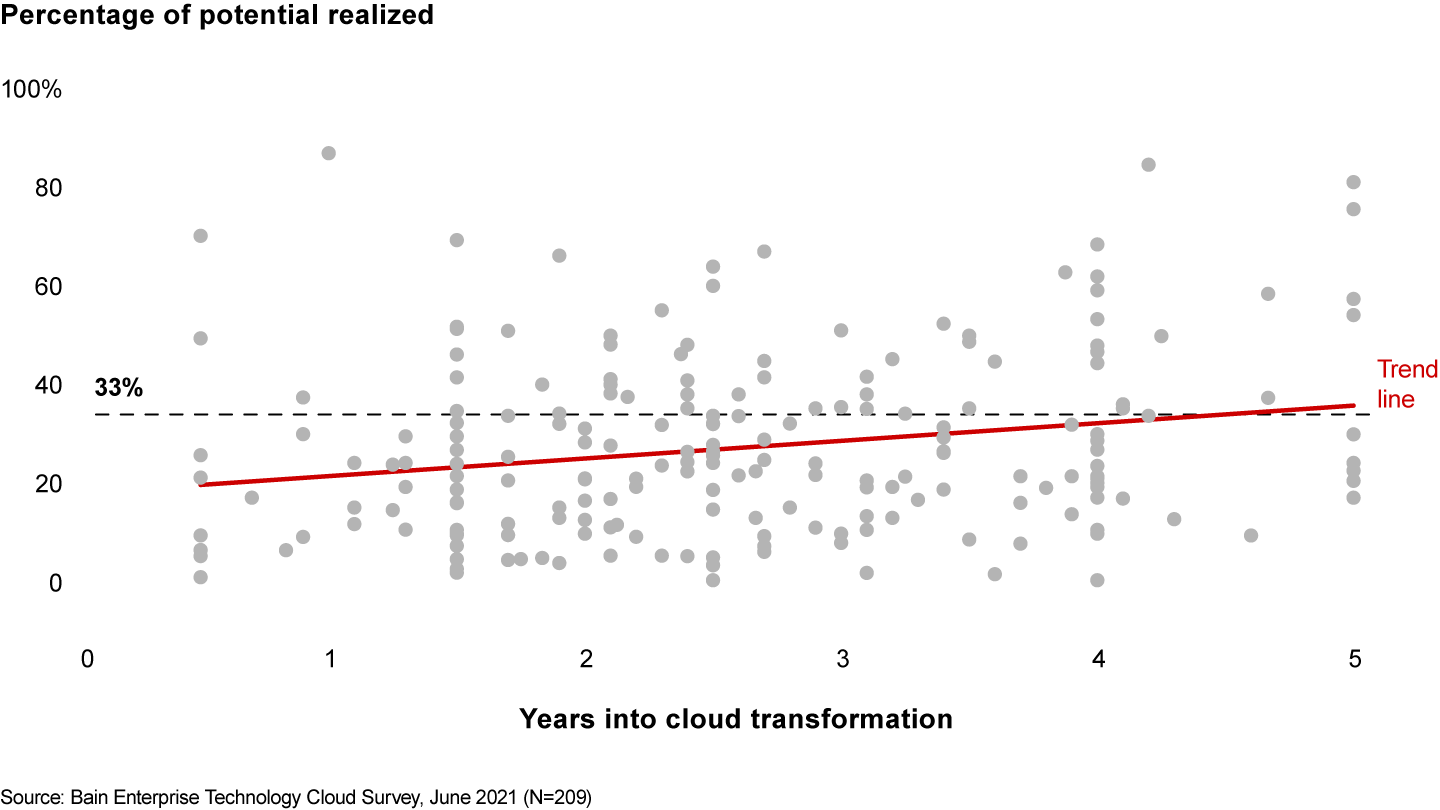
      Cloud initiatives tend to hit a ceiling of about 35% of potential at around five years
      Cloud initiatives tend to hit a ceiling of about 35% of potential at around five years
      Cloud initiatives tend to hit a ceiling of about 35% of potential at around five years

      All these barriers can be overcome, but reaching full potential takes commitment and innovation. Leaders in cloud adoption—that is, those who are achieving greater scale benefits from the cloud model—are more likely to take specific actions, including setting high ambitions, changing entrenched work habits, and taking a more holistic approach to value creation (see Figure 2). In our experience, leaders are also more likely to take a customer-first approach to their business and operating models, a perspective that tends to benefit from the agility and flexibility of a cloud-based model.

      Figure 2
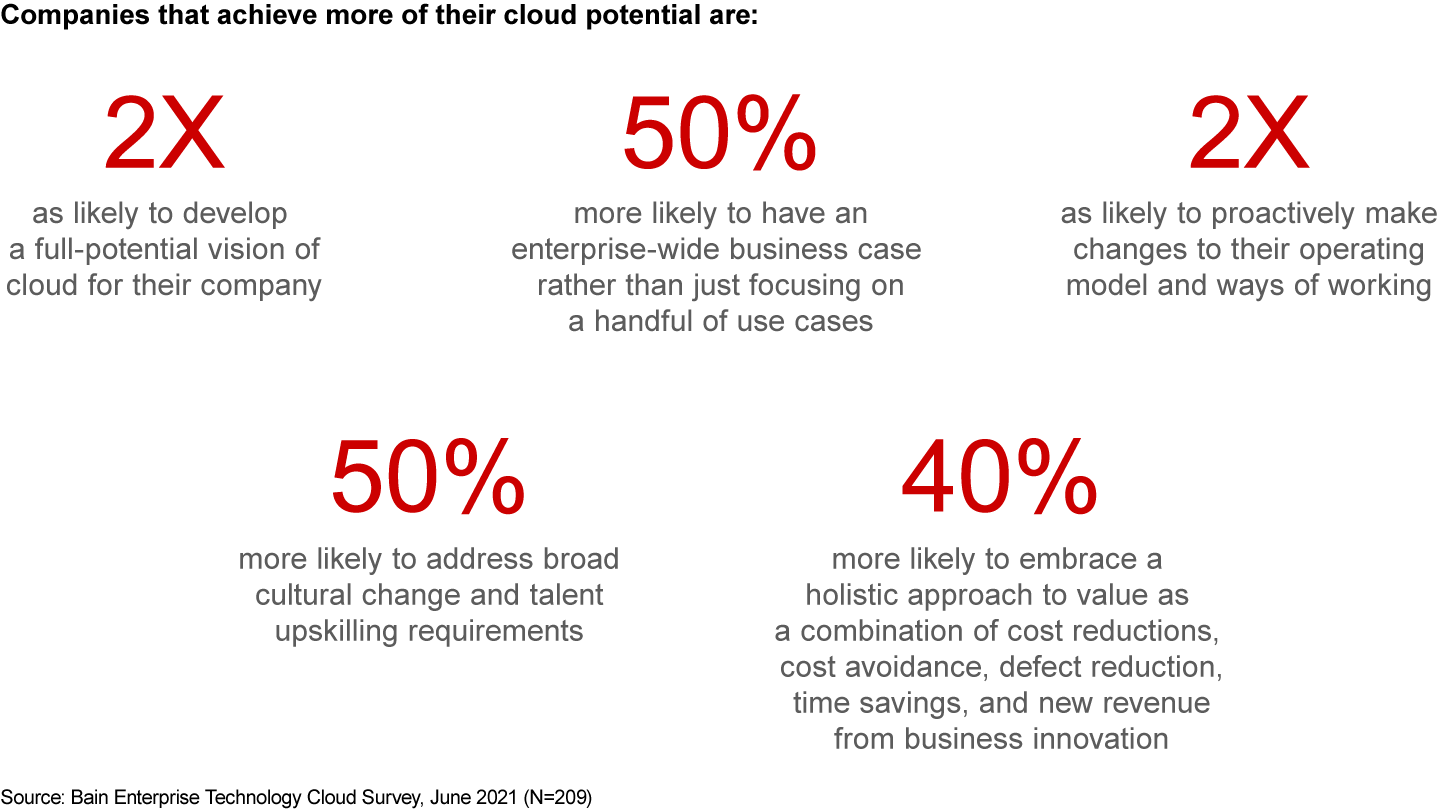
      Cloud leaders are more likely to do these things
      Cloud leaders are more likely to do these things
      Cloud leaders are more likely to do these things

      For the many executives who find themselves in this large cohort of companies that have plateaued at 35%, the message is clear: Don’t give up. While it’s true that the easy gains have been won, greater potential lies ahead for companies that find ways to break through that ceiling. Forging greater ambition starts by understanding two questions:

      • How does the cloud model help companies generate new value?
      • How do companies that are stuck break through old barriers and build new momentum to scale?

      Two main sources of value from the cloud

      Migrating to the cloud generates two types of value: one on the bottom line and one on the top line. New bottom-line value results from cloud’s ability to make developers more productive while reducing the costs of delivering new technology. For the top line, cloud operating models make it easier to innovate, creating and launching new products and businesses in less time.

      Higher productivity, lower unit costs: This is the value that most companies target initially, the core benefits of the cloud model that allow customers to scale up rapidly, pay per use, adapt with flexibility to new demands, and self-provision new infrastructure when needed. These benefits can shave about one-fifth off the unit costs of computing and storage, cut software development time in half or more, and reduce errors.

      Two major barriers block companies from reaching these numbers. First, most are not setting their goals as high as they could, moving more of the business to the cloud model. Cloud initiatives should be pragmatic, but they can also push the limits of what’s possible within an industry. The greater the investment in cloud, the greater the return on investment.

      Second, legacy companies struggle with old work habits and preferences that native cloud companies never have to face. Incumbents can move workloads to the cloud, but they also need to encourage employees to reinvent processes and consider cloud-based solutions first. Another element of this problem is that it’s hard to find enough engineers who are experienced working and developing in a cloud-based environment. Overcoming these barriers requires a blend of reskilling current employees while also attracting new talent.

      Breakthrough business innovations: Beyond these cost benefits, cloud offers greater potential as an innovation platform. Launching new products months ahead of competitors or responding to massive disruptions (such as Covid-19 or supply chain shortages) can create real market advantages. When The Wall Street Journal saw an opportunity to deliver a compelling new feature during the 2020 US presidential campaign, it used machine learning services from Amazon Web Services (AWS) to quickly develop a searchable database of candidate quotes. The Journal wanted readers to be able to pose questions in natural language—such as “what did the president say about healthcare?”—and see results quickly based on text gleaned from Dow Jones’ Factiva database. The Journal’s team developed the service, Talk2020, in four months and was able to launch in September, two months before the election.

      Bain’s research has found that a cloud-enabled insurgent can have operating cost advantages of 60% to 70% (as well as time-to-market advantages) over an incumbent weighed down by legacy ways of working and technology. Whether in banking, insurance, consumer products, pharmaceuticals, or utilities, incumbents increasingly risk being outhustled by smaller and faster, cloud-enabled insurgents. Moderna, for example, has steadily transformed from a discovery-stage biotech company into a commercial biopharma enterprise, developing a diverse portfolio of mRNA-based vaccines and therapeutics. Moderna’s investment in a cloud-based strategy with AWS helped the firm accelerate the test-and-learn cycles that supported the development of its highly effective Covid-19 vaccine as well as its ability to scale production globally.

      Increasingly, market success requires integration with a broader set of ecosystem partners, many of whom are niche providers of new capabilities or data born in the cloud. The cloud model helps companies enter new markets quickly and gain access to new business capabilities by seamlessly partnering across a broad ecosystem and to new technologies such as artificial intelligence, machine learning, blockchain, and digital twinning.

      But companies can only reap these benefits if the business side is dialed into cloud’s potential as an innovation platform. Cloud initiatives that are led only by the technology side of the business, with little buy-in from finance and business executives, tend to lose momentum. If, however, the business case includes upside from cloud advantages, such as faster time to market, the entire company is more likely to support an ambitious cloud program.

      Ongoing education can help executives see the connections between cloud services, faster product design, and better customer experience. When the connections are clear, senior executives can become advocates for the cloud model. Boom Supersonic CEO Blake Scholl, for example, describes how that company’s ability to take advantage of high-performance computing on AWS allows for rapid design iteration at a savings of millions of dollars as it designs a supersonic passenger plane.

      Breaking through the barriers

      The transition from legacy ways of working to a cloud-enabled operating model at enterprise scale is hard work. But the paths of success taken by cloud leaders offer a playbook for effective transformation.

      • Define cloud efforts with a customer-back orientation so that business executives can clearly understand how cloud will improve speed, cost, quality, and innovation, eventually leading to better outcomes with customers, such as more cross-selling and higher loyalty.
      • Prepare a full-potential business case that considers all sources of enterprise value, including technology unit cost reduction, developer and engineering productivity, defect reduction, upside from new revenue sources, and value from more loyal customers.
      • Design the cloud strategy to include new ways of working to accelerate the transformation of the operating model.
      • Invest thoughtfully and in stages to put in place necessary technical foundations, including testing environments, product architectures, and migration plans.
      • Educate executives and frontline staff with continuous learning so that the enterprise takes the most expansive view of cloud benefits and implications.
      • Invest in engineering talent and culture, both of which are central to the cloud journey, and create a plan that includes developing new skills for the software engineering staff as well as hiring new, cloud-savvy talent.

      Perhaps most important, underlying all these tactics should be a concerted effort to aim high, to determine to move as much work to the cloud as is feasible, and to keep the momentum rolling long after the initial enthusiasm wanes.

      Auteurs
      • Vishy Padmanabhan
        Former Partner, New York
      • Prasad Sankaran
        Former Partner, Houston
      • Adi Prakash
        Senior Leader, Strategy, Enterprise Transformation, and Business Value Realization, Amazon Web Services, New York
      • Rajneesh Sethi
        Country Practice Lead, Canada Advisory, Amazon Web Services, Toronto
      • Headshot of Frank Ford
        Frank Ford
        Partner, London
      Contactez-nous
      Expertises fonctionnelles transverses
      • Digital
      • Technologies de l'information
      Comment pouvons-nous vous aider ?
      • Systems & Architecture
      CIO Insights
      Tech Execs Lack Confidence in System Integrators

      Only 6% said that they would recommend their system integrators for an enterprise resource planning (ERP) transformation.

      Voir plus
      CIO Insights
      Want More Out of Your AI Investments? Think People First

      To unlock AI’s exponential productivity potential, companies must modernize workflow and workforce in tandem.

      Voir plus
      Technologies de l'information
      Reimagining Merchandising in the Era of Agentic AI

      The future of merchandising is not better analysis, but faster, smarter execution—and agentic AI is what makes that possible.

      Voir plus
      CIO Insights
      Life Sciences’ AI Momentum Requires a Workforce Redesign

      AI scalers aren't waiting for new talent—they're building it.

      Voir plus
      CIO Insights
      How Soon Will Agentic AI Redefine Enterprise Resource Planning?

      Bain’s latest survey reveals a divide: tech leaders find ERP enables AI adoption, while laggards say it hinders it.

      Voir plus
      First published in novembre 2021
      Mots clés
      • CIO Insights
      • Digital
      • Systems & Architecture
      • Technologies de l'information

      Comment nous avons aidé nos clients

      A Strategic Separation Enables New Growth for GSK and Haleon

      Lire l’étude de cas

      Salvaging a Technology Outsourcing Deal Gone Bad

      Lire l’étude de cas

      Aligning a new technology platform with shifting business priorities

      Lire l’étude de cas

      Vous souhaitez continuer cette conversation ?

      Nous aidons des dirigeants du monde entier à matérialiser des impacts et des résultats pérennes et créateurs de valeur dans leurs organisations.

      Les points de vue de Bain : notre perspective sur des problématiques auxquelles sont confrontées les entreprises à travers le monde, envoyés chaque mois dans votre boîte de réception. 

      *J’ai lu la politique de confidentialité et j’accepte les conditions.

      Merci de lire notre politique de confidentialité.
      Bain & Company
      Contactez-nous Sustainability Accessibility Conditions d’utilisation Politique de Confidentialité Cookie Policy Mentions Légales Sitemap Log In

      © 1996-2026 Bain & Company, Inc.

      Contacter Bain

      Comment pouvons-nous vous aider ?

      • Business inquiry
      • Career information
      • Press relations
      • Partnership request
      • Speaker request
      Voir tous les bureaux