

Etude

What does it take for an organisation to truly harness the power of its employees to improve productivity and business performance? Increasingly, business leaders are realising that the answer lies in creating a positive work environment in which employees feel they can achieve their individual, and collective, full potential. It’s a powerful force: One Gallup analysis of 50,000 companies showed that high-engagement organisations have more than 20% higher profitability and productivity levels than their low-engagement counterparts.1
While the concept of building an engaged workforce is straightforward, achieving it is no easy task. This challenge is only intensifying as technology advances and businesses globalise. As a result, leaders face an urgent need to expand their leadership repertoire in order to motivate an increasingly diverse labour force. But for a significant percentage of the workforce, Australian organisations have not yet been able to uniformly create such environments. Despite the fact that women comprise almost 60% of university graduates2 and 46% of the workforce,3 only 10% of senior leaders4 and 4% of CEOs in Australian ASX200 companies are women.5 Further, our research shows that about 60% of women don’t feel they have equal opportunity to be promoted into senior roles at the same rate as their male colleagues.
In Bain & Company and Chief Executive Women’s (CEW) previous joint research (see “What Stops Women from Reaching the Top? Confronting the Tough Issues,” 2011), survey respondents ranked visible and committed leadership as the most critical factor in creating equal opportunity for women in the workplace.6 However, our most recent research indicates that leaders struggle with providing it: Less than 50% of women agree with the statement, “The leadership team at my company or organisation has made gender parity a visible priority.”
This year’s research aimed to understand specifically what CEOs and other leaders can do to create positive and engaging environments for both genders. Based on survey responses from nearly 1,500 men and women, we find that there are several critical leadership behaviours that can make major differences in employee perceptions of the organisation in general and as a place for women to progress. Importantly, these leadership behaviours affect engagement levels for both women and men, spurring higher performance across the board.
To measure engagement, we asked respondents to rate two questions on a scale of zero to 10: How likely would you be to recommend your organisation as a place to work? How likely would you be to recommend your organisation as a place for women to progress to senior levels? Based on their scores, respondents were categorised as promoters, passives or detractors. The aggregate Net Promoter ScoreSM (NPS®) for each question was calculated by subtracting the percentage of detractors from the percentage of promoters (see below, “Net Promoter Score explained”). The higher the NPS, the greater the advocacy levels.
Consistent with our previous research, we found that women have very low levels of advocacy. Only 27% of women in Australia are promoters of their organisation as a place to work, compared with 50% of men. Factoring in detractors, women’s NPS in Australia is -5, compared with +35 for men. When it comes to rating an organisation as a place for women to progress to senior levels, the number of female promoters nearly halves to a slim 15%, compared with 42% for men. More concerning, 52% of women are detractors of their organisation as a place for women to progress, yielding an NPS of -38.
So, what does it take for CEOs to create more engaged employees? To help organisations find practical solutions, we sought to pinpoint the CEO behaviours that foster environments where both genders are strong advocates of their organisation and feel able to flourish. We began by asking respondents to rate their CEOs on 13 dimensions relating to business performance and gender parity leadership. We then correlated those answers with respondents’ NPS scores to identify which traits were associated with higher employee advocacy levels.
Walk the talk: The impact that visible leadership has on employees’ perceptions of their workplaces
We find there is a handful of critical behaviours that have the potential to create promoters amongst employees of both genders, if done well—and detractors, if done poorly. We call this “conduct that counts,” because these habits significantly shape employee impressions of work environments. One dimension that correlates strongly with NPS for the organisation as a place to work is the effectiveness of the CEO in delivering strong business performance. However, it is not enough for a CEO to simply deliver financial results to win the respect of employees. A key feature of “conduct that counts” is that the CEO demonstrates inclusive behaviour (see Figure 1).
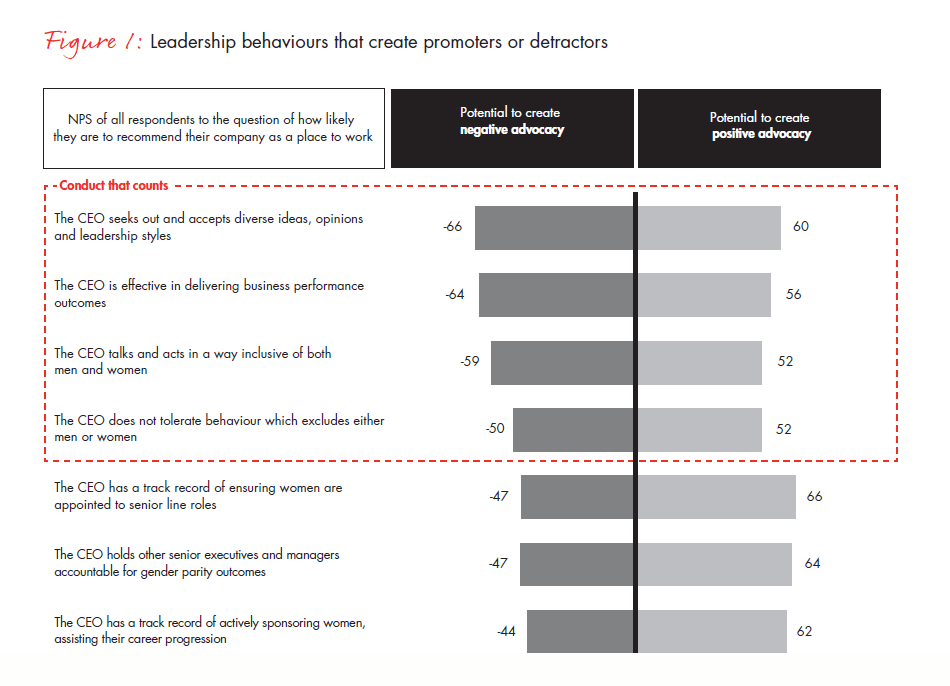
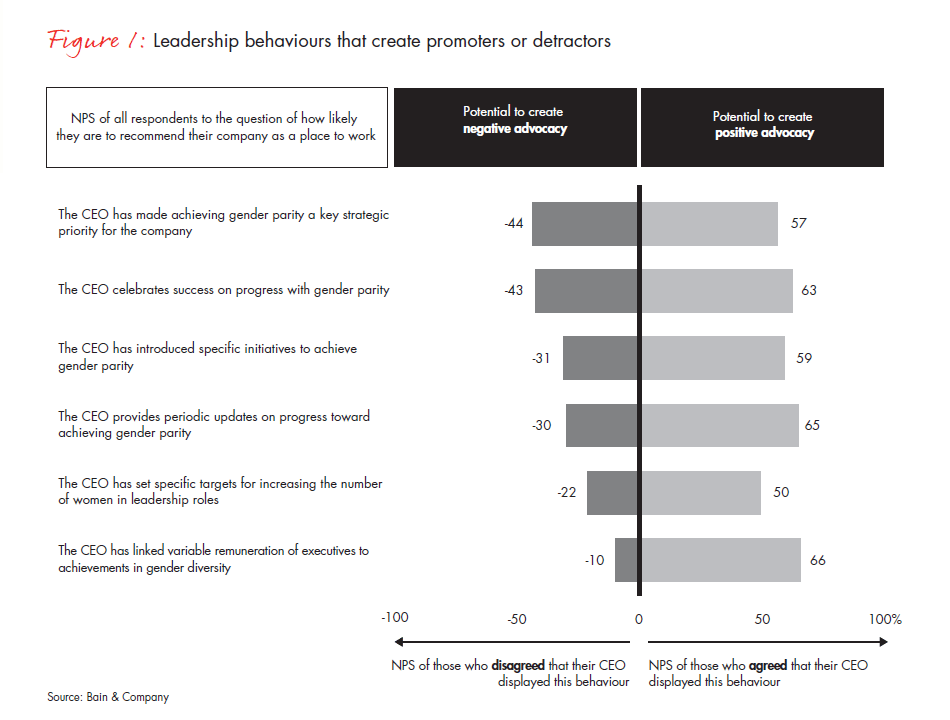
Four statements which correlate strongly with NPS for the organisation as a place to work are:
- The CEO is effective in delivering business performance outcomes.
- The CEO seeks and accepts diverse ideas, opinions and leadership styles.
- The CEO talks and acts in a way that is inclusive of both men and women.
- The CEO does not tolerate behaviour which excludes either men or women.
CEOs who practice “conduct that counts” ensure their leadership teams include the top talent who will complement, rather than merely reinforce one another and, accordingly, seek strong representation of both genders. CEOs who promote diversity also translate high-level goals into daily words and actions that encourage both genders to succeed and be themselves in their organisations. Finally, such conduct means that CEOs clearly and consistently impose consequences for those in their organisations who don’t behave in such ways, showing zero tolerance for biases against diverse ideas, opinions and styles.
Overall, the message of these findings for CEOs is loud and clear: CEOs who are respected for delivering business outcomes, coupled with inclusive behaviour, provide powerful inspiration to the employees they lead. If leaders want to influence productivity by creating workplaces where their teams feel positive and engaged, then they need to personally value and actively seek diversity within their organisation.
Long term, this will create a positive cycle of diversity and engagement that begins to feed itself. Indeed, our research reveals a real example of this: When we compare the level of advocacy based on the gender of the CEO, we find that both men and women are more likely to be advocates for their organisation when their CEO is a woman.
Actions speak louder than words: The actions that influence perceptions of women’s potential to progress
When we focus more narrowly on which CEO behaviours create a workplace where employees of both genders believe women can progress to senior levels, we find that the “conduct that counts” is the actual track record of the CEO in appointing women to, and sponsoring them in, leadership roles (see Figure 2). Three statements that correlate strongly with the NPS for both men and women regarding the organisation as a place where women can progress are:
- The CEO has a track record of ensuring women are appointed into senior line roles.
- The CEO holds other senior executives and managers accountable for gender parity outcomes.
- The CEO has a track record of actively sponsoring women, assisting their career progression.
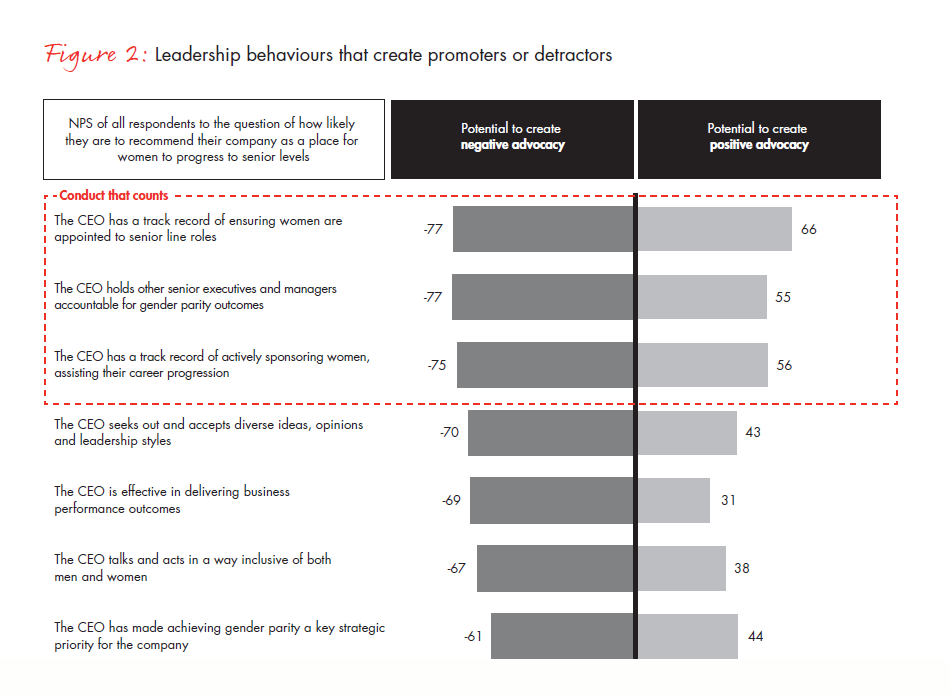
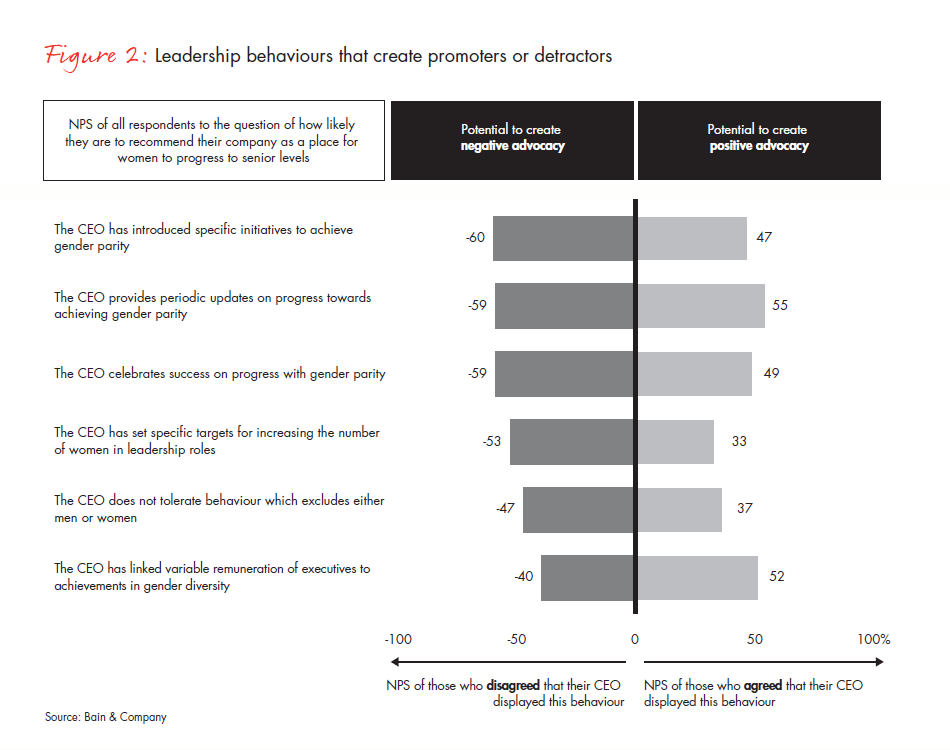
Such CEOs go beyond simply talking about gender diversity and actually appoint women to line roles in their own leadership teams. They also help influence similar appointments throughout the organisation by actively advising women and creating opportunities for them to claim the senior line roles that lead to the top. Finally, they ensure their direct reports follow suit in their own appointment and sponsorship of women and consistently impose penalties for not doing so.
Underscoring the benefits of having a critical mass of women in leadership teams, the survey shows that both genders are significantly more likely to recommend their organisation as a place for women to progress when more than 25% of its executive leadership team is female. The bottom line: Employees are canny observers of reality rather than rhetoric. These scores indicate employees believe that actions speak louder than words when it comes to CEOs creating environments where women believe they can progress.
Conclusion
Winning the hearts and minds of employees is not an easy task for CEOs, particularly as they face increasingly diverse workforces with different needs and backgrounds. The starting point is challenging, considering women’s low advocacy levels for their organisations and prospects to progress.
However, the battle is a worthwhile one, since having a fully engaged workforce is critical to higher productivity and profitability. To help CEOs win this battle, our research highlights “conduct that counts”: leadership behaviours that strongly correlate to higher engagement levels. The lesson for Australian CEOs seeking to reap the benefits of diversity is clear: Foster inclusiveness in your organisations and lead the way by appointing women to leadership positions.
Methodology: We received 1,492 responses from employees of Australian businesses, large and small, in government and not-for-profit organisations. Of the responders, 55% were women and 45% were men. Fifty-eight per cent held senior management, executive or board positions.
The Net Promoter ScoreSM (NPS®) groups respondents into three categories: promoters, passives and detractors.
- Promoters (score of 9 or 10): People who feel that their lives have been enriched by their relationship with their organisation or leader. They behave like loyal employees, typically staying longer and talking the organisation up to their friends and colleagues.
- Passives (score of 7 or 8): People who are fairly satisfied employees, but not loyal ones. They rarely talk their company up, and when they do, it’s likely to be qualified and unenthusiastic. If a better offer comes along, they are likely to defect.
- Detractors (score of 0 to 6): People who feel their lives have been diminished by their association with their organisation or leader. They are dissatisfied and even dismayed by how they are treated. They frequently speak negatively about their organisation and are likely to leave as soon as they find something better.
NPS is calculated by subtracting the percentage of detractors from the percentage of promoters.
Endnotes
Net Promoter SystemSM and Net Promoter ScoreSM are trademarks of Bain & Company, Inc., Fred Reichheld and Satmetrix Systems, Inc
1. State of the Global Workplace: Employee Engagement Insights for Business Leaders Worldwide, Gallup, http://www.gallup.com/strategicconsulting/164735/state-global-workplace.aspx.
2. “Table 2: Award Course Completions for All Students by Citizenship and Gender, 1999 to 2013,” Award Course Completions, Australian Department of Education, http://docs.education.gov.au/documents/2013-award-course-completions.
3. Labour Force, Australia, June 2014, Australian Bureau of Statistics, http://www.abs.gov.au/AUSSTATS/abs@.nsf/allprimarymainfeatures/CE01582B70A13C4CCA257D2C00124321
4. 2012 Australian Census of Women in Leadership, Equal Opportunity for Women in the Workplace Agency, Australian Government, p. 8, https://www.wgea.gov.au/sites/default/ files/2012_CENSUS%20REPORT.pdf.
5. 2012 Australian Census of Women in Leadership, Equal Opportunity for Women in the Workplace Agency, Australian Government, p. 27, https://www.wgea.gov.au/sites/default/ files/2012_CENSUS%20REPORT.pdf.
6. Melanie Sanders, David Zehner, Dr. Jenny Fagg, Meredith Hellicar, “Creating a positive cycle: Critical steps to achieving gender parity in Australia,” Bain Insights, February 06, 2013, http://www.bain.com/offices/australia/en_us/publications/creating-a-positive-cycle.aspx.
First published in décembre 2014