
Skip to Content
  • Bureaux

    Bureaux

    Amérique du Nord et Amérique du Sud
    • Atlanta
    • Austin
    • Bogota
    • Boston
    • Buenos Aires
    • Chicago
    • Dallas
    • Denver
    • Houston
    • Los Angeles
    • Mexico City
    • Minneapolis
    • Monterrey
    • Montreal
    • New York
    • Rio de Janeiro
    • San Francisco
    • Santiago
    • São Paulo
    • Seattle
    • Silicon Valley
    • Toronto
    • Washington, DC
    Europe, Moyen-Orient et Afrique
    • Amsterdam
    • Athens
    • Berlin
    • Brussels
    • Copenhagen
    • Doha
    • Dubai
    • Dusseldorf
    • Frankfurt
    • Helsinki
    • Istanbul
    • Johannesburg
    • Kyiv
    • Lisbon
    • London
    • Madrid
    • Milan
    • Munich
    • Oslo
    • Paris
    • Riyadh
    • Rome
    • Stockholm
    • Vienna
    • Warsaw
    • Zurich
    Asie et Australie
    • Bangkok
    • Beijing
    • Bengaluru
    • Brisbane
    • Ho Chi Minh City
    • Hong Kong
    • Jakarta
    • Kuala Lumpur
    • Manila
    • Melbourne
    • Mumbai
    • New Delhi
    • Perth
    • Shanghai
    • Singapore
    • Sydney
    • Tokyo
    Voir tous les bureaux
  • Alumni
  • Presse
  • S’abonner
  • Contacter
  • Canada | Français

    Sélectionnez votre région et votre langue

    Global
    • Global (English)
    Amérique du Nord et Amérique du Sud
    • Brazil (Português)
    • Argentina (Español)
    • Canada (Français)
    • Chile (Español)
    • Colombia (Español)
    Europe, Moyen-Orient et Afrique
    • France (Français)
    • DACH Region (Deutsch)
    • Italy (Italiano)
    • Spain (Español)
    • Greece (Elliniká)
    Asie et Australie
    • China (中文版)
    • Korea (한국어)
    • Japan (日本語)
  • Saved items (0)
    Saved items (0)

    You have no saved items.

    Bookmark content that interests you and it will be saved here for you to read or share later.

    Explore Bain Insights
  • Expertises Sectorielles
    Menu principal

    Expertises Sectorielles

    • Aerospace et Défense
    • Agroalimentaire
    • Chimie
    • Infrastructures, BTP et Matériaux de Construction
    • Grande Consommation
    • Services Financiers
    • Santé
    • Engins & Equipements Industriels
    • Media et Divertissement
    • Metals
    • Mining
    • Pétrole & Gaz
    • Papier et Emballage
    • Private Equity
    • Secteur Public
    • Distribution
    • Technologie
    • Télécommunications
    • Transportation
    • Travel & Leisure
    • Utilities & Energies Renouvelables
  • Expertises Fonctionnelles
    Menu principal

    Expertises Fonctionnelles

    • Expérience Client
    • ESG
    • Innovation
    • Fusions et Acquisitions
    • Opérations
    • People & Organization
    • Private Equity
    • Sales & Marketing
    • Stratégie
    • IA, Perspectives et Solutions
    • Technology
    • Transformation
  • Digital
  • Points de Vue
  • About
    Menu principal

    About

    • Notre Activité
    • Nos Valeurs
    • Nos Collaborateurs et Notre Équipe Dirigeante
    • Notre Impact
    • Prix & Récompenses
    • Partenariats Internationaux
    Further: Our global responsibility
    • Sustainability
    • Impact Social
    • World Economic Forum
    Learn more about Further
  • Carrières
    Menu principal

    Carrières

    • Rejoignez-nous
      Carrières
      Rejoignez-nous
      • Find Your Place
      • Nos domaines d’expertise
      • Equipes multidisciplinaires
      • Étudiants
      • Stages et programmes
      • Événements de recrutement
    • La vie chez Bain
      Carrières
      La vie chez Bain
      • Blog: Inside Bain
      • Récits de carrière
      • Nos collaborateurs
      • Nos bureaux
      • Soutenir votre évolution professionnelle
      • Groupes d’affinités
      • Avantages chez Bain
    • Histoires d’impact
    • Notre processus de recrutement
      Carrières
      Notre processus de recrutement
      • Ce que vous pouvez attendre
      • Entretiens
    Trouver un poste
  • Bureaux
    Menu principal

    Bureaux

    • Amérique du Nord et Amérique du Sud
      Bureaux
      Amérique du Nord et Amérique du Sud
      • Atlanta
      • Austin
      • Bogota
      • Boston
      • Buenos Aires
      • Chicago
      • Dallas
      • Denver
      • Houston
      • Los Angeles
      • Mexico City
      • Minneapolis
      • Monterrey
      • Montreal
      • New York
      • Rio de Janeiro
      • San Francisco
      • Santiago
      • São Paulo
      • Seattle
      • Silicon Valley
      • Toronto
      • Washington, DC
    • Europe, Moyen-Orient et Afrique
      Bureaux
      Europe, Moyen-Orient et Afrique
      • Amsterdam
      • Athens
      • Berlin
      • Brussels
      • Copenhagen
      • Doha
      • Dubai
      • Dusseldorf
      • Frankfurt
      • Helsinki
      • Istanbul
      • Johannesburg
      • Kyiv
      • Lisbon
      • London
      • Madrid
      • Milan
      • Munich
      • Oslo
      • Paris
      • Riyadh
      • Rome
      • Stockholm
      • Vienna
      • Warsaw
      • Zurich
    • Asie et Australie
      Bureaux
      Asie et Australie
      • Bangkok
      • Beijing
      • Bengaluru
      • Brisbane
      • Ho Chi Minh City
      • Hong Kong
      • Jakarta
      • Kuala Lumpur
      • Manila
      • Melbourne
      • Mumbai
      • New Delhi
      • Perth
      • Shanghai
      • Singapore
      • Sydney
      • Tokyo
    Voir tous les bureaux
  • Alumni
  • Presse
  • S’abonner
  • Contacter
  • Canada | Français
    Menu principal

    Sélectionnez votre région et votre langue

    • Global
      Sélectionnez votre région et votre langue
      Global
      • Global (English)
    • Amérique du Nord et Amérique du Sud
      Sélectionnez votre région et votre langue
      Amérique du Nord et Amérique du Sud
      • Brazil (Português)
      • Argentina (Español)
      • Canada (Français)
      • Chile (Español)
      • Colombia (Español)
    • Europe, Moyen-Orient et Afrique
      Sélectionnez votre région et votre langue
      Europe, Moyen-Orient et Afrique
      • France (Français)
      • DACH Region (Deutsch)
      • Italy (Italiano)
      • Spain (Español)
      • Greece (Elliniká)
    • Asie et Australie
      Sélectionnez votre région et votre langue
      Asie et Australie
      • China (中文版)
      • Korea (한국어)
      • Japan (日本語)
  • Saved items  (0)
    Menu principal
    Saved items (0)

    You have no saved items.

    Bookmark content that interests you and it will be saved here for you to read or share later.

    Explore Bain Insights
  • Expertises Sectorielles
    • Expertises Sectorielles

      • Aerospace et Défense
      • Agroalimentaire
      • Chimie
      • Infrastructures, BTP et Matériaux de Construction
      • Grande Consommation
      • Services Financiers
      • Santé
      • Engins & Equipements Industriels
      • Media et Divertissement
      • Metals
      • Mining
      • Pétrole & Gaz
      • Papier et Emballage
      • Private Equity
      • Secteur Public
      • Distribution
      • Technologie
      • Télécommunications
      • Transportation
      • Travel & Leisure
      • Utilities & Energies Renouvelables
  • Expertises Fonctionnelles
    • Expertises Fonctionnelles

      • Expérience Client
      • ESG
      • Innovation
      • Fusions et Acquisitions
      • Opérations
      • People & Organization
      • Private Equity
      • Sales & Marketing
      • Stratégie
      • IA, Perspectives et Solutions
      • Technology
      • Transformation
  • Digital
  • Points de Vue
  • Carrières
    Recherches les plus fréquentes
    • Agile
    • Digital
    • Stratégie
    Vos recherches précédentes
      Pages récemment visitées

      Content added to saved items

      Saved items (0)

      Removed from saved items

      Saved items (0)

      Etude

      How group dynamics affect decisions

      How group dynamics affect decisions

      Group interactions often color people’s judgment. But companies can learn to counter the effects of group biases.

      Par Paul Rogers and Todd Senturia

      • min

      Etude

      How group dynamics affect decisions
      en

      We human beings don’t always make good decisions. Our rational judgment is influenced not only by passions and emotions but also by built-in biases such as overconfidence in our own abilities (see our earlier article, “Why we behave—and decide—the way we do”). One big factor affecting the quality of decisions is whether a decision involves a group. Group dynamics can lead otherwise sensible individuals to make (or agree to) decisions they might not come to on their own.

      At times the effects are positive, as when some group members help others overcome prejudices. But the dynamics of a group often have negative consequences. Since nearly every company relies on collective decision making in some contexts, executives need to be on the lookout for group biases and their undesirable results. Here are four common manifestations of the “group effect” and some suggestions about how to counter them:

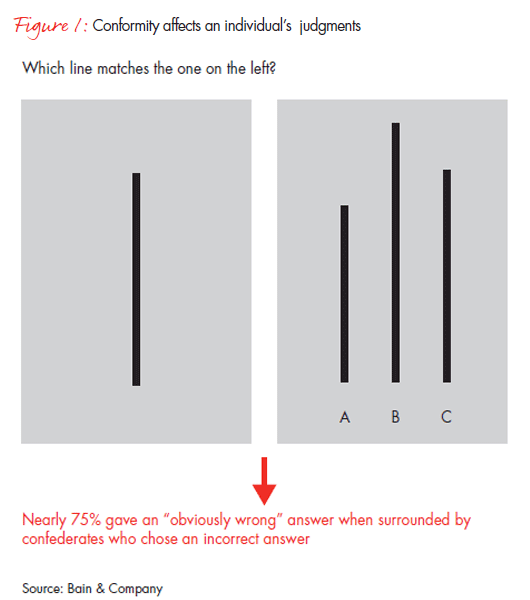
      Conformity. Many people go along with the group regardless of what they themselves might think as individuals. A famous experiment by psychologist Solomon Asch showed how powerful this effect is. Asked to choose which of three lines was the same length as a prototype line, nearly every subject chose correctly when acting alone. But then Asch put each subject into a group of several confederates, all of whom had been instructed to pick the wrong line on one of the “tests.” Sure enough, almost 75% of the subjects agreed with the group at least once—even though many later confessed they knew the group’s answer was wrong (see Figure 1).

      decision-insights-conformity-affects-an-individuals-judgments-fig-01

      In business, the tendency to conform often persuades dissenters to shut up rather than speak out. Warner Brothers, for example, invested $50 million in the film adaptation of Tom Wolfe’s best seller The Bonfire of the Vanities. The result: a hugely expensive box-office bomb. "Many people involved … had doubts about the casting choices and changes in the storyline, but they never voiced these doubts to the director,” wrote Cabrillo College professor J. Dan Rothwell in a book on small-group communication. Meanwhile the director also had doubts “but because no dissent was voiced, he convinced himself that he had made the correct decisions."

      Group polarization. You'd think that a group would tend to moderate individual points of view. In fact, the opposite often occurs: In a phenomenon known as group polarization, deliberation can intensify people’s attitudes, leading to more extreme decisions. A study of US federal judges, for example, found that judges working alone took a relatively extreme course of action only 30% of the time. When they were working in groups of three, this figure more than doubled, to 65%.

      The business implications? Imagine a company's investment committee. If it's composed of people with a generally cautious outlook, the group may make decisions that avoid risk altogether—or vice versa. Or imagine a go/no-go product-development decision. If group members making the decision are inclined toward innovation rather than conservatism, they may collectively decide to throw caution to the winds. A public example of group polarization may have occurred in 2013 in the US, when opposition to the Affordable Care Act led a group of Republicans in the House of Representatives to shut down the US government in hopes of forcing negotiations over the act’s implementation. “From decades of empirical research, we know that when like-minded people speak with one another, they tend to become more extreme, more confident and more unified—the phenomenon known as group polarization,” wrote Harvard Law School Professor Cass R. Sunstein in an analysis of the shutdown. "If you're in a group whose members think the Affordable Care Act is horrible, you'll hear many arguments to that effect and very few the other way. After a lot of people have spoken, [the act] will seem much worse than merely horrible; it might be taken as a menace to the republic."

      Obedience to authority. Every Psychology 101 student learns of Stanley Milgram’s classic experiment in which test subjects obeyed instructions to administer electric shocks to other "subjects"—actually confederates pretending to be shocked—even when the harm seemed extreme. Though businesses depend on employees to carry out their supervisors’ instructions, executives should find this particular group dynamic disturbing. A company suffers when subordinates never challenge their superiors’ decisions. Take the worst commercial aviation incident in history: In 1977 a KLM plane attempted to take off from Tenerife airport while a Pan Am plane was on the runway. Official investigation concluded that the senior KLM pilot had taken off without clearance as a result of communication problems, including the reluctance of other crew to challenge his decision to go. The “captain was always right” effect was cited as a principal cause in the official report on the incident.

      Bystander effect. As social psychologists have long known, people are far more likely to aid a victim in distress or report an apparent emergency if they are alone than if other people are around. One reason: If you’re uncertain what to do, you’re likely to take your cues from other people whenever possible.

      The bystander effect crops up in a variety of business contexts. Employees might be expected to report safety violations, for example—but if some people ignore a dangerous situation, others are likely to do so as well. Barings Bank was brought down in 1995 by the unauthorized trading of head derivatives trader Nick Leeson in Singapore. Afterwards, investigators found that several internal and external reports had drawn attention to the fact that someone in Leeson’s position could conceal losses. Yet "individuals in a number of different departments failed to face up to, or follow up on, identified problems," according to an MIT Sloan Management Review article.

      Good organizational practices can help counter the ill effects of group dynamics. The most important key is to locate decision roles and accountabilities with specific individuals. An individual who is publicly responsible for a given decision is less likely to be swayed by group polarization. And someone who has public responsibility for offering input can’t easily take refuge in mindless conformity or in the role of a bystander.

      Companies can put plenty of other tools to good use as well, including:

      • Devil’s advocate. A person or team charged with taking the less popular side of an issue can help guard against mindless conformity.
      • Diversity in decision-making meetings. People from different functions or with different backgrounds may help counter conformity and group polarization.
      • Advance collection of opinions. Asking for input in advance often counters the tendency of a group to reach more extreme positions.
      • A forum for direct communication with senior management. People who disagree with an action but are afraid to say so can use back channels to communicate their concern.
      • An “at-cause” attitude. A culture that fosters what we call an at-cause approach encourages everyone to assume personal responsibility for group decisions.

      Nobody can put an end to group dynamics, and anyway the output of a group is often more positive than you would expect. But companies that actively compensate for the negative effects will make better decisions, on average, than those that fail to do so.

      Paul Rogers is a partner with Bain & Company based in London and founder of the firm’s Global Organization practice. Todd Senturia is a Bain partner based in Los Angeles.

      Bain Book

      Decide & Deliver

      Learn more about the five steps that leading organizations use to make great decisions quickly and execute them effectively.

      Auteurs
      • Paul Rogers
        Former Partner, Middle East
      • Todd Senturia
        Former Senior Director of Professional Development, Los Angeles
      Contactez-nous
      Expertises fonctionnelles transverses
      • Organisation
      Organisation
      Why we behave—and decide—the way we do

      Here are four biases that can hobble even the most thoughtful decision makers.

      Voir plus
      Organisation
      Boiling-frog affliction and other ills: Using combination therapies to improve organization performance

      Organizational ailments tend to come in clusters, which means you’re going to need a combination of treatments to fix them.

      Voir plus
      Organisation
      Beef up organisation in a downturn

      A strong organisation isn't optional, something to worry about after the crisis.

      Voir plus
      Organisation
      Want More Out of Your AI Investments? Think People First

      To unlock AI’s exponential productivity potential, companies must modernize workflow and workforce in tandem.

      Voir plus
      Organisation
      Stay Relevant, Spark Energy: Pedro Arnt, CEO dLocal

      How can a hyperscaler grow at lightning speed without losing its soul? 

      Voir plus
      First published in décembre 2013
      Mots clés
      • Organisation

      Comment nous avons aidé nos clients

      A Bold New Strategy Restores a Bank to a Leadership Position

      Lire l’étude de cas

      Centralization boosts performance for an energy giant

      Lire l’étude de cas

      A Regional Operating Model Lifts European Sales for a Medical Device Maker

      Lire l’étude de cas

      Vous souhaitez continuer cette conversation ?

      Nous aidons des dirigeants du monde entier à matérialiser des impacts et des résultats pérennes et créateurs de valeur dans leurs organisations.

      Les points de vue de Bain : notre perspective sur des problématiques auxquelles sont confrontées les entreprises à travers le monde, envoyés chaque mois dans votre boîte de réception. 

      *J’ai lu la politique de confidentialité et j’accepte les conditions.

      Merci de lire notre politique de confidentialité.
      Bain & Company
      Contactez-nous Sustainability Accessibility Conditions d’utilisation Politique de Confidentialité Cookie Policy Mentions Légales Sitemap Log In

      © 1996-2026 Bain & Company, Inc.

      Contacter Bain

      Comment pouvons-nous vous aider ?

      • Business inquiry
      • Career information
      • Press relations
      • Partnership request
      • Speaker request
      Voir tous les bureaux