Skip to Content
  • Bureaux

    Bureaux

    Amérique du Nord et Amérique du Sud
    • Atlanta
    • Austin
    • Bogota
    • Boston
    • Buenos Aires
    • Chicago
    • Dallas
    • Denver
    • Houston
    • Los Angeles
    • Mexico City
    • Minneapolis
    • Monterrey
    • Montreal
    • New York
    • Rio de Janeiro
    • San Francisco
    • Santiago
    • São Paulo
    • Seattle
    • Silicon Valley
    • Toronto
    • Washington, DC
    Europe, Moyen-Orient et Afrique
    • Amsterdam
    • Athens
    • Berlin
    • Brussels
    • Copenhagen
    • Doha
    • Dubai
    • Dusseldorf
    • Frankfurt
    • Helsinki
    • Istanbul
    • Johannesburg
    • Kyiv
    • Lisbon
    • London
    • Madrid
    • Milan
    • Munich
    • Oslo
    • Paris
    • Riyadh
    • Rome
    • Stockholm
    • Vienna
    • Warsaw
    • Zurich
    Asie et Australie
    • Bangkok
    • Beijing
    • Bengaluru
    • Brisbane
    • Ho Chi Minh City
    • Hong Kong
    • Jakarta
    • Kuala Lumpur
    • Manila
    • Melbourne
    • Mumbai
    • New Delhi
    • Perth
    • Shanghai
    • Singapore
    • Sydney
    • Tokyo
    Voir tous les bureaux
  • Alumni
  • Presse
  • S’abonner
  • Contacter
  • Canada | Français

    Sélectionnez votre région et votre langue

    Global
    • Global (English)
    Amérique du Nord et Amérique du Sud
    • Brazil (Português)
    • Argentina (Español)
    • Canada (Français)
    • Chile (Español)
    • Colombia (Español)
    Europe, Moyen-Orient et Afrique
    • France (Français)
    • DACH Region (Deutsch)
    • Italy (Italiano)
    • Spain (Español)
    • Greece (Elliniká)
    Asie et Australie
    • China (中文版)
    • Korea (한국어)
    • Japan (日本語)
  • Saved items (0)
    Saved items (0)

    You have no saved items.

    Bookmark content that interests you and it will be saved here for you to read or share later.

    Explore Bain Insights
  • Expertises Sectorielles
    Menu principal

    Expertises Sectorielles

    • Aerospace et Défense
    • Agroalimentaire
    • Chimie
    • Infrastructures, BTP et Matériaux de Construction
    • Grande Consommation
    • Services Financiers
    • Santé
    • Engins & Equipements Industriels
    • Media et Divertissement
    • Metals
    • Mining
    • Pétrole & Gaz
    • Papier et Emballage
    • Private Equity
    • Secteur Public
    • Distribution
    • Technologie
    • Télécommunications
    • Transportation
    • Travel & Leisure
    • Utilities & Energies Renouvelables
  • Expertises Fonctionnelles
    Menu principal

    Expertises Fonctionnelles

    • Expérience Client
    • ESG
    • Innovation
    • Fusions et Acquisitions
    • Opérations
    • People & Organization
    • Private Equity
    • Sales & Marketing
    • Stratégie
    • IA, Perspectives et Solutions
    • Technology
    • Transformation
  • Digital
  • Points de Vue
  • About
    Menu principal

    About

    • Notre Activité
    • Nos Valeurs
    • Nos Collaborateurs et Notre Équipe Dirigeante
    • Notre Impact
    • Prix & Récompenses
    • Partenariats Internationaux
    Further: Our global responsibility
    • Sustainability
    • Impact Social
    • World Economic Forum
    Learn more about Further
  • Carrières
    Menu principal

    Carrières

    • Rejoignez-nous
      Carrières
      Rejoignez-nous
      • Find Your Place
      • Nos domaines d’expertise
      • Equipes multidisciplinaires
      • Étudiants
      • Stages et programmes
      • Événements de recrutement
    • La vie chez Bain
      Carrières
      La vie chez Bain
      • Blog: Inside Bain
      • Récits de carrière
      • Nos collaborateurs
      • Nos bureaux
      • Soutenir votre évolution professionnelle
      • Groupes d’affinités
      • Avantages chez Bain
    • Histoires d’impact
    • Notre processus de recrutement
      Carrières
      Notre processus de recrutement
      • Ce que vous pouvez attendre
      • Entretiens
    Trouver un poste
  • Bureaux
    Menu principal

    Bureaux

    • Amérique du Nord et Amérique du Sud
      Bureaux
      Amérique du Nord et Amérique du Sud
      • Atlanta
      • Austin
      • Bogota
      • Boston
      • Buenos Aires
      • Chicago
      • Dallas
      • Denver
      • Houston
      • Los Angeles
      • Mexico City
      • Minneapolis
      • Monterrey
      • Montreal
      • New York
      • Rio de Janeiro
      • San Francisco
      • Santiago
      • São Paulo
      • Seattle
      • Silicon Valley
      • Toronto
      • Washington, DC
    • Europe, Moyen-Orient et Afrique
      Bureaux
      Europe, Moyen-Orient et Afrique
      • Amsterdam
      • Athens
      • Berlin
      • Brussels
      • Copenhagen
      • Doha
      • Dubai
      • Dusseldorf
      • Frankfurt
      • Helsinki
      • Istanbul
      • Johannesburg
      • Kyiv
      • Lisbon
      • London
      • Madrid
      • Milan
      • Munich
      • Oslo
      • Paris
      • Riyadh
      • Rome
      • Stockholm
      • Vienna
      • Warsaw
      • Zurich
    • Asie et Australie
      Bureaux
      Asie et Australie
      • Bangkok
      • Beijing
      • Bengaluru
      • Brisbane
      • Ho Chi Minh City
      • Hong Kong
      • Jakarta
      • Kuala Lumpur
      • Manila
      • Melbourne
      • Mumbai
      • New Delhi
      • Perth
      • Shanghai
      • Singapore
      • Sydney
      • Tokyo
    Voir tous les bureaux
  • Alumni
  • Presse
  • S’abonner
  • Contacter
  • Canada | Français
    Menu principal

    Sélectionnez votre région et votre langue

    • Global
      Sélectionnez votre région et votre langue
      Global
      • Global (English)
    • Amérique du Nord et Amérique du Sud
      Sélectionnez votre région et votre langue
      Amérique du Nord et Amérique du Sud
      • Brazil (Português)
      • Argentina (Español)
      • Canada (Français)
      • Chile (Español)
      • Colombia (Español)
    • Europe, Moyen-Orient et Afrique
      Sélectionnez votre région et votre langue
      Europe, Moyen-Orient et Afrique
      • France (Français)
      • DACH Region (Deutsch)
      • Italy (Italiano)
      • Spain (Español)
      • Greece (Elliniká)
    • Asie et Australie
      Sélectionnez votre région et votre langue
      Asie et Australie
      • China (中文版)
      • Korea (한국어)
      • Japan (日本語)
  • Saved items  (0)
    Menu principal
    Saved items (0)

    You have no saved items.

    Bookmark content that interests you and it will be saved here for you to read or share later.

    Explore Bain Insights
  • Expertises Sectorielles
    • Expertises Sectorielles

      • Aerospace et Défense
      • Agroalimentaire
      • Chimie
      • Infrastructures, BTP et Matériaux de Construction
      • Grande Consommation
      • Services Financiers
      • Santé
      • Engins & Equipements Industriels
      • Media et Divertissement
      • Metals
      • Mining
      • Pétrole & Gaz
      • Papier et Emballage
      • Private Equity
      • Secteur Public
      • Distribution
      • Technologie
      • Télécommunications
      • Transportation
      • Travel & Leisure
      • Utilities & Energies Renouvelables
  • Expertises Fonctionnelles
    • Expertises Fonctionnelles

      • Expérience Client
      • ESG
      • Innovation
      • Fusions et Acquisitions
      • Opérations
      • People & Organization
      • Private Equity
      • Sales & Marketing
      • Stratégie
      • IA, Perspectives et Solutions
      • Technology
      • Transformation
  • Digital
  • Points de Vue
  • Carrières
    Recherches les plus fréquentes
    • Agile
    • Digital
    • Stratégie
    Vos recherches précédentes
      Pages récemment visitées

      Content added to saved items

      Saved items (0)

      Removed from saved items

      Saved items (0)

      Etude

      How Pharmaceutical Companies in India Can Succeed in the Age of Covid-19

      How Pharmaceutical Companies in India Can Succeed in the Age of Covid-19

      We envision four distinct future scenarios for what the changed landscape may look like and how to plan ahead for success.

      Par Parijat Ghosh, Dinkar Ayilavarapu, et Arunava Dalal

      • min
      }

      Etude

      How Pharmaceutical Companies in India Can Succeed in the Age of Covid-19
      en
      En Bref
      • The Covid-19 pandemic is reshaping the pharma and healthcare industry landscape and the role of stakeholders in unprecedented ways.
      • Uncertainty regarding the depth and duration of the pandemic and ecosystem actions during and post-crisis will dictate the magnitude of change in the industry, changes in the regulatory framework, length of economic disruption and the importance of diversification and digitalisation.
      • Effective leaders will need to conserve their existing businesses, taking advantage of digitalisation to improve operations, go-to-market strategies and cost management.
      • Leaders can prepare for recovery through focused mergers and acquisitions (M&A) and investment in new digital ventures. They will also need to retool for the future by revisiting their value chain, including investment in application programming interface (API) businesses and manufacturing digitalisation.

      The Covid-19 pandemic is making an unprecedented impact on the economy and transforming the global pharma industry and healthcare landscape.

      Given the speed and scale of government response, it is critical for healthcare executives to focus on conserving their businesses, servicing their customers and protecting their liquidity and solvency. Simultaneously, executives need to look ahead to understand discontinuities triggered by the pandemic and to “future proof” their business. To plan ahead, we explore the impact the pandemic may have on the healthcare and pharma industries and how companies can position themselves to succeed.

      For Our Clients

      Macro Surveillance Platform

      For more detail on the business implications of coronavirus from Bain’s Macro Trends Group, log on to the Macro Surveillance Platform. Learn more about the platform >

      We envision two types of changes: dramatic acceleration of existing shifts such as digitalization, and new trends such as changes in the global pharma value chain, seeded by a revised regulatory posture in developed markets.

      Digitalisation has been an ongoing process in pharma. However, the Covid-19-induced lockdown and associated reduction in face-to-face interaction will require companies to transform their customer and stakeholder engagement through digital-first mechanisms.

      The depth and duration of the pandemic could fundamentally transform the global pharma value chain. Given manufacturing delays and shortfalls due to the pandemic, governments may increasingly apply a national interest lens for pharma manufacturers. In the process they may willfully or accidentally reverse globalisation. Most likely, global pharma supply chains will move away from geographically concentrated manufacturing, such as in China or Italy. In an extreme case, a significant portion of the pharma manufacturing value addition may be repatriated back to western nations. Consideration of key uncertainties in a post-Covid-19 landscape may provide insight into dealing with this pandemic (see Figure 1).

      Figure 1
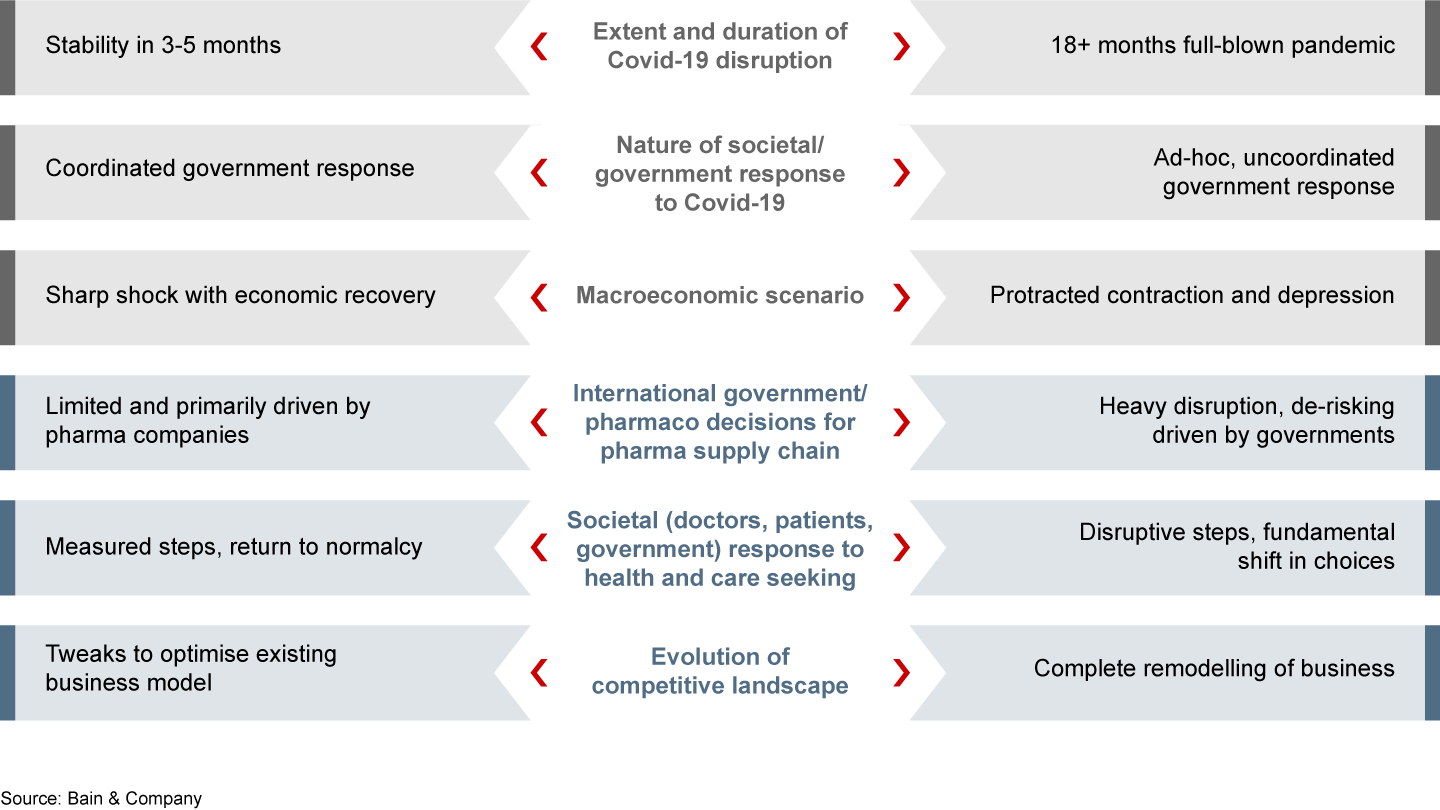
      Consider these key Covid-19 critical uncertainties

      These uncertainties can be aggregated into two major dimensions that will determine alternate futures for the pharma business:

      • Depth and duration of the pandemic: This is the primary determinant of government actions that, in turn, will dictate the response from the ecosystem. The critical driver is the discovery of a cure or vaccine for Covid-19. This could occur within the second or third quarter of 2020 or in 18 months when a vaccine is available.
      • Healthcare ecosystem’s response to the pandemic: This ranges from a coordinated response by all stakeholders to effectively manage the pandemic to coordinated intent but ineffective action due to divergent incentives and inherent constraints in the ecosystem.

      Potential scenarios

      Based on these dimensions, we envision four distinct future scenarios for what the changed landscape may look like and how to plan ahead for success (see Figures 2 and 3).

      Figure 2
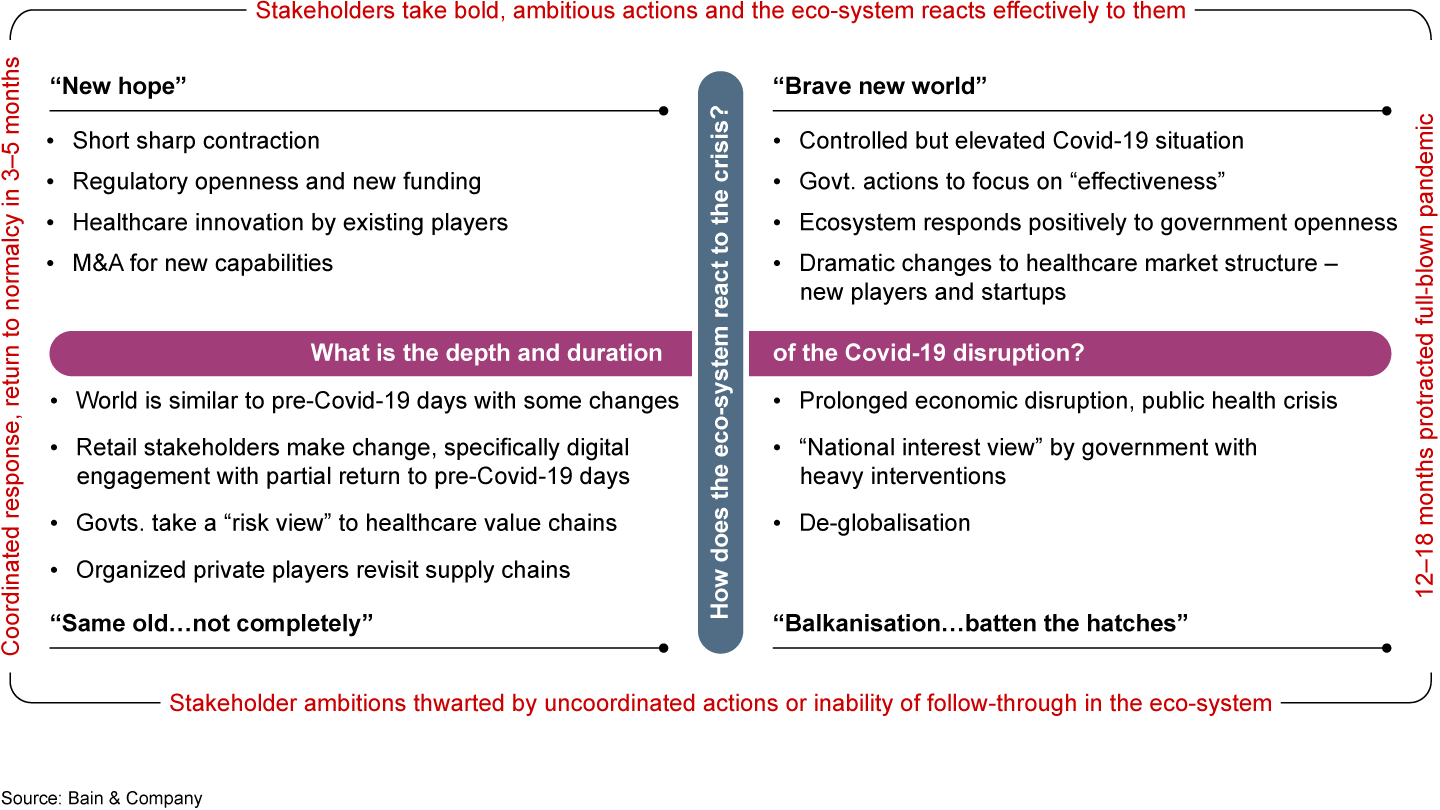
      We envision four possible scenarios for the future
      Figure 3
      Economic recovery is different in each of the four scenarios

      Scenario 1: Balkanisation

      In this scenario, a protracted pandemic triggers a massive demand for healthcare globally and prolonged economic disruption. Despite the best efforts of stakeholders, available supply remains unable to address patient needs in the short to medium term. Given this failure, governments step in and take control of the sector to prioritise consumer and patient interests.

      Government responses may range from nationalisation, a strategy employed in parts of Western Europe, to aggressive government mandates, quotas or price controls. Given the severity of the pandemic in this scenario, governments increasingly view healthcare as a critical national interest and encourage manufacturers to bring significant portions of manufacturing onshore.

      This type of crisis has occurred before. In response to the global financial crisis of 2008-09, many European countries, including the UK, nationalised large parts of their banking system. That shift may now occur in the pharma industry.

      In this scenario, the key to a pharma company’s survival (or success) will be to restructure the global business model. This may entail separation of international businesses, local partnerships and investments, or localisation of manufacturing. Planning ahead will require sustained engagement with the government to manage the evolving regulatory landscape.

      Scenario 2: Brave new world

      In this scenario, governments respond to Covid-19 with investment and expansion. The healthcare sector expands to include new players, greater investment and incentives for innovation. Examples of sector innovation include a more rapid transition to e-commerce for pharma retail, broader adoption of diagnostic wearables or artificial intelligence and analytics platforms to better forecast interventions and outcomes. These trends will shift value creation to new entrants, with existing players at the risk of becoming commodity providers in one part of the ecosystem.

      This scenario played out recently in the media sector, with an internet-led transformation. Value creation in the entertainment industry shifted from large media companies and distributors to content companies and over-the-top platforms. The frontrunners in this race, Amazon Prime and Netflix, are now competing with established players, like Disney, that are racing to follow suit.

      Success in this scenario means pharma executives will need to focus on cost efficiency and agility as they manage assets and resources. Planning for this future will include partnering with new players to generate growth and value.

      Scenario 3: New hope

      In this scenario, the Covid-19 disruption is relatively short with a subsequent return to normalcy in a few months.

      Retail stakeholders such as doctors and patients use digitalisation for more efficient engagement. Governments balance the need for innovation with a more traditional view of both research and development and pharma supply chains.

      This scenario is similar to how telcos transformed themselves and the market on the back of the late 1990s’ regulatory reform. Innovative business models emerged to expand mobile penetration and generate financial results in the subsequent decade.

      Successful pharma players embrace digitalisation as a facet of the patient and customer relationship to enhance customer engagement and improve internal operations. This scenario will likely spur M&A activity, including consolidation of smaller pharma companies, especially in India, and acquisition of companies with specific capabilities by larger pharma players. Successful companies will employ venture capital to bet on nascent technology with successful investments brought in-house.

      Scenario 4: Same old, but not completely

      In this scenario, there is short, sharp contraction followed by a rapid recovery in economic activity. The world looks largely like it did before Covid-19.

      The pandemic motivates retail stakeholders like doctors and patients to increase their digital engagement. However, this higher use of telemedicine, digital consultation and electronic medical record systems is short-term, snapping back to pre-Covid levels as the epidemic ends. Governments adopt a conservative view of healthcare value chains to protect against pandemics. Private players restructure their supply chains, with western countries reducing geographic concentration in API and formulations manufacturing, while the Indian pharma sector selectively brings some manufacturing in-house.

      This scenario is similar to what happened after demonetisation in 2016, when digital cashless transactions spiked in India. The number of debit card transactions at point-of-sale grew three times in December 2016 (compared with October 2016, a month before demonetisation) before settling at about two times by December 2017.

      Success will require digitalisation and supply chain restructuring with a view to increasing resiliency and preparing more effectively for future pandemics.

      Agenda for pharma executives

      The pharmaceutical and healthcare industries are at an inflection point. Despite uncertainty about the future, executives can employ strategies to manage their immediate needs while positioning themselves for success once the crisis stabilises. Our advice to pharma executives is to focus on a three-part agenda: conserve your existing business, plan for recovery and prepare to retool (see Figure 4).

      Figure 4
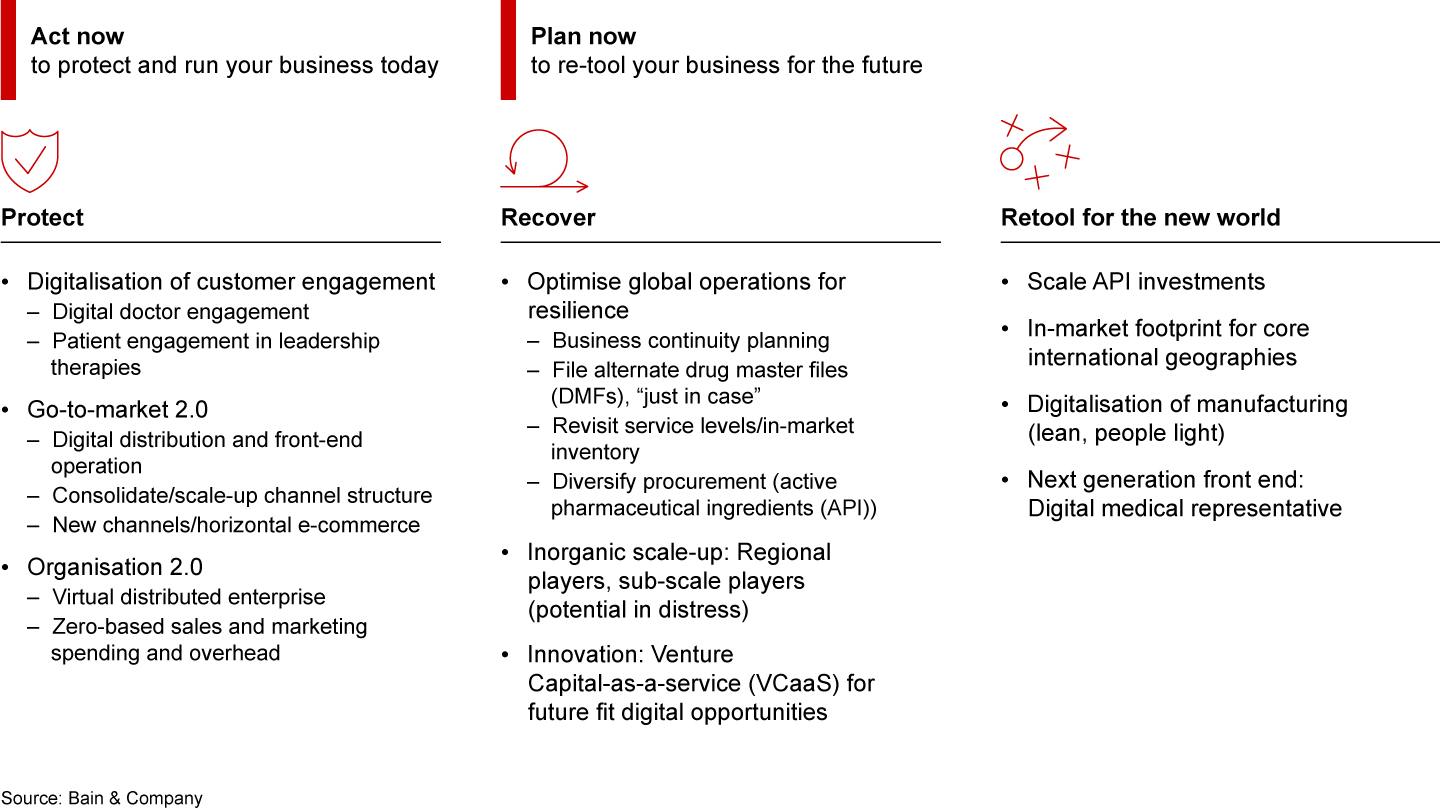
      We recommend a three-step response: Protect, Recover and Retool

      Conserve your most critical assets

      This extends not just to cash and liquidity but to suppliers and customer relationships, all critical elements of success. Should the crisis persist for an extended period, you may need to consider withdrawing from the least solvent parts of your business to maintain adequate liquidity.

      Broaden adoption of digitalisation in your business. This involves rethinking digital engagement with medical professionals, marketing of your products and related services, and communication and interaction with employees and external stakeholders.

      Successful companies will emerge as “virtual distributed enterprises” with a greater market presence but a smaller physical footprint.

      Plan for a recovery

      Executives will need to risk manage their supply chain, reducing concentration in any specific geography or single vendor. Customer service processes and messaging may need to be recrafted with a focus on resiliency and partnership rather than efficiency.

      Consider that scale expectations in the sector may shift towards greater size, as relatively smaller firms that are unable to survive look for buyers. These acquisitions could position some companies to better compete in international markets or domestically in India.

      Prepare to retool your business

      Retooling may mean a shift in the existing approach to API manufacturers, with a bias towards in-house manufacturing and full vertical integration. Related to that, digitalisation may create greater flexibility for manufacturers.

      An increased appetite for innovation may result in a shift from internal innovation to external investment in new ideas or businesses. The big idea which transforms your business may originate outside.

      Summary

      The Covid-19 pandemic is reshaping the future landscape of the pharma and healthcare industries and the role of stakeholders in unprecedented ways. Despite the uncertainty, executives can increase their chances for success by acting now to conserve critical assets, planning for recovery and retooling their business to stabilise and grow operations once recovery becomes more certain. This may be a rare opportunity for your business to achieve greater success.

      Related Insights

      Coronavirus

      The global Covid-19 pandemic has extracted a terrible human toll and spurred sweeping changes in the world economy. Across industries, executives have begun reassessing their strategies and repositioning their companies to thrive now and in the world beyond coronavirus.

      Auteurs
      • Headshot of Parijat Ghosh
        Parijat Ghosh
        Partner, New Delhi
      • Dinkar Ayilavarapu
        Former Partner, New Delhi
      • Headshot of Arunava Dalal
        Arunava Dalal
        Partner, New Delhi
      Contactez-nous
      Synergies sectorielles
      • Pharmaceuticals
      • Santé
      Expertises fonctionnelles transverses
      • Digital
      • Stratégie
      • Technologies de l'information
      • Venture Ecosystem
      Comment pouvons-nous vous aider ?
      • Venture Capital As a Service
      • Zero-based Redesign
      Digital
      Top Digital Use Cases by Industry

      Bain’s research identifies the most useful digital applications, including those that offer the best opportunities for competitive advantage.

      Voir plus
      Santé
      Life Sciences’ AI Momentum Requires a Workforce Redesign

      AI scalers aren't waiting for new talent—they're building it.

      Voir plus
      Zero-based Redesign
      Wealth Management Firms Can Take Out Costs While Reducing Risk and Improving Client Loyalty

      Six tactics allow firms to reduce operating costs by 17% to 38%.

      Voir plus
      Stratégie
      Insurers Now Need Bigger, Bolder Digital Moves

      Covid-19 creates an imperative for companies to accelerate their digital agenda, due to shifts in customer behavior and increased cost pressures on the industry.

      Voir plus
      Santé
      Accelerating Growth and Innovation in European Mid-Sized Pharma

      Insights from the last decade of growth and portfolio innovation can help crack the growth code for EU mid-size pharma.

      Voir plus
      First published in mai 2020
      Mots clés
      • Digital
      • Pharmaceuticals
      • Santé
      • Stratégie
      • Technologies de l'information
      • Venture Capital As a Service
      • Venture Ecosystem
      • Zero-based Redesign

      Comment nous avons aidé nos clients

      Recharging the pharmaceutical sales model

      Lire l’étude de cas

      Review focuses biotech on portfolio potential

      Lire l’étude de cas

      Pharma go-to-market strategy

      Lire l’étude de cas

      Vous souhaitez continuer cette conversation ?

      Nous aidons des dirigeants du monde entier à matérialiser des impacts et des résultats pérennes et créateurs de valeur dans leurs organisations.

      Les points de vue de Bain : notre perspective sur des problématiques auxquelles sont confrontées les entreprises à travers le monde, envoyés chaque mois dans votre boîte de réception. 

      *J’ai lu la politique de confidentialité et j’accepte les conditions.

      Merci de lire notre politique de confidentialité.
      Bain & Company
      Contactez-nous Sustainability Accessibility Conditions d’utilisation Politique de Confidentialité Cookie Policy Mentions Légales Sitemap Log In

      © 1996-2026 Bain & Company, Inc.

      Contacter Bain

      Comment pouvons-nous vous aider ?

      • Business inquiry
      • Career information
      • Press relations
      • Partnership request
      • Speaker request
      Voir tous les bureaux