
Skip to Content
  • Bureaux

    Bureaux

    Amérique du Nord et Amérique du Sud
    • Atlanta
    • Austin
    • Bogota
    • Boston
    • Buenos Aires
    • Chicago
    • Dallas
    • Denver
    • Houston
    • Los Angeles
    • Mexico City
    • Minneapolis
    • Monterrey
    • Montreal
    • New York
    • Rio de Janeiro
    • San Francisco
    • Santiago
    • São Paulo
    • Seattle
    • Silicon Valley
    • Toronto
    • Washington, DC
    Europe, Moyen-Orient et Afrique
    • Amsterdam
    • Athens
    • Berlin
    • Brussels
    • Copenhagen
    • Doha
    • Dubai
    • Dusseldorf
    • Frankfurt
    • Helsinki
    • Istanbul
    • Johannesburg
    • Kyiv
    • Lisbon
    • London
    • Madrid
    • Milan
    • Munich
    • Oslo
    • Paris
    • Riyadh
    • Rome
    • Stockholm
    • Vienna
    • Warsaw
    • Zurich
    Asie et Australie
    • Bangkok
    • Beijing
    • Bengaluru
    • Brisbane
    • Ho Chi Minh City
    • Hong Kong
    • Jakarta
    • Kuala Lumpur
    • Manila
    • Melbourne
    • Mumbai
    • New Delhi
    • Perth
    • Shanghai
    • Singapore
    • Sydney
    • Tokyo
    Voir tous les bureaux
  • Alumni
  • Presse
  • S’abonner
  • Contacter
  • Canada | Français

    Sélectionnez votre région et votre langue

    Global
    • Global (English)
    Amérique du Nord et Amérique du Sud
    • Brazil (Português)
    • Argentina (Español)
    • Canada (Français)
    • Chile (Español)
    • Colombia (Español)
    Europe, Moyen-Orient et Afrique
    • France (Français)
    • DACH Region (Deutsch)
    • Italy (Italiano)
    • Spain (Español)
    • Greece (Elliniká)
    Asie et Australie
    • China (中文版)
    • Korea (한국어)
    • Japan (日本語)
  • Saved items (0)
    Saved items (0)

    You have no saved items.

    Bookmark content that interests you and it will be saved here for you to read or share later.

    Explore Bain Insights
  • Expertises Sectorielles
    Menu principal

    Expertises Sectorielles

    • Aerospace et Défense
    • Agroalimentaire
    • Chimie
    • Infrastructures, BTP et Matériaux de Construction
    • Grande Consommation
    • Services Financiers
    • Santé
    • Engins & Equipements Industriels
    • Media et Divertissement
    • Metals
    • Mining
    • Pétrole & Gaz
    • Papier et Emballage
    • Private Equity
    • Secteur Public
    • Distribution
    • Technologie
    • Télécommunications
    • Transportation
    • Travel & Leisure
    • Utilities & Energies Renouvelables
  • Expertises Fonctionnelles
    Menu principal

    Expertises Fonctionnelles

    • Expérience Client
    • ESG
    • Innovation
    • Fusions et Acquisitions
    • Opérations
    • People & Organization
    • Private Equity
    • Sales & Marketing
    • Stratégie
    • IA, Perspectives et Solutions
    • Technology
    • Transformation
  • Digital
  • Points de Vue
  • About
    Menu principal

    About

    • Notre Activité
    • Nos Valeurs
    • Nos Collaborateurs et Notre Équipe Dirigeante
    • Notre Impact
    • Prix & Récompenses
    • Partenariats Internationaux
    Further: Our global responsibility
    • Sustainability
    • Impact Social
    • World Economic Forum
    Learn more about Further
  • Carrières
    Menu principal

    Carrières

    • Rejoignez-nous
      Carrières
      Rejoignez-nous
      • Find Your Place
      • Nos domaines d’expertise
      • Equipes multidisciplinaires
      • Étudiants
      • Stages et programmes
      • Événements de recrutement
    • La vie chez Bain
      Carrières
      La vie chez Bain
      • Blog: Inside Bain
      • Récits de carrière
      • Nos collaborateurs
      • Nos bureaux
      • Soutenir votre évolution professionnelle
      • Groupes d’affinités
      • Avantages chez Bain
    • Histoires d’impact
    • Notre processus de recrutement
      Carrières
      Notre processus de recrutement
      • Ce que vous pouvez attendre
      • Entretiens
    Trouver un poste
  • Bureaux
    Menu principal

    Bureaux

    • Amérique du Nord et Amérique du Sud
      Bureaux
      Amérique du Nord et Amérique du Sud
      • Atlanta
      • Austin
      • Bogota
      • Boston
      • Buenos Aires
      • Chicago
      • Dallas
      • Denver
      • Houston
      • Los Angeles
      • Mexico City
      • Minneapolis
      • Monterrey
      • Montreal
      • New York
      • Rio de Janeiro
      • San Francisco
      • Santiago
      • São Paulo
      • Seattle
      • Silicon Valley
      • Toronto
      • Washington, DC
    • Europe, Moyen-Orient et Afrique
      Bureaux
      Europe, Moyen-Orient et Afrique
      • Amsterdam
      • Athens
      • Berlin
      • Brussels
      • Copenhagen
      • Doha
      • Dubai
      • Dusseldorf
      • Frankfurt
      • Helsinki
      • Istanbul
      • Johannesburg
      • Kyiv
      • Lisbon
      • London
      • Madrid
      • Milan
      • Munich
      • Oslo
      • Paris
      • Riyadh
      • Rome
      • Stockholm
      • Vienna
      • Warsaw
      • Zurich
    • Asie et Australie
      Bureaux
      Asie et Australie
      • Bangkok
      • Beijing
      • Bengaluru
      • Brisbane
      • Ho Chi Minh City
      • Hong Kong
      • Jakarta
      • Kuala Lumpur
      • Manila
      • Melbourne
      • Mumbai
      • New Delhi
      • Perth
      • Shanghai
      • Singapore
      • Sydney
      • Tokyo
    Voir tous les bureaux
  • Alumni
  • Presse
  • S’abonner
  • Contacter
  • Canada | Français
    Menu principal

    Sélectionnez votre région et votre langue

    • Global
      Sélectionnez votre région et votre langue
      Global
      • Global (English)
    • Amérique du Nord et Amérique du Sud
      Sélectionnez votre région et votre langue
      Amérique du Nord et Amérique du Sud
      • Brazil (Português)
      • Argentina (Español)
      • Canada (Français)
      • Chile (Español)
      • Colombia (Español)
    • Europe, Moyen-Orient et Afrique
      Sélectionnez votre région et votre langue
      Europe, Moyen-Orient et Afrique
      • France (Français)
      • DACH Region (Deutsch)
      • Italy (Italiano)
      • Spain (Español)
      • Greece (Elliniká)
    • Asie et Australie
      Sélectionnez votre région et votre langue
      Asie et Australie
      • China (中文版)
      • Korea (한국어)
      • Japan (日本語)
  • Saved items  (0)
    Menu principal
    Saved items (0)

    You have no saved items.

    Bookmark content that interests you and it will be saved here for you to read or share later.

    Explore Bain Insights
  • Expertises Sectorielles
    • Expertises Sectorielles

      • Aerospace et Défense
      • Agroalimentaire
      • Chimie
      • Infrastructures, BTP et Matériaux de Construction
      • Grande Consommation
      • Services Financiers
      • Santé
      • Engins & Equipements Industriels
      • Media et Divertissement
      • Metals
      • Mining
      • Pétrole & Gaz
      • Papier et Emballage
      • Private Equity
      • Secteur Public
      • Distribution
      • Technologie
      • Télécommunications
      • Transportation
      • Travel & Leisure
      • Utilities & Energies Renouvelables
  • Expertises Fonctionnelles
    • Expertises Fonctionnelles

      • Expérience Client
      • ESG
      • Innovation
      • Fusions et Acquisitions
      • Opérations
      • People & Organization
      • Private Equity
      • Sales & Marketing
      • Stratégie
      • IA, Perspectives et Solutions
      • Technology
      • Transformation
  • Digital
  • Points de Vue
  • Carrières
    Recherches les plus fréquentes
    • Agile
    • Digital
    • Stratégie
    Vos recherches précédentes
      Pages récemment visitées

      Content added to saved items

      Saved items (0)

      Removed from saved items

      Saved items (0)

      Etude

      Plugging into Emerging Electricity Markets

      Plugging into Emerging Electricity Markets

      Companies and investors interested in global expansion in the power sector must consider a range of opportunities and risks.

      Par Julian Critchlow, Wade Cruse, Rodrigo Rubio and Amit Sinha

      • min
      }

      Etude

      Plugging into Emerging Electricity Markets
      en

      As fast-growing markets around the world try to meet the rising demands for electricity in their growing economies, they will require an unprecedented level of capital investment—far beyond what we have seen, or expect to see, in mature markets.

      There are several reasons for this:

      • Electricity demand is rising along with economic growth.
      • Per-capita consumption of electricity is rising along with consumer wealth, and many customers are connecting to the power grid for the first time.
      • The energy and environmental policies of these countries will require much of the new power-generating capacity to come from renewable sources, which are far more capital-intensive to develop than conventional power-generation technologies.

      Combined, the demand for more electricity and greater capital intensity means that fast-growing economies will have to double their investments in electricity from about $240 billion annually to $495 billion annually between 2015 and 2040—$13 trillion in total—outspending OECD countries by 2-to-1.

      Historically, the governments of fast-growing economies have funded about 60% to 70% of the investment in electricity. As their need for capital increases, we expect that to reverse itself, with most of the investment coming from private capital. The focus will shift from importing fossil fuels to importing capital.

      Unfortunately, many of these countries have a mixed record of attracting private capital, with many of the larger countries delivering poor returns on investment. Long-term investors have well-founded concerns about transparency and reliability of policies and regulations, particularly where policymakers have shorter-term political priorities.

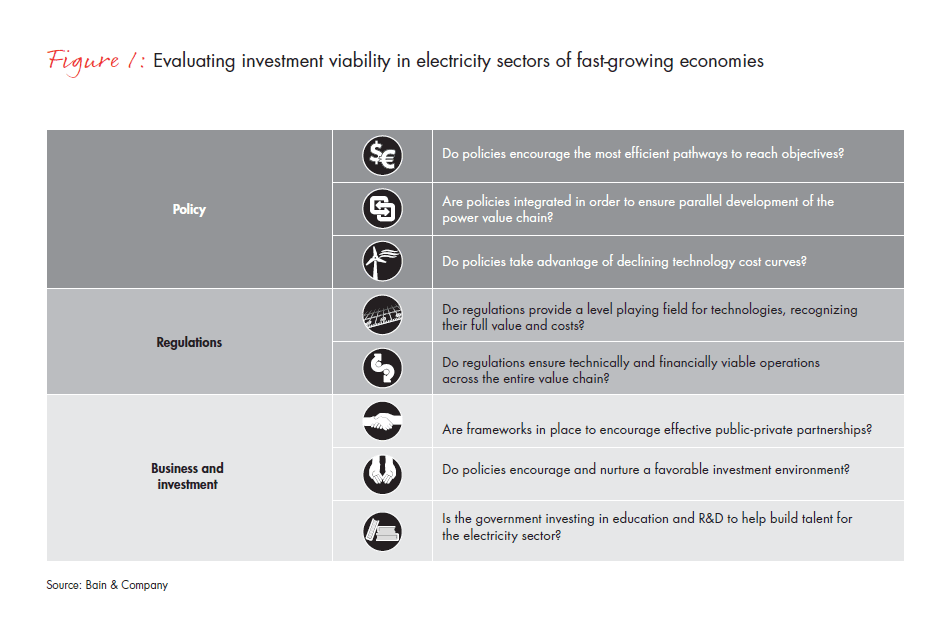
      To attract the necessary capital, fast-growing economies will need to improve the viability of investment in their power sectors. In our 2016 report to the World Economic Forum, The Future of Electricity in Fast-Growing Economies, we identified eight recommendations for policymakers, regulators and the business and investment communities to improve investment viability in fast-growing markets.

      Companies and investors looking at global expansion should go through a two-stage process that first helps them assess the most promising markets to enter and then determines how to enter these markets while balancing risk against potential opportunity.

      Where to play: Evaluating opportunities in fast-growing markets

      Companies evaluating opportunities in the power sectors of fast-growing economies need to think along two dimensions: market-specific risks (including currency risk, depth of debt and equity markets, openness to foreign investment and transparency of business practices) and sector-specific risks.

      Risks in the first category apply across sectors, and they are well captured in a range of indices, including that of the Economist Intelligence Unit. The nature of investments in the power sector— capital-intensive and long-life assets—underscore the importance of some of these risks more than others. For example, the implications of regulatory and planning approvals make investors particularly sensitive to the transparency and openness of governance processes for these approvals.

      The second set of risks deals directly with the stability and robustness of the policy, regulatory and investment options within the power sector. To help investors and utility executives navigate these opportunities and contribute to economic growth in fast-growing economies, Bain worked with the World Economic Forum to identify best practices in power sectors around the world (see Figure 1). Utility executives and investors can use these recommendations as criteria for evaluating the risks in a given market. For example, investors must determine whether policies are sufficiently integrated to ensure parallel development along the full value chain. Without such integrated policies, assets may become stranded due to bottlenecks in other parts of the value chain. This occurred in China when wind farms sat idle because they were not yet connected to the transmission and distribution grid. Since then, China has made substantial investments in its T&D system to match its progress in power generation.

      plugging-into-emerging-electricity-markets-fig-01_embed

      Another criterion is whether the government supports effective public–private partnerships. For example, in Brazil, where electricity demand has grown with the economy at about 4%, the government adopted new rules in 2004 that encouraged public–private partnerships by clearly defining the rules for competitive bidding and contracting and by providing financing support through the Brazilian Development Bank. These changes attracted $118 billion for more than 172 public–private partnerships across industries and added new power generation capacity—until the government made other policy changes in 2012.

      To grow successfully internationally, companies need to find the best fit among their capabilities and the opportunities and risks in new fast-growth markets. Companies and investors must make an honest assessment of their technical and operational capabilities and the strengths and weaknesses of their operating model and culture. The characteristics of individual markets can then be assessed for fit with these capabilities.

      How to win: Assessing capabilities and investment modes

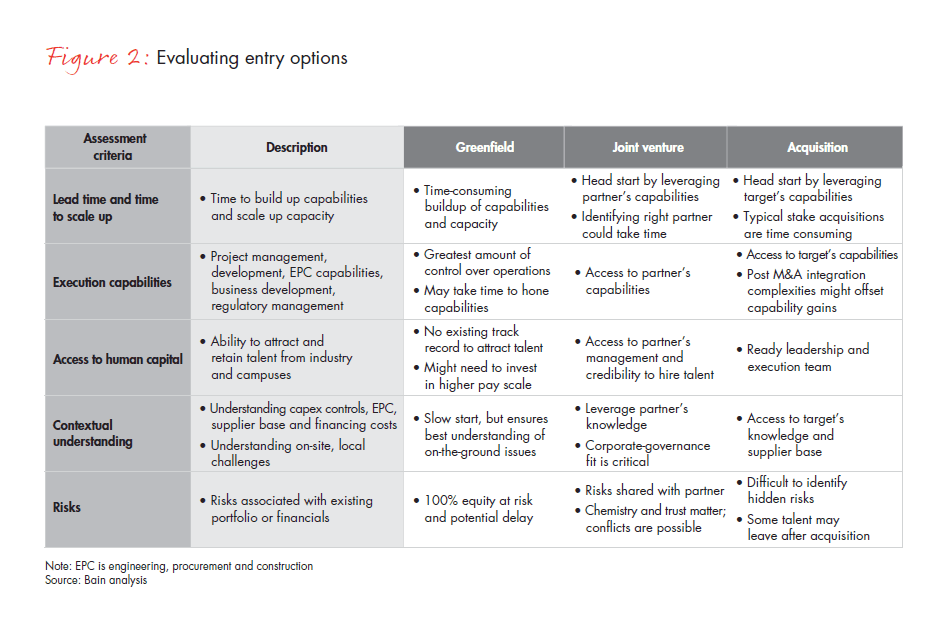
      Utility companies looking at longer-term and operational investments in emerging markets (that is, 10 years or more) have at least three options for entry: buying an existing company, creating a joint venture, or making a greenfield investment (see Figure 2).

      plugging-into-emerging-electricity-markets-fig-02_embed
      • Greenfield. Greenfield investments offer the greatest potential returns to investors since they do not have to pay an acquisition premium. However, greenfield expansion is not without its risk if investors do not understand fully how the rules and contexts vary from market to market. A well-equipped and experienced organization on the ground can help mitigate these risks. Where they have the technological advantages and other capabilities to do so, most would prefer to go that route. Greenfield investments typically take longer to put in place—often four or five years before an asset is up, running and generating revenue—but they allow for greater control and can provide more flexibility provided the utility has the capabilities to see the project through. Hyosung, a Korean company that manufactures transformers and other T&D equipment, originally tried to acquire and then partner with Indian companies to enter the market but eventually decided to enter the market with its own company, Hyosung T&D India, which is developing a manufacturing facility in Khed City near Pune.
      • Acquisitions. In cases where companies either lack the capabilities or are uncomfortable with the level of risk or waiting period associated with greenfield investments, acquisitions of going concerns can be a quicker way to enter a market—provided the acquirer has access to capital and can find appropriate targets. Acquisitions often start as minority investments, moving in the direction of majority ownership. In Brazil, Engie (formerly GDF Suez) acquired about 68% of Tractebel Energia, giving the multinational energy services company control of the country’s largest independent electricity generator. Two-thirds of the electricity Tractebel Energia generates is renewable. It is part of Engie’s suite of Latin American investments, which include majority shareholder stakes in generation companies in Argentina, Chile, Peru and Uruguay.
      • Joint ventures. In the middle ground between greenfield and acquisitions are joint ventures, a proven tactic for entering emerging markets such as India and China not only in electricity but across industries. JVs offer market entry on new projects with a local partner with human capital that understands the market—at the price of shared control and revenue. Partnering with a local reduces the risk of trying to navigate unfamiliar policy and business culture norms in unfamiliar markets. Sometimes, by connecting global scale with local knowledge, they can build a market-leading powerhouse: In 1982 Suzuki formed a partnership with the Indian car maker Maruti Udyog that has gone on to become a dominant player in the country’s automobile industry as Maruti Suzuki, selling about 45% of India’s passenger vehicles in 2015. The deal originally allowed Suzuki to import cars from Japan to India, but now the company produces about 1.3 million vehicles annually in its Indian plants.

      Given the high fixed costs of entry, utilities should select only a few new markets to enter and invest in learning the rules and developing relationships there. The capabilities that they develop will prepare them for subsequent expansion in those markets and beyond. Finally, energy companies entering the electricity sectors in fastgrowing markets should keep in mind some basic principles that apply to companies entering new markets across all industries:

      • Localize at every level. Homegrown competitors have several incumbent advantages, including consumer loyalty, lower costs and sympathetic government regulators. By taking the time to master local complexities, multinationals can begin to regain a competitive edge.
      • Think global, hire local. Too often, multinationals count on expatriates to guide their entry into emerging markets. Market leaders cultivate strong local management teams with market insights that give them an edge in product design, promotion, and distribution. Empowering local teams fosters loyalty and develops a talent pool to tap when entering other emerging markets.
      • Build dedicated emerging-markets capabilities. Leaders approach each emerging market with strategies crafted to distinguish the characteristics they find there from established practices they pursue in developed economies. One UK multinational has a formal emerging-markets organization separate from its other international operations. Putting the emerging-markets operation under one tent sharpens focus and improves managers’ ability to evaluate the relative risk–return trade-offs across its emerging-markets portfolio.

      Over the next couple of decades, the power sector in growth markets will offer unprecedented opportunities for investment and growth. Policymakers and regulators in the most successful markets will learn from the past to attract the necessary capital domestically and from international investors. Successful investors will have a clear understanding of their capabilities and appetite for risk, which will help them evaluate markets and design winning strategies. With a robust approach, the returns are likely to far exceed the risks of fast-growing markets.

      Julian Critchlow is a partner with Bain & Company in London, Wade Cruse is a Bain partner in Singapore and Amit Sinha is a Bain partner in Delhi. Rodrigo Rubio leads Bain’s Mexico City office. All four partners work with Bain’s Global Utilities practice, which Julian leads.


      plugging-into-emerging-electricity-markets-fig-01_full

      plugging-into-emerging-electricity-markets-fig-02_full
      Auteurs
      • Headshot of Wade Cruse
        Wade Cruse
        Partner, Singapore
      • Headshot of Rodrigo Rubio
        Rodrigo Rubio
        Partner, Mexico City
      • Amit Sinha
        Former Partner, New Delhi
      Contactez-nous
      Synergies sectorielles
      • Energie et Ressources Naturelles
      • Utilities & Energies Renouvelables
      Utilities & Energies Renouvelables
      The Future of Electricity in Fast-Growing Economies

      Attracting investment to provide affordable, accessible and sustainable power.

      Voir plus
      Utilities & Energies Renouvelables
      Business and Investment Opportunities in a Changing Electricity Sector

      New technologies are creating ample opportunities, but incumbents that generate, transmit and distribute electricity face challenging economics.

      Voir plus
      Marchés Émergents et à Croissance Rapide
      Energy Efficiency: Opportunities in Emerging Markets

      Companies in many industries stand to benefit from efforts to reduce energy consumption in the world’s fast-growing economies.

      Voir plus
      Marchés Émergents et à Croissance Rapide
      What’s Powering China’s Market for Luxury Goods?

      Sales are growing at a healthy 20% rate, but not all brands are celebrating.

      Voir plus
      Utilities & Energies Renouvelables
      Utilities Can Power Growth Through a Better Customer Experience

      Top performers turn everyday interactions into loyalty, lower costs, greater revenue streams, and stronger reputations.

      Voir plus
      First published in février 2016
      Mots clés
      • Energie et Ressources Naturelles
      • Marchés Émergents et à Croissance Rapide
      • Utilities & Energies Renouvelables

      Comment nous avons aidé nos clients

      An Environmental Services Company Captures Massive Savings from a Merger

      Lire l’étude de cas

      Boosting a utility's workforce productivity

      Lire l’étude de cas

      Revitalizing a utility's market position with customer loyalty

      Lire l’étude de cas

      Vous souhaitez continuer cette conversation ?

      Nous aidons des dirigeants du monde entier à matérialiser des impacts et des résultats pérennes et créateurs de valeur dans leurs organisations.

      Les points de vue de Bain : notre perspective sur des problématiques auxquelles sont confrontées les entreprises à travers le monde, envoyés chaque mois dans votre boîte de réception. 

      *J’ai lu la politique de confidentialité et j’accepte les conditions.

      Merci de lire notre politique de confidentialité.
      Bain & Company
      Contactez-nous Sustainability Accessibility Conditions d’utilisation Politique de Confidentialité Cookie Policy Mentions Légales Sitemap Log In

      © 1996-2026 Bain & Company, Inc.

      Contacter Bain

      Comment pouvons-nous vous aider ?

      • Business inquiry
      • Career information
      • Press relations
      • Partnership request
      • Speaker request
      Voir tous les bureaux