
Skip to Content
  • Bureaux

    Bureaux

    Amérique du Nord et Amérique du Sud
    • Atlanta
    • Austin
    • Bogota
    • Boston
    • Buenos Aires
    • Chicago
    • Dallas
    • Denver
    • Houston
    • Los Angeles
    • Mexico City
    • Minneapolis
    • Monterrey
    • Montreal
    • New York
    • Rio de Janeiro
    • San Francisco
    • Santiago
    • São Paulo
    • Seattle
    • Silicon Valley
    • Toronto
    • Washington, DC
    Europe, Moyen-Orient et Afrique
    • Amsterdam
    • Athens
    • Berlin
    • Brussels
    • Copenhagen
    • Doha
    • Dubai
    • Dusseldorf
    • Frankfurt
    • Helsinki
    • Istanbul
    • Johannesburg
    • Kyiv
    • Lisbon
    • London
    • Madrid
    • Milan
    • Munich
    • Oslo
    • Paris
    • Riyadh
    • Rome
    • Stockholm
    • Vienna
    • Warsaw
    • Zurich
    Asie et Australie
    • Bangkok
    • Beijing
    • Bengaluru
    • Brisbane
    • Ho Chi Minh City
    • Hong Kong
    • Jakarta
    • Kuala Lumpur
    • Manila
    • Melbourne
    • Mumbai
    • New Delhi
    • Perth
    • Shanghai
    • Singapore
    • Sydney
    • Tokyo
    Voir tous les bureaux
  • Alumni
  • Presse
  • S’abonner
  • Contacter
  • Canada | Français

    Sélectionnez votre région et votre langue

    Global
    • Global (English)
    Amérique du Nord et Amérique du Sud
    • Brazil (Português)
    • Argentina (Español)
    • Canada (Français)
    • Chile (Español)
    • Colombia (Español)
    Europe, Moyen-Orient et Afrique
    • France (Français)
    • DACH Region (Deutsch)
    • Italy (Italiano)
    • Spain (Español)
    • Greece (Elliniká)
    Asie et Australie
    • China (中文版)
    • Korea (한국어)
    • Japan (日本語)
  • Saved items (0)
    Saved items (0)

    You have no saved items.

    Bookmark content that interests you and it will be saved here for you to read or share later.

    Explore Bain Insights
  • Expertises Sectorielles
    Menu principal

    Expertises Sectorielles

    • Aerospace et Défense
    • Agroalimentaire
    • Chimie
    • Infrastructures, BTP et Matériaux de Construction
    • Grande Consommation
    • Services Financiers
    • Santé
    • Engins & Equipements Industriels
    • Media et Divertissement
    • Metals
    • Mining
    • Pétrole & Gaz
    • Papier et Emballage
    • Private Equity
    • Secteur Public
    • Distribution
    • Technologie
    • Télécommunications
    • Transportation
    • Travel & Leisure
    • Utilities & Energies Renouvelables
  • Expertises Fonctionnelles
    Menu principal

    Expertises Fonctionnelles

    • Expérience Client
    • ESG
    • Innovation
    • Fusions et Acquisitions
    • Opérations
    • People & Organization
    • Private Equity
    • Sales & Marketing
    • Stratégie
    • IA, Perspectives et Solutions
    • Technology
    • Transformation
  • Digital
  • Points de Vue
  • About
    Menu principal

    About

    • Notre Activité
    • Nos Valeurs
    • Nos Collaborateurs et Notre Équipe Dirigeante
    • Notre Impact
    • Prix & Récompenses
    • Partenariats Internationaux
    Further: Our global responsibility
    • Sustainability
    • Impact Social
    • World Economic Forum
    Learn more about Further
  • Carrières
    Menu principal

    Carrières

    • Rejoignez-nous
      Carrières
      Rejoignez-nous
      • Find Your Place
      • Nos domaines d’expertise
      • Equipes multidisciplinaires
      • Étudiants
      • Stages et programmes
      • Événements de recrutement
    • La vie chez Bain
      Carrières
      La vie chez Bain
      • Blog: Inside Bain
      • Récits de carrière
      • Nos collaborateurs
      • Nos bureaux
      • Soutenir votre évolution professionnelle
      • Groupes d’affinités
      • Avantages chez Bain
    • Histoires d’impact
    • Notre processus de recrutement
      Carrières
      Notre processus de recrutement
      • Ce que vous pouvez attendre
      • Entretiens
    Trouver un poste
  • Bureaux
    Menu principal

    Bureaux

    • Amérique du Nord et Amérique du Sud
      Bureaux
      Amérique du Nord et Amérique du Sud
      • Atlanta
      • Austin
      • Bogota
      • Boston
      • Buenos Aires
      • Chicago
      • Dallas
      • Denver
      • Houston
      • Los Angeles
      • Mexico City
      • Minneapolis
      • Monterrey
      • Montreal
      • New York
      • Rio de Janeiro
      • San Francisco
      • Santiago
      • São Paulo
      • Seattle
      • Silicon Valley
      • Toronto
      • Washington, DC
    • Europe, Moyen-Orient et Afrique
      Bureaux
      Europe, Moyen-Orient et Afrique
      • Amsterdam
      • Athens
      • Berlin
      • Brussels
      • Copenhagen
      • Doha
      • Dubai
      • Dusseldorf
      • Frankfurt
      • Helsinki
      • Istanbul
      • Johannesburg
      • Kyiv
      • Lisbon
      • London
      • Madrid
      • Milan
      • Munich
      • Oslo
      • Paris
      • Riyadh
      • Rome
      • Stockholm
      • Vienna
      • Warsaw
      • Zurich
    • Asie et Australie
      Bureaux
      Asie et Australie
      • Bangkok
      • Beijing
      • Bengaluru
      • Brisbane
      • Ho Chi Minh City
      • Hong Kong
      • Jakarta
      • Kuala Lumpur
      • Manila
      • Melbourne
      • Mumbai
      • New Delhi
      • Perth
      • Shanghai
      • Singapore
      • Sydney
      • Tokyo
    Voir tous les bureaux
  • Alumni
  • Presse
  • S’abonner
  • Contacter
  • Canada | Français
    Menu principal

    Sélectionnez votre région et votre langue

    • Global
      Sélectionnez votre région et votre langue
      Global
      • Global (English)
    • Amérique du Nord et Amérique du Sud
      Sélectionnez votre région et votre langue
      Amérique du Nord et Amérique du Sud
      • Brazil (Português)
      • Argentina (Español)
      • Canada (Français)
      • Chile (Español)
      • Colombia (Español)
    • Europe, Moyen-Orient et Afrique
      Sélectionnez votre région et votre langue
      Europe, Moyen-Orient et Afrique
      • France (Français)
      • DACH Region (Deutsch)
      • Italy (Italiano)
      • Spain (Español)
      • Greece (Elliniká)
    • Asie et Australie
      Sélectionnez votre région et votre langue
      Asie et Australie
      • China (中文版)
      • Korea (한국어)
      • Japan (日本語)
  • Saved items  (0)
    Menu principal
    Saved items (0)

    You have no saved items.

    Bookmark content that interests you and it will be saved here for you to read or share later.

    Explore Bain Insights
  • Expertises Sectorielles
    • Expertises Sectorielles

      • Aerospace et Défense
      • Agroalimentaire
      • Chimie
      • Infrastructures, BTP et Matériaux de Construction
      • Grande Consommation
      • Services Financiers
      • Santé
      • Engins & Equipements Industriels
      • Media et Divertissement
      • Metals
      • Mining
      • Pétrole & Gaz
      • Papier et Emballage
      • Private Equity
      • Secteur Public
      • Distribution
      • Technologie
      • Télécommunications
      • Transportation
      • Travel & Leisure
      • Utilities & Energies Renouvelables
  • Expertises Fonctionnelles
    • Expertises Fonctionnelles

      • Expérience Client
      • ESG
      • Innovation
      • Fusions et Acquisitions
      • Opérations
      • People & Organization
      • Private Equity
      • Sales & Marketing
      • Stratégie
      • IA, Perspectives et Solutions
      • Technology
      • Transformation
  • Digital
  • Points de Vue
  • Carrières
    Recherches les plus fréquentes
    • Agile
    • Digital
    • Stratégie
    Vos recherches précédentes
      Pages récemment visitées

      Content added to saved items

      Saved items (0)

      Removed from saved items

      Saved items (0)

      Rapport

      Private Equity Takes a Midyear Bounce off the Bottom

      Private Equity Takes a Midyear Bounce off the Bottom

      Here’s what we know so far about Covid-19’s effect on the PE industry.

      Par Hugh MacArthur

      • min
      }

      Rapport

      Private Equity Takes a Midyear Bounce off the Bottom
      en

      At the halfway point of an historically challenging year, private equity firms are getting back to business.

      First-half deal count dropped 36% in the Americas and 34% in Europe, the Middle East and Africa (EMEA), compared with the first six months of 2019 (see Figure 1). Yet after an initial shock-and-awe period related to the Covid-19 pandemic, general partners (GPs) are clearly back in the market seeking out opportunities to buy assets at the cycle’s nadir.

      June deal activity ticked up convincingly in the Americas and EMEA after dropping precipitously early in the pandemic. June deal count was also trending upward in China, although Asia-Pacific overall is more muddled because of the varied pandemic effects and responses in different countries.

      Figure 1
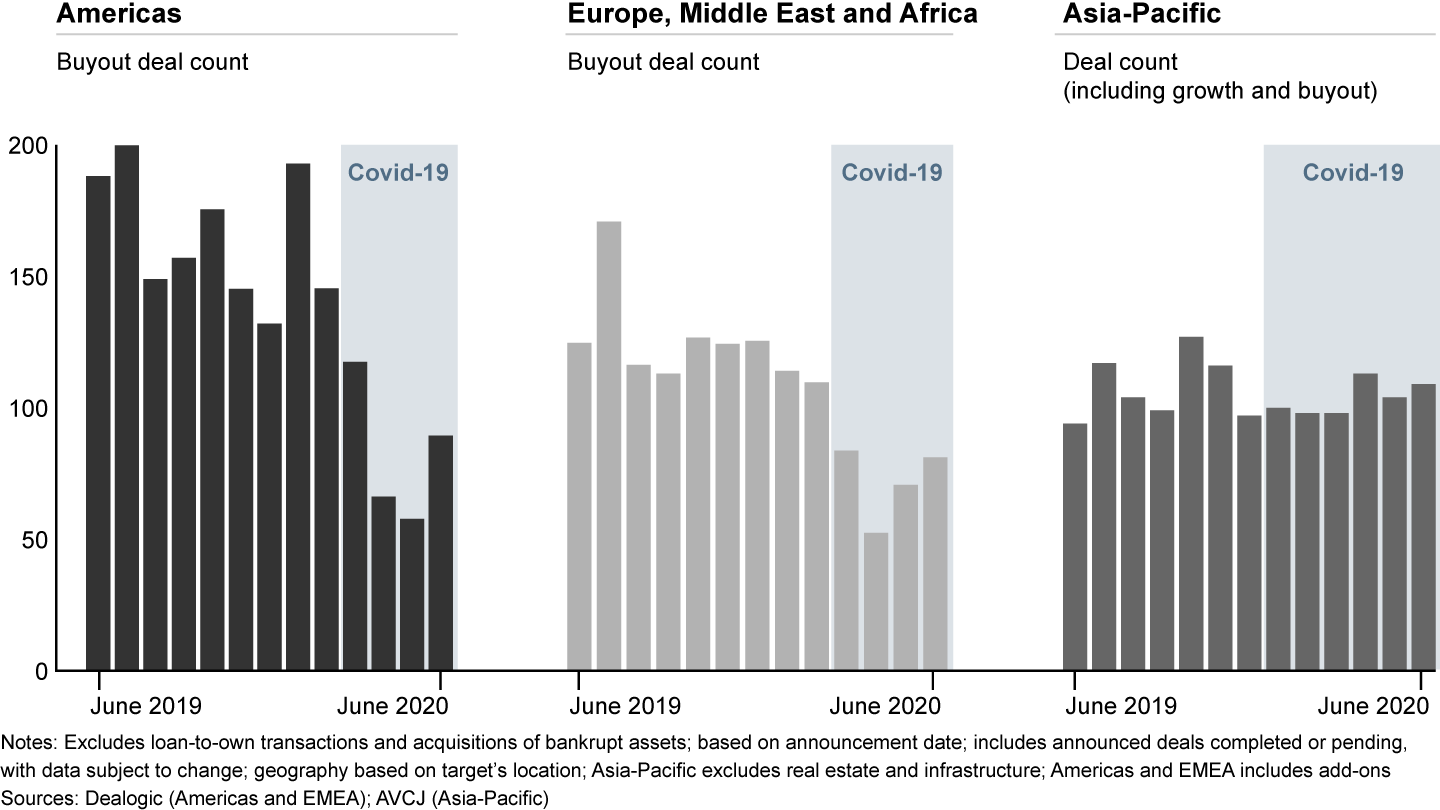
      Private equity deal activity showed strong signs of recovery in June
      Private equity deal activity showed strong signs of recovery in June
      Private equity deal activity showed strong signs of recovery in June

      Dealmaking still has a long way to go to reach prepandemic levels, yet Bain & Company’s due diligence activity suggests momentum is building across the market. As the largest provider of due diligence to private equity firms worldwide, Bain’s diligence work can be seen as a leading indicator for dealmaking globally. After steep declines from March through May, June due diligence work rebounded sharply, and there’s optimism that investment will pick up in the second half of the year. That could change, of course, given the unpredictable nature of the pandemic; investigating deals is no guarantee of closing them. But the bump up in diligence is a strong indication that GPs are actively in the hunt and looking to put money to work.

      Lessons learned

      The relatively quick turnaround in animal spirits marks a stark contrast with private equity activity in the wake of the 2008–2009 global financial crisis, when deal numbers lagged for years. Several reasons account for the difference. First, the industry is sitting on $2.6 trillion in unspent capital, or more than twice the amount it had at the start of the last recession. That capital has a clock on it, meaning GPs are looking to do deals. Second, there’s ample incentive to put money to work now. As the industry learned after the last recession, smart investments made near the bottom of the cycle tend to produce above-average returns if you move decisively. Indeed, the window to find assets at deeply distressed prices may already have closed; public equity and debt markets have both posted strong recoveries off their Covid-related lows.

      That’s because investors generally believe that this downturn is different in kind than the last one. While the global financial crisis exposed vast structural problems with the global banking system, the Covid-19 shock has been more like a natural disaster. It’s a powerful externality that will undoubtedly have major economic impact, but doesn’t reflect underlying weakness in demand. Real risk remains that the Covid-19 effect on consumer activity will last long enough to morph into a financial crisis. But so far, the market is betting on something more benign.

      Reluctance to exit

      There’s no question, however, that the ongoing uncertainty is gnawing at both buyer and seller confidence. Market volatility and hard questions about how much consumer behavior has changed in various industries make it difficult to develop conviction around valuations. Investors are assessing how much Covid-19 is affecting customer demand right now and what demand will look like as the economic downturn and subsequent recovery run their course. Armed with little reliable data in a constantly shifting environment, it’s no wonder that buyers and sellers might have difficulty agreeing on what any company is worth right now. That shows up in the anemic market for exits, which are depressed across the globe. More than 80% of all GPs in a recent Investec survey say they don’t expect to make a portfolio exit over the next 12 months. Pressure to sell will build eventually, given many consecutive years of strong dealmaking. But for now, firms are unlikely to exit at a discount unless they absolutely have to.

      LPs regain confidence

      Compared with dealmaking and exits, fund-raising held up relatively well over the year’s first half. That’s largely because funds closed during the first two quarters benefited from capital committed before the Covid-19 pandemic struck. Capital raised globally in the first quarter actually surpassed 2019 levels, but fell off 18% from a year earlier in the second quarter (see Figure 2).

      Figure 2
      New private capital raised fell 18% globally in the second quarter as limited partners assessed the market turmoil
      New private capital raised fell 18% globally in the second quarter as limited partners assessed the market turmoil
      New private capital raised fell 18% globally in the second quarter as limited partners assessed the market turmoil

      It remains to be seen how much capital limited partners (LPs) will commit in the second half as the Covid-19 crisis drags on. But their mood has actually been improving. When Campbell Lutyens surveyed LPs in April, 22% of them said commitments were on hold, and only 34% said they were proceeding with “business as usual.” By June, those percentages had shifted to 8% and 58%, respectively, as LPs adjusted to the new reality (see Figure 3).

      Figure 3
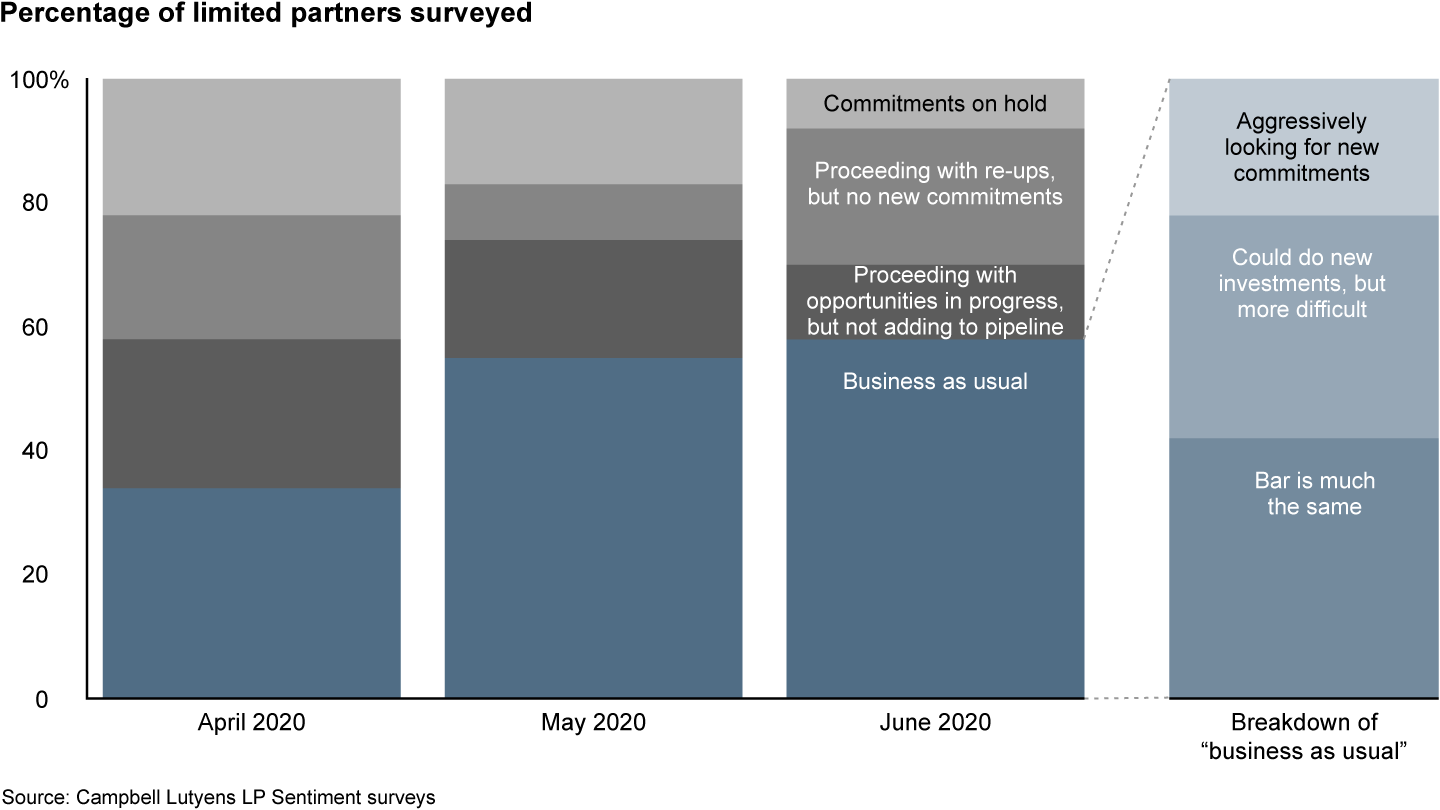
      Limited partners have grown steadily more confident about making new capital commitments as the Covid-19 crisis wears on
      Limited partners have grown steadily more confident about making new capital commitments as the Covid-19 crisis wears on
      Limited partners have grown steadily more confident about making new capital commitments as the Covid-19 crisis wears on

      Their increasing confidence reflects a couple of things. First, rebounding equity markets have restored balance to the asset mix in LP portfolios, making it easier to allocate new capital to private equity. Second, worries about liquidity have eased, partly because LPs know they can turn to a healthy secondaries market if needed. Finally, LPs remain committed to the asset class over the long term and recognize the importance of maintaining a steady pace of commitments to diversify vintage years. LPs clearly have their guard up, however. They’ll undoubtedly be more selective than ever with their commitments, sticking with proven winners and taking fewer risks.

      Three emerging trends

      As private equity firms try to make the best of a period of unprecedented tumult, we see three clear implications from the Covid-19 crisis so far:

      Sector expertise is more important than ever. Figuring out how Covid-19 is reshaping industries is probably the most difficult challenge GPs face as they think through the long-term effect on their portfolios. If you don’t have deep sector expertise, getting to the right answer is going to be difficult. Sector specialists have strong domain knowledge, industry contacts and many repetitions in their chosen industry. That allows them to see past financial engineering to create lasting business value. Expertise will be even more important as firms try to understand the discontinuities caused by Covid-19. Assessing the health and prospects of both target and portfolio companies will depend on it.

      In retail healthcare, for instance, the widespread deployment of telemedicine has raised real questions about what routine service delivery will look like in the years ahead. Some patients will prefer to continue online visits where medically appropriate, meaning providers will suddenly find themselves in the technology game. Determining how much behavior will change and how quickly providers must adapt will require nuanced analysis of company-specific exposure to industry-specific dynamics. To invest with confidence, firms will need a sophisticated understanding of what customers value, how the industry needs to pivot, and how management can deliver new kinds of services in the highest-quality way. For a generalist, those insights are hard to come by.

      Your value-creation plan may be obsolete. With so much changing so fast, fund managers need to fundamentally reevaluate every business plan in their portfolios. What are the pivotal things you believed were going to create value in this business, and are they still true? Consider the impact on a thin-margin business like retail grocery. Having tried out online delivery during the pandemic, many customers are likely to decide that they really liked having groceries delivered and will seek out providers that can do so reliably and affordably in the future. Even if the percentage is small, losing those customers could be devastating for a store operating on the edge.

      But many grocery chains have found that online ordering is structurally less profitable than in-store transactions—and in many cases, each order comes at a loss. Investments in things like automated fulfillment centers and the IT to support a strong online customer experience will be a critical part of adding value and gaining market share in the future. But if you owned a US grocery chain six months ago, you probably weren’t accelerating these investments because you didn’t really have to. In the wake of Covid-19 that’s changed; the future is now.

      Welcome to the digital world. For all of the digital sophistication of its practitioners, the business of private equity is stubbornly analog. Everything is on paper, and every meeting is in person. How often do you jump on a plane and devote two days of travel to a one-hour meeting? Covid-19 and technologies like Zoom or Microsoft Teams have forced us to radically change these behaviors, and we’ve seen in recent months that going virtual works just fine in many cases. Knowing that talent is their most constrained resource, many firms have rethought their business models to see how they can be more productive. A survey in May by Private Equity International, for instance, shows that GPs are generally open to using video conferencing for a number of interactions they’ve traditionally done in person (see Figure 4).

      Figure 4
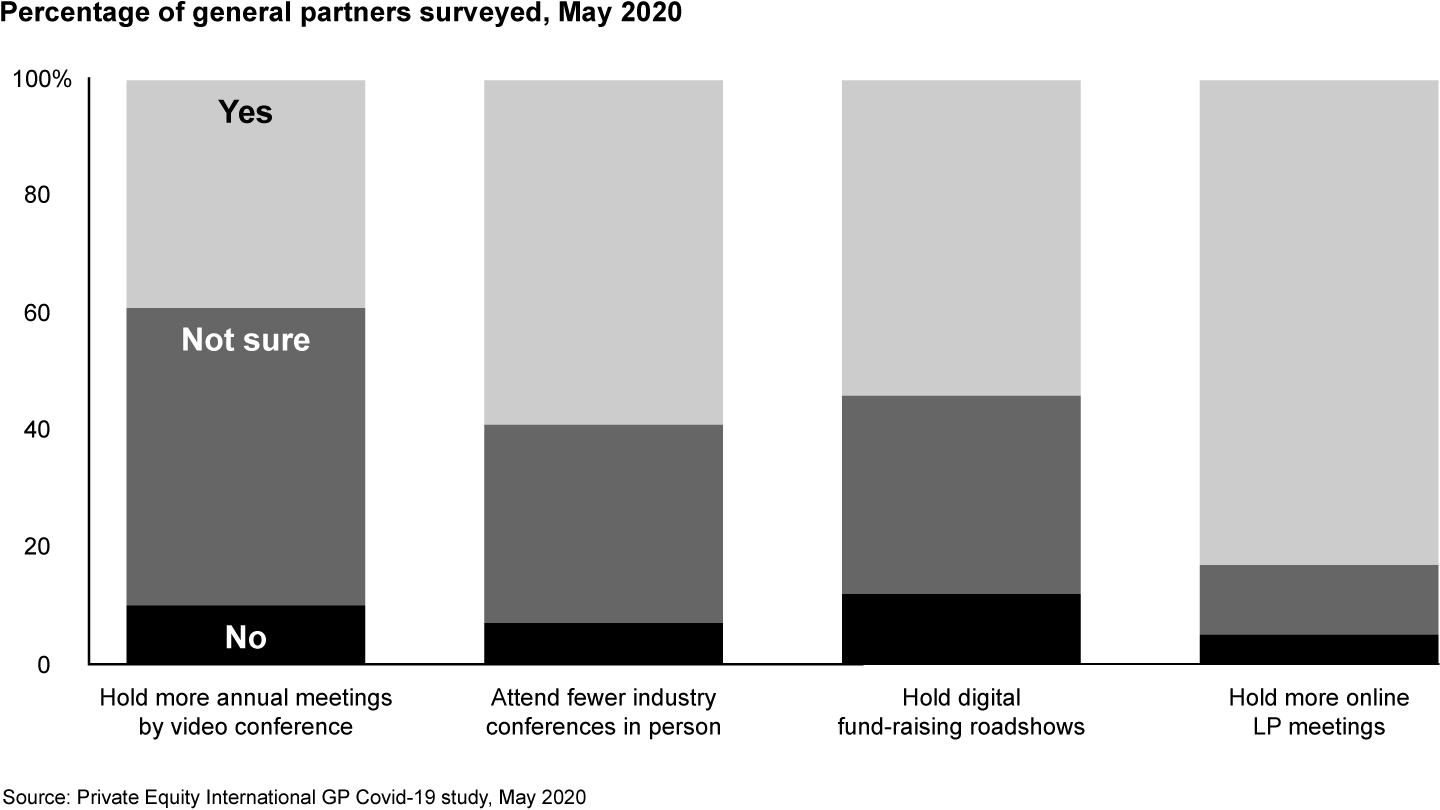
      In the wake of Covid-19, general partners are much more inclined to go virtual for routine interactions
      In the wake of Covid-19, general partners are much more inclined to go virtual for routine interactions
      In the wake of Covid-19, general partners are much more inclined to go virtual for routine interactions

      This is also forcing a review of what technology can do for the entire investment value chain, from sourcing deals, to monitoring portfolio companies, to assessing exit opportunities. Instead of waiting around for the next confidential memorandum to come through the door, for example, firms are mining rivers of information to find companies with the characteristics they like and the kinds of issues they have experience dealing with. Those companies may not be available for sale now, but by targeting what they want and going after it proactively, firms can begin a dialogue with potential targets and see what transpires.

      Increasingly, firms are using data, artificial intelligence, machine learning and automation to find companies, conduct due diligence, underwrite risk more comfortably and do it faster. Firms that aren’t moving in this direction risk being left behind.

      Auteurs
      • Headshot of Hugh MacArthur
        Hugh MacArthur
        Partner, Boston
      Contactez-nous
      Synergies sectorielles
      • Private Equity
      Coronavirus
      Will Covid-19 Hurt or Help Healthcare Companies? It Depends

      Prospects have improved for alternative sites of care, telemedicine, modernization of clinical trials, and healthcare provider consolidation.

      Voir plus
      Coronavirus
      Cash Management Practices to Weather a Downturn

      Take an honest look at the business, and decide where to improve.

      Voir plus
      Private Equity
      Spotting the Downturn Early and Coming Out Ahead with Gryphon’s David Andrews

      We ask the co-CEO of Gryphon Investors how he spotted one of the harshest cycles in the industry’s history and when he thinks it may finally break.

      Voir plus
      Coronavirus
      Ramping Up Online Grocery without Breaking the Bank

      Bain’s Marc-André Kamel discusses the challenges that online grocery presents for retailers and CPGs and how they can pair up to find a winning solution.

      Voir plus
      Private Equity
      What Kind of AI Cycle Are We Actually In?

      The question for investors is not whether AI will boom or bust, but who may be unwittingly subsidizing the buildout.

      Voir plus
      First published in juillet 2020
      Mots clés
      • Coronavirus
      • Private Equity

      Comment nous avons aidé nos clients

      Smart Pricing Helped a Private Equity Firm Unlock More Value

      Lire l’étude de cas

      Rapid Tech Due Diligence Helped a Private Equity Firm Invest with Confidence

      Lire l’étude de cas

      Finding profit potential in a struggling private equity portfolio company

      Lire l’étude de cas

      Vous souhaitez continuer cette conversation ?

      Nous aidons des dirigeants du monde entier à matérialiser des impacts et des résultats pérennes et créateurs de valeur dans leurs organisations.

      Les points de vue de Bain : notre perspective sur des problématiques auxquelles sont confrontées les entreprises à travers le monde, envoyés chaque mois dans votre boîte de réception. 

      *J’ai lu la politique de confidentialité et j’accepte les conditions.

      Merci de lire notre politique de confidentialité.
      Bain & Company
      Contactez-nous Sustainability Accessibility Conditions d’utilisation Politique de Confidentialité Cookie Policy Mentions Légales Sitemap Log In

      © 1996-2026 Bain & Company, Inc.

      Contacter Bain

      Comment pouvons-nous vous aider ?

      • Business inquiry
      • Career information
      • Press relations
      • Partnership request
      • Speaker request
      Voir tous les bureaux