

Rapport

This article is part of Bain’s 2019 Global Private Equity Report. Explore the contents of the report here or download the PDF to read the full report.
Valuation multiples, or the price paid per dollar of EBITDA, move up and down. Yet for the past 30 years, the average multiples investors have paid for public assets have almost always topped those paid for private assets, usually by as much as one to two times EBITDA. There have been periods when the gap has widened out in favor of public assets—the best example being the late-1990s tech boom, when everybody and their brother was piling into the stock market, driving up public valuations and making IPOs the easy exit for PE investors. As for periods when private multiples generally exceed the public average, there have been exactly three: during the “Barbarians at the Gate” era of the mid-1980s, during the exuberant run-up to the recent global financial crisis, and now.
The Barbarians era and the precrisis boom were short lived. There’s no single reason why multiples quickly reverted to normal, but one contributor was that the arbitrage opportunity dried up quickly. Both eras were marked by heavy activity in public-to-private deals, driven by investors’ belief that companies would be worth more in private hands than the public markets were giving them credit for. Heavy P2P activity, though, ends up being a backstop. The rush for public assets eventually buttresses public multiples and helps restore the usual balance.
A question worth asking this time around is whether this dynamic has changed. Is there something fundamentally different in the way investors view the public and private markets that is leading to a long-term reversal in how those markets value assets? Obviously, there’s no way of predicting the future, but there are signs that the ground is shifting under the old order. And if the markets are, in fact, undergoing long-term change, it will have clear implications for PE firms navigating a hotly competitive environment.
Public assets have historically commanded higher average valuations for a number of reasons, including the fact that investors are willing to pay a premium for more liquidity and transparency. The universe of investors is also much broader, enabling the public markets to attract truly massive flows of capital. Nothing has really changed in that regard. But a lot has changed on the private side of the ledger. Investors have never been more drawn to the private markets than they are today, and it’s plausible this abiding enthusiasm is leading to long-term change in how markets value assets.
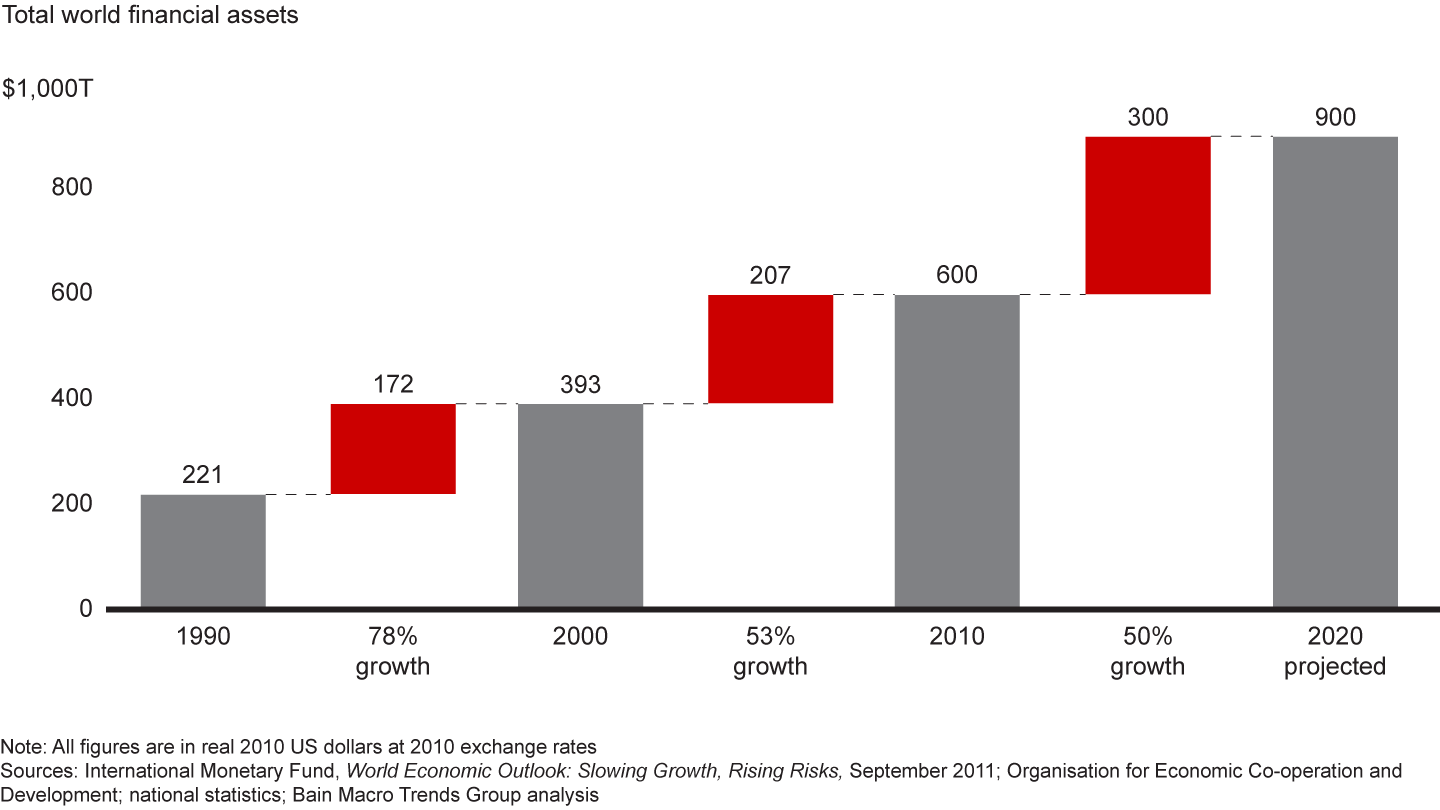
The flow of capital into the private markets is unprecedented. Partly, that’s because investors simply have more money to put to work than they’ve ever had in the past. Financial engineering, high-speed computing and the loosening of financial regulations have unleashed a superabundance of financial assets over the past 25 years, which has transformed how both the equity and debt markets behave. Global financial capital increased 53% from 2000 to 2010, reaching some $600 trillion, or 10 times real global GDP. Bain’s Macro Trends Group projects that it is swelling by half again and will reach approximately $900 trillion by the end of 2020 (see Figure 3.1).
Figure 3.1

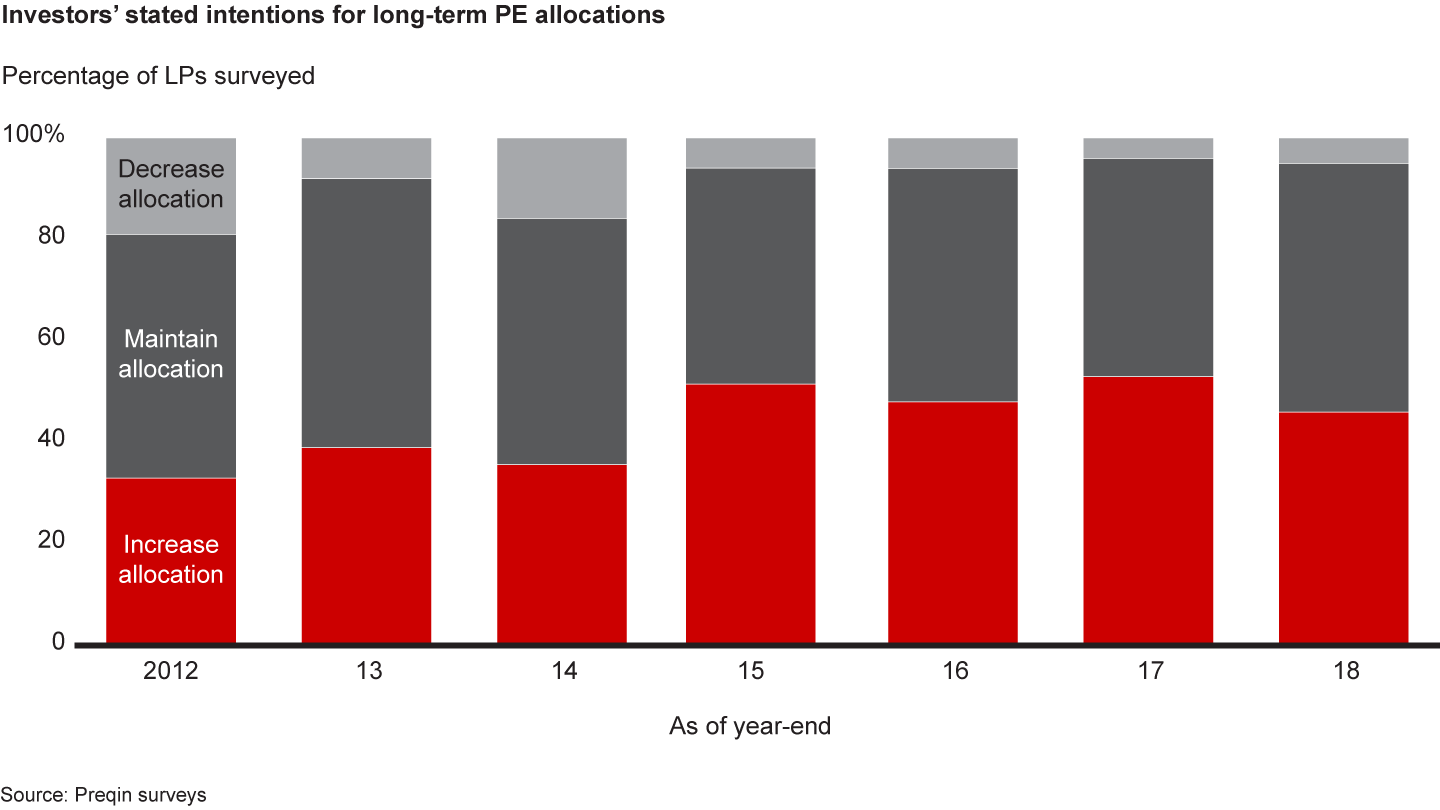
This age of superabundance has had both negative and positive effects. The flood of capital led to the housing and buyout booms that imploded so spectacularly during the global financial crisis. Yet the ready liquidity in the aftermath of the crisis also powered the rebound in public and private markets, allowing private equity to recover, regain its momentum and accelerate out of the gloom. Since then, investors hungry for yield have flocked to private equity, enticed by its superior returns relative to other asset classes. Since the start of the current economic cycle in 2009, investors have allocated a staggering $5.8 trillion globally to private equity, and the debt markets have been eager to finance transactions. LPs have also been steadily increasing their overall PE allocations, a sign that they are confident in private capital’s long-term ability to deliver strong performance (see Figure 3.2). Over the past 20 years, private-market capital has grown at more than double the rate of public capital globally, and, at the moment, there’s no slowdown in sight. Indeed, a number of firms are experimenting with ways to make PE investments available to retail investors. If these innovative new vehicles take off, it could open the floodgates to a massive new investor channel.
Figure 3.2

As we explained earlier in this report, the unprecedented amount of capital chasing a limited number of assets has driven average buyout purchase price multiples to record highs in recent years. It has also given companies financing choices they’ve never had before. During the late-’90s tech boom, riding the surge in public equities to a blockbuster IPO was the obvious choice for any company looking to finance growth. Today, that’s no longer true. Companies can now tap private equity or institutional capital with relative ease and borrow at historically low rates. That means they can avoid the myriad costs and hassles of going public. Uber, which has ridden almost $21 billion in venture capital to a private valuation of around $72 billion, is the poster child for this new reality. The company has filed to launch a public offering in 2019, but that’s because it has grown to the point that the public markets are now its only option to gain wide-scale liquidity (a real exit) for investors and shareholders.
What’s clear is that the advantages of going public no longer outweigh the considerable disadvantages. First of all, it’s expensive. Initiating a public offering is an exercise in writing checks to investment bankers and lawyers. Being public then adds several million to a company’s cost structure in the form of higher compensation and the many costs associated with financial reporting. For many leadership teams, managing in a fishbowl is also enervating. Relentless scrutiny from Wall Street, quarterly reporting requirements and the linkage of corporate incentives with short-term performance goals all discourage a long-term perspective on value creation. If the stock price suffers, any number of hostile entities will be ready to swoop in with a massively disruptive takeover bid.
Leaders who have experienced both the public and private arenas rarely equivocate about which they prefer. Michael Dell, who teamed with Silver Lake Partners to take his eponymous PC company private for $24 billion in 2013, put it this way: “Privatization has unleashed the passion of our team members, who have the freedom to focus first on innovating for customers in a way that was not always possible when striving to meet the quarterly demands of Wall Street. As a private company, Dell now has the freedom to take a long-term view.” Dell reemerged as a public company in December to simplify its capital structure. But it did so through a complex cash-and-equity deal that avoided the hassles of an IPO.
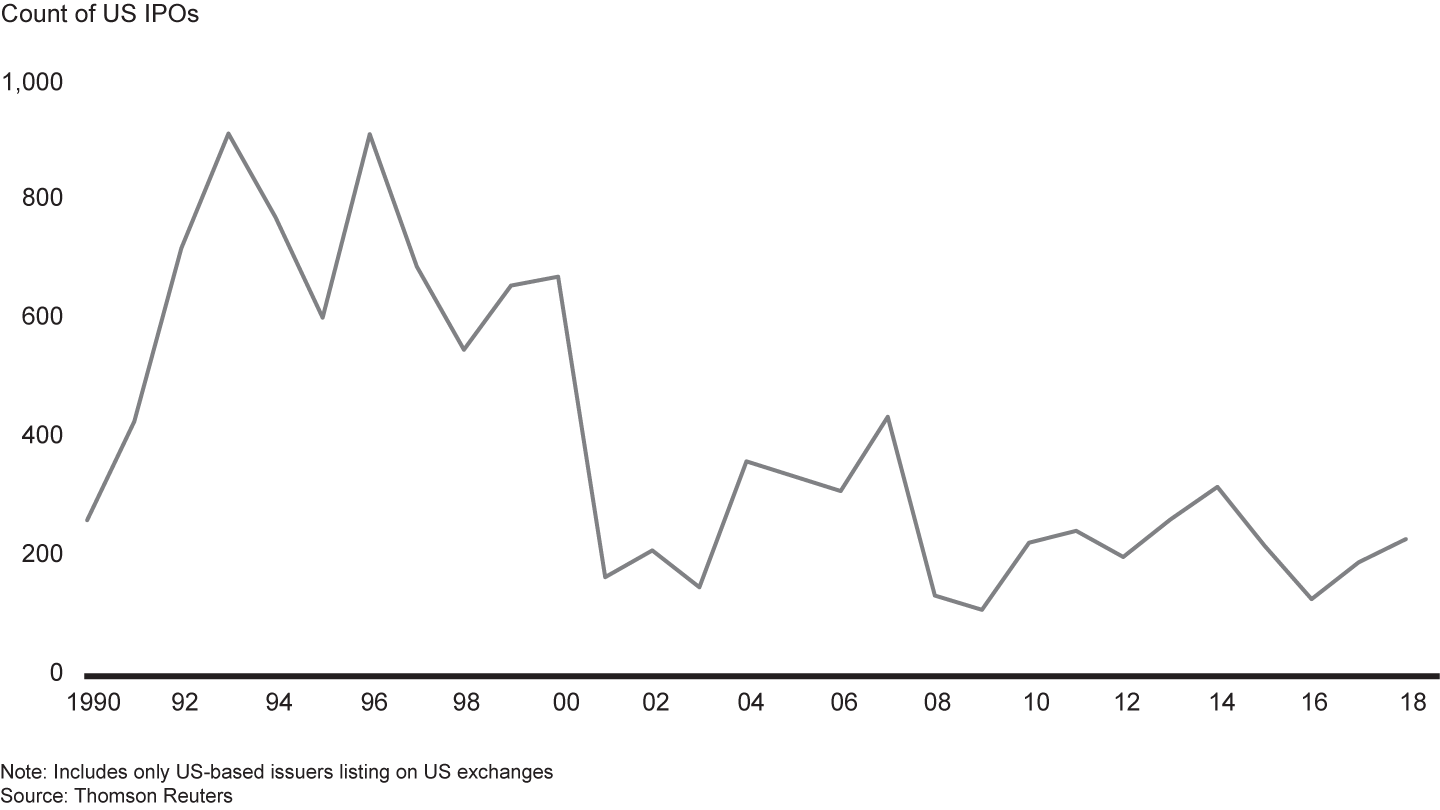
Given the choice, more and more companies are choosing to stay or go private. The number of US public companies has declined approximately 45% since its peak 20 years ago, despite a rise in the total number of companies. At the same time, the number of IPOs has plummeted. During the 1990s, the US market averaged 652 public offerings a year. Last year, the total was around one-third of that (see Figure 3.3).
Figure 3.3

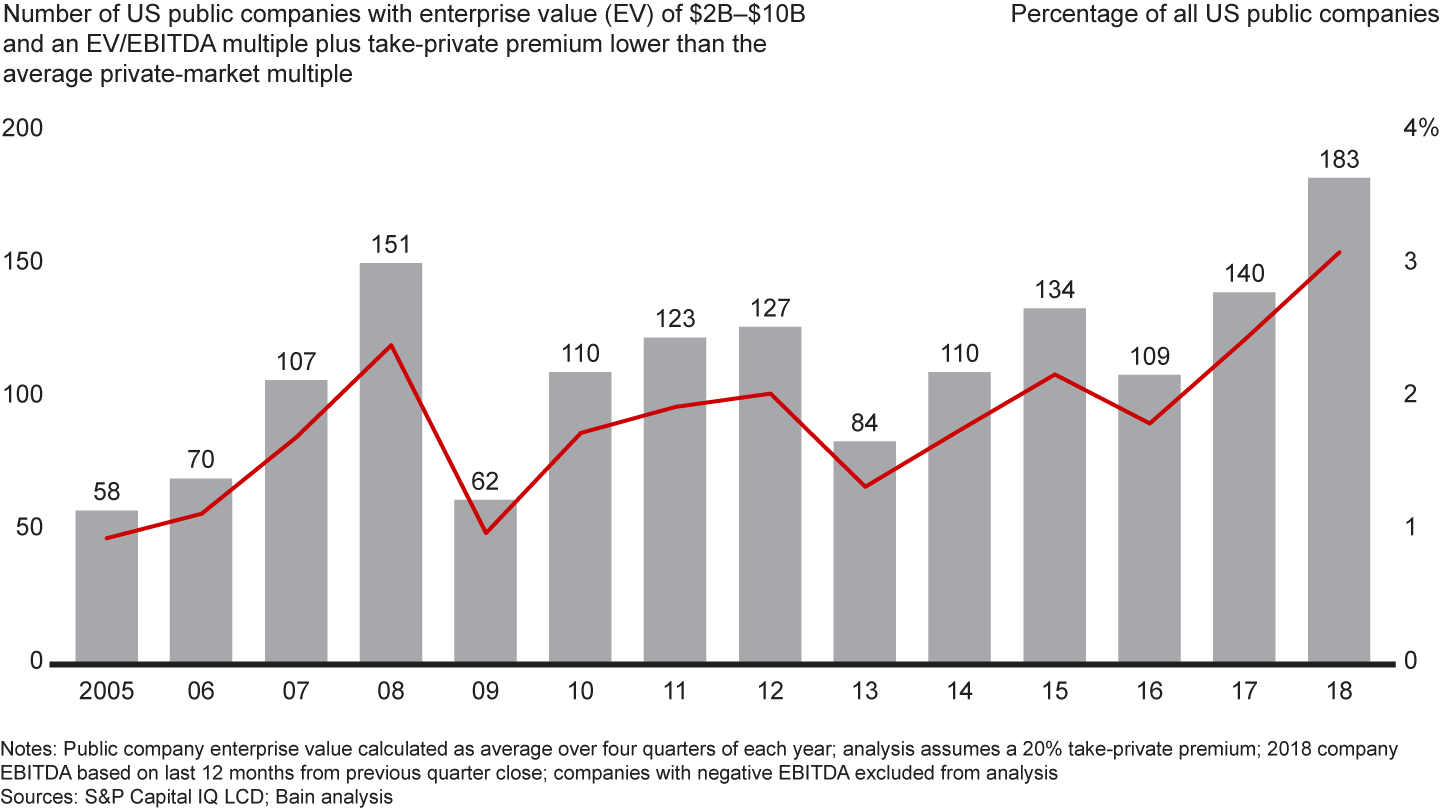
Meanwhile, the pool of companies ripe for take-private transactions is growing. As private multiples have surged and public multiples begin to price in the threat of a recession, a record number of companies are drifting into private equity’s P2P sweet spot. These are companies with an enterprise value between $2 billion and $10 billion that could be purchased for a multiple plus take-private premium that is still below the average private-market multiple (see Figure 3.4).
Figure 3.4

It’s unsurprising, then, that P2P activity has been robust in the latter part of this cycle. For the first time since 2006–07, the value of US companies going private in 2018 exceeded the value of those going public, causing a net outflow from public markets (see Figure 3.5). It is noteworthy that, in the US and Western Europe, one in five companies taken private in 2017 and 2018 had earlier been taken public via a sponsor-backed IPO. The market, in other words, has decided that these companies are clearly more valuable under private ownership than they were in the public realm.
Figure 3.5
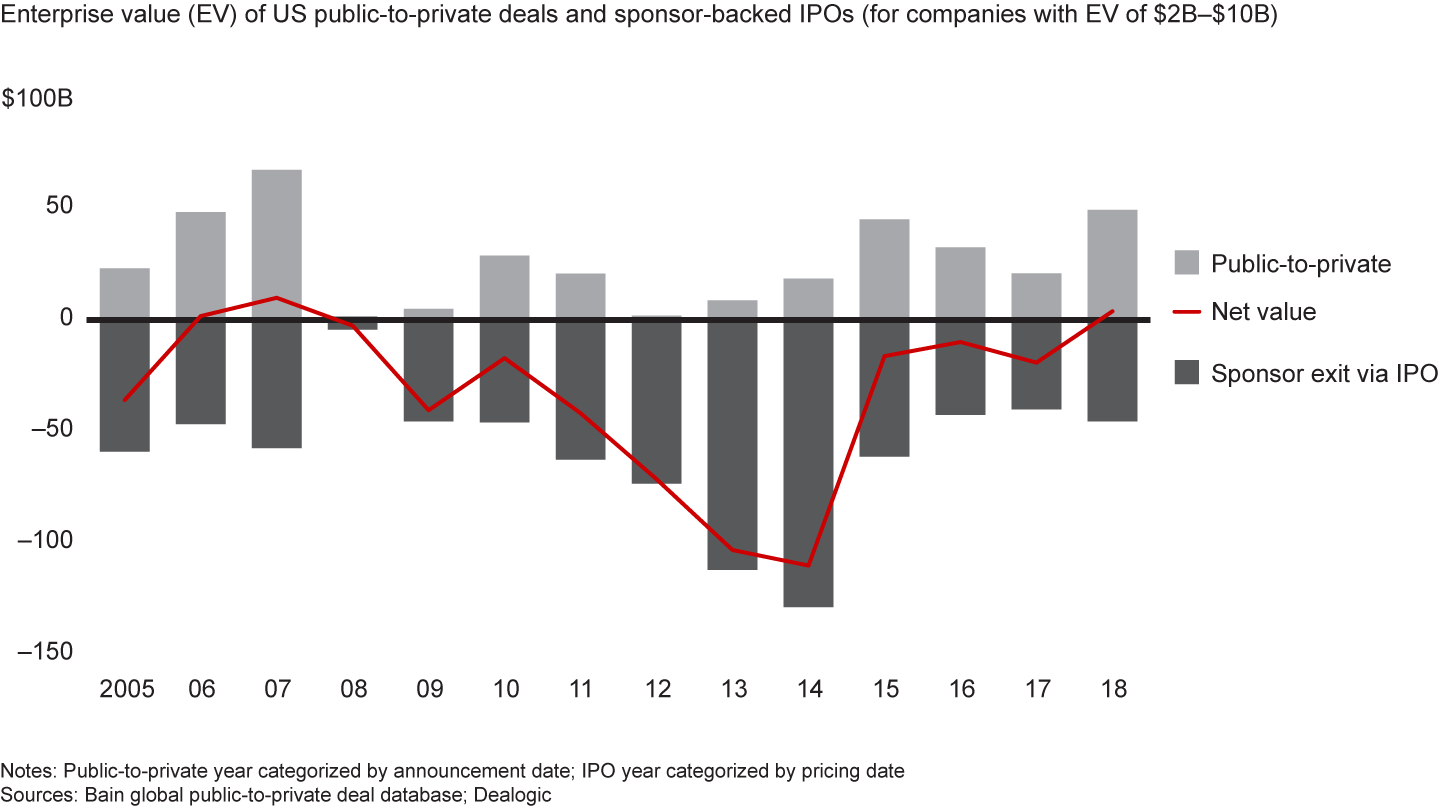

Taken to the extreme, this pattern would end up placing most cash-generating companies in private hands. Public ownership in that case would be reserved for companies that must exist in the public realm for regulatory reasons (banks, insurance companies, utilities) or because they can’t carry leverage (non-cash-generating early-stage investments in sectors like biotech or technology). That seems far-fetched, but from where we sit, the superabundance of capital shows no signs of ebbing. And it is likely to affect how investors and companies think about financing growth and long-term strategy for years to come. Again, there is no way to accurately predict whether the current multiple reversal will last any longer than the last two brief periods of inversion did. We are, however, noticing some real trends that haven’t been a factor until now. That suggests it’s worth considering what it would mean for PE firms and their investors if private multiples remain elevated over the long term. We see several implications.
Goodbye, IPO exits. If private multiples remain high relative to public valuations, it becomes less attractive to exit via an IPO. For GPs, the best prices for assets will come from selling a company to a strategic buyer, like a large corporation looking to acquire growth, or to another PE firm willing to shepherd the company to a new level of performance. Maximizing value has always meant thinking about the right exit strategy from day one and building value accordingly. For GPs, focusing on strategic and sponsor-to-sponsor exits may become the new normal. And for LPs, it means getting comfortable with the idea that sponsor-to-sponsor transactions may become an even bigger part of the deal market.
Public company targets. The growth in public-to-private transactions we have seen in the latter part of this cycle could be just getting started. Faced with the challenge of putting record amounts of capital to work, private equity is already targeting bigger and bigger companies. One obvious place to look for big companies is the public markets. For many large firms, this will likely become an increasingly important hunting ground, requiring a shift in their approach to deal sourcing, screening and due diligence.
Even bigger megafunds. The past several years have seen the return in earnest of the megabuyout fund. Witness recent fund launches by Apollo, Hellman & Friedman and Carlyle of $24.7 billion, $16 billion and $18.5 billion, respectively. Funds are growing in size, and the take-private opportunity in the public markets makes a case for even bigger funds capable of transacting ever-larger P2P deals. It is conceivable that we will see funds hit the $30 billion, $40 billion or even $50 billion mark as more companies cross over from public to private.
Democratization of private equity. Given the growth of the private markets and their higher return potential vs. public markets, making private equity more accessible to retail investors is gaining importance. Already, retail investors are struggling to gain exposure to the small and middle-market companies that have been the bread and butter of private equity. These companies are increasingly turning to private financing to avoid the cost and hassle of being publicly traded. Individuals are missing out on the opportunity to invest in fast-growing start-ups with potential to generate big returns (like Uber) as companies stay private longer. Now, as a growing number of traditionally public companies go private, it makes more sense than ever to push the door open for retail PE investors. Around 15% to 20% of Blackstone’s annual fund-raising already comes from retail investors, and this is likely just the start.

Get Our Latest Private Equity Insights
Receive Bain’s landmark Global Private Equity Report each February, plus the latest insights and developments in private equity throughout the year.
The trend toward bigger and bigger deals—whether they be large take-private transactions or buyouts of fast-growing private companies that never went public—will require significant changes in how most PE firms operate. We know from the P2P boom a decade ago that, for many PE firms, the experience of buying and trying to add value to truly large enterprises was disappointing. Too many deals went sideways or blew up, either because the firm didn’t do a thorough enough job in due diligence to really understand the risks and opportunities involved in these complex businesses, or because it didn’t have a value-creation process that could work on a much larger business. A playbook for a $20 billion acquisition is not a simple “scale up” of the playbook firms use to unlock value at a $2 billion company. Megadeals require a mega-investment in due diligence and the skills needed to choreograph change on a massive scale, to affect the financial, operational or strategic trajectory of the business. As we discussed in Section 2, that could mean developing the capabilities to pursue corporate-style M&A strategies. It could also require becoming more adept at deploying tools like zero-based redesign to achieve rapid cost reduction on a large scale, or developing the kind of human resources capabilities to manage enterprise-wide cultural change. The bottom line is that firms need to adjust their investment and capabilities to the task at hand. Tackling larger deals successfully means matching due diligence and resources post-close to the increased scale of the investment.
One more point: It is notable that after the previous two periods when private multiples exceeded public valuations, the economy headed for a downturn. As we mentioned in Section 1, that risk exists this time around as well. There is, of course, no way of predicting a downturn, either in terms of timing or severity. But hunkering down and not investing through the storm isn’t an option for most firms; they need to put money to work. It’s critical, however, to enter into any new deals with eyes wide open. We disagree with the notion that firms should completely avoid anything with a whiff of cyclicality at times like these. As long as a company is fundamentally sound and isn’t carrying too much leverage, it can still perform through a downturn. Many PE-owned cyclical companies bought before the global financial crisis rode through the storm and emerged as winners on the other side. The 2007 carve-out of Allison Transmission from General Motors by Carlyle and Onex is a good example. Allison’s EBITDA declined to $501 million from $544 million between 2008 and 2009, but leadership managed expenses aggressively to improve margins and generated cash by finding working capital and capital expenditure efficiencies. The company not only survived the downturn but was well positioned to benefit from the recovery.
The key imperative in cyclical deals is a deep understanding of how well a company is positioned financially and competitively. It isn’t enough to know the industry well; in diligence, firms need to test the business against robust downturn scenarios. This means having a firm grasp of how far earnings can fall and for how long, and exactly what levers an owner can pull to minimize the damage. It is essential to build a balance sheet that can withstand a period of economic weakness. It is also critical to understand the company’s core strengths and how the value-creation plan will take advantage of them.
This article is part of Bain’s 2019 Global Private Equity Report. Explore the contents of the report here or download the PDF to read the full report.
First published in février 2019