
Skip to Content
  • Bureaux

    Bureaux

    Amérique du Nord et Amérique du Sud
    • Atlanta
    • Austin
    • Bogota
    • Boston
    • Buenos Aires
    • Chicago
    • Dallas
    • Denver
    • Houston
    • Los Angeles
    • Mexico City
    • Minneapolis
    • Monterrey
    • Montreal
    • New York
    • Rio de Janeiro
    • San Francisco
    • Santiago
    • São Paulo
    • Seattle
    • Silicon Valley
    • Toronto
    • Washington, DC
    Europe, Moyen-Orient et Afrique
    • Amsterdam
    • Athens
    • Berlin
    • Brussels
    • Copenhagen
    • Doha
    • Dubai
    • Dusseldorf
    • Frankfurt
    • Helsinki
    • Istanbul
    • Johannesburg
    • Kyiv
    • Lisbon
    • London
    • Madrid
    • Milan
    • Munich
    • Oslo
    • Paris
    • Riyadh
    • Rome
    • Stockholm
    • Vienna
    • Warsaw
    • Zurich
    Asie et Australie
    • Bangkok
    • Beijing
    • Bengaluru
    • Brisbane
    • Ho Chi Minh City
    • Hong Kong
    • Jakarta
    • Kuala Lumpur
    • Manila
    • Melbourne
    • Mumbai
    • New Delhi
    • Perth
    • Shanghai
    • Singapore
    • Sydney
    • Tokyo
    Voir tous les bureaux
  • Alumni
  • Presse
  • S’abonner
  • Contacter
  • Canada | Français

    Sélectionnez votre région et votre langue

    Global
    • Global (English)
    Amérique du Nord et Amérique du Sud
    • Brazil (Português)
    • Argentina (Español)
    • Canada (Français)
    • Chile (Español)
    • Colombia (Español)
    Europe, Moyen-Orient et Afrique
    • France (Français)
    • DACH Region (Deutsch)
    • Italy (Italiano)
    • Spain (Español)
    • Greece (Elliniká)
    Asie et Australie
    • China (中文版)
    • Korea (한국어)
    • Japan (日本語)
  • Saved items (0)
    Saved items (0)

    You have no saved items.

    Bookmark content that interests you and it will be saved here for you to read or share later.

    Explore Bain Insights
  • Expertises Sectorielles
    Menu principal

    Expertises Sectorielles

    • Aerospace et Défense
    • Agroalimentaire
    • Chimie
    • Infrastructures, BTP et Matériaux de Construction
    • Grande Consommation
    • Services Financiers
    • Santé
    • Engins & Equipements Industriels
    • Media et Divertissement
    • Metals
    • Mining
    • Pétrole & Gaz
    • Papier et Emballage
    • Private Equity
    • Secteur Public
    • Distribution
    • Technologie
    • Télécommunications
    • Transportation
    • Travel & Leisure
    • Utilities & Energies Renouvelables
  • Expertises Fonctionnelles
    Menu principal

    Expertises Fonctionnelles

    • Expérience Client
    • ESG
    • Innovation
    • Fusions et Acquisitions
    • Opérations
    • People & Organization
    • Private Equity
    • Sales & Marketing
    • Stratégie
    • IA, Perspectives et Solutions
    • Technology
    • Transformation
  • Digital
  • Points de Vue
  • About
    Menu principal

    About

    • Notre Activité
    • Nos Valeurs
    • Nos Collaborateurs et Notre Équipe Dirigeante
    • Notre Impact
    • Prix & Récompenses
    • Partenariats Internationaux
    Further: Our global responsibility
    • Sustainability
    • Impact Social
    • World Economic Forum
    Learn more about Further
  • Carrières
    Menu principal

    Carrières

    • Rejoignez-nous
      Carrières
      Rejoignez-nous
      • Find Your Place
      • Nos domaines d’expertise
      • Equipes multidisciplinaires
      • Étudiants
      • Stages et programmes
      • Événements de recrutement
    • La vie chez Bain
      Carrières
      La vie chez Bain
      • Blog: Inside Bain
      • Récits de carrière
      • Nos collaborateurs
      • Nos bureaux
      • Soutenir votre évolution professionnelle
      • Groupes d’affinités
      • Avantages chez Bain
    • Histoires d’impact
    • Notre processus de recrutement
      Carrières
      Notre processus de recrutement
      • Ce que vous pouvez attendre
      • Entretiens
    Trouver un poste
  • Bureaux
    Menu principal

    Bureaux

    • Amérique du Nord et Amérique du Sud
      Bureaux
      Amérique du Nord et Amérique du Sud
      • Atlanta
      • Austin
      • Bogota
      • Boston
      • Buenos Aires
      • Chicago
      • Dallas
      • Denver
      • Houston
      • Los Angeles
      • Mexico City
      • Minneapolis
      • Monterrey
      • Montreal
      • New York
      • Rio de Janeiro
      • San Francisco
      • Santiago
      • São Paulo
      • Seattle
      • Silicon Valley
      • Toronto
      • Washington, DC
    • Europe, Moyen-Orient et Afrique
      Bureaux
      Europe, Moyen-Orient et Afrique
      • Amsterdam
      • Athens
      • Berlin
      • Brussels
      • Copenhagen
      • Doha
      • Dubai
      • Dusseldorf
      • Frankfurt
      • Helsinki
      • Istanbul
      • Johannesburg
      • Kyiv
      • Lisbon
      • London
      • Madrid
      • Milan
      • Munich
      • Oslo
      • Paris
      • Riyadh
      • Rome
      • Stockholm
      • Vienna
      • Warsaw
      • Zurich
    • Asie et Australie
      Bureaux
      Asie et Australie
      • Bangkok
      • Beijing
      • Bengaluru
      • Brisbane
      • Ho Chi Minh City
      • Hong Kong
      • Jakarta
      • Kuala Lumpur
      • Manila
      • Melbourne
      • Mumbai
      • New Delhi
      • Perth
      • Shanghai
      • Singapore
      • Sydney
      • Tokyo
    Voir tous les bureaux
  • Alumni
  • Presse
  • S’abonner
  • Contacter
  • Canada | Français
    Menu principal

    Sélectionnez votre région et votre langue

    • Global
      Sélectionnez votre région et votre langue
      Global
      • Global (English)
    • Amérique du Nord et Amérique du Sud
      Sélectionnez votre région et votre langue
      Amérique du Nord et Amérique du Sud
      • Brazil (Português)
      • Argentina (Español)
      • Canada (Français)
      • Chile (Español)
      • Colombia (Español)
    • Europe, Moyen-Orient et Afrique
      Sélectionnez votre région et votre langue
      Europe, Moyen-Orient et Afrique
      • France (Français)
      • DACH Region (Deutsch)
      • Italy (Italiano)
      • Spain (Español)
      • Greece (Elliniká)
    • Asie et Australie
      Sélectionnez votre région et votre langue
      Asie et Australie
      • China (中文版)
      • Korea (한국어)
      • Japan (日本語)
  • Saved items  (0)
    Menu principal
    Saved items (0)

    You have no saved items.

    Bookmark content that interests you and it will be saved here for you to read or share later.

    Explore Bain Insights
  • Expertises Sectorielles
    • Expertises Sectorielles

      • Aerospace et Défense
      • Agroalimentaire
      • Chimie
      • Infrastructures, BTP et Matériaux de Construction
      • Grande Consommation
      • Services Financiers
      • Santé
      • Engins & Equipements Industriels
      • Media et Divertissement
      • Metals
      • Mining
      • Pétrole & Gaz
      • Papier et Emballage
      • Private Equity
      • Secteur Public
      • Distribution
      • Technologie
      • Télécommunications
      • Transportation
      • Travel & Leisure
      • Utilities & Energies Renouvelables
  • Expertises Fonctionnelles
    • Expertises Fonctionnelles

      • Expérience Client
      • ESG
      • Innovation
      • Fusions et Acquisitions
      • Opérations
      • People & Organization
      • Private Equity
      • Sales & Marketing
      • Stratégie
      • IA, Perspectives et Solutions
      • Technology
      • Transformation
  • Digital
  • Points de Vue
  • Carrières
    Recherches les plus fréquentes
    • Agile
    • Digital
    • Stratégie
    Vos recherches précédentes
      Pages récemment visitées

      Content added to saved items

      Saved items (0)

      Removed from saved items

      Saved items (0)

      Managing Change Blog

      Red Is Good: Why Smart Leaders Question the Green in Performance Dashboards

      Red Is Good: Why Smart Leaders Question the Green in Performance Dashboards

      By embracing red results on your performance dashboard, you nurture the kind of problem solving and collaboration that leads to the best results.

      Par David Michels

      • min

      Article

      Red Is Good: Why Smart Leaders Question the Green in Performance Dashboards
      en

      The senior executive of a global industrial conglomerate felt a knot of apprehension form in her stomach. She was looking at the latest report from the team in charge of a major change program. The dashboard was a sea of green, indicating that every part of the program was humming along just fine (see Figure 1). Nothing to worry about. But this executive knew better, and in fact, she was downright agitated. “How do I find out what is really going on with our program?” she wondered. “I feel I’m the only one probing, and all I get in response is some version of ‘yes, ma’am.'"

      Figure 1
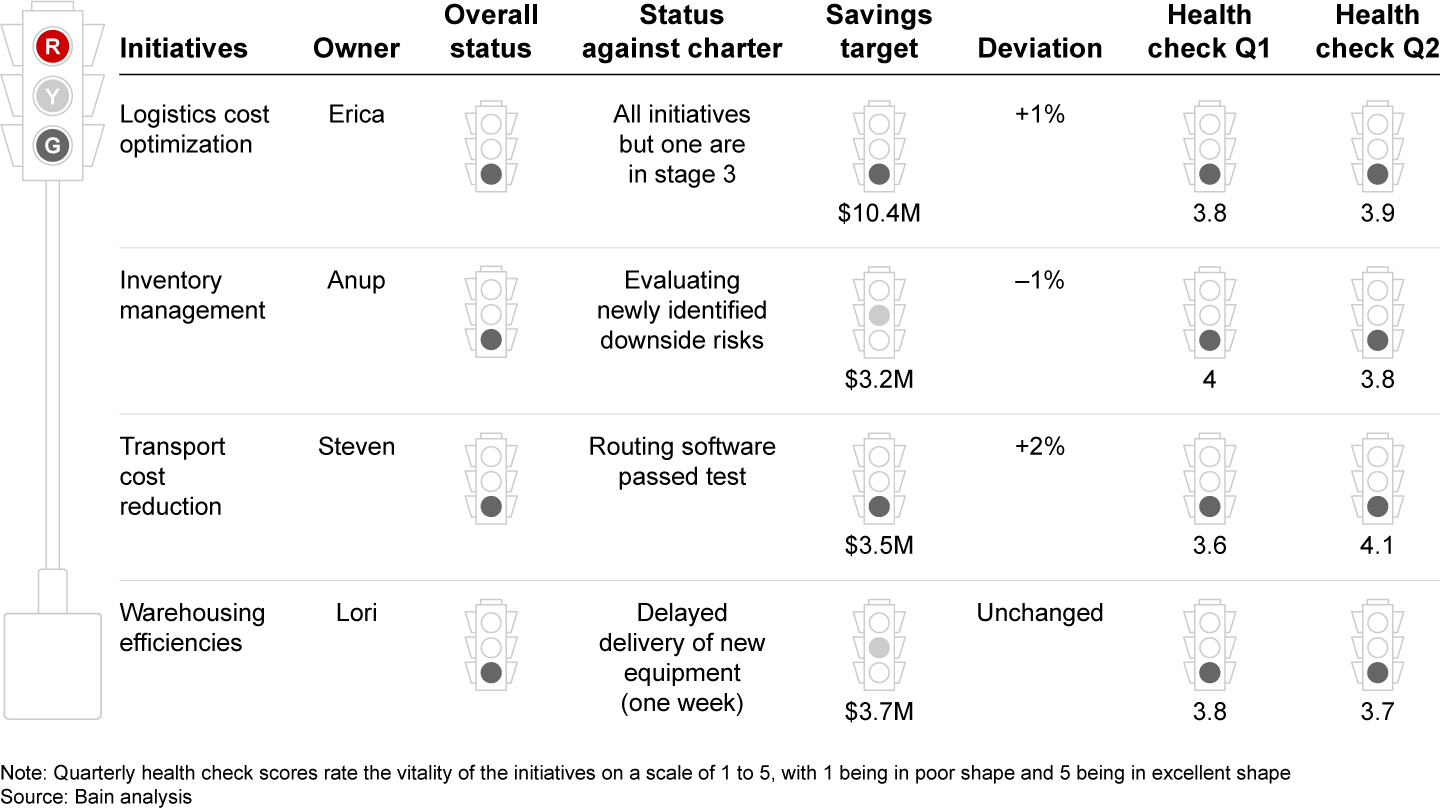
      A dashboard without any reds should set off alarm bells
      A dashboard without any reds should set off alarm bells
      A dashboard without any reds should set off alarm bells

      The executive who shared this experience with me recently is a veteran of many corporate change initiatives. So she knows that most change efforts don’t deliver the intended results or are recalibrated at some point to meet much more modest and diluted goals. Behind all the happy-face reporting, she knew instinctively that trouble surely lurked. Eventually, the truth would emerge, but maybe too late to take appropriate action. Why wouldn’t anybody tell her the truth?

      My friend’s problem is a common one. In many companies, employees go to extraordinary lengths to avoid having to communicate bad news to the higher-ups. This fear can motivate well-intentioned employees to do their darnedest to make sure there is no bad news. But it also leads to those false green signals.

      Read More

      Change Management Insights

      Change management has been around for decades, but more than 70% of change efforts fail. Bain’s Results Delivery® insights help companies to predict, measure and manage risk, starting on day one.

      Change programs are especially prone to the false greens syndrome. To track progress across multiple initiatives, the program leader asks for some kind of reporting system—after all, if you can’t measure it, it won’t happen. The program office whips up impressive-looking dashboards with greens, yellows and reds to show what’s on track and what’s not. Team members are assigned responsibility for indicators, and the added transparency gives everyone confidence in the process.

      Then, something miraculous happens. Within a couple of reporting cycles, the dashboard turns all green! On the surface, this bodes well for the program. Progress must be terrific. But beneath the surface, as my executive friend suspected, the reality is not so rosy. The reds have simply gone underground. And when that happens, you not only lose your grip on what is really going on; the process itself also loses legitimacy and soon morphs into a time-wasting exercise in bureaucracy.

      What’s needed instead is a “red is good” mentality. And this is when the boss has to step up to the plate. Even if he or she is friendly and encouraging, when team members report a red status to the program sponsor, they perceive a signal, whether direct or indirect, that this indicator better turn green—and soon. Even the most confident employee will eventually cave to this unspoken message and find a way to show green, whether the problem is truly resolved or not. In some companies, there is nothing subtle about the “green is good” message. For years, Microsoft employees were terrified about what might happen if they had to report that a project was not panning out—a fear that CEO Satya Nadella has tried hard to quell.

      There is a better way. What if you opened each meeting by saying something like this: “Hitting the goals for this program will not come free. It will not be easy. We will face many challenges. I want to use these meetings to confront real issues and solve them. Let’s put our three toughest challenges—our reds—on the table each time we meet. Then let’s use our best, most creative thinking to knock down these hurdles and move forward.”

      David Michels, who leads Bain's Results Delivery® practice in Europe, the Middle East and Africa, outlines how company leaders can create an environment in which real issues are addressed and dealt with.

      Of course, simply speaking these words won’t do the trick. The employees’ belief that reds will hurt their careers is a powerful inhibitor to change. Leaders who want the truth need to show, not just tell, that those few brave souls who dare to admit red will experience positive outcomes. In other words, walk the talk.

      There will always be reds when you try to do something new or different. Sweep these challenges under the rug, and all kinds of unintended negative consequences ensue. But with a “red is good” mindset, when somebody puts a red on the table, the team rallies and swings into solution mode. Thinking “red is good” nurtures precisely the kind of problem solving and collaboration that leads to the best results—in change programs and across your company.

      David Michels leads Bain & Company's Results Delivery® practice in Europe, the Middle East and Africa.

      Auteurs
      • Headshot of David Michels
        David Michels
        Partner, Tokyo
      Contactez-nous
      Expertises fonctionnelles transverses
      • Conduite du Changement
      Comment pouvons-nous vous aider ?
      • ARC℠
      • Behavior Change
      • Results Delivery® Office
      Conduite du Changement
      Because I Said So: Lessons in Parenting and Change Management

      The next time you prepare to launch a change initiative, think first about how you will enlist employees in the process.

      Voir plus
      Conduite du Changement
      Is Your Change Creating a Flood?

      Leaders who set off change floods, without the proper systems in place, do so at their peril.

      Voir plus
      Blog Management du Changement
      It's 8-to-1 against Your Change Program: How to Beat the Odds

      The most successful change programs often have five principles in common.

      Voir plus
      Blog Management du Changement
      Four Ways Leaders Can Make AI Redesigns Stick

      As companies redesign to scale AI, these four lessons help leaders ensure their organizations actually live the new operating model.

      Voir plus
      Results Delivery® Office
      CTO Insights: How to Lead a Transformation

      We spoke with executives who have run transformations at large companies about the three most critical roles of a chief transformation officer.

      Voir plus
      First published in mai 2017
      Mots clés
      • ARC℠
      • Behavior Change
      • Blog Management du Changement
      • Conduite du Changement
      • Results Delivery® Office

      Comment nous avons aidé nos clients

      An Aerospace Leader Bounces Back with a Three-Part Transformation

      Lire l’étude de cas

      Mobilization Efforts Help a Chemical Company Implement and Sustain 15% Cost Reduction

      Lire l’étude de cas

      Results360® Boosts a Pharmaceutical Company’s Stock Price 135%

      Lire l’étude de cas

      Vous souhaitez continuer cette conversation ?

      Nous aidons des dirigeants du monde entier à matérialiser des impacts et des résultats pérennes et créateurs de valeur dans leurs organisations.

      Les points de vue de Bain : notre perspective sur des problématiques auxquelles sont confrontées les entreprises à travers le monde, envoyés chaque mois dans votre boîte de réception. 

      *J’ai lu la politique de confidentialité et j’accepte les conditions.

      Merci de lire notre politique de confidentialité.
      Bain & Company
      Contactez-nous Sustainability Accessibility Conditions d’utilisation Politique de Confidentialité Cookie Policy Mentions Légales Sitemap Log In

      © 1996-2026 Bain & Company, Inc.

      Contacter Bain

      Comment pouvons-nous vous aider ?

      • Business inquiry
      • Career information
      • Press relations
      • Partnership request
      • Speaker request
      Voir tous les bureaux