
Skip to Content
  • Bureaux

    Bureaux

    Amérique du Nord et Amérique du Sud
    • Atlanta
    • Austin
    • Bogota
    • Boston
    • Buenos Aires
    • Chicago
    • Dallas
    • Denver
    • Houston
    • Los Angeles
    • Mexico City
    • Minneapolis
    • Monterrey
    • Montreal
    • New York
    • Rio de Janeiro
    • San Francisco
    • Santiago
    • São Paulo
    • Seattle
    • Silicon Valley
    • Toronto
    • Washington, DC
    Europe, Moyen-Orient et Afrique
    • Amsterdam
    • Athens
    • Berlin
    • Brussels
    • Copenhagen
    • Doha
    • Dubai
    • Dusseldorf
    • Frankfurt
    • Helsinki
    • Istanbul
    • Johannesburg
    • Kyiv
    • Lisbon
    • London
    • Madrid
    • Milan
    • Munich
    • Oslo
    • Paris
    • Riyadh
    • Rome
    • Stockholm
    • Vienna
    • Warsaw
    • Zurich
    Asie et Australie
    • Bangkok
    • Beijing
    • Bengaluru
    • Brisbane
    • Ho Chi Minh City
    • Hong Kong
    • Jakarta
    • Kuala Lumpur
    • Manila
    • Melbourne
    • Mumbai
    • New Delhi
    • Perth
    • Shanghai
    • Singapore
    • Sydney
    • Tokyo
    Voir tous les bureaux
  • Alumni
  • Presse
  • S’abonner
  • Contacter
  • Canada | Français

    Sélectionnez votre région et votre langue

    Global
    • Global (English)
    Amérique du Nord et Amérique du Sud
    • Brazil (Português)
    • Argentina (Español)
    • Canada (Français)
    • Chile (Español)
    • Colombia (Español)
    Europe, Moyen-Orient et Afrique
    • France (Français)
    • DACH Region (Deutsch)
    • Italy (Italiano)
    • Spain (Español)
    • Greece (Elliniká)
    Asie et Australie
    • China (中文版)
    • Korea (한국어)
    • Japan (日本語)
  • Saved items (0)
    Saved items (0)

    You have no saved items.

    Bookmark content that interests you and it will be saved here for you to read or share later.

    Explore Bain Insights
  • Expertises Sectorielles
    Menu principal

    Expertises Sectorielles

    • Aerospace et Défense
    • Agroalimentaire
    • Chimie
    • Infrastructures, BTP et Matériaux de Construction
    • Grande Consommation
    • Services Financiers
    • Santé
    • Engins & Equipements Industriels
    • Media et Divertissement
    • Metals
    • Mining
    • Pétrole & Gaz
    • Papier et Emballage
    • Private Equity
    • Secteur Public
    • Distribution
    • Technologie
    • Télécommunications
    • Transportation
    • Travel & Leisure
    • Utilities & Energies Renouvelables
  • Expertises Fonctionnelles
    Menu principal

    Expertises Fonctionnelles

    • Expérience Client
    • ESG
    • Innovation
    • Fusions et Acquisitions
    • Opérations
    • People & Organization
    • Private Equity
    • Sales & Marketing
    • Stratégie
    • IA, Perspectives et Solutions
    • Technology
    • Transformation
  • Digital
  • Points de Vue
  • About
    Menu principal

    About

    • Notre Activité
    • Nos Valeurs
    • Nos Collaborateurs et Notre Équipe Dirigeante
    • Notre Impact
    • Prix & Récompenses
    • Partenariats Internationaux
    Further: Our global responsibility
    • Sustainability
    • Impact Social
    • World Economic Forum
    Learn more about Further
  • Carrières
    Menu principal

    Carrières

    • Rejoignez-nous
      Carrières
      Rejoignez-nous
      • Find Your Place
      • Nos domaines d’expertise
      • Equipes multidisciplinaires
      • Étudiants
      • Stages et programmes
      • Événements de recrutement
    • La vie chez Bain
      Carrières
      La vie chez Bain
      • Blog: Inside Bain
      • Récits de carrière
      • Nos collaborateurs
      • Nos bureaux
      • Soutenir votre évolution professionnelle
      • Groupes d’affinités
      • Avantages chez Bain
    • Histoires d’impact
    • Notre processus de recrutement
      Carrières
      Notre processus de recrutement
      • Ce que vous pouvez attendre
      • Entretiens
    Trouver un poste
  • Bureaux
    Menu principal

    Bureaux

    • Amérique du Nord et Amérique du Sud
      Bureaux
      Amérique du Nord et Amérique du Sud
      • Atlanta
      • Austin
      • Bogota
      • Boston
      • Buenos Aires
      • Chicago
      • Dallas
      • Denver
      • Houston
      • Los Angeles
      • Mexico City
      • Minneapolis
      • Monterrey
      • Montreal
      • New York
      • Rio de Janeiro
      • San Francisco
      • Santiago
      • São Paulo
      • Seattle
      • Silicon Valley
      • Toronto
      • Washington, DC
    • Europe, Moyen-Orient et Afrique
      Bureaux
      Europe, Moyen-Orient et Afrique
      • Amsterdam
      • Athens
      • Berlin
      • Brussels
      • Copenhagen
      • Doha
      • Dubai
      • Dusseldorf
      • Frankfurt
      • Helsinki
      • Istanbul
      • Johannesburg
      • Kyiv
      • Lisbon
      • London
      • Madrid
      • Milan
      • Munich
      • Oslo
      • Paris
      • Riyadh
      • Rome
      • Stockholm
      • Vienna
      • Warsaw
      • Zurich
    • Asie et Australie
      Bureaux
      Asie et Australie
      • Bangkok
      • Beijing
      • Bengaluru
      • Brisbane
      • Ho Chi Minh City
      • Hong Kong
      • Jakarta
      • Kuala Lumpur
      • Manila
      • Melbourne
      • Mumbai
      • New Delhi
      • Perth
      • Shanghai
      • Singapore
      • Sydney
      • Tokyo
    Voir tous les bureaux
  • Alumni
  • Presse
  • S’abonner
  • Contacter
  • Canada | Français
    Menu principal

    Sélectionnez votre région et votre langue

    • Global
      Sélectionnez votre région et votre langue
      Global
      • Global (English)
    • Amérique du Nord et Amérique du Sud
      Sélectionnez votre région et votre langue
      Amérique du Nord et Amérique du Sud
      • Brazil (Português)
      • Argentina (Español)
      • Canada (Français)
      • Chile (Español)
      • Colombia (Español)
    • Europe, Moyen-Orient et Afrique
      Sélectionnez votre région et votre langue
      Europe, Moyen-Orient et Afrique
      • France (Français)
      • DACH Region (Deutsch)
      • Italy (Italiano)
      • Spain (Español)
      • Greece (Elliniká)
    • Asie et Australie
      Sélectionnez votre région et votre langue
      Asie et Australie
      • China (中文版)
      • Korea (한국어)
      • Japan (日本語)
  • Saved items  (0)
    Menu principal
    Saved items (0)

    You have no saved items.

    Bookmark content that interests you and it will be saved here for you to read or share later.

    Explore Bain Insights
  • Expertises Sectorielles
    • Expertises Sectorielles

      • Aerospace et Défense
      • Agroalimentaire
      • Chimie
      • Infrastructures, BTP et Matériaux de Construction
      • Grande Consommation
      • Services Financiers
      • Santé
      • Engins & Equipements Industriels
      • Media et Divertissement
      • Metals
      • Mining
      • Pétrole & Gaz
      • Papier et Emballage
      • Private Equity
      • Secteur Public
      • Distribution
      • Technologie
      • Télécommunications
      • Transportation
      • Travel & Leisure
      • Utilities & Energies Renouvelables
  • Expertises Fonctionnelles
    • Expertises Fonctionnelles

      • Expérience Client
      • ESG
      • Innovation
      • Fusions et Acquisitions
      • Opérations
      • People & Organization
      • Private Equity
      • Sales & Marketing
      • Stratégie
      • IA, Perspectives et Solutions
      • Technology
      • Transformation
  • Digital
  • Points de Vue
  • Carrières
    Recherches les plus fréquentes
    • Agile
    • Digital
    • Stratégie
    Vos recherches précédentes
      Pages récemment visitées

      Content added to saved items

      Saved items (0)

      Removed from saved items

      Saved items (0)

      Technology Report

      Sovereign AI Is the Next Fault Line in the Global Tech Sector

      Sovereign AI Is the Next Fault Line in the Global Tech Sector

      The electronics supply chain was only the start of tech’s global decoupling.

      Par Anne Hoecker, Jonathan Frick, Jue Wang, Balaji Thirumalai, et Karen Harris

      • min
      }

      Rapport

      Sovereign AI Is the Next Fault Line in the Global Tech Sector
      en
      En Bref
      • Sovereign AI blocs are emerging as governments worldwide spend billions of dollars subsidizing domestic computing infrastructure and AI models.
      • Locally based data center providers account for nearly a quarter of new computing capacity coming online in the next few years.
      • Despite sovereign AI momentum, tech incumbents’ global scale and deep coffers provide significant advantages over domestic competitors.
      • Data center operators will enjoy a short-term windfall, but there’s a real risk of overcapacity.

      This article is part of Bain's 2024 Technology Report.

      Explore the report

      As technology companies race to capitalize on breakthroughs in large language models (LLMs) and generative artificial intelligence (AI), executives must now grapple with an additional layer of complexity and opportunity: the emergence of “sovereign” AI blocs around the world.

      De-globalization in technology began with the electronics supply chain, particularly semiconductors. Disruptions from Covid-19 and geopolitical tensions between the US and China (including export controls and restrictive policies on trade and talent) pushed tech companies to rapidly invest in making their supply chains more resilient. They’ve expanded their manufacturing footprints beyond China and created more flexibility within their talent pools. With government support, companies are building new semiconductor hubs in places including the US, India, Germany, and Japan.

      Now the post-globalization movement in technology is spreading to data, AI, security, and privacy. Governments worldwide—including India, Japan, France, Canada, and the United Arab Emirates—are spending billions of dollars to subsidize sovereign AI. In other words, they’re investing in domestic computing infrastructure and AI models developed within their borders, trained on local data and languages.

      While it’s tempting to compare sovereign AI to the decoupling of semiconductor supply chains, the challenges are quite different. For example, compared to the semiconductor market, which has a complex supply chain with intellectual property fragmented throughout, the AI market is easier to enter. This is largely due to open-source LLMs, which make launching new AI products simpler.

      As the sovereign AI push picks up steam, several factors will determine how it plays out.

      Factors favoring sovereign AI

      1. National interests: Governments view localized AI as critical for protecting data privacy, ensuring national security, building or strengthening domestic high-tech ecosystems, and growing their economies. Countries can’t afford to fully rely on others for AI and cloud computing capabilities due to the economic value at stake and the decoupling of the countries leading the AI race—the US and China.
      2. Infrastructure: Like any utility, physical infrastructure for AI and cloud computing must be built somewhere and will require massive capital investments in data centers, computing capacity, and electrical grids. These investments intersect with other national infrastructure issues like the green transition in the electricity grid, which AI’s significant power demand will complicate. Locally based data center providers account for nearly a quarter of new computing capacity coming online in the next few years, while technology hyperscalers are planning to add the most (see Figure 1). It’s also notable that national governments have ordered at least 40,000 graphics processing units (GPUs) themselves over the past year.
      Figure 1
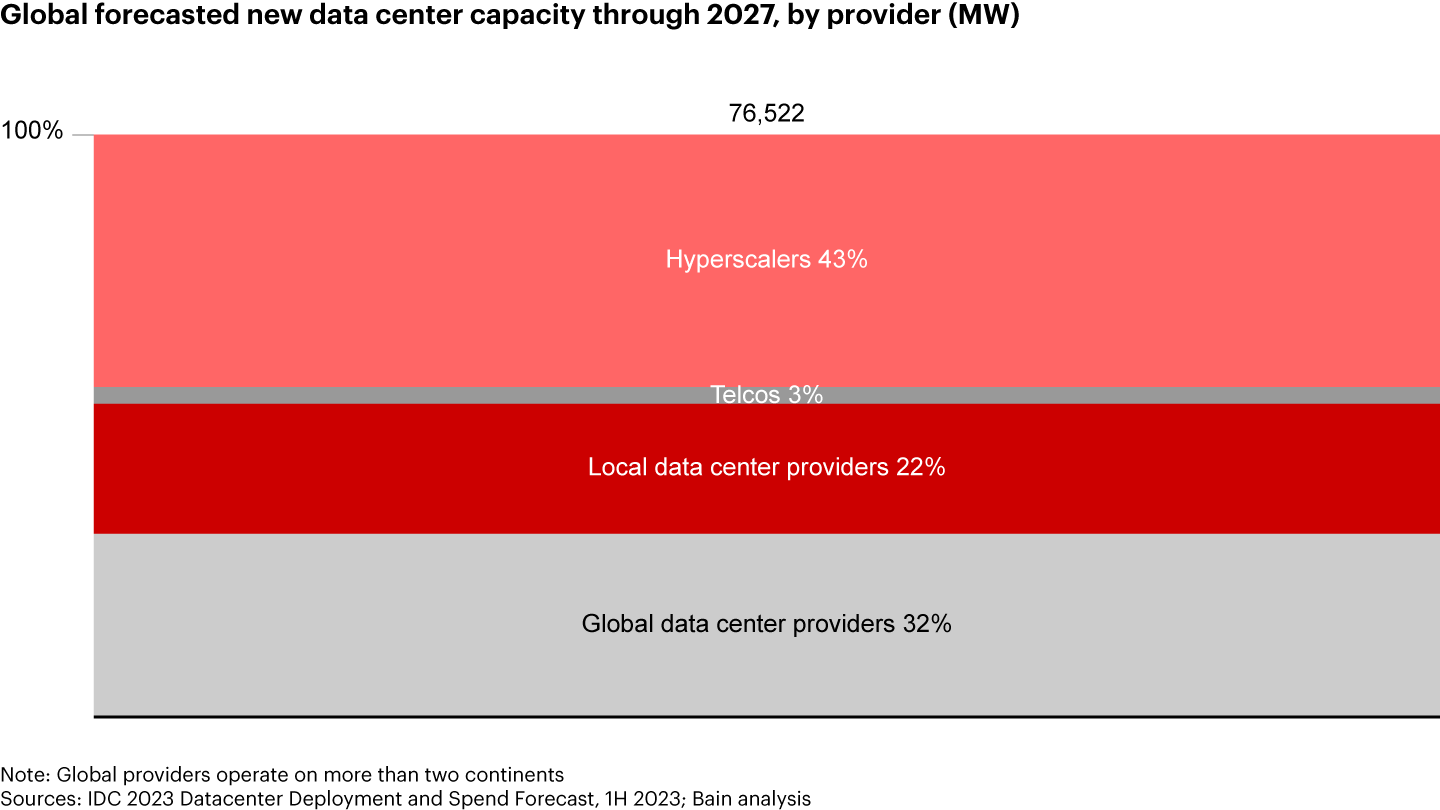
      Nearly a quarter of new data center capacity will come from local providers, with hyperscalers planning the most capacity
      1. Regulatory strategies: AI regulatory strategies are diverging across borders. The leading AI markets—the US, EU, and China—are taking very different approaches so far.
      2. Localization: Many AI models will need to be specific to local languages and context. Some applications will differ across countries to comply with security and privacy regulations and meet local market needs. AI use cases in healthcare, education, and agriculture, for example, will vary greatly between developed and emerging economies.

      Factors working against sovereign AI

      1. Scope of subsidies: Thus far, governments haven’t subsidized national AI initiatives to the extent seen with semiconductor fabs or to the degree likely required to nurture local champions that could compete at scale with global incumbents. (The powerful open-source LLM series Falcon, backed by hundreds of millions of dollars from an arm of the United Arab Emirates government, is a notable exception.)
      2. Global scale: This still provides critical advantages for developing a winning AI platform, including network effects (e.g., access to a large developer ecosystem), deep coffers, and the ability to spread R&D costs across worldwide operations. LLM training costs have grown exponentially over the past few years, with the most expensive models exceeding $100 million (see Figure 2). Although smaller, more cost-efficient models are also being released, the cost dynamics continue to favor large global firms.
      Figure 2
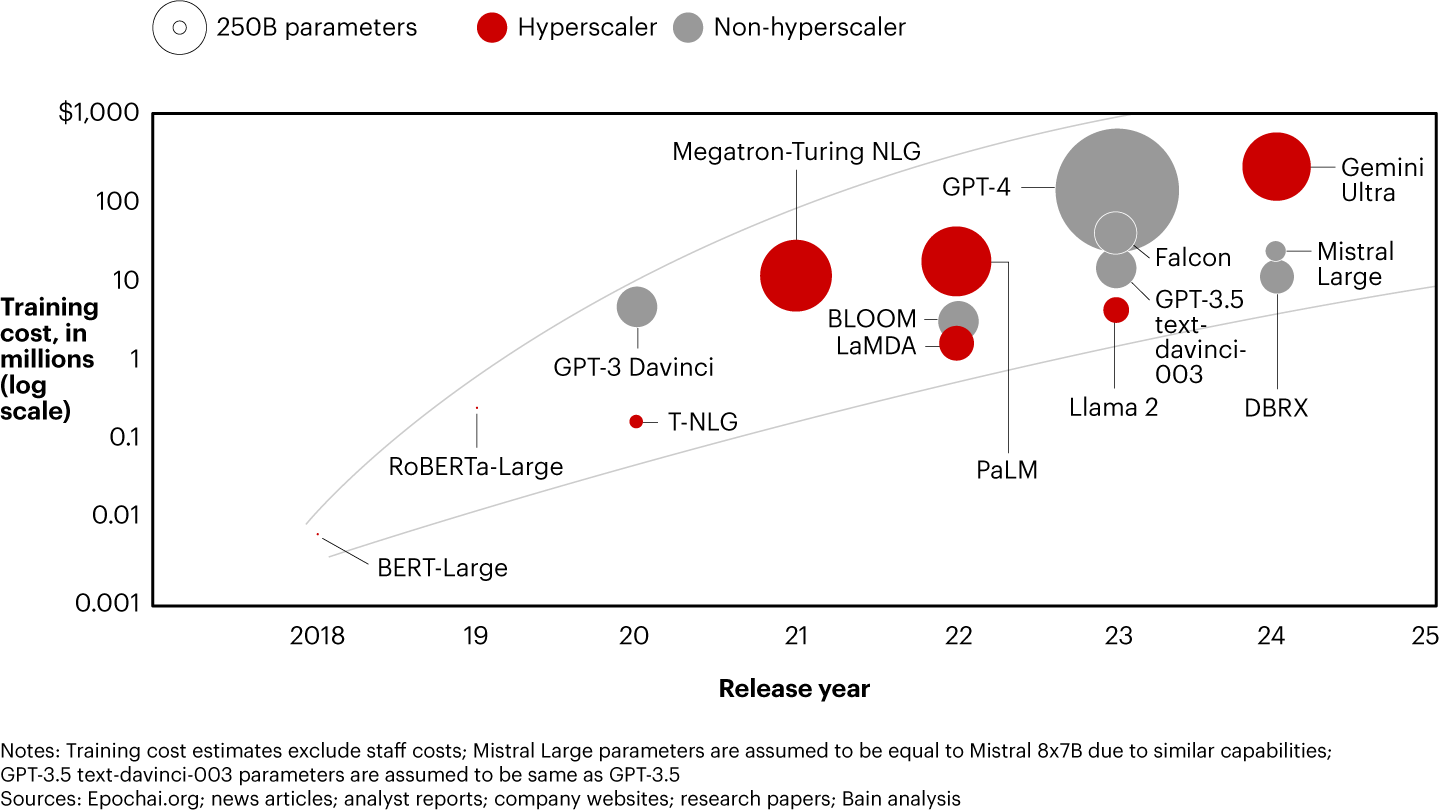
      Large language model training costs have increased exponentially, but smaller, more cost-efficient models are also being released
      1. Incumbents’ adaptation: Global tech companies are adapting to governments’ push for sovereign AI by localizing operations, complying with local rules, and forming joint ventures with local firms.
      2. Practical realities: Aspiring domestic competitors must navigate the same practical realities as multinational companies: significant investments in securing land, regulatory approvals, power, connectivity, and other key elements for AI initiatives.

      Takeaways for executives

      Establishing successful sovereign AI ecosystems will be time-consuming and incredibly expensive. While less complex in some important ways than building semiconductor fabs, these projects require more than securing local subsidies.

      Hyperscalers and other big tech firms may continue to invest in localized operations. This could fragment their ecosystems and R&D globally, though their scale will remain a significant advantage.

      New AI workloads and fragmentation created by sovereignty could enable AI challengers to reach hyperscale. These challengers will need to recognize the power of the current hyperscaler ecosystem and prioritize business opportunities that capitalize on their competitive advantages, while partnering with big tech companies where possible.

      Data center operators and hardware suppliers will enjoy a short-term windfall as companies and governments splurge on computing capacity. Nvidia, for example, projected $10 billion in revenue from governments’ sovereign AI investments in 2024, up from zero last year. However, data center owners risk overcapacity, similar to telecom networks in the early 2000s. Suppliers of silicon and other hardware may see accelerated growth rates level off long-term.

      Lastly, investors have a chance to stake high-value claims in a hot asset class, including new sub-asset classes. For example, secured financing tied to GPUs is becoming a more common form of corporate debt. Successful investors will base bets on a well-defined risk/return profile, deciding between lower-risk investments in “picks and shovels” like GPUs and data centers or higher-risk/higher-reward investments such as LLMs and cloud platforms.

      Read the Next Chapter

      Five Functions Where AI Is Already Delivering

      Read our 2024 Technology Report

      Download the PDF Explore the report

      More from the report

      • Commercializing Innovation

      • Investing in a Shifting Market

      • Scope M&A

      • Sovereign AI

      • Top AI Functions

      • The AI Opportunity

      • Big and Small Computing

      • The AI Chip Shortage

      • The Software Cycle

      • AI in Tech Services

      • Deploying Generative AI

      • Software Development Efficiency

      • Customer Success

      • AI Everywhere

      Auteurs
      • Headshot of Anne Hoecker
        Anne Hoecker
        Partner, Silicon Valley
      • Headshot of Jonathan Frick
        Jonathan Frick
        Partner, London
      • Headshot of Jue Wang
        Jue Wang
        Partner, Silicon Valley
      • Headshot of Balaji Thirumalai
        Balaji Thirumalai
        Partner, Bengaluru
      • Headshot of Karen Harris
        Karen Harris
        Managing Director, Macro Trends Group, New York
      Contactez-nous
      Synergies sectorielles
      • Technologie
      Expertises fonctionnelles transverses
      • Digital
      • IA, Perspectives et Solutions
      Comment pouvons-nous vous aider ?
      • Artificial Intelligence
      Technology Report
      Quantum Computing Moves from Theoretical to Inevitable

      Quantum will likely become part of a mosaic, working with classical computing to solve big problems.

      Voir plus
      Technologie
      Software M&A

      The good news: Most deal best practices still apply to AI acquisitions.

      Voir plus
      Artificial Intelligence Insights
      What Business Leaders Need to Know About AI Sovereignty

      Aligning business strategy with national AI priorities is necessary to compete and scale.

      Voir plus
      IA, Perspectives et Solutions
      Retailers Have a Secret Weapon in AI-Powered Shopping: Trust

      US consumers would be more comfortable with AI buying on their behalf if a familiar retailer were involved.

      Voir plus
      Technology Report
      How Can We Meet AI’s Insatiable Demand for Compute Power?

      Technological innovation, new revenue, and public support may be needed to fund and supply enough electricity.

      Voir plus
      First published in septembre 2024
      Mots clés
      • Artificial Intelligence
      • Artificial Intelligence Insights
      • CIO Insights
      • Digital
      • IA, Perspectives et Solutions
      • Technologie
      • Technology Report

      Comment nous avons aidé nos clients

      Helping a Midsize ERP Player Compete against the Giants

      Lire l’étude de cas

      Aggressively growing an IT service provider with a high-performance culture

      Lire l’étude de cas

      When the price is right, customers respond

      Lire l’étude de cas

      Vous souhaitez continuer cette conversation ?

      Nous aidons des dirigeants du monde entier à matérialiser des impacts et des résultats pérennes et créateurs de valeur dans leurs organisations.

      Les points de vue de Bain : notre perspective sur des problématiques auxquelles sont confrontées les entreprises à travers le monde, envoyés chaque mois dans votre boîte de réception. 

      *J’ai lu la politique de confidentialité et j’accepte les conditions.

      Merci de lire notre politique de confidentialité.
      Bain & Company
      Contactez-nous Sustainability Accessibility Conditions d’utilisation Politique de Confidentialité Cookie Policy Mentions Légales Sitemap Log In

      © 1996-2026 Bain & Company, Inc.

      Contacter Bain

      Comment pouvons-nous vous aider ?

      • Business inquiry
      • Career information
      • Press relations
      • Partnership request
      • Speaker request
      Voir tous les bureaux