
Skip to Content
  • Bureaux

    Bureaux

    Amérique du Nord et Amérique du Sud
    • Atlanta
    • Austin
    • Bogota
    • Boston
    • Buenos Aires
    • Chicago
    • Dallas
    • Denver
    • Houston
    • Los Angeles
    • Mexico City
    • Minneapolis
    • Monterrey
    • Montreal
    • New York
    • Rio de Janeiro
    • San Francisco
    • Santiago
    • São Paulo
    • Seattle
    • Silicon Valley
    • Toronto
    • Washington, DC
    Europe, Moyen-Orient et Afrique
    • Amsterdam
    • Athens
    • Berlin
    • Brussels
    • Copenhagen
    • Doha
    • Dubai
    • Dusseldorf
    • Frankfurt
    • Helsinki
    • Istanbul
    • Johannesburg
    • Kyiv
    • Lisbon
    • London
    • Madrid
    • Milan
    • Munich
    • Oslo
    • Paris
    • Riyadh
    • Rome
    • Stockholm
    • Vienna
    • Warsaw
    • Zurich
    Asie et Australie
    • Bangkok
    • Beijing
    • Bengaluru
    • Brisbane
    • Ho Chi Minh City
    • Hong Kong
    • Jakarta
    • Kuala Lumpur
    • Manila
    • Melbourne
    • Mumbai
    • New Delhi
    • Perth
    • Shanghai
    • Singapore
    • Sydney
    • Tokyo
    Voir tous les bureaux
  • Alumni
  • Presse
  • S’abonner
  • Contacter
  • Canada | Français

    Sélectionnez votre région et votre langue

    Global
    • Global (English)
    Amérique du Nord et Amérique du Sud
    • Brazil (Português)
    • Argentina (Español)
    • Canada (Français)
    • Chile (Español)
    • Colombia (Español)
    Europe, Moyen-Orient et Afrique
    • France (Français)
    • DACH Region (Deutsch)
    • Italy (Italiano)
    • Spain (Español)
    • Greece (Elliniká)
    Asie et Australie
    • China (中文版)
    • Korea (한국어)
    • Japan (日本語)
  • Saved items (0)
    Saved items (0)

    You have no saved items.

    Bookmark content that interests you and it will be saved here for you to read or share later.

    Explore Bain Insights
  • Expertises Sectorielles
    Menu principal

    Expertises Sectorielles

    • Aerospace et Défense
    • Agroalimentaire
    • Automobile
    • Chimie
    • Infrastructures, BTP et Matériaux de Construction
    • Grande Consommation
    • Services Financiers
    • Santé
    • Engins & Equipements Industriels
    • Media et Divertissement
    • Metals
    • Mining
    • Pétrole & Gaz
    • Papier et Emballage
    • Private Equity
    • Secteur Public
    • Distribution
    • Technologie
    • Télécommunications
    • Transportation
    • Travel & Leisure
    • Utilities & Energies Renouvelables
  • Expertises Fonctionnelles
    Menu principal

    Expertises Fonctionnelles

    • Expérience Client
    • ESG
    • Innovation
    • Fusions et Acquisitions
    • Opérations
    • People & Organization
    • Private Equity
    • Sales & Marketing
    • Stratégie
    • IA, Perspectives et Solutions
    • Technology
    • Transformation
  • Digital
  • Points de Vue
  • About
    Menu principal

    About

    • Notre Activité
    • Nos Valeurs
    • Nos Collaborateurs et Notre Équipe Dirigeante
    • Notre Impact
    • Prix & Récompenses
    • Partenariats Internationaux
    Further: Our global responsibility
    • Sustainability
    • Impact Social
    • World Economic Forum
    Learn more about Further
  • Carrières
    Menu principal

    Carrières

    • Rejoignez-nous
      Carrières
      Rejoignez-nous
      • Find Your Place
      • Nos domaines d’expertise
      • Equipes multidisciplinaires
      • Étudiants
      • Stages et programmes
      • Événements de recrutement
    • La vie chez Bain
      Carrières
      La vie chez Bain
      • Blog: Inside Bain
      • Récits de carrière
      • Nos collaborateurs
      • Nos bureaux
      • Soutenir votre évolution professionnelle
      • Groupes d’affinités
      • Avantages chez Bain
    • Histoires d’impact
    • Notre processus de recrutement
      Carrières
      Notre processus de recrutement
      • Ce que vous pouvez attendre
      • Entretiens
    Trouver un poste
  • Bureaux
    Menu principal

    Bureaux

    • Amérique du Nord et Amérique du Sud
      Bureaux
      Amérique du Nord et Amérique du Sud
      • Atlanta
      • Austin
      • Bogota
      • Boston
      • Buenos Aires
      • Chicago
      • Dallas
      • Denver
      • Houston
      • Los Angeles
      • Mexico City
      • Minneapolis
      • Monterrey
      • Montreal
      • New York
      • Rio de Janeiro
      • San Francisco
      • Santiago
      • São Paulo
      • Seattle
      • Silicon Valley
      • Toronto
      • Washington, DC
    • Europe, Moyen-Orient et Afrique
      Bureaux
      Europe, Moyen-Orient et Afrique
      • Amsterdam
      • Athens
      • Berlin
      • Brussels
      • Copenhagen
      • Doha
      • Dubai
      • Dusseldorf
      • Frankfurt
      • Helsinki
      • Istanbul
      • Johannesburg
      • Kyiv
      • Lisbon
      • London
      • Madrid
      • Milan
      • Munich
      • Oslo
      • Paris
      • Riyadh
      • Rome
      • Stockholm
      • Vienna
      • Warsaw
      • Zurich
    • Asie et Australie
      Bureaux
      Asie et Australie
      • Bangkok
      • Beijing
      • Bengaluru
      • Brisbane
      • Ho Chi Minh City
      • Hong Kong
      • Jakarta
      • Kuala Lumpur
      • Manila
      • Melbourne
      • Mumbai
      • New Delhi
      • Perth
      • Shanghai
      • Singapore
      • Sydney
      • Tokyo
    Voir tous les bureaux
  • Alumni
  • Presse
  • S’abonner
  • Contacter
  • Canada | Français
    Menu principal

    Sélectionnez votre région et votre langue

    • Global
      Sélectionnez votre région et votre langue
      Global
      • Global (English)
    • Amérique du Nord et Amérique du Sud
      Sélectionnez votre région et votre langue
      Amérique du Nord et Amérique du Sud
      • Brazil (Português)
      • Argentina (Español)
      • Canada (Français)
      • Chile (Español)
      • Colombia (Español)
    • Europe, Moyen-Orient et Afrique
      Sélectionnez votre région et votre langue
      Europe, Moyen-Orient et Afrique
      • France (Français)
      • DACH Region (Deutsch)
      • Italy (Italiano)
      • Spain (Español)
      • Greece (Elliniká)
    • Asie et Australie
      Sélectionnez votre région et votre langue
      Asie et Australie
      • China (中文版)
      • Korea (한국어)
      • Japan (日本語)
  • Saved items  (0)
    Menu principal
    Saved items (0)

    You have no saved items.

    Bookmark content that interests you and it will be saved here for you to read or share later.

    Explore Bain Insights
  • Expertises Sectorielles
    • Expertises Sectorielles

      • Aerospace et Défense
      • Agroalimentaire
      • Automobile
      • Chimie
      • Infrastructures, BTP et Matériaux de Construction
      • Grande Consommation
      • Services Financiers
      • Santé
      • Engins & Equipements Industriels
      • Media et Divertissement
      • Metals
      • Mining
      • Pétrole & Gaz
      • Papier et Emballage
      • Private Equity
      • Secteur Public
      • Distribution
      • Technologie
      • Télécommunications
      • Transportation
      • Travel & Leisure
      • Utilities & Energies Renouvelables
  • Expertises Fonctionnelles
    • Expertises Fonctionnelles

      • Expérience Client
      • ESG
      • Innovation
      • Fusions et Acquisitions
      • Opérations
      • People & Organization
      • Private Equity
      • Sales & Marketing
      • Stratégie
      • IA, Perspectives et Solutions
      • Technology
      • Transformation
  • Digital
  • Points de Vue
  • Carrières
    Recherches les plus fréquentes
    • Agile
    • Digital
    • Stratégie
    Vos recherches précédentes
      Pages récemment visitées

      Content added to saved items

      Saved items (0)

      Removed from saved items

      Saved items (0)

      Etude

      Coronavirus Accelerates the Transformation of China’s Meat Supply Chain

      Coronavirus Accelerates the Transformation of China’s Meat Supply Chain

      The outbreak highlights the need for a shift away from open-air markets and toward a cold-chain model similar to Europe’s.

      Par Thomas Luedi and Helen Liu

      • min
      }

      Etude

      Coronavirus Accelerates the Transformation of China’s Meat Supply Chain
      en

      While China and countries around the world confront the human toll from the coronavirus outbreak, the effect on China’s food industry is already coming into focus.

      Travel restrictions and quarantines after the outbreak were apparent immediately. Restaurants sat empty, and home deliveries spiked as customers shunned eating out in favor of ordering in. Animal slaughtering and processing operations slowed considerably amid travel and workplace shutdowns and reduced demand.

      More broadly, the coronavirus, which rapidly spread from an outdoor market selling live animals and fresh meat in the city of Wuhan, is poised to dramatically change those very markets, which many Chinese rely on for fresh meat. A look into the history of China’s meat industry underscores the need for a transformation away from these open-air markets and toward a cold-chain model, similar to Europe and the United States, that keeps perishable items fresher for longer.

      For Our Clients

      Macro Surveillance Platform

      For more detail on the business implications of coronavirus from Bain’s Macro Trends Group, log on to the Macro Surveillance Platform. Learn more about the platform >

      Lessons from past outbreaks

      China is no stranger to epidemic-induced food chain disruptions. Bird flus such as H7N9 in 2017 affected chicken stocks, while the African swine fever in 2018–2019 led to a pork shortage that lingers today.

      Perhaps most comparable to the COVID-19 epidemic is the 2002–2003 SARS outbreak, which can provide some lessons for how quickly the industry may recover once the outbreak abates (see Figure 1).

      Figure 1
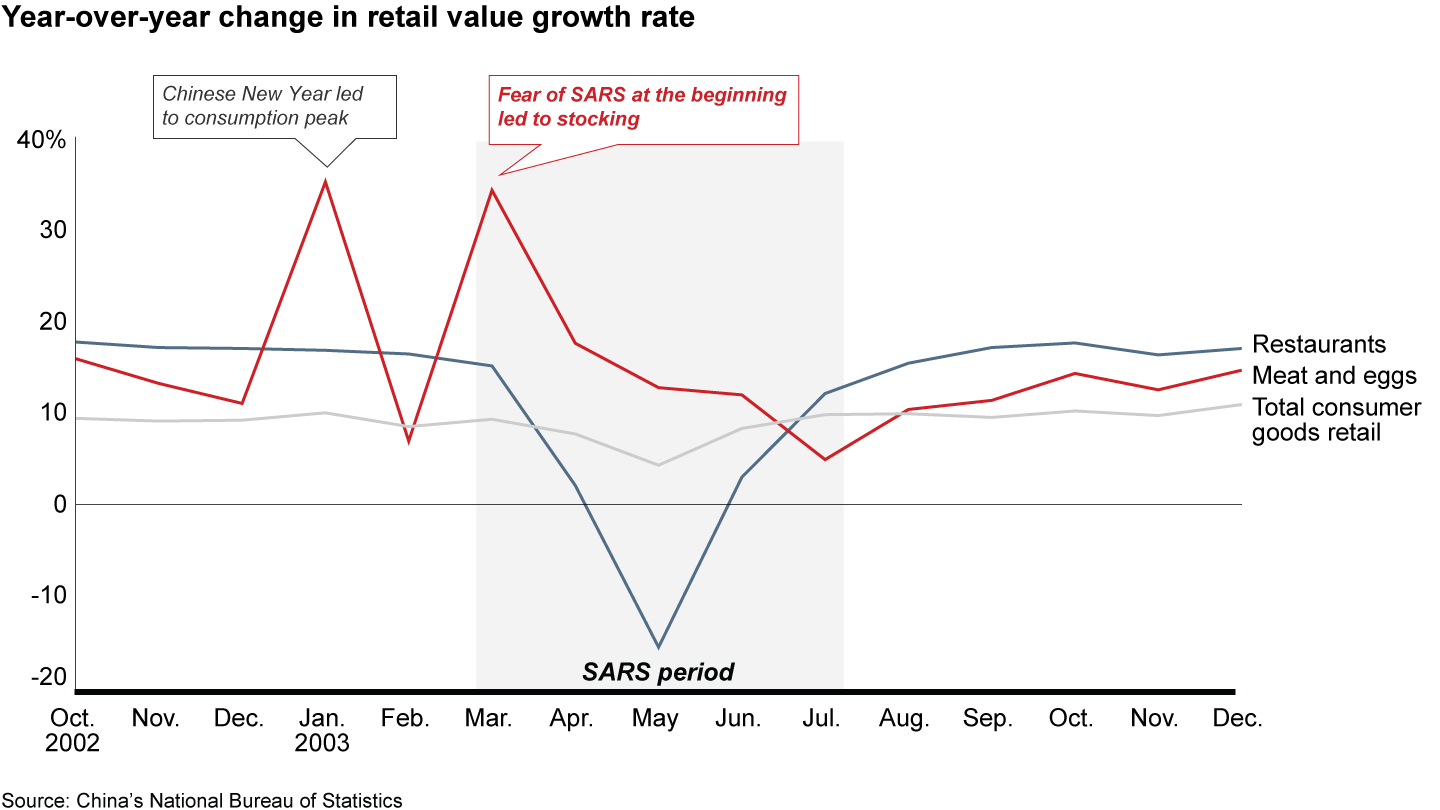
      Restaurants in China took the brunt of the impact from SARS, but quickly recovered

      During SARS, restaurants took the largest hit, with year-over-year value growth rate plunging more than 30 percentage points during the peak of the outbreak, as the government canceled its Labor Day holiday and diners stayed home to avoid large crowds. However, restaurants quickly recovered, returning to preoutbreak levels almost immediately after the outbreak passed.

      China’s overall retail channel was less affected, but meat and egg sales spiked for about a month at the start of the epidemic as consumers stocked up on supplies.

      Impact along China’s food value chain

      The coronavirus outbreak promises to have a much larger impact than SARS.

      COVID-19 has prompted Chinese authorities to take sweeping quarantine measures to contain it. These efforts include the temporary shuttering of restaurants and fresh food markets, as well as travel restrictions that have affected meat transportation, slaughtering and processing operations (see Figure 2).

      Figure 2
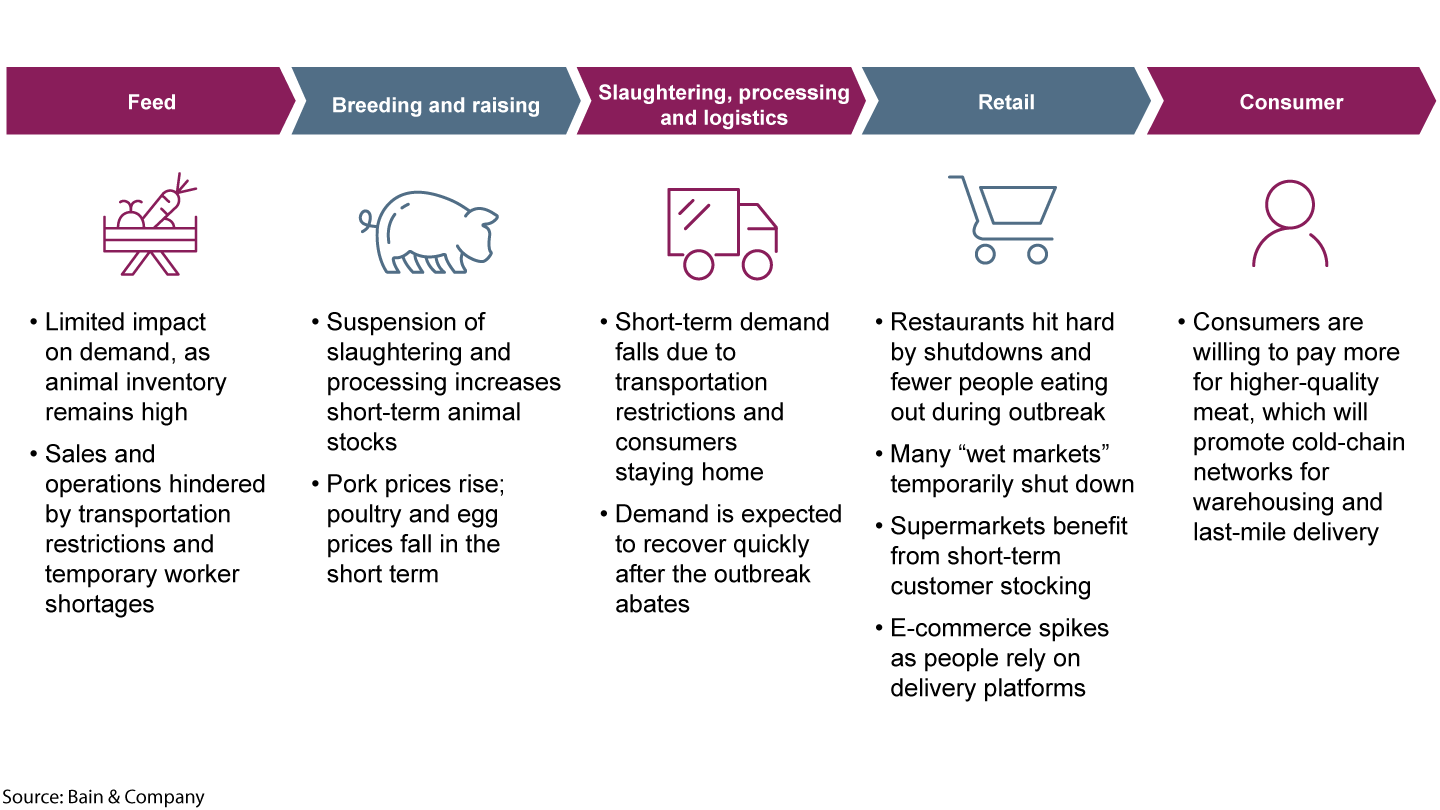
      COVID-19 will affect different segments of China’s food chain

      In retail, restaurants saw the sharpest declines: The segment was down more than 50% during Chinese New Year, a peak consumption period in the country, and into February as consumers stayed home.

      Outdoor food markets known as “wet markets,” similar to the one where the outbreak began, have also been hit hard, as most were temporarily shuttered amid the outbreak. While some markets outside of Wuhan are reopening, the impact promises to be long term, because we expect much stricter hygiene regulations and enforcement to reshape the segment, and smaller specialty shops give way to broader integration with larger food retailers.

      Hypermarkets and supermarkets saw a short-term spike in sales, as more consumers opted to eat at home and stocked up on food supplies. Fresh food sales even doubled at some leading retailers during the Chinese New Year sales period.

      Volume rose three times at leading e-commerce food delivery platforms in February, when many consumers opted to stay home. This is likely to accelerate a longer-term shift from offline to online sales in fresh food, which stood at only 3% before the COVID-19 outbreak.

      Meat slaughtering, processing and logistics operations face short-term challenges due to declining demand during the outbreak, as well as transportation restrictions and the postponement of many workers returning to their jobs after the Chinese New Year. Some companies remain closed, but government initiatives to guarantee daily food supplies, such as granting priority to food trucks on highways and supporting enhanced safety measures at meat processors, are expected to help this segment quickly recover.

      Breeding and raising operations will see a short-term increase in the stock of live animals, because retail sales have declined and culling is not needed. This has affected the prices of key animal products (see Figure 3).

      Figure 3
      Prices for poultry products take biggest hit from China’s coronavirus outbreak
      • The poultry and egg segments, which represent 20% to 30% of China’s total protein consumption, have faced strong downward price pressure. Weeks into the outbreak, wholesale prices fell 5% to 10% for live poultry and more than 20% for eggs. This partly reflects the short life cycles of chickens and minimal shelf life of eggs, prompting producers to sell off their stocks at a time when demand was also down, as consumers stayed home while restaurants and markets were closed.
      • Pork, which makes up 40% to 50% of the country’s protein consumption, saw wholesale prices rise around 10%. That hike comes on top of already high prices due to the 2018–2019 African swine fever outbreak, which led to the mass culling of pig stocks. Still, the Chinese government has mitigated more severe shortages during the coronavirus outbreak by releasing reserves of frozen pork into the market and allowing some pork producers to resume work after implementing protective measures against the spread of the coronavirus.
      • Prices for beef and lamb have been relatively unaffected, as they comprise just 5% to 15% of total protein consumption.

      Demand for animal feed will change little, as live animal inventory remains high. Unlike previous outbreaks like the African swine fever, there are no plans for culling in the wake of COVID-19. However, sales and operations have been disrupted by travel restrictions and the delay of employees returning to work.

      Key trends transforming China’s food chain

      The COVID-19 epidemic, coming on the heels of the bird flu and African swine fever outbreaks, will further accelerate the transformation of China’s food supply chain, especially animal products. Here are four themes spurring this transformation.

      Acceleration of cold-chain network development. The rise of e-commerce food channels and the desire for higher-quality food after COVID-19 have boosted the need for a more robust cold-chain network. As consumers become more willing to pay a premium for fresh, high-quality meat, improving the warehousing and last-mile delivery options will be paramount.

      Industry consolidation and vertical integration. More attention on food safety will benefit larger players that can invest in modernizing production lines to standards common in the US and Europe, including more refrigeration (see Figure 4). Larger players will also further vertically integrate throughout the value chain to give them more control over raw material prices, quality and supplies. These factors will put smaller players with weak cash positions out of business.

      Figure 4
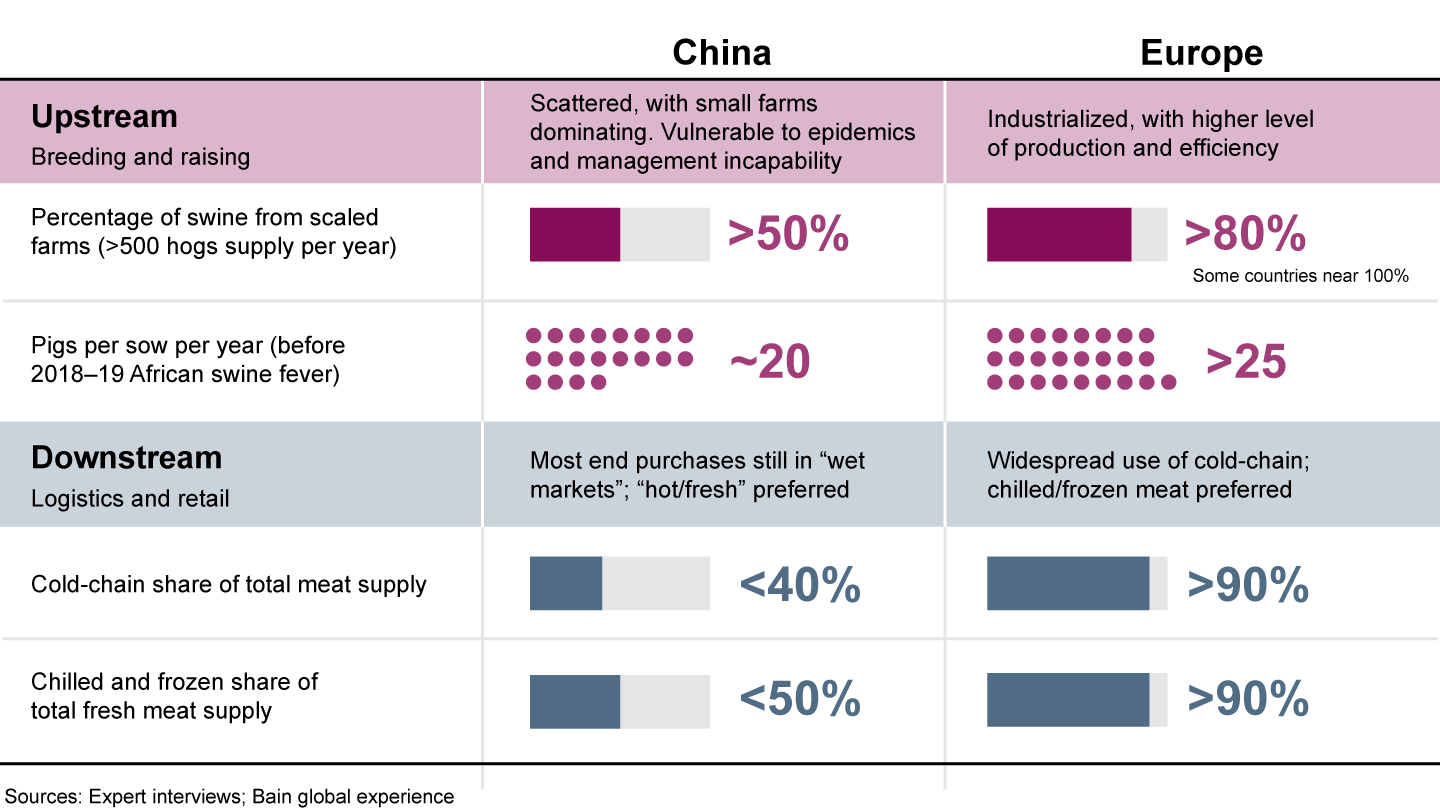
      Comparing the animal-protein chains in China and Europe

      Stricter food safety regulations and enforcement. Chinese authorities will shift toward food-safety standards more in line with European regulations, which cover the whole value chain and include more robust food tracing and a more mature alert system.

      Figure 5
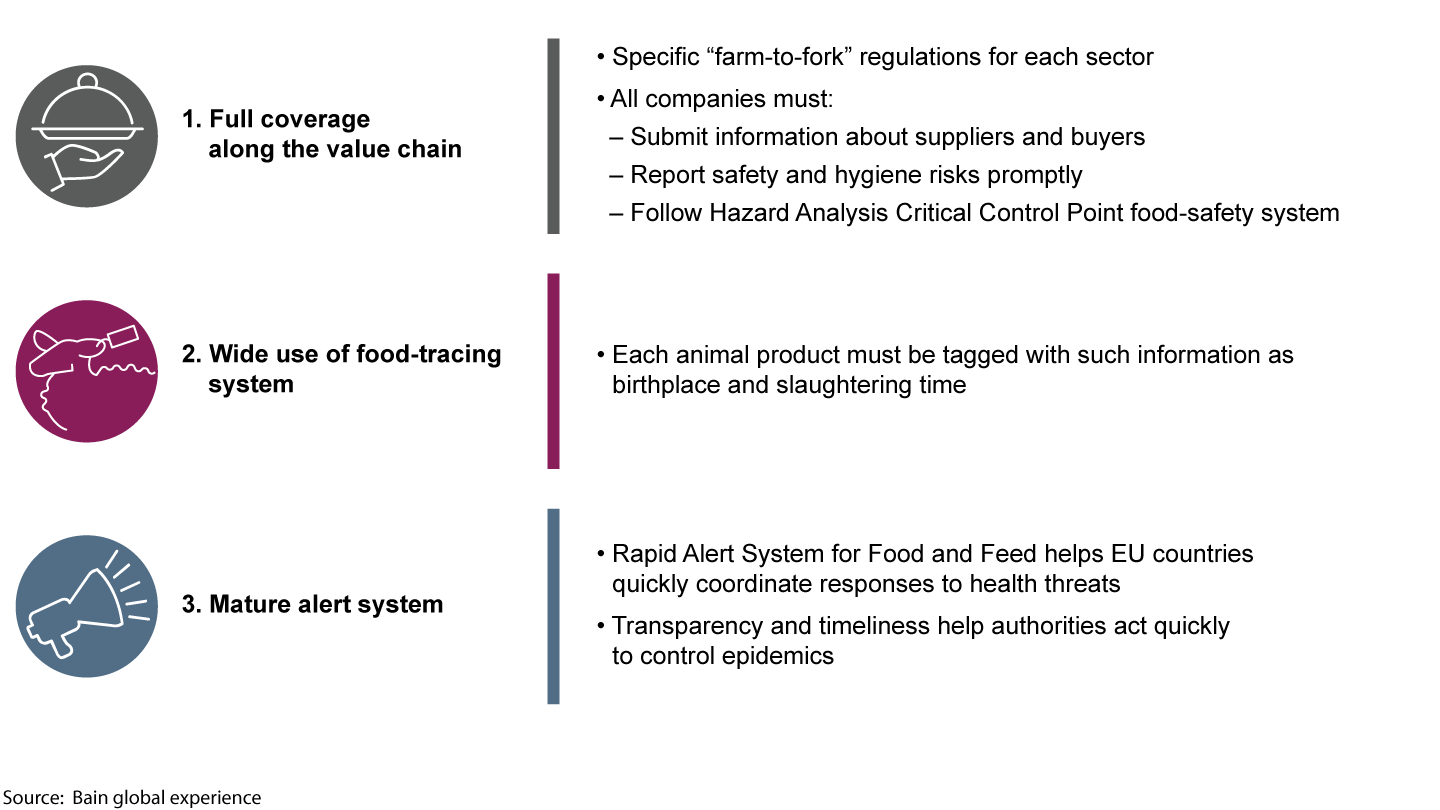
      Europe’s animal-protein regulations help it respond quickly to epidemics

      Quicker shift toward digitalization and automation. Until now, the prevalence of small farms in China’s agriculture industry has slowed the adoption of digital and automated technologies. But with the increased attention to food safety after recent outbreaks, stricter regulations and industry consolidation will combine to hasten the adoption of these technologies.

      How food and agricultural companies can respond

      While the total impact of the outbreak on China’s food sector is yet to be determined, companies can take steps in the short, medium and long term to respond to the challenges and opportunities ahead.

      Take short-term steps to navigate through the crisis. To start, companies should implement strict protective measures to ensure the safety of their workers and prevent additional outbreaks. These efforts can improve team morale and reinforce a commitment to quality control.

      Next, companies should look for opportunities to cut costs and manage cash. Companies can seek savings in selling, general and administrative expenses (SG&A) or in indirect procurement costs, such as short-term expansion, while profits are lower. Executives should plan for the worst and prepare a “Plan B” that includes things such as financing options or different supply chain solutions.

      Identify medium-term opportunities for inorganic growth. Begin by setting a clear strategy based on the company’s future ambition. Identify key capability gaps to reach that ambition, and allocate scarce resources to fill them—either by building the capabilities internally or looking at M&A options.

      Then, identify key adjacencies for potential M&A, such as cold-chain logistics. Within each sector, some incumbents face short-term challenges, which may present an opportunity to buy. However, don’t make an acquisition solely based on price. Make sure a target fits the company’s strategy.

      Invest in long-term initiatives to embrace the transformation. Double-down on technology that improves food safety and quality control. As regulations become stricter, stay ahead of the curve. Specifically, focus on investing in inspection protocols, devising quarantine procedures and building a robust tracing system.

      It also pays in the long term to diversify and balance your product portfolio to increase resilience against future risks. For example, diversify the types of animals bred, or stagger raising periods. To avoid losing focus on your core, build out first from close adjacencies that may share key capabilities.

      This is a challenging time for China’s food producers. Companies that make the right moves now will be best positioned to thrive in a market with tougher regulations and changing customer expectations.

      The authors would like to thank Yue Chen, Josh Zhu and Rock Zhang for their contributions.

      Thomas Luedi and Helen Liu are Bain & Company partners based in Shanghai.

      Related Insights

      Coronavirus Insights

      The global Covid-19 pandemic is exacting a terrible human toll and menacing the world economy. Across industries, companies should act now to protect their employees and customers—and prepare now for the world beyond coronavirus. Explore our Insights page to filter by industry. 

      Auteurs
      • Headshot of Thomas Luedi
        Thomas Luedi
        Partner, Bangkok
      • Headshot of Helen Liu
        Helen Liu
        Partner, Shanghai
      Contactez-nous
      Synergies sectorielles
      • Agroalimentaire
      • Grande Consommation
      Expertises fonctionnelles transverses
      • Opérations
      • Supply Chain
      Coronavirus
      Leading through a Global Crisis: A Conversation with GOJO CEO Carey Jaros

      Bain's Manny Maceda welcomes Carey Jaros, whose company makes Purell hand sanitizer, to discuss how the business quickly pivoted its operations as the Covid-19 pandemic surged.

      Voir plus
      Coronavirus
      Cash Management Practices to Weather a Downturn

      Take an honest look at the business, and decide where to improve.

      Voir plus
      Agroalimentaire
      Can Food Companies Unwrap a New Strategy?

      Industry relevance is up for grabs as macro forces disrupt the old order. Bold moves will herald the sector’s future leaders.

      Voir plus
      Supply Chain
      How AI Is Starting to Transform Circular Packaging

      There are 15 AI use cases companies across the value chain can use today to accelerate circularity.

      Voir plus
      Coronavirus
      Ramping Up Online Grocery without Breaking the Bank

      Bain’s Marc-André Kamel discusses the challenges that online grocery presents for retailers and CPGs and how they can pair up to find a winning solution.

      Voir plus
      First published in mars 2020
      Mots clés
      • Agroalimentaire
      • Coronavirus
      • Grande Consommation
      • Opérations
      • Supply Chain

      Comment nous avons aidé nos clients

      A Strategic Separation Enables New Growth for GSK and Haleon

      Lire l’étude de cas

      Food Co. jump-starts growth with return to core brands

      Lire l’étude de cas

      Focus on core delivers growth for retailer

      Lire l’étude de cas

      Vous souhaitez continuer cette conversation ?

      Nous aidons des dirigeants du monde entier à matérialiser des impacts et des résultats pérennes et créateurs de valeur dans leurs organisations.

      Les points de vue de Bain : notre perspective sur des problématiques auxquelles sont confrontées les entreprises à travers le monde, envoyés chaque mois dans votre boîte de réception. 

      *J’ai lu la politique de confidentialité et j’accepte les conditions.

      Merci de lire notre politique de confidentialité.
      Bain & Company
      Contactez-nous Sustainability Accessibility Conditions d’utilisation Politique de Confidentialité Cookie Policy Mentions Légales Sitemap Log In

      © 1996-2026 Bain & Company, Inc.

      Contacter Bain

      Comment pouvons-nous vous aider ?

      • Business inquiry
      • Career information
      • Press relations
      • Partnership request
      • Speaker request
      Voir tous les bureaux