
Skip to Content
  • Bureaux

    Bureaux

    Amérique du Nord et Amérique du Sud
    • Atlanta
    • Austin
    • Bogota
    • Boston
    • Buenos Aires
    • Chicago
    • Dallas
    • Denver
    • Houston
    • Los Angeles
    • Mexico City
    • Minneapolis
    • Monterrey
    • Montreal
    • New York
    • Rio de Janeiro
    • San Francisco
    • Santiago
    • São Paulo
    • Seattle
    • Silicon Valley
    • Toronto
    • Washington, DC
    Europe, Moyen-Orient et Afrique
    • Amsterdam
    • Athens
    • Berlin
    • Brussels
    • Copenhagen
    • Doha
    • Dubai
    • Dusseldorf
    • Frankfurt
    • Helsinki
    • Istanbul
    • Johannesburg
    • Kyiv
    • Lisbon
    • London
    • Madrid
    • Milan
    • Munich
    • Oslo
    • Paris
    • Riyadh
    • Rome
    • Stockholm
    • Vienna
    • Warsaw
    • Zurich
    Asie et Australie
    • Bangkok
    • Beijing
    • Bengaluru
    • Brisbane
    • Ho Chi Minh City
    • Hong Kong
    • Jakarta
    • Kuala Lumpur
    • Manila
    • Melbourne
    • Mumbai
    • New Delhi
    • Perth
    • Shanghai
    • Singapore
    • Sydney
    • Tokyo
    Voir tous les bureaux
  • Alumni
  • Presse
  • S’abonner
  • Contacter
  • Canada | Français

    Sélectionnez votre région et votre langue

    Global
    • Global (English)
    Amérique du Nord et Amérique du Sud
    • Brazil (Português)
    • Argentina (Español)
    • Canada (Français)
    • Chile (Español)
    • Colombia (Español)
    Europe, Moyen-Orient et Afrique
    • France (Français)
    • DACH Region (Deutsch)
    • Italy (Italiano)
    • Spain (Español)
    • Greece (Elliniká)
    Asie et Australie
    • China (中文版)
    • Korea (한국어)
    • Japan (日本語)
  • Saved items (0)
    Saved items (0)

    You have no saved items.

    Bookmark content that interests you and it will be saved here for you to read or share later.

    Explore Bain Insights
  • Expertises Sectorielles
    Menu principal

    Expertises Sectorielles

    • Aerospace et Défense
    • Agroalimentaire
    • Chimie
    • Infrastructures, BTP et Matériaux de Construction
    • Grande Consommation
    • Services Financiers
    • Santé
    • Engins & Equipements Industriels
    • Media et Divertissement
    • Metals
    • Mining
    • Pétrole & Gaz
    • Papier et Emballage
    • Private Equity
    • Secteur Public
    • Distribution
    • Technologie
    • Télécommunications
    • Transportation
    • Travel & Leisure
    • Utilities & Energies Renouvelables
  • Expertises Fonctionnelles
    Menu principal

    Expertises Fonctionnelles

    • Expérience Client
    • ESG
    • Innovation
    • Fusions et Acquisitions
    • Opérations
    • People & Organization
    • Private Equity
    • Sales & Marketing
    • Stratégie
    • IA, Perspectives et Solutions
    • Technology
    • Transformation
  • Digital
  • Points de Vue
  • About
    Menu principal

    About

    • Notre Activité
    • Nos Valeurs
    • Nos Collaborateurs et Notre Équipe Dirigeante
    • Notre Impact
    • Prix & Récompenses
    • Partenariats Internationaux
    Further: Our global responsibility
    • Sustainability
    • Impact Social
    • World Economic Forum
    Learn more about Further
  • Carrières
    Menu principal

    Carrières

    • Rejoignez-nous
      Carrières
      Rejoignez-nous
      • Find Your Place
      • Nos domaines d’expertise
      • Equipes multidisciplinaires
      • Étudiants
      • Stages et programmes
      • Événements de recrutement
    • La vie chez Bain
      Carrières
      La vie chez Bain
      • Blog: Inside Bain
      • Récits de carrière
      • Nos collaborateurs
      • Nos bureaux
      • Soutenir votre évolution professionnelle
      • Groupes d’affinités
      • Avantages chez Bain
    • Histoires d’impact
    • Notre processus de recrutement
      Carrières
      Notre processus de recrutement
      • Ce que vous pouvez attendre
      • Entretiens
    Trouver un poste
  • Bureaux
    Menu principal

    Bureaux

    • Amérique du Nord et Amérique du Sud
      Bureaux
      Amérique du Nord et Amérique du Sud
      • Atlanta
      • Austin
      • Bogota
      • Boston
      • Buenos Aires
      • Chicago
      • Dallas
      • Denver
      • Houston
      • Los Angeles
      • Mexico City
      • Minneapolis
      • Monterrey
      • Montreal
      • New York
      • Rio de Janeiro
      • San Francisco
      • Santiago
      • São Paulo
      • Seattle
      • Silicon Valley
      • Toronto
      • Washington, DC
    • Europe, Moyen-Orient et Afrique
      Bureaux
      Europe, Moyen-Orient et Afrique
      • Amsterdam
      • Athens
      • Berlin
      • Brussels
      • Copenhagen
      • Doha
      • Dubai
      • Dusseldorf
      • Frankfurt
      • Helsinki
      • Istanbul
      • Johannesburg
      • Kyiv
      • Lisbon
      • London
      • Madrid
      • Milan
      • Munich
      • Oslo
      • Paris
      • Riyadh
      • Rome
      • Stockholm
      • Vienna
      • Warsaw
      • Zurich
    • Asie et Australie
      Bureaux
      Asie et Australie
      • Bangkok
      • Beijing
      • Bengaluru
      • Brisbane
      • Ho Chi Minh City
      • Hong Kong
      • Jakarta
      • Kuala Lumpur
      • Manila
      • Melbourne
      • Mumbai
      • New Delhi
      • Perth
      • Shanghai
      • Singapore
      • Sydney
      • Tokyo
    Voir tous les bureaux
  • Alumni
  • Presse
  • S’abonner
  • Contacter
  • Canada | Français
    Menu principal

    Sélectionnez votre région et votre langue

    • Global
      Sélectionnez votre région et votre langue
      Global
      • Global (English)
    • Amérique du Nord et Amérique du Sud
      Sélectionnez votre région et votre langue
      Amérique du Nord et Amérique du Sud
      • Brazil (Português)
      • Argentina (Español)
      • Canada (Français)
      • Chile (Español)
      • Colombia (Español)
    • Europe, Moyen-Orient et Afrique
      Sélectionnez votre région et votre langue
      Europe, Moyen-Orient et Afrique
      • France (Français)
      • DACH Region (Deutsch)
      • Italy (Italiano)
      • Spain (Español)
      • Greece (Elliniká)
    • Asie et Australie
      Sélectionnez votre région et votre langue
      Asie et Australie
      • China (中文版)
      • Korea (한국어)
      • Japan (日本語)
  • Saved items  (0)
    Menu principal
    Saved items (0)

    You have no saved items.

    Bookmark content that interests you and it will be saved here for you to read or share later.

    Explore Bain Insights
  • Expertises Sectorielles
    • Expertises Sectorielles

      • Aerospace et Défense
      • Agroalimentaire
      • Chimie
      • Infrastructures, BTP et Matériaux de Construction
      • Grande Consommation
      • Services Financiers
      • Santé
      • Engins & Equipements Industriels
      • Media et Divertissement
      • Metals
      • Mining
      • Pétrole & Gaz
      • Papier et Emballage
      • Private Equity
      • Secteur Public
      • Distribution
      • Technologie
      • Télécommunications
      • Transportation
      • Travel & Leisure
      • Utilities & Energies Renouvelables
  • Expertises Fonctionnelles
    • Expertises Fonctionnelles

      • Expérience Client
      • ESG
      • Innovation
      • Fusions et Acquisitions
      • Opérations
      • People & Organization
      • Private Equity
      • Sales & Marketing
      • Stratégie
      • IA, Perspectives et Solutions
      • Technology
      • Transformation
  • Digital
  • Points de Vue
  • Carrières
    Recherches les plus fréquentes
    • Agile
    • Digital
    • Stratégie
    Vos recherches précédentes
      Pages récemment visitées

      Content added to saved items

      Saved items (0)

      Removed from saved items

      Saved items (0)

      Etude

      The Science of Centeredness

      The Science of Centeredness

      By achieving centeredness in the workplace, you can produce more thoughtful, strategic and authentic responses to everyday stresses.

      Par Mark Horwitch and Meredith Whipple Callahan

      • min
      }

      Etude

      The Science of Centeredness
      en

      What is centeredness?


      Centeredness is the ability, acquired through learned practice, to apply a set of physical and mental skills that help create a state of greater mindfulness. Mindfulness is attained by paying nonjudgmental attention to one’s thoughts, feelings and surroundings, and then adjusting one’s thinking, decisions and actions in a nonhabitual, creative and positive manner. Though many people reach centeredness through exercises in personal mindfulness, including meditation, Bain recommends practicing centeredness in the moment, as we move through our professional and personal lives. There are three sequential steps to becoming centered in the moment: settling into our physical bodies, sensing our felt emotions and shifting into a position of neutral observation. The result: We are brought into a state characterized by full attention and equanimity. Centeredness is the key to replacing automatic reactions with thoughtful, strategic and authentic responses.

      Why does centeredness matter?


      The concept of mindfulness has been around since the Buddha introduced it 2,500 years ago. However, it is not inherently religious; mindfulness has increasingly been supported by scientific and medical research, beginning in the mid-20th century. Since the 1970s, Dr. Herbert Benson, a professor at the Harvard Medical School and director emeritus of the Benson-Henry Institute for Mind Body Medicine at Massachusetts General Hospital, has used mindfulness techniques as the core of his well-known stress mitigation programs. Benson called the physiological state evoked by these techniques the “relaxation response.” Subsequent studies have shown that mindfulness practices are useful in treating eating disorders, addictions, anxiety, depression, pain and weakened immune systems.

      In recent years, corporations and academic and military organizations, as well as the medical community, have included mindfulness in training programs, to improve listening skills, increase empathy and help people cope with stress. Harvard Law School, for example, employs mindfulness in its curriculum on dispute resolution. The US Marine Corps and the Army teach mindfulness and stress resilience through an initiative called Mindfulness-based Mind Fitness Training. And a number of corporations, such as First Direct and Taj Hotels, offer workplace meditation to employees. Google’s Search Inside Yourself program has been well publicized and has spawned a best-selling book and a non-profit organization.

      Recent research conducted by professors at two of Singapore’s top business schools, Lee Kong Chian School of Business and NUS Business School, and London’s Imperial College Business School shows a strong positive correlation between a leader’s mindfulness and employee well-being. Findings show that under leaders who scored high for mindfulness, employees had higher performance ratings, fewer instances of negative behaviors, lower emotional exhaustion and higher satisfaction with work-life balance.

      At Bain, we believe that centeredness is essential to unleashing our inspirational leadership potential. Centeredness improves our ability to stay levelheaded, to cope with job stresses, to empathize with others and to listen more deeply—important components of our Bain Inspirational LeadershipSM System.

      How does centeredness work?


      The practice of centeredness has direct and powerful effects on the physiological processes within our bodies, beginning with our brains.

      Our brains


      In the 1960s, Paul MacLean, a neuroscientist and psychiatrist, created the “triune brain” model to describe the evolution of the human brain and its functions. This widely used model proposes that the human brain has three components: the primitive brain, the limbic brain and the neocortex. From the perspective of evolution, each of these structures was added sequentially, and each serves a different function.

      The primitive brain


      The primitive brain (sometimes referred to as the reptilian brain) consists of the brain stem and the cerebellum, and is located under the base of the skull where the spinal column connects (see Figure 1). The primitive brain’s functions are related to physical survival and maintenance of the body. The brain stem handles breathing, circulation, digestion and the execution of the fight-flight-freeze response to stressors. The cerebellum orchestrates movement. The behaviors of the primitive brain are automatic and highly resistant to change. When we are faced with stressors, our primitive brains, sensing, for example, an unsafe or threatening situation, trigger our sympathetic and parasympathetic nervous systems, which activate the fight-flight-freeze response. This sequence occurs in one-twentieth of a second (about the time between two heartbeats). Settling the body—the first step of centeredness—helps calm the sympathetic and parasympathetic nervous systems and quiets the primitive brain’s alarm bells.
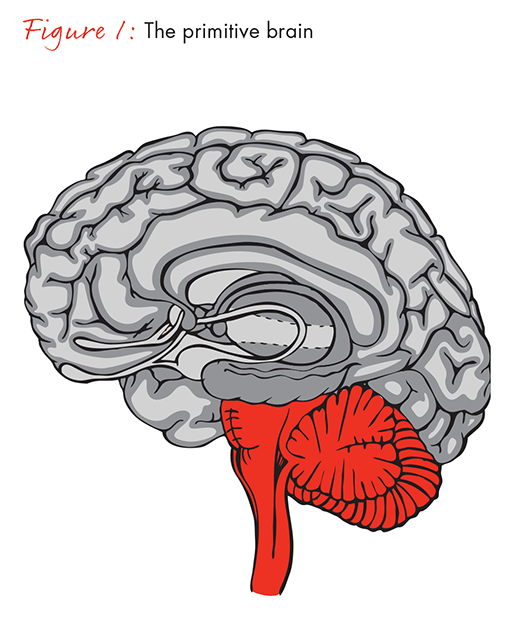

      the-science-of-centeredness-fig01_embed

      The limbic brain


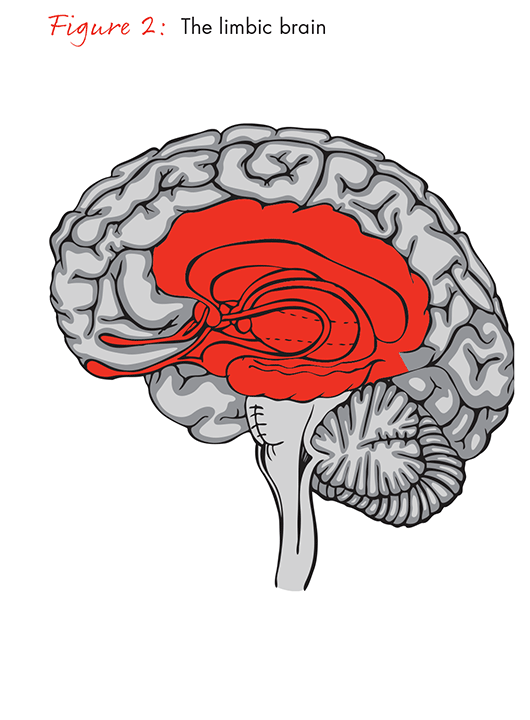
      The limbic brain sits on top of the primitive brain, roughly between the base of the ear lobes and the lower ridge of the forehead, at the level of the eyebrows (see Figure 2). It includes the hippocampus, which enables long-term memory, and the amygdala, which associates events with emotions. The amygdala comes into play in social engagement, motivation, intuition, empathy, imagination, and the mediation and expression of emotions. The sensations recorded by the amygdala yield valuable information about what is happening to you, which can’t be accessed by the earlier-developed primitive brain or the later-developed neocortex.

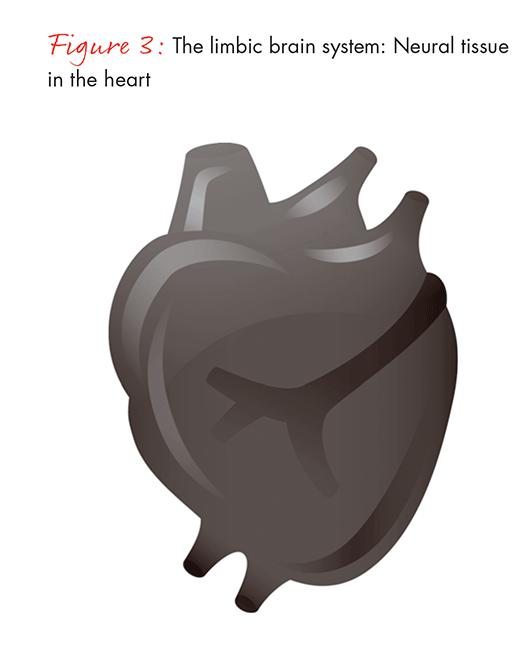
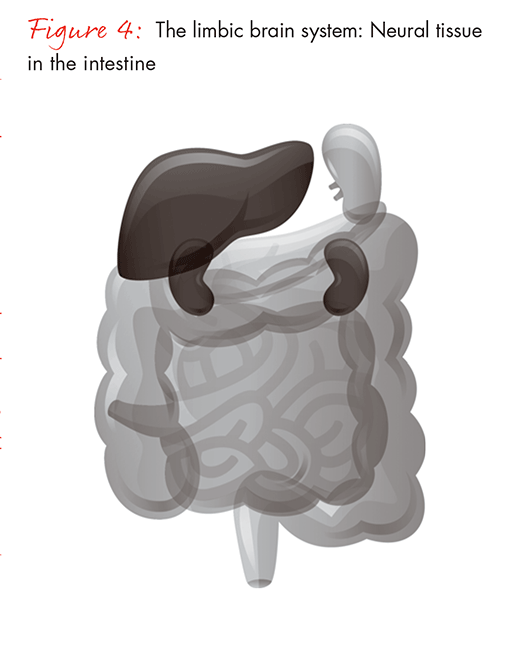
      As it relates to centeredness, the limbic brain senses emotional stimuli and initiates the primitive brain’s alarm sequence. The sensors for the limbic brain are spread throughout the body. We not only have neural tissue in our heads, but also in our hearts and intestines, which transmit information via the nervous system directly to our limbic brains (see Figures 3 and 4). The pace of research in neurocardiology and neuroendocrinology has accelerated over the past 20 years. In 1991, Dr. J. Andrew Armour, a professor at the University of Montreal and a pioneer in the field of neurocardiology, showed that the heart has neurons that actively communicate with the amygdala. More recent studies suggest the heart brain has about 40,000 neurons. Similarly, in 1998, Dr. Michael Gershon, a professor at Columbia University, proved the existence of an enteric or gut brain, which has an estimated 100 million neurons, about one-thousandth of that in the cerebral brain. Like the heart brain, the gut brain communicates directly with the amygdala as part of the limbic brain system.

      Thus, the old folk sayings about following your heart and listening to your gut contain wisdom that has been validated by neuroscientific studies. Many neuroscientists today regard the human body as having three physical brains—one in the head, one in the heart and one in the gut. By ignoring or suppressing information generated by all of our brains, we severely limit our ability to fully understand emotional situations. Instead, we react with patterns of unconscious, conditioned behaviors, such as lashing out in anger, stomping out of the room and becoming paralyzed to any action at all. Sensing our felt emotions—the second step of centeredness practice—helps us recognize and pay conscious attention to this embodied information. Settling into our bodies and sensing our emotions help lay the groundwork for accessing the breadth of better choices that could be offered by our neocortex.
      the-science-of-centeredness-fig02_embed
      the-science-of-centeredness-fig03_embed
      the-science-of-centeredness-fig04_embed

      The neocortex


      The neocortex, or the executive brain, constitutes five-sixths of our overall brain matter. Housed underneath the crown of the head and behind the forehead, the neocortex is what makes us uniquely human (see Figure 5). The neocortex enables us to speak and interpret language, solve problems and make decisions and plans for the future. In modern cultures, this is the part of the brain we prize the most. That said, the fullest expression of human nature does not ignore or suppress our primitive or limbic brains, but rather includes and balances them with the evolved functions of our executive brains. Learning how to notice and name our emotions from the clues given by our limbic systems gives us an opportunity to react thoughtfully and create space for our executive brains to function. We insert a “circuit breaker” in the chain reaction from stimulus to automatic response. The third and final step of centeredness practice—shifting into a mode of neutral observation—creates this space and engages our rational executive brains in generating a considered and hopefully more positive response.
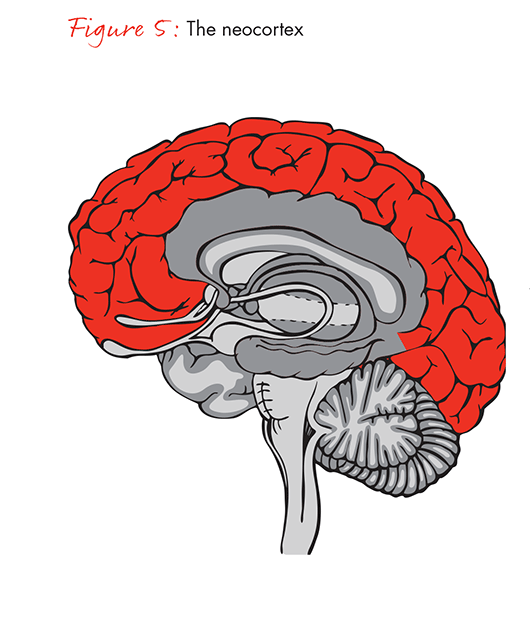

      the-science-of-centeredness-fig05_embed

      Bain’s centeredness exercises


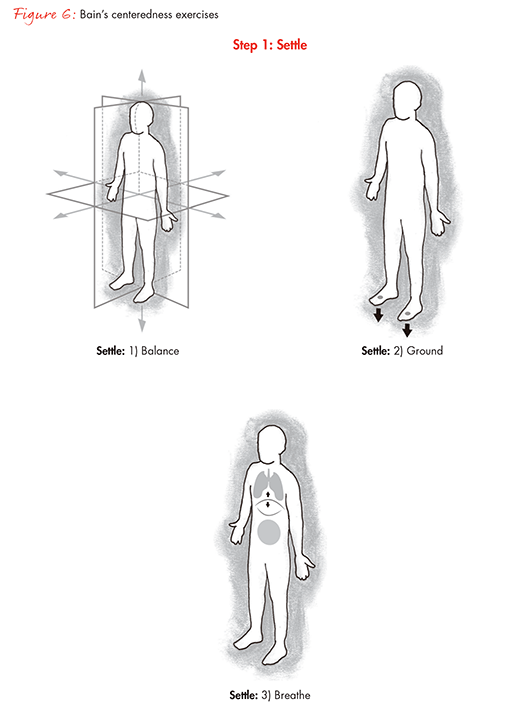
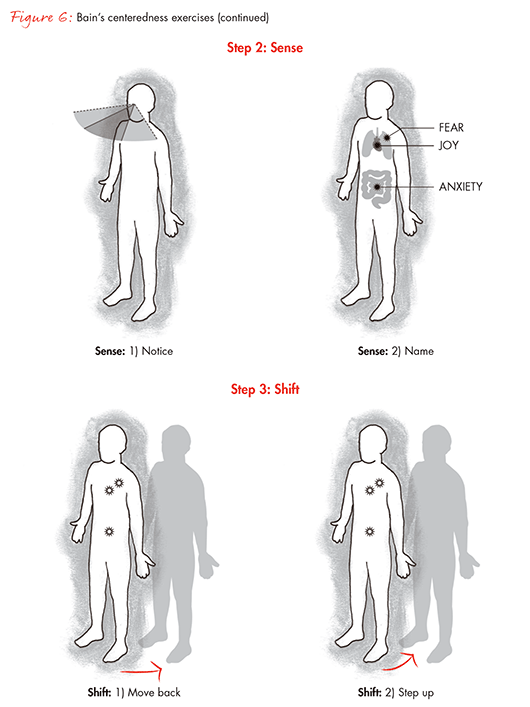
      Each of the three steps of centeredness will allow you to interact more proactively with your physiology, addressing each aspect of your triune brain in succession (see Figure 6).

      • Step 1: Settling into your body signals to your primitive brain that you are safe and mitigates the automatic fight-flight-freeze response. To practice this, first, balance yourself, creating physical stability in your body. Second, ground yourself to firmly connect yourself to the earth. Third, breathe deeply to bring attention to your center of gravity and to calm yourself.
      • Step 2: Sensing is the ability to notice the physical information that your limbic brain (especially the heart and gut brains) transmits in reaction to emotional stimuli, such as a tight chest, shortness of breath and butterflies in your stomach. Sensing enables you to name the emotion connected to that physical sensation, and identifying the emotion allows you to begin managing your response. By sensing, you are gaining access to and using your limbic brain system, rather than allowing it to operate entirely on autopilot.
      • Step 3: Shifting is the mental process of creating distance between your emotions and actions through a change in perspective, in essence adopting a position of neutral observation. Neutral observation occurs when you move back and step up from the emotions you noticed and named while sensing. This shift is the circuit breaker that allows your neocortex (the executive brain) to enter the process and control your responses.
      the-science-of-centeredness-fig06_embed
      the-science-of-centeredness-fig07_embed

      Learning and practicing each of these three steps will allow you to wisely choose your course of action and guide your behaviors in situations of stress or emotional intensity. Furthermore, these three steps will enable you to bring your full set of inspirational leadership skills to bear in your everyday life.

      Mark Horwitch is a partner with Bain & Company, and he directs the firm’s leadership programs. Meredith Whipple Callahan is a senior manager with Bain’s leadership group. They are both based in San Francisco.

      Bain Inspirational LeadershipSM is a service mark of Bain & Company, Inc.

      Auteurs
      • Headshot of Mark Horwitch
        Mark Horwitch
        Alumni, Denver
      Contactez-nous
      Expertises fonctionnelles transverses
      • Organisation
      Comment pouvons-nous vous aider ?
      • Talent
      Organisation
      How Leaders Inspire: Cracking the Code

      Inspirational leadership starts with a unique combination of high-impact strengths.

      Voir plus
      Organisation
      The chemistry of enthusiasm

      How engaged employees create loyal customers.

      Voir plus
      Stratégie Client et Marketing
      Energetic, Enthusiastic and Creative

      Employee advocacy as the key to customer centricity.

      Voir plus
      Talent
      Want More Out of Your AI Investments? Think People First

      To unlock AI’s exponential productivity potential, companies must modernize workflow and workforce in tandem.

      Voir plus
      Organisation
      Stay Relevant, Spark Energy: Pedro Arnt, CEO dLocal

      How can a hyperscaler grow at lightning speed without losing its soul? 

      Voir plus
      First published in juillet 2016
      Mots clés
      • Organisation
      • Talent

      Comment nous avons aidé nos clients

      A Bold New Strategy Restores a Bank to a Leadership Position

      Lire l’étude de cas

      A Conglomerate Charts a New Global Strategy

      Lire l’étude de cas

      Inspiring retail employees to think and act like owners

      Lire l’étude de cas

      Vous souhaitez continuer cette conversation ?

      Nous aidons des dirigeants du monde entier à matérialiser des impacts et des résultats pérennes et créateurs de valeur dans leurs organisations.

      Les points de vue de Bain : notre perspective sur des problématiques auxquelles sont confrontées les entreprises à travers le monde, envoyés chaque mois dans votre boîte de réception. 

      *J’ai lu la politique de confidentialité et j’accepte les conditions.

      Merci de lire notre politique de confidentialité.
      Bain & Company
      Contactez-nous Sustainability Accessibility Conditions d’utilisation Politique de Confidentialité Cookie Policy Mentions Légales Sitemap Log In

      © 1996-2026 Bain & Company, Inc.

      Contacter Bain

      Comment pouvons-nous vous aider ?

      • Business inquiry
      • Career information
      • Press relations
      • Partnership request
      • Speaker request
      Voir tous les bureaux