Skip to Content
  • Bureaux

    Bureaux

    Amérique du Nord et Amérique du Sud
    • Atlanta
    • Austin
    • Bogota
    • Boston
    • Buenos Aires
    • Chicago
    • Dallas
    • Denver
    • Houston
    • Los Angeles
    • Mexico City
    • Minneapolis
    • Monterrey
    • Montreal
    • New York
    • Rio de Janeiro
    • San Francisco
    • Santiago
    • São Paulo
    • Seattle
    • Silicon Valley
    • Toronto
    • Washington, DC
    Europe, Moyen-Orient et Afrique
    • Amsterdam
    • Athens
    • Berlin
    • Brussels
    • Copenhagen
    • Doha
    • Dubai
    • Dusseldorf
    • Frankfurt
    • Helsinki
    • Istanbul
    • Johannesburg
    • Kyiv
    • Lisbon
    • London
    • Madrid
    • Milan
    • Munich
    • Oslo
    • Paris
    • Riyadh
    • Rome
    • Stockholm
    • Vienna
    • Warsaw
    • Zurich
    Asie et Australie
    • Bangkok
    • Beijing
    • Bengaluru
    • Brisbane
    • Ho Chi Minh City
    • Hong Kong
    • Jakarta
    • Kuala Lumpur
    • Manila
    • Melbourne
    • Mumbai
    • New Delhi
    • Perth
    • Shanghai
    • Singapore
    • Sydney
    • Tokyo
    Voir tous les bureaux
  • Alumni
  • Presse
  • S’abonner
  • Contacter
  • Canada | Français

    Sélectionnez votre région et votre langue

    Global
    • Global (English)
    Amérique du Nord et Amérique du Sud
    • Brazil (Português)
    • Argentina (Español)
    • Canada (Français)
    • Chile (Español)
    • Colombia (Español)
    Europe, Moyen-Orient et Afrique
    • France (Français)
    • DACH Region (Deutsch)
    • Italy (Italiano)
    • Spain (Español)
    • Greece (Elliniká)
    Asie et Australie
    • China (中文版)
    • Korea (한국어)
    • Japan (日本語)
  • Saved items (0)
    Saved items (0)

    You have no saved items.

    Bookmark content that interests you and it will be saved here for you to read or share later.

    Explore Bain Insights
  • Expertises Sectorielles
    Menu principal

    Expertises Sectorielles

    • Aerospace et Défense
    • Agroalimentaire
    • Chimie
    • Infrastructures, BTP et Matériaux de Construction
    • Grande Consommation
    • Services Financiers
    • Santé
    • Engins & Equipements Industriels
    • Media et Divertissement
    • Metals
    • Mining
    • Pétrole & Gaz
    • Papier et Emballage
    • Private Equity
    • Secteur Public
    • Distribution
    • Technologie
    • Télécommunications
    • Transportation
    • Travel & Leisure
    • Utilities & Energies Renouvelables
  • Expertises Fonctionnelles
    Menu principal

    Expertises Fonctionnelles

    • Expérience Client
    • ESG
    • Innovation
    • Fusions et Acquisitions
    • Opérations
    • People & Organization
    • Private Equity
    • Sales & Marketing
    • Stratégie
    • IA, Perspectives et Solutions
    • Technology
    • Transformation
  • Digital
  • Points de Vue
  • About
    Menu principal

    About

    • Notre Activité
    • Nos Valeurs
    • Nos Collaborateurs et Notre Équipe Dirigeante
    • Notre Impact
    • Prix & Récompenses
    • Partenariats Internationaux
    Further: Our global responsibility
    • Sustainability
    • Impact Social
    • World Economic Forum
    Learn more about Further
  • Carrières
    Menu principal

    Carrières

    • Rejoignez-nous
      Carrières
      Rejoignez-nous
      • Find Your Place
      • Nos domaines d’expertise
      • Equipes multidisciplinaires
      • Étudiants
      • Stages et programmes
      • Événements de recrutement
    • La vie chez Bain
      Carrières
      La vie chez Bain
      • Blog: Inside Bain
      • Récits de carrière
      • Nos collaborateurs
      • Nos bureaux
      • Soutenir votre évolution professionnelle
      • Groupes d’affinités
      • Avantages chez Bain
    • Histoires d’impact
    • Notre processus de recrutement
      Carrières
      Notre processus de recrutement
      • Ce que vous pouvez attendre
      • Entretiens
    Trouver un poste
  • Bureaux
    Menu principal

    Bureaux

    • Amérique du Nord et Amérique du Sud
      Bureaux
      Amérique du Nord et Amérique du Sud
      • Atlanta
      • Austin
      • Bogota
      • Boston
      • Buenos Aires
      • Chicago
      • Dallas
      • Denver
      • Houston
      • Los Angeles
      • Mexico City
      • Minneapolis
      • Monterrey
      • Montreal
      • New York
      • Rio de Janeiro
      • San Francisco
      • Santiago
      • São Paulo
      • Seattle
      • Silicon Valley
      • Toronto
      • Washington, DC
    • Europe, Moyen-Orient et Afrique
      Bureaux
      Europe, Moyen-Orient et Afrique
      • Amsterdam
      • Athens
      • Berlin
      • Brussels
      • Copenhagen
      • Doha
      • Dubai
      • Dusseldorf
      • Frankfurt
      • Helsinki
      • Istanbul
      • Johannesburg
      • Kyiv
      • Lisbon
      • London
      • Madrid
      • Milan
      • Munich
      • Oslo
      • Paris
      • Riyadh
      • Rome
      • Stockholm
      • Vienna
      • Warsaw
      • Zurich
    • Asie et Australie
      Bureaux
      Asie et Australie
      • Bangkok
      • Beijing
      • Bengaluru
      • Brisbane
      • Ho Chi Minh City
      • Hong Kong
      • Jakarta
      • Kuala Lumpur
      • Manila
      • Melbourne
      • Mumbai
      • New Delhi
      • Perth
      • Shanghai
      • Singapore
      • Sydney
      • Tokyo
    Voir tous les bureaux
  • Alumni
  • Presse
  • S’abonner
  • Contacter
  • Canada | Français
    Menu principal

    Sélectionnez votre région et votre langue

    • Global
      Sélectionnez votre région et votre langue
      Global
      • Global (English)
    • Amérique du Nord et Amérique du Sud
      Sélectionnez votre région et votre langue
      Amérique du Nord et Amérique du Sud
      • Brazil (Português)
      • Argentina (Español)
      • Canada (Français)
      • Chile (Español)
      • Colombia (Español)
    • Europe, Moyen-Orient et Afrique
      Sélectionnez votre région et votre langue
      Europe, Moyen-Orient et Afrique
      • France (Français)
      • DACH Region (Deutsch)
      • Italy (Italiano)
      • Spain (Español)
      • Greece (Elliniká)
    • Asie et Australie
      Sélectionnez votre région et votre langue
      Asie et Australie
      • China (中文版)
      • Korea (한국어)
      • Japan (日本語)
  • Saved items  (0)
    Menu principal
    Saved items (0)

    You have no saved items.

    Bookmark content that interests you and it will be saved here for you to read or share later.

    Explore Bain Insights
  • Expertises Sectorielles
    • Expertises Sectorielles

      • Aerospace et Défense
      • Agroalimentaire
      • Chimie
      • Infrastructures, BTP et Matériaux de Construction
      • Grande Consommation
      • Services Financiers
      • Santé
      • Engins & Equipements Industriels
      • Media et Divertissement
      • Metals
      • Mining
      • Pétrole & Gaz
      • Papier et Emballage
      • Private Equity
      • Secteur Public
      • Distribution
      • Technologie
      • Télécommunications
      • Transportation
      • Travel & Leisure
      • Utilities & Energies Renouvelables
  • Expertises Fonctionnelles
    • Expertises Fonctionnelles

      • Expérience Client
      • ESG
      • Innovation
      • Fusions et Acquisitions
      • Opérations
      • People & Organization
      • Private Equity
      • Sales & Marketing
      • Stratégie
      • IA, Perspectives et Solutions
      • Technology
      • Transformation
  • Digital
  • Points de Vue
  • Carrières
    Recherches les plus fréquentes
    • Agile
    • Digital
    • Stratégie
    Vos recherches précédentes
      Pages récemment visitées

      Content added to saved items

      Saved items (0)

      Removed from saved items

      Saved items (0)

      Etude

      Three Prescriptions for the Future of Biopharma Productivity

      Three Prescriptions for the Future of Biopharma Productivity

      After three decades of remarkable shareholder returns, leading biopharma companies will learn from the past and prepare for a challenging decade ahead.

      Par Kai Grass, Michele Rudolph, and Eli Weinberg

      • min
      }

      Etude

      Three Prescriptions for the Future of Biopharma Productivity
      en
      At a Glance
      • Biopharma companies have enjoyed 30 years of high productivity, with average total shareholder return growing at a compound annual rate of 17%.
      • Bain research shows that the biopharma sector will continue to be productive but see dampened returns over the next five years. Beyond that, companies will face an increasingly challenging landscape.
      • To preserve productivity, biopharma companies can adapt tried-and-true approaches to the evolving environment and adopt new practices.

      Remarkable advances in patient outcomes, technological innovation, and strong financial returns have been the hallmarks of biopharma for the past 30 years. The sector has brought life-sustaining medicines to patients across disease areas and geographies.

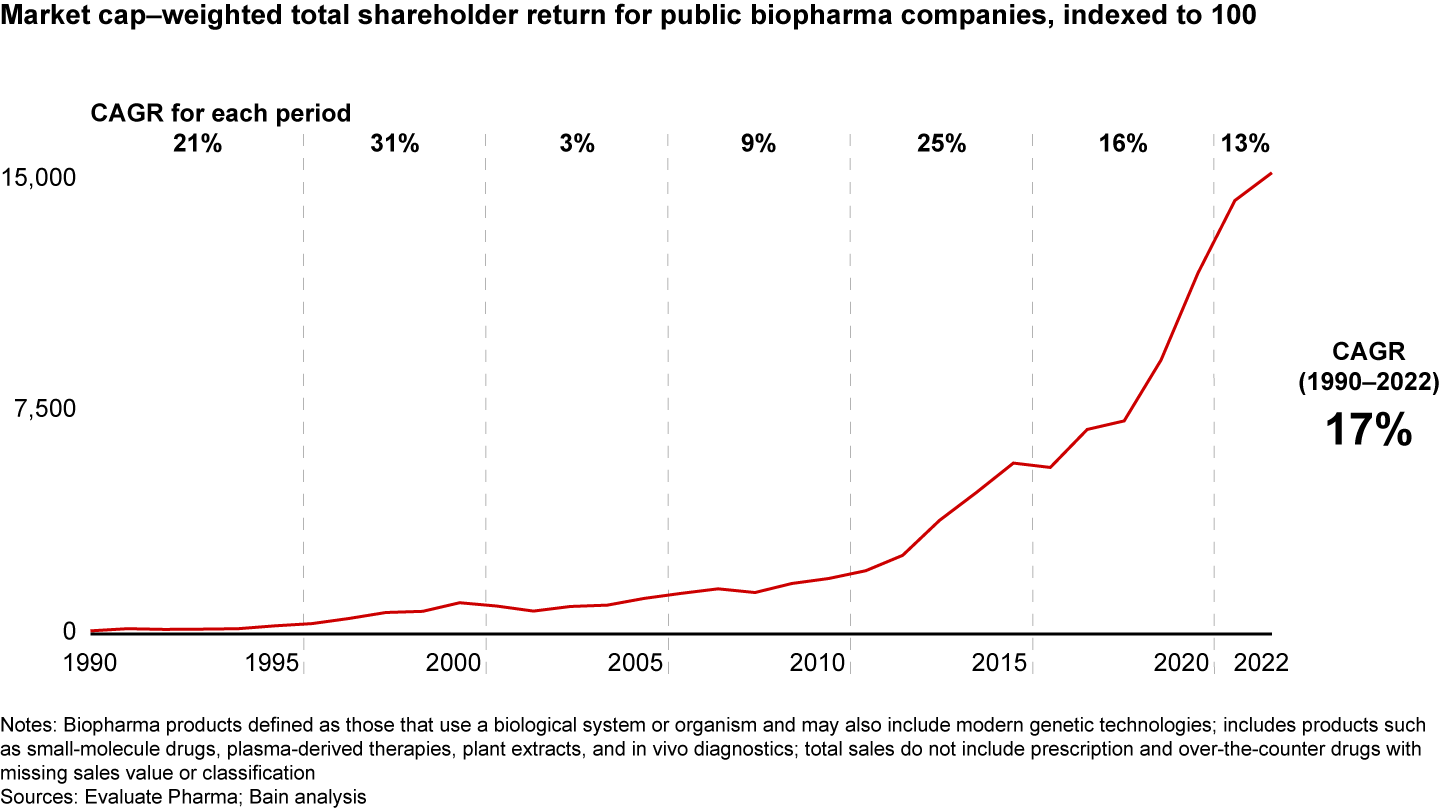
      Compared with other industries, biopharma has been a productivity powerhouse. Total shareholder return (TSR) is one way to quantify this productivity, helping executives track their organizations’ performance and chart a path to greater efficiency, revenue growth, and innovation. Biopharma companies’ average TSR grew at a compound annual rate of 17% from 1990 to 2022 (see Figure 1). While TSR growth dipped slightly over the past two years, it remains considerably high at 13%.

      Figure 1a
      Biopharma companies have been productivity powerhouses for 30 years
      Figure 1b
      Immense revenue growth has propelled total shareholder return

      Revenue growth has been a strong contributor to this success: The biopharma sector’s combined revenue is 16 times higher now than it was in 1990. Such revenue growth alone is enough to deliver healthy TSR, but other factors have also been influential. Multiple expansion has played nearly an equal role to revenue growth, serving as one of the biggest swing factors in a company’s TSR, particularly during periods of low revenue growth. And while capital structure has made a minimal contribution to overall industry TSR, it has made a significant difference for some individual companies that have managed their capital effectively.

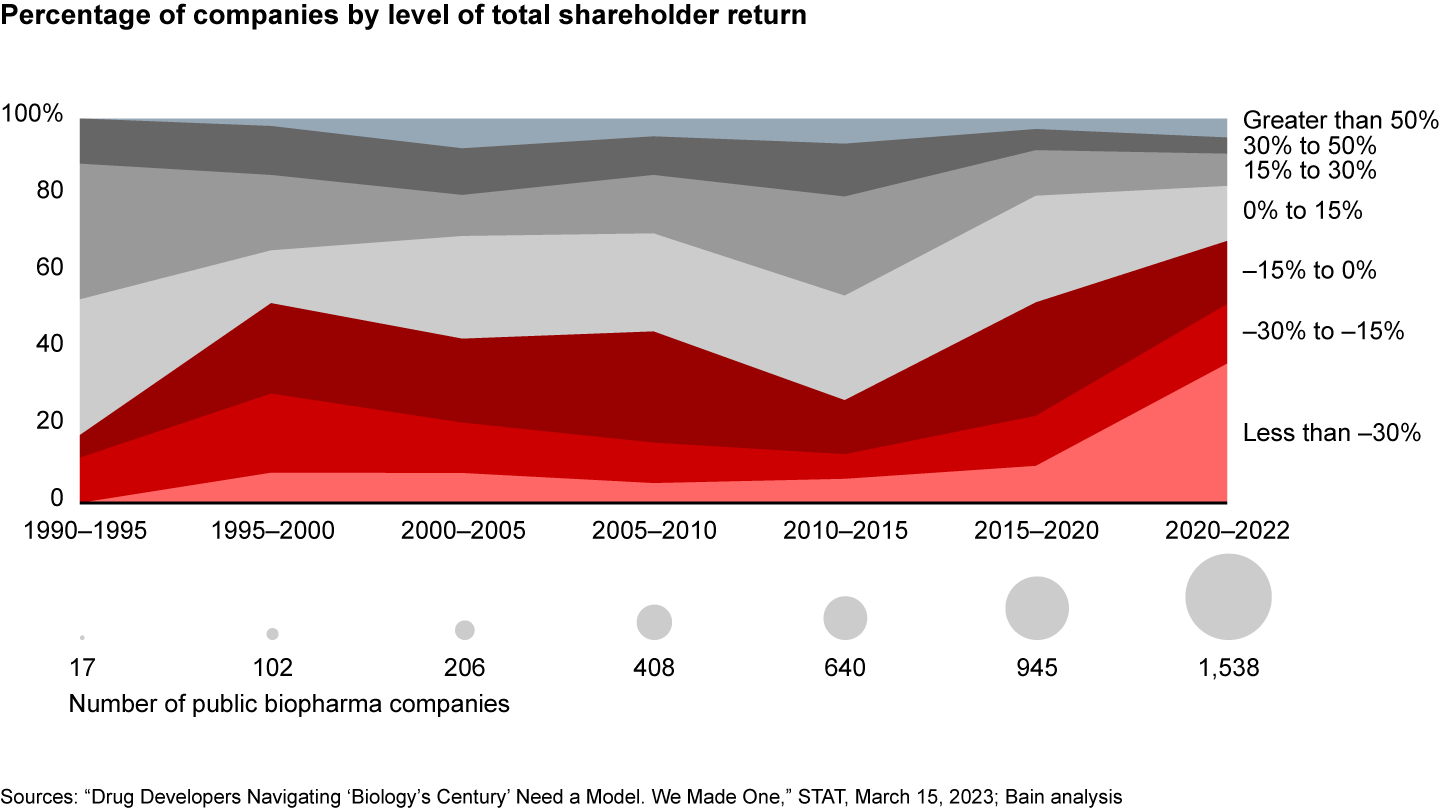
      Now, however, revenue growth may be slowing, reducing TSR growth and marking the end of an era. A confluence of factors is already casting a shadow on the outlook (see Figure 2). Historically somewhat immune to downturns, biopharma is feeling the effects of the uncertain macroeconomic environment more acutely than in the past. Pricing pressure from multiple governments, increased competition for patients, loss of exclusivity, and saturation across geographies are threatening revenues. Margins are being squeezed by the increasing costs of manufacturing, marketing, clinical trials, labor, and more in today’s high-inflation environment.

      Figure 2
      An increasing share of biopharma companies have negative TSR

      Over the next five years, we expect TSR to be slightly lower but still positive, around 6% to 10%, which is in line with the historical S&P 500. There are, of course, substantial influences that will play a role, including the effect of pricing and exclusivity legislation in the US and Europe, regulatory scrutiny on M&A, and the success of new therapeutic modalities.

      Beyond five years, we expect headwinds to intensify, slowing biopharma’s productivity drastically from 2027 to 2032. Over that time, maintaining more than 10% industrywide TSR could require adding more than $500 billion per year in revenue—compared with the current $300 billion per year in biologics and $200 billion per year in oncology—while modestly expanding margins, according to our estimates.

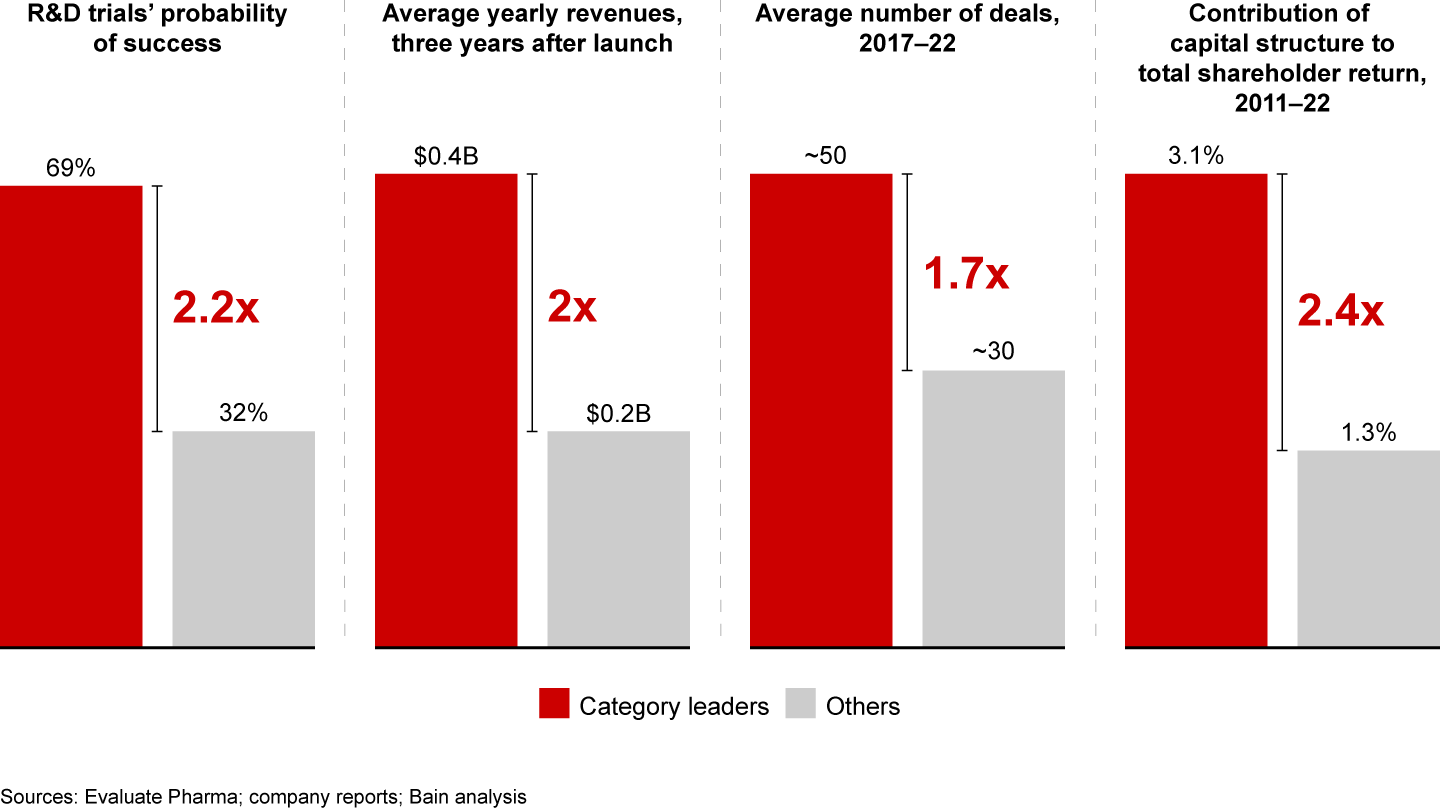
      As biopharma’s stunning productivity streak faces pressures from multiple directions, it will be important for companies to learn from what has worked consistently for the past 30 years and apply it in the current context. For example, category leadership—or the strategy of leading in a set of disease areas that have overlapping physician call points—is consistently linked to high TSR. From 2010 to 2022, the most focused category leaders achieved a median annual TSR of 16.7%, compared with just 8.7% for their peers that took a broader approach.

      That’s because category leaders enjoy multiple advantages that support both the enterprise value and capital structure components of TSR. They have more successful R&D trials, higher launch revenues, greater M&A opportunities, and stronger capital structure performance than their counterparts (see Figure 3).

      Figure 3
      A focused category strategy has several benefits

      We also found a link between R&D spending and TSR performance over the past 30 years: Companies that continuously innovate are consistently rewarded, making the case for maintaining R&D investments through periods of lower growth.

      Preserving productivity and creating durable competitive differentiation in the decade ahead will be daunting. Biopharma companies will need to consider a variety of scenarios. But we believe there are three practical paths to sustain revenue growth, uncover cost efficiencies, pursue innovation, and, ultimately, keep delivering TSR growth.

      1. Redefine category leadership as clinical decision-making evolves

      Category leadership has always been critical for biopharma providers and historically has been defined by the commercial presence around the decision makers: prescribers. As diagnostics and therapies become more complex and decision-making power shifts, category leadership will evolve both in terms of how categories are defined (moving away from the traditional disease-area model) and which capabilities are required to sustain leadership.

      For example, there will be areas of oncology where leadership is marked by biomarker-driven precision medicine: in other words, having a suite of genetic diagnostics and therapies to treat patients across the range of mutations. In other areas, categories may be defined by common manufacturing modality (such as cell therapy), patient experience and support services, disease pathway, or presence at the site of care. Each biopharma will need to define the categories where they can uniquely deliver value and identify the products that cluster into those categories.

      2. Don’t shy away from digital disruption

      The biopharma sector was already being disrupted by process automation, digital-based customer interactions, machine learning, and more. Now, generative AI is accelerating the pace of change tremendously, with use cases that extend across functions.

      These digital tools will allow biopharma companies to personalize customer interactions, reduce the burden of transactional work, accelerate clinical development, and make other strides that will benefit revenue and margin. But doing so will require new processes, roles, talent models, and effective AI governance. Companies that take a digital-first approach and disrupt their operating models ahead of the pack will be productivity leaders, outpacing companies that move more slowly or take a wait-and-see approach. In creating new operating models, these early adopters will capture the most value and build a sustainable advantage.

      3. Embrace consortia approaches

      Novel modalities have unprecedented clinical potential, but they also carry high risks and financial uncertainty. Many products, like CAR T-cell therapies, require complex production, transportation, and delivery methods.

      Rather than make heavy parallel investments, cell and gene therapy players can collaborate across development, manufacturing, and commercial efforts to cut costs and enhance productivity. Consider the roughly 2,516 clinical trials registered globally in 2020 during the Covid-19 pandemic, many of which had substantial overlap and duplicated efforts. Going forward, basket trials (those that test a new drug on different diseases with the same mutation or biomarker) and umbrella trials (those that evaluate multiple therapies for a single disease) can spread the high costs of clinical trials across multiple biopharma companies. This democratization will play a critical role in the progress of advanced modalities for rare diseases.

      Adapt and grow

      The next five years will be challenging but productive, demanding more than a business-as-usual approach. By 2027, biopharma companies will be balancing mounting pressures with a healthy pipeline of innovation. Those that adapt their operating models accordingly will be rewarded with both short-term multiple expansion and long-term TSR growth.

      While navigating this environment will be a formidable undertaking, executives can prepare today with three no-regrets moves. First, they can build an objective, forward-looking view of TSR under different macroeconomic and legislative scenarios. They can assess how different approaches to category leadership, digitalization, and democratization could affect TSR for their portfolio and pipeline. Finally, the companies that embed the fundamentals of TSR into their internal decision making and metrics will be the most productive in the future environment.

      Auteurs
      • Headshot of Kai Grass
        Kai Grass
        Partner, Dusseldorf
      • Michele Rudolph
        Alumni, New York
      • Headshot of Eli Weinberg
        Eli Weinberg
        Partner, New York
      Contactez-nous
      Synergies sectorielles
      • Pharmaceuticals
      • Santé
      Santé
      Accelerating Growth and Innovation in European Mid-Sized Pharma

      Insights from the last decade of growth and portfolio innovation can help crack the growth code for EU mid-size pharma.

      Voir plus
      Santé
      How Life Sciences Leaders Are Widening the AI Capability Gap

      Most pharma and medtech companies agree that a strong data foundation is table stakes. Few invest equally in the behaviors needed to move from pilots to adoption.

      Voir plus
      Santé
      From Silos to Pods: Scaling AI in Life Sciences

      Cross-functional collaboration is the real differentiator between those that see meaningful returns and those that don’t.

      Voir plus
      Santé
      Pharmaceuticals M&A

      Dealmaking in 2026 may redefine what it means to buy growth.

      Voir plus
      Santé
      Innovation Rewired: When Imagination Meets AI

      AI can’t dream. Humans can. The smartest companies combine them into a dream machine.

      Voir plus
      First published in juillet 2023
      Mots clés
      • Pharmaceuticals
      • Santé

      Comment nous avons aidé nos clients

      A Pharma Company’s Finance Function Gets a Shot in the Arm

      Lire l’étude de cas

      Recharging the pharmaceutical sales model

      Lire l’étude de cas

      Pharma go-to-market strategy

      Lire l’étude de cas

      Vous souhaitez continuer cette conversation ?

      Nous aidons des dirigeants du monde entier à matérialiser des impacts et des résultats pérennes et créateurs de valeur dans leurs organisations.

      Les points de vue de Bain : notre perspective sur des problématiques auxquelles sont confrontées les entreprises à travers le monde, envoyés chaque mois dans votre boîte de réception. 

      *J’ai lu la politique de confidentialité et j’accepte les conditions.

      Merci de lire notre politique de confidentialité.
      Bain & Company
      Contactez-nous Sustainability Accessibility Conditions d’utilisation Politique de Confidentialité Cookie Policy Mentions Légales Sitemap Log In

      © 1996-2026 Bain & Company, Inc.

      Contacter Bain

      Comment pouvons-nous vous aider ?

      • Business inquiry
      • Career information
      • Press relations
      • Partnership request
      • Speaker request
      Voir tous les bureaux