
Skip to Content
  • Bureaux

    Bureaux

    Amérique du Nord et Amérique du Sud
    • Atlanta
    • Austin
    • Bogota
    • Boston
    • Buenos Aires
    • Chicago
    • Dallas
    • Denver
    • Houston
    • Los Angeles
    • Mexico City
    • Minneapolis
    • Monterrey
    • Montreal
    • New York
    • Rio de Janeiro
    • San Francisco
    • Santiago
    • São Paulo
    • Seattle
    • Silicon Valley
    • Toronto
    • Washington, DC
    Europe, Moyen-Orient et Afrique
    • Amsterdam
    • Athens
    • Berlin
    • Brussels
    • Copenhagen
    • Doha
    • Dubai
    • Dusseldorf
    • Frankfurt
    • Helsinki
    • Istanbul
    • Johannesburg
    • Kyiv
    • Lisbon
    • London
    • Madrid
    • Milan
    • Munich
    • Oslo
    • Paris
    • Riyadh
    • Rome
    • Stockholm
    • Vienna
    • Warsaw
    • Zurich
    Asie et Australie
    • Bangkok
    • Beijing
    • Bengaluru
    • Brisbane
    • Ho Chi Minh City
    • Hong Kong
    • Jakarta
    • Kuala Lumpur
    • Manila
    • Melbourne
    • Mumbai
    • New Delhi
    • Perth
    • Shanghai
    • Singapore
    • Sydney
    • Tokyo
    Voir tous les bureaux
  • Alumni
  • Presse
  • S’abonner
  • Contacter
  • Canada | Français

    Sélectionnez votre région et votre langue

    Global
    • Global (English)
    Amérique du Nord et Amérique du Sud
    • Brazil (Português)
    • Argentina (Español)
    • Canada (Français)
    • Chile (Español)
    • Colombia (Español)
    Europe, Moyen-Orient et Afrique
    • France (Français)
    • DACH Region (Deutsch)
    • Italy (Italiano)
    • Spain (Español)
    • Greece (Elliniká)
    Asie et Australie
    • China (中文版)
    • Korea (한국어)
    • Japan (日本語)
  • Saved items (0)
    Saved items (0)

    You have no saved items.

    Bookmark content that interests you and it will be saved here for you to read or share later.

    Explore Bain Insights
  • Expertises Sectorielles
    Menu principal

    Expertises Sectorielles

    • Aerospace et Défense
    • Agroalimentaire
    • Chimie
    • Infrastructures, BTP et Matériaux de Construction
    • Grande Consommation
    • Services Financiers
    • Santé
    • Engins & Equipements Industriels
    • Media et Divertissement
    • Metals
    • Mining
    • Pétrole & Gaz
    • Papier et Emballage
    • Private Equity
    • Secteur Public
    • Distribution
    • Technologie
    • Télécommunications
    • Transportation
    • Travel & Leisure
    • Utilities & Energies Renouvelables
  • Expertises Fonctionnelles
    Menu principal

    Expertises Fonctionnelles

    • Expérience Client
    • ESG
    • Innovation
    • Fusions et Acquisitions
    • Opérations
    • People & Organization
    • Private Equity
    • Sales & Marketing
    • Stratégie
    • IA, Perspectives et Solutions
    • Technology
    • Transformation
  • Digital
  • Points de Vue
  • About
    Menu principal

    About

    • Notre Activité
    • Nos Valeurs
    • Nos Collaborateurs et Notre Équipe Dirigeante
    • Notre Impact
    • Prix & Récompenses
    • Partenariats Internationaux
    Further: Our global responsibility
    • Sustainability
    • Impact Social
    • World Economic Forum
    Learn more about Further
  • Carrières
    Menu principal

    Carrières

    • Rejoignez-nous
      Carrières
      Rejoignez-nous
      • Find Your Place
      • Nos domaines d’expertise
      • Equipes multidisciplinaires
      • Étudiants
      • Stages et programmes
      • Événements de recrutement
    • La vie chez Bain
      Carrières
      La vie chez Bain
      • Blog: Inside Bain
      • Récits de carrière
      • Nos collaborateurs
      • Nos bureaux
      • Soutenir votre évolution professionnelle
      • Groupes d’affinités
      • Avantages chez Bain
    • Histoires d’impact
    • Notre processus de recrutement
      Carrières
      Notre processus de recrutement
      • Ce que vous pouvez attendre
      • Entretiens
    Trouver un poste
  • Bureaux
    Menu principal

    Bureaux

    • Amérique du Nord et Amérique du Sud
      Bureaux
      Amérique du Nord et Amérique du Sud
      • Atlanta
      • Austin
      • Bogota
      • Boston
      • Buenos Aires
      • Chicago
      • Dallas
      • Denver
      • Houston
      • Los Angeles
      • Mexico City
      • Minneapolis
      • Monterrey
      • Montreal
      • New York
      • Rio de Janeiro
      • San Francisco
      • Santiago
      • São Paulo
      • Seattle
      • Silicon Valley
      • Toronto
      • Washington, DC
    • Europe, Moyen-Orient et Afrique
      Bureaux
      Europe, Moyen-Orient et Afrique
      • Amsterdam
      • Athens
      • Berlin
      • Brussels
      • Copenhagen
      • Doha
      • Dubai
      • Dusseldorf
      • Frankfurt
      • Helsinki
      • Istanbul
      • Johannesburg
      • Kyiv
      • Lisbon
      • London
      • Madrid
      • Milan
      • Munich
      • Oslo
      • Paris
      • Riyadh
      • Rome
      • Stockholm
      • Vienna
      • Warsaw
      • Zurich
    • Asie et Australie
      Bureaux
      Asie et Australie
      • Bangkok
      • Beijing
      • Bengaluru
      • Brisbane
      • Ho Chi Minh City
      • Hong Kong
      • Jakarta
      • Kuala Lumpur
      • Manila
      • Melbourne
      • Mumbai
      • New Delhi
      • Perth
      • Shanghai
      • Singapore
      • Sydney
      • Tokyo
    Voir tous les bureaux
  • Alumni
  • Presse
  • S’abonner
  • Contacter
  • Canada | Français
    Menu principal

    Sélectionnez votre région et votre langue

    • Global
      Sélectionnez votre région et votre langue
      Global
      • Global (English)
    • Amérique du Nord et Amérique du Sud
      Sélectionnez votre région et votre langue
      Amérique du Nord et Amérique du Sud
      • Brazil (Português)
      • Argentina (Español)
      • Canada (Français)
      • Chile (Español)
      • Colombia (Español)
    • Europe, Moyen-Orient et Afrique
      Sélectionnez votre région et votre langue
      Europe, Moyen-Orient et Afrique
      • France (Français)
      • DACH Region (Deutsch)
      • Italy (Italiano)
      • Spain (Español)
      • Greece (Elliniká)
    • Asie et Australie
      Sélectionnez votre région et votre langue
      Asie et Australie
      • China (中文版)
      • Korea (한국어)
      • Japan (日本語)
  • Saved items  (0)
    Menu principal
    Saved items (0)

    You have no saved items.

    Bookmark content that interests you and it will be saved here for you to read or share later.

    Explore Bain Insights
  • Expertises Sectorielles
    • Expertises Sectorielles

      • Aerospace et Défense
      • Agroalimentaire
      • Chimie
      • Infrastructures, BTP et Matériaux de Construction
      • Grande Consommation
      • Services Financiers
      • Santé
      • Engins & Equipements Industriels
      • Media et Divertissement
      • Metals
      • Mining
      • Pétrole & Gaz
      • Papier et Emballage
      • Private Equity
      • Secteur Public
      • Distribution
      • Technologie
      • Télécommunications
      • Transportation
      • Travel & Leisure
      • Utilities & Energies Renouvelables
  • Expertises Fonctionnelles
    • Expertises Fonctionnelles

      • Expérience Client
      • ESG
      • Innovation
      • Fusions et Acquisitions
      • Opérations
      • People & Organization
      • Private Equity
      • Sales & Marketing
      • Stratégie
      • IA, Perspectives et Solutions
      • Technology
      • Transformation
  • Digital
  • Points de Vue
  • Carrières
    Recherches les plus fréquentes
    • Agile
    • Digital
    • Stratégie
    Vos recherches précédentes
      Pages récemment visitées

      Content added to saved items

      Saved items (0)

      Removed from saved items

      Saved items (0)

      Etude

      What to Do Now That Your Demand Forecast Is Wrong

      What to Do Now That Your Demand Forecast Is Wrong

      The coronavirus outbreak has scrambled normal data patterns. Automated systems now need a heavy infusion of human judgment.

      Par Sanjin Bicanic, Chris Brahm, et Cesar Brea

      • min
      }

      Etude

      What to Do Now That Your Demand Forecast Is Wrong
      en
      En Bref
      • Covid-19 is a black swan event. Most of the critical demand forecasts that underpin your business could be wrong for at least the next 3 to 12 months.
      • Businesses can update and improve their forecasts by creating scenarios, studying analogs and deploying human judgment.
      • This approach can help you adjust your short-term forecasts during the crisis and medium-term forecasts when the recovery begins.

      Covid-19 is what’s known as a black swan event—something both unexpected and extreme relative to historical norms. Due to the crisis, most demand forecast models in place today are no longer accurate.

      These forecasts underpin many of the essential processes and functions that create value in an enterprise. As a result, most critical operational plans suddenly don’t fit the situation on the ground. Among the projections that many businesses can no longer rely on: the revenue forecasts central to expense planning, the sales and operations planning forecasts that serve as the basis of inventory and manufacturing plans, and the demand forecasts that determine workforce planning.

      For Our Clients

      Macro Surveillance Platform

      For more detail on the business implications of coronavirus from Bain’s Macro Trends Group, log on to the Macro Surveillance Platform. Learn more about the platform >

      The black swan touches different industries and goods in different ways. Some—including groceries, health and hygiene, pet care, video streaming and most e-commerce channels—have seen an immediate and very positive increase in demand (see Figure 1). Many more are suffering a significant drop. When the recovery begins, it too will be uneven, with wide swings in demand from industry to industry.

      Figure 1
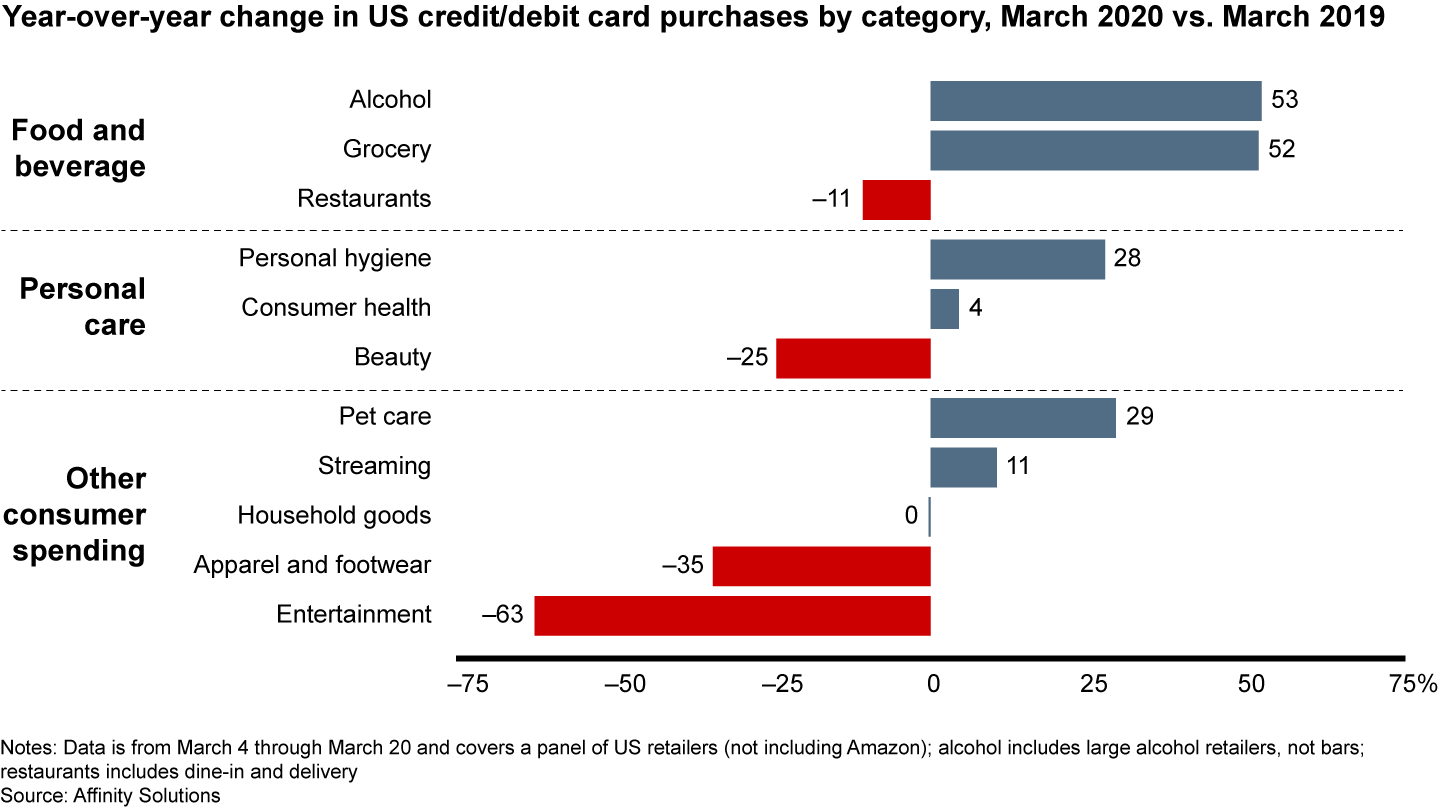
      Covid-19 has completely remade demand for goods, benefiting some but hurting many
      Covid-19 has completely remade demand for goods, benefiting some but hurting many
      Covid-19 has completely remade demand for goods, benefiting some but hurting many

      We are still learning the range of possible outcomes of the outbreak and the full extent of its impact, both in the near and medium terms. But it’s clear that companies will need to both update their forecasts and take a fundamentally new approach to creating them.

      The more that humans have been taken out of the forecasting process and replaced with automation, the more work will be needed to correct a company’s forecasts. Machine learning models rely heavily on historic business-as-usual patterns of demand. With business now anything but usual, human judgment has become critically important. That carries its own risks.  

      Here are three ways to begin to hedge those risks and improve your forecasts.

      1. Set up a team and a war room, and begin to triage

      Appoint a senior manager, ideally someone in charge of forecasting now or who has been in the past, to oversee updates of critical company forecasts. Create a small agile team to do the work and interface with key internal audiences across all geographies and across your broader ecosystem of suppliers, sales channels and customers. Because the impact of coronavirus varies from place to place, it helps if this is a global team that can share insight from different locations.

      Setting up a virtual war room will help you gather and synthesize the latest data, such as sales across all geographies, virus development data and macroeconomic data. Forward-looking companies are investing aggressively in ways of listening and communicating both upstream and downstream within their ecosystem, in order to create a complete picture and minimize the chance of missing important signals.

      It’s more important and helpful than ever to focus on the forecasts with the highest dollar impact on your business and the most significant error. Apply your forecasting SWAT team according to the Pareto principle, the idea that 20% of the forecasts account for 80% of the value.

      2. Develop short-term scenarios

      The initial weeks and months of the crisis will bring the most societal disruption—mandatory shutdowns, quarantines, social distancing—and will most severely impact your supply chain, sales channel and customer behavior.

      Companies will need to shift from complex modeling to simple, more transparent modeling. There is not enough time to collect and review all the relevant data affecting your models, so it makes sense to focus on the few critically important ones. Because of their reliance on historical signals, complex algorithms, especially machine learning, are not well suited to short-term modeling in this anomalous moment. Simple math and human judgment are the order of the day.

      For industries with daily data updates, including most businesses that sell directly to consumers, it’s possible to rely to some degree on real-time data. If data takes longer to update, as it does for most business-to-business organizations, it will be more necessary to rely on business judgment.

      With so much uncertainty about Covid-19 and how different actors in the economy will respond to it, scenario forecasts are critical. Relying solely on point estimate forecasts could lead to strategies and actions that are insufficient or flat-out wrong. It’s helpful to define two to four integrative scenarios that build in a number of factors affecting demand, including virus spread and the responses of customers, competitors, supply chain and government.

      There are three steps to take when creating a scenario. 

      • Determine the outlook for intrinsic demand using analogs. By using analogous examples from countries, states or even metro regions that are days or weeks ahead on the Covid-19 curve, it’s possible to see how demand has shifted year over year.

      Companies operating in multiple places should pay close attention to their own demand trend in different locations. Others can use market research data on the closest analog to their industry, keeping in mind how customer and channel mix may vary from one spot to another, and using business judgment to adjust. For example, the reduction in restaurant demand followed a very similar slope in most countries, offset by a few days (see Figure 2).

      Figure 2
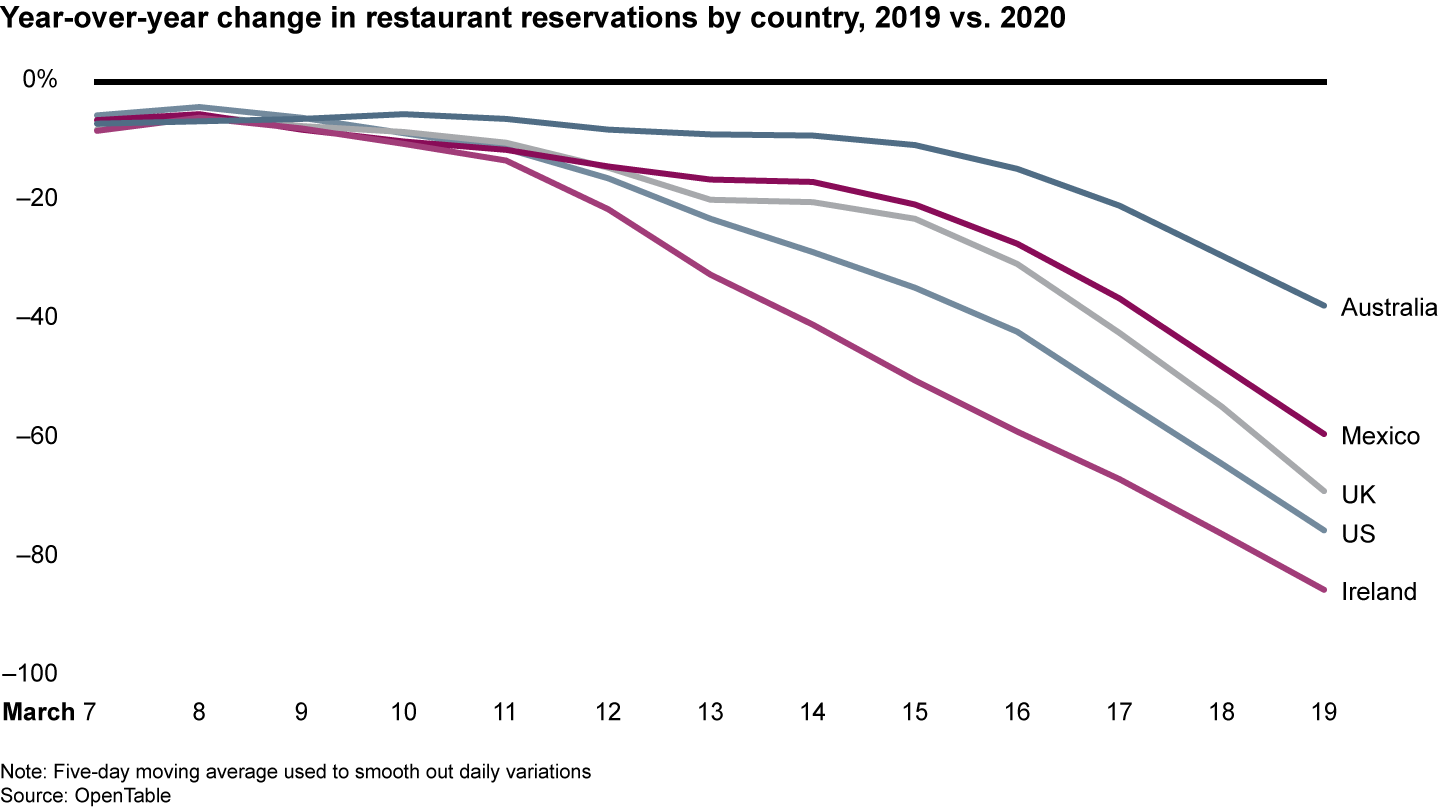
      Restaurant reservations followed a similar declining trend in various countries
      • Determine what constrains your supply chain. In some situations, your supply chain—raw materials, production capacity, workforce and so on—will determine how well you can meet demand. Demand for personal protective equipment, for example, has increased greatly since we began combatting the crisis, but tragically, the supply chain cannot match it quickly enough. Facing different constraints, countries have taken a variety of steps to try to address the shortage (see Figure 3).
      Figure 3
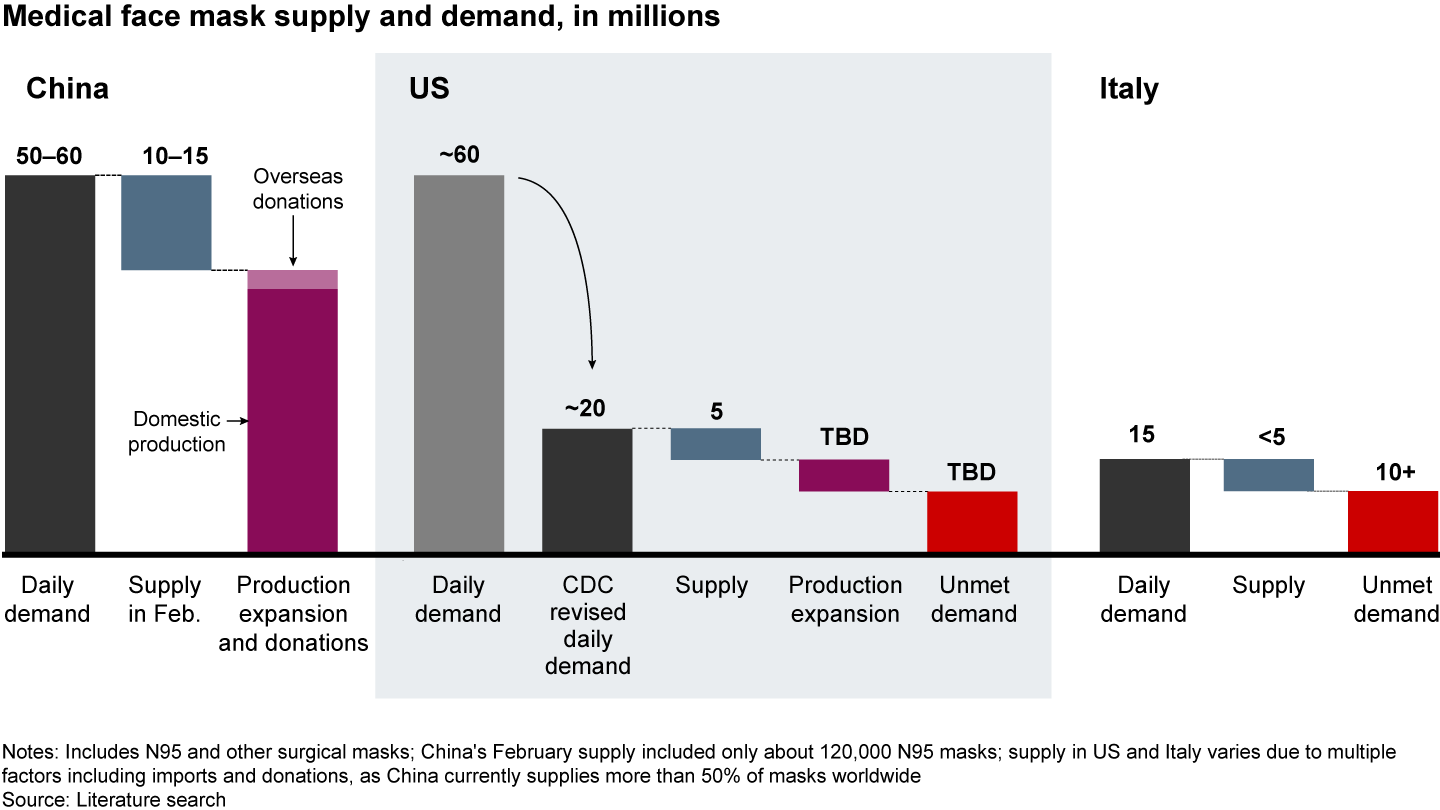
      Response to the shortage of medical masks has differed by country
      • Gauge customer demand and any channel constraints you may face. It’s more critical than ever to demonstrate empathy for customers, and listening hard is a critical part of that. You may discover new hidden needs. Understand how well your distribution channels reach your customers and whether channel issues could cause them to stop buying from you. For example, there is still demand for apparel, but it is increasingly satisfied via e-commerce (see Figure 4). Companies without multiple strong channels will need to curtail their demand expectations accordingly.
      Figure 4
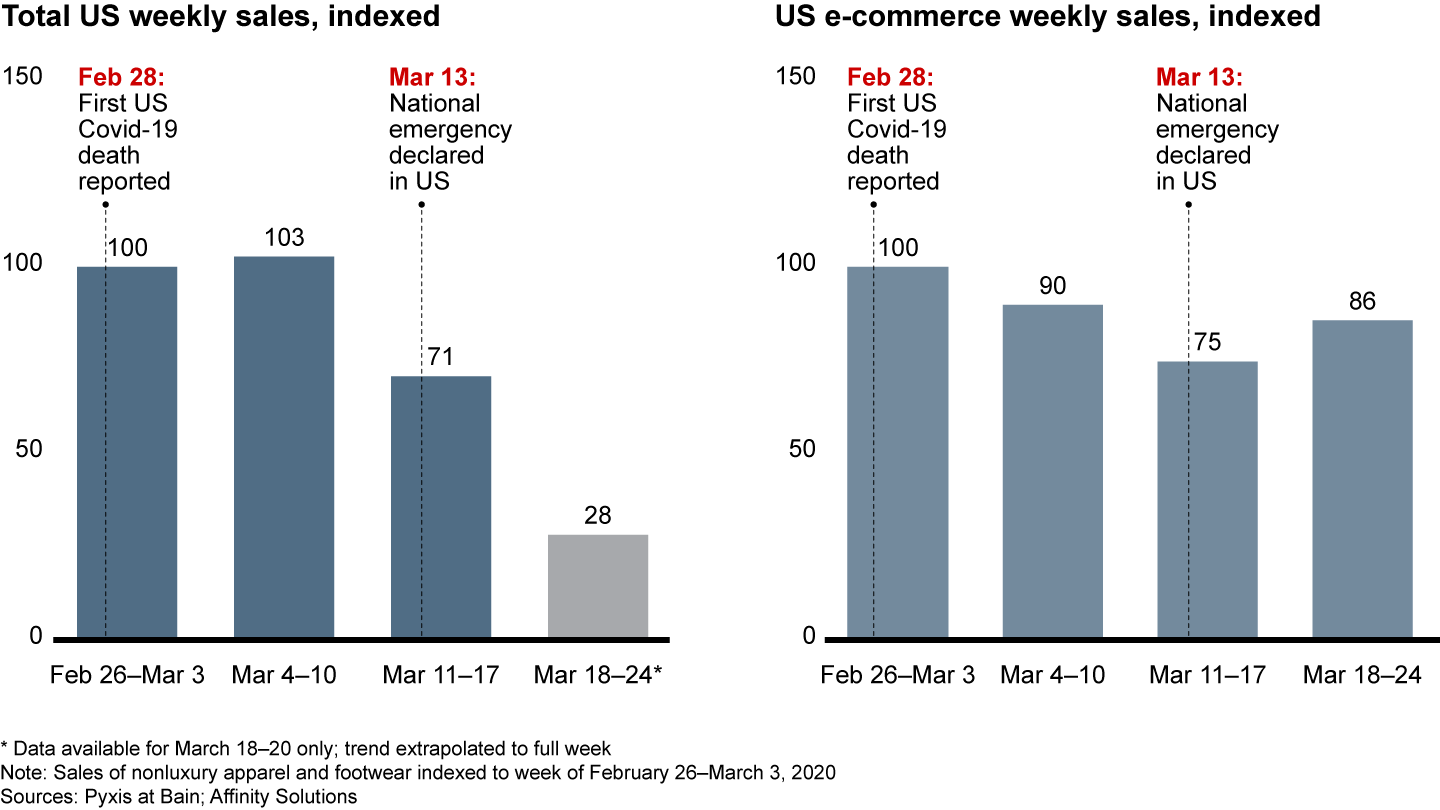
      Sales of apparel and footwear have held up better online

      Once you have your forecasts, you can begin to test strategies to respond to the range of projections, making sure they are robust enough to deal with a range of possible outcomes. Know the objectives of each strategy. Do you intend to optimize revenue, market share, profit, customer fulfillment rate, customer satisfaction or cash flow?

      3. Fix medium-term scenarios

      Even as companies grapple with a rapidly evolving near-term outlook, they have begun to look ahead to the medium term—the one or two quarters following the start of the recovery when the number of new cases of Covid-19 begins to drop, societal restrictions ease, and both the supply chain and sales channels largely return to their usual capacity. To begin to get a handle on this, it makes sense to start with your pre-virus forecast and then adjust up and down based on scenarios.

      The scenarios should model three key uncertainties:

      • Speed of recovery. Countries that are recovering faster can provide some sense of the time it will take to bounce back. Data from AutoNavi, the maps app operated by Alibaba Group, shows that traffic in major shopping districts in China, for instance, is picking back up, reaching 50% of its precrisis level in the first month of recovery.
      • Rebound effect. Some industries will experience a brief “hangover,” especially if demand increased sharply during the crisis as customers stocked their pantries. (Think groceries and home hygiene.) Other industries like restaurants and bars may see a surge from pent-up demand. Consumer demand in China during and after the SARS epidemic shows how different products can rebound after a black swan event (see Figure 5).
      Figure 5
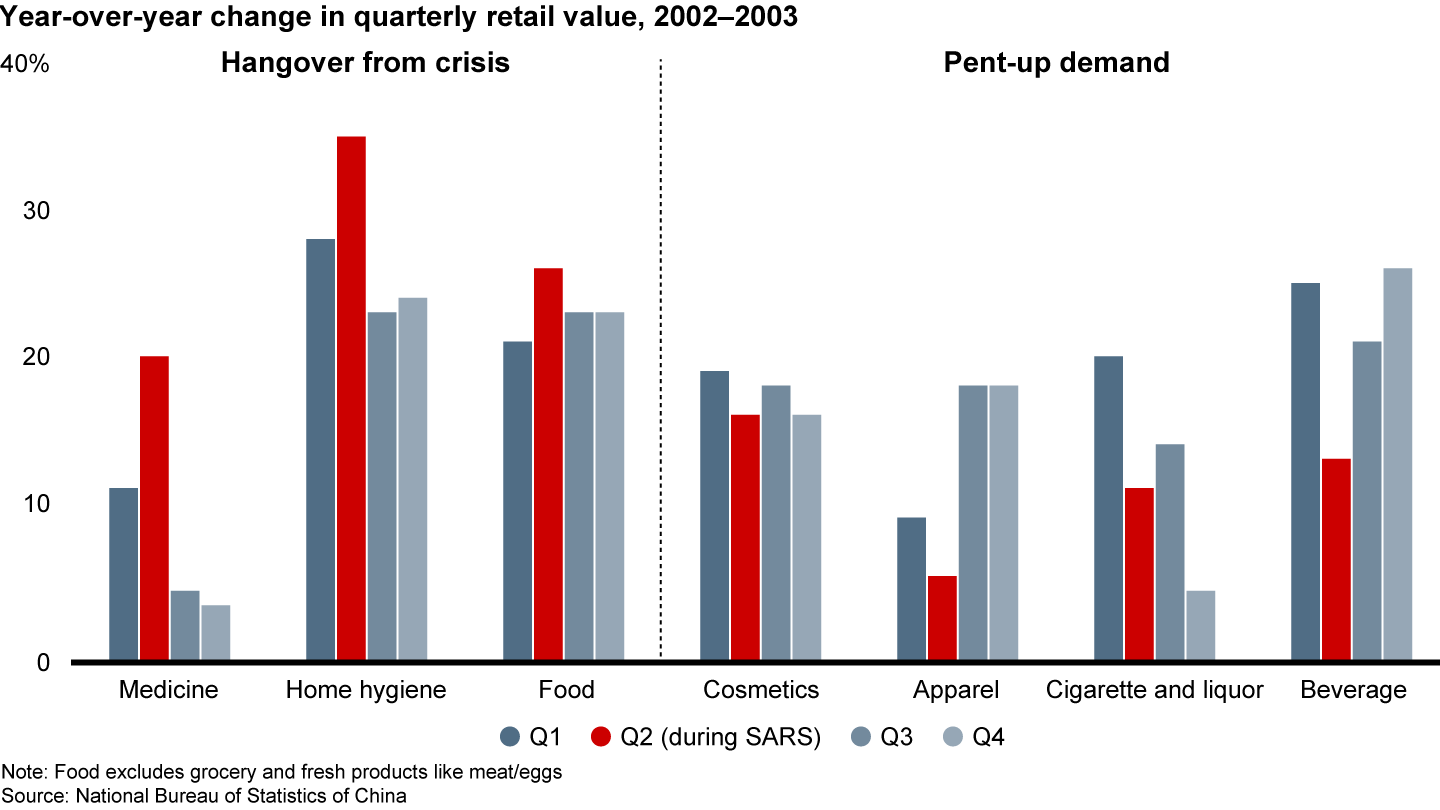
      After SARS, consumer goods in China fell into two recovery patterns
      • Structural behavior change. Some temporary demand shifts may become long-term trends. We might expect an increase in the use of home gyms to continue after the crisis is over, for example. Business travel might decrease permanently if videoconferencing becomes the new default. Or demand may stay steady but the channel shifts. Use of the telemedicine app offered by China’s PingAn Group has increased ninefold during the coronavirus crisis, and that growth is expected to continue due to the relaxation of telemedicine regulations.

      The new normal

      At some point in the future, once the pandemic has stabilized, we will find ourselves in a new normal. Many companies will need to revamp how they forecast going forward, either due to a permanent shift in customer behavior or because they rely on historical data, which may be less relevant and lead them astray.

      In rebuilding, you will undoubtedly uncover many opportunities to improve your approach to forecasting and learn from that. This is not the first time forecasts have been well off the mark. Fixing demand forecasts completely upended by Covid-19 is quite urgent, but also completely doable.

      Related Insights

      Coronavirus

      The global Covid-19 pandemic has extracted a terrible human toll and spurred sweeping changes in the world economy. Across industries, executives have begun reassessing their strategies and repositioning their companies to thrive now and in the world beyond coronavirus.

      Sanjin Bicanic is a principal in the Advanced Analytics practice in Bain & Company’s San Francisco office. Chris Brahm is a partner and director in the San Francisco office and leads Bain's Global Advanced Analytics practice. Cesar Brea is a partner with Bain’s Advanced Analytics and Customer Strategy & Marketing practices. He is based in Boston.

      The authors would like to acknowledge the contributions of Affinity Solutions, a data-led intelligence platform that helps marketers use purchase data insights to better serve customers.

      Auteurs
      • Headshot of Sanjin Bicanic
        Sanjin Bicanic
        Partner, Los Angeles
      • Headshot of Chris Brahm
        Chris Brahm
        Alumni, San Francisco
      • Headshot of Cesar Brea
        Cesar Brea
        Alumni, Boston
      Contactez-nous
      Expertises fonctionnelles transverses
      • Digital
      • IA, Perspectives et Solutions
      • Supply Chain
      Comment pouvons-nous vous aider ?
      • Demand Forecasting
      Coronavirus
      A Strategy to Make Pharma Supply Chains More Resilient

      Flexible contracts, modular manufacturing and improved network visibility help reduce risk.

      Voir plus
      Coronavirus
      Cash Management Practices to Weather a Downturn

      Take an honest look at the business, and decide where to improve.

      Voir plus
      Demand Forecasting
      Predicting Consumer Demand in an Unpredictable World

      While it's more complicated than ever in the Covid-19 pandemic, don’t abandon forecast modeling. Just change how you do it.

      Voir plus
      IA, Perspectives et Solutions
      AI Is Revolutionizing Industrial Operations

      Supply chain planning, procurement enhancements, manufacturing optimization, and engineering augmentation are emerging AI opportunities.

      Voir plus
      Coronavirus
      Ramping Up Online Grocery without Breaking the Bank

      Bain’s Marc-André Kamel discusses the challenges that online grocery presents for retailers and CPGs and how they can pair up to find a winning solution.

      Voir plus
      First published in avril 2020
      Mots clés
      • Coronavirus
      • Demand Forecasting
      • Digital
      • IA, Perspectives et Solutions
      • Supply Chain

      Comment nous avons aidé nos clients

      A New Demand Forecasting Approach Signals a Bottom-Line Boost

      Lire l’étude de cas

      Blockchain-enabled Payment Flows: A Payments Company Reviews its Strategy

      Lire l’étude de cas

      Better Forecasts, Less Waste Boost Grupo Bimbo’s Profitability

      Lire l’étude de cas

      Vous souhaitez continuer cette conversation ?

      Nous aidons des dirigeants du monde entier à matérialiser des impacts et des résultats pérennes et créateurs de valeur dans leurs organisations.

      Les points de vue de Bain : notre perspective sur des problématiques auxquelles sont confrontées les entreprises à travers le monde, envoyés chaque mois dans votre boîte de réception. 

      *J’ai lu la politique de confidentialité et j’accepte les conditions.

      Merci de lire notre politique de confidentialité.
      Bain & Company
      Contactez-nous Sustainability Accessibility Conditions d’utilisation Politique de Confidentialité Cookie Policy Mentions Légales Sitemap Log In

      © 1996-2026 Bain & Company, Inc.

      Contacter Bain

      Comment pouvons-nous vous aider ?

      • Business inquiry
      • Career information
      • Press relations
      • Partnership request
      • Speaker request
      Voir tous les bureaux