

Report

Corporate profits have been remarkably resilient in recent decades.
While GDP in the developed world has grown a robust 3.6% annually since 1990 (in nominal terms), corporate net income over the same period has grown almost twice as fast, or 7% per year (see Figure 1). Companies in developed markets have churned out profits at a historic pace, despite massive economic dislocations like the bursting of the dot-com bubble in 2000 and the global financial crisis eight years later. Terrorism, immigration crises, Brexit, chronic geopolitical instability―none of it has managed to derail what has been a golden age of corporate profitability.
But can it continue?
Figure 1
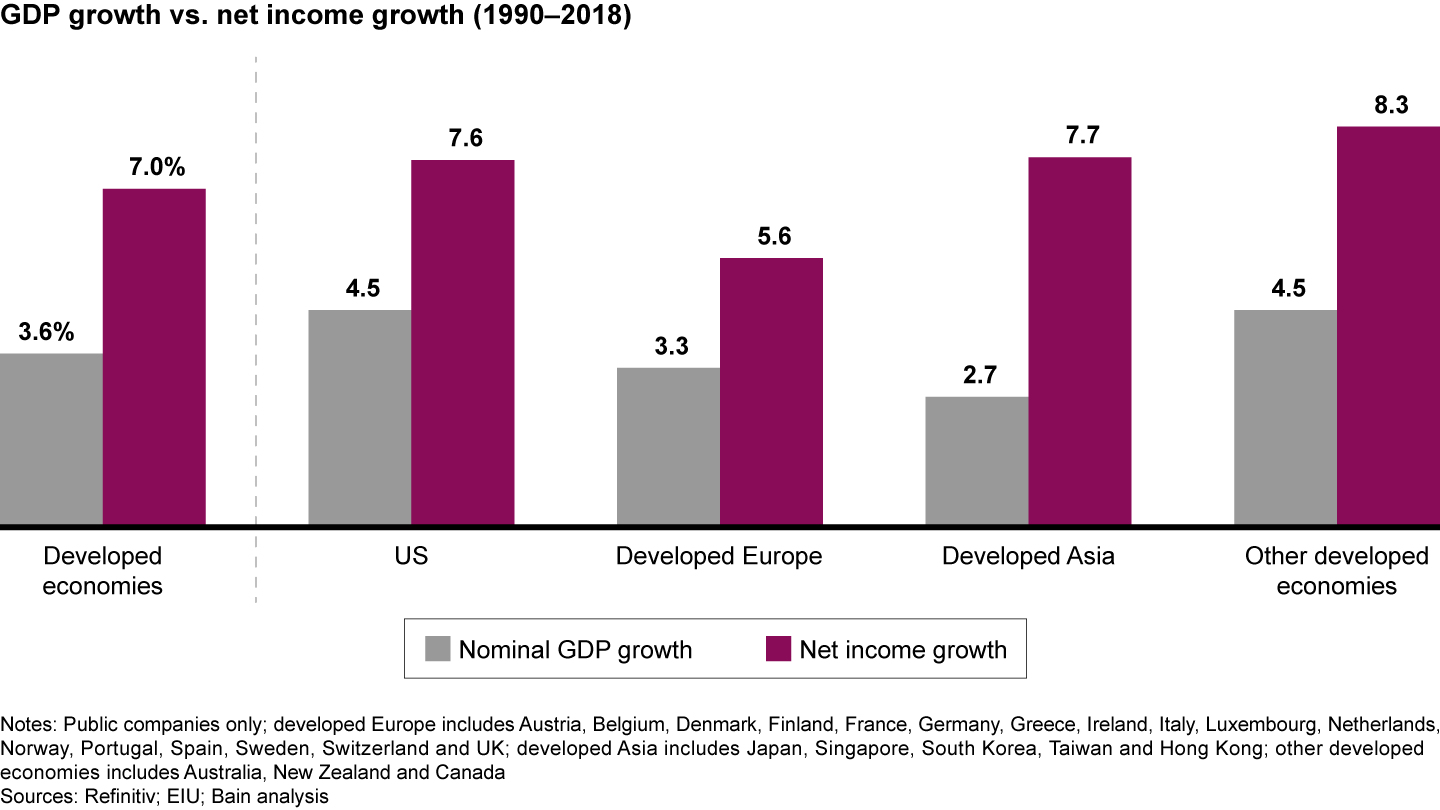

Even before the Covid-19 crisis set off what is shaping up to be the worst economic shock since the Great Depression, corporate profits were showing signs of peaking. Recent Bain & Company research, in collaboration with Oxford Economics, has identified several key factors that could dampen profit growth in the years ahead―factors involving both market dynamics and a potential backlash from governments and societies.

Peak Profits
Even before Covid-19, the golden age of corporate profitability was showing signs of topping out.
We believe that Covid-19 will accelerate the shift. Like other historic crises before it, the pandemic has the potential to hasten currents of change that otherwise might have taken a decade or more to play out.
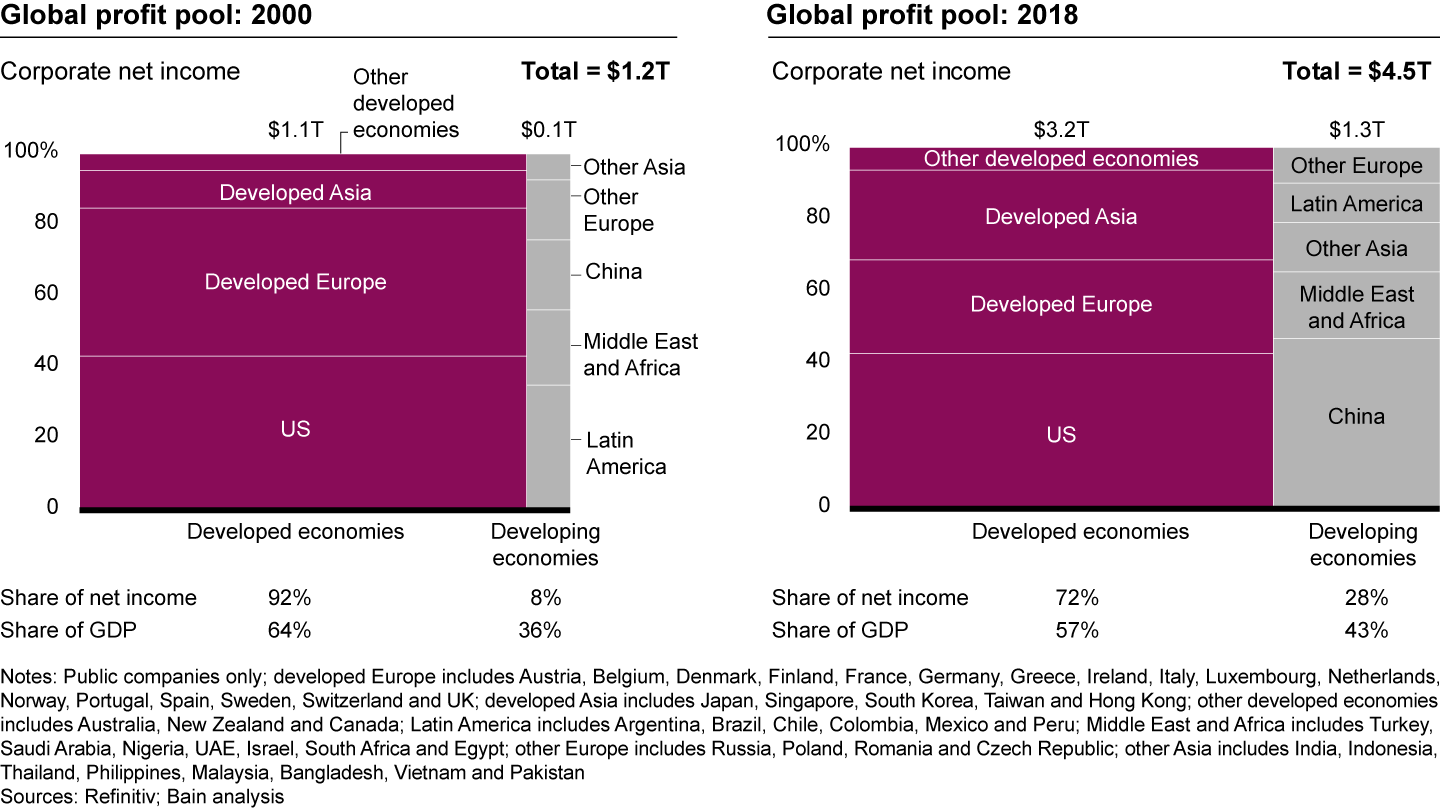
To understand whether the forces that have contributed to this golden age of profitability will persist into the future, we studied 13,000 listed companies in 26 developed economies spanning the US, Europe, Asia, Canada, Australia and New Zealand. We focused on developed-market companies because of their outsize share of the global profit pool and comparable macroeconomic dynamics (see Figure 2). While rapid profit growth in the developing world (especially in China) has led to substantial share gains over the past 20 years, there’s no question that companies in the developed world still dominate in terms of overall profits.
Figure 2

Over the past several decades, six waves of change have powered the steady rise in corporate profitability:
- Labor’s waning bargaining power, due to a decline in unionization and simultaneous expansion of the labor supply
- Financial liberalization, which drove up the profitability and economic share of financial services
- Globalization, which allowed firms to access lower-cost supply chains and new export markets
- A commodity super-cycle, driven by surging industrialization in China and India
- The rise of major Internet platforms (in the US especially), which powered extraordinary profitability for a small cohort of firms through network effects and asset-light growth
- Automation, which fueled the displacement of labor with capital in an expanding range of sectors
In parallel, the cost of capital has fallen precipitously, affording companies a meaningful boost in economic profit.
A widening performance gap
These six waves have been particularly strong in the United States, pushing returns for US companies to historic heights. However, while average profitability has been steadily rising, median profitability has actually fallen. The difference owes to a significant divergence in outcomes between the large incumbents of the US market and a very long tail of midsize competitors (see Figure 3). The bulk of the increase in the profit pool in recent decades has been captured by large firms. Smaller competitors, in fact, have seen return on equity fall. While large firms (greater than $25 billion in revenue) had an average ROE in the 1980s that was 1.3 times greater than that of small firms (less than $1 billion in revenue), the ratio expanded to 4.2x in the 2010s. In technology, the spread is 10x.
Figure 3
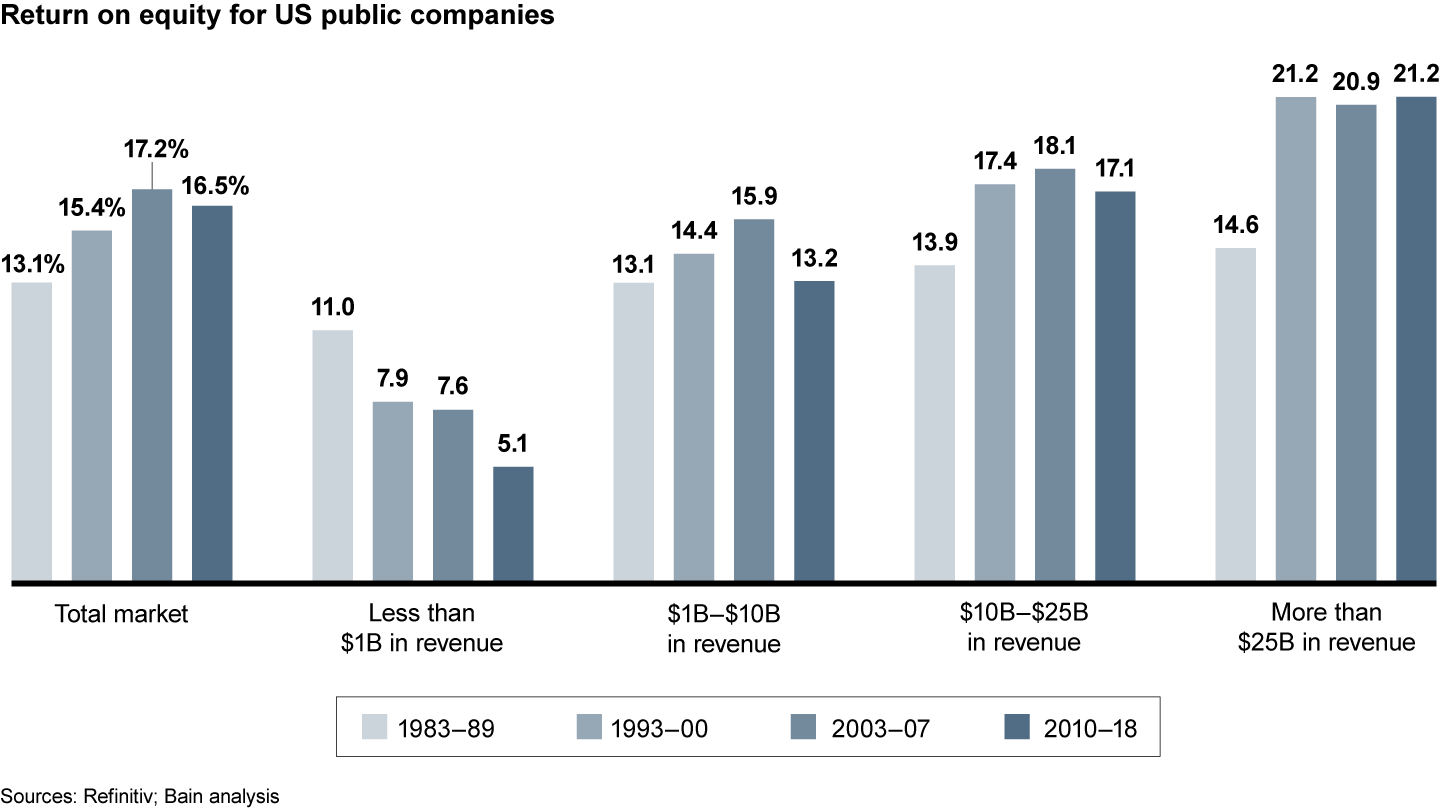

One reason is that technological change has increased the benefits of scale, widening the profitability gap between large incumbents and everybody else. Increasing economies of scale have coincided with a surge in mergers and acquisitions, which has pushed up concentration rates in most subsectors of the economy. As a result, 1% of listed companies in the US now account for 41% of corporate profits, up from 33% in the 1980s.
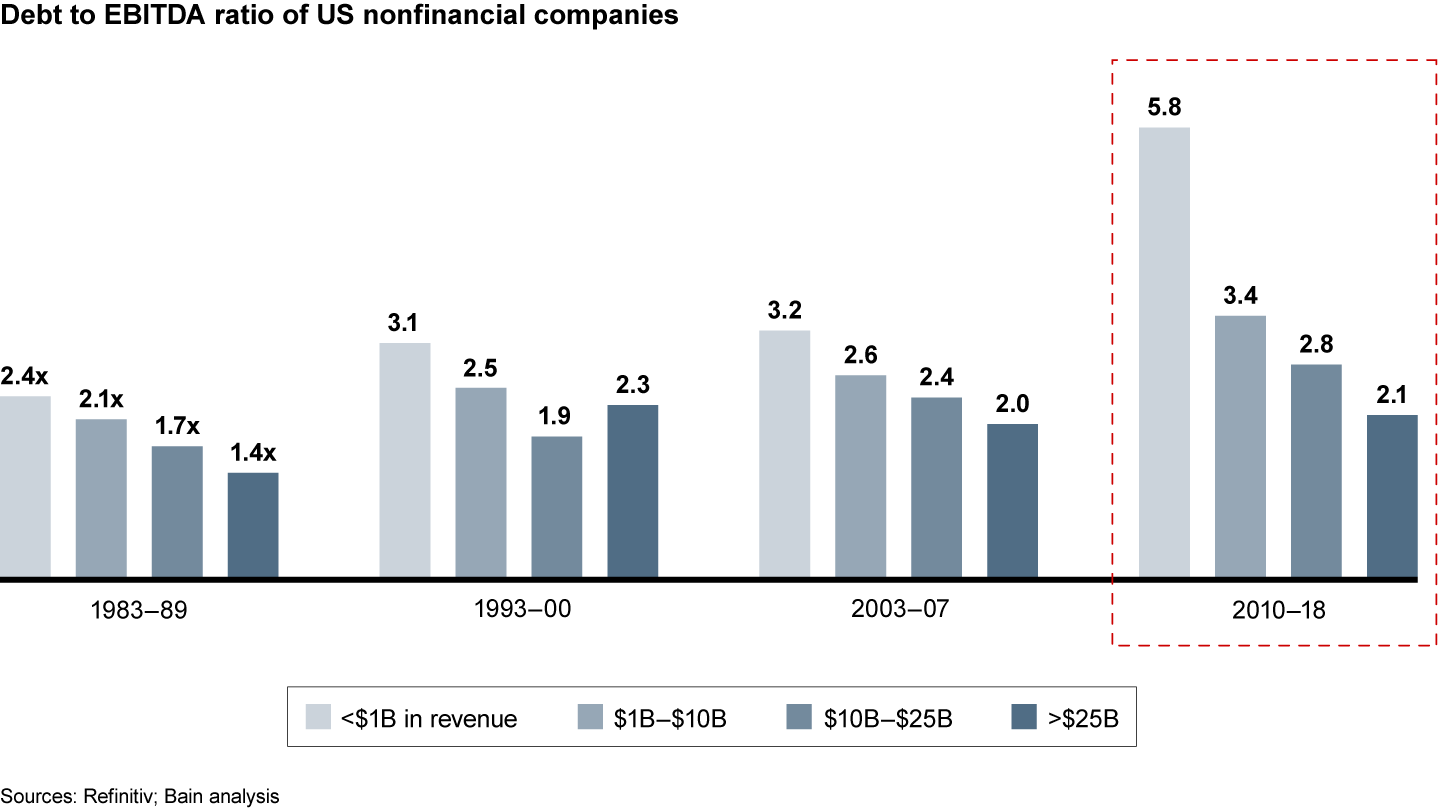
This growing scale advantage has made it harder for smaller rivals to unseat established incumbents, leaving them stuck with middling profitability. In that context, it is not surprising that midsize firms have increasingly relied on leverage to boost returns in recent years, driving their debt ratios to historic levels (see Figure 4). That has left them especially vulnerable to the Covid-19 downturn.
Figure 4

Gathering headwinds
As powerful as these macro trends have been, we see two emerging mechanisms that could exert downward pressure on corporate profitability and perhaps force a reversion to the historical mean.
The first is the market itself. Favorable market trends typically ebb and flow. As we enter this new decade, the tide of globalization has already begun to recede. Recent trade wars had already pushed companies to rethink their commitment to offshore supply chains. Then the coronavirus pandemic exposed how risky those stretched, low-cost supply lines really are. A move toward reshoring to better manage risk will likely pressure margins.
At the same time, labor market changes will exert upward pressure on costs for many companies. Over the past several decades, three megatrends have assured a steady supply of labor that has had a dampening effect on wages: the aging of the baby boom generation, more women entering the workforce and the rise of offshoring. More recently, each of those trends has either tapped out or reversed. (See Bain’s Labor 2030 report for a detailed look at the forces shaping the labor market.) While the Covid-19 unemployment shock will offset this shift in the short term, finding talent with the right skills for the right job is getting harder in many areas of the economy.
On the upside, it’s likely that an acceleration in automation and the continued growth of Internet platforms will support high profitability levels. But those benefits will mostly flow to the biggest and fastest companies. The rest will continue to suffer from their lack of scale in a market that just got tougher. Indeed, the Covid-19 shock could prove devastating for midsize companies with too much leverage. Some may be acquired or disappear entirely, but others may find themselves joining the growing cohort of zombie firms―struggling companies that survive on evergreen loans only because banks are unwilling to cut them off and book the hit to capital.
On balance, these factors alone might not be enough to slow the corporate profit juggernaut. But there is a wild card that could dramatically reshape corporate return profiles as we emerge from this pandemic: an expansion in the role of the state.
Surging corporate profitability, isolated as it’s been among large firms, has coincided with a number of troubling social indicators. Rising income inequality (before and after taxes and transfers) and stagnant upward mobility have fueled increasing discontent with the status quo. The Covid-19 crisis and the global financial crisis before it have also shed light on the increasing fragility of today’s economy. On one end of the spectrum are smaller firms struggling (and taking on more financial risk) to keep up. At the other end are the large, interrelated, “too big to fail” firms that have increasingly required government support, raising populist ire on a global scale.
Since the Industrial Revolution, the relationship between business and society has fluctuated through cycles of rising and falling freedom for the firm. Even before the Covid-19 crisis, firms had begun to face growing demands from society to adopt a wider view of corporate purpose beyond the short-term maximization of shareholder wealth. In response to the pandemic, the role of the state has dramatically expanded, as governments have actively intervened in the operations of the market and stepped in as the investor of last resort.
As society grapples with challenges ranging from global warming to the regulation of data to the human costs of automation, a more interventionist government may become the new norm. The toll on corporate profitability through regulation, taxation and other interventions could be significant.

Peak Profits: A Conversation on Corporate Profitability
Bain's Andrew Schwedel and James Root discuss how the rise in profitability over the past few decades may be ending, and what business leaders can do to adapt to the new environment.
Profit pressures globally
While this overview has focused on the US, as it is by far the largest contributor to the global profit pool, other developed economies are likely to face their own flavors of earnings pressure.
- In developed Europe, the recent trajectory of corporate profits has been largely tied to the promises and perils of the European project. Following the adoption of a single currency, returns soared in the early 2000s as capital (and leverage) flooded into the periphery countries―particularly Portugal, Ireland, Italy, Greece and Spain. The financial crash and subsequent sovereign debt crises led to a downward step change in profits as Europe struggled to regain its economic footing. While stronger protections for labor and a more expansive welfare state than in the US have dampened the rise in inequality, Europe has increasingly struggled to achieve international competitiveness (particularly on the periphery) and has badly lagged the US and China in terms of scaling large technology companies and Internet platforms. These weak spots have blunted both profitability and real income growth, contributing to surging populism, and the challenges will only be magnified by the Covid-19 crisis. Without reform, corporate profits in Europe will come under immense strain in the coming decades.
- In developed Asia, the pattern of corporate profitability for Japan has been distinctly different from that of the Asian Tigers―South Korea, Singapore, Hong Kong and Taiwan. For Japan, a sluggish macro economy following the financial crisis in 1990 dragged down corporate profitability and growth, causing the erstwhile economic powerhouse to miss the golden age of profits enjoyed in the West. The Asian Tigers, by contrast, have ridden a combination of high growth and (relatively) stable returns to immense shareholder value creation and a broad-based improvement in living standards. For these economies, the main issue is a reliance on global trade flows for a major portion of GDP. That may leave them particularly exposed in a deglobalizing world, at a time when their economic growth has begun to decelerate.
- In Australia, New Zealand and Canada, profits are heavily concentrated in the resources sector and have closely followed global resource prices over recent decades. Profitability surged through the early 2000s on the back of the commodity super-cycle but has since reverted to historic levels as the cycle ran its course. Higher unit labor costs fueled by demand from the resources sector have reduced the ability of these markets to compete in other tradeable sectors. As the most recent super-cycle continues to dissipate, a resurgence in corporate profitability will be more challenging.
The new imperatives
Throughout history, crises have often served as catalysts for change. We expect the Covid-19 pandemic will be no different. The crisis will likely accelerate trends that were already in place, making it harder for global companies to generate the level of profit growth they have enjoyed over the past 40 years.
Peak profits, moreover, coincides with a historic shift in business eras―from the era of shareholder primacy to what we call the era of scale insurgency. For business leaders, winning in this new era will require:
- Sharpening your competitive edge. While macro tailwinds have pushed up aggregate profitability in recent decades, our modeling suggests that nearly 60% of the variance in firm-level profitability still comes down to factors specific to a given company or sector. In other words, much is still directly within the control of business leaders, and their strategic choices matter immensely. As profit pools shrink, competition for customers will intensify. To survive, firms will need to deliver the benefits of both scale and intimacy.
- Rediscovering business building. In an environment of heightened competition for profits, creating value will require firms to rediscover the lost art of business building. This will be especially important if governments raise barriers to M&A. In low-interest-rate environments, intrinsic value is far more sensitive to growth than to margins, meaning the stakes are especially high.
- Resilience. To offset margin pressure, many firms will be tempted to trade greater efficiency for lower resilience. In a more turbulent world, this will prove to be a false economy. Instead, firms should look beyond this year’s earnings and consider the implications their strategic, operational and financial choices will have across the business cycle. Doing this well will require a candid dialogue with investors, who have not borne the full cost of firms’ lack of resilience over the past two business cycles.
- Elevating citizenship and sustainability. Demands for business to take on a greater civic role will only get louder in coming years, as the recent groundswell around racial and social justice has shown. The ability to navigate an increasingly complex web of societal expectations will come to be seen as a moral imperative as well as a significant source of competitive advantage. The new era will require firms to proactively identify and meaningfully address the issues their employees and customers care about—or risk losing both.
These imperatives will challenge leadership teams to think differently in the years ahead. While it’s impossible to know exactly how the many forces affecting corporate profitability will unfold, the scale and speed of the transition we now face favors bold action; the new era won’t be kind to companies that stand still.
Published in lipiec 2020