

Brief

At a Glance
- Natural climate solutions (NCS) will play an important role in the energy transition, but until recently, they have received less attention and capital than other solutions.
- NCS include forests, grasslands, and wetlands that can either sequester carbon or, through preservation, prevent its release.
- Now, NCS are emerging as a new asset class, spurred along by the growth of carbon markets, progress toward shared standards, a flourishing ecosystem of players, and technological innovation.
- Private capital is moving into NCS. Successful investors will pay close attention to the market and factors that include supply limitations, low correlation between price and quality, and uncertain regulatory environments.
Natural climate solutions (NCS) are ways to sequester carbon through conservation, restoration, and improved land management of the world’s forests, grasslands, and wetlands. Given their potential to abate greenhouse gas emissions, their comparatively low marginal costs, and their ability to deliver other benefits, NCS are expected to be a key component of any pathway that limits global warming to well below 2 degrees Celsius above preindustrial levels, in line with the Paris Agreement. NCS could account for 37% of total mitigation efforts—about 11 gigatons of carbon dioxide out of the net 30 gigatons that need to be abated each year—while also delivering economic and social benefits, such as restoring ecosystems and securing the transition to low-carbon livelihoods for communities that depend on natural resources.
NCS also represent a new source of potential growth for investors. Today, only about 2% of the $632 billion deployed globally each year in climate capital goes toward natural solutions. The main reasons are that investors are unfamiliar with this asset class and unsure about the returns given the volatility of carbon prices. We expect that to change over the next few years, and it seems likely that the entry of institutional investors will help mature this asset class and bring it into the mainstream.
Several other trends indicate that the market is poised to grow and become more manageable for investors.
Nature is emerging as a new asset class
Although NCS may not have received the attention from private capital that they deserve, several trends suggest that is changing.
- Growth of voluntary carbon markets: Carbon credits have been on an upswing in recent years, in terms of both price and traded volumes. Volatility in carbon markets over the past few months, however, has crimped volumes and prices, although some higher-quality credits, such as nature-based restoration credits, have sustained price levels. The value of the primary voluntary carbon market grew by 190% in 2021, to just under $1 billion, while retirements of credits (that is, purchased and taken off the market) grew by 70% during the same period.
- Progress toward shared standards: For years, the global carbon markets have been hampered by the lack of consistent standards with which to measure carbon emissions. At the COP26 UN Climate Change conference in November 2021, countries established rules about transparency and accounting (still to be formally adopted) that should help the international emissions trading markets develop. In addition, the Institute of International Finance’s Taskforce on Scaling Voluntary Carbon Markets is working on legal principles and contracts for carbon trading as well as a global benchmark for carbon credit quality.
- A flourishing ecosystem of players: New infrastructure, systems, and actors (including marketplaces, brokerage services, and technical service providers to measure, verify, and report on carbon and cobenefits) are developing globally. Domestic voluntary carbon markets also are emerging—for example, at least five countries in Southeast Asia are developing or considering emissions trading schemes, which can be a precursor to local carbon markets.
- Growth in technological innovation: Technological advancements afford NCS projects greater transparency, accountability, and therefore trust—the lack of which had limited the growth of carbon offset markets. For instance, improved forest monitoring allows for more accurate baseline assessments and monitoring while reducing setup and operational costs. Global Forest Watch’s new global maps (offered free online) can now detail the emissions and removals of a 30-square-meter parcel of forest compared with previous models that could only estimate broad changes in forest carbon flux across countries.
Private capital is pouring into NCS
Investment funds are growing rapidly, and private investors are showing more confidence in this asset class. Over the past five years, more than 50 new funds with a strong focus on NCS have been launched, about 20% more than in the previous five-year period. Of the $45 billion to $50 billion in committed capital from these funds, a third or more comes from private investors. These investments are increasingly viable, no longer dependent on public grants or a spirit of philanthropy.
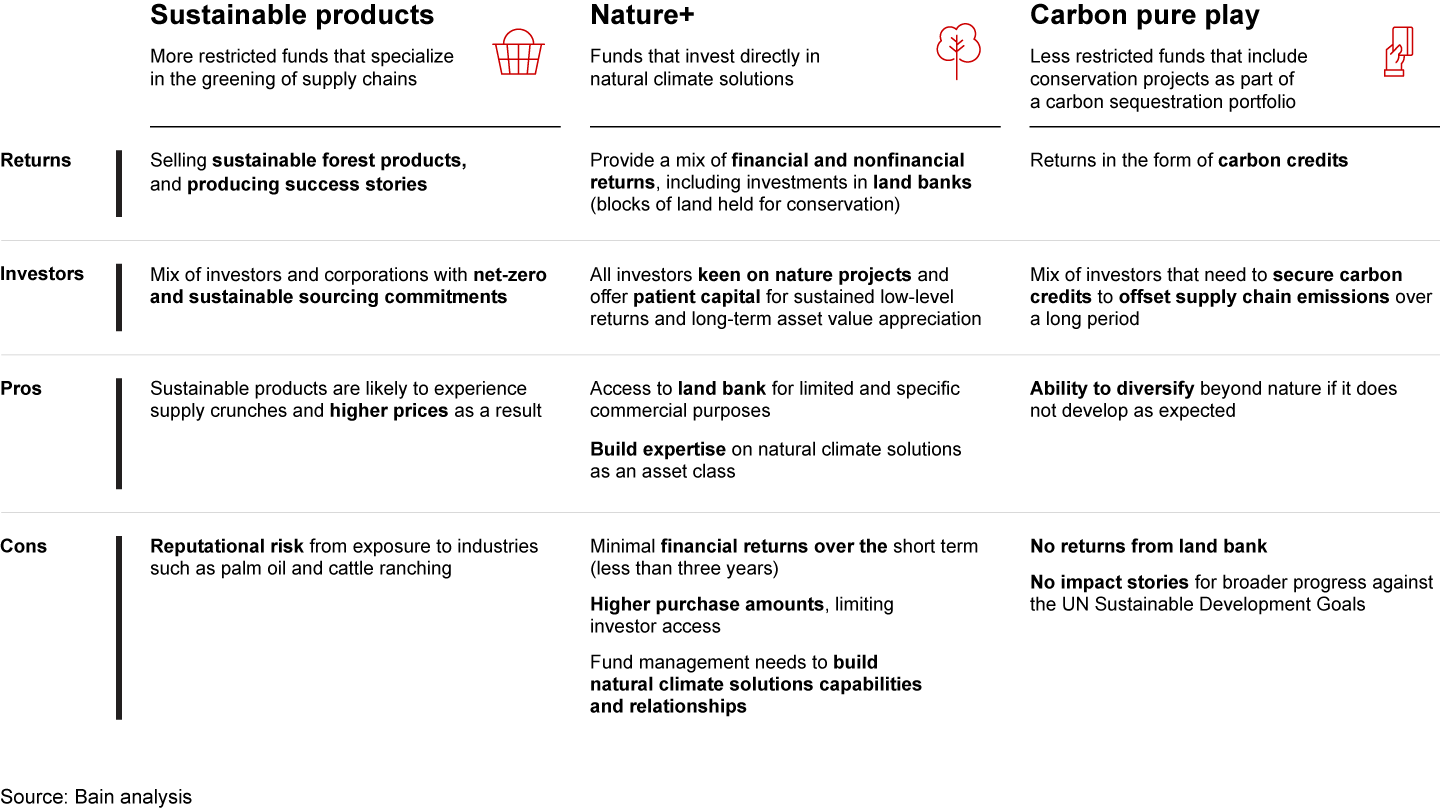
Three types of NCS funds are emerging with different sources for returns and target investors (see Figure 1).
- Sustainable product funds focus on greening supply chains for those with net-zero and sustainable sourcing commitments.
- Nature+ funds invest directly in NCS to provide financial and nonfinancial returns for long-term investors.
- Carbon pure play funds secure carbon credits from NCS investments within a broader carbon sequestration portfolio.
Figure 1

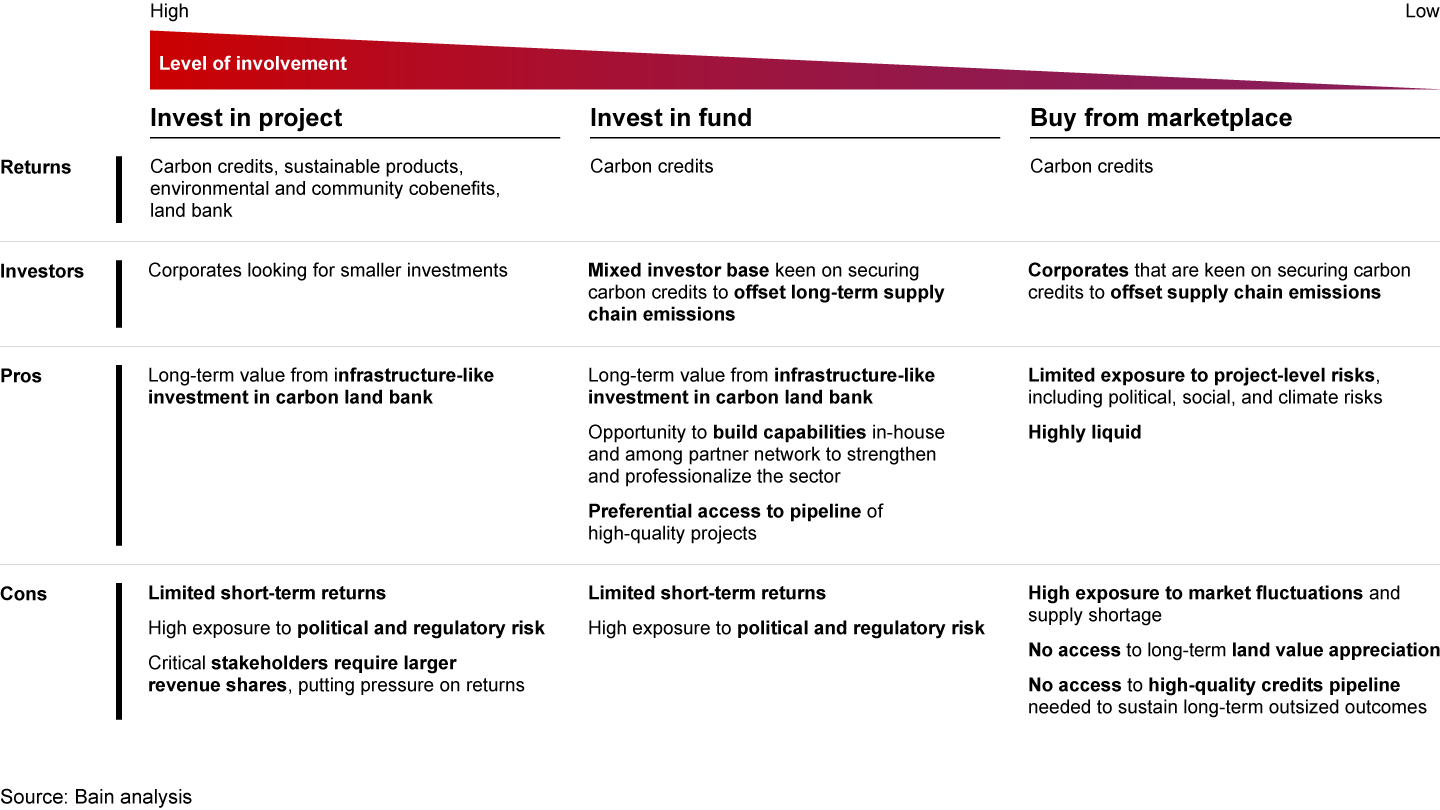
Models vary in terms of the types of outcomes, the risk-return trade-offs, and the level of engagement with others. New large-scale NCS funds are tailoring their models to provide the specific mix of financial and nonfinancial outcomes most suited to their target investor classes (see Figure 2). These models are based on the three ways credits can be accessed—that is, directly from a project, as part of a portfolio of projects, or indirectly from the market.
Figure 2

Five considerations for investors
While the market for carbon credits and natural climate solutions develops, investors need to consider five important aspects of the current opportunities in credits—namely, a tight inventory of NCS projects and long development times, a low correlation between price and quality, no consensus on how to measure and price cobenefits, an evolving trade infrastructure in the nascent voluntary carbon markets, and the political and regulatory risks in a largely unregulated, fragmented carbon market.
Tight inventory of NCS projects and long development times
A supply crunch is looming. Existing NCS projects have limited scalability, and many proposed projects either have long lead times (up to four years) or never pan out at all. In this seller’s market, with many buyers scouting for high-quality projects, investors should take several actions to improve their ability to obtain high-quality credits.
- Form a proactive investment strategy that includes strong partnerships. Many investors have taken an opportunistic approach to credits, reacting when opportunities present themselves. A more effective approach is to establish a comprehensive origination strategy tailored to the local environment. They should evaluate partnerships based on their track records and their relationships with governments and local communities.
- Use technology to speed up high-quality projects. The sector would benefit from comprehensive early-stage project registries and automated assessment tools to quickly score projects based on their carbon and cobenefits potential.
- Engage the community. Poor community engagement is the primary reason for project failure. Success is more likely when local communities are properly consulted, participate voluntarily, and receive an equitable share of benefits. Investors that obtain such guarantees from project developers can better mitigate their risks.
Low correlation between price and quality
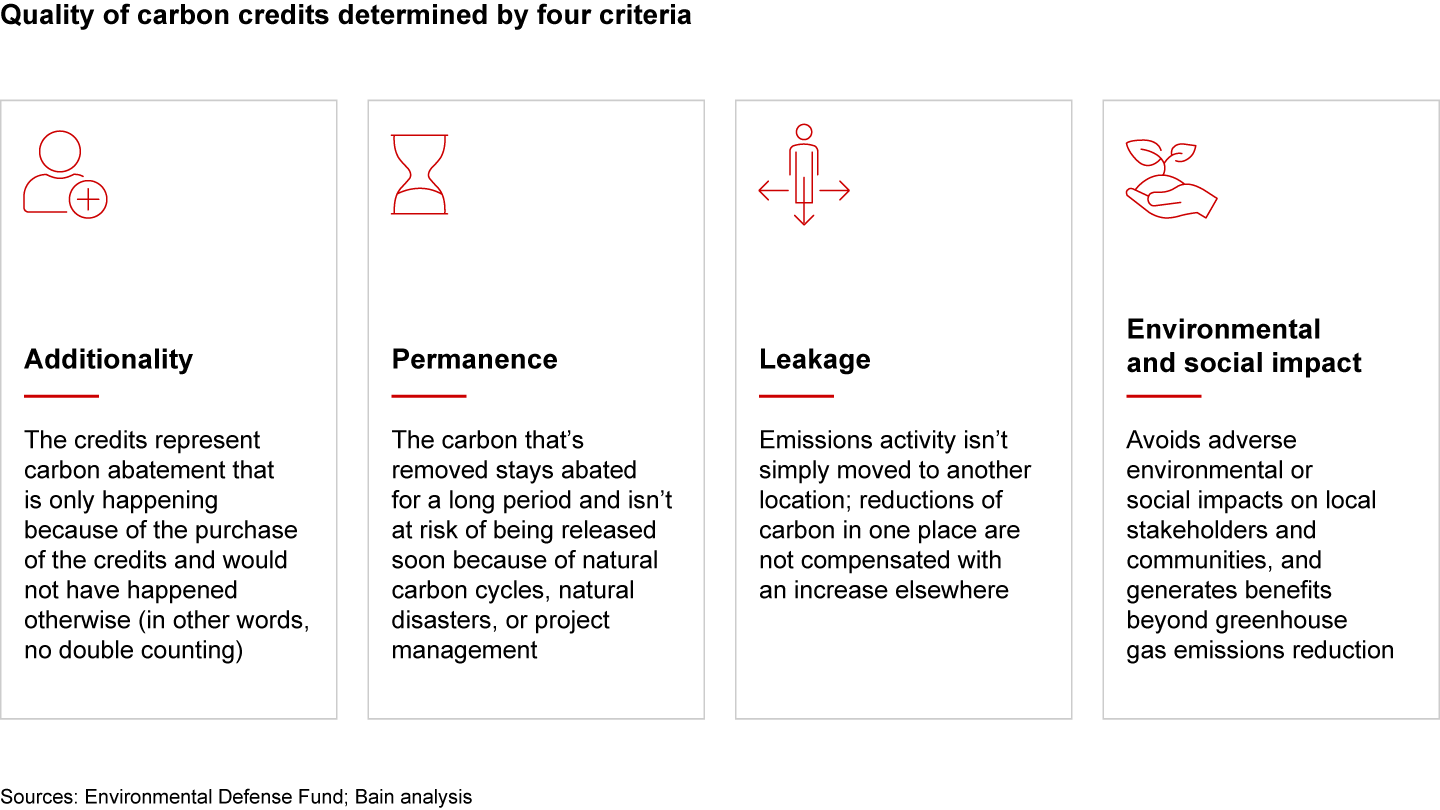
The nascent NCS market does not yet price risk and quality well despite a general understanding of the four criteria that determine their quality (see Figure 3).
Figure 3

The lack of a consensus standard can result in some low-quality credits being priced above high-quality ones. As standards coalesce and the risks become clearer, investors can consider several strategies to ensure the quality of credits.
- Engage large funds. Large funds give investors more engagement and control over the selection of projects, enforce minimum standards and guidelines for projects, and assist with the selection of implementation partners, providing quality assurance for investors in an uncertain market.
- Work with third-party tech providers. Specialty companies use technology and data to get a better picture of the quality of carbon credits, assessing their additionality, permanence, and potential for leakage. Using these third-party platforms for due diligence allows for the swift assessment and procurement of reliable projects.
No consensus on how to measure and price cobenefits
Cobenefits are intrinsic to the value of NCS credits, but they are difficult to measure and verify. Verification agencies such as Verra, through its CCB program, and Plan Vivo are working to introduce standards, but a consensus is years away. Until then, investors should consider several tactics.
- Scrutinize how projects aim to measure, verify, and report cobenefits. Ask for project designs that ensure projects meet cobenefit verification standards to warrant the price premium. Ideally, project developers should demonstrate cases of ex-ante and ex-post assessments of cobenefits for previous projects.
- Identify the most relevant cobenefits, and adopt best practices. Prioritize cobenefits that businesses and investors are familiar with, such as geographic markets with first-hand experience. Cobenefits that most comprehensively address the pain points of local governments and communities are more enduring.
Evolving trade infrastructure in the nascent voluntary carbon markets
Despite immense progress, voluntary carbon markets are still maturing. While there have long been established registries, such as VCS or Gold Standard, a new wave of vertically integrated registries are emerging, such as CIBO and Nori. Emerging exchanges are adopting different choices on principles related to technology, payments, and risk management. As such, there are a few strategies to consider in this ever-changing and complex landscape to remain agile.
- Agile participation: Interest in the market is attracting innovation and support. Investors need optionality as the shape and structure of the market shakes out.
- Accelerated development of tools: Engage with partners in the ecosystem to accelerate the development of pricing signals and trade infrastructure. Invest in appropriate partners to carry this development forward.
- Flexible go-to-market strategy: Make a concerted effort to define the optimal go-to-market strategy by engaging with partners in the ecosystem to ensure that a proper assessment is made and evaluated. This will ensure that returns can be maximized to the best ability and judgment.
Political and regulatory risks in a largely unregulated, fragmented carbon market
Country regulatory frameworks and carbon accounting infrastructure need to develop alongside voluntary carbon markets. Projects that are legal but neglect the local communities have been termed “carbon colonialism.” To prevent the unsanctioned exportation of national assets, some countries will choose to centralize accounting and restrict carbon credits to domestic sales until the proper carbon trading infrastructure is in place. To avoid project cancellation, license revocation, or disruption to the international sale of credits, here are a few strategies:
- Do right by the local communities. Even in the absence of regulation, ensure that projects meet the highest standards for environmental and social safeguards and best practices for community benefit sharing. If the development of carbon offset projects can benefit local stakeholders commensurately, political risks are minimized.
- For high-risk markets, get locals invested. Design investments so that local leaders are engaged in management and decision making and are directly invested in a successful outcome. For funds, consider a local office and local investors so that credits can be retired domestically. Support the development of local carbon markets.
- Diversify portfolios. Geographical diversification can and should spread political risk. Stay abreast of developments in writings on and regulations of carbon credits. This will offer investors multiple revenue streams and allow for increased flexibility in times of unforeseen volatility or changes.
- Consider blended finance. Leverage catalytic capital from public or philanthropic capital to increase and de-risk investments for the private sector. Existing NCS funds typically use concessional capital to cover more than 20% of a first-round fund-raising target.
Moving forward
The global net-zero imperative has never been more present, and NCS has an irreplaceable role to play. Private financing is waking up to the economic and environmental value of nature as an asset class. Whatever their risk profile and needs, pioneering investors can moderate their involvement from a range of participation models. If investors are mindful of the supply limitations, quality variance, cobenefits uncertainty, trade infrastructure developments, and regulatory risks, financial and nonfinancial returns beckon.
Published in kwiecień 2022