Skip to Content
  • Offices

    Offices

    North & Latin America
    • Atlanta
    • Austin
    • Bogota
    • Boston
    • Buenos Aires
    • Chicago
    • Dallas
    • Denver
    • Houston
    • Los Angeles
    • Mexico City
    • Minneapolis
    • Monterrey
    • Montreal
    • New York
    • Rio de Janeiro
    • San Francisco
    • Santiago
    • São Paulo
    • Seattle
    • Silicon Valley
    • Toronto
    • Washington, DC
    Europe & Africa
    • Amsterdam
    • Athens
    • Berlin
    • Brussels
    • Copenhagen
    • Dusseldorf
    • Frankfurt
    • Helsinki
    • Istanbul
    • Johannesburg
    • Kyiv
    • Lisbon
    • London
    • Madrid
    • Milan
    • Munich
    • Oslo
    • Paris
    • Rome
    • Stockholm
    • Vienna
    • Warsaw
    • Zurich
    Middle East
    • Doha
    • Dubai
    • Riyadh
    Asia & Australia
    • Bangkok
    • Beijing
    • Bengaluru
    • Brisbane
    • Ho Chi Minh City
    • Hong Kong
    • Jakarta
    • Kuala Lumpur
    • Manila
    • Melbourne
    • Mumbai
    • New Delhi
    • Perth
    • Seoul
    • Shanghai
    • Singapore
    • Sydney
    • Tokyo
    See all offices
  • Alumni
  • Media Center
  • Subscribe
  • Contact
  • Global

    Select your region and language

    Global
    • Global (English)
    North & Latin America
    • Brazil (Português)
    • Argentina (Español)
    • Canada (Français)
    • Chile (Español)
    • Colombia (Español)
    Europe, Middle East, & Africa
    • France (Français)
    • DACH Region (Deutsch)
    • Italy (Italiano)
    • Spain (Español)
    • Greece (Elliniká)
    Asia & Australia
    • China (中文版)
    • Korea (한국어)
    • Japan (日本語)
  • Saved items (0)
    Saved items (0)

    You have no saved items.

    Bookmark content that interests you and it will be saved here for you to read or share later.

    Explore Bain Insights
  • Industries
    Main menu

    Industries

    • Aerospace & Defense
    • Agribusiness
    • Chemicals
    • Construction & Infrastructure
    • Consumer Products
    • Financial Services
    • Healthcare & Life Sciences
    • Industrial Machinery & Equipment
    • Media & Entertainment
      Industries
      Media & Entertainment
      • Media Lab
    • Metals
    • Mining
    • Oil & Gas
    • Paper & Packaging
    • Private Equity
      Industries
      Private Equity
      • Due Diligence
      • Exit Planning
      • Firm Strategy & Operations
      • Portfolio Value Creation
    • Social Impact
    • Retail
    • Technology
    • Telecommunications
      Industries
      Telecommunications
      • Capital Expenditure
      • Telco Digital Transformation
    • Transportation
    • Travel & Leisure
    • Utilities & Renewables
  • Consulting Services
    Main menu

    Consulting Services

    • Customer Experience
    • Sustainability
    • Innovation
    • M&A
    • Operations
    • People & Organization
    • Private Equity
    • Sales & Marketing
    • Strategy
    • AI, Insights, and Solutions
    • Technology
    • Transformation
  • Digital
  • Insights
    Main menu

    Insights

    • Industry Insights
    • Services Insights
    • Bain Books
    • Webinars
    • Bain Futures
    View all Insights
    Featured topics
    • Tariff Response
    • Artificial Intelligence
    • Thriving in Uncertainty
    • Executive Conversations
    • Macro Trends
    • M&A Report
    • Healthcare Private Equity Report
    • Paper & Packaging Report
    • Technology Report
    • CEO's Guide to Sustainability
    • CEO Insights
    • CFO Insights
    • COO Insights
    • CIO Insights
    • CMO Insights
    View all featured topics
  • About
    Main menu

    About

    • What We Do
    • What We Believe
    • Our People & Leadership
    • Client Results
    • Awards & Recognition
    • Global Affiliations
    Further: Our global responsibility
    • Sustainability
    • Social Impact
    • World Economic Forum
    Learn more about Further
  • Careers
    Main menu

    Careers

    • Work with Us
      Careers
      Work with Us
      • Find Your Place
      • Our Work Areas
      • Integrated Teams
      • Students
      • Internships & Programs
      • Recruiting Events
    • Life at Bain
      Careers
      Life at Bain
      • Blog: Inside Bain
      • Career Stories
      • Our People
      • Where We Work
      • Supporting Your Growth
      • Affinity Groups
      • Benefits
    • Impact Stories
    • Hiring Process
      Careers
      Hiring Process
      • What to Expect
      • Interviewing
    FIND JOBS
  • Offices
    Main menu

    Offices

    • North & Latin America
      Offices
      North & Latin America
      • Atlanta
      • Austin
      • Bogota
      • Boston
      • Buenos Aires
      • Chicago
      • Dallas
      • Denver
      • Houston
      • Los Angeles
      • Mexico City
      • Minneapolis
      • Monterrey
      • Montreal
      • New York
      • Rio de Janeiro
      • San Francisco
      • Santiago
      • São Paulo
      • Seattle
      • Silicon Valley
      • Toronto
      • Washington, DC
    • Europe & Africa
      Offices
      Europe & Africa
      • Amsterdam
      • Athens
      • Berlin
      • Brussels
      • Copenhagen
      • Dusseldorf
      • Frankfurt
      • Helsinki
      • Istanbul
      • Johannesburg
      • Kyiv
      • Lisbon
      • London
      • Madrid
      • Milan
      • Munich
      • Oslo
      • Paris
      • Rome
      • Stockholm
      • Vienna
      • Warsaw
      • Zurich
    • Middle East
      Offices
      Middle East
      • Doha
      • Dubai
      • Riyadh
    • Asia & Australia
      Offices
      Asia & Australia
      • Bangkok
      • Beijing
      • Bengaluru
      • Brisbane
      • Ho Chi Minh City
      • Hong Kong
      • Jakarta
      • Kuala Lumpur
      • Manila
      • Melbourne
      • Mumbai
      • New Delhi
      • Perth
      • Seoul
      • Shanghai
      • Singapore
      • Sydney
      • Tokyo
    See all offices
  • Alumni
  • Media Center
  • Subscribe
  • Contact
  • Global
    Main menu

    Select your region and language

    • Global
      Select your region and language
      Global
      • Global (English)
    • North & Latin America
      Select your region and language
      North & Latin America
      • Brazil (Português)
      • Argentina (Español)
      • Canada (Français)
      • Chile (Español)
      • Colombia (Español)
    • Europe, Middle East, & Africa
      Select your region and language
      Europe, Middle East, & Africa
      • France (Français)
      • DACH Region (Deutsch)
      • Italy (Italiano)
      • Spain (Español)
      • Greece (Elliniká)
    • Asia & Australia
      Select your region and language
      Asia & Australia
      • China (中文版)
      • Korea (한국어)
      • Japan (日本語)
  • Saved items  (0)
    Main menu
    Saved items (0)

    You have no saved items.

    Bookmark content that interests you and it will be saved here for you to read or share later.

    Explore Bain Insights
  • Industries
    • Industries

      • Aerospace & Defense
      • Agribusiness
      • Chemicals
      • Construction & Infrastructure
      • Consumer Products
      • Financial Services
      • Healthcare & Life Sciences
      • Industrial Machinery & Equipment
      • Media & Entertainment
      • Metals
      • Mining
      • Oil & Gas
      • Paper & Packaging
      • Private Equity
      • Social Impact
      • Retail
      • Technology
      • Telecommunications
      • Transportation
      • Travel & Leisure
      • Utilities & Renewables
  • Consulting Services
    • Consulting Services

      • Customer Experience
      • Sustainability
      • Innovation
      • M&A
      • Operations
      • People & Organization
      • Private Equity
      • Sales & Marketing
      • Strategy
      • AI, Insights, and Solutions
      • Technology
      • Transformation
  • Digital
  • Insights
    • Insights

      • Industry Insights
      • Services Insights
      • Bain Books
      • Webinars
      • Bain Futures
      View all Insights
      Featured topics
      • Tariff Response
      • Artificial Intelligence
      • Thriving in Uncertainty
      • Executive Conversations
      • Macro Trends
      • M&A Report
      • Healthcare Private Equity Report
      • Paper & Packaging Report
      • Technology Report
      • CEO's Guide to Sustainability
      • CEO Insights
      • CFO Insights
      • COO Insights
      • CIO Insights
      • CMO Insights
      View all featured topics
  • About
    • About

      • What We Do
      • What We Believe
      • Our People & Leadership
      • Client Results
      • Awards & Recognition
      • Global Affiliations
      Further: Our global responsibility
      • Sustainability
      • Social Impact
      • World Economic Forum
      Learn more about Further
  • Careers
    Popular Searches
    • Agile
    • Digital
    • Strategy
    Your Previous Searches
      Recently Visited Pages

      Content added to saved items

      Saved items (0)

      Removed from saved items

      Saved items (0)

      The Visionary CEO’s Guide to Sustainability

      Operations and Supply Chain Decarbonization: Lower Emissions, Higher Performance

      Operations and Supply Chain Decarbonization: Lower Emissions, Higher Performance

      By integrating sustainability into operations, companies can meet their increasingly ambitious emissions targets while mitigating costs and boosting resilience.

      By Torsten Lichtenau, Abhijit Prabhu, Anna Fritz Månsson, Mattia Bernardi, and Gerry Mattios

      • min read
      }

      Report

      Operations and Supply Chain Decarbonization: Lower Emissions, Higher Performance
      en
      At a Glance
      • To achieve ambitious decarbonization targets, companies must treat emissions with the same operational importance as improving efficiency and reducing costs.
      • Of companies that have set a target to reduce upstream Scope 3 emissions, 60% do not have a dedicated strategy to deliver, our research shows, but those that do can build this into a competitive advantage.
      • We have identified four actions leading companies take that contribute to decarbonization success, practices any company can benefit from emulating.

      This article is part of Bain’s 2023 CEO Sustainability Guide

      Explore the report

      Decarbonization is urgent. Countries representing 90% of the world’s GDP have committed to cutting greenhouse gas emissions to as close to zero as possible, and investors, customers, regulators, and employees are all focused on carbon. Companies across industries are setting ambitious goals for reducing various types of carbon emissions (see Figure 1). As of October 2023, more than 6,000 companies representing close to 50 different sectors had set or committed to setting Science Based Targets for emissions reduction. That’s up from fewer than 500 companies in 2018.

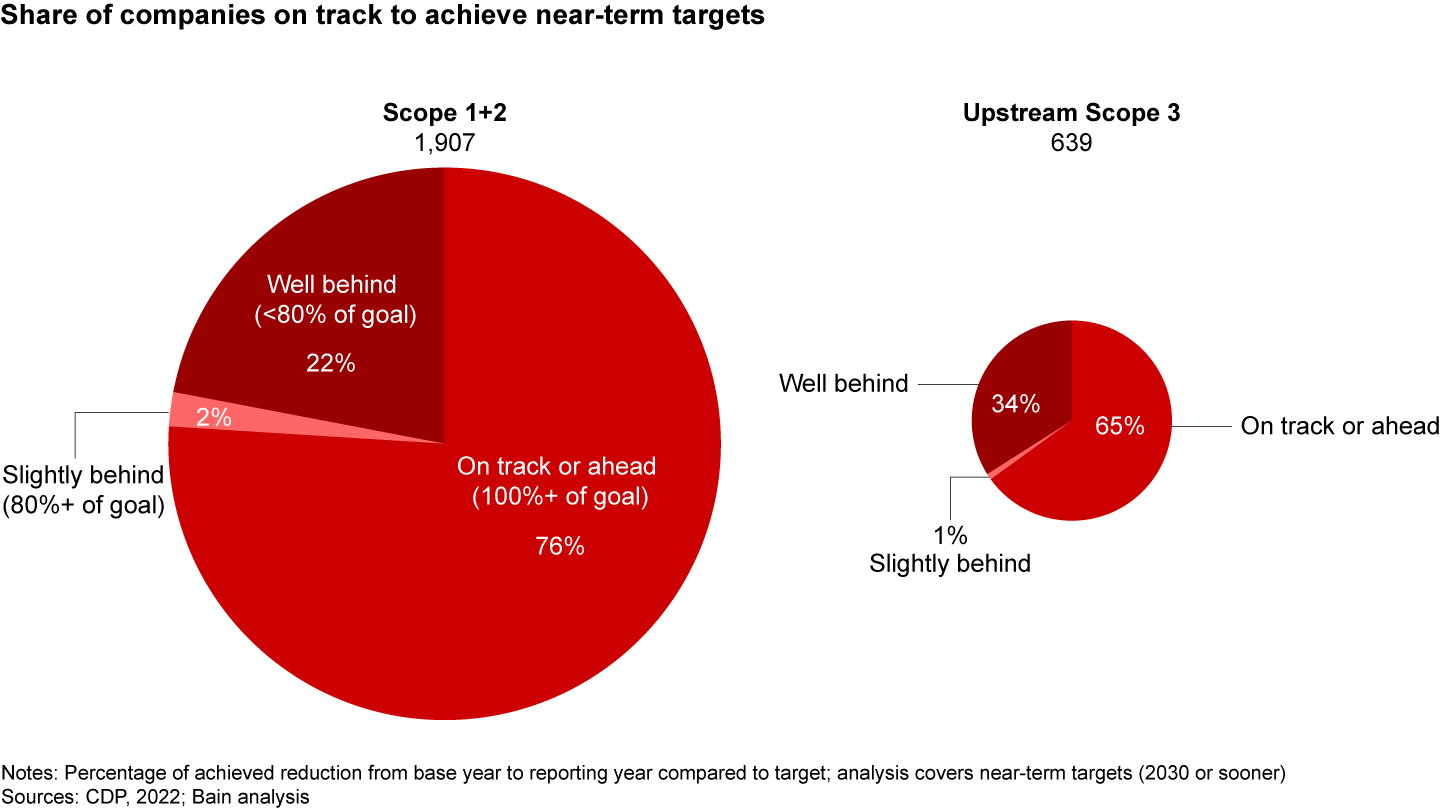
      Each company and industry faces its own unique decarbonization challenges and opportunities, but it’s fair to say that organizations across the board are struggling to meet their increasingly ambitious targets. A Bain & Company analysis of CDP data finds that more than 20% of companies are not on track to reach their reduction targets for the Scope 1 emissions generated by assets they own and operate or the Scope 2 emissions generated by purchased electricity and fuel. More than a third may not meet their planned reduction of upstream Scope 3 supplier emissions (see Figure 2). 

      Figure 1
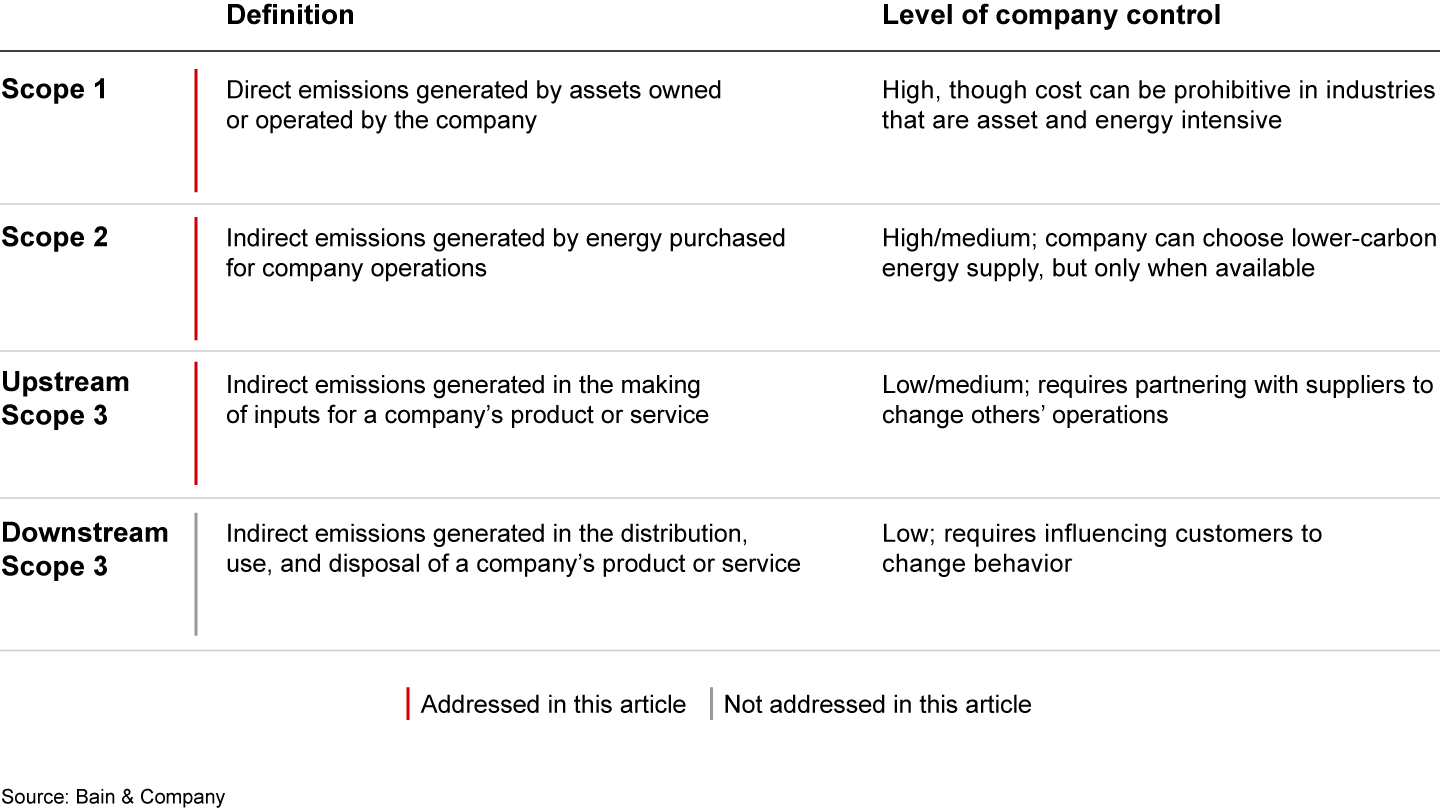
      A guide to emission types
      Figure 2
      More than one in five companies are not on track to meet their Scope 1 and 2 decarbonization targets, and more than one-third are lagging their upstream Scope 3 goals

      Decarbonization is critical to operational excellence

      To improve those numbers, companies must embed reduction of their carbon footprint into their operating model and treat it with the same importance as improving efficiency and reducing costs. Production efficiency, cost, and carbon emissions can be seen as three corners of a “triangle of optimization,” each requiring equal and parallel attention. When well harmonized, they can benefit one another. This approach is particularly true for Scope 1 and 2 emissions, which often can be reduced while also lowering costs.  

      A paper manufacturer was able to do just that: By defining and prioritizing 70-odd decarbonization initiatives across 10 different sites, it is currently on track to reduce emissions by more than 20% by 2025 while achieving €10 million to €15 million in energy savings. In many industries, executives link decarbonization efforts with energy transition and energy efficiency as a way to reduce their exposure to volatile energy costs.

      Most companies start their decarbonization efforts with Scope 1 and 2 emissions because they are closer to their own control. That doesn’t mean they are easy to address, however. These efforts require new thinking about energy consumption, sourcing, and production, along with the ability to orchestrate extraordinarily complex change.

      When a global semiconductor manufacturer launched a comprehensive plan to reduce greenhouse gas emissions and shift its energy sources to address Scope 1 and 2 emissions, management quickly identified more than 600 initiatives. Managing such an expansive pipeline is a complex challenge. To prioritize, management pinpointed those with the highest CO2e impact that were easiest to implement and focused on understanding their cost—a model they have now standardized across the company. Lots of work was done on the ground to determine the right energy sources for each plant and to ensure goals were achievable and optimized for both energy efficiency and the sourcing of renewable energy. Early results have been strong: a reduction of Scope 1 and 2 emissions that’s roughly 10% higher than plan and a notably higher-than-expected use of renewable energy.

      Like this semiconductor maker, many companies are able to achieve their Scope 1 and 2 ambitions in the first few years by making their operations more efficient and reducing their energy use. It’s when they get beyond those first successes and face external expectations of a steady annual rate of emissions reduction that they start to really struggle. Decarbonization requires more than mastering the handful of technical operational levers that will make an immediate dent in Scope 1 and 2 emissions.

      Upstream Scope 3 emissions: for many, the biggest opportunity and the biggest challenge

      Upstream Scope 3 accounts for the largest share of emissions in many sectors, responsible for more than 50% of all emissions in apparel, food and beverage, chemicals, and retail, for example, according to CDP data. This may be why, while the number of companies setting targets across all scopes strongly increased in recent years, the most significant growth has come in Scope 3 emissions. More than 4 in 10 companies now target Scope 3 improvement.

      Meeting those targets often requires new skills and behaviors, some of which may be unfamiliar to engineers focused on optimizing performance and procurement experts charged with negotiating the best terms, sometimes adversarially. These include partnering with suppliers and other participants in the value chain, identifying and selecting greener suppliers, replacing virgin materials, and designing products with a lower carbon footprint.

      Adding to the challenge is the fact that, in many categories, sustainable supply is limited, leaving companies two options: invest to secure access to that supply and possibly buy a few years’ head start on competitors, or accept that achieving their emissions reduction goals may take longer than hoped.

      As with Scope 1 and 2, a well-developed upstream Scope 3 plan can help mitigate cost when integrated into a company’s broader supply chain strategy, including a combination of product development optimized for cost and product development optimized for sustainability.

      60%

      of companies that set an upstream Scope 3 target do not have a strategy to deliver on that goal

      According to Bain research, approximately 60% of companies that set an upstream Scope 3 target do not have a dedicated strategy or plan to deliver on that goal. Those that do can build this into a competitive advantage.

      Four lessons from successful supply chain decarbonization efforts

      As they plan their strategy to get to net zero, executives should consider these four lessons from leading companies.  

      When calculating baseline emissions, be pragmatic; don’t wait for perfection. Establishing a baseline for your operational emissions can be challenging, especially for the upstream Scope 3 emissions that companies do not directly control. While an accurate baseline enables more precise goal setting, don’t prioritize perfection over action. It’s most important that analytical efforts to understand existing carbon emissions serve the company’s action plan by highlighting interventions with the highest potential to help meet goals. By systemizing carbon baselining and accounting—with software tools, for example—and how data is exchanged with suppliers, companies can build a level of insight into their emissions that will only get more precise over time.

      Collaborate internally and externally. Achieving decarbonization goals can’t be the responsibility of one internal function. Procurement shouldn’t be the only department thinking about suppliers’ upstream Scope 3 emissions, nor should a plant manager be expected to manage Scope 1 and 2 emissions reduction all alone. Companies will only hit their decarbonization goals when the entire organization, from the C-suite to the front line, in every business unit, is committed to and educated on the mission. Building that commitment often requires aligning incentives across functions and roles around common decarbonization goals.

      Think beyond the boundaries of your organization to the ecosystem of partners you’ll need to realize your decarbonization ambitions. As partners, companies and their suppliers can work together to understand where they each wish to be positioned on the value chain. Getting there may require new approaches, like investing to help suppliers lower their emissions or building a consortium of peers to standardize new, lower-carbon requirements. That’s the approach taken by the 100-plus consumer products companies that make up The Sustainability Consortium, which is working on ways to make supply chains more transparent, identifying areas of environmental impact, mapping supply chains and their risks, and facilitating collective sustainability innovation.

      Use all levers at your disposal and put in place the tools necessary for them to work. Once targets are set, identify all levers that could help you meet them. For example, you may need to switch suppliers or redesign a product. Many firms focus on the low-hanging fruit that will quickly reduce carbon emissions, but companies should think about their overall decarbonization journey, including initiatives that will take more time, innovation, or development.

      Enablers are also important. These are the tools—like internal carbon pricing; new ways of interacting with, evaluating, and rewarding suppliers; and capability building—that will make it possible to pull the levers that lower emissions. Though it may sound obvious, it’s important to prioritize initiatives based on their potential to reduce carbon, reduce costs, and increase resilience. Many companies miss this step. And since many decarbonization initiatives cannot be implemented autonomously, suppliers and customers should be engaged in evaluating their feasibility, priority, and potential to either lower costs or increase revenue (see Figure 3).

      Figure 3
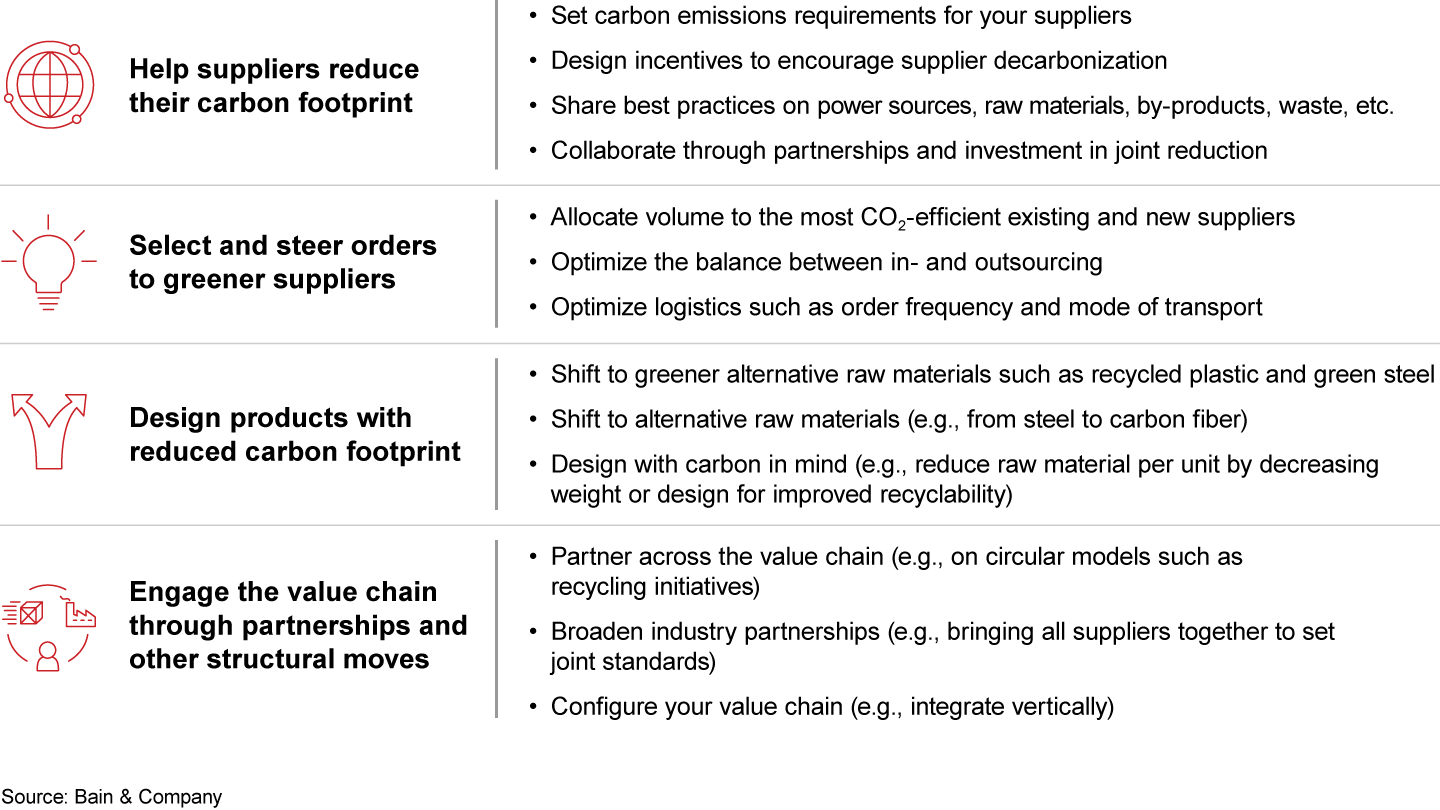
      Reducing upstream Scope 3 emissions requires action on multiple fronts

      Near-term steps such as managing suppliers can offer valuable carbon reductions, but it’s often longer-term efforts that present the greatest opportunities. In the automotive industry, for example, designing low-carbon alternatives for metals, alternative raw materials, and low-carbon products can reduce upstream Scope 3 carbon emissions by approximately 40% to 60% or more, but such efforts may take years. To speed that up, manufacturers are collaborating with, investing alongside, and guaranteeing to buy supply from steelmakers producing CO2-reduced green steel. 

      Actively look to create value for your company and customers through decarbonization. While there may be a legacy perception that reducing carbon emissions will increase costs and decrease economic competitiveness, many initiatives can lower costs and help increase revenue. For example, reducing Scope 2 emissions by optimizing building operations like HVAC and lighting saves money, savings that can be passed on to customers or used to fund other decarbonization initiatives. Similarly, companies may be able to boost revenue by charging a green premium or build new businesses with different models that create value for the firm. Thinking about your customers’ priorities can help guide decarbonization efforts and increase the likelihood of achieving carbon reduction goals and reaping rewards from a low-carbon supply chain.

      Five questions for executives to ask today

      To understand how close your company is to making decarbonization a core operational capability and a source of competitive advantage, it’s valuable to ask five questions:

      1. What is my company’s emissions trajectory, and how does that compare to the targets we’ve set?
      2. Has my team spent time on the shop floor (or its equivalent) to understand where renewable energy and energy efficiency could be used?
      3. Do our procurement and engineering teams consider carbon equally important to cost and efficiency in their talks with suppliers and when designing products?
      4. Have we added decarbonization to our management dashboard, so we see it alongside our financial performance and operational efforts?
      5. Have we invested in building the capabilities we need in our team, and do we have training in place for our people to develop the skills that will help us reach our decarbonization goals?

      Read the Next Chapter

      Making Business Do Better for Everyone

      Read our 2023 CEO Sustainability Guide

      Explore the full report Download PDF
      Authors
      • Headshot of Torsten Lichtenau
        Torsten Lichtenau
        Partner, London
      • Headshot of Abhijit Prabhu
        Abhijit Prabhu
        Partner, Boston
      • Headshot of Anna Fritz Månsson
        Anna Fritz Månsson
        Partner, Stockholm
      • Headshot of Mattia Bernardi
        Mattia Bernardi
        Partner, Milan
      • Headshot of Gerry Mattios
        Gerry Mattios
        Partner, Singapore
      Contact us
      Related Industries
      • Advanced Manufacturing & Services
      • Automotive
      • Aviation
      • Consumer Products
      • Energy & Natural Resources
      • Freight & Logistics
      • Machinery & Equipment
      • Paper & Packaging
      • Retail
      • Utilities & Renewables
      Related Consulting Services
      • Accelerated Performance Transformation
      • Operations
      • Sustainability
      How We Can Help
      • Climate Change
      • Supply Chain & Operations Decarbonization
      Advanced Manufacturing & Services
      Top Performers Unlock More Revenue from Sustainability

      Across global industries, leaders are capturing more revenue from sustainable products—and some expect the momentum to build.

      Read More
      CEO's Guide to Sustainability
      From Sustainability Commitments to Impact: Four Pragmatic Questions for Visionary CEOs

      Amid competing priorities, CEOs and consumers still say sustainability matters. By acting now, companies can set the stage for profitable growth.

      Read More
      Top Digital Use Cases by Industry

      Bain’s research identifies the most useful digital applications, including those that offer the best opportunities for competitive advantage.

      Read More
      Advanced Manufacturing & Services
      Capturing Value by Decarbonizing the Automotive Supply Chain

      While the auto industry has made progress decreasing emissions, decarbonizing the supply chain remains a challenge.

      Read More
      Paper & Packaging
      How AI Is Starting to Transform Circular Packaging

      There are 15 AI use cases companies across the value chain can use today to accelerate circularity.

      Read More

      Introduction

      • The Questions Every CEO Needs to Ask About Sustainability

      Levers of Change: Technology, Behavior, Policy

      • Selling Sustainability Means Decoding Consumers

      • Does a Purpose Help Brands Grow?

      • Lower Costs, Faster Adoption: Closing the Sustainable Innovation Gap

      • The Future Is Circular: How Companies Can Prepare to Grow in a Changing World

      • Leading with Vision: Harnessing the Climate Policy Response

      Sector Perspectives

      • Building Resilience in Your Business Strategy: Four Imperatives for Leaders

      • The Energy Transition’s Other Big Puzzle: Making the Math Work

      • Can Food and Agriculture Companies Raise Their Game?

      • Fires, Floods, and Loans: How Banks Can Deal with Increasing Climate Risks

      Making It Happen

      • Building a Data-Based Stakeholder Strategy

      • Operations and Supply Chain Decarbonization: Lower Emissions, Higher Performance

      • Making Business Do Better for Everyone

      • Organizing for Sustainability

      • A Talent Strategy for Sustainability: Skills Matter, but Mindset Is Everything

      Published in listopad 2023
      Tags
      • Accelerated Performance Transformation
      • Advanced Manufacturing & Services
      • Automotive
      • Aviation
      • CEO's Guide to Sustainability
      • Climate Change
      • Consumer Products
      • Energy & Natural Resources
      • Freight & Logistics
      • Machinery & Equipment
      • Operations
      • Paper & Packaging
      • Retail
      • Supply Chain & Operations Decarbonization
      • Sustainability
      • Utilities & Renewables

      How We've Helped Clients

      A Conglomerate Charts a New Global Strategy

      Read case study

      Customer-Centricity Helps a Global Aviation Firm Reach New Heights

      Read case study

      A Manufacturer Vows to “Push to Zero” Carbon Emissions

      Read case study

      Ready to talk?

      We work with ambitious leaders who want to define the future, not hide from it. Together, we achieve extraordinary outcomes.

      Stay ahead in a rapidly changing world. Subscribe to Bain Insights, our monthly look at the critical issues facing global businesses.

      *I have read and understand Bain’s Privacy Notice.

      Please read and agree to the Privacy Policy.
      Bain & Company
      Contact us Sustainability Accessibility Terms of use Privacy Modern Slavery Act Statement Cookie Policy Sitemap Log In

      © 1996-2026 Bain & Company, Inc.

      Contact Bain

      How can we help you?

      • Business inquiry
      • Career information
      • Press relations
      • Partnership request
      • Speaker request
      See all offices