
Skip to Content
  • Offices

    Offices

    North & Latin America
    • Atlanta
    • Austin
    • Bogota
    • Boston
    • Buenos Aires
    • Chicago
    • Dallas
    • Denver
    • Houston
    • Los Angeles
    • Mexico City
    • Minneapolis
    • Monterrey
    • Montreal
    • New York
    • Rio de Janeiro
    • San Francisco
    • Santiago
    • São Paulo
    • Seattle
    • Silicon Valley
    • Toronto
    • Washington, DC
    Europe & Africa
    • Amsterdam
    • Athens
    • Berlin
    • Brussels
    • Copenhagen
    • Dusseldorf
    • Frankfurt
    • Helsinki
    • Istanbul
    • Johannesburg
    • Kyiv
    • Lisbon
    • London
    • Madrid
    • Milan
    • Munich
    • Oslo
    • Paris
    • Rome
    • Stockholm
    • Vienna
    • Warsaw
    • Zurich
    Middle East
    • Doha
    • Dubai
    • Riyadh
    Asia & Australia
    • Bangkok
    • Beijing
    • Bengaluru
    • Brisbane
    • Ho Chi Minh City
    • Hong Kong
    • Jakarta
    • Kuala Lumpur
    • Manila
    • Melbourne
    • Mumbai
    • New Delhi
    • Perth
    • Seoul
    • Shanghai
    • Singapore
    • Sydney
    • Tokyo
    See all offices
  • Alumni
  • Media Center
  • Subscribe
  • Contact
  • Global

    Select your region and language

    Global
    • Global (English)
    North & Latin America
    • Brazil (Português)
    • Argentina (Español)
    • Canada (Français)
    • Chile (Español)
    • Colombia (Español)
    Europe, Middle East, & Africa
    • France (Français)
    • DACH Region (Deutsch)
    • Italy (Italiano)
    • Spain (Español)
    • Greece (Elliniká)
    Asia & Australia
    • China (中文版)
    • Korea (한국어)
    • Japan (日本語)
  • Saved items (0)
    Saved items (0)

    You have no saved items.

    Bookmark content that interests you and it will be saved here for you to read or share later.

    Explore Bain Insights
  • Industries
    Main menu

    Industries

    • Aerospace & Defense
    • Agribusiness
    • Chemicals
    • Construction & Infrastructure
    • Consumer Products
    • Financial Services
    • Healthcare & Life Sciences
    • Industrial Machinery & Equipment
    • Media & Entertainment
      Industries
      Media & Entertainment
      • Media Lab
    • Metals
    • Mining
    • Oil & Gas
    • Paper & Packaging
    • Private Equity
      Industries
      Private Equity
      • Due Diligence
      • Exit Planning
      • Firm Strategy & Operations
      • Portfolio Value Creation
    • Social Impact
    • Retail
    • Technology
    • Telecommunications
      Industries
      Telecommunications
      • Capital Expenditure
      • Telco Digital Transformation
    • Transportation
    • Travel & Leisure
    • Utilities & Renewables
  • Consulting Services
    Main menu

    Consulting Services

    • Customer Experience
    • Sustainability
    • Innovation
    • M&A
    • Operations
    • People & Organization
    • Private Equity
    • Sales & Marketing
    • Strategy
    • AI, Insights, and Solutions
    • Technology
    • Transformation
  • Digital
  • Insights
    Main menu

    Insights

    • Industry Insights
    • Services Insights
    • Bain Books
    • Webinars
    • Bain Futures
    View all Insights
    Featured topics
    • Tariff Response
    • Artificial Intelligence
    • Thriving in Uncertainty
    • Executive Conversations
    • Macro Trends
    • M&A Report
    • Healthcare Private Equity Report
    • Paper & Packaging Report
    • Technology Report
    • CEO's Guide to Sustainability
    • CEO Insights
    • CFO Insights
    • COO Insights
    • CIO Insights
    • CMO Insights
    View all featured topics
  • About
    Main menu

    About

    • What We Do
    • What We Believe
    • Our People & Leadership
    • Client Results
    • Awards & Recognition
    • Global Affiliations
    Further: Our global responsibility
    • Sustainability
    • Social Impact
    • World Economic Forum
    Learn more about Further
  • Careers
    Main menu

    Careers

    • Work with Us
      Careers
      Work with Us
      • Find Your Place
      • Our Work Areas
      • Integrated Teams
      • Students
      • Internships & Programs
      • Recruiting Events
    • Life at Bain
      Careers
      Life at Bain
      • Blog: Inside Bain
      • Career Stories
      • Our People
      • Where We Work
      • Supporting Your Growth
      • Affinity Groups
      • Benefits
    • Impact Stories
    • Hiring Process
      Careers
      Hiring Process
      • What to Expect
      • Interviewing
    FIND JOBS
  • Offices
    Main menu

    Offices

    • North & Latin America
      Offices
      North & Latin America
      • Atlanta
      • Austin
      • Bogota
      • Boston
      • Buenos Aires
      • Chicago
      • Dallas
      • Denver
      • Houston
      • Los Angeles
      • Mexico City
      • Minneapolis
      • Monterrey
      • Montreal
      • New York
      • Rio de Janeiro
      • San Francisco
      • Santiago
      • São Paulo
      • Seattle
      • Silicon Valley
      • Toronto
      • Washington, DC
    • Europe & Africa
      Offices
      Europe & Africa
      • Amsterdam
      • Athens
      • Berlin
      • Brussels
      • Copenhagen
      • Dusseldorf
      • Frankfurt
      • Helsinki
      • Istanbul
      • Johannesburg
      • Kyiv
      • Lisbon
      • London
      • Madrid
      • Milan
      • Munich
      • Oslo
      • Paris
      • Rome
      • Stockholm
      • Vienna
      • Warsaw
      • Zurich
    • Middle East
      Offices
      Middle East
      • Doha
      • Dubai
      • Riyadh
    • Asia & Australia
      Offices
      Asia & Australia
      • Bangkok
      • Beijing
      • Bengaluru
      • Brisbane
      • Ho Chi Minh City
      • Hong Kong
      • Jakarta
      • Kuala Lumpur
      • Manila
      • Melbourne
      • Mumbai
      • New Delhi
      • Perth
      • Seoul
      • Shanghai
      • Singapore
      • Sydney
      • Tokyo
    See all offices
  • Alumni
  • Media Center
  • Subscribe
  • Contact
  • Global
    Main menu

    Select your region and language

    • Global
      Select your region and language
      Global
      • Global (English)
    • North & Latin America
      Select your region and language
      North & Latin America
      • Brazil (Português)
      • Argentina (Español)
      • Canada (Français)
      • Chile (Español)
      • Colombia (Español)
    • Europe, Middle East, & Africa
      Select your region and language
      Europe, Middle East, & Africa
      • France (Français)
      • DACH Region (Deutsch)
      • Italy (Italiano)
      • Spain (Español)
      • Greece (Elliniká)
    • Asia & Australia
      Select your region and language
      Asia & Australia
      • China (中文版)
      • Korea (한국어)
      • Japan (日本語)
  • Saved items  (0)
    Main menu
    Saved items (0)

    You have no saved items.

    Bookmark content that interests you and it will be saved here for you to read or share later.

    Explore Bain Insights
  • Industries
    • Industries

      • Aerospace & Defense
      • Agribusiness
      • Chemicals
      • Construction & Infrastructure
      • Consumer Products
      • Financial Services
      • Healthcare & Life Sciences
      • Industrial Machinery & Equipment
      • Media & Entertainment
      • Metals
      • Mining
      • Oil & Gas
      • Paper & Packaging
      • Private Equity
      • Social Impact
      • Retail
      • Technology
      • Telecommunications
      • Transportation
      • Travel & Leisure
      • Utilities & Renewables
  • Consulting Services
    • Consulting Services

      • Customer Experience
      • Sustainability
      • Innovation
      • M&A
      • Operations
      • People & Organization
      • Private Equity
      • Sales & Marketing
      • Strategy
      • AI, Insights, and Solutions
      • Technology
      • Transformation
  • Digital
  • Insights
    • Insights

      • Industry Insights
      • Services Insights
      • Bain Books
      • Webinars
      • Bain Futures
      View all Insights
      Featured topics
      • Tariff Response
      • Artificial Intelligence
      • Thriving in Uncertainty
      • Executive Conversations
      • Macro Trends
      • M&A Report
      • Healthcare Private Equity Report
      • Paper & Packaging Report
      • Technology Report
      • CEO's Guide to Sustainability
      • CEO Insights
      • CFO Insights
      • COO Insights
      • CIO Insights
      • CMO Insights
      View all featured topics
  • About
    • About

      • What We Do
      • What We Believe
      • Our People & Leadership
      • Client Results
      • Awards & Recognition
      • Global Affiliations
      Further: Our global responsibility
      • Sustainability
      • Social Impact
      • World Economic Forum
      Learn more about Further
  • Careers
    Popular Searches
    • Agile
    • Digital
    • Strategy
    Your Previous Searches
      Recently Visited Pages

      Content added to saved items

      Saved items (0)

      Removed from saved items

      Saved items (0)

      Brief

      Retail Healthcare Continues to Consolidate in Europe

      Retail Healthcare Continues to Consolidate in Europe

      The trend will create value across the chain through improved care, lower cost and opportunities for talent.

      By Franz-Robert Klingan, Christoffer Precht and Giovanni Battista Miani

      • min read
      }

      Brief

      Retail Healthcare Continues to Consolidate in Europe
      en

      As healthcare costs continue to escalate, healthcare providers in Europe are under intense pressure to improve efficiencies without compromising patient outcomes. Retail health consolidation could help alleviate some of these challenges. 

      Retail health consists of outpatient healthcare in freestanding, commercially owned and often branded clinic chains. Typically, retail health chains have dedicated teams for administrative tasks, allowing physicians and nurses to focus on patient care. Common retail health clinics in Europe include dental clinics, ophthalmology and radiology clinics, and veterinary practice chains. As in the US, many European retail health clinics rely on patient self-payment for much of their revenue.

      Consolidation of retail health has been uneven across Europe. This could change as the advantages inherent in the model—such as improved quality of care for less cost—are realised across the value chain. Reaping the benefits, however, requires the ability to navigate Europe’s highly fragmented regulatory landscape and a savvy understanding of retail health models.

      Unlocking value through efficiency

      Healthcare systems around the world suffer from inefficiencies, and Europe’s healthcare systems are no exception. The rise of retail health is rooted in the desire to manage costs better, increase productivity and improve the quality of patient care. The fundamental appeal of consolidation is the ability to unlock value through efficiency, which benefits patients, physicians, payers and investors alike.

      The trend toward retail health is supported by medical advancements that make it easier to shift services out of hospitals and into outpatient settings. This can offer greater convenience to patients, and payers are naturally keen to transfer patients to lower-cost outpatient environments.

      Retail health chains are also more responsive to physicians’ changing attitudes about ownership. They offer a more stable and flexible alternative to the risks of running a practice. And for physicians who are preparing for retirement and looking for a solid exit for their practice, retail health chains are welcome buyers. 

      For investors, consolidation offers opportunities for value creation at the top and bottom line, and significant expansion of multiples. Revenues can be boosted by increased utilisation, category management, higher patient volumes, pricing sophistication, network optimisation, and improved branding and marketing. At the bottom line, there are scale-driven economies in such areas as purchasing and supply chain management, real estate management and the centralisation of administration.

      The number of outlets is key to capturing better economies.

      Opportunity within a fragmented landscape

      The trends driving consolidation are the same in Europe and the US. Retail health chains are not popping up in European shopping centres or grocery stores as they are in the US, where the number of retail buyout deals increased at a compound annual growth rate of 34% from 2012 to 2017. But both markets are grappling with demands for cost management and consumer choice, and stakeholders in both regions see that consolidation can deliver high-quality, repeatable outcomes for less cost.

      In Europe, however, payer, regulator and physician attitude shifts are slower than in the US. In addition, the region is highly fragmented by different national payer systems and regulations. The result is a disparate consolidation landscape in Europe (see Figure 1).

      Figure 1
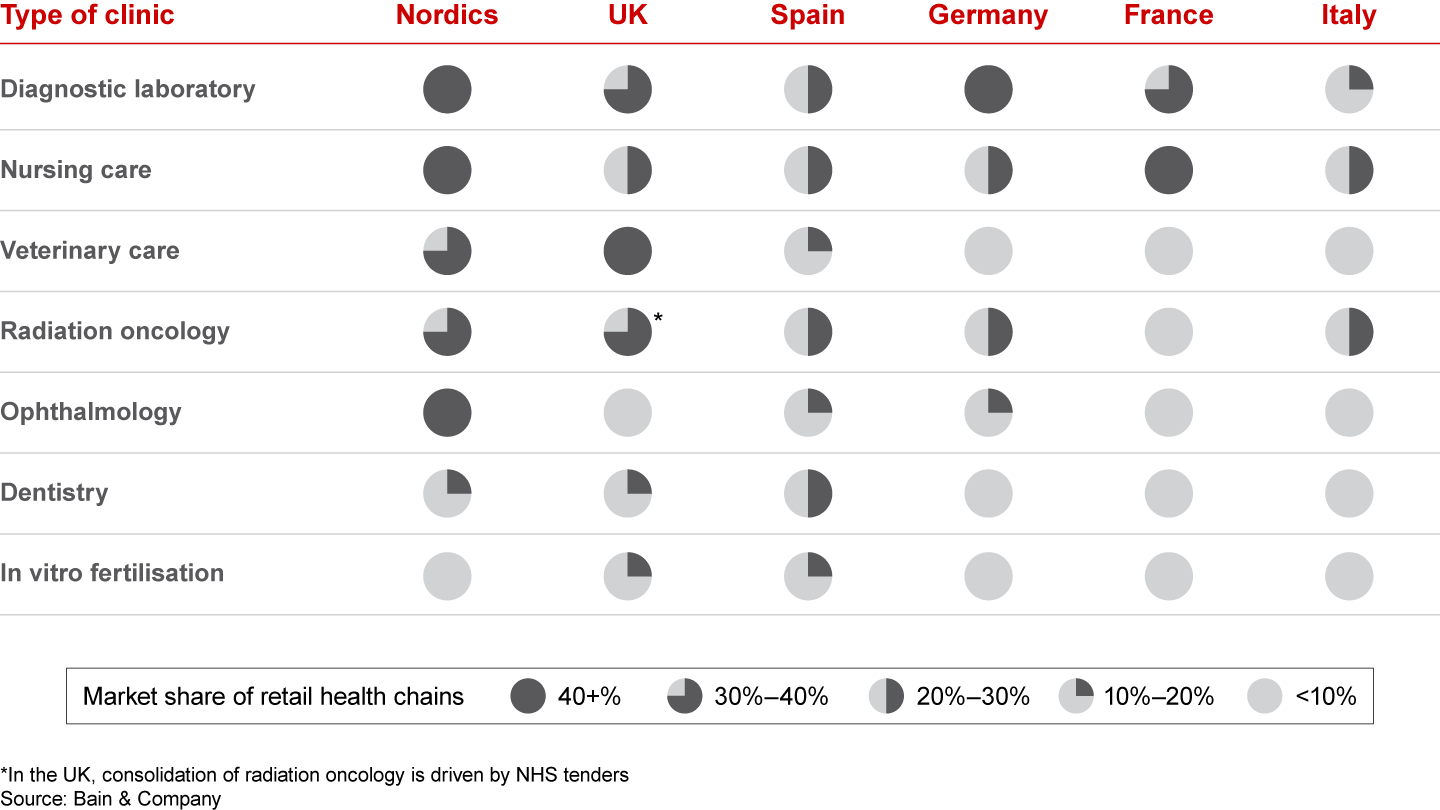
      Retail health chains have significantly consolidated only in selected European markets
      Retail health chains have significantly consolidated only in selected European markets
      Retail health chains have significantly consolidated only in selected European markets

      Across Europe, consolidation is most advanced in countries such as the Nordics, where regulators have been more liberal regarding consolidation and ownership models. Where corporate ownership of health clinics is highly regulated, as in France, care provision remains comparably fragmented. Countries that have recently eased regulations, such as Germany, have seen a spike in retail health consolidation.

      Roll-ups can happen rather rapidly. Veterinary care in Sweden, for example, had a retail health market share of about 50% in 2013. By 2018, this share had increased to 60% to 65%, representing a 20% to 30% increase within five years. Similar trends have emerged in Norway and Denmark, where the retail health-chain share in 2013 was 20% and 10%, respectively, but increased to 25% to 30% in Norway and about 15% in Denmark by 2018. 

      Naturally, roll-ups happen faster with some clinic types than with others. Consolidation can accelerate, for example, when linking multiple clinics provides scale benefits. These benefits can occur on the front end, such as improved access to nursing care services or the creation of loyalty schemes in veterinary practices. Back-end benefits allow for sharing back-office functions, such as finance, human resources and other administrative tasks, across multiple practices. 

      In contrast, the benefits of consolidating purchasing vary by subsector. For example, veterinary practices may derive significant value from consolidated procurement of medicine, and dental practices may be able to invest in expensive equipment when purchasing jointly.

      Integrated clinic chains that combine key specialties are beginning to emerge. For instance, Vivanta, a Spanish clinic chain formed through the merger of six legacy brands, offers dental, aesthetic and nutritional services. In Germany, healthcare reforms dating to the early 2000s introduced ambulatory care centres called Medizinische Versorgungszentren (MVZs). MVZs can be single-specialty or multispecialty clinics and can include nonphysicians within their operating structures. The clinics save costs by sharing resources such as equipment, rooms and staff; integrating patient care through the close cooperation of several specialties within short distances; and relieving physicians of administrative tasks.

      Multiple avenues for value creation

      There are two main routes for value creation in retail health consolidation: clinic improvements and network effects (see Figure 2).

      Figure 2
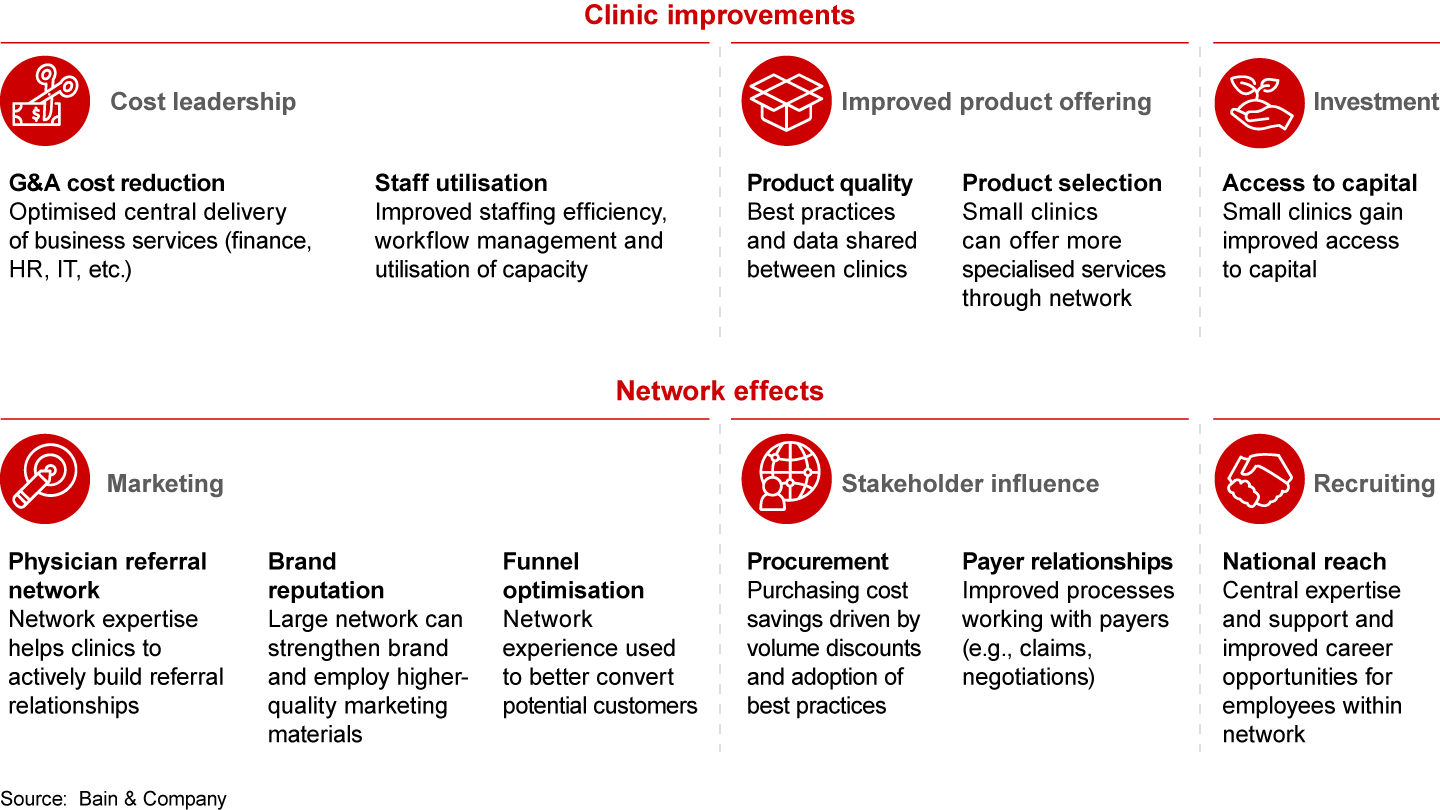
      Investing in clinic improvements and capturing network effects are key to success in retail health
      Investing in clinic improvements and capturing network effects are key to success in retail health
      Investing in clinic improvements and capturing network effects are key to success in retail health

      Clinic improvements refer to initiatives to help manage individual clinics, such as price optimisation, utilisation management at the outlet level, cost management and an improved product offering. Digital and IT can be effective areas in which to consolidate services, but they first must reach a minimum scale.

      Network effects are the benefits specifically linked to the number of outlets in a chain. They include purchasing on a larger scale, patient referrals between clinics in the same chain, and better access to talent across all clinics within the chain. Network effects can improve marketing, the ability to influence payers and suppliers, and recruiting. Just as with digital and IT improvements, network effects require a minimum scale to be significant.

      Examples of successful European roll-ups include AniCura, a veterinary chain that until recently was owned by Nordic Capital, and KKR-backed GenesisCare, an Australian provider of radiation oncology. Part of AniCura’s winning formula was a structured approach to buy clinics one by one, implement clinic improvements and then integrate the clinics into the chain to optimise network effects. Similarly, GenesisCare ensured operational improvements at the clinic level before capturing network effects by closely coordinating cancer care across the network.

      This approach needs to be fine-tuned according to the type of clinic and local regulations.

      Some incentives, such as utilisation of staff and equipment, offer benefits across clinic chains and geographies. Access to capital can also be a significant advantage. Dental clinic chains, for example, can centralise expensive equipment and investments, such as a digital lab for 3-D printing.

      In contrast, the ability to extract value through procurement may vary by country or clinic type. For example, government regulations in Finland limit potential profits from improved medicine procurement by mandating that all patients pay the same price for medicines, regardless of point of sale. In addition, the Finnish government determines acceptable wholesale prices, pharmacy margins and taxes.

      Europe’s fragmented regulatory programmes make it difficult, if not impossible, to prescribe a generalised approach to making investments across borders. The most successful strategies adapt to the clinic type and local and countrywide regulations.

      Strategic approach is key

      In addition to addressing the right initiatives in the right order, investors need to acquire the right clinics at an attractive price and balance rapid roll-up with the ability to make improvements.

      The quickest way to scale up is to operate a light decentralised model that does little more than integrate some back-end functions using the “umbrella model” (see Figure 3). Physicians essentially operate as they did before the acquisition, even under their original brand, with little or no input from the owner. The downside is that clinic improvements are more difficult to implement and enforce, and network effects are harder to capture.

      Figure 3
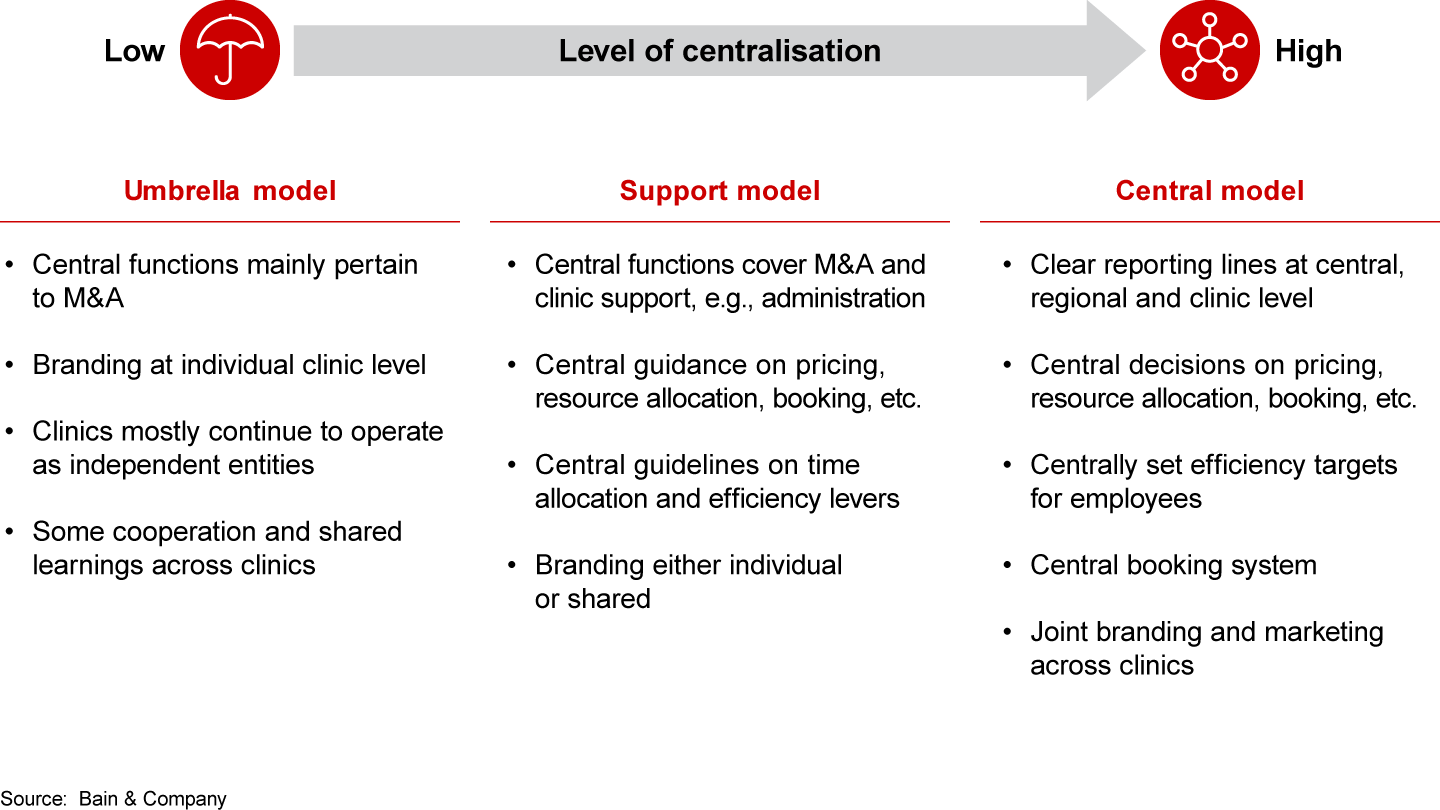
      Operating models for retail health reflect the level of centralisation
      Operating models for retail health reflect the level of centralisation
      Operating models for retail health reflect the level of centralisation

      Conversely, the most effective way to execute value-creation initiatives is to use a “central model” in which the owner exercises much tighter control on the acquired unit. However, this method has proved to be a tougher sell to clinic owners. As a result, it can take longer to acquire new clinics to add to the existing network.

      Whatever the clinic type or model, success depends on physician buy-in. Rather than adopt a onetime, all-in approach, investors may consider phasing in different elements, starting with functions that are most useful to physicians. That way, physicians perceive the venture as a value-creation opportunity rather than a constraint.

      Ample room to grow

      The macroeconomic trends that are driving retail health consolidation will sharpen in the foreseeable future. Competition for acquisitions of single practices will intensify, particularly in easy-to-consolidate countries and specialties. Yet there is plenty of “white space” in most European countries and sectors. And any healthcare service that can be provided in an outpatient setting can be consolidated into a retail health chain, offering further potential for innovation and future growth.

      Investors—whether they are entrepreneurial physicians or professional private equity funds—will need to carefully navigate the regulatory landscape of each country and ensure that incentive schemes do not conflict with medical ethics. They will also need to invest in initiatives selectively, balancing clinical improvements and efficiency gains against further acquisitions. This requires deep insights into the healthcare sector and retail growth models. 

      With the right strategy in place, all stakeholders stand to benefit from retail health consolidation. Patients gain improved access to care, physicians have more flexibility and choice, and investors acquire long-term, stable returns. The outlook is promising for countries that foster the right conditions for retail health consolidation and growth.

      Franz-Robert Klingan is a Bain & Company partner who leads the firm’s Healthcare Private Equity practice. He is based in Munich. Christoffer Precht is a Bain partner and a leader in the firm’s Private Equity practice, and is based in Stockholm. Giovanni Battista Miani is a Bain principal and a leader in the Private Equity practice. He is based in London.

      The authors thank Anna Kestner and Edie Wu for their contributions to this brief.

      Authors
      • Headshot of Franz-Robert Klingan
        Franz-Robert Klingan
        Partner, Vienna
      • Headshot of Christoffer Precht
        Christoffer Precht
        Partner, London
      • Headshot of Giovanni Battista Miani
        Giovanni Battista Miani
        Partner, London
      Contact us
      Related Industries
      • Healthcare & Life Sciences
      • Private Equity
      Related Consulting Services
      • M&A Due Diligence
      • Mergers and Acquisitions
      Healthcare & Life Sciences
      New Diligence Challenge: Uncovering AI Risks and Opportunities

      Five questions that financial sponsors and M&A dealmakers ask to evaluate AI’s (sometimes unexpected) impact on a target.

      Read More
      Healthcare & Life Sciences
      New Models of Value Creation for Physician Groups

      Investors are retooling their physician group approach, building performance-driven platforms for the long term and positioning assets for strategic exits.

      Read More
      Mergers and Acquisitions
      Media M&A

      AI and other tech tools can boost bidding confidence in this highly competitive environment.

      Read More
      Healthcare & Life Sciences
      Healthcare Private Equity Market 2025: Resurgence and Record Growth

      Healthcare private equity investment posted a very strong year for deal value and volume, paired with a strong rebound in exits.

      Read More
      Mergers and Acquisitions
      Consumer Products M&A

      In their quest for profitable growth, more companies are divesting brands or buying insurgents.

      Read More
      Published in czerwiec 2019
      Tags
      • Healthcare & Life Sciences
      • M&A Due Diligence
      • Mergers and Acquisitions
      • Private Equity

      How We've Helped Clients

      Pharma oncology growth strategy

      Read case study

      Review focuses biotech on portfolio potential

      Read case study

      Turning bottlenecks into growth opportunities

      Read case study

      Ready to talk?

      We work with ambitious leaders who want to define the future, not hide from it. Together, we achieve extraordinary outcomes.

      Stay ahead in a rapidly changing world. Subscribe to Bain Insights, our monthly look at the critical issues facing global businesses.

      *I have read and understand Bain’s Privacy Notice.

      Please read and agree to the Privacy Policy.
      Bain & Company
      Contact us Sustainability Accessibility Terms of use Privacy Modern Slavery Act Statement Cookie Policy Sitemap Log In

      © 1996-2026 Bain & Company, Inc.

      Contact Bain

      How can we help you?

      • Business inquiry
      • Career information
      • Press relations
      • Partnership request
      • Speaker request
      See all offices