Skip to Content
  • Offices

    Offices

    North & Latin America
    • Atlanta
    • Austin
    • Bogota
    • Boston
    • Buenos Aires
    • Chicago
    • Dallas
    • Denver
    • Houston
    • Los Angeles
    • Mexico City
    • Minneapolis
    • Monterrey
    • Montreal
    • New York
    • Rio de Janeiro
    • San Francisco
    • Santiago
    • São Paulo
    • Seattle
    • Silicon Valley
    • Toronto
    • Washington, DC
    Europe & Africa
    • Amsterdam
    • Athens
    • Berlin
    • Brussels
    • Copenhagen
    • Dusseldorf
    • Frankfurt
    • Helsinki
    • Istanbul
    • Johannesburg
    • Kyiv
    • Lisbon
    • London
    • Madrid
    • Milan
    • Munich
    • Oslo
    • Paris
    • Rome
    • Stockholm
    • Vienna
    • Warsaw
    • Zurich
    Middle East
    • Doha
    • Dubai
    • Riyadh
    Asia & Australia
    • Bangkok
    • Beijing
    • Bengaluru
    • Brisbane
    • Ho Chi Minh City
    • Hong Kong
    • Jakarta
    • Kuala Lumpur
    • Manila
    • Melbourne
    • Mumbai
    • New Delhi
    • Perth
    • Seoul
    • Shanghai
    • Singapore
    • Sydney
    • Tokyo
    See all offices
  • Alumni
  • Media Center
  • Subscribe
  • Contact
  • Global

    Select your region and language

    Global
    • Global (English)
    North & Latin America
    • Brazil (Português)
    • Argentina (Español)
    • Canada (Français)
    • Chile (Español)
    • Colombia (Español)
    Europe, Middle East, & Africa
    • France (Français)
    • DACH Region (Deutsch)
    • Italy (Italiano)
    • Spain (Español)
    • Greece (Elliniká)
    Asia & Australia
    • China (中文版)
    • Korea (한국어)
    • Japan (日本語)
  • Saved items (0)
    Saved items (0)

    You have no saved items.

    Bookmark content that interests you and it will be saved here for you to read or share later.

    Explore Bain Insights
  • Industries
    Main menu

    Industries

    • Aerospace & Defense
    • Agribusiness
    • Chemicals
    • Construction & Infrastructure
    • Consumer Products
    • Financial Services
    • Healthcare & Life Sciences
    • Industrial Machinery & Equipment
    • Media & Entertainment
      Industries
      Media & Entertainment
      • Media Lab
    • Metals
    • Mining
    • Oil & Gas
    • Paper & Packaging
    • Private Equity
      Industries
      Private Equity
      • Due Diligence
      • Exit Planning
      • Firm Strategy & Operations
      • Portfolio Value Creation
    • Social Impact
    • Retail
    • Technology
    • Telecommunications
      Industries
      Telecommunications
      • Capital Expenditure
      • Telco Digital Transformation
    • Transportation
    • Travel & Leisure
    • Utilities & Renewables
  • Consulting Services
    Main menu

    Consulting Services

    • Customer Experience
    • Sustainability
    • Innovation
    • M&A
    • Operations
    • People & Organization
    • Private Equity
    • Sales & Marketing
    • Strategy
    • AI, Insights, and Solutions
    • Technology
    • Transformation
  • Digital
  • Insights
    Main menu

    Insights

    • Industry Insights
    • Services Insights
    • Bain Books
    • Webinars
    • Bain Futures
    View all Insights
    Featured topics
    • Tariff Response
    • Artificial Intelligence
    • Thriving in Uncertainty
    • Executive Conversations
    • Macro Trends
    • M&A Report
    • Healthcare Private Equity Report
    • Paper & Packaging Report
    • Technology Report
    • CEO's Guide to Sustainability
    • CEO Insights
    • CFO Insights
    • COO Insights
    • CIO Insights
    • CMO Insights
    View all featured topics
  • About
    Main menu

    About

    • What We Do
    • What We Believe
    • Our People & Leadership
    • Client Results
    • Awards & Recognition
    • Global Affiliations
    Further: Our global responsibility
    • Sustainability
    • Social Impact
    • World Economic Forum
    Learn more about Further
  • Careers
    Main menu

    Careers

    • Work with Us
      Careers
      Work with Us
      • Find Your Place
      • Our Work Areas
      • Integrated Teams
      • Students
      • Internships & Programs
      • Recruiting Events
    • Life at Bain
      Careers
      Life at Bain
      • Blog: Inside Bain
      • Career Stories
      • Our People
      • Where We Work
      • Supporting Your Growth
      • Affinity Groups
      • Benefits
    • Impact Stories
    • Hiring Process
      Careers
      Hiring Process
      • What to Expect
      • Interviewing
    FIND JOBS
  • Offices
    Main menu

    Offices

    • North & Latin America
      Offices
      North & Latin America
      • Atlanta
      • Austin
      • Bogota
      • Boston
      • Buenos Aires
      • Chicago
      • Dallas
      • Denver
      • Houston
      • Los Angeles
      • Mexico City
      • Minneapolis
      • Monterrey
      • Montreal
      • New York
      • Rio de Janeiro
      • San Francisco
      • Santiago
      • São Paulo
      • Seattle
      • Silicon Valley
      • Toronto
      • Washington, DC
    • Europe & Africa
      Offices
      Europe & Africa
      • Amsterdam
      • Athens
      • Berlin
      • Brussels
      • Copenhagen
      • Dusseldorf
      • Frankfurt
      • Helsinki
      • Istanbul
      • Johannesburg
      • Kyiv
      • Lisbon
      • London
      • Madrid
      • Milan
      • Munich
      • Oslo
      • Paris
      • Rome
      • Stockholm
      • Vienna
      • Warsaw
      • Zurich
    • Middle East
      Offices
      Middle East
      • Doha
      • Dubai
      • Riyadh
    • Asia & Australia
      Offices
      Asia & Australia
      • Bangkok
      • Beijing
      • Bengaluru
      • Brisbane
      • Ho Chi Minh City
      • Hong Kong
      • Jakarta
      • Kuala Lumpur
      • Manila
      • Melbourne
      • Mumbai
      • New Delhi
      • Perth
      • Seoul
      • Shanghai
      • Singapore
      • Sydney
      • Tokyo
    See all offices
  • Alumni
  • Media Center
  • Subscribe
  • Contact
  • Global
    Main menu

    Select your region and language

    • Global
      Select your region and language
      Global
      • Global (English)
    • North & Latin America
      Select your region and language
      North & Latin America
      • Brazil (Português)
      • Argentina (Español)
      • Canada (Français)
      • Chile (Español)
      • Colombia (Español)
    • Europe, Middle East, & Africa
      Select your region and language
      Europe, Middle East, & Africa
      • France (Français)
      • DACH Region (Deutsch)
      • Italy (Italiano)
      • Spain (Español)
      • Greece (Elliniká)
    • Asia & Australia
      Select your region and language
      Asia & Australia
      • China (中文版)
      • Korea (한국어)
      • Japan (日本語)
  • Saved items  (0)
    Main menu
    Saved items (0)

    You have no saved items.

    Bookmark content that interests you and it will be saved here for you to read or share later.

    Explore Bain Insights
  • Industries
    • Industries

      • Aerospace & Defense
      • Agribusiness
      • Chemicals
      • Construction & Infrastructure
      • Consumer Products
      • Financial Services
      • Healthcare & Life Sciences
      • Industrial Machinery & Equipment
      • Media & Entertainment
      • Metals
      • Mining
      • Oil & Gas
      • Paper & Packaging
      • Private Equity
      • Social Impact
      • Retail
      • Technology
      • Telecommunications
      • Transportation
      • Travel & Leisure
      • Utilities & Renewables
  • Consulting Services
    • Consulting Services

      • Customer Experience
      • Sustainability
      • Innovation
      • M&A
      • Operations
      • People & Organization
      • Private Equity
      • Sales & Marketing
      • Strategy
      • AI, Insights, and Solutions
      • Technology
      • Transformation
  • Digital
  • Insights
    • Insights

      • Industry Insights
      • Services Insights
      • Bain Books
      • Webinars
      • Bain Futures
      View all Insights
      Featured topics
      • Tariff Response
      • Artificial Intelligence
      • Thriving in Uncertainty
      • Executive Conversations
      • Macro Trends
      • M&A Report
      • Healthcare Private Equity Report
      • Paper & Packaging Report
      • Technology Report
      • CEO's Guide to Sustainability
      • CEO Insights
      • CFO Insights
      • COO Insights
      • CIO Insights
      • CMO Insights
      View all featured topics
  • About
    • About

      • What We Do
      • What We Believe
      • Our People & Leadership
      • Client Results
      • Awards & Recognition
      • Global Affiliations
      Further: Our global responsibility
      • Sustainability
      • Social Impact
      • World Economic Forum
      Learn more about Further
  • Careers
    Popular Searches
    • Agile
    • Digital
    • Strategy
    Your Previous Searches
      Recently Visited Pages

      Content added to saved items

      Saved items (0)

      Removed from saved items

      Saved items (0)

      Report

      Tech-tonic Shifts: Technology Is Reshaping the Global Economy

      Tech-tonic Shifts: Technology Is Reshaping the Global Economy

      Technology has emerged as the primary disruptor and value creator across all sectors.

      By Matthew Crupi, Chris Johnson, and David Crawford

      • min read
      }

      Report

      Tech-tonic Shifts: Technology Is Reshaping the Global Economy
      en

      This article is part of Bain's 2021 Technology Report.

      Explore the report

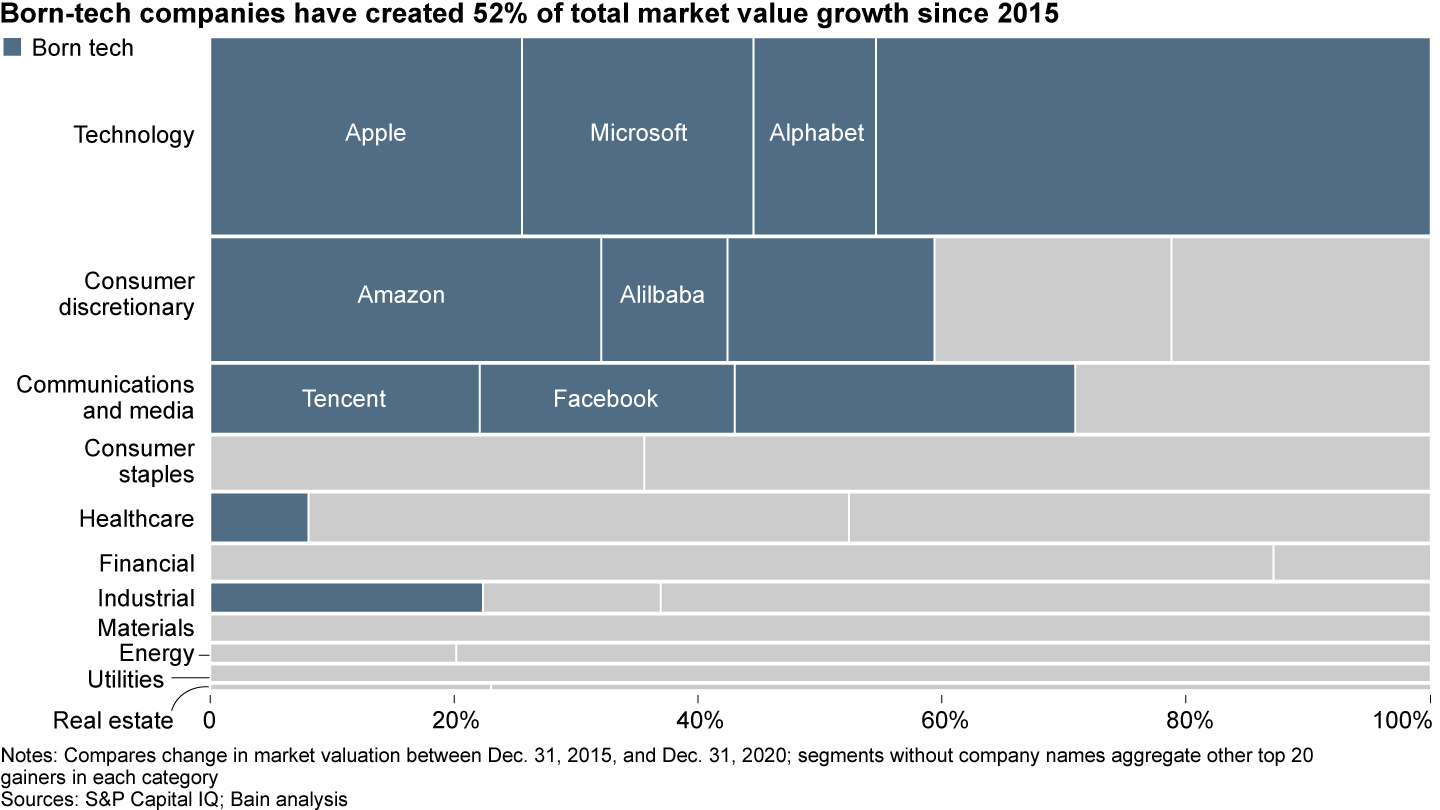
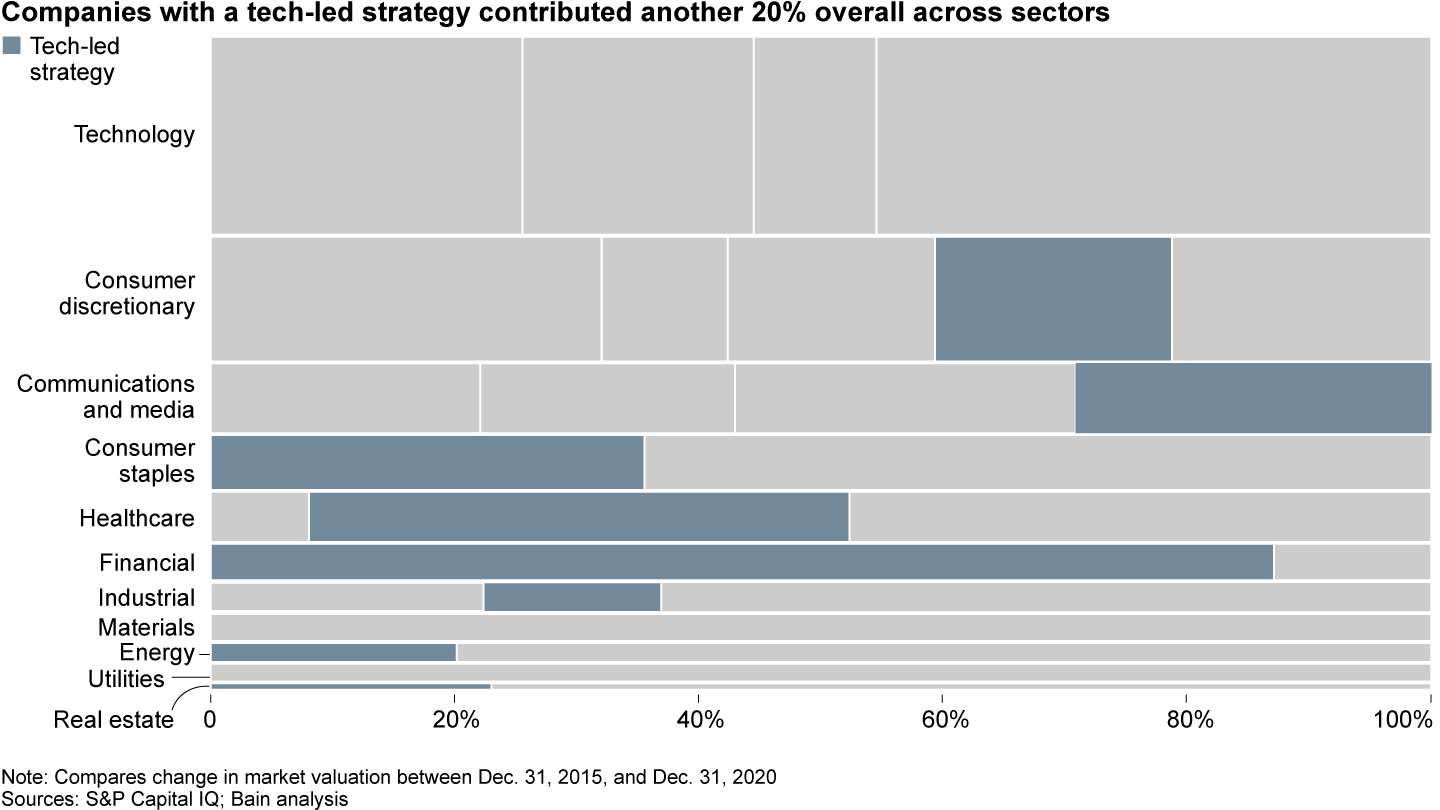
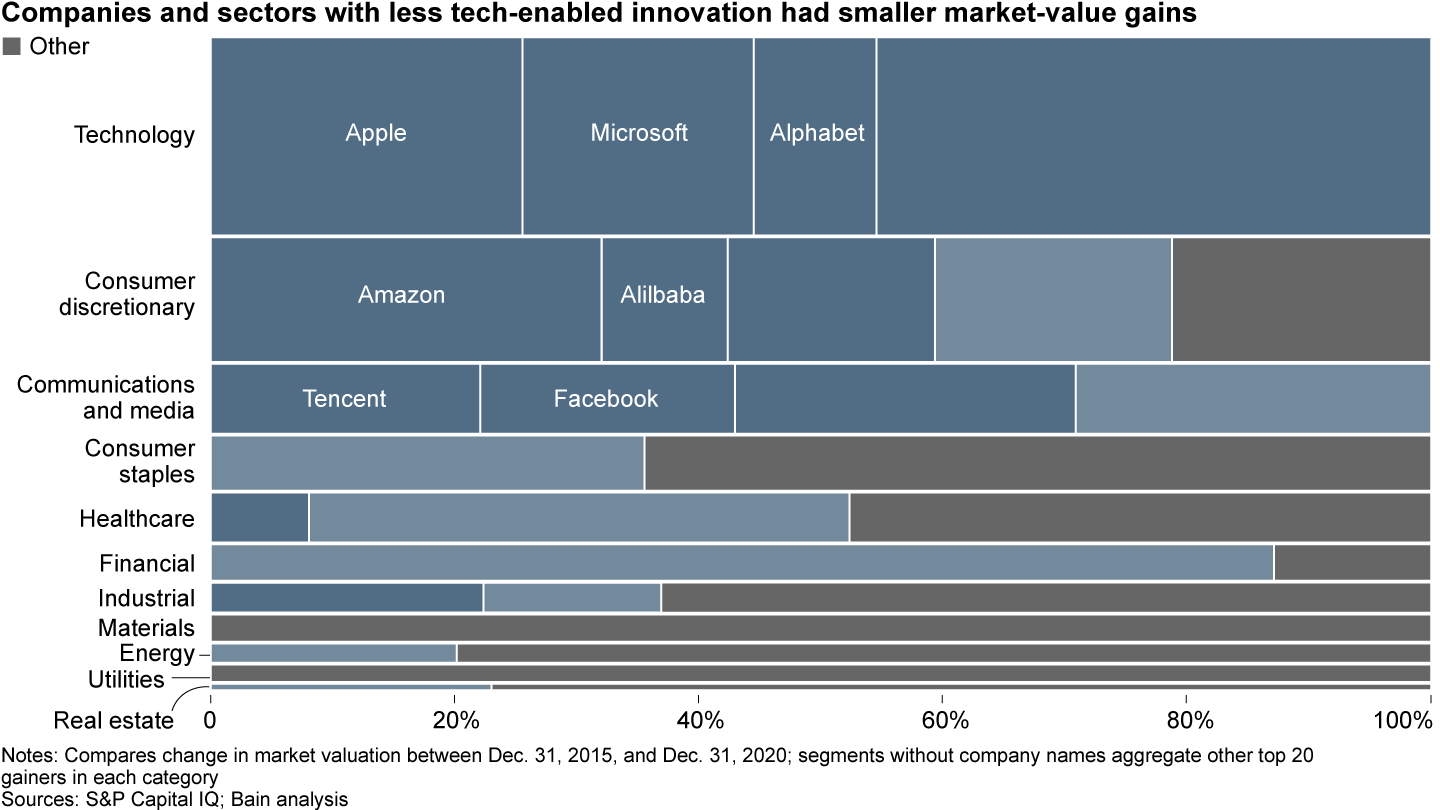
      Most of the largest creators of value in recent years, regardless of sector, have one thing in common: technology is critical to their business (see Figure 1).

      Figure 1
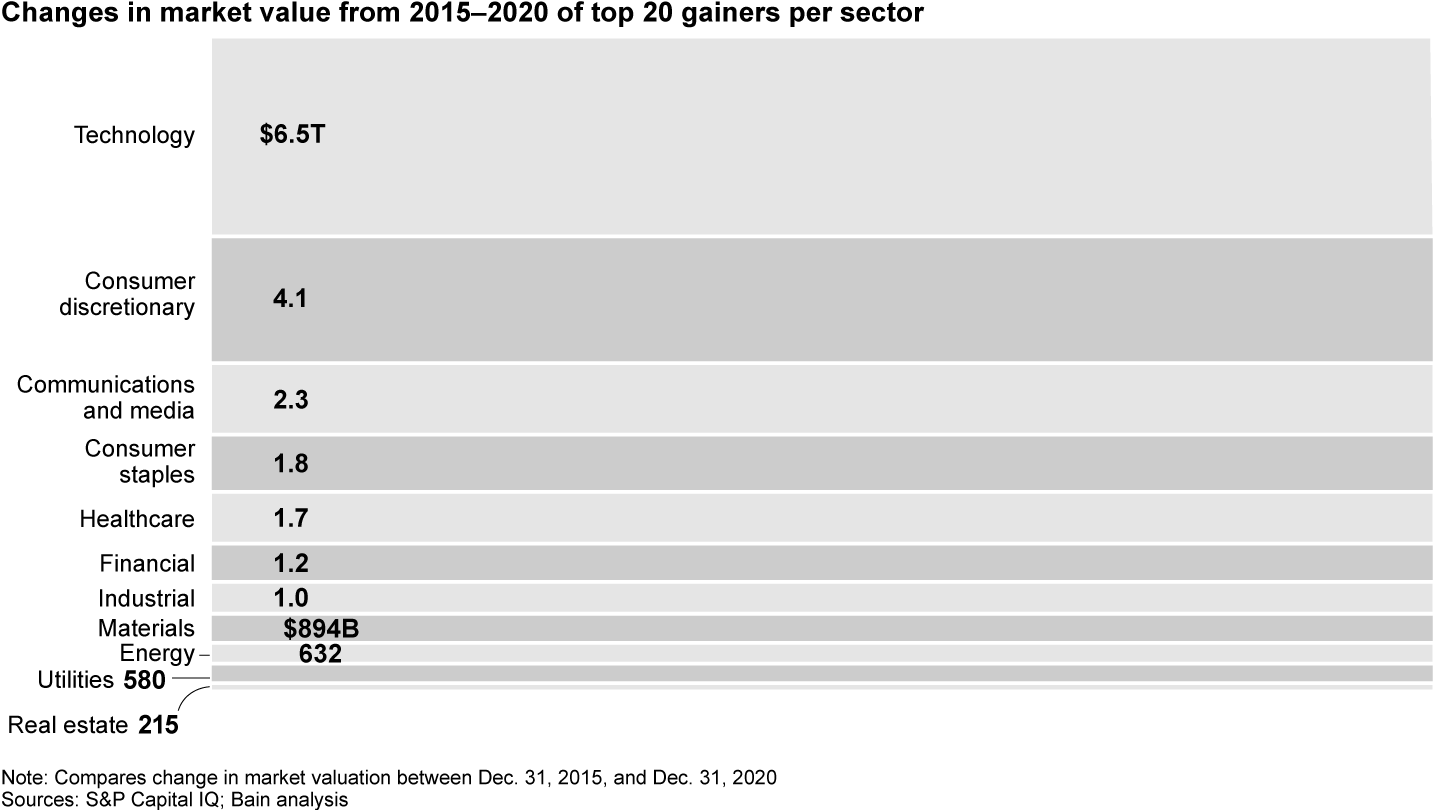
      Technology is fueling most of the growth across the global economy
      Figure 1
      Technology is fueling most of the growth across the global economy
      Figure 1
      Technology is fueling most of the growth across the global economy
      Figure 1
      Technology is fueling most of the growth across the global economy

      In general, companies and sectors with less tech-enabled innovation had smaller market-value gains from 2015 through 2020.

      The clear message is that technology isn’t just an industry. It has become the primary disruptive force across the entire global economy.

      “Born tech” companies deliberately built their businesses upon technology at an early stage because they viewed it as critical to their success, even if their end product isn’t a traditional technology product or service. Think Tesla in automobiles, Netflix in media, and Amazon in retail.

      But even more-traditional, often “brick-and-mortar,” businesses have recognized the outsized benefits of adopting a tech-led strategy. For example, Disney launched a streaming video service, and Walmart now has a huge online marketplace.

      This phenomenon goes beyond legacy companies’ digital transformation projects, which often focus on converting analog processes to digital ones. This is about all sectors learning how to wield technology and the tech industry’s platform and ecosystem playbook as a needle-moving competitive advantage.

      Infographic

      Technology Isn't Just an Industry Anymore. It's Everything

      Most of the largest value creators in recent years were technology companies or businesses with a tech-led strategy.

      As we explored in last year’s Technology Report, the massive global success of cloud technology and platform business models fueled the technology industry’s value creation over the past decade. These two trends gave rise to the tech giants, the leading cloud tools and service providers that we call “hyperscalers”: Alphabet, Amazon, Apple, Facebook, and Microsoft in the US, and Alibaba and Tencent in China.

      Now, cloud technology and platform business models are unlocking significant value for companies across every sector. The winning companies of the next decade will be defined by their ability to take full advantage of these catalysts.

      Cloud-native infrastructure software

      Within the technology industry, the unprecedented growth of the hyperscalers has overshadowed the rapid rise of another segment that has become a formidable value creator and disruptor in its own right: cloud-native infrastructure software vendors.

      The publicly traded companies in this group were collectively worth nearly half a trillion dollars at the end of 2020, with many of the leading ones more than doubling in market value last year (see Figure 2). Plus, there’s a healthy pipeline of earlier-stage competitors reportedly valued at more than $1 billion each (so-called unicorns).

      Figure 2
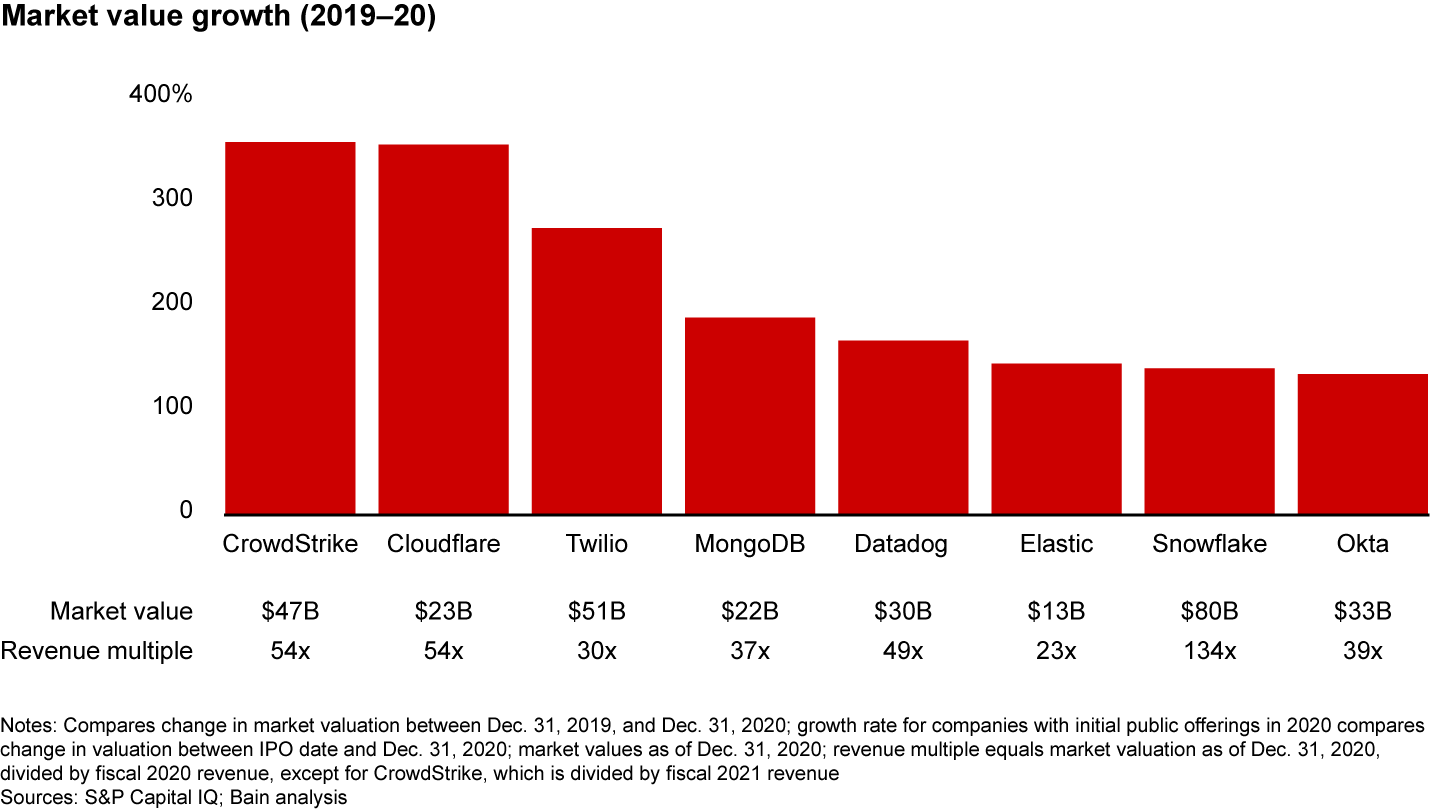
      Market values of top cloud-native infrastructure software vendors are growing rapidly

      Cloud-native infrastructure software companies have flourished because they can more easily launch and rapidly scale up new applications by building them on top of the big cloud service providers’ public cloud resources. Rather than making costly up-front capital investments, cloud-native infrastructure software companies can pay for cloud computing resources as they go, based on how much they use. This can free them to focus investments on product development, sales, marketing, and other areas that can grow their businesses.

      This model has helped Snowflake become one of the fastest-growing and highest-valued cloud-native infrastructure software vendors. The company developed a platform, running on multiple public clouds, that helps businesses consolidate their disparate data sets so they can more easily analyze and share data, and build data-enabled applications. Snowflake uses the public clouds’ elasticity to flexibly ramp its computing and storage resources up or down independently, based on what customers need. This has delivered cost and performance benefits for both Snowflake and its customers. Furthermore, the standardization and infrastructure management capabilities of each public cloud make it easier for customers to deploy Snowflake’s services using their cloud of choice. Snowflake’s customers in financial services, healthcare, retail, and other sectors are now collectively running hundreds of millions of data queries each day using the company’s products.

      Nontech companies and the cloud

      As cloud infrastructure and supporting tools get more advanced, they’re empowering companies across industries not only to build more efficient and effective IT footprints, but also to use large amounts of data to enhance their business model.

      For example, automakers are scaling up vehicle telematics services underpinned by cloud technology. This can improve customers’ safety and vehicle experience and lower the total cost of car ownership. General Motors introduced its OnStar telematics system 25 years ago. The company has added a series of cloud-based capabilities to it since the mid-2000s, and GM leaders see OnStar as an important source of future growth. There are now about 20 million Internet-connected GM vehicles worldwide. OnStar, which comes standard in most GM vehicles, transmits telematics data to the cloud for real-time analysis. For consumers, OnStar provides navigation assistance, proactively alerts emergency services when the vehicle has been in an accident, and enables GM’s new usage-based insurance offering, which adjusts rates based on driving behavior. Commercial customers can use GM’s OnStar Vehicle Insights product to more easily monitor vehicle fleets’ performance, location, usage, and other metrics.

      Nontech companies and platforms

      Platforms are usually associated with the technology sector, but now companies in other industries are shaking up their markets by adopting business models built upon tech platforms. The term “platform” is often used broadly. Here, we use it specifically to indicate a product or service upon which others build their livelihood―one that attracts an ecosystem of partners and customers who collectively deliver value. The power of platforms lies in their network effects, which drive down marginal acquisition costs and fuel compounding increases in value for the platform and its participants.

      One example of a traditional business taking advantage of tech platforms is John Deere. The nearly two-century-old tractor manufacturer launched its digital platform MyJohnDeere in 2012. The product combines data generated by sensors installed on the company’s farm equipment with third-party data on crop characteristics, soil conditions, yields, weather, and more. The platform’s ability to synthesize this information helps farmers manage their fleets by reducing machine downtime and conserving fuel, which reduces costs and increases productivity. The platform’s analytical insights continuously improve as more farmers join and share data. The platform is also a hub for third-party applications that can help farmers make agronomic decisions and better manage their fields. These innovations have deepened John Deere’s relationships with customers and strengthened its core equipment business, ultimately helping the company to nearly triple its market capitalization since 2011.

      Patterns emerge 

      In our analysis of companies worldwide adopting cloud technology and platform business models, we’ve found that the most successful are doing four things differently.

      First, they’re using data and analytics to gain an edge. By actively managing and drawing insights from large data sets, companies can more rapidly improve their offers based on real-time customer feedback.

      Netflix does this well. All that binge-watching of movies and TV shows produces valuable viewer behavior data that guides content development and personalized promotions. Netflix says the vast majority of customers’ viewing choices are based on suggestions served up by its data-driven recommendation engine. As customers watch more, Netflix uses that data to shape the content it produces so viewers keep coming back.

      Second, winning companies are scaling rapidly while owning fewer assets. Cloud technology and platforms have made this “asset-light” model possible because companies can now achieve scale through “connection” rather than “production,” by tapping into capital goods owned by others. As the meme says, Uber became one of the world’s largest taxi companies without owning any cars, and Airbnb became one of the largest accommodation providers without owning any real estate.

      Third, realizing they don’t have to own everything, leading companies are using partnerships to add capabilities faster and cheaper than developing them internally. For example, Swedish financial technology company Klarna, which helps facilitate payments between buyers and sellers online by offering consumers pay-after-delivery and installment-plan options, sought a solution that would allow Klarna users to shop at any merchant, even ones that don’t have a direct relationship with the company. Rather than build it in-house, Klarna formed a partnership with Marqeta to provide consumers with virtual, single-use credit cards—which Klarna calls “One-time cards”—that can be used at checkout like any other payment card. This virtual card allows the consumer to pay with Klarna at the point of sale, without requiring a new technical integration between Klarna and the merchant’s registers and terminals. Using Marqeta’s card-issuing product, Klarna can fund the card in real time with the exact amount needed to pay for the customer’s order. Klarna also used Marqeta’s geographic reach to launch in two new countries, the US and Australia, a model Klarna is replicating in other countries. Since launching its partnership with Marqeta in early 2019, Klarna’s transaction volume has approximately doubled every quarter.

      Lastly, companies are investing in tech talent to help them take full advantage of cloud technologies and platform business models. Just look at Goldman Sachs for a clear view of how executives across sectors are reshaping their businesses with technology. The US-based financial services firm now has more software developers (10,000) than most technology companies. Coders make up about 25% of its workforce.

      The question on the table in every boardroom, regardless of industry, is not whether technology can make a difference for the business. It’s how, and to what extent? Companies that embrace technology as a fundamental, differentiating capability have a shot at unleashing more growth than ever.

      Read the Next Chapter

      The Case for Big Tech M&A

      More from the report

      • Welcome to the New Tech Economy

      • Tech-tonic Equity Shifts

      • The Case for Big Tech M&A

      • Tech Venture Capital Surges

      • SaaS Spurs Software Superperformance

      • Bringing Order to the Hybrid Cloud

      • Winning Europe’s Cloud Market

      • Shifting Semiconductor Equilibrium

      • Leading AI’s Next Era

      • US, China, and the Decoupling Push

      • The Tech Talent War Expands

      • Scaling DevOps

      • The Go-to-Market Orchestra

      • Chip Shortage Lessons

      Read our 2021 Technology Report

      Download the PDF Explore the report
      Authors
      • Headshot of Matthew Crupi
        Matthew Crupi
        Partner, Dallas
      • Headshot of Chris Johnson
        Chris Johnson
        Alumni, San Francisco
      • Headshot of David Crawford
        David Crawford
        Partner, Silicon Valley
      Contact us
      Related Industries
      • Cloud Computing
      • Hardware
      • Internet of Things
      • Software
      • Technology
      Related Consulting Services
      • Enterprise Technology
      CIO Insights
      Despite Tech Layoffs, Competition for Talent Remains Fierce

      Tech workers increasingly value career development opportunities and remote or hybrid work options, while compensation has soared.

      Read More
      CIO Insights
      Four Ways Leaders Can Make AI Redesigns Stick

      As companies redesign to scale AI, these four lessons help leaders ensure their organizations actually live the new operating model.

      Read More
      Technology
      How Businesses Can Prepare for Post-Quantum Cybersecurity Threats

      Your company will soon face attackers armed with quantum technology. Will you be ready?

      Read More
      CIO Insights
      The 2026 Retail Executive Agenda

      Here are letters to the C-suite to help strengthen strategy, catalyze collaboration, and expand value creation in the AI age.

      Read More
      Technology
      Using Hardware to Scale the Industrial Internet of Things

      Bain partners discuss the opportunity for hardware vendors to help companies develop their IoT pilots.

      Read More
      Published in wrzesień 2021
      Tags
      • CIO Insights
      • Cloud Computing
      • Enterprise Technology
      • Hardware
      • Internet of Things
      • Software
      • Technology

      How We've Helped Clients

      Helping a Midsize ERP Player Compete against the Giants

      Read case study

      Video: A Marketing Transformation Puts a Software Leader Back on Top

      Read case study

      Aggressively growing an IT service provider with a high-performance culture

      Read case study

      Ready to talk?

      We work with ambitious leaders who want to define the future, not hide from it. Together, we achieve extraordinary outcomes.

      Stay ahead in a rapidly changing world. Subscribe to Bain Insights, our monthly look at the critical issues facing global businesses.

      *I have read and understand Bain’s Privacy Notice.

      Please read and agree to the Privacy Policy.
      Bain & Company
      Contact us Sustainability Accessibility Terms of use Privacy Modern Slavery Act Statement Cookie Policy Sitemap Log In

      © 1996-2026 Bain & Company, Inc.

      Contact Bain

      How can we help you?

      • Business inquiry
      • Career information
      • Press relations
      • Partnership request
      • Speaker request
      See all offices