
Skip to Content
  • Offices

    Offices

    North & Latin America
    • Atlanta
    • Austin
    • Bogota
    • Boston
    • Buenos Aires
    • Chicago
    • Dallas
    • Denver
    • Houston
    • Los Angeles
    • Mexico City
    • Minneapolis
    • Monterrey
    • Montreal
    • New York
    • Rio de Janeiro
    • San Francisco
    • Santiago
    • São Paulo
    • Seattle
    • Silicon Valley
    • Toronto
    • Washington, DC
    Europe & Africa
    • Amsterdam
    • Athens
    • Berlin
    • Brussels
    • Copenhagen
    • Dusseldorf
    • Frankfurt
    • Helsinki
    • Istanbul
    • Johannesburg
    • Kyiv
    • Lisbon
    • London
    • Madrid
    • Milan
    • Munich
    • Oslo
    • Paris
    • Rome
    • Stockholm
    • Vienna
    • Warsaw
    • Zurich
    Middle East
    • Doha
    • Dubai
    • Riyadh
    Asia & Australia
    • Bangkok
    • Beijing
    • Bengaluru
    • Brisbane
    • Ho Chi Minh City
    • Hong Kong
    • Jakarta
    • Kuala Lumpur
    • Manila
    • Melbourne
    • Mumbai
    • New Delhi
    • Perth
    • Seoul
    • Shanghai
    • Singapore
    • Sydney
    • Tokyo
    See all offices
  • Alumni
  • Media Center
  • Subscribe
  • Contact
  • Global

    Select your region and language

    Global
    • Global (English)
    North & Latin America
    • Brazil (Português)
    • Argentina (Español)
    • Canada (Français)
    • Chile (Español)
    • Colombia (Español)
    Europe, Middle East, & Africa
    • France (Français)
    • DACH Region (Deutsch)
    • Italy (Italiano)
    • Spain (Español)
    • Greece (Elliniká)
    Asia & Australia
    • China (中文版)
    • Korea (한국어)
    • Japan (日本語)
  • Saved items (0)
    Saved items (0)

    You have no saved items.

    Bookmark content that interests you and it will be saved here for you to read or share later.

    Explore Bain Insights
  • Industries
    Main menu

    Industries

    • Aerospace & Defense
    • Agribusiness
    • Chemicals
    • Construction & Infrastructure
    • Consumer Products
    • Financial Services
    • Healthcare & Life Sciences
    • Industrial Machinery & Equipment
    • Media & Entertainment
      Industries
      Media & Entertainment
      • Media Lab
    • Metals
    • Mining
    • Oil & Gas
    • Paper & Packaging
    • Private Equity
      Industries
      Private Equity
      • Due Diligence
      • Exit Planning
      • Firm Strategy & Operations
      • Portfolio Value Creation
    • Social Impact
    • Retail
    • Technology
    • Telecommunications
      Industries
      Telecommunications
      • Capital Expenditure
      • Telco Digital Transformation
    • Transportation
    • Travel & Leisure
    • Utilities & Renewables
  • Consulting Services
    Main menu

    Consulting Services

    • Customer Experience
    • Sustainability
    • Innovation
    • M&A
    • Operations
    • People & Organization
    • Private Equity
    • Sales & Marketing
    • Strategy
    • AI, Insights, and Solutions
    • Technology
    • Transformation
  • Digital
  • Insights
    Main menu

    Insights

    • Industry Insights
    • Services Insights
    • Bain Books
    • Webinars
    • Bain Futures
    View all Insights
    Featured topics
    • Tariff Response
    • Artificial Intelligence
    • Thriving in Uncertainty
    • Executive Conversations
    • Macro Trends
    • M&A Report
    • Healthcare Private Equity Report
    • Paper & Packaging Report
    • Technology Report
    • CEO's Guide to Sustainability
    • CEO Insights
    • CFO Insights
    • COO Insights
    • CIO Insights
    • CMO Insights
    View all featured topics
  • About
    Main menu

    About

    • What We Do
    • What We Believe
    • Our People & Leadership
    • Client Results
    • Awards & Recognition
    • Global Affiliations
    Further: Our global responsibility
    • Sustainability
    • Social Impact
    • World Economic Forum
    Learn more about Further
  • Careers
    Main menu

    Careers

    • Work with Us
      Careers
      Work with Us
      • Find Your Place
      • Our Work Areas
      • Integrated Teams
      • Students
      • Internships & Programs
      • Recruiting Events
    • Life at Bain
      Careers
      Life at Bain
      • Blog: Inside Bain
      • Career Stories
      • Our People
      • Where We Work
      • Supporting Your Growth
      • Affinity Groups
      • Benefits
    • Impact Stories
    • Hiring Process
      Careers
      Hiring Process
      • What to Expect
      • Interviewing
    FIND JOBS
  • Offices
    Main menu

    Offices

    • North & Latin America
      Offices
      North & Latin America
      • Atlanta
      • Austin
      • Bogota
      • Boston
      • Buenos Aires
      • Chicago
      • Dallas
      • Denver
      • Houston
      • Los Angeles
      • Mexico City
      • Minneapolis
      • Monterrey
      • Montreal
      • New York
      • Rio de Janeiro
      • San Francisco
      • Santiago
      • São Paulo
      • Seattle
      • Silicon Valley
      • Toronto
      • Washington, DC
    • Europe & Africa
      Offices
      Europe & Africa
      • Amsterdam
      • Athens
      • Berlin
      • Brussels
      • Copenhagen
      • Dusseldorf
      • Frankfurt
      • Helsinki
      • Istanbul
      • Johannesburg
      • Kyiv
      • Lisbon
      • London
      • Madrid
      • Milan
      • Munich
      • Oslo
      • Paris
      • Rome
      • Stockholm
      • Vienna
      • Warsaw
      • Zurich
    • Middle East
      Offices
      Middle East
      • Doha
      • Dubai
      • Riyadh
    • Asia & Australia
      Offices
      Asia & Australia
      • Bangkok
      • Beijing
      • Bengaluru
      • Brisbane
      • Ho Chi Minh City
      • Hong Kong
      • Jakarta
      • Kuala Lumpur
      • Manila
      • Melbourne
      • Mumbai
      • New Delhi
      • Perth
      • Seoul
      • Shanghai
      • Singapore
      • Sydney
      • Tokyo
    See all offices
  • Alumni
  • Media Center
  • Subscribe
  • Contact
  • Global
    Main menu

    Select your region and language

    • Global
      Select your region and language
      Global
      • Global (English)
    • North & Latin America
      Select your region and language
      North & Latin America
      • Brazil (Português)
      • Argentina (Español)
      • Canada (Français)
      • Chile (Español)
      • Colombia (Español)
    • Europe, Middle East, & Africa
      Select your region and language
      Europe, Middle East, & Africa
      • France (Français)
      • DACH Region (Deutsch)
      • Italy (Italiano)
      • Spain (Español)
      • Greece (Elliniká)
    • Asia & Australia
      Select your region and language
      Asia & Australia
      • China (中文版)
      • Korea (한국어)
      • Japan (日本語)
  • Saved items  (0)
    Main menu
    Saved items (0)

    You have no saved items.

    Bookmark content that interests you and it will be saved here for you to read or share later.

    Explore Bain Insights
  • Industries
    • Industries

      • Aerospace & Defense
      • Agribusiness
      • Chemicals
      • Construction & Infrastructure
      • Consumer Products
      • Financial Services
      • Healthcare & Life Sciences
      • Industrial Machinery & Equipment
      • Media & Entertainment
      • Metals
      • Mining
      • Oil & Gas
      • Paper & Packaging
      • Private Equity
      • Social Impact
      • Retail
      • Technology
      • Telecommunications
      • Transportation
      • Travel & Leisure
      • Utilities & Renewables
  • Consulting Services
    • Consulting Services

      • Customer Experience
      • Sustainability
      • Innovation
      • M&A
      • Operations
      • People & Organization
      • Private Equity
      • Sales & Marketing
      • Strategy
      • AI, Insights, and Solutions
      • Technology
      • Transformation
  • Digital
  • Insights
    • Insights

      • Industry Insights
      • Services Insights
      • Bain Books
      • Webinars
      • Bain Futures
      View all Insights
      Featured topics
      • Tariff Response
      • Artificial Intelligence
      • Thriving in Uncertainty
      • Executive Conversations
      • Macro Trends
      • M&A Report
      • Healthcare Private Equity Report
      • Paper & Packaging Report
      • Technology Report
      • CEO's Guide to Sustainability
      • CEO Insights
      • CFO Insights
      • COO Insights
      • CIO Insights
      • CMO Insights
      View all featured topics
  • About
    • About

      • What We Do
      • What We Believe
      • Our People & Leadership
      • Client Results
      • Awards & Recognition
      • Global Affiliations
      Further: Our global responsibility
      • Sustainability
      • Social Impact
      • World Economic Forum
      Learn more about Further
  • Careers
    Popular Searches
    • Agile
    • Digital
    • Strategy
    Your Previous Searches
      Recently Visited Pages

      Content added to saved items

      Saved items (0)

      Removed from saved items

      Saved items (0)

      Brief

      The Three Common Transformation Talent Mistakes and How to Avoid Them

      The Three Common Transformation Talent Mistakes and How to Avoid Them

      Data confirms that the strongest predictor of a transformation’s success is how well the company retains, develops, and acquires the right talent and capabilities.

      By Peter Slagt, Melissa Burke, and Anna Cochemé

      • min read
      }

      Brief

      The Three Common Transformation Talent Mistakes and How to Avoid Them
      en
      At a Glance
      • The first talent mistake companies make is failing to focus on their critical strategic roles and getting the right people in them.
      • When filling those roles, too many executives focus too much on well-known “star players,” burning them out and overlooking other worthy talent.
      • True transformation is a long-term endeavor, and too many companies fail to invest in the talent they will need to sustain it.

      Getting better at transformation is critical for businesses in every industry, and boosting the approach to talent by addressing three common failings is an important place to start.

      “The one regret I have from our transformation is the talent we allocated to the work,” says a senior executive of a defense contractor about its launch of a breakthrough product. “We could have gone faster and been stronger if we had focused more on our talent.”

      Setting a transformation agenda isn’t easy. Neither is mapping out a plan to begin. But those aren’t the things that leave corporate transformation leaders with a nagging sense of worry. Not having the right people in place to deliver is what worries them the most.

      Responses to Bain & Company’s 2023 Transformation & Change Survey of over 400 executives and senior leaders confirm that the strongest predictor of a transformation’s success is how well the company retains, develops, and acquires the right talent and capabilities to pull it off. Only 12% of business transformations achieve their original ambition, and those that do differentiate themselves by the way they manage talent (see Figure 1).

      Figure 1
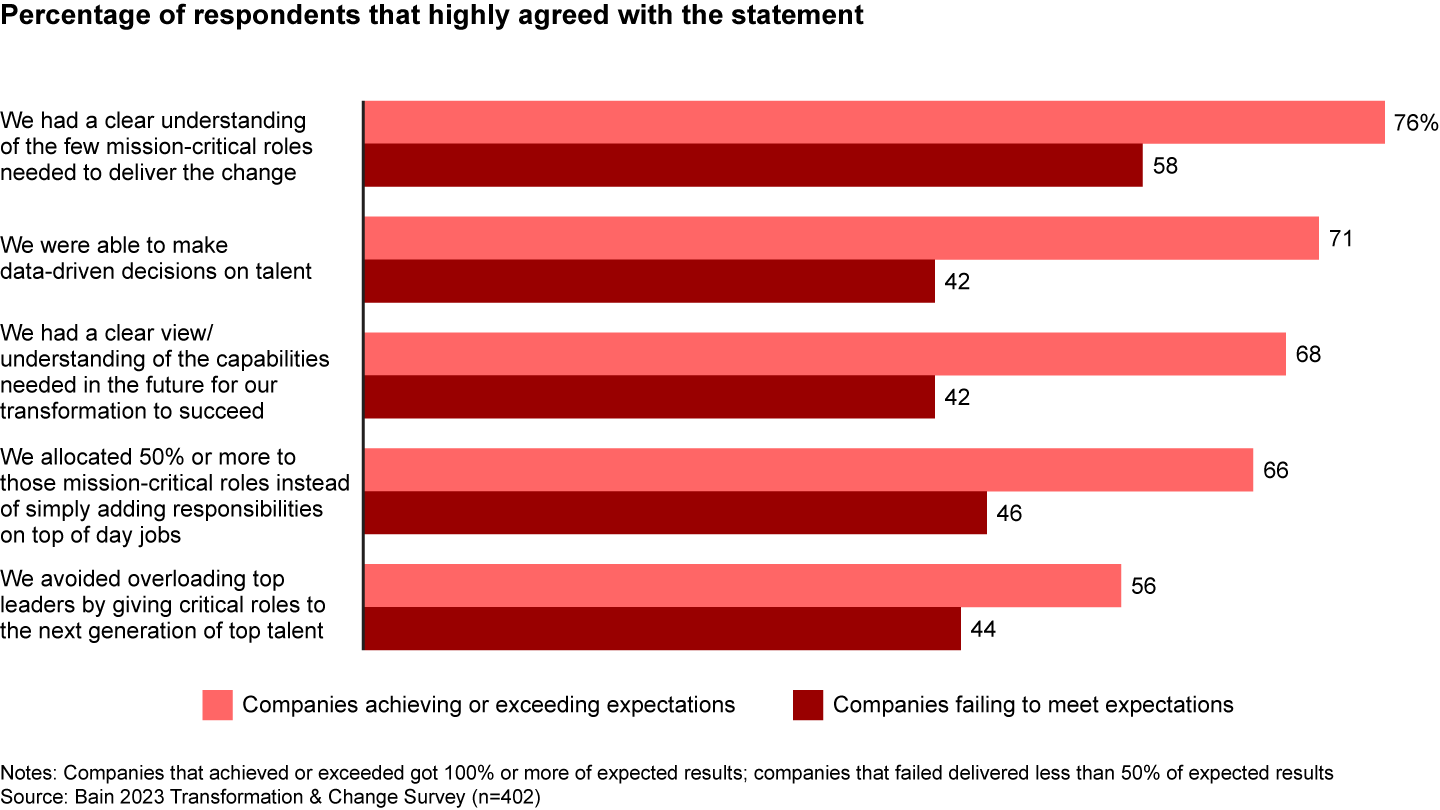
      Top-performing business transformations differentiate themselves on five talent dimensions

      Transformations that fall short often make one—or more—of three typical mistakes. They fail to focus on the roles critical to the transformation, they pull from too shallow a talent pool, and/or they prepare poorly for the future.

      Mistake #1: Failure to focus on the critical roles

      Companies often neglect to tie their strategic priorities to the specific outcomes required in the next two to three years. This makes it hard to pinpoint which roles are essential to delivering those outcomes and who is best fit to fill them. As a result, too often the wrong people end up in critical seats. While 76% of survey respondents from companies with a successful transformation record said they understood which mission-critical roles were essential, only 58% of those from poor performers felt they had the same understanding.

      In our experience, 90% of the value and results of any transformation are created by less than 5% of roles. So, getting the best-qualified people into those roles is critical. Frequently, CEOs have a general sense of which roles are most important but haven’t articulated what will be needed from each role to enable the company to deliver on its transformation aspiration. Nor have they quantified the potential cost of not filling those roles correctly.

      There is another way. Consider what happened when a new CEO started at a financial service company’s Asia operations. A reevaluation of its portfolio strategy was undertaken, including markets and customers served as well as business lines and products. In tandem, the leadership team identified 50 mission-critical roles in key areas including customer, distribution, and data. Before considering candidates, they created a “success profile” for each role, mapping it to the transformation strategy and clearly describing what each position needed to deliver and the competencies the candidates would need to succeed. The exercise helped leadership more efficiently identify the right people for the roles—people who went on to make a difference in helping the company meet its transformation ambition.

      Mistake #2: Relying on too shallow a talent pool

      Failure to look beyond well-known “star players” contributes to burnout among that oversubscribed group as they are often allocated to the transformation on top of their other work. This sets them up for failure while also sapping the transformation’s momentum.

      By contrast, two-thirds of survey respondents from strong transformers said their companies ensured that those people assigned to transformations had at least half their time allocated to the new role. Fifty-six percent of strong transformers avoided overloading their top leaders, compared with 44% of poor transformers.

      It’s understandable that CEOs would turn to their most trusted talent when undertaking a transformation. But with this group almost certainly already fully booked, a better approach focuses on getting the right fit for the specific role. Using that lens frees those filling the role to be more creative and open-minded.

      Business Transformations That Work

      Business transformations are about continuously reshaping an organization. When they work, they enhance performance, increase efficiency, and create a competitive advantage.

      When a pharmaceutical company began to staff its transformation, the CEO encouraged executives to include every good candidate for consideration. No one was left off the list because they were too valuable in their current job for their supervisor to lose. It was made clear to the candidates that being part of the transformation would be a big step in their personal development and that they had been chosen by the CEO and his direct reports. The CEO reviewed the team members’ development plans yearly and got to know them personally. He and the rest of top leadership remained champions of both the transformation and the people dedicated to it, even after their assignments concluded and they went on to other roles. 

      Some roles created for the transformation will require a significant upfront investment. More than 90% of the transformation programs covered in our survey were led by a chief transformation officer (CTO) or someone with similar responsibilities, and naming a dedicated CTO can have an outsized impact on transformation success. CTOs align efforts with strategy, improve integration with ongoing operations, and help meet financial expectations. Data from Bain’s ARC database of more than 24,000 transformation initiatives shows that large-scale change efforts achieve 24% more of their planned value when a dedicated CTO oversees them.

      Mistake #3: Poor preparation for the future

      Spending too little time building long-term strategic capabilities compromises a company’s ability to sustain its transformation.

      True transformation takes time, but many companies lack the talent to sustain it. In Bain’s 2022 Talent Survey, more than half of companies’ high performers were viewed as lacking the capabilities needed to succeed in critical roles in 5 to 10 years. Addressing that requires looking beyond the performance skills that people need to meet their current job descriptions, focusing on inspirational skills such as how they motivate themselves and others to go above and beyond. Generic leadership development programs don’t typically focus on these inspirational skills, so they will need to be updated.

      Once the critical gaps are identified, a variety of approaches can help develop these capabilities and behaviors. These can include classroom training, on-the-job-learning, coaching, role rotation, and behavioral nudges such as automated feedback gathered from direct reports.

      Every transformation is a plan to address change, and as change becomes a continuous state in every industry, talent must constantly evolve too. Consider the experience of an oil and gas company that embarked on a large transformation to address supply chain disruption in the global market. Part of the transformation required transitioning the centralized organization to a portfolio of market-oriented business units.

      Top executives recognized the new model would require a very different set of teams and skills. They started by defining a new model for top leadership, followed by assessing the company’s executive team and then its top 300 managers on the capabilities the company would need in the future. The CEO and leadership team used a third party to conduct behavioral interviews to assess the leaders, then compared those results to what would be required of them under the new leadership model and identified any gaps. They used online psychometric assessments to understand how difficult it would be to close each gap and then began to do so, using coaching and other interventions to begin to develop the key capabilities in the existing leadership pool.

      The approach identified many “hidden gems”—effective leaders with a quieter style who possessed needed capabilities and who, when deployed to critical transformation roles, immediately had a positive impact. The program has been so successful that it’s now been completely integrated into HR approaches and systems across the whole organization.

      Moving forward

      Transformation, at its core, is about engaging people and building leaders. Start strong by dedicating the most respected leaders and most capable subject matter experts to the effort, then building a top team that is cohesive, commited, and aligned. Finish strong by understanding all the talent implications of your transformation, including the broader workforce shifts and skills needed to deliver your future strategy.

      Sixty-six percent of respondents to our recent survey report having taken on three or more major change efforts in the last five years. Getting better at transformation is critical for businesses in every industry. Smart leaders will pay attention to that nervous feeling and put talent at the center of their transformation strategy.

      Authors
      • Headshot of Peter Slagt
        Peter Slagt
        Partner, Madrid
      • Headshot of Melissa Burke
        Melissa Burke
        Practice Executive Vice President, Raleigh
      • Headshot of Anna Cochemé
        Anna Cochemé
        Partner, Chicago
      Contact us
      Related Consulting Services
      • Change Management
      • Transformation
      How We Can Help
      • Talent
      Talent
      A Framework For Effective Feedback: Moving From “I” To “We” To “You”

      How to build a system that encourages the constructive feedback critical to executive leadership today.

      Read More
      Talent
      HR: The Hidden Accelerator of AI Adoption

      Scaling AI starts with people. Yet only half of companies involve HR in their strategy.

      Read More
      Transformation
      CTO Insights: How to Lead a Transformation

      We spoke with executives who have run transformations at large companies about the three most critical roles of a chief transformation officer.

      Read More
      Talent
      You Can't Spell AI without HR: The Surprising Secret to Scale

      High-performing companies are integrating HR into their generative AI strategies as they balance big bets with near-term wins.

      Read More
      Transformation
      From Disillusionment to Action: Four Ways CEOs Can Boost Sustainability

      Extreme weather is increasing pressure on leaders to make real progress on sustainability, but this isn’t all about risk. There’s plenty of opportunity too.

      Read More
      Published in kwiecień 2024
      Tags
      • Change Management
      • Talent
      • Transformation

      How We've Helped Clients

      A Conglomerate Charts a New Global Strategy

      Read case study

      A Video Game Company Levels Up With a New Operating Model

      Read case study

      Inspiring retail employees to think and act like owners

      Read case study

      Ready to talk?

      We work with ambitious leaders who want to define the future, not hide from it. Together, we achieve extraordinary outcomes.

      Stay ahead in a rapidly changing world. Subscribe to Bain Insights, our monthly look at the critical issues facing global businesses.

      *I have read and understand Bain’s Privacy Notice.

      Please read and agree to the Privacy Policy.
      Bain & Company
      Contact us Sustainability Accessibility Terms of use Privacy Modern Slavery Act Statement Cookie Policy Sitemap Log In

      © 1996-2026 Bain & Company, Inc.

      Contact Bain

      How can we help you?

      • Business inquiry
      • Career information
      • Press relations
      • Partnership request
      • Speaker request
      See all offices