

Brief

At a Glance
- Travelers need help cutting through the time-consuming complexity of booking a trip online, according to new research by Bain & Company and Google.
- Brands can grasp this opportunity by focusing on three imperatives: acting on raw customer needs, de-averaging and personalizing their marketing approach, and winning each traveler interaction.
- Marketers that master these techniques can enjoy better conversion rates, premium pricing and deeper customer loyalty.
Whether it’s a weekend break or the vacation of a lifetime, all travel begins with a journey of a different kind—the path to purchase. It’s a time when consumers seek inspiration, research options, compare prices, then choose.
As digital technology expands choices in the travel sector, however, the path to purchase becomes an ever more complicated odyssey, overwhelming some consumers as they spend hours online trying to find their next unforgettable moment.
Written in collaboration with
Written in collaboration with

The most assiduous planners can carry out more than 500 searches and consult in excess of 50 travel sites before booking, according to a Bain & Company and Google study using data supplied by Dynata. While behaving in a less-driven fashion, the average consumer also left few stones unturned, conducting 33 searches and checking 12 travel sites (see Figure 1).
Figure 1
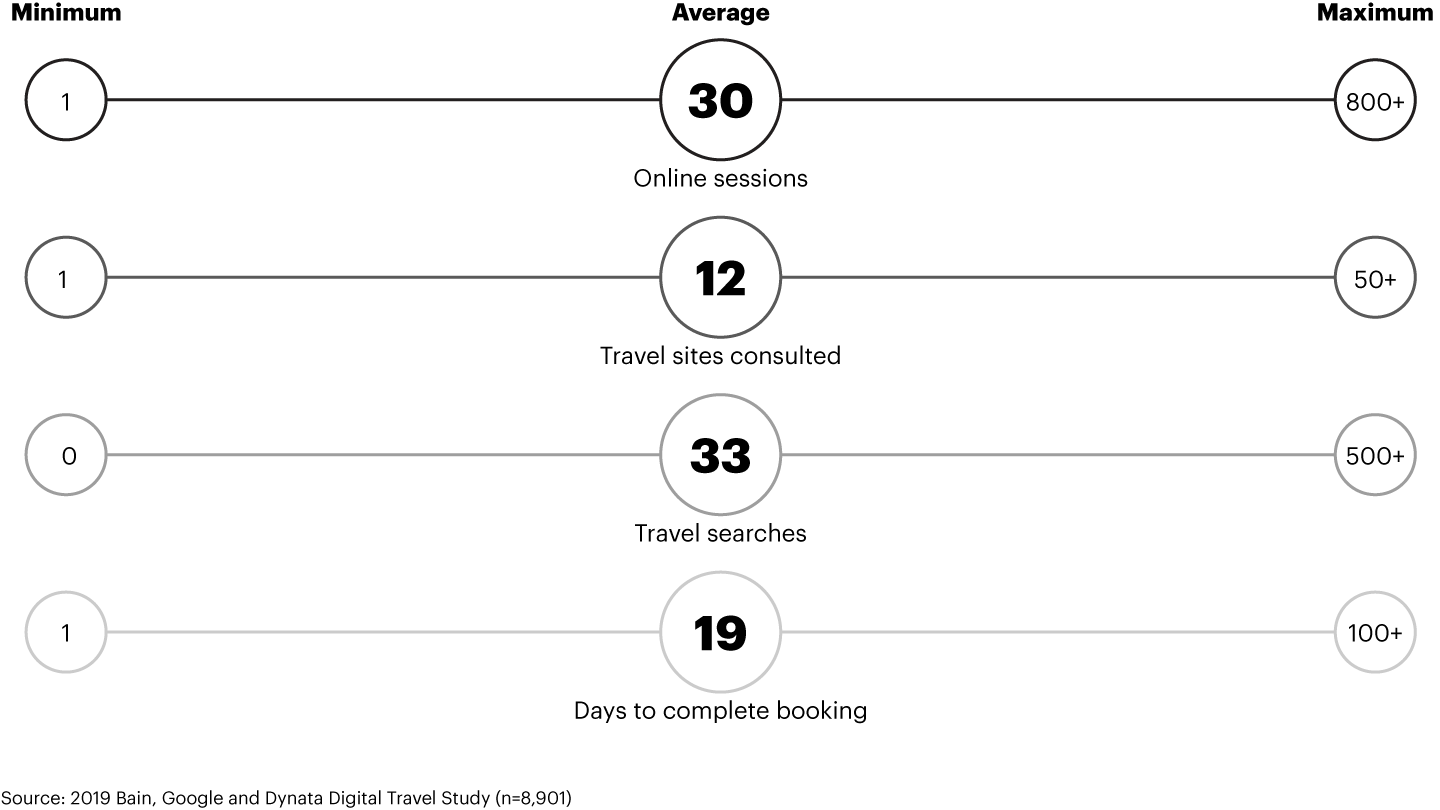

The study—covering more than 12,000 travelers intent on making a booking from the US, the UK, Germany, Brazil, Japan and Australia—also highlights the stop-start nature of the modern booking journey, with episodes varying from two minutes to six hours, all the while jumping between devices. It’s little wonder that the whole process took 19 days, on average, and stretched beyond 100 days for some.
While travelers display plenty of stamina, they have little tolerance for websites or apps that offer a poor user experience. Brands that fall short can lose much more than just one sale; the customer might not even consider them for the next few journeys.
In this high-stakes environment, brands can use the digital clues that customers leave behind to engage with them in a more relevant way, making booking less circuitous and creating a more meaningful experience when the travel actually begins.
Leading players such as Airbnb, Booking.com and Qantas have already gained an edge by mastering at least one of the three key challenges identified by the Bain and Google study—namely, recognizing and acting on raw customer needs, de-averaging and personalizing your marketing approach, and winning each traveler interaction.
This isn’t just a marketing department issue, though. CEOs recognize that deep customer understanding is vital to their company’s digital future.
Acting on raw customer needs
Emotions shape bookings in powerful ways. When customers search for a room, they are often doing something more profound, such as reconnecting with a friend, exploring a new culture, realizing a bucket list dream or escaping from the strain of daily life for a while.
Travel brands often miss these raw needs because, by the time the traveler reaches them, the process has become more price- and promotion-driven than inspirational. Yet some sector leaders already know which raw needs correspond with their strengths. They then use that insight to shape their search marketing (both paid and organic) and fine-tune their messaging. The result? Better leads, with higher conversion and loyalty.
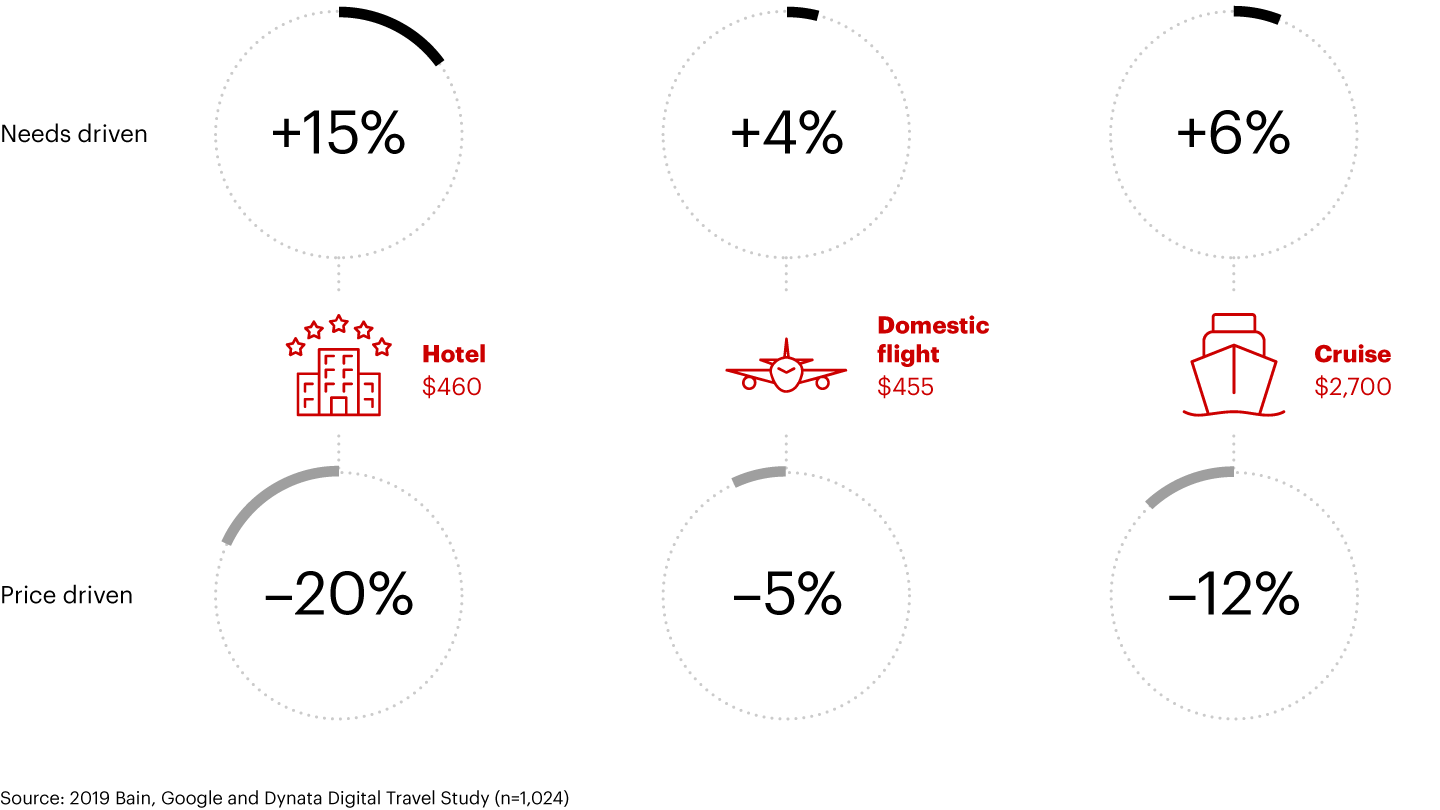
As well as transforming the customer’s experience, this approach can lift revenue. In the Bain and Google study, customers in the US who booked because a raw need was met paid 15% more than average for hotel rooms and 6% more for cruises (see Figure 2). In Germany and the UK, the premium for meeting a raw need was 10% for international flights and 8% for hotel rooms.
Figure 2

Insurgent brands grow rapidly by building their entire marketing strategy around a focused set of needs. Airbnb noticed an unmet craving for connection in the accommodation market on the part of travelers who wanted to bond with other travelers and who also wanted to feel closer to the locals in their chosen destination.
It duly made its hosts’ properties stand out against competing hotels by highlighting the experiences they could offer. It also began listing paid experiences led by locals, such as a boat tour through Amsterdam’s canals or classes on how to make steamed buns in Shanghai. Travelers actively seek out the distinctively positioned Airbnb. Direct traffic comprised about 64% of visits to Airbnb’s site over the past year vs. about 50% of visits at other leading booking platforms.
Virgin Voyages is betting on a similar approach by targeting the unmet needs of those who would not normally choose a vacation at sea. The cruise venture has emphasized how it will break with tradition by not having children, buffets or water slides on its vessels when it sets sail in 2020. It also plans to inject an edgy, fun tone through innovations such as onboard tattoo artists and vinyl record shops.
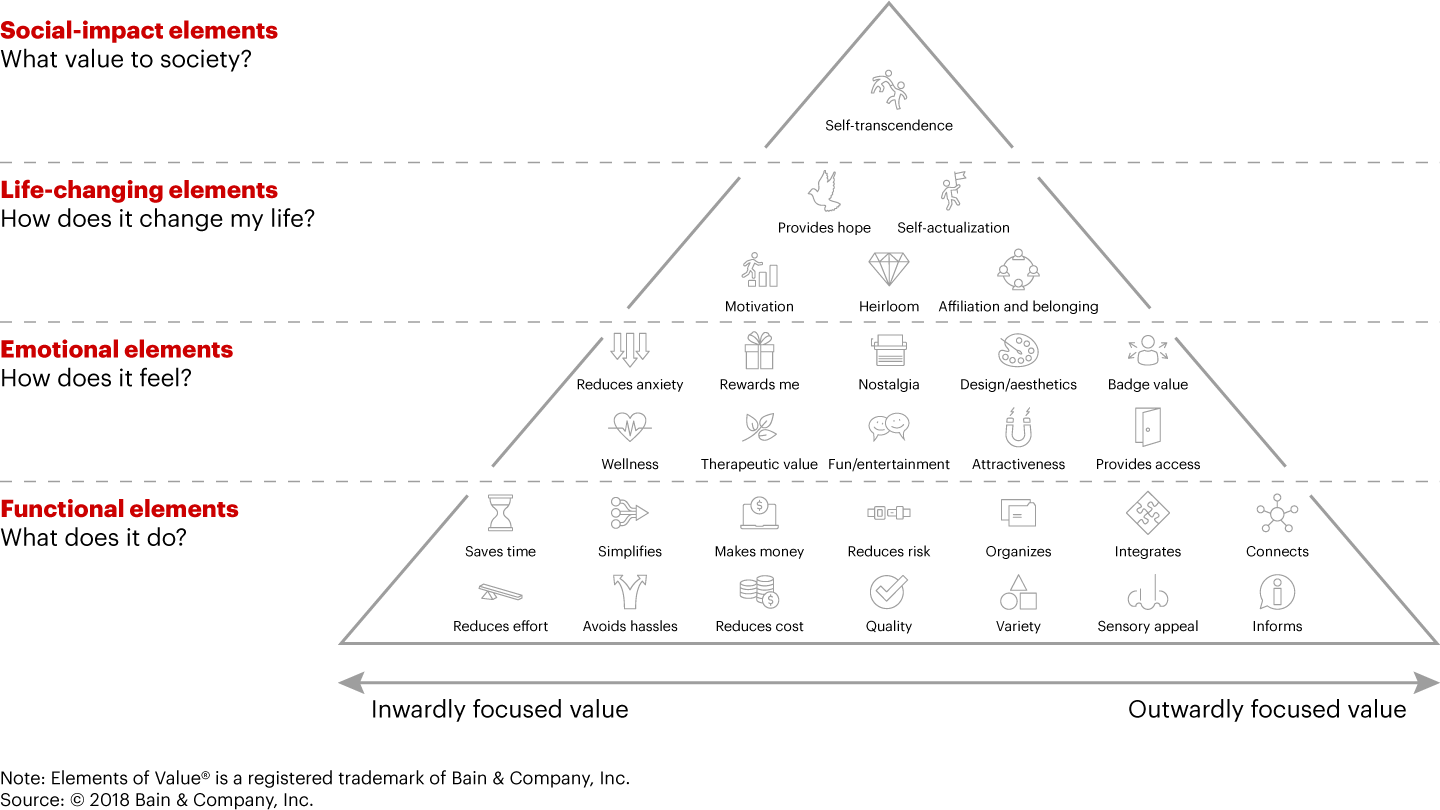
A desire for connection. A desire for fun. These are higher-order needs, not basic wants (see Figure 3). Companies that excel at meeting these rarefied demands can create a formidable bond with customers. Westin, for instance, does a great job of fulfilling a wide range of the higher-order needs catalogued in Bain’s Elements of Value® framework. Its hotels and resorts score well above average on design/aesthetics, for instance, but its outperformance on therapeutic value is particularly striking—and can be linked to innovations such as workout clothing rental, on-site access to Peloton bike classes and its Heavenly Bed.
Customers are willing to pay more to stay at a Westin than at other upper-upscale brands that don’t have quite the same emotional resonance. The Bain and Google study found that travelers who considered Westin for their booking showed an above-average propensity to be motivated by past experiences with the brand, rather than price.
Figure 3

De-averaging and personalizing your marketing approach
In a world of infinite paths to purchase, brands that target typical behavior risk missing the vast majority of travelers and wasting advertising dollars. Used well, technology allows them to move to a “market of one” approach, reacting in real time to customer signals.
Consider a common challenge: luring back the travelers who explore your site intently then leave. Marketers often respond to this sort of behavior with an email offering a discount. But few will open it; many who do so may not be driven by price anyway.
In a de-averaged response to the problem, a brand might more profitably offer the same money-off deal but switch to a discounted upgrade for those its data identifies as being less fixated on price. It might not even contact a third subgroup straight away if they have moved on from considering hotels to researching activities at their chosen destination instead.
To find the right blend of rapid, personalized responses to detected or predicted consumer behavior, cutting-edge brands are turbocharging their test-and-learn capabilities through automation, predictive analytics and machine learning.
Booking.com, for instance, uses a blend of digital technologies to personalize the customer experience in ways far beyond the capabilities of manual segmentation. Its tools in deployment and development include an artificial intelligence system that searches tens of millions of destination photos for fresh options to fit a customer’s preferences. Meanwhile, data-led experimentation and testing is at the heart of the company’s culture.
Glenn Fogel, chief executive of the site’s parent, Booking Holdings, wants to recreate the tailored expertise of neighborhood travel agents, such as the one he remembers his family using in the 1970s. “She knew what we could afford. She knew what we liked,” he recalled at an industry conference. Travelers already rank Booking.com among the best brands for serving customers across desktop computers and mobile devices; our study showed that its browsing-to-booking conversion rate was 1.7 times the average for online travel agents.
Winning each traveler interaction
Travel brands know that every interaction matters, that each one is an opportunity to get closer to the customer (and conversion) and also to lose them. Here’s a fresh challenge, though: The path to purchase has changed from linear to circular, with travelers engaging with multiple trips at once in looping patterns that are hard to predict.
An episode from the Bain and Google study shows how this works in practice. A traveler combined looking for hotels in Las Vegas and the nearby Grand Canyon with a separate quest for flights to San Diego. She booked a room near the Grand Canyon and then rebooked a new hotel with the same brand. Her Las Vegas plans remained in similar flux: After booking a room, she continued seeking out reviews of that hotel and others. (She’s not alone in keeping her options open, by the way. Three-quarters of the travelers in the Bain and Google study continued researching choices after booking, while 1 in 10 canceled and rebooked.)
What all this means is that each successful interaction can’t be viewed as another step toward conversion; instead, it’s just a means to stay top of mind in a meandering process that might not wrap up anytime soon (see Figure 4). That insight helps to explain a bold approach taken by Qantas in its frequent flyer program—one that has boosted brand engagement and helped fuel a rise in revenue per member.
The Australian airline gave out frequent flyer points for physical activity and good sleeping habits via a well-being app. The initiative is linked to a diversification into private health insurance with insurer nib. But even if its 12.9 million members don’t sign up for a policy, the app means that Qantas’s brand stays relevant for future flight purchases while burnishing its trusted reputation.
Figure 4
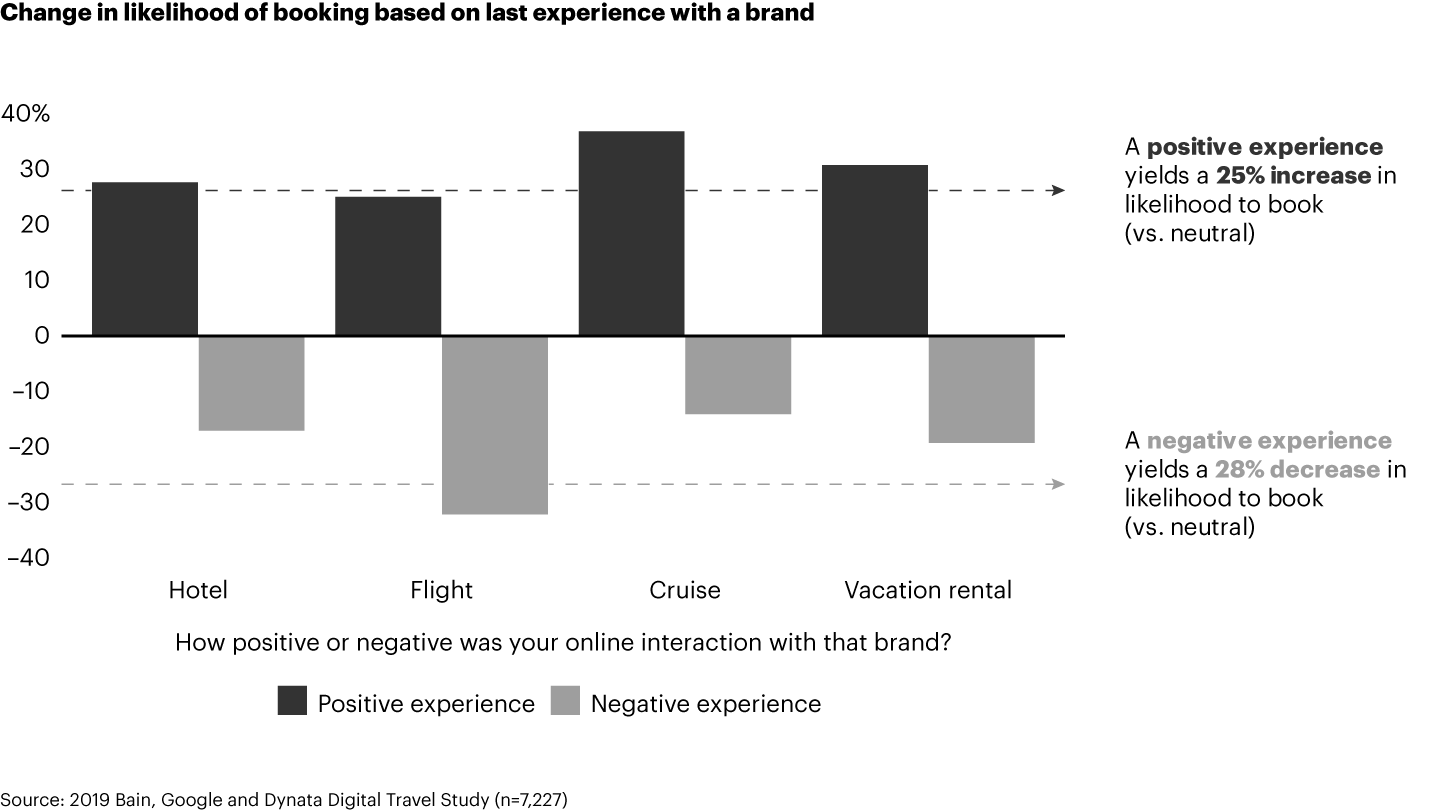

During the often-prolonged period before a purchase, brands must do well in all digital channels to remain in consideration—particularly the mobile channel. Consumers with a positive mobile experience pay a 16% premium and, in three out of five cases, are more likely to book with that brand again.
Voice assistants such as Alexa, Siri, Cortana and Google Assistant are gaining traction; about a quarter of the travelers we studied are ready to use voice search to research and book travel in the near future. As voice search matures, it is likely to free itself from specific hardware and evolve into a device-less channel that will need integration with the existing panoply of devices.
Winning each interaction can even mean bringing your own device to this already crowded party. Princess Cruises, for instance, has its own wearable device (sported in a wristband, pendant or clip, or kept in a handbag) that its travelers can use to make payments, bet in the casino, open their cabin door or speed up embarkation. It also allows cruisers to locate family and friends, a big unmet need as ships get bigger.
Operating models for the new path to purchase
Executives who target these three imperatives—acting on raw customer needs, de-averaging and personalizing marketing, and winning each traveler interaction—are often confounded by barriers within their own companies.
Many blockages are IT related, such as unintegrated systems, a proliferation of niche apps overwhelming travelers or customer data not being accessible across the organization. Other barriers are organizational, such as a culture more focused on org charts and old business silos than on divining what customers need.
Leading brands are promoting new ways of working to clear these obstacles, fostering Agile project management, collaboration and other pro-innovation cultural changes. Delta Air Lines crossed the org boundaries in this fashion. To support its strategic approach to customer experience, it created formal cross-functional mechanisms, including a steering committee spanning in-flight staff, airport workers and operational leaders. It is perhaps no coincidence that the US carrier has one of the most integrated airline customer apps, including booking, preflight notification, real-time bag tracking and loyalty program.
Tomorrow’s winners in travel will accelerate rapidly from data gathering to decision making; they’ll also flex budgets across brands, products and marketing channels, reallocating funds to promising areas unearthed by continual testing. Travelers won’t necessarily see these changes. But they’ll feel the difference in the streamlined path to purchase, and they may even come to enjoy what used to be a lengthy grind.
A practical starting point for executives
Take a fresh look at the data that you already have. Use it to deepen your understanding of who your key customers are—and how much they are worth to you over the course of their relationship with your brand. Examine whether you can deploy benchmarks more rigorously to pinpoint weaknesses across the full sweep of your customer interactions. And bear in mind that, having clarified the real business problem, the most effective leaders sequence their response as a gradual series of steps forward, aligning their teams around clear goals. Such an approach can produce short-term results while embedding learning and preparing the organization for a more automated way of working in the future.
Phil Kleweno is a Bain & Company partner based in Washington, DC, and he leads the firm’s Travel and Leisure vertical. Caterina Rovati is a Bain principal who led the study, and Karthik Venkataraman is a Bain partner; both are members of the Travel and Leisure vertical and based in Washington, DC. Laura Beaudin, a Bain partner based in San Francisco, leads the firm’s Global Marketing Excellence practice.
Elements of Value® is a registered trademark of Bain & Company, Inc.
Written in collaboration with
Written in collaboration with


Published in listopad 2019