Skip to Content
  • Offices

    Offices

    North & Latin America
    • Atlanta
    • Austin
    • Bogota
    • Boston
    • Buenos Aires
    • Chicago
    • Dallas
    • Denver
    • Houston
    • Los Angeles
    • Mexico City
    • Minneapolis
    • Monterrey
    • Montreal
    • New York
    • Rio de Janeiro
    • San Francisco
    • Santiago
    • São Paulo
    • Seattle
    • Silicon Valley
    • Toronto
    • Washington, DC
    Europe & Africa
    • Amsterdam
    • Athens
    • Berlin
    • Brussels
    • Copenhagen
    • Dusseldorf
    • Frankfurt
    • Helsinki
    • Istanbul
    • Johannesburg
    • Kyiv
    • Lisbon
    • London
    • Madrid
    • Milan
    • Munich
    • Oslo
    • Paris
    • Rome
    • Stockholm
    • Vienna
    • Warsaw
    • Zurich
    Middle East
    • Doha
    • Dubai
    • Riyadh
    Asia & Australia
    • Bangkok
    • Beijing
    • Bengaluru
    • Brisbane
    • Ho Chi Minh City
    • Hong Kong
    • Jakarta
    • Kuala Lumpur
    • Manila
    • Melbourne
    • Mumbai
    • New Delhi
    • Perth
    • Seoul
    • Shanghai
    • Singapore
    • Sydney
    • Tokyo
    See all offices
  • Alumni
  • Media Center
  • Subscribe
  • Contact
  • Global

    Select your region and language

    Global
    • Global (English)
    North & Latin America
    • Brazil (Português)
    • Argentina (Español)
    • Canada (Français)
    • Chile (Español)
    • Colombia (Español)
    Europe, Middle East, & Africa
    • France (Français)
    • DACH Region (Deutsch)
    • Italy (Italiano)
    • Spain (Español)
    • Greece (Elliniká)
    Asia & Australia
    • China (中文版)
    • Korea (한국어)
    • Japan (日本語)
  • Saved items (0)
    Saved items (0)

    You have no saved items.

    Bookmark content that interests you and it will be saved here for you to read or share later.

    Explore Bain Insights
  • Industries
    Main menu

    Industries

    • Aerospace & Defense
    • Agribusiness
    • Chemicals
    • Construction & Infrastructure
    • Consumer Products
    • Financial Services
    • Healthcare & Life Sciences
    • Industrial Machinery & Equipment
    • Media & Entertainment
      Industries
      Media & Entertainment
      • Media Lab
    • Metals
    • Mining
    • Oil & Gas
    • Paper & Packaging
    • Private Equity
      Industries
      Private Equity
      • Due Diligence
      • Exit Planning
      • Firm Strategy & Operations
      • Portfolio Value Creation
    • Social Impact
    • Retail
    • Technology
    • Telecommunications
      Industries
      Telecommunications
      • Capital Expenditure
      • Telco Digital Transformation
    • Transportation
    • Travel & Leisure
    • Utilities & Renewables
  • Consulting Services
    Main menu

    Consulting Services

    • Customer Experience
    • Sustainability
    • Innovation
    • M&A
    • Operations
    • People & Organization
    • Private Equity
    • Sales & Marketing
    • Strategy
    • AI, Insights, and Solutions
    • Technology
    • Transformation
  • Digital
  • Insights
    Main menu

    Insights

    • Industry Insights
    • Services Insights
    • Bain Books
    • Webinars
    • Bain Futures
    View all Insights
    Featured topics
    • Tariff Response
    • Artificial Intelligence
    • Thriving in Uncertainty
    • Executive Conversations
    • Macro Trends
    • M&A Report
    • Healthcare Private Equity Report
    • Paper & Packaging Report
    • Technology Report
    • CEO's Guide to Sustainability
    • CEO Insights
    • CFO Insights
    • COO Insights
    • CIO Insights
    • CMO Insights
    View all featured topics
  • About
    Main menu

    About

    • What We Do
    • What We Believe
    • Our People & Leadership
    • Client Results
    • Awards & Recognition
    • Global Affiliations
    Further: Our global responsibility
    • Sustainability
    • Social Impact
    • World Economic Forum
    Learn more about Further
  • Careers
    Main menu

    Careers

    • Work with Us
      Careers
      Work with Us
      • Find Your Place
      • Our Work Areas
      • Integrated Teams
      • Students
      • Internships & Programs
      • Recruiting Events
    • Life at Bain
      Careers
      Life at Bain
      • Blog: Inside Bain
      • Career Stories
      • Our People
      • Where We Work
      • Supporting Your Growth
      • Affinity Groups
      • Benefits
    • Impact Stories
    • Hiring Process
      Careers
      Hiring Process
      • What to Expect
      • Interviewing
    FIND JOBS
  • Offices
    Main menu

    Offices

    • North & Latin America
      Offices
      North & Latin America
      • Atlanta
      • Austin
      • Bogota
      • Boston
      • Buenos Aires
      • Chicago
      • Dallas
      • Denver
      • Houston
      • Los Angeles
      • Mexico City
      • Minneapolis
      • Monterrey
      • Montreal
      • New York
      • Rio de Janeiro
      • San Francisco
      • Santiago
      • São Paulo
      • Seattle
      • Silicon Valley
      • Toronto
      • Washington, DC
    • Europe & Africa
      Offices
      Europe & Africa
      • Amsterdam
      • Athens
      • Berlin
      • Brussels
      • Copenhagen
      • Dusseldorf
      • Frankfurt
      • Helsinki
      • Istanbul
      • Johannesburg
      • Kyiv
      • Lisbon
      • London
      • Madrid
      • Milan
      • Munich
      • Oslo
      • Paris
      • Rome
      • Stockholm
      • Vienna
      • Warsaw
      • Zurich
    • Middle East
      Offices
      Middle East
      • Doha
      • Dubai
      • Riyadh
    • Asia & Australia
      Offices
      Asia & Australia
      • Bangkok
      • Beijing
      • Bengaluru
      • Brisbane
      • Ho Chi Minh City
      • Hong Kong
      • Jakarta
      • Kuala Lumpur
      • Manila
      • Melbourne
      • Mumbai
      • New Delhi
      • Perth
      • Seoul
      • Shanghai
      • Singapore
      • Sydney
      • Tokyo
    See all offices
  • Alumni
  • Media Center
  • Subscribe
  • Contact
  • Global
    Main menu

    Select your region and language

    • Global
      Select your region and language
      Global
      • Global (English)
    • North & Latin America
      Select your region and language
      North & Latin America
      • Brazil (Português)
      • Argentina (Español)
      • Canada (Français)
      • Chile (Español)
      • Colombia (Español)
    • Europe, Middle East, & Africa
      Select your region and language
      Europe, Middle East, & Africa
      • France (Français)
      • DACH Region (Deutsch)
      • Italy (Italiano)
      • Spain (Español)
      • Greece (Elliniká)
    • Asia & Australia
      Select your region and language
      Asia & Australia
      • China (中文版)
      • Korea (한국어)
      • Japan (日本語)
  • Saved items  (0)
    Main menu
    Saved items (0)

    You have no saved items.

    Bookmark content that interests you and it will be saved here for you to read or share later.

    Explore Bain Insights
  • Industries
    • Industries

      • Aerospace & Defense
      • Agribusiness
      • Chemicals
      • Construction & Infrastructure
      • Consumer Products
      • Financial Services
      • Healthcare & Life Sciences
      • Industrial Machinery & Equipment
      • Media & Entertainment
      • Metals
      • Mining
      • Oil & Gas
      • Paper & Packaging
      • Private Equity
      • Social Impact
      • Retail
      • Technology
      • Telecommunications
      • Transportation
      • Travel & Leisure
      • Utilities & Renewables
  • Consulting Services
    • Consulting Services

      • Customer Experience
      • Sustainability
      • Innovation
      • M&A
      • Operations
      • People & Organization
      • Private Equity
      • Sales & Marketing
      • Strategy
      • AI, Insights, and Solutions
      • Technology
      • Transformation
  • Digital
  • Insights
    • Insights

      • Industry Insights
      • Services Insights
      • Bain Books
      • Webinars
      • Bain Futures
      View all Insights
      Featured topics
      • Tariff Response
      • Artificial Intelligence
      • Thriving in Uncertainty
      • Executive Conversations
      • Macro Trends
      • M&A Report
      • Healthcare Private Equity Report
      • Paper & Packaging Report
      • Technology Report
      • CEO's Guide to Sustainability
      • CEO Insights
      • CFO Insights
      • COO Insights
      • CIO Insights
      • CMO Insights
      View all featured topics
  • About
    • About

      • What We Do
      • What We Believe
      • Our People & Leadership
      • Client Results
      • Awards & Recognition
      • Global Affiliations
      Further: Our global responsibility
      • Sustainability
      • Social Impact
      • World Economic Forum
      Learn more about Further
  • Careers
    Popular Searches
    • Agile
    • Digital
    • Strategy
    Your Previous Searches
      Recently Visited Pages

      Content added to saved items

      Saved items (0)

      Removed from saved items

      Saved items (0)

      Brief

      As Digital Currencies Start to Embed in the Payments System, What Role for Banks?

      As Digital Currencies Start to Embed in the Payments System, What Role for Banks?

      To avoid disintermediation and realize the potential benefits, banks need to decide now what their investment posture is and how far they want to engage.

      By Sen Ganesh, Alastair Kendall, Thomas Olsen, and Rachel Amory

      • min read
      }

      Brief

      As Digital Currencies Start to Embed in the Payments System, What Role for Banks?
      en
      At a Glance
      • Digital currencies hold the promise of programmability, enriched data, lower costs, and faster payments. Banks, governments, and fintechs are beginning to deploy the currencies in different payment situations.
      • We foresee that digital and traditional currencies will coexist, though the pace of a market’s evolution will depend on regulation and adoption of web3 services.
      • Unless banks carve out a clear role in digital currencies, they risk getting disintermediated from the customer. Bain research shows non-bank digital wallet providers or crypto platforms are building this customer relationship.
      • Banks need to start making choices now on how far and where they want to participate, by selecting the appropriate applications, service lines, and infrastructure, and by fostering the right partnerships.

      Fast-emerging digital currencies have the potential to affect 5% to 10%—or more—of the global payments market by 2030, Bain & Company estimates. Central banks, global banks, and digital native fintechs are vying to establish their solutions as the standard for this evolution of the payments system.

      Many large banks, for instance, have been tinkering with digital currencies, but often are doing so through dozens of different initiatives. Now they have an opportunity to focus on using digital currencies in new payments solutions for their clients. Such solutions hold the promise of programmability, enriched data, lower costs, and faster payments.

      Success in this realm, however, requires taking the long view on resources and returns. Banks will want to develop a clear strategy appropriate to their point of departure, based on understanding how digital currencies will play out and which factors should trigger action on their part.

      The family of digital currencies, and their potential benefits

      Of all the competing digital currencies and tokens, we focus here on four types of digital currency: central bank digital currency (CBDC), with more than 100 countries exploring the merits of a centrally issued currency; tokenized bank deposits representing a claim on a bank; stablecoins pegged to external source of value, such as a US Dollar Coin (USDC); and cryptocurrencies like Bitcoin, not pegged to an underlying asset.

      Digital currencies have several potential benefits:

      • Real-time, anytime settlement. Round-the-clock certainty of settlement with a counterparty would allow the payer and the payment processing firm to free up trapped pools of liquidity, optimizing working capital and collateral.
      • Programmability. Digital currencies could enable conditional, event-driven, and automated initiation and settlement of payments through the use of smart contracts tied to the currency.
      • Cost efficiency. Using blockchain technology may eliminate or reduce back-office processes such as manual repairs due to failure, sanctions screening, and compliance reporting.
      • Enriched data sets. The data exhaust from payments would provide information required to understand the nature of the payment and reconcile it with transactions.

      Use cases with the greatest potential

      These likely benefits open the door to a broad range of applications for digital currencies (see Figure 1). Those on the right side of the figure are easiest to implement with existing methods that are either in place (such as web3 native cases) or that are being developed. Those on the left side have higher obstacles to adoption given multiple jurisdictions (such as cross-border payments) or a need for integration to complex back-end enterprise resource planning (ERP) systems (such as business-to-business, or B2B, payments). Let’s review each in turn.

      Figure 1
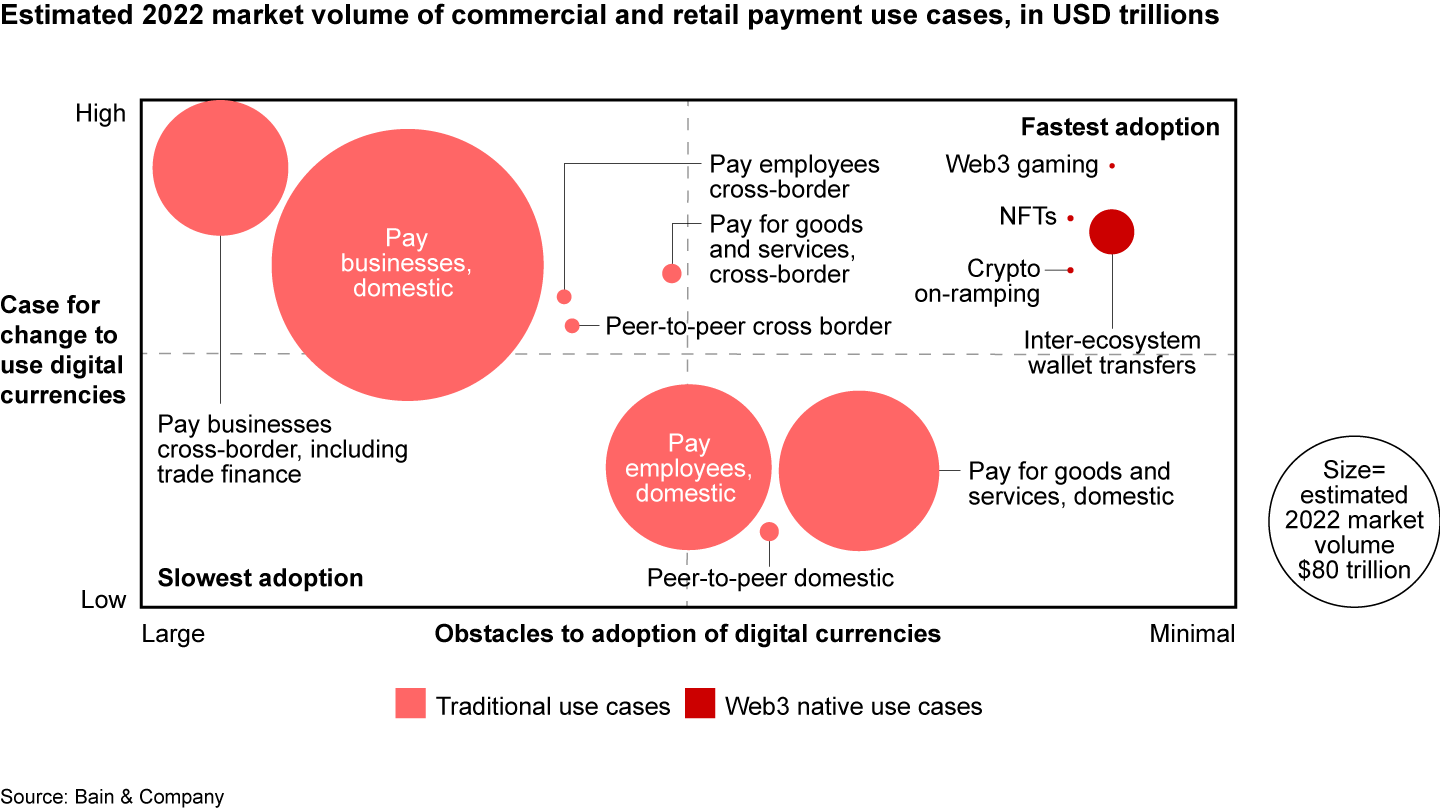
      The most immediate payment opportunities for digital currencies are web3 native applications, then traditional cross-border applications
      The most immediate payment opportunities for digital currencies are web3 native applications, then traditional cross-border applications
      The most immediate payment opportunities for digital currencies are web3 native applications, then traditional cross-border applications

      B2B payments, including supplier payments and intracompany payments (especially cross-border payments), will benefit greatly due to the instantaneous settlement that digital currencies provide. They optimize liquidity requirements and improve automation, enabling the conditional initiation of payment for goods through smart contacts, and may ease reconciliation requirements. There are, however, a number of obstacles due to the requirement to integrate with existing ERP systems and the need for more data to enable rapid reconciliation.

      Card giants Visa and Mastercard are exploring the use of digital currencies to make everyday payments on their networks. Between them, the companies have announced partnerships with Coinbase, Bakkt, Gemini, BitPay, and others to support emerging payment forms.

      Businesses paying employees or customers, including payroll, marketplace disbursements, refunds, and insurance claims, will benefit from programmability to automatically initiate payments such as instant disbursement upon completion of an employee’s shift. In turn, this should reduce operational costs for banks and their corporate clients. This is considered easier to adopt than B2B payments, requiring only employees or consumers to hold digital wallets—many of which are prevalent today.

      Consumer-to-merchant payment for goods and services currently is restricted to certain applications or merchants such as Shopify that are willing to accept digital currencies in return for goods and services in some countries.

      The rise of CBDCs could make such consumer-to-merchant transactions a competitive battleground if governments mandate retail CBDC usage. For instance, China’s e-CNY pilot, a digital yuan, is designed to provide a convenient complement to cash as an alternative to the duopoly of Alipay and WeChat Pay, with 140 million individual accounts and 10 million corporate accounts as of October 2021. Domestic CBDCs remain nascent, and interoperability across borders constitutes an even larger leap, though countries are exploring initiatives to make that leap, such as Project Dunbar led by the Bank for International Settlements in partnership with the Australian, Malaysian, Singaporean, and South African central banks.

      Payments for goods and services have a lower case for change given existing popular methods such as cards. However, the ease of adoption is considered simpler, as consumers and merchants need only a wallet to interact, and as traditional incumbents open acceptance networks in certain use cases to foster adoption.

      Peer-to-peer payments is one of the simpler use cases for adoption. It requires only a wallet held by both payer and payee, and much of this exists today through crypto wallets. However, the case for change here is slightly weaker, because fintechs have already sprung up to solve problems around cost and speed, even if some are using digital-currency rails.

      Web3 native use cases represent the third generation of the Internet, a more interoperable system that includes digital currencies to transfer money within a digital ecosystem. Native web3 use cases have been the biggest spur to digital currency usage among consumers, albeit from a relatively small base. Related applications include payment for gaming, purchase of non-fungible tokens, inter-ecosystem transfers between wallets, and ultimately the on- and off-ramping of cryptocurrencies to fund such purchases. Web3 wallets, such as MetaMask, create tools for identity, custody, and payment, helping to streamline the customer experience. As web3 evolves, the use of digital currencies will rise in parallel.

      Wholesale payments, including those between financial institutions, where growth will likely be fastest, are among other important applications not shown in the figure. Digital currencies can be programmed to match payments to transfers, reducing the need for collateral or liquidity, and lowering costs. One example is the bank-led consortium with J.P. Morgan, DBS, and Temasek, which formed Partior to enable real-time, cross-border wholesale payments.

      Digital and traditional currencies will likely coexist

      Demand for digital currencies first developed through crypto use cases. Bain’s recent Web3 Retail Tracker survey of 2,000 US adults finds that 13% currently own digital currencies. Of those who don’t already own digital currencies, an additional 10% of respondents would consider buying them even though the crypto market continues to be uncertain and underregulated.

      Given future demand, the payments market could evolve under a variety of potential scenarios, which would differ by country depending on the competitive dynamics and stance of the central bank and government (see Figure 2).      

      Figure 2
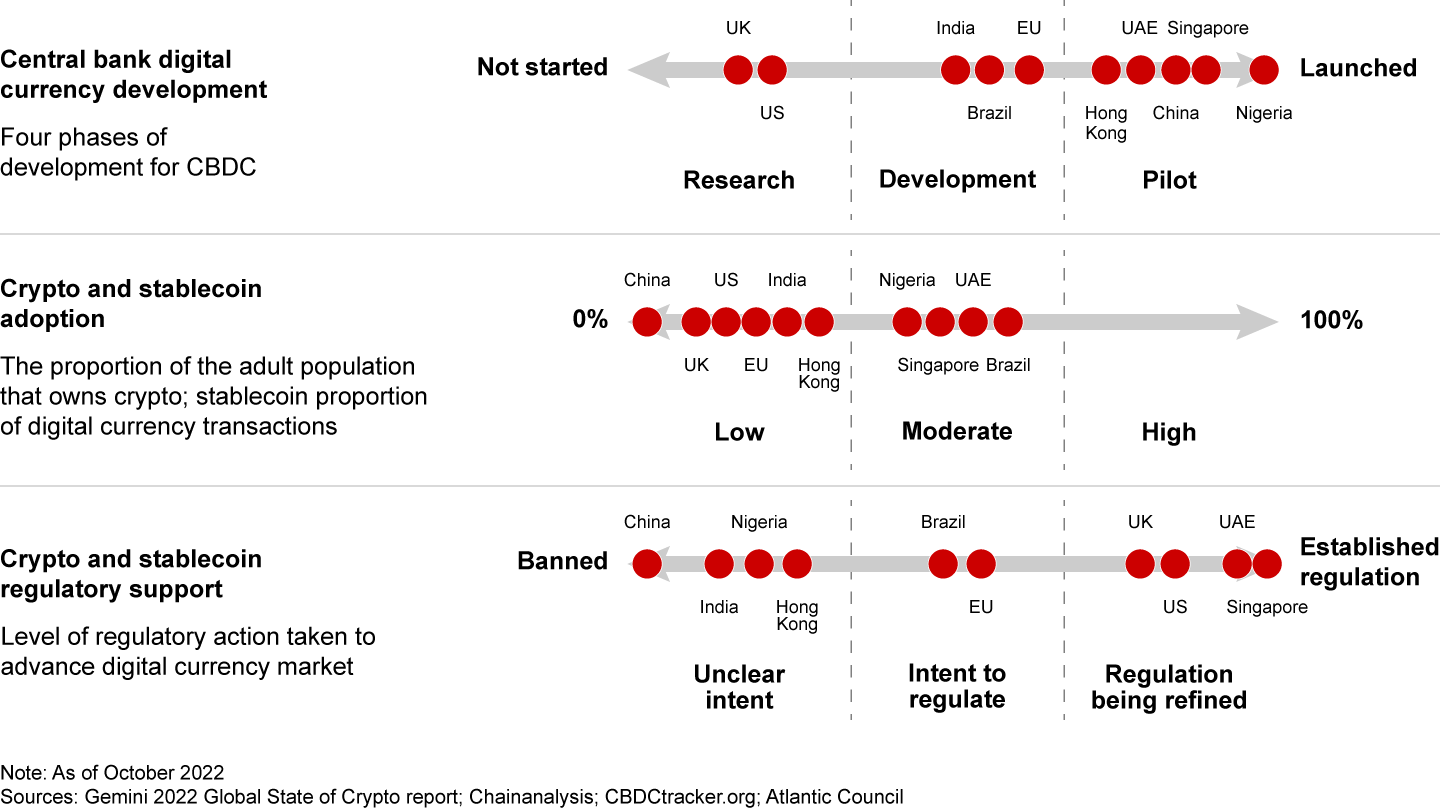
      The maturity of digital currencies varies by country

      At one extreme, the status quo could endure, with digital currencies on the periphery or limited to niche use cases. At the other extreme, they could grow and be interchangeable with, or even replace, traditional currency. As the figure shows, some governments favor CBDC over stablecoin; others favor the reverse. We view the most likely scenario as multiple digital currency payments methods coexisting alongside traditional payments for the foreseeable future.

      What banks should scan for

      Leading companies identify trigger points, signposts, and metrics to help them spot changes before the competition does and capitalize on the flexibility embedded in their strategies.

      In the case of digital currencies, the following factors will largely drive adoption, and close monitoring of these factors will be critical for any bank that hopes to participate in the market:

      • Regulation about how digital currencies should be treated in the banking system and who can gain access to them. Recent market turbulence in some cryptocurrencies has pushed regulators to act. Bringing clarity to the treatment of digital currencies—who can issue, use, and store them, and what compliance requirements will consist of—will spur more regulated financial institutions to accelerate their acceptance of digital currencies.
      • The pace of development of web3 services by financial institutions and technology companies building foundational services such as digital identity, custodial services, and acceptance solutions.
      • Client demand for new payments solutions.   
      • Industry collaboration. Major moves by tech companies or banks that shift the market, offering proprietary or industry-wide solutions, will prompt adoption for specific use cases.

      The clear business case for banks

      For banks weighing whether to take action on digital currencies, the business case is clear on several dimensions.

      To start, banks must avoid disintermediation from end customers. Returning to Bain’s Web3 Retail Tracker survey, respondents owning digital currencies overwhelmingly use non-bank providers (see Figure 3). Use of payment companies such as PayPal and Cash App is almost as high as specialist crypto exchanges.      

      Figure 3
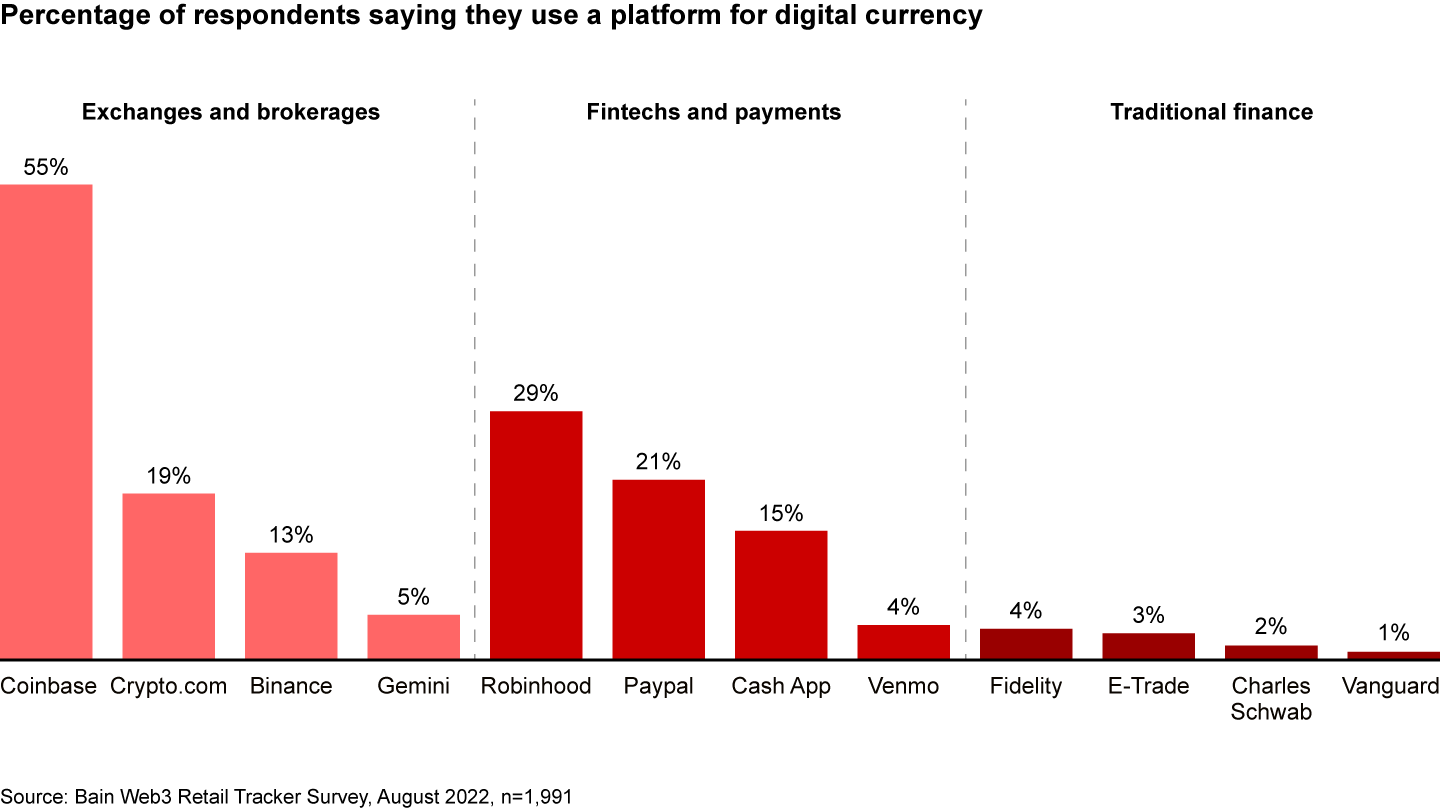
      Exchanges and fintech or payment companies handle more digital currency than traditional providers
      Exchanges and fintech or payment companies handle more digital currency than traditional providers
      Exchanges and fintech or payment companies handle more digital currency than traditional providers

      As consumers increasingly interact with digital wallets provided by payment companies and loaded with digital currency, banks risk getting cut out entirely and watching their payments and ancillary revenue pools dry up.

      Beyond creating a major risk of disintermediation, digital currencies could open up innovative payments solutions for banks that would help corporate clients reduce costs and enable new services, including payment on delivery of goods and automatic insurance claims payouts. And payments data will contribute to a deeper understanding of clients, so as to improve credit decisions and develop more personalized banking products.

      Digital currencies will also reduce costs per transaction over the long run, with greater speed and automation eliminating manual back-end processes. To be sure, these benefits will only come after meaningful investment to shift from current payment rails to blockchain rails.

      What should banks do now?

      The right actions taken by banks will depend on their size and the maturity of the regulatory and competitive landscape in which they operate. Large regional and global banks have payments and broader revenue pools (such as consumer and business deposits and revolving credit) that could be at risk of longer-term disruption. Or they may just have the investment capacity to target emerging revenue pools and invest aggressively.

      Banks may either go it alone or join an initiative. As an example of the former, J.P. Morgan has set up Onyx and JPM Coin as a new payment rail to facilitate programmable, real-time, multi-currency payments. It also offers delivery-versus-payment and payment-versus-payment options to solve current cross-border hurdles.

      Some firms are collaborating even if the immediate payoff is not obvious. The European Central Bank announced that it would be partnering with CaixaBank, Worldline, and Nexi, as well as Amazon and EPI, to develop prototypes of different functions of a digital euro, due to be piloted in 2023.

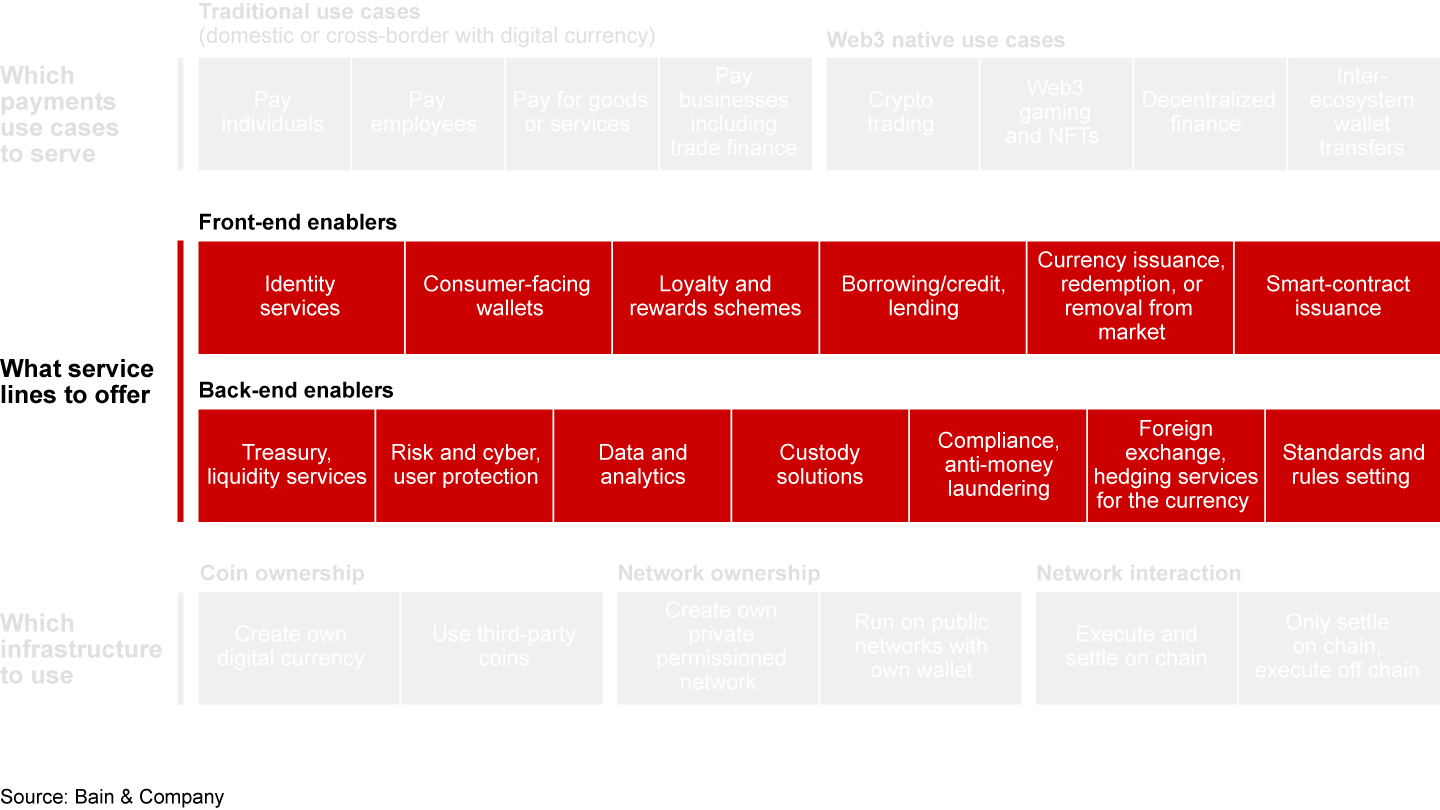
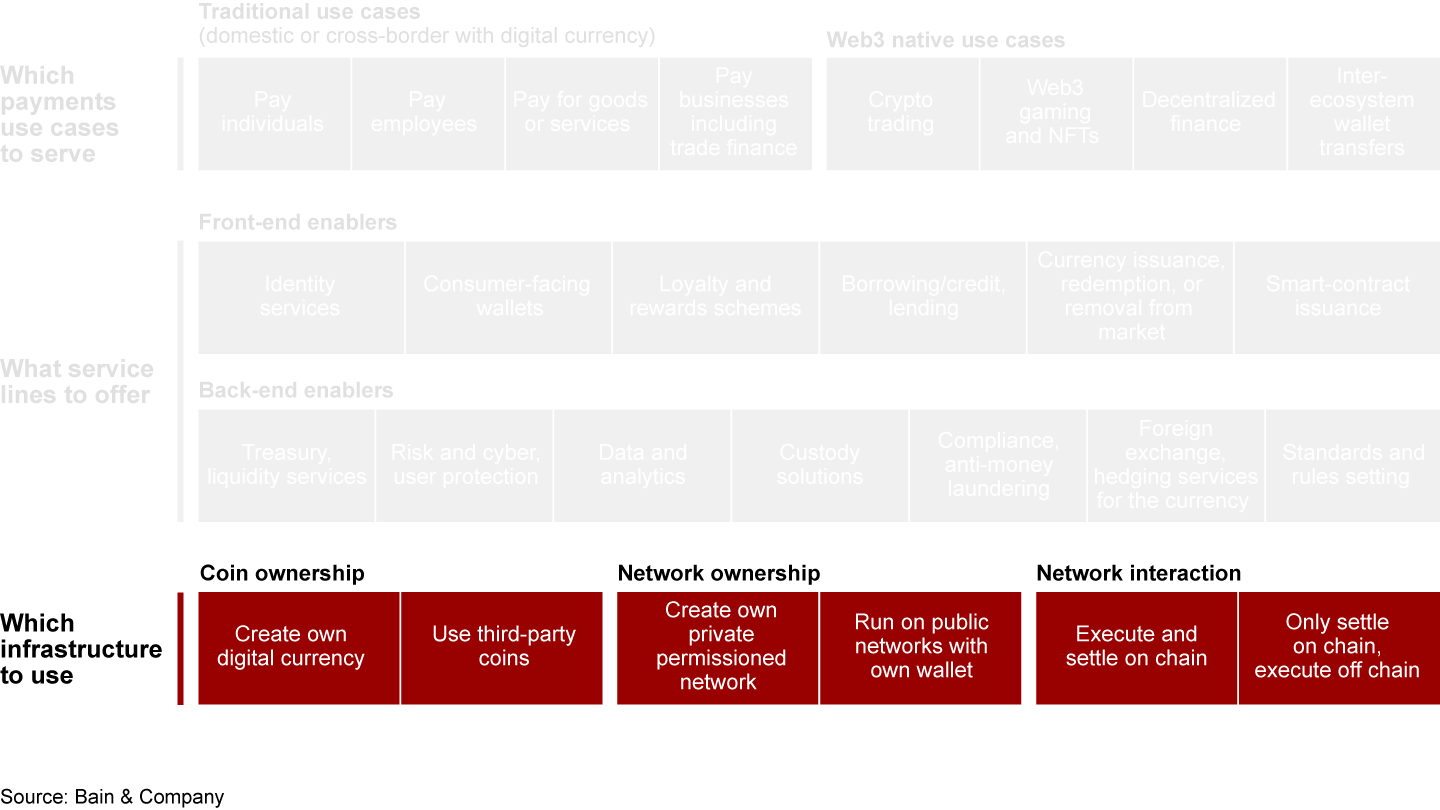
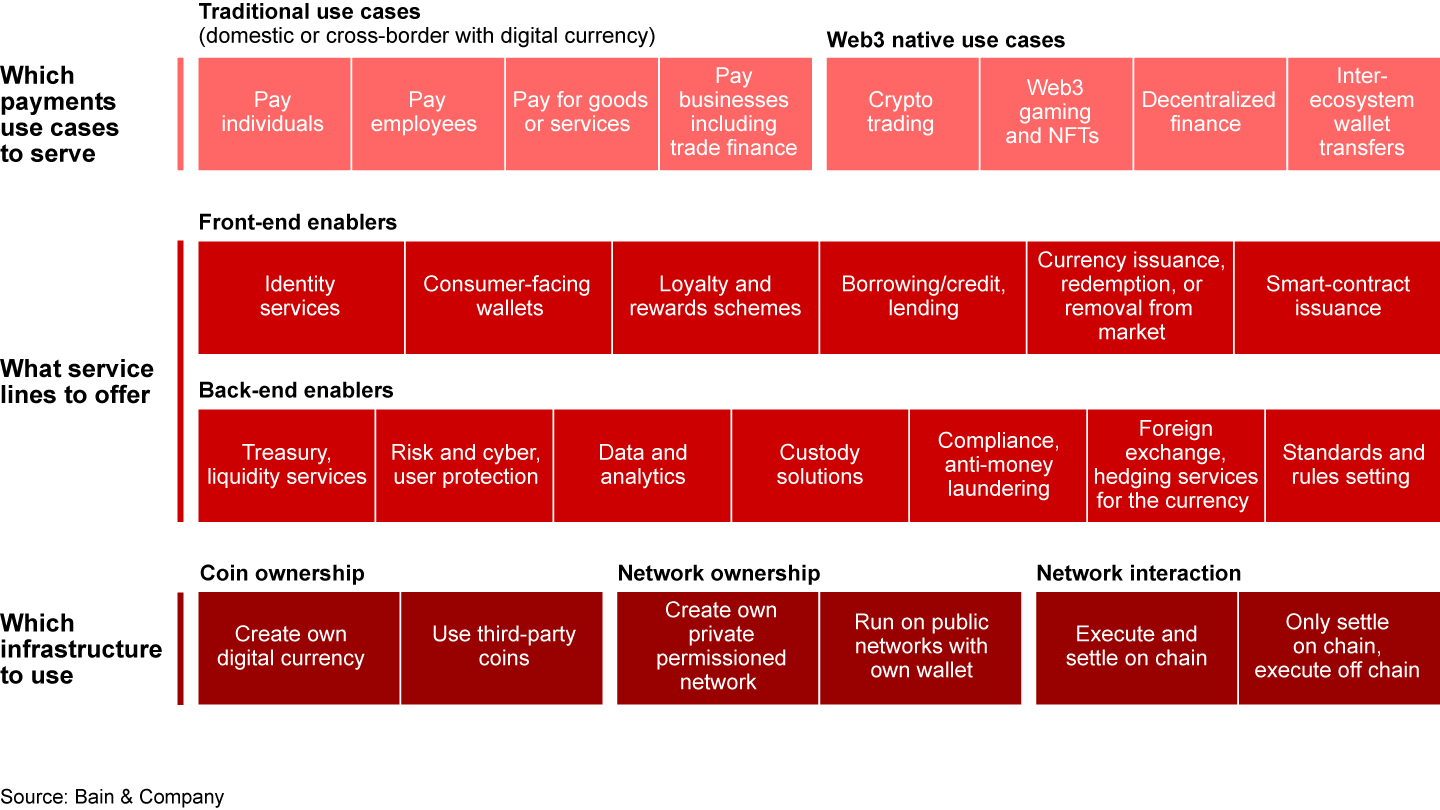
      Smaller banks can probably afford to wait until payments solutions have been more established. But they should monitor signals and prepare to move quickly as use cases take hold to select the appropriate use cases, service lines, and infrastructure (see Figure 4).

      Figure 4a
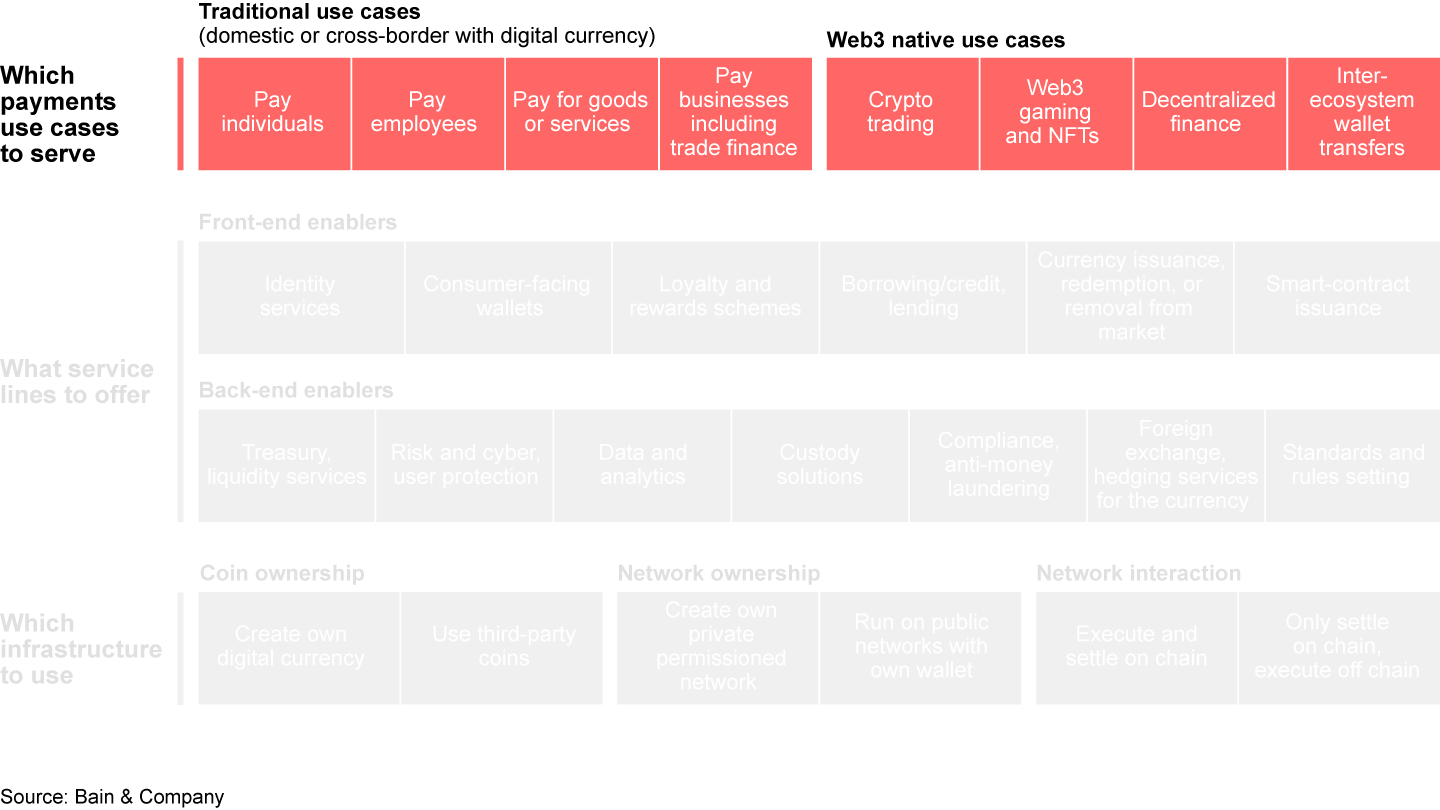
      Financial institutions face decisions on three major dimensions
      Financial institutions face decisions on three major dimensions
      Financial institutions face decisions on three major dimensions
      Figure 4b
      Financial institutions face decisions on three major dimensions
      Financial institutions face decisions on three major dimensions
      Financial institutions face decisions on three major dimensions
      Figure 4c
      Financial institutions face decisions on three major dimensions
      Financial institutions face decisions on three major dimensions
      Financial institutions face decisions on three major dimensions
      Figure 4d
      Financial institutions face decisions on three major dimensions
      Financial institutions face decisions on three major dimensions
      Financial institutions face decisions on three major dimensions

      ​Every bank, though, should gain a clear view on the role of payments in its strategy and within the organization. Banks can address the following questions to avoid being left behind:

      How will digital currencies affect our payments strategy and client value proposition?

      • What are the top five applications and opportunities we can tap into?
      • Which use cases will create economic value, whether through cost savings, revenue lift, or protection of current revenue pools?
      • How can we engage our clients on new digital currencies solutions?

      Which market developments in digital assets should trigger action from us?

      • What are the three to five metrics or events, such as the passage of certain regulations, that will trigger our initiatives and investment?

      How should we prepare the organization?

      • Do we possess the right technology, talent, operating model, and institutional knowledge to scale up the use of digital currencies if they take hold?
      • What is the right level of investment and time horizon when weighing these initiatives?
      • Will we build, partner, or buy? Who will we collaborate with?
      • What no-regret actions should we take now?

      Regardless of where a financial institution might want to participate, the time has come to prepare. First movers are establishing capabilities that could become difficult to displace, and corporate customers are showing signs of interest in how digital currencies can improve their payments. Without a clear strategy and the capabilities to execute it, financial institutions will not be able to take advantage of the emerging role of digital currencies in payments.

      Authors
      • Headshot of Sen Ganesh
        Sen Ganesh
        Partner, Bangkok
      • Headshot of Alastair Kendall
        Alastair Kendall
        Partner, London
      • Headshot of Thomas Olsen
        Thomas Olsen
        Partner, New York
      • Headshot of Rachel Amory
        Rachel Amory
        Alumni, New York
      Contact us
      Related Industries
      • Banking
      • Digital Assets and Blockchain
      • Financial Services
      • Fintech
      • Payments
      Related Consulting Services
      • Web3
      Financial Services
      From Niche to Utility: Stablecoins Move toward the Financial Mainstream

      Widespread adoption depends on regulatory clarity, a compelling value proposition, and seamless integration with legacy systems.

      Read More
      Financial Services
      Digital Euro: Following the Journey

      Bain’s Ricardo Correia and Nexi’s Alessandro Agnoletti discuss the Digital Euro initiative and what it means for the future of banking in Europe.

      Read More
      Financial Services
      Can US Banks Protect Their Card-Issuing Business?

      Consumer payments have been gravitating to neobanks and technology firms.

      Read More
      Financial Services
      How Tokenization Can Fuel a $400 Billion Opportunity in Distributing Alternative Investments to Individuals

      Tokenization could revolutionize access to alternatives, unlocking revenues for managers and distributors while enabling higher-quality portfolios for wealthy individuals.

      Read More
      Financial Services
      The Fragmentation of Wholesale Payments Calls for Banks to Remake Their Approach

      Banks have a dominant position, but competitors look set to take market share.

      Read More
      Published in Aralık 2022
      Tags
      • Banking
      • Digital Assets and Blockchain
      • Financial Services
      • Fintech
      • Payments
      • Web3

      How We've Helped Clients

      Blockchain-enabled Payment Flows: A Payments Company Reviews its Strategy

      Read case study

      A Digital-First Bank Finds a Customer-Driven Path to Profitability

      Read case study

      The change process unlocks potential and profits

      Read case study

      Ready to talk?

      We work with ambitious leaders who want to define the future, not hide from it. Together, we achieve extraordinary outcomes.

      Stay ahead in a rapidly changing world. Subscribe to Bain Insights, our monthly look at the critical issues facing global businesses.

      *I have read and understand Bain’s Privacy Notice.

      Please read and agree to the Privacy Policy.
      Bain & Company
      Contact us Sustainability Accessibility Terms of use Privacy Modern Slavery Act Statement Cookie Policy Sitemap Log In

      © 1996-2026 Bain & Company, Inc.

      Contact Bain

      How can we help you?

      • Business inquiry
      • Career information
      • Press relations
      • Partnership request
      • Speaker request
      See all offices