Skip to Content
  • Offices

    Offices

    North & Latin America
    • Atlanta
    • Austin
    • Bogota
    • Boston
    • Buenos Aires
    • Chicago
    • Dallas
    • Denver
    • Houston
    • Los Angeles
    • Mexico City
    • Minneapolis
    • Monterrey
    • Montreal
    • New York
    • Rio de Janeiro
    • San Francisco
    • Santiago
    • São Paulo
    • Seattle
    • Silicon Valley
    • Toronto
    • Washington, DC
    Europe & Africa
    • Amsterdam
    • Athens
    • Berlin
    • Brussels
    • Copenhagen
    • Dusseldorf
    • Frankfurt
    • Helsinki
    • Istanbul
    • Johannesburg
    • Kyiv
    • Lisbon
    • London
    • Madrid
    • Milan
    • Munich
    • Oslo
    • Paris
    • Rome
    • Stockholm
    • Vienna
    • Warsaw
    • Zurich
    Middle East
    • Doha
    • Dubai
    • Riyadh
    Asia & Australia
    • Bangkok
    • Beijing
    • Bengaluru
    • Brisbane
    • Ho Chi Minh City
    • Hong Kong
    • Jakarta
    • Kuala Lumpur
    • Manila
    • Melbourne
    • Mumbai
    • New Delhi
    • Perth
    • Seoul
    • Shanghai
    • Singapore
    • Sydney
    • Tokyo
    See all offices
  • Alumni
  • Media Center
  • Subscribe
  • Contact
  • Global

    Select your region and language

    Global
    • Global (English)
    North & Latin America
    • Brazil (Português)
    • Argentina (Español)
    • Canada (Français)
    • Chile (Español)
    • Colombia (Español)
    Europe, Middle East, & Africa
    • France (Français)
    • DACH Region (Deutsch)
    • Italy (Italiano)
    • Spain (Español)
    • Greece (Elliniká)
    Asia & Australia
    • China (中文版)
    • Korea (한국어)
    • Japan (日本語)
  • Saved items (0)
    Saved items (0)

    You have no saved items.

    Bookmark content that interests you and it will be saved here for you to read or share later.

    Explore Bain Insights
  • Industries
    Main menu

    Industries

    • Aerospace & Defense
    • Agribusiness
    • Chemicals
    • Construction & Infrastructure
    • Consumer Products
    • Financial Services
    • Healthcare & Life Sciences
    • Industrial Machinery & Equipment
    • Media & Entertainment
      Industries
      Media & Entertainment
      • Media Lab
    • Metals
    • Mining
    • Oil & Gas
    • Paper & Packaging
    • Private Equity
      Industries
      Private Equity
      • Due Diligence
      • Exit Planning
      • Firm Strategy & Operations
      • Portfolio Value Creation
    • Social Impact
    • Retail
    • Technology
    • Telecommunications
      Industries
      Telecommunications
      • Capital Expenditure
      • Telco Digital Transformation
    • Transportation
    • Travel & Leisure
    • Utilities & Renewables
  • Consulting Services
    Main menu

    Consulting Services

    • Customer Experience
    • Sustainability
    • Innovation
    • M&A
    • Operations
    • People & Organization
    • Private Equity
    • Sales & Marketing
    • Strategy
    • AI, Insights, and Solutions
    • Technology
    • Transformation
  • Digital
  • Insights
    Main menu

    Insights

    • Industry Insights
    • Services Insights
    • Bain Books
    • Webinars
    • Bain Futures
    View all Insights
    Featured topics
    • Tariff Response
    • Artificial Intelligence
    • Thriving in Uncertainty
    • Executive Conversations
    • Macro Trends
    • M&A Report
    • Healthcare Private Equity Report
    • Paper & Packaging Report
    • Technology Report
    • CEO's Guide to Sustainability
    • CEO Insights
    • CFO Insights
    • COO Insights
    • CIO Insights
    • CMO Insights
    View all featured topics
  • About
    Main menu

    About

    • What We Do
    • What We Believe
    • Our People & Leadership
    • Client Results
    • Awards & Recognition
    • Global Affiliations
    Further: Our global responsibility
    • Sustainability
    • Social Impact
    • World Economic Forum
    Learn more about Further
  • Careers
    Main menu

    Careers

    • Work with Us
      Careers
      Work with Us
      • Find Your Place
      • Our Work Areas
      • Integrated Teams
      • Students
      • Internships & Programs
      • Recruiting Events
    • Life at Bain
      Careers
      Life at Bain
      • Blog: Inside Bain
      • Career Stories
      • Our People
      • Where We Work
      • Supporting Your Growth
      • Affinity Groups
      • Benefits
    • Impact Stories
    • Hiring Process
      Careers
      Hiring Process
      • What to Expect
      • Interviewing
    FIND JOBS
  • Offices
    Main menu

    Offices

    • North & Latin America
      Offices
      North & Latin America
      • Atlanta
      • Austin
      • Bogota
      • Boston
      • Buenos Aires
      • Chicago
      • Dallas
      • Denver
      • Houston
      • Los Angeles
      • Mexico City
      • Minneapolis
      • Monterrey
      • Montreal
      • New York
      • Rio de Janeiro
      • San Francisco
      • Santiago
      • São Paulo
      • Seattle
      • Silicon Valley
      • Toronto
      • Washington, DC
    • Europe & Africa
      Offices
      Europe & Africa
      • Amsterdam
      • Athens
      • Berlin
      • Brussels
      • Copenhagen
      • Dusseldorf
      • Frankfurt
      • Helsinki
      • Istanbul
      • Johannesburg
      • Kyiv
      • Lisbon
      • London
      • Madrid
      • Milan
      • Munich
      • Oslo
      • Paris
      • Rome
      • Stockholm
      • Vienna
      • Warsaw
      • Zurich
    • Middle East
      Offices
      Middle East
      • Doha
      • Dubai
      • Riyadh
    • Asia & Australia
      Offices
      Asia & Australia
      • Bangkok
      • Beijing
      • Bengaluru
      • Brisbane
      • Ho Chi Minh City
      • Hong Kong
      • Jakarta
      • Kuala Lumpur
      • Manila
      • Melbourne
      • Mumbai
      • New Delhi
      • Perth
      • Seoul
      • Shanghai
      • Singapore
      • Sydney
      • Tokyo
    See all offices
  • Alumni
  • Media Center
  • Subscribe
  • Contact
  • Global
    Main menu

    Select your region and language

    • Global
      Select your region and language
      Global
      • Global (English)
    • North & Latin America
      Select your region and language
      North & Latin America
      • Brazil (Português)
      • Argentina (Español)
      • Canada (Français)
      • Chile (Español)
      • Colombia (Español)
    • Europe, Middle East, & Africa
      Select your region and language
      Europe, Middle East, & Africa
      • France (Français)
      • DACH Region (Deutsch)
      • Italy (Italiano)
      • Spain (Español)
      • Greece (Elliniká)
    • Asia & Australia
      Select your region and language
      Asia & Australia
      • China (中文版)
      • Korea (한국어)
      • Japan (日本語)
  • Saved items  (0)
    Main menu
    Saved items (0)

    You have no saved items.

    Bookmark content that interests you and it will be saved here for you to read or share later.

    Explore Bain Insights
  • Industries
    • Industries

      • Aerospace & Defense
      • Agribusiness
      • Chemicals
      • Construction & Infrastructure
      • Consumer Products
      • Financial Services
      • Healthcare & Life Sciences
      • Industrial Machinery & Equipment
      • Media & Entertainment
      • Metals
      • Mining
      • Oil & Gas
      • Paper & Packaging
      • Private Equity
      • Social Impact
      • Retail
      • Technology
      • Telecommunications
      • Transportation
      • Travel & Leisure
      • Utilities & Renewables
  • Consulting Services
    • Consulting Services

      • Customer Experience
      • Sustainability
      • Innovation
      • M&A
      • Operations
      • People & Organization
      • Private Equity
      • Sales & Marketing
      • Strategy
      • AI, Insights, and Solutions
      • Technology
      • Transformation
  • Digital
  • Insights
    • Insights

      • Industry Insights
      • Services Insights
      • Bain Books
      • Webinars
      • Bain Futures
      View all Insights
      Featured topics
      • Tariff Response
      • Artificial Intelligence
      • Thriving in Uncertainty
      • Executive Conversations
      • Macro Trends
      • M&A Report
      • Healthcare Private Equity Report
      • Paper & Packaging Report
      • Technology Report
      • CEO's Guide to Sustainability
      • CEO Insights
      • CFO Insights
      • COO Insights
      • CIO Insights
      • CMO Insights
      View all featured topics
  • About
    • About

      • What We Do
      • What We Believe
      • Our People & Leadership
      • Client Results
      • Awards & Recognition
      • Global Affiliations
      Further: Our global responsibility
      • Sustainability
      • Social Impact
      • World Economic Forum
      Learn more about Further
  • Careers
    Popular Searches
    • Agile
    • Digital
    • Strategy
    Your Previous Searches
      Recently Visited Pages

      Content added to saved items

      Saved items (0)

      Removed from saved items

      Saved items (0)

      Energy & Natural Resources Report

      Investing in New Growth Businesses in Energy and Natural Resources

      Investing in New Growth Businesses in Energy and Natural Resources

      Most companies are already building several Engine 2 businesses.

      By Brian Murphy, Peter Parry, Neelam Phadke, and Alasdair Robbie

      • min read
      }

      Report

      Investing in New Growth Businesses in Energy and Natural Resources
      en
      At a Glance
      • For many companies in the energy and natural resources sector, the path to success depends on investing in new growth businesses—what we call Engine 2.
      • Companies whose core businesses are most affected by the energy and resource transition are investing most aggressively.
      • Many of these Engine 2 businesses are low-carbon ventures, including renewable power generation, carbon capture and storage, green hydrogen, and new forms of electric mobility.
      • These investments are blurring business boundaries, such as European oil and gas companies investing heavily in renewable power generation and electric vehicle charging stations.

      This article is part of Bain’s Energy and Natural Resources Report 2022

      Explore the report

      For many energy and mining companies, big reductions in emissions in recent years have resulted from divestments: selling their most carbon-intensive assets to new owners, often with less-visible portfolios. Of course, this did nothing to reduce global emissions, since most of these assets will continue to operate under new owners.

      It did, however, provide capital to the sellers, more than $100 billion per year that the sector could invest in a number of ways, including new growth businesses that might have a smaller carbon footprint than the assets that were sold. That would line up with what we’re hearing and seeing from our large energy and natural resources clients, as more of them start to develop opportunities in low-carbon business. Some are moving faster than others, hoping to establish leading positions in these new growth businesses, which Bain calls “Engine 2.”

      We set out to quantify this movement by developing a definitive data set on the strategy and resource allocation of 125 of the top energy and natural resources (ENR) firms by market capitalization, analyzing their public statements, annual reports, and analyst reports. We wanted to determine how much their actions support what they’re saying publicly and what they told us in our recent survey (see “How Energy and Resource Executives Think about the Transition”).

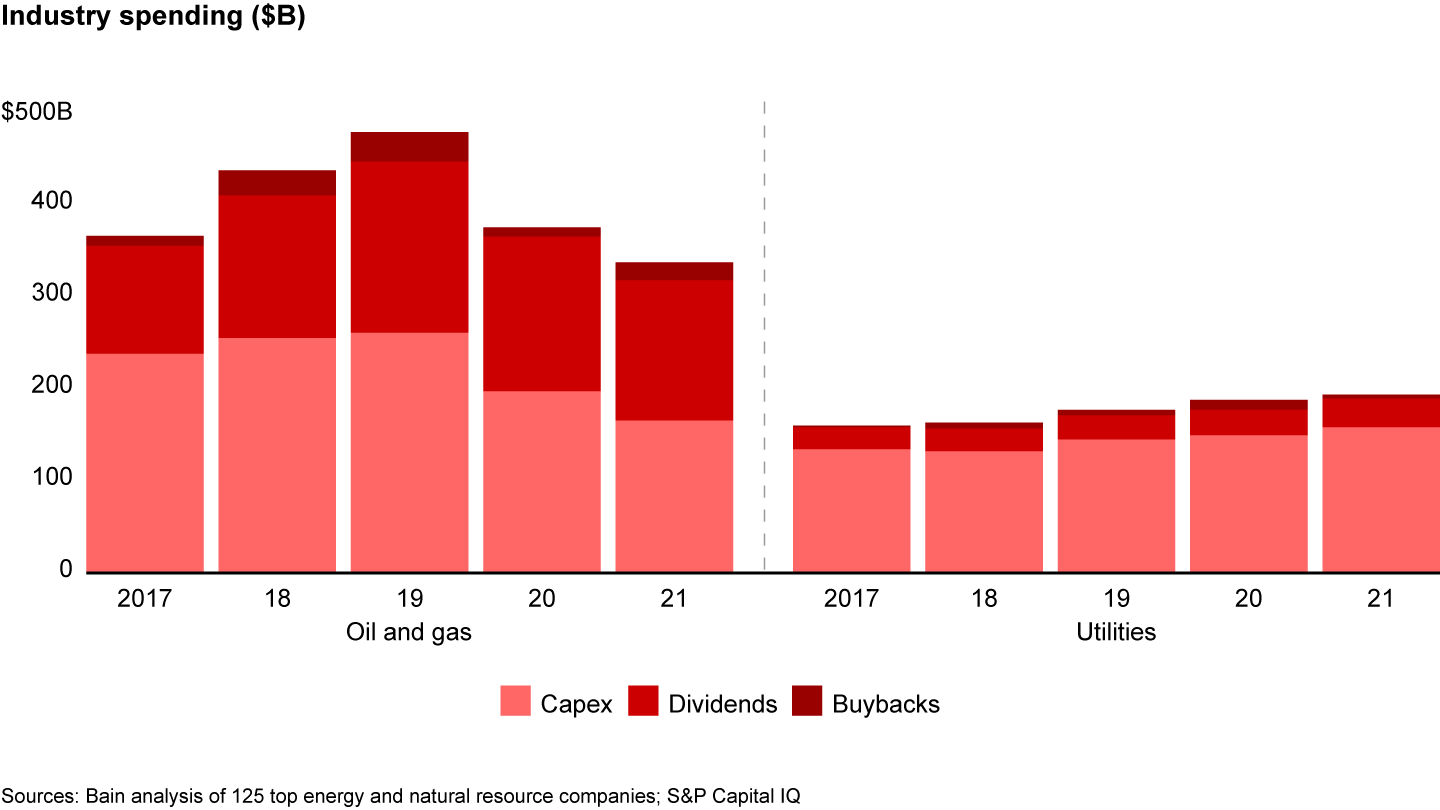
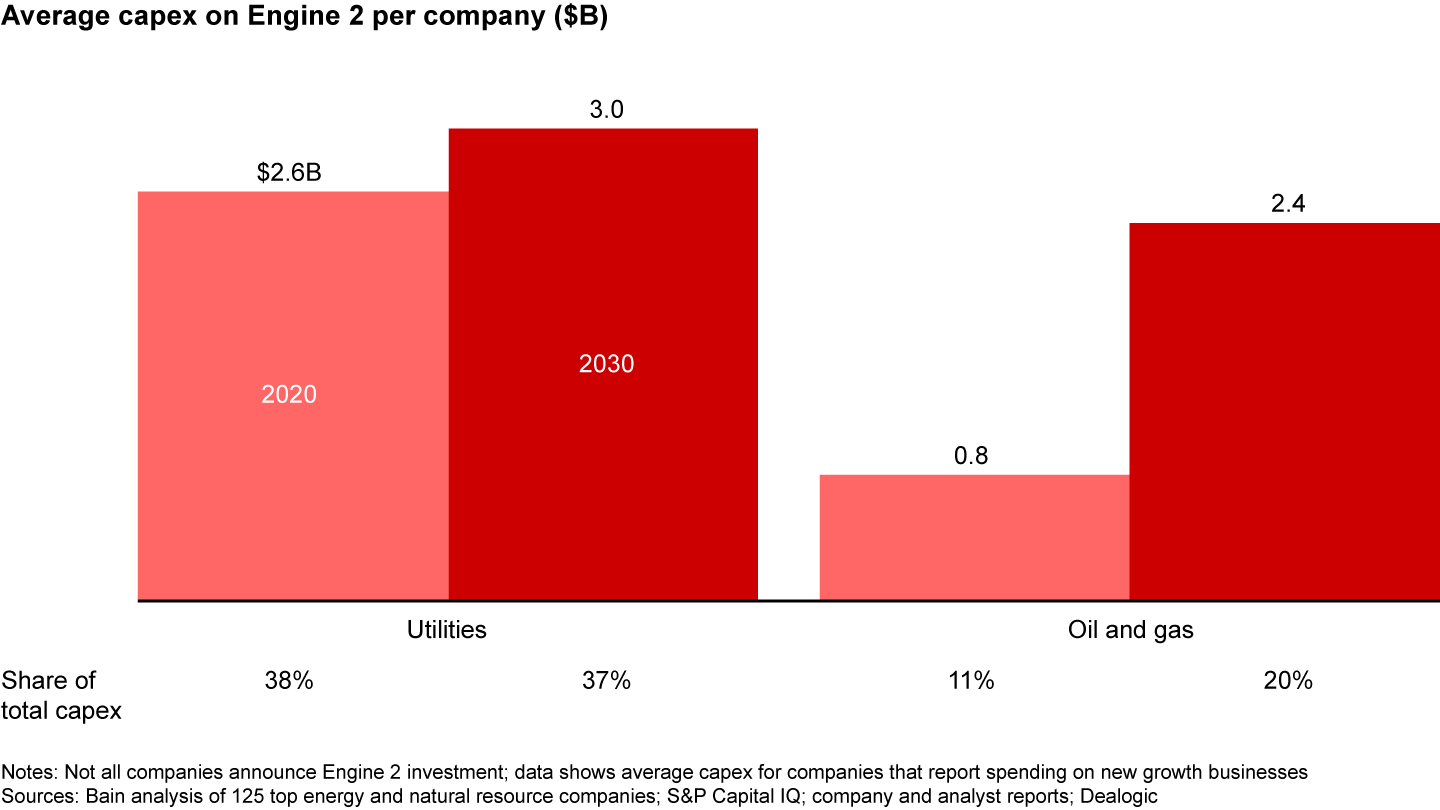
      Our research found that over the past two years, these companies have become more ambitious in new markets and are allocating resources toward their lower-carbon goals (see Figure 1). Utilities are already spending a lot, oil and gas companies are scaling up, and companies in mining, chemicals, and agriculture are still in the early phases of change. The greater resources of large oil and gas companies could enable them to catch up quickly with the utilities sector, once their plans solidify (see Figure 2). More investment will be needed over the next decade to reach their targets and net-zero carbon emissions, but their plans are coming into sharper focus. If oil prices remain high, these companies will have more funds to deploy, which could accelerate investments in new growth businesses.

      Figure 1
      Utilities and oil & gas companies expect to spend more on new growth businesses over the next 10 years
      Figure 2
      Oil and gas has the resources to match and exceed the utility sector’s investments in renewables

      Sectors are responding differently, depending on how their core products are threatened.

      • Utilities and oil and gas companies are in the eye of the storm, under intense pressure to change their methods of production or products. They’re investing in and converging on some of the same end markets, with companies reporting an average of four or five Engine 2s in development (see Figure 3).
      • Chemicals firms are concentrating much of their effort and research investments on circularity—specifically, how to address the plastic waste problem by recycling more plastics or developing bio-based products. Some of these solutions will invite new collaborations with companies in customer sectors, including automotive and consumer products. This challenge may not be an existential threat to their industries, as carbon reduction is in oil and gas. But the chemicals and plastics producers are probably the natural owners of the solutions. 
      • Agribusiness and mining are under less direct threat, except for coal. Both sectors are focused on reducing carbon in operations and otherwise improving sustainability in operations, including using less water. Companies are also investing in new, sustainable products. In agribusiness, that could be alternative proteins or digital platforms that help with food chain traceability. In mining, it may be supplying transition commodities, low-carbon inputs to metals, or even metal recycling.
      Figure 3
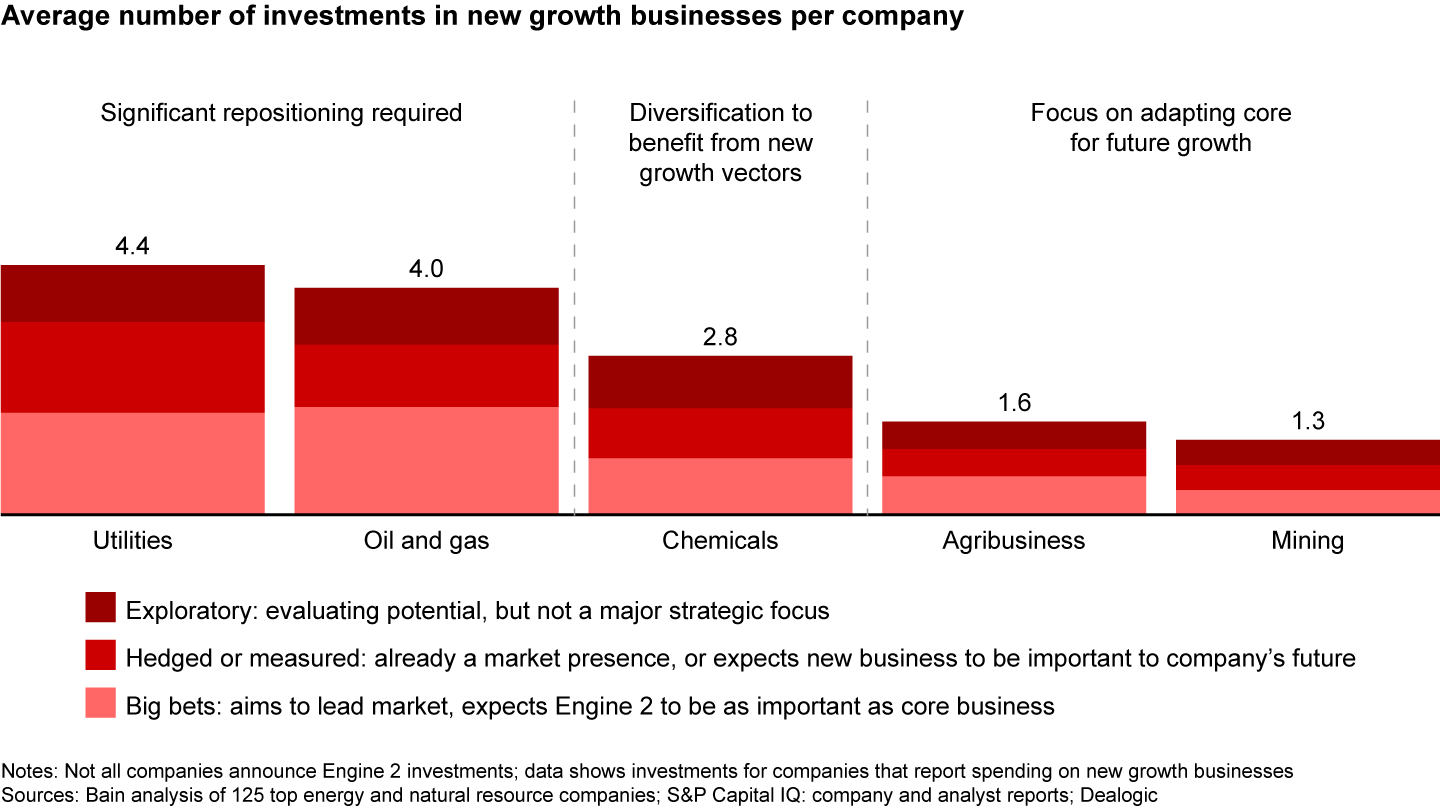
      Sectors are investing in line with the effects that the energy and resource transition will have on their core businesses

      The takeaway is that companies that aren’t yet investing seriously in new growth businesses may be falling behind. But it’s still early in the game. A look at how other companies and industries are investing can help companies develop their next moves (for more on developing Engine 2, see “How to Do Engine 2 for the Energy Transition”).

      Where ENR firms are placing bets

      Our analysis of these leading energy and natural resource companies reveals three types of investments in Engine 2:

      • Big bets. Aiming for market leadership or expecting Engine 2 to be as important as the core business.
      • Hedged or measured. Investing in a new market, but with less grand ambitions than for their big bets.
      • Exploratory. Evaluating the potential in a new market, but it’s not yet a major strategic focus. 

      We see big bets, the most aggressive investments, most commonly in areas where an incumbent sees enough potential to replace its legacy business in the future, or where there’s a natural adjacency that offers a viable path to meaningful scale (see Figure 4). Hedged or measured bets are on businesses that will be part of the future portfolio but aren’t expected to displace the core. Exploratory plays are seen in more nascent profit pools, or where the potential is still undefined.

      Figure 4
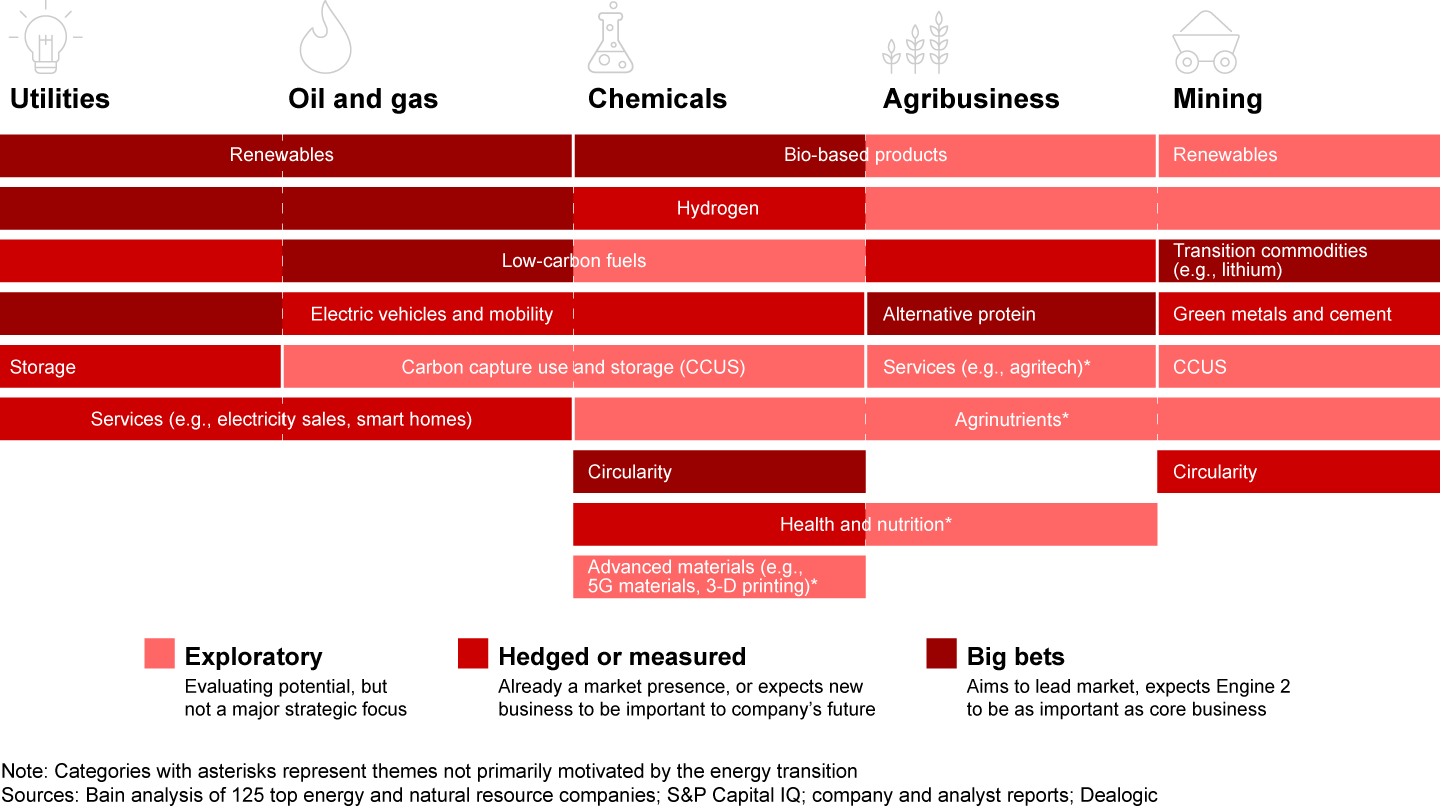
      Companies facing the greatest threats to their core are investing most aggressively in new businesses

      Utilities. Utilities continue to invest in renewable power generation, which is already an economical alternative for them to provide their core product (electricity) with fewer carbon emissions—albeit typically with lower returns. Meanwhile, many are exploring new businesses in services and distributed systems. Enel, for example, is investing to fully decarbonize its power generation by 2040 through expanding renewables, and simultaneously expanding into efficient energy management through tech and services via its Enel X platform. 

      Oil and gas. New policies and social pressures are shaping the investments of oil and gas companies.

      • European majors, facing greater regulatory pressure on Scope 3 emissions, are investing aggressively in renewables, hydrogen, and biofuels. Shell, for example, aims to produce 560 terawatt hours of renewable electricity and establish a network of 2.5 million electric vehicle (EV) charging points globally, while also building out hydrogen, carbon capture use and storage (CCUS), and a sustainable aviation fuel business. TotalEnergies aims to generate a combined 20% of its revenue in 2030 from renewables, biomass, and hydrogen, and another 50% from gas to reduce its reliance on oil.
      • Oil companies in the US are focused on producing more and cleaner oil, gas, and refined products, while making bets on biofuels and CCUS. Chevron aims to capture 25 million metric tons of carbon dioxide per year and recently announced its acquisition of Renewable Energy Group for over $3 billion to help reach its goal of producing 100,000 barrels per day of renewable fuel by 2030.
      • National oil companies follow the priorities of their parent government. Saudi Aramco, for example, is pursuing low-carbon hydrogen.

      Chemicals is a diverse sector, but we’re seeing two broad themes. Some companies are investing in more sustainable ways to make or market current products, such as making plastics more recyclable or bio-based. We’re also seeing investments in new products and markets, some resulting from the energy transition and others from new technologies (such as materials for 5G networks). BASF aims to double the sales from its circular economy solutions business to €17 billion by 2030. 

      Agribusiness is a more highly fragmented growth industry and may not face the same existential threat to its core business as oil and gas does. But these companies are investing in new business to capture some new opportunities and improve operations. Specifically, we see new investments along three themes. First, they’re investing in greater sustainability, in food products like alternative proteins, and in inputs, like renewable fuel feedstock and bio-based fertilizers. Second, they’re investing in markets that promote better health and nutrition, in part to appeal to consumers who want more transparency in their food sourcing. And they’re building up their digital capabilities to tap into new asset-light business models like Olam’s AtSource, which traces the supply chain from grower to customer.

      Mining. Many coal assets have been divested by larger companies, and those that have retained them have clear plans to ramp down. Outside of coal, there’s limited direct threat to mining’s core business. Some of the global mining majors are orienting their portfolios to take advantage of rising demand for minerals associated with the energy transition, including staples like copper, aluminium, and nickel, along with new moves into lithium and rare earth minerals.

      Blurred business boundaries and the basis for competition

      This rapid redefinition of the energy landscape is blurring traditional boundaries between sectors, particularly in five areas (see Figure 5). 

      • Renewables. European oil and gas firms like BP and Total are investing in power generation, competing with incumbent utilities. Some chemicals and mining companies are collaborating with utilities to develop clean energy for their operations.

      • Hydrogen infrastructure. Oil and gas, utilities, chemicals, agribusiness, mining, and industrial gases are all investing to capture share at various points along the value chain.

      • Electric vehicle charging stations. In Europe, utilities are racing with oil and gas companies to build networks of stations. (In the US, some states limit utilities’ abilities to pursue retail recharging stations or other downstream opportunities.) Many European utilities (Eon, Iberdrola, Enel) have ambitions to serve this end of the value chain. At the same time, oil and gas players (BP, Total, Shell) see a natural opportunity here; instead of providing gasoline through a pump to a fuel tank, they want to convert their retail network to provide electrons to EVs.

      • Low-carbon fuels. Here again, we see interest and ambition from oil and gas, chemicals, utilities, and even agribusiness companies.

      • Carbon capture use and storage. Oil and gas players are most active in the CCUS landscape, but the ambitions for technologies vary. Some see CCUS as an opportunity to virtually decarbonize their existing product; by capturing atmospheric carbon as an offset, they can go to market with “net-zero oil.” Others are seeking to commercialize CCUS as a service. Chemicals companies are also providing the inputs needed to capture carbon.
      Figure 5
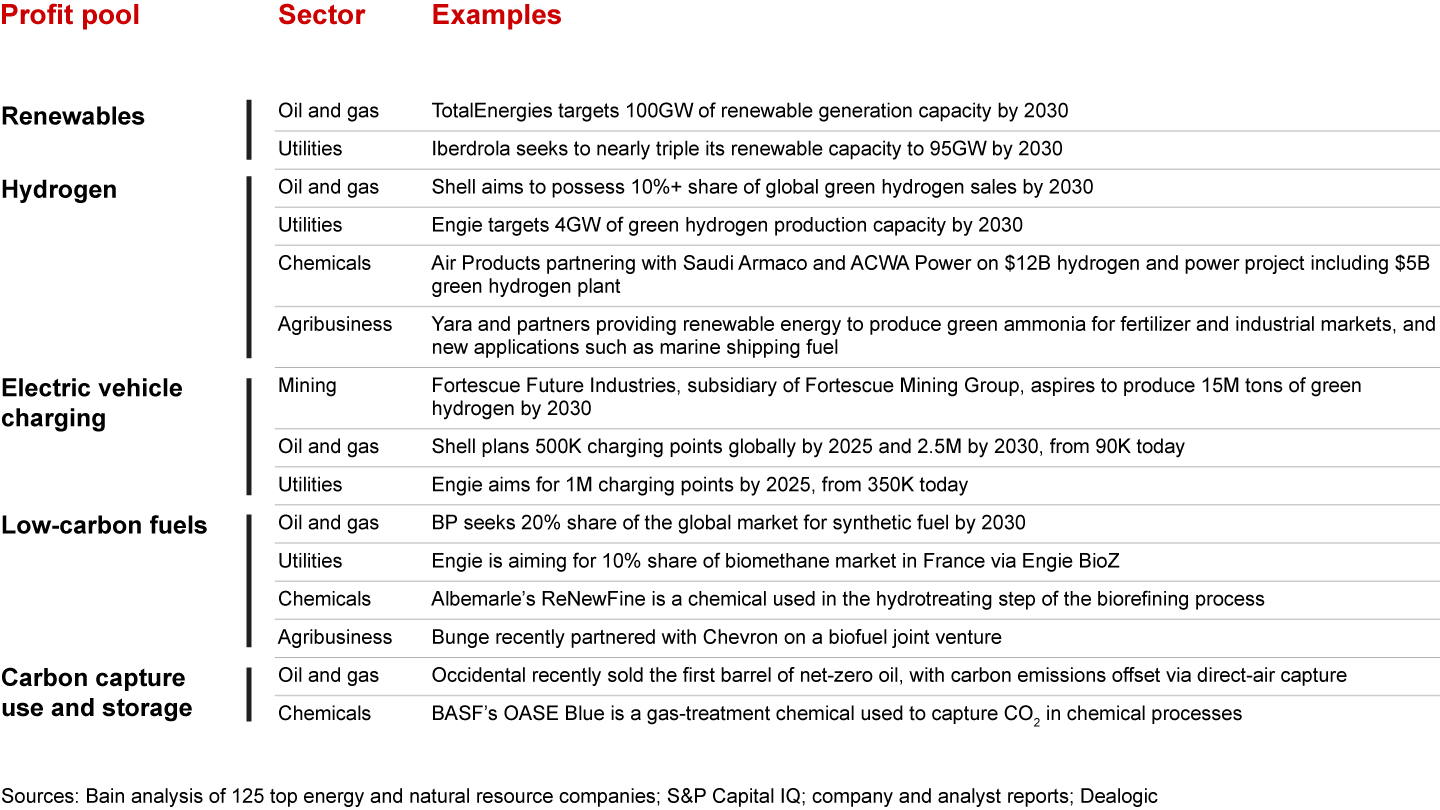
      Companies across sectors are converging on a limited set of opportunities, creating new arenas of competition

      The basis of competition in each market isn’t clear yet, and companies that haven’t traditionally been competitors are now elbowing for market leadership positions. For example, 9 of the top 10 players in renewable generation capacity in 2020 were large power utility companies, but by 2030 at least 3 of the large oil majors are expected to move into the top 10 renewable players, per announced investment plans (see Figure 6).

      Figure 6
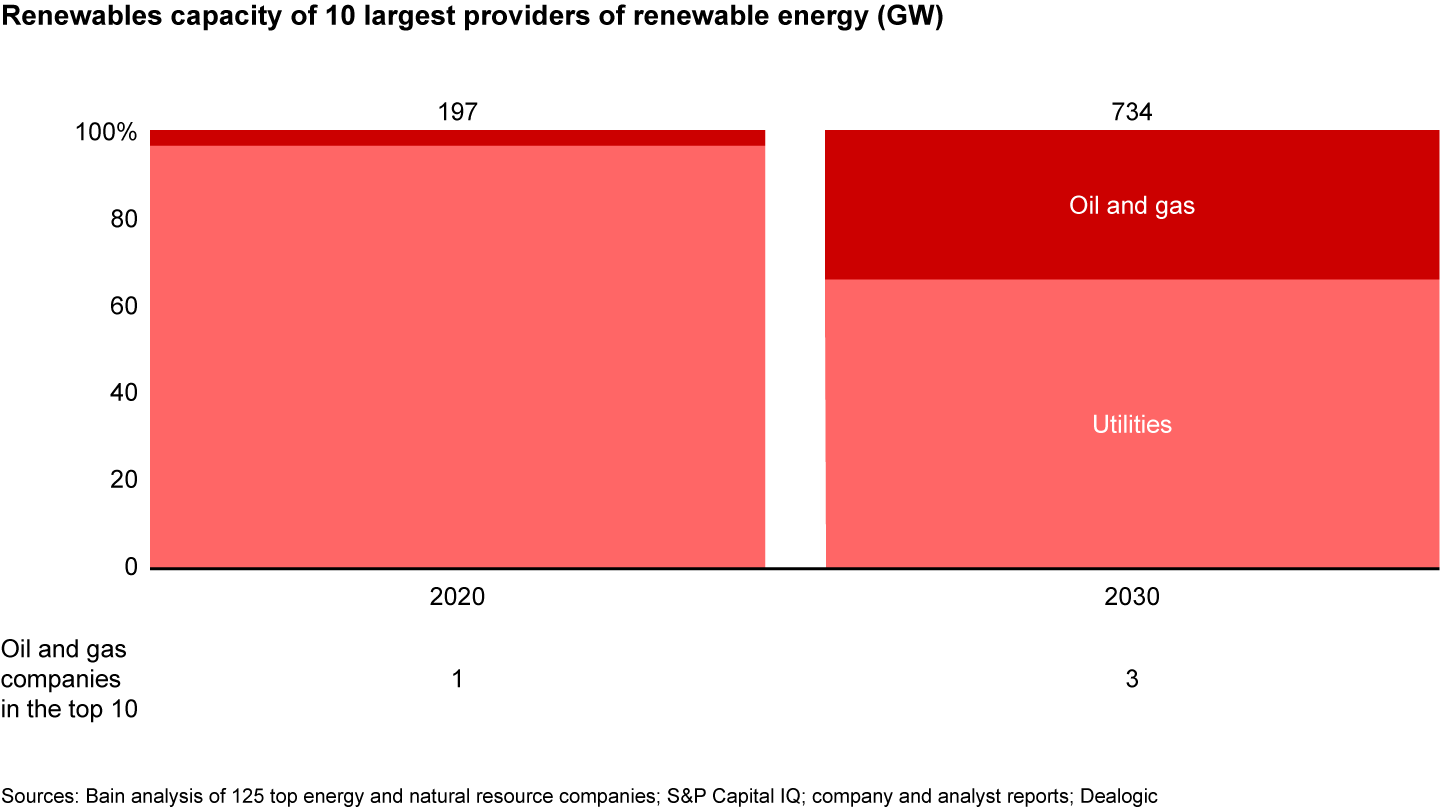
      Some oil and gas companies are investing heavily in renewable power generation, which will change the makeup of the leader board

      Moves like this will require new capabilities, and incumbents are increasingly turning to partnerships, joint ventures, and acquisitions as an important tool to develop their Engine 2 businesses (see Figure 7).

      Figure 7
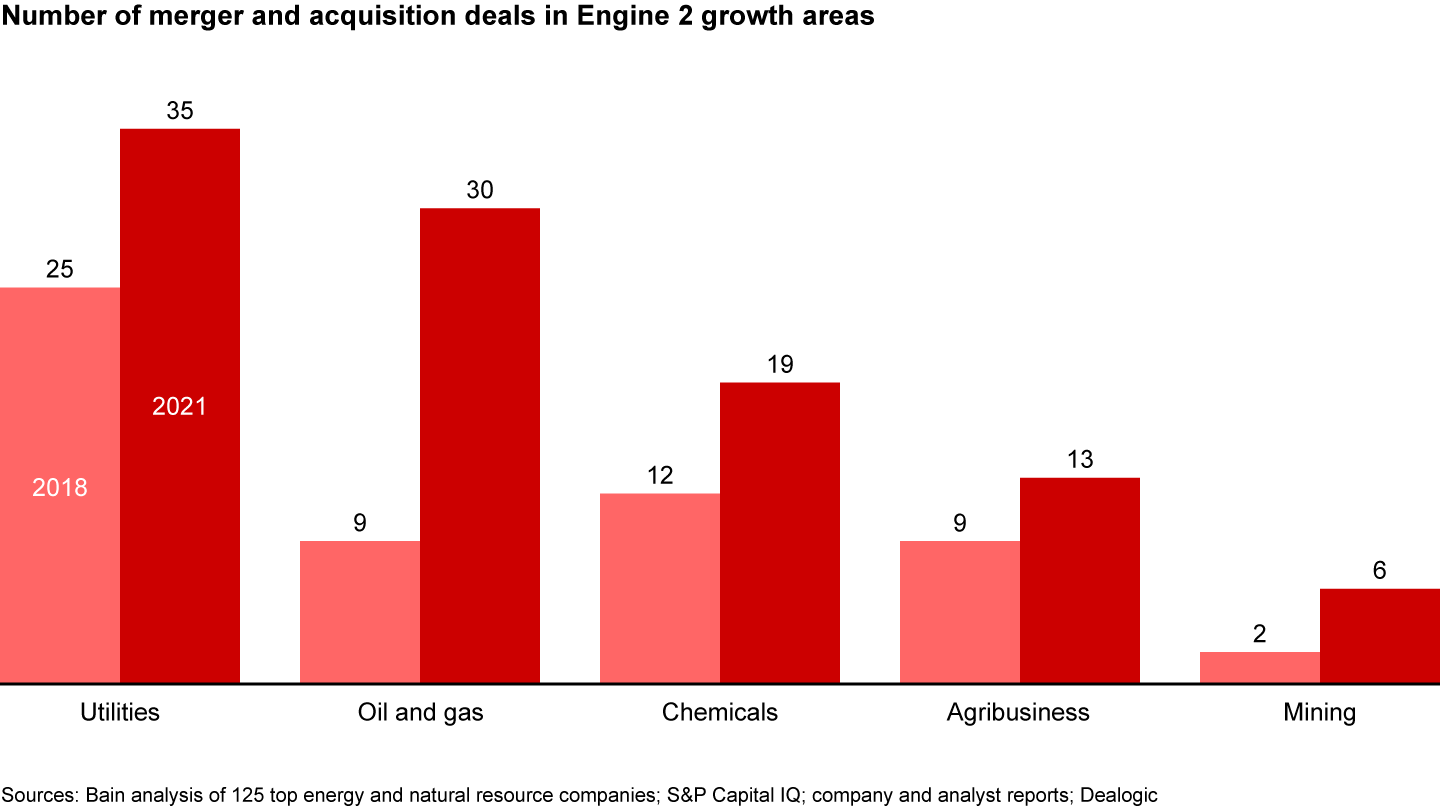
      M&A is emerging as a critical tool for accessing talent, capabilities, and markets for new growth businesses

      Scale M&A can be challenging, given the nascent nature of new energy markets, but smaller acquisitions (below $5 billion) and effective partnerships remain important for developing new businesses. The high valuations for some clean tech assets can be difficult to justify when weighed against potential returns for deploying capital in the core business. Partnerships are critical but are no substitute for a clear, well-developed strategy.

      Challenges greater than expected 

      While companies are aggressively investing, it’s too early to declare success, and there are plenty of challenges in executing to deliver these ambitions. As noted in our survey, executives are grappling with the challenge of generating returns from these new ventures.

      Even on its own, the task of navigating the energy and resource transition would be an unprecedented challenge for most energy and natural resources companies (see Figure 8). The added complexities of pandemic-induced supply chain disruptions, rising trade barriers, the Russian invasion of Ukraine, dramatic spikes in commodity prices, and accelerating pressure from investors and capital markets are testing the abilities of every senior team and executive in these industries. The landscape is far more challenging than anticipated, and it’s not going to get any easier.

      Figure 8
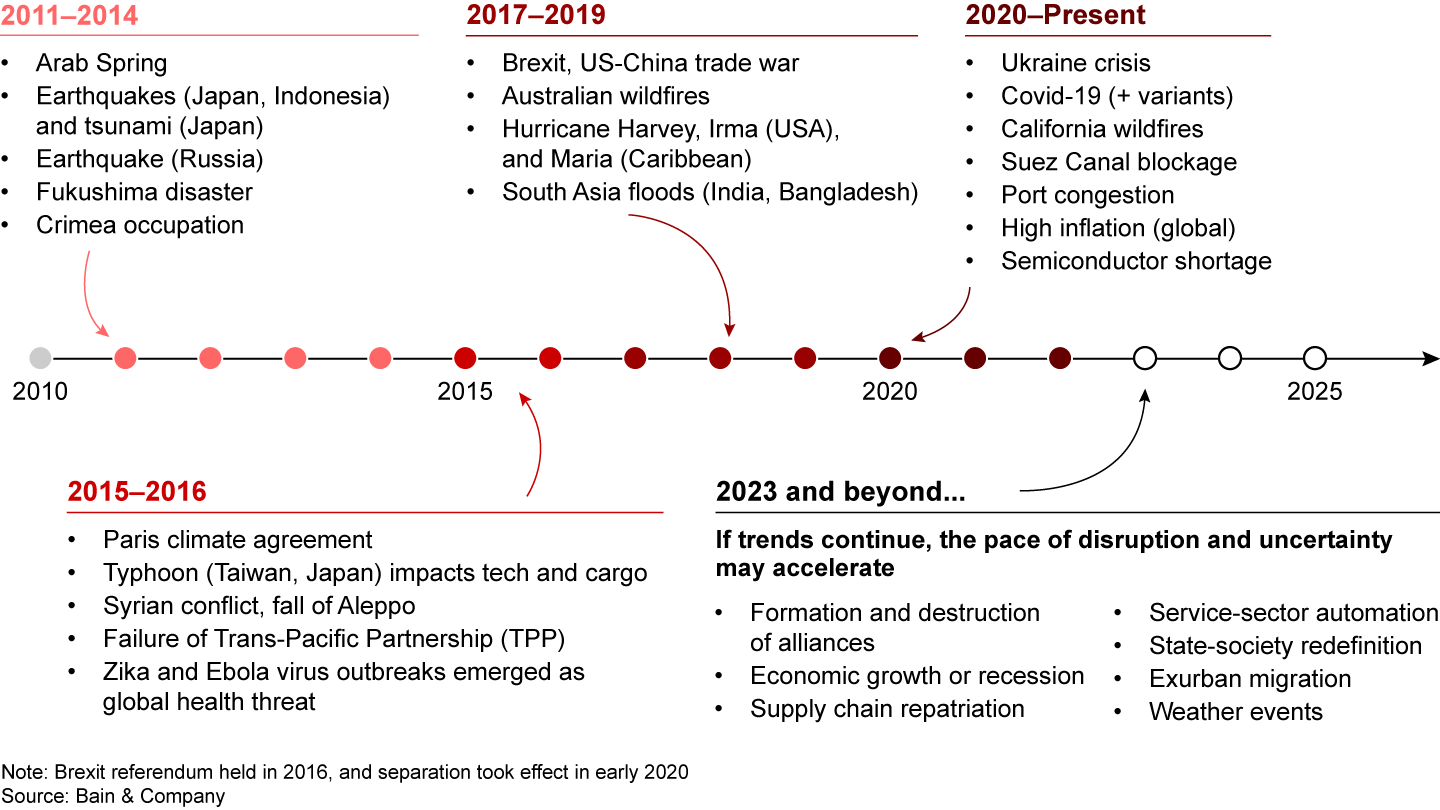
      An accelerating string of dramatic disruptions is exacerbating the challenge of the energy and resource transition

      Nevertheless, our research shows that many Engine 2 successes have sprung from turbulent times, rewriting the rules and revealing new profit pools. Within many large ENR companies, Engine 2 organizations are being established and equipped with the talent and resources needed to meet customer needs, scale quickly, and obtain the capital necessary to deliver on 2030 targets. For them, the status quo won’t be good enough.

      One truth already seems clear: Successful new businesses will require many large companies to adopt an insurgent position. If some fast-moving, forward-looking, nimble attacker is going to cannibalize your business, better that it be one from inside your own organization.

      Read the Next Chapter

      Meeting the Needs of Capital and Energy Markets

      Data-rich perspectives

      • Execs on energy transition

      • Investing in Engine 2

      • Energy investors and ESG

      • Responding to Ukraine crisis

      Transition trends

      • Talent and inclusivity

      • Building coalitions for decarbonization

      • Circularity in plastics

      Strategic capabilities

      • How to do Engine 2

      • Operations through disruptions

      • Pricing and inflation

      • M&A opportunities

      • Delivering decarbonization

      Read our Energy and Natural Resources Report 2022

      Explore the full report Download PDF
      Authors
      • Headshot of Brian Murphy
        Brian Murphy
        Partner, Perth
      • Headshot of Peter Parry
        Peter Parry
        Advisory Partner, London
      • Headshot of Neelam Phadke
        Neelam Phadke
        Alumni, New Delhi
      • Headshot of Alasdair Robbie
        Alasdair Robbie
        Partner, London
      Contact us
      Related Industries
      • Agribusiness
      • Chemicals
      • Energy & Natural Resources
      • Mining
      • Oil & Gas
      • Utilities & Renewables
      Related Consulting Services
      • Strategy
      Energy and Natural Resources Report
      Developing Talent Strategies for the Energy Transition

      Energy and natural resources companies will need to create an inclusive environment for new and diverse employees, while also valuing legacy talent.

      Read More
      Energy and Natural Resources Report
      The Energy Transition’s Other Big Puzzle: Making the Math Work

      Strong investment returns are within reach for companies that focus on the fundamentals and aren’t afraid to get creative.

      Read More
      Energy & Natural Resources
      Sustaining Capital: From Chaos to Discipline

      Fragmented budgets, poor visibility, and missed forecasts are fixable with the right approach.

      Read More
      Strategy
      Betting on the Future without a Plan B?

      Fewer than half of CEOs say their companies have what it takes to thrive in today’s volatile world.

      Read More
      Energy and Natural Resources Report
      State of the Transition 2023: Global Energy and Natural Resource Executive Perspectives

      Bain’s third annual survey on the energy transition finds executives increasing investments in low-carbon businesses, but skeptical of consumers’ willingness to pay more.

      Read More
      Published in Haziran 2022
      Tags
      • Agribusiness
      • Chemicals
      • Energy & Natural Resources
      • Energy and Natural Resources Report
      • Mining
      • Oil & Gas
      • Strategy
      • Utilities & Renewables

      How We've Helped Clients

      An Environmental Services Company Captures Massive Savings from a Merger

      Read case study

      New products propel profitability for metals manufacturer

      Read case study

      Revitalizing a utility's market position with customer loyalty

      Read case study

      Ready to talk?

      We work with ambitious leaders who want to define the future, not hide from it. Together, we achieve extraordinary outcomes.

      Stay ahead in a rapidly changing world. Subscribe to Bain Insights, our monthly look at the critical issues facing global businesses.

      *I have read and understand Bain’s Privacy Notice.

      Please read and agree to the Privacy Policy.
      Bain & Company
      Contact us Sustainability Accessibility Terms of use Privacy Modern Slavery Act Statement Cookie Policy Sitemap Log In

      © 1996-2026 Bain & Company, Inc.

      Contact Bain

      How can we help you?

      • Business inquiry
      • Career information
      • Press relations
      • Partnership request
      • Speaker request
      See all offices