




|
|
Digital is no longer just a channel; it’s the front door to your brand and the primary way customers engage with your business. In fact, according to our survey of nearly 1,800 customers, 78% of respondents prefer to transact online, and 56% only use digital. Done right, digital doesn’t just transact—it converts, differentiates, and earns enduring loyalty. Yet customers are largely dissatisfied with their digital experiences. Although 67% of transactions are completed without issues, the 33% of transactions that had notable issues led to a sharp 88-point drop in Net Promoter ScoreSM to -31 (see Figure 1).
Figure 1
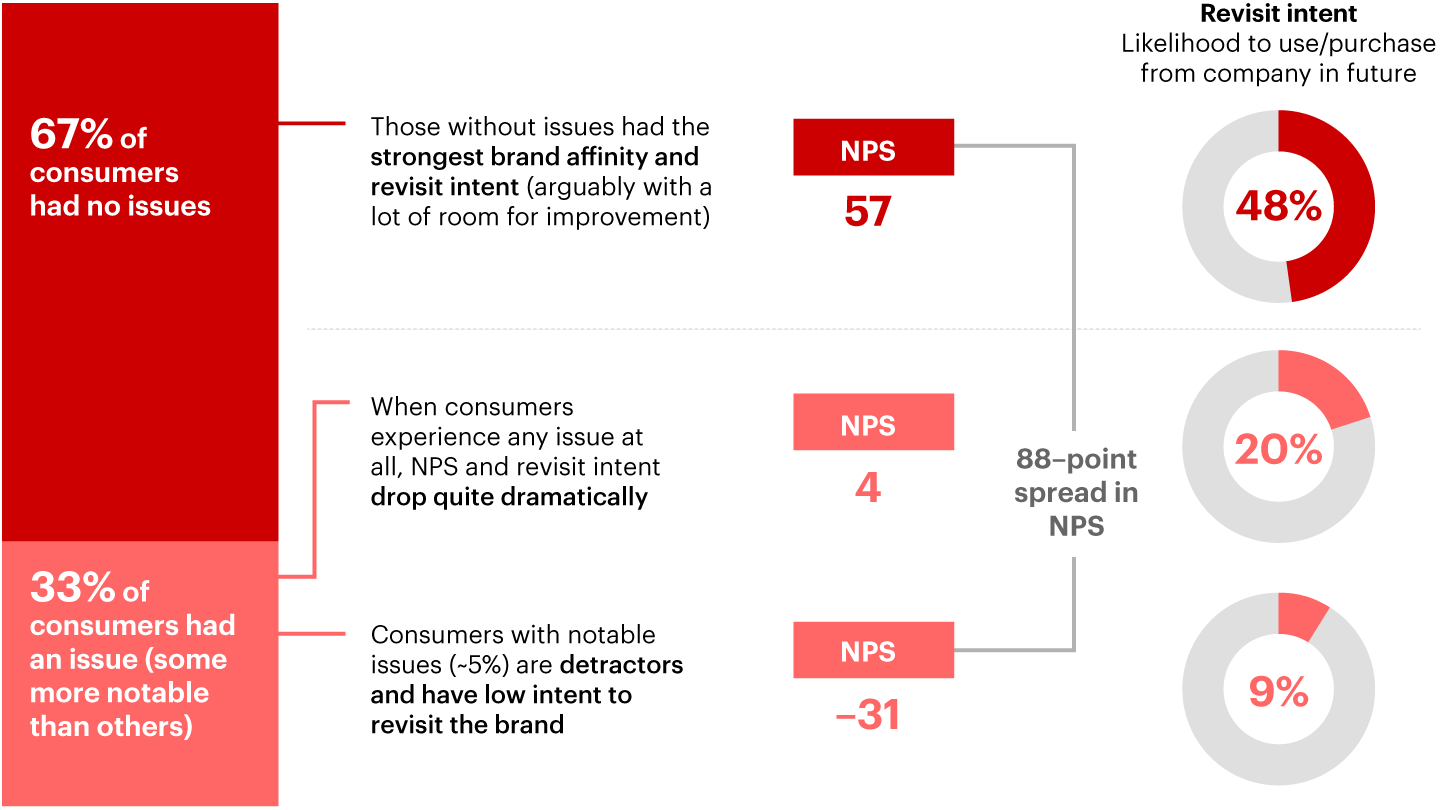

Customers with issue-free experiences ranked vendors better, with an NPSSM of 57, although even this score is hardly something to celebrate. Seamless experiences are table stakes. To truly close the gap, customer-facing businesses must strive for something increasingly predictive of customer loyalty: delight. (Yes, even paying a phone bill or making an insurance claim can have an element of delight.) We help your company not only deliver the basics but also earn loyalty in more innovative ways by carefully analyzing every facet of the digital experience you create for your customers. Our Digital Experience Diagnostic is an outside-in assessment of your brand’s user experience on web or mobile, customized to your specific needs. We assess performance across a range of dimensions, benchmark it against both direct competitors and cross-industry leaders—because best practices often come from beyond your sector—and identify powerful opportunities to improve the user experience, meet customers’ unique needs, and build lasting trust. Survey says: Master the basicsOur assessments are informed by deep expertise designing products and improving the customer experience, augmented by our primary research into everyday customers’ pain points. We ran a quantitative survey of nearly 1,800 US-based customers and conducted interviews with 80 respondents about their last digital transaction across mobile app and mobile and computer web browsers. The transactions included buying clothing from a favorite retailer, paying a utilities bill, filing an insurance claim, and opening a cellphone account. A few themes emerged:
Figure 2
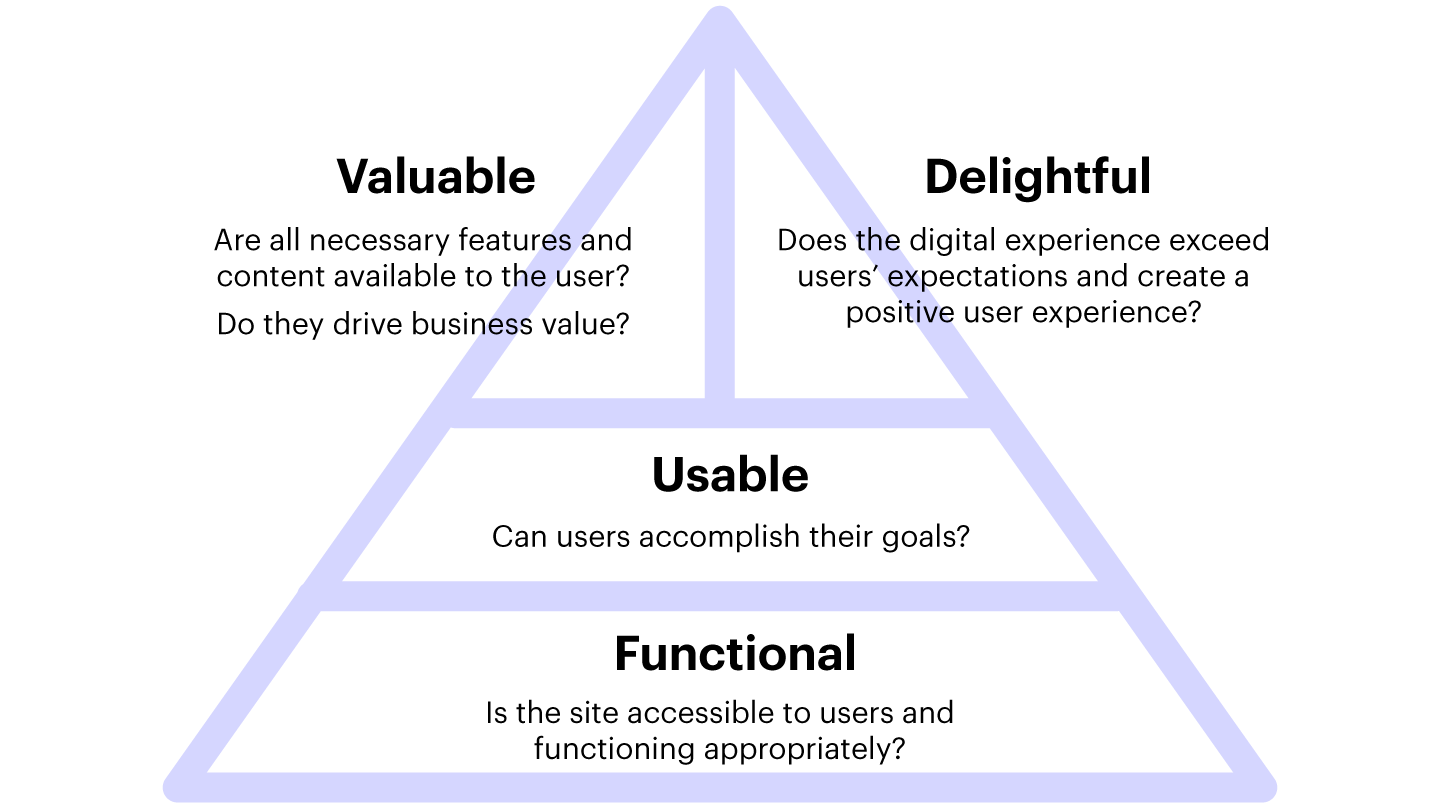
Delight is the new differentiatorBeyond an error-free experience, we know that time-saving moments of delight truly move NPS and earn loyalty. But what exactly does delight look like? Consider things like intuitive design, personalized messaging, proactive support, or features that enable fast resolution. These moments of truth can be exciting—such as finding the perfect dress for a specific occasion on a retail website—or mundane. Even the most functional tasks can spark delight. “The best recent online transaction I had was transferring money between bank accounts—it was easy and quick. I was able to do it late at night when my bank would have been closed,” said a respondent. Usability and engagement are primary drivers of long-term adoption and differentiation, and we work to pinpoint the pivotal moments of truth that shape your customers’ perceptions and satisfaction. Our robust Digital Experience Diagnostic looks closely at user experience from an external perspective, focusing on how design and interactions meet user needs. It includes three components: User experience evaluation and relative performanceOur product designers begin by understanding your brand’s target customer, then create a persona representing that customer’s profile, voice, expectations, and unmet needs. The designers put themselves in the customer’s shoes, use the website to meet specific goals, and generate qualitative insights on what’s working, what’s broken, and what can be improved. Then they dig deeper with a user experience/user interface (UX/UI) analysis that answers questions such as “How well is the digital experience delivering today?” or “How are customers led down the path of sales conversion with minimal friction?” Using an inspection method known as heuristics, the designers evaluate how well the interface helps them perform tasks relative to competitors’ experiences or other industry’s benchmarks, then identify usability problems by measuring compliance across approximately 25 criteria and four dimensions: functional, usable, valuable, and delightful (see Figure 3). Finally, our team conducts competitive benchmarking, surfacing best practices from inside or outside your industry to reveal opportunities to improve your digital experience’s features and functionality. In addition to comparing competitors’ UX strengths with your current state, we conduct a disruptor discovery exercise to find more inspiration you can apply and outline best-in-class exemplars or specific principles that create an unforgettable user experience.
Figure 3

Journey mapping and analyticsIn this exercise, we outline the current digital journey and identify moments of truth as well as the points of friction that could prevent your company from delivering an engaging experience. This starts with an end-to-end user-flow breakdown that includes a detailed analysis of each screen and its specific features and how they are used. We also conduct a back-end technology discovery exercise for full transparency into feasibility, the infrastructure supporting the current journey, and what might need to change to support future improvements. Additionally, we assess your site’s business impact by looking at key performance health metrics such as bounce rate, time spent on page, loading speed, site traffic, and sales conversion rate. These metrics allow you to zero in on what can be gained by prioritizing UX/UI improvements. RecommendationsTaken together, these multi-dimensional inputs help us identify opportunities to enhance your digital experience and drive business value. Our recommendations are based on impact, feasibility, or other critical dimensions, including top KPIs like repeat purchase or increased basket size. Equipped with data, insights, benchmarks, and action items, we prototype your future-state user experience. After identification comes prioritization. The hardest yet most valuable step is to pinpoint what’s most critical to fix. We work with you to validate that your backlog accounts for the most important opportunities to close the gap with competitors, win in the digital experience, and accelerate the path to value realization. Getting beyond NPS 57“The quality of an online transaction experience basically makes or breaks my perception,” said one of our interviewees. Another said, “If my transaction is not convenient, easy, and secure, then I’m just not going to go back.” The message is clear: Your digital experience can make or break customer loyalty. For customer-facing companies losing share because of the digital experience, our diagnostic will reveal opportunities for improvement, insight into how competitors are delivering, and actionable steps for reinvention. Our approach is also useful for different phases of the private equity life cycle, such as understanding the potential impact of digital experience improvements on deal upside during the due diligence process. As customers increasingly rely on digital, companies must raise the bar on performance. Getting the basics right is non-negotiable, but the next frontier—delivering personalized experiences and on-demand support at scale—is where differentiation happens. Our Digital Experience Diagnostic helps you identify the moments that matter most, so you know exactly where to start. |
Published in 一月 2026