


Brief


|
At a Glance
High-performing teams are important in every industry, but in pharmaceuticals they are critical. Just 20% of pharmaceutical teams drive 60% of a company’s strategic and financial value, but only one in four achieves its full potential (see Figure 1).
Figure 1
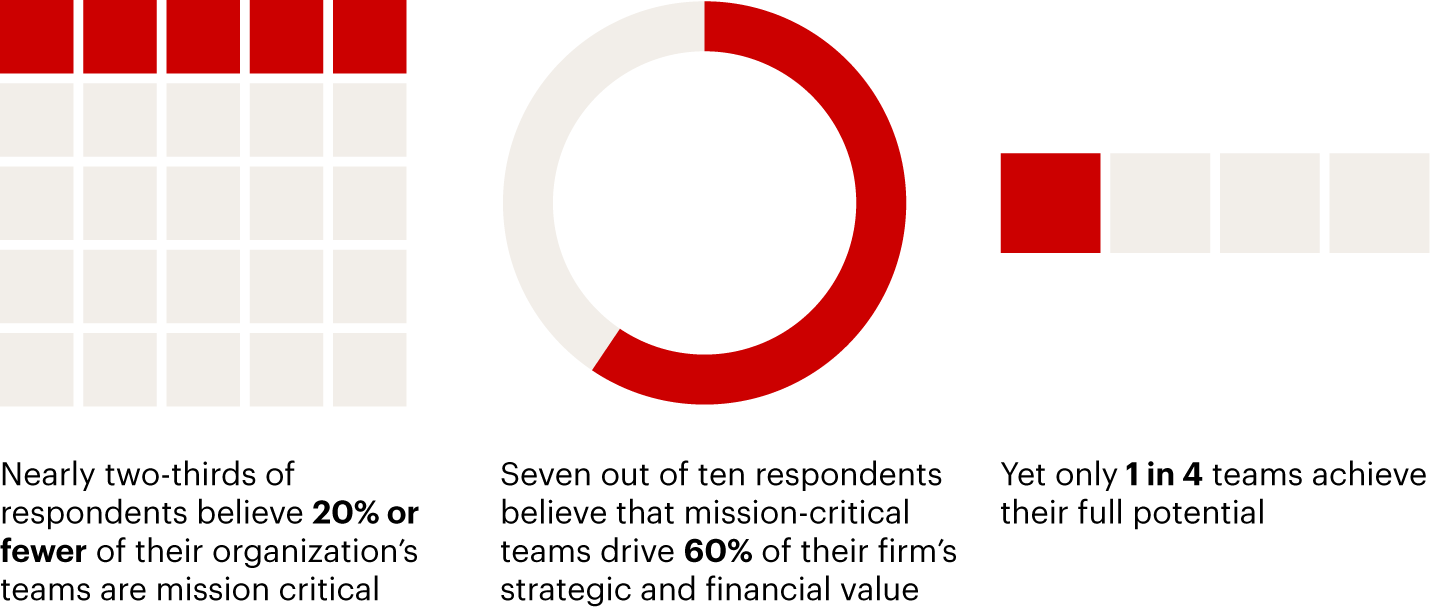

Pharmaceutical companies are primarily organized by function, but drug development and commercialization depend on integrated, cross-functional execution. Mission-critical teams bring together experts from across the organization to deliver shared outcomes no single function could achieve alone. To succeed, these teams must operate across silos. Yet members typically report to their functional leads—not the team leader—and their goals often diverge. The complexity of pharma compounds these challenges. Regulatory requirements, compliance, safety, quality, and cost considerations often compete. As a result, decision making and execution can be slow. Mission-critical teams must overcome these challenges. Companies with strong mission-critical teams start by defining the team’s mission in terms of shared outcomes—results no single function could produce alone. This often involves navigating critical trade-offs: cost vs. speed, speed vs. power of a study, or the trade-offs required when testing multiple potential indications for a single asset. That was the challenge faced by a mid-sized pharmaceutical company as it advanced a complex development program for multiple indications of a high-priority asset. The company quickly assembled a core team, assigning its best available talent. As managers added missing capabilities, the team doubled in size. Soon, it began to miss deadlines. A root cause assessment, including surveys of team members and executives, revealed the central issue: Leaders had not clearly communicated the shared outcomes expected of that team. Without clarity, the team struggled to prioritize and make trade-offs. When they asked for guidance, leaders stepped in to help, but this created a sense of ad hoc management and limited team autonomy. Team members did not understand which outcomes were “must win.” Management took three steps in response. First, they brought the full team together to reiterate the mission, priority objectives, and shared outcomes. They helped the team focus on three must-win battles, out of dozens of competing priorities. Second, they rapidly identified talent gaps and acquired new talent with the needed capabilities. These steps enabled the team to streamline its structure and focus on priority indications. Finally, the executive team created a formal mechanism to engage with the team and provide sustained support, ensuring the team had access to their input and the practical help needed to move quickly. This helped the company submit its application for the new molecule’s first indication and accelerated multiple follow-on indications. Confidence in the team climbed quickly, and the team itself is reenergized and pushing new ways to accelerate progress. Three ways to accelerate mission-critical teamsNo two companies will approach mission-critical teams in exactly the same way, but three practices consistently make a difference.

About IncQueryIncQuery is a leading programming provider of quantitative surveys for primary research. Its collaborative co-authoring platform, combined with support from experienced survey directors, empowers professionals to quickly launch high-quality surveys. Visit incquery.com for more information. |