The move from potential to practice is creating new opportunities for healthcare providers and start-ups.
By Parijat Ghosh, Dhruv Sukhrani, Marita Vavoulioti, Sunil Thakur, Rahul Agarwal, and Namit Chugh
Report
AI in Indian Healthcare Delivery
AI in Indian Healthcare Delivery
The move from potential to practice is creating new opportunities for healthcare providers and start-ups.
By Parijat Ghosh, Dhruv Sukhrani, Marita Vavoulioti, Sunil Thakur, Rahul Agarwal, and Namit Chugh
Published on 九月 17, 2026
min read
Report
AI in Indian Healthcare Delivery
en
At a Glance
AI is not new, but foundation models are: The agentic era of reasoning large language models (LLMs) is emerging, with mounting evidence that clinical tasks can be performed at a human level of competence.
India’s healthcare infrastructure is becoming AI-ready, supported by government initiatives and a thriving start-up ecosystem, as well as rising electronic medical record (EMR) penetration, private capital, and clinician acceptance.
In AI deployments, value is currently concentrated in a narrow set of use cases (e.g., workflow automation and ambient scribing, among others) directed toward efficiency and patient experience gains while business ROI remains difficult to demonstrate in near-term.
Several high-potential AI use cases present large whitespace despite clear demand—including remote patient monitoring, operation theatre and intensive care unit (ICU) optimization, post-discharge chronic disease management, and claims management—creating compelling opportunities for AI start-ups.
Implementation readiness remains uneven—data quality, workflow integration, clinician trust, and change management remain the primary barriers to scale, favoring start-ups with deep healthcare domain expertise alongside AI capabilities.
The evolution of AI and India healthcare’s readiness
Expanded AI capabilities enable more complex clinical work
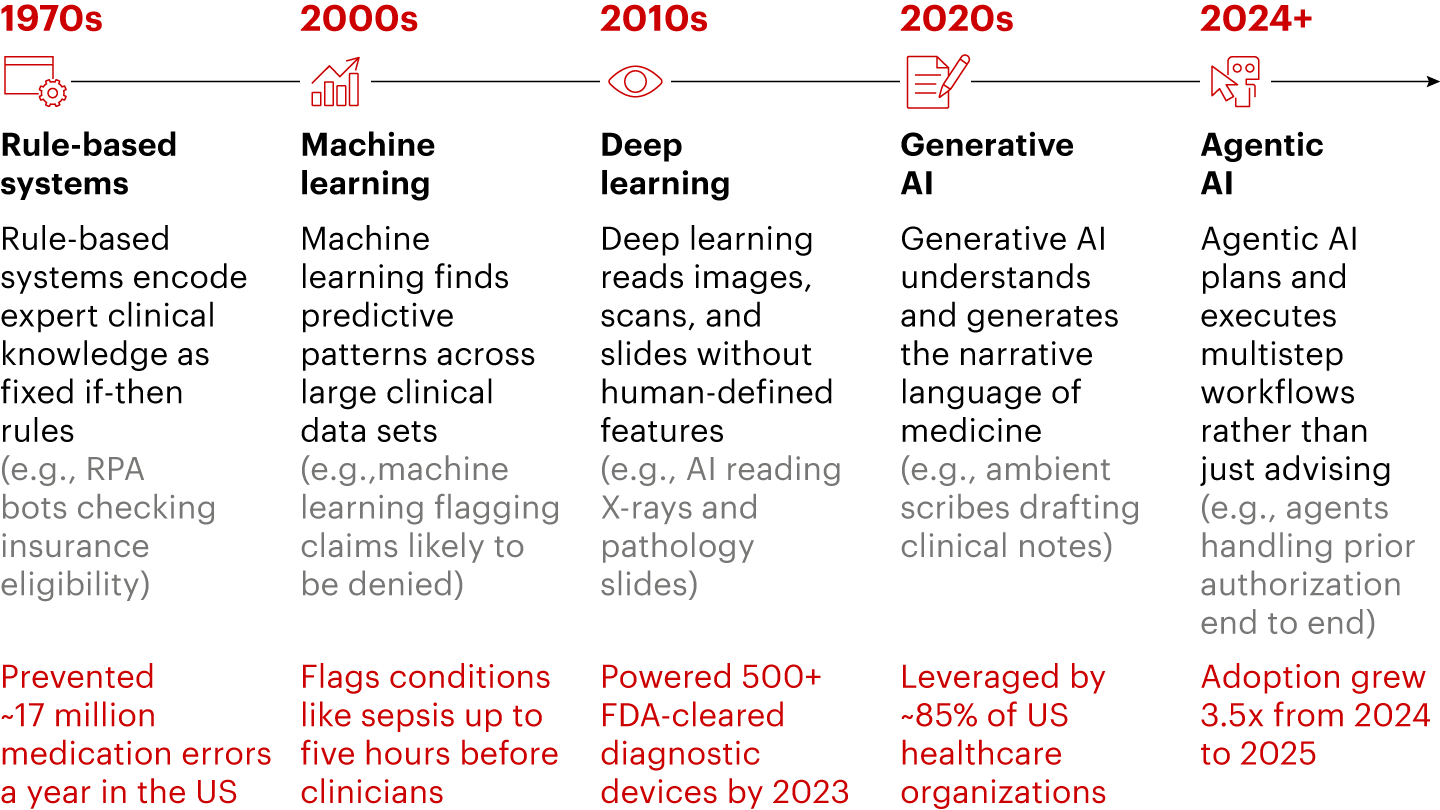
For decades, AI in healthcare has promised more than it delivered. That changed over the past few years, as AI capability swiftly advanced through five eras (see Figure 1):
Written in collaboration with
Written in collaboration with
Rule-based systems: First, rule-based systems encoded clinical expertise as fixed logic, preventing an estimated 17 million medication errors annually in the US. However, the technology was limited to the cases designers had anticipated, and models did not self-update.
Machine learning: AI models used EMR and other clinical data to build predictive models by picking up patterns that rule-based programs could not. Using these patterns, machine learning flagged sepsis cases five hours earlier than prior methods. However, because it was largely limited to structured data, the biggest benefits often stayed out of reach.
Deep learning: Tools incorporated visual data, reading X-rays, scans, and pathology slides with specialist-grade accuracy. This was the first era to reach clinical maturity at scale, with more than 500 AI-enabled radiology devices cleared by the US Food and Drug Administration (FDA) by 2023.
Generative AI and LLMs: Generative AI and LLMs could work on unstructured data with minimal preprocessing, then write clinical notes and documentation at scale. Most US healthcare organizations are now using or exploring generative AI for documentation, coding, and patient communication.
Agentic AI: AI can now run multistep workflows, such as ordering a test, updating a record, alerting a nurse, or scheduling a follow-up visit, with limited supervision. This changes AI’s role, shifting from a tool at clinicians’ disposal to a system that works alongside them. Adoption is still early, with about 43% of US health systems piloting generative AI and only 3% using it in live workflows.
Figure 1
AI has advanced quickly, with each era unlocking new opportunities for healthcare
Notes: FDA is US Food and Drug Administration; ML is machine learning; RPA is robotic process automation
Sources: Bain and HealthQuad analysis
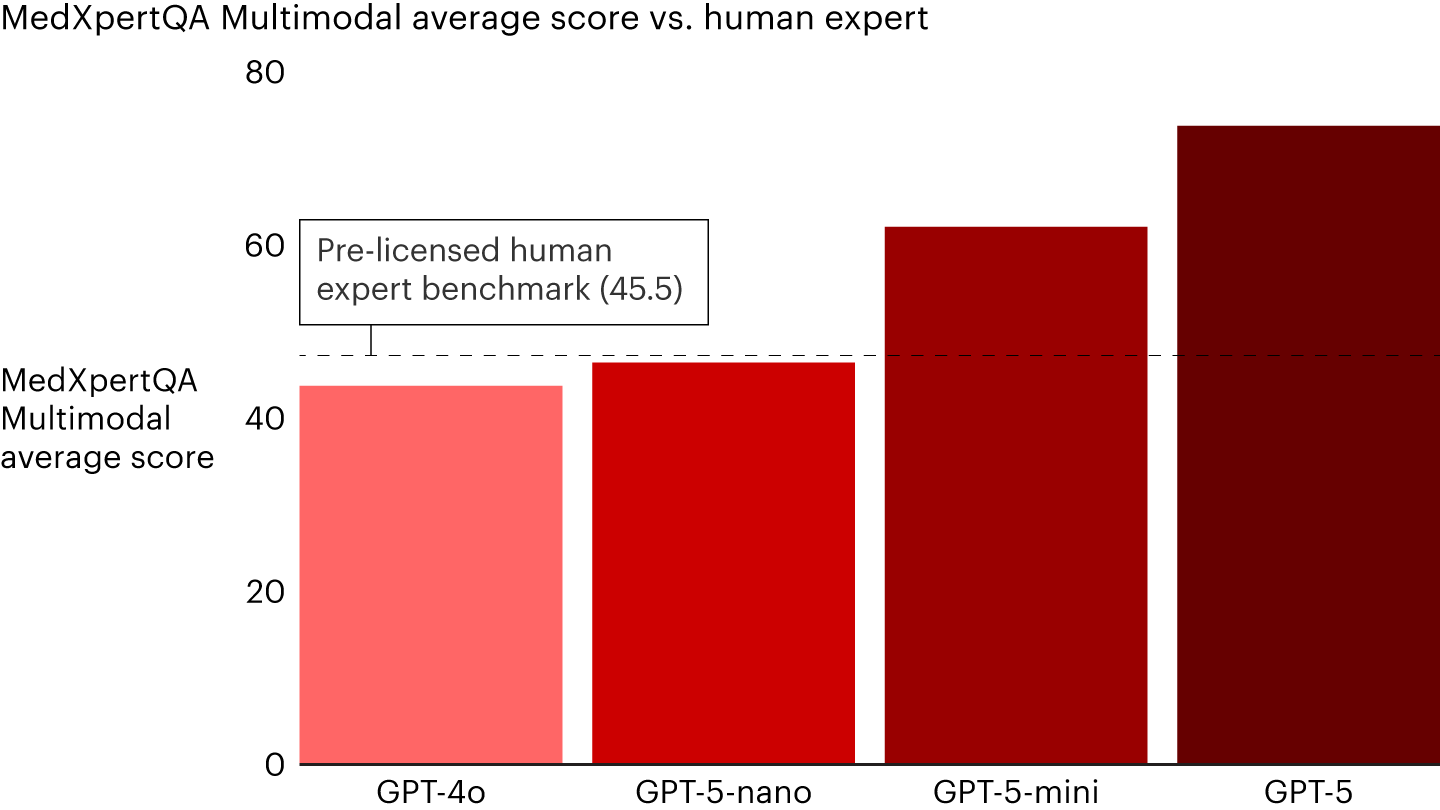
The amount of expert-level human work that AI can complete independently has been doubling every six to nine months since 2023, with the latest models outperforming pre-licensed medical professionals in controlled environments (see Figure 2). This rapid advancement underscores the potential for LLMs to serve as clinical decision support systems in the years ahead.
Figure 2
In tests, GPT-5 can outperform pre-licensed medical professionals in controlled evaluations
Sources: Model Evaluation & Threat Research; Wang et al., “Capabilities of GPT-5 on Multimodal Medical Reasoning,” Emory University School of Medicine, 2025; Bain analysis
Falling costs are bringing advanced tools within reach
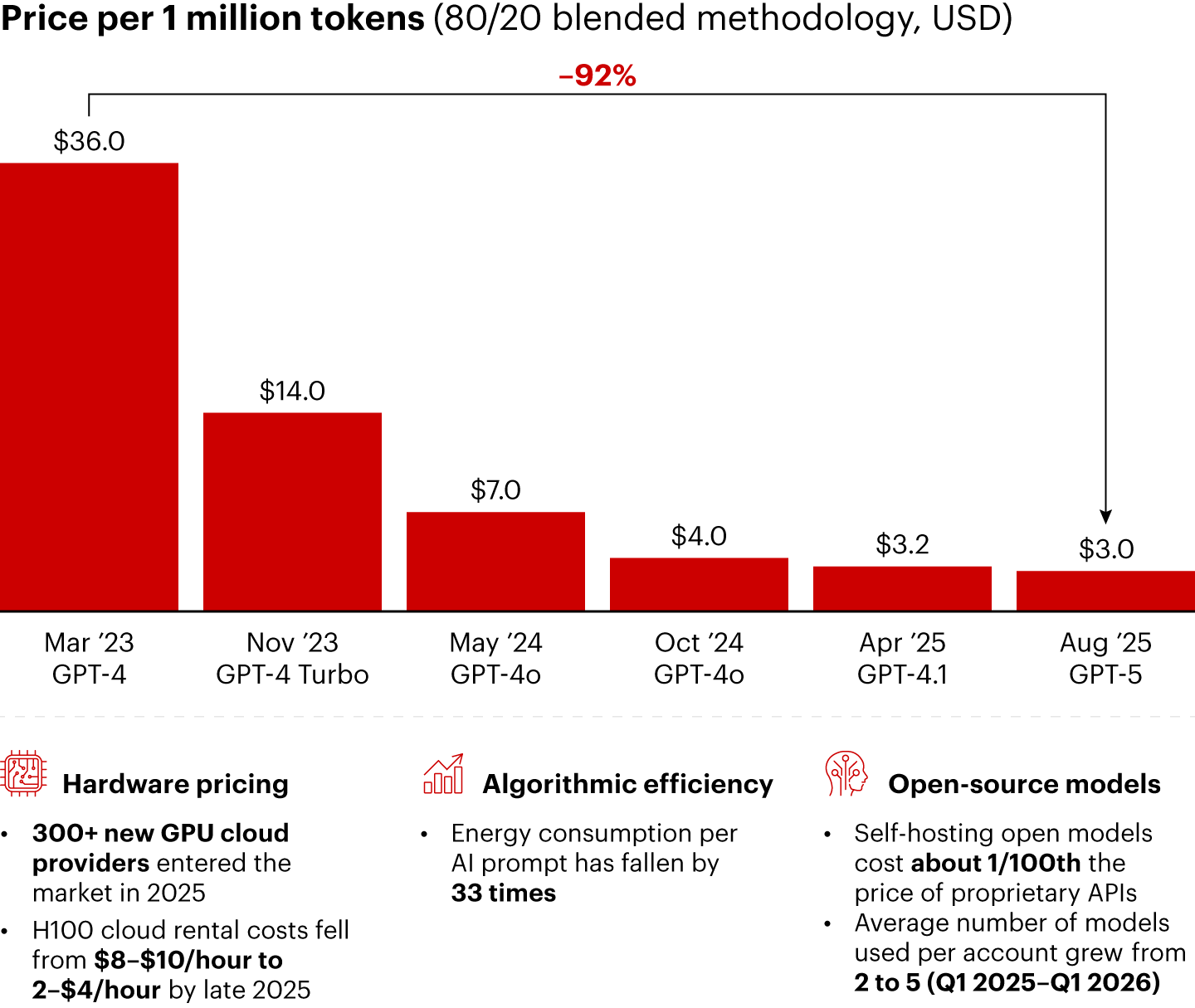
AI deployment costs have fallen because of three parallel structural forces: Algorithmic breakthroughs have decoupled intelligence from brute computational force; a surge in graphics processing unit (GPU) cloud providers has turned specialized hardware into a commodity; and the open-source release of frontier-class models has collapsed the proprietary pricing floor entirely (see Figure 3).
Figure 3
The cost of frontier AI models has plummeted since 2023
Notes: API is application programming interface; GPU is graphics processing unit
Sources: OpenAI API pricing; Stanford AI Index; PubMed; lit. search
As deployment costs have fallen, Indian healthcare providers have gained increased access to AI capabilities. However, lower unit costs may not reduce total spending, as usage and volumes are both rising and cost predictability and ROI evidence are still emerging. Ultimately, execution speed will separate leaders from followers.
India is advancing AI readiness
Historically, Indian healthcare has been paper-based, with providers relying on fragmented records and little digital infrastructure. That’s changing as AI matures and costs fall. Now, the question is whether India is ready to deploy AI at scale.
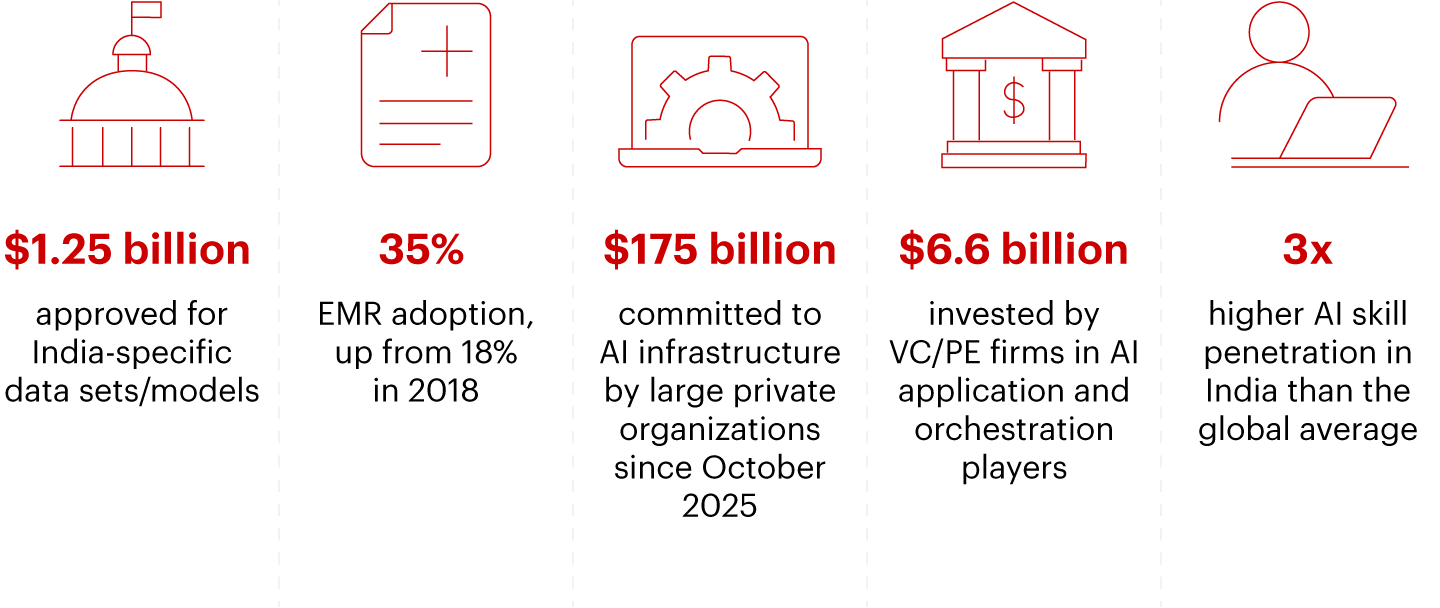
On this front, India is making significant progress, supported by five structural pillars (see Figure 4):
Government initiatives: The Ayushman Bharat Digital Mission (ABDM) is advancing clinical AI similarly to how the Unified Payments Interface powered the fintech industry—by building the underlying infrastructure. ABDM enables patient records to be stored and shared across providers and insurers (with consent). Approved in 2024, the IndiaAI Mission has approximately $1.25 billion in funding to back India-specific data sets and models such as BharatGen and Bhashini.
EMR penetration: EMR use in Indian hospitals has risen from 18% in 2018 to about 35% today. This growth is concentrated in large urban hospital chains, while most small- and mid-sized hospitals still document on paper. While growing, India’s EMR penetration remains behind the US and UK, where adoption is above 90%.
Private capital at scale: Private-sector investment remains key to enabling large-scale AI deployment. Reliance, Amazon, Microsoft, and Google have together committed over $175 billion to AI and data center infrastructure in India over the next seven to eight years. Private equity groups invested around $1.4 billion in single-specialty providers alone over 2023—2024.
Thriving entrepreneurial ecosystem: Big tech has focused on infrastructure and data, while venture capital and private equity firms invested $6.6 billion in AI applications over the past 10 years. India is now the second-largest market in Asia-Pacific by number of AI start-ups, with close to 2,900 AI start-ups.
Talent: India has one of the world’s strongest AI talent bases, with skill penetration around three times the global average. Much of this capability is currently oriented toward foreign markets. Therefore, India’s AI trajectory may depend on how talent is applied to local priorities, including India’s vernacular languages and healthcare delivery.
Figure 4
India’s AI adoption is supported by five structural strengths
Notes: EMR is electronic medical record; PE is private equity; VC is venture capital
Sources: Press Information Bureau (Government of India); lit. search
The truest measure of AI readiness is patient impact. By that benchmark, AI in Indian healthcare remains largely assistive today; it’s used to draft and summarize documentation and support clinicians, but it rarely operates independently. This reflects a regulatory landscape that is still evolving. India’s national regulatory authority for pharmaceuticals and medical devices, the Central Drugs Standard Control Organisation (CDSCO), issued draft guidance on medical-device software in October 2025; however, it has not yet clearly addressed adaptive and autonomous systems.
AI adoption in Indian healthcare delivery
To scale AI in healthcare, value, deployability, and trust must converge
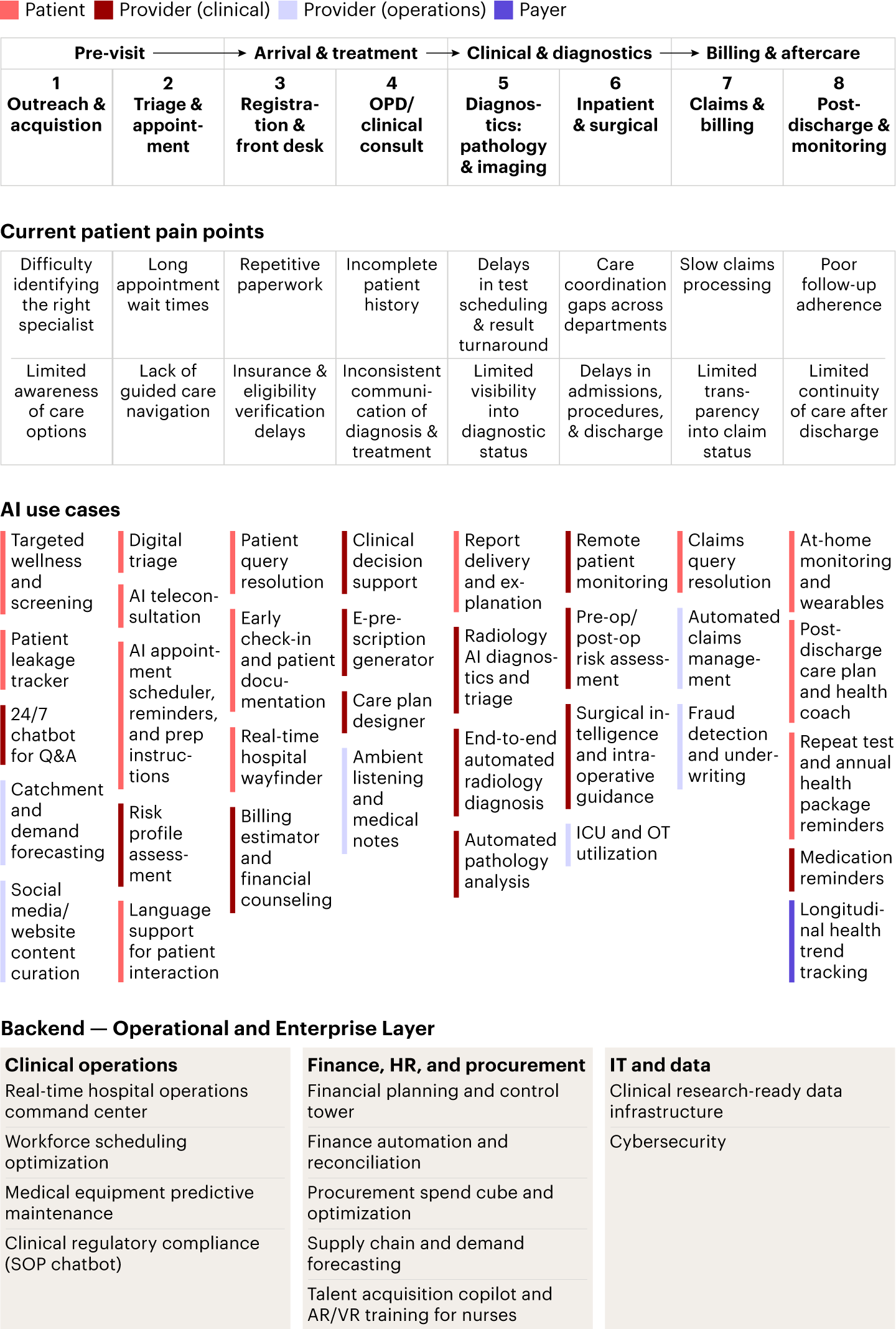
The patient journey spans eight core touchpoints, from outreach to post-discharge follow-up and long-term care management. Friction often persists across this journey in the form of long queues, fragmented records, and significant clinician time spent on administrative work. These bottlenecks all affect patient experience, access, throughput, care quality, and provider economics (see Figure 5).
Figure 5
AI can alleviate several pain points across the patient journey
Notes: AR is augmented reality; ICU is intensive care unit; OPD is outpatient department; OT is operation theatre; SOP is standard operating procedure; VR is virtual reality
Sources: Primary interviews of leading hospitals and diagnostic labs; Bain and HealthQuad analysis
AI can address many of these constraints by improving how providers acquire, triage, register, diagnose, treat, bill, and follow up with patients. AI tools can also reduce clinical and operational bottlenecks, improve diagnostic speed and accuracy, streamline revenue-cycle workflows, and extend care beyond the hospital.
However, adoption is currently uneven. While AI can touch every part of the journey, the key question is whether applications are mature, trusted, and valuable enough to scale today.
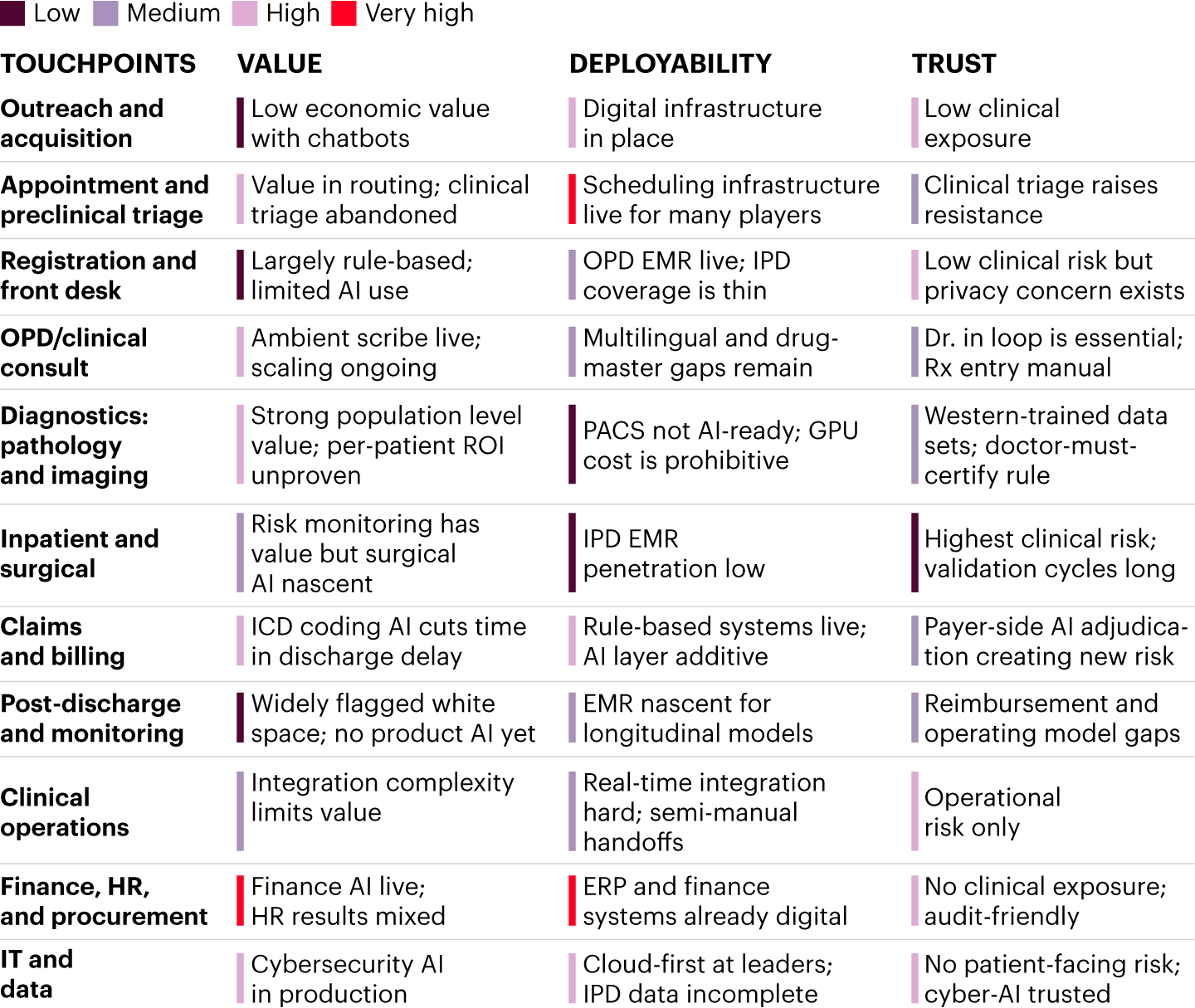
We evaluated AI adoption across India’s leading hospitals and diagnostics chains through three lenses (see Figure 6):
Value: Captures AI’s impact on outcomes, access, throughput, cost, and revenue realization
Deployability: Reflects how well AI can be integrated into workflows and data systems
Trust: Captures clinical validation, regulatory readiness, data governance, and user adoption
Together, these form a framework that helps providers prioritize AI deployment—choosing whether to scale now, build toward a capability, or plan for a future horizon.
Figure 6
AI use cases deliver varying levels of value, deployability, and trust across the patient journey
Notes: EMR is electronic medical record; ERP is Enterprise Resource Planning; GPU is graphics processing unit; ICD is International Classification of Diseases; IPD is inpatient department; OPD is outpatient department; PACS is Picture Archiving and Communication System
Sources: Primary interviews with CIOs of more than 20 leading hospitals and diagnostic labs; Bain and HealthQuad analysis
AI gains are largely operational and narrowly concentrated
AI’s value in healthcare is evident, with the largest gains emerging in ambient scribing, patient flow and discharge prediction, claims and back-office automation, and targeted diagnostic interpretation. To date, these use cases account for the most realized value, with operational ROI increasingly evident through productivity, capacity, and quality improvements. However, business ROI remains harder to capture.
Public health screening, primary care support, and workflow-integrated clinical decision support represent a second wave seeing traction. In these areas, AI can expand access, augment frontline providers, and enable more personalized care through longitudinal health insights—though decision-support value remains bounded by clinician oversight.
Several use cases remain whitespace, including remote patient monitoring, post-discharge and inpatient monitoring, and operating theater/ICU optimization. Here, demand is clear but adoption is constrained by EMR maturity, device connectivity, and validation and liability barriers around autonomous clinical care.
Autonomous clinical reasoning remains nascent. Meanwhile, chatbots, symptom checkers, and front-door engagement tools have shown limited incremental value, as existing digital solutions often make an additional AI layer difficult to justify.
Deployability separates what scales from what stalls
AI scales fastest when data is structured, systems are digitized, and integration requirements are limited. As a result, adoption is strongest in acquisition, scheduling, claims, finance, procurement, back-office automation, and original equipment manufacturer (OEM)-integrated diagnostic solutions. These use cases leverage existing infrastructure, require minimal workflow change, and can move into production quickly.
Deployability declines as AI moves deeper into clinical workflows. The primary constraints are workflow integration, interoperability, data readiness, and change management rather than model performance. In inpatient settings, limitations in EMR maturity, device connectivity, and longitudinal data availability further slow adoption. As a result, many providers continue to rely on rules-based approaches, with more advanced AI applications remaining longer-term opportunities.
Trust separates back-office AI from the bedside
In operational functions such as outreach, registration, finance, claims, and back-office operations, AI risks are low and outputs are easily verifiable, resulting in higher provider trust.
Trust requirements rise sharply as AI moves closer to clinical decision making. Key barriers to trust include regulatory ambiguity, medicolegal liability, clinical validation requirements, and multilingual complexity.
As a result, providers typically require human oversight whenever AI influences clinical care. Clinical adoption has therefore been strongest in use cases that augment rather than replace clinical judgment, such as clinical documentation, risk flagging, and diagnostic prioritization. More autonomous applications—including symptom triage, specialist decision support, and medication ordering—continue to face higher adoption barriers.
Value, deployability, and trust form a use case prioritization map
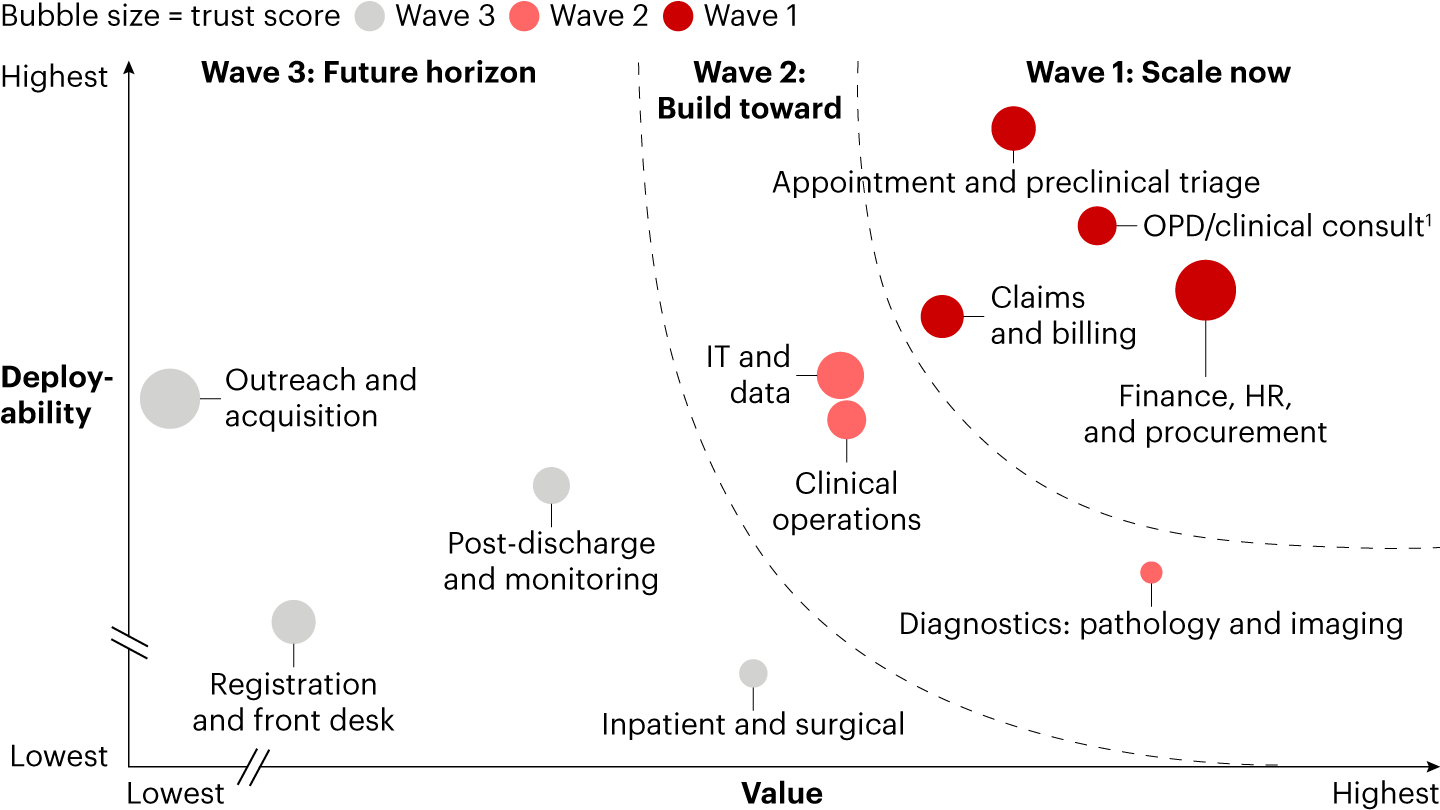
In the near term, opportunity is concentrated around four touchpoints where value, deployability, and trust align (see Figure 7). Chatbot-led appointment scheduling and AI-driven preclinical triage, claims and billing, back-end functions optimization (across finance, HR, and procurement), and outpatient department (OPD)/clinical consults are ready to scale today.
Figure 7
In India, near-term AI opportunities focus on workflow optimization, while diagnostic and operational use cases require additional investment to scale
Notes: 1) Mainly includes ambient scribe; OPD is outpatient department
Sources: Primary interviews of CIOs from more than 20 leading hospitals and diagnostic labs; Bain and HealthQuad analysis
Diagnostics, clinical operations, and IT and data (including cybersecurity) sit in the “build-toward” zone; in these use cases, value is real, but either deployability or trust requires deliberate investment and codevelopment to scale. Outreach, registration, post-discharge and monitoring, and inpatient care remain future-horizon bets, gated by EMR maturity and data infrastructure limits.
Leading healthcare systems match each use case to the best-suited AI technology
Healthcare AI is best understood as a stack of complementary technologies.
Rule-based systems sit at the operational layer, managing repeatable tasks such as scheduling, eligibility checks, billing estimates, and registration. Machine learning adds a deeper analytical layer, identifying patterns across large data sets to support use cases in risk scoring and remote patient monitoring. Computer vision applies similar pattern recognition to medical imaging, making it valuable in radiology and pathology, where speed and consistency matter.
Newer advancements extend the stack even further: Generative AI is being used for ambient scribing, clinical summaries, and query resolution, while agentic AI is beginning to coordinate multistep workflows with limited supervision.
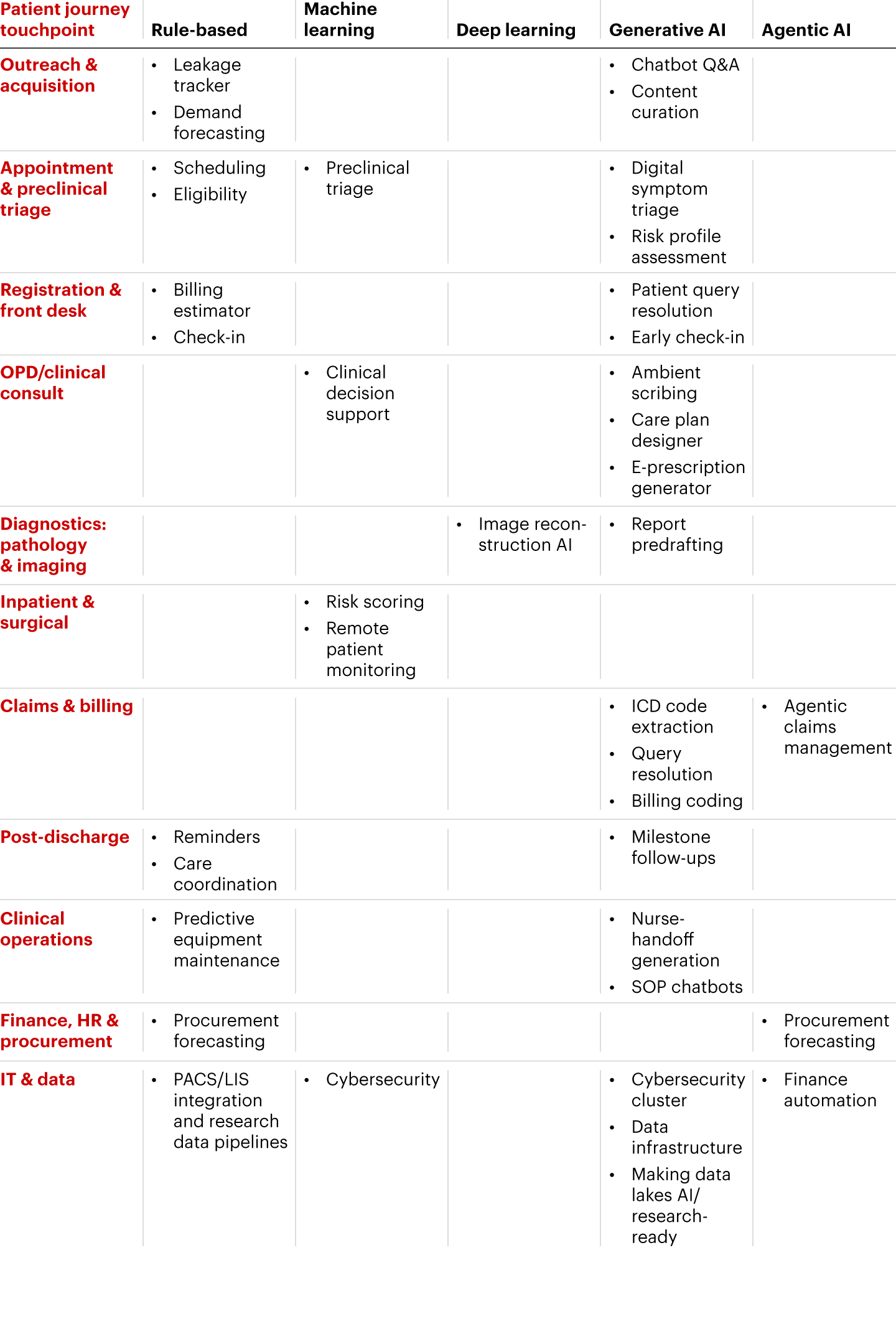
The takeaway is that healthcare systems do not need to choose one generation of AI over another. Not every use case requires generative AI or agentic AI; many workflows are better served by rules, robotic process automation, machine learning, computer vision, or basic workflow automation. Instead of using what’s newest, healthcare systems need to match each use case with the technology best suited to deliver it (see Figure 8).
Figure 8
Use cases should be matched to the most appropriate AI technology
Notes: ICD is International Classification of Diseases; LIS is Laboratory Information System; OPD is outpatient department; PACS is Picture Archiving and Communication System; SOP is standard operating procedure
Sources: Primary interviews of CIOs from leading hospitals and diagnostic labs; Bain and HealthQuad analysis
The build vs. buy decision
In our research, we found healthcare leaders tend to build AI tools far more often than they buy. When they do partner with external firms, they favor credible, validated start-ups that offer broad platforms over narrow point solutions.
Provider spending is concentrated in two main areas: commoditized capabilities, such as cybersecurity, and highly specialized solutions, such as OEM-integrated diagnostic AI.
Between these extremes, leading providers increasingly build the application layer in-house and selectively partner or codevelop with start-ups—particularly where proprietary data, clinical specialization, or local validation are required.
For start-ups, providers that lack in-house technology capabilities represent a major opportunity. For these organizations, data and EMR readiness remain the primary constraints. As a result, demand is shifting toward integrated platforms that combine AI with underlying EMR and data infrastructure.
AI healthcare start-ups are creating pathways to scale
The Indian AI healthcare ecosystem is evolving rapidly, with start-ups leveraging AI to address persistent challenges across the continuum of care:
Pre-visit and access: In outreach and triage, start-ups like Cureskin and Mariana AI illustrate the shift toward AI-led symptom assessment and patient routing. Meanwhile, at the registration and front desks, start-ups such as Pype are automating intake and documentation.
Clinical and diagnostics: For OPD and clinical consults, players such as Augnito and Sunoh.ai are scaling ambient scribing. In diagnostics, Qure.ai and SigTuple are among India’s more established players in imaging and pathology AI.
Inpatient and beyond: Across inpatient and surgical care, start-ups like LifeSigns and Cloudphysician enable remote monitoring and tele-ICU. In claims and revenue-cycle management, RapidClaims and Vitraya automate adjudication and coding. In post-discharge and monitoring, tap.health and Healthify extend care beyond the hospital through chronic disease- and wearable-driven engagement.
Many more companies are active across each of these categories, and the pace of new entrants remains high. The ecosystem is both broad and fast-moving, rather than settling around a single set of players.
Case studies
India’s leading healthcare providers are not just ahead on AI adoption—they are on a distinctly different point of the AI maturity curve, thanks to early data-platform investments. The most advanced providers built proprietary data platforms years ago. That head start shows up in deployments. More mature players are increasingly pushing AI into clinical touchpoints (e.g., ambient documentation, imaging, and rounding), whereas less mature organizations remain focused on nonclinical, back-office use cases.
The following two case studies highlight Indian providers at different stages of AI adoption maturity.
A quaternary care group operates at the mature end of the AI-adoption curve, backed by early investments in a proprietary EMR and data infrastructure.
Key AI use cases: Ambient scribing across more than 100,000 prescriptions; automated claims-eligibility verification; and a central command center tracking OPD volumes, bed occupancy, and billing in real time.
Deployment method: AI tools were built in-house on a proprietary EMR. The group piloted each tool against real-world conditions and scaled only those demonstrating clear clinical and operational value, rather than rolling them out broadly and refining later.
Emerging results: Insurance risks are identified in less than a minute via an eligibility crawler; discharge turnaround has been shortened by six to seven hours through claims-query automation; and nursing handoffs are now paperless.
A quaternary care group with deep strength in cardiac sciences has pushed AI further into the clinical core than most of its peers across the majority of its patient touchpoints.
Key AI use cases: Autonomous tuberculosis screening, lung cancer detection, and radiotherapy contour planning across imaging modalities including x-ray, electrocardiogram, echocardio-graphy, and ultrasound; ambient scribing across OPD consultations, IPD progression notes, and voice-dictated nurse handovers spanning more than 600 nurses; and AI-assisted nurse hiring.
Deployment method: Over 11 years, the group partnered and co-developed solutions with more than 20 start-ups, frequently serving as a validation partner and first customer. Partner’s developers, IT team, and clinicians worked side by side on the clinical use cases to build pragmatic solutions and end-to-end traceability, thereby earning trust that led to better adoption.
Emerging results: Prescriptions are now drafted in less than a minute, with roughly 90% requiring no edits; nurse handovers reduced from roughly 30 minutes to less than five minutes.
Imperatives for hospitals
The hospitals that capture value from AI will not be those that pilot the most tools but those that treat AI as a leadership agenda rather than a technology one. That shift—from scattered experiments to a governed, outcome-led program—rests on seven imperatives.
Lead AI as a business transformation, not an IT project: Anchor AI to a few clinically owned outcomes (such as OPD throughput or length of stay), not a back-office efficiency exercise or scattered pilots. Assign a clinical or operations owner (not the CIO alone), publish the thesis internally, and test every pilot for measurable impact. Build the case beyond headcount reduction, and put a 90-day clock on each pilot; if it doesn’t move the needle, redesign or retire it rather than extend it.
Sequence AI adoption; don’t spread it thin: Wave 1 can scale immediately (scheduling, ambient scribing, claims, and procurement automation) with a board-level review every six months. Wave 2 builds toward diagnostics and clinical operations: Begin EMR remediation now and appoint a data-readiness owner who reports to the board. Wave 3 is the future horizon: Post-discharge and inpatient AI depend on connectivity, so investing in Internet of Things and wearables now gives early movers an edge.
Treat data readiness as infrastructure, not a precondition to wait on: Remediate data and deploy AI in parallel. Audit EMR, Picture Archiving and Communication System (PACS), Laboratory Information System (LIS), and Enterprise Resource Planning (ERP) data immediately, fixing billing, OPD notes, and claims first. Establish governance before scaling: clinical, legal, and technology committees owning consent, ABDM-aligned audit trails, and Digital Personal Data Protection (DPDP) Act compliance. Embed these now since retrofitting costs far more. Where EMR penetration is limited, capture data first and choose digitization partners with AI readiness in mind.
Build two capabilities: a specialist AI “lab” and a broadly AI-fluent organization (“crowd”): A small lab that builds and the wider workforce that adopts. The lab (clinicians, data scientists, and product managers) should take just two to three high-impact workflows a quarter, kept close to care, since codesigning with users drives adoption. Equip the wider organization with short, role-specific sessions on real tools and department champions to build clinician-to-clinician trust. Handoff protocols—which decisions need clinician review, when AI can stand alone, and how errors escalate—are nonnegotiable.
Be deliberate about what to build, buy, and codevelop: Build only where proprietary data or clinical expertise creates an edge, not for commodities like scheduling or generic LLM interfaces. Buy for speed but demand open architecture and application programming interface (API) integration; FDA clearance alone is insufficient, and Indian clinical validation and data portability are nonnegotiable. Codevelop where workflow fit is critical (e.g., start-up technology paired with in-house clinical data and validation), anchoring every agreement to clinical key performance indicators, with a 30-day on-floor embed as the minimum bar.
Make workflow integration a condition of adoption, not an afterthought: If clinicians have to leave the EMR to use a tool, they won’t use it. Run an integration checklist before purchase and reject anything that adds friction. Stress-test for 30 days, aiming for zero additional steps for the clinician.
Govern clinical AI continuously, not at a single sign-off: Define accountability before deployment. Back office and scheduling can run with periodic audit review, but sepsis alerts, medication ordering, and diagnostic interpretation always require clinician sign-off. Track performance in real time and share metrics (accuracy, override rates, adverse events) with clinical teams monthly; an override spike signals a model, workflow, or trust failure, each needing a different response. Build medicolegal liability into vendor contracts from Day 1: Data ownership, error liability, indemnification, and obligations during performance degradation cannot be afterthoughts.
Imperatives for founders
The founders who build durable healthcare AI companies will not be those with the best models but those who solve real clinical problems and earn trust to scale. That path rests on seven imperatives.
Validate the problem in clinical proximity before building: Start with a large, recurring, systemic problem you can solve, not the technology itself. Spend time in hospitals of all sizes and across care settings to learn workflows and pain points firsthand and to see how the addressable market differs across them. Shadow doctors, nurses, and billing staff to surface the manual workarounds that signal high-value opportunities. Embed clinical expertise in the founding team; advisory relationships can’t substitute for lived experience.
Land with a point solution, then expand into a platform: Enter with a single, low-risk workflow to build trust and gain data access before moving into higher-value clinical applications. Begin with operational use cases such as claims, procurement, scheduling, or documentation. Design modular architecture from inception so expansion doesn’t require reengineering. Build a data flywheel from Day 1; every deployment should generate proprietary data that trains the next product, but only if the pipeline is built in from the start.
Own the stack; don’t wrap a generic model: Providers are wary of products that are merely wrappers around generic foundation models. Defensibility comes from controlling the stack end to end across infrastructure, data, orchestration, model, application, and integration. Establish data governance early, including residency and annotation pipelines, and fine-tune open-source models on clinical data; the fine-tuned model is proprietary, the base model is not. Compete on domain depth and integration, not benchmark scores, which carry little weight with Indian procurement committees.
Treat integration as the product, not a post-sale step: Adoption is driven by integration, not stand-alone tools, and every certified integration removes an adoption barrier. Treat integration across Hospital Information System (HIS), EMR, PACS, LIS, and ERP as a core product capability from the outset. Don’t assume clean EMR data exists—building the data-capture layer is often a prerequisite to delivering value. Use ABDM as a distribution channel and a source of longitudinal data, which also signals regulatory trust to procurement committees as DPDP requirements tighten. Standardize deployment packages by segment since large chains, midsized facilities, and Tier 2 hospitals differ in infrastructure and ROI expectations.
Build for Indian clinical realities from Day 1: Western-trained models often break in Indian settings, where disease burden, language, and workflow fragmentation change performance and providers demand local evidence. Train and validate on Indian data sets, accounting for vernacular usage, code switching, local nomenclature, and regional disease patterns. Partner with institutions such as AIIMS for clinical validation and market credibility. Build offline first since connectivity is often unreliable in Tier 2 and Tier 3 settings.
Build trust continuously, not at a single sign-off: Embed validation, explainability, governance, patient safety, and privacy into the product from Day 1, and generate clinical evidence continuously. AI informs decisions, but clinicians provide judgment and must retain accountability, so build explainability, human oversight, and transparent reasoning into the core design. Institutionalize continuous monitoring of accuracy, override rates, safety incidents, and model drift, and report the data to clinical and administrative stakeholders.
Healthcare AI opportunities exist outside the hospitals too: The largest whitespace lies in expanding access, not improving hospital efficiency, given the scale of the Indian population. Explore population-scale screening and diagnostics, where unmet need is high and regulatory pathways are clearer. Augmenting primary care and frontline workers addresses India’s most acute supply constraint, extending specialist-quality support to settings specialists rarely reach. Consumer health is a parallel frontier: Positioning AI as the intelligence layer over triage, care journeys, and wearable data captures a population-scale opportunity that episodic hospital visits cannot match.
Policy considerations for healthcare AI
Policymakers can help set the pace of AI in healthcare. The infrastructure, regulatory clarity, and governance they build now could shape how far and how fast clinical AI can scale. Five priorities stand out.
Build the digital rail with clinical AI in mind: Decisions now on ABDM linkage, data standards, and compute could constrain or enable every clinical AI application built on top of them. Consider designing ABDM for longitudinal clinical use, not just administrative recordkeeping, and encourage structured clinical data formats at the point of care. Consider directing a meaningful share of the IndiaAI Mission’s $1.25 billion toward shared compute for public health institutions as well as large private players.
Role of payer power, not just regulation, in driving adoption: Reimbursement signals shape provider investment so government could encourage adoption faster through procurement than through rules. Consider embedding AI readiness into Ayushman Bharat and state-scheme empanelment, tying participation to minimum EMR penetration, data quality, and governance standards, with phased timelines for smaller providers. Validated diagnostic and drug safety benchmarks could also help build trust across the ecosystem.
Enable clearer regulatory pathways for adaptive and autonomous AI: Founders and hospitals may find it harder to build trust without greater clarity. A tiered risk classification could distinguish among applications: Documentation and scheduling warrant lighter oversight than diagnostic AI, and today’s one-size-fits-all approach can constrain low-risk applications. Regulatory sandboxes could provide space to test frontline and primary care AI, where Accredited Social Health Activist support carries a lower risk profile than hospital-grade clinical decision support and can be refined without blocking beneficial tools.
Potential need for India-specific models and data sets as a strategic asset: BharatGen, Bhashini, and the IndiaAI Mission are the right instincts; execution will decide whether they matter clinically. One opportunity is to support ethically governed data sets across India’s highest-burden diseases—diabetes, tuberculosis, cardiovascular disease, maternal mortality, and cancer—to create a repository no private player can replicate. Vernacular clinical language models could also be treated as critical infrastructure, moving Bhashini beyond consumer use into clinical-grade speech-to-text across the top languages by clinical volume.
Considerations for data governance as AI scales: Hospital CIOs consistently cite data governance uncertainty as a top barrier, one that policymakers are particularly well positioned to address. Clinical data guidance under the DPDP Act could cover consent for model training, data retention, error liability, and cross-border flows for models trained on Indian data but hosted abroad. A national health data governance body could also help ensure guidance doesn’t stay fragmented across CDSCO, the National Health Authority, the Ministry of Electronics and Information Technology, and individual states, each with overlapping jurisdictions.
The future-back view: Moving from workflow efficiency to broad transformation
This report has taken a deliberately today-forward view—focusing on where AI is deployed now; which use cases are scaling; and what actions providers and founders should take next, along with considerations for policymakers. That lens is operational and concentrated on workflows and throughput because that is where value, deployability, and trust converge today.
However, this focus can obscure where the technology is heading. Expert-level AI models capable of autonomous execution are compounding—doubling every six to nine months. Each evolution expands the clinical perimeter that AI can credibly enter.
A future-back lens points to a more fundamental shift—from assistive tools to collaborative intelligence. AI will evolve from a tool clinicians reach for into a system that works alongside, and selectively ahead, of them. As agentic systems mature and data foundations deepen, AI will move beyond administrative efficiency into the clinical core: powering longitudinal risk prediction, autonomously orchestrating patient navigation, and providing continuous post-discharge management.
By aligning value, deployability, and trust, India has a unique opportunity to modernize its healthcare delivery. By leaning into the AI opportunity, it could establish a world-class model for accessible, AI-collaborative care.
We sincerely thank Sidharth Kulkarni and Gargi Tyagi from HealthQuad and Ayush Khaitan, Mayank Puri, Sudhanshu Sharma, Soham Gawde, Anirudh Pandalai, and Vanshika Jha from Bain & Company for their contributions to the key insights in this report. We would also like to thank Karan Bajaj and Anisha Pradhan from Bain & Company for their in-depth research, as well as the providers, diagnostic labs, start-ups, and investor community members whose valuable inputs helped shape this report. Finally, we wish to thank Shelza Khan for their editorial support.