


Brief


|
At a Glance
Consumers and business owners tend to think about insurance only sporadically. Suddenly, they have a number of insurance concerns since Covid-19 disrupted everyone’s work and home life, as well as their finances. Many people worry not only about their health, but also what their insurance will cover. Will travel insurance reimburse canceled trips? Will health insurance cover tests and treatment for the coronavirus? Will business-interruption insurance kick in, and what does it cover? Will insurers’ capital remain adequate if capital markets continue to crash? 
Macro Surveillance PlatformFor more detail on the business implications of coronavirus from Bain’s Macro Trends Group, log on to the Macro Surveillance Platform. Learn more about the platform > For insurers themselves, which often must improvise as they go, the pandemic has thrown operations into round-the-clock emergency planning and extensive work-at-home modes. Investors have pummeled their stocks (see Figure 1). For life insurers, lower bond yields could also mean hard times, because they invest customers’ premiums heavily in corporate bonds.
Figure 1
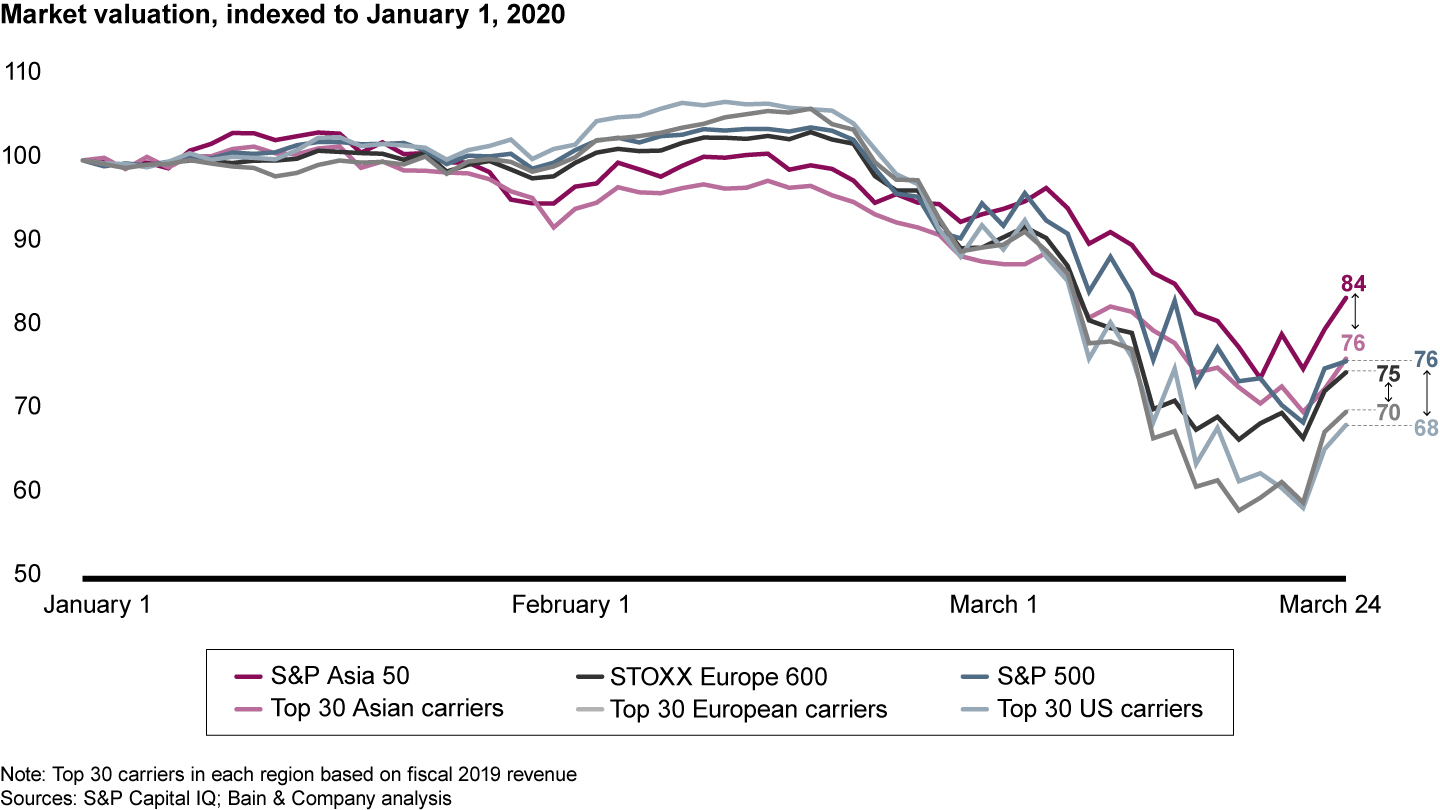

The scope of the challenge can seem overwhelming to insurance executives. Fortunately, our recent work with insurers, combined with observations of the industry worldwide, yields a useful short set of actions to guide executives in the weeks and months ahead. The approach should have two streams: act now to protect the business, and plan now for the trajectory beyond the immediate crisis. Protect your people, including agents
In Italy, for instance, Generali and other major carriers took most of these measures quickly. Set up a business continuity plan
Adjust the operating model accordingly
Go the extra mile for customersLeading carriers in the most affected countries have stepped up to support customers in different ways, ranging from extended coverage to extra services. A structured approach might encompass a variety of offerings. For retail customers, insurers can consider enlarging the scope of coverage by providing:
Small and medium-sized enterprises may be concerned about their employees or the effects of a forced shutdown. Insurers can offer:
Some insurers, such as People’s Insurance Company of China, China Pacific and Ping An, have worked together to provide coronavirus-related products. These include indemnity for production losses, business interruption and salaries to quarantined employees. For support agents, insurers can help alleviate economic hardship. For instance, in Italy Allianz has released €75 million to respond to agencies’ need for liquidity. Plan now for a different futureGiven the current state of uncertainty, it pays to devise an ongoing stress test in which you:
This set of guidelines will help insurance executives weather the immediate crisis and fortify their organizations during the related economic downturn. Looking ahead, insurers also have a mandate to build a business model tuned to new customer behaviors and priorities. For example, consumers will look for policies that clearly convey what is and is not covered. They will ask for convenient support through any channel and at any time, either to communicate with agents or perform basic tasks themselves. Insurers must be ready to change the role of physical distribution by offering simple and digital distribution. Employees now are open to new ways of working. That does not mean opening the pocketbook for any digital initiative. Rather, spending on digital should align closely with an insurer’s strategy. Turbulent times often create big shifts in market share, so insurers that take select, concerted actions now may emerge even stronger when the economy starts to expand again. 
CoronavirusThe global Covid-19 pandemic has extracted a terrible human toll and spurred sweeping changes in the world economy. Across industries, executives have begun reassessing their strategies and repositioning their companies to thrive now and in the world beyond coronavirus. Andrew Schwedel, Marcello Pallotta and Henrik Naujoks are partners with Bain & Company’s Financial Services practice, and Henrik leads the practice in the Asia-Pacific region. They are based, respectively, in New York, Milan and Hong Kong. |